

Journalist

Park Sae-jin
-
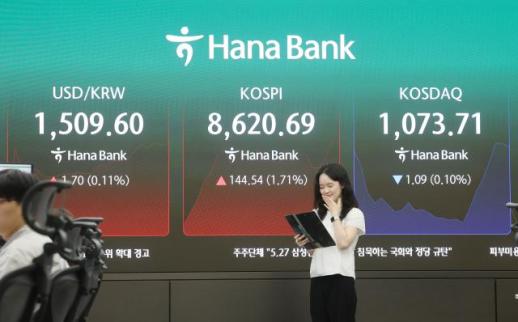 Won-Dollar Exchange Rate Rises Amid Diminished U.S.-Iran Peace Hopes The won-dollar exchange rate opened higher as hopes for a U.S.-Iran peace agreement faded. In the Seoul foreign exchange market on June 1, the exchange rate for the Korean won against the U.S. dollar was 1508.1 won. The rate opened at 1508.8 won, up 0.9 won from the previous session. The renewed preference for safe assets appears to be linked to difficulties in the U.S.-Iran peace negotiations. At the same time, the dollar index, which measures the value of the U.S. dollar against six major currencies, rose by 0.14 to 99.05. On May 30, The New York Times reported that President Donald Trump did not approve a draft memorandum of understanding (MOU) aimed at ending the conflict between the U.S. and Iran. Previously, U.S. and Iranian officials had tentatively agreed on the peace MOU, with only final approval procedures remaining. An Iranian news agency also reported that Iran plans to propose new amendments, indicating that the country is thoroughly preparing for a no-deal scenario. In the bond market, foreign investors have sold a net 1.4162 trillion won worth of securities. Minkyoung Won, an economist at Woori Bank, stated, "The won-dollar exchange rate is expected to rise in line with increasing international oil prices due to weakened optimism regarding the U.S.-Iran negotiations. There is a high likelihood that foreign capital will continue to exit the domestic stock market, and even if individual and institutional buying supports the KOSPI, demand for remittances in the foreign exchange market will lead to an increase in the exchange rate."* This article has been translated by AI. 2026-06-01 09:57:00
 -
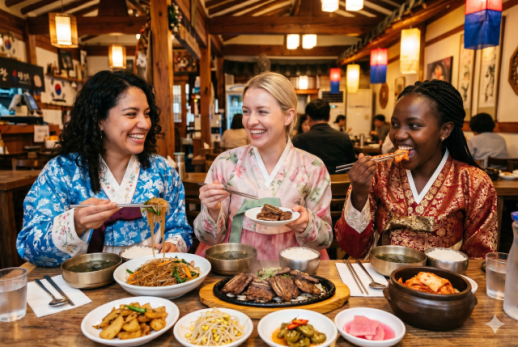 South Korea targets Honduras, Latvia and Kenya to diversify food exports SEOUL, June 01 (AJP) - The Korea International Trade Association has identified Honduras, Latvia and Kenya as strategic target markets to reduce South Korea's heavy reliance on the United States, China and Japan for food exports. The strategy aims to leverage the global popularity of South Korean culture to open new trade channels and sustain long-term growth. South Korean food exports have grown at an annual rate of 5.8 percent since 2015, surpassing 9 billion dollars in 2024. However, more than 50 percent of the export volume over the past decade remained concentrated in just three nations, prompting industry calls for immediate market diversification. The association published its findings Monday in a report outlining export competitiveness and market expansion strategies. Researchers selected the three countries based on surging local interest in South Korean culture, noting they all met strict criteria for cultural fan club growth and consumer goods import increases between 2021 and 2023. The report recommended specific product categories and localized approaches for each emerging market. For Honduras, researchers highlighted snacks such as sweets and ice cream, advising companies to launch sweet, large-capacity products and focus on hypermarket promotions to capture a growing youth demographic and urban population. In Latvia, which recorded the highest food import openness among 14 candidate nations, the association projected strong demand for mild sauces and dressings. The report suggested an integrated marketing campaign spanning YouTube, Google and expanding offline retail networks like hypermarkets and convenience stores. Kenya was identified as a target market for processed rice foods, including tteokbokki and rice crackers. The country offers a rapidly expanding consumer base, improved mobile payment infrastructure and an active e-commerce sector where platforms like TikTok and WhatsApp can drive localized sales. Across all three markets, the association urged exporters to strictly comply with local ingredient labeling rules and eco-friendly regulations driven by environmental, social and corporate governance standards. "Export channel diversification is the key that will determine the competitiveness of K-food going forward," said Kim Moo-hyun, chief researcher at the association. "Our companies should actively utilize services from related organizations, and the government must also strengthen communication with local regulatory authorities centered on diplomatic missions, acting as one team." To support these expansion efforts, the trade association plans to publish five strategic reports on consumer goods exports this year. The organization will also host business-to-business exhibitions linking South Korean companies with local buyers in Ho Chi Minh City and Paris in June, Jakarta in September, and Los Angeles in October. 2026-06-01 09:53:11
 -
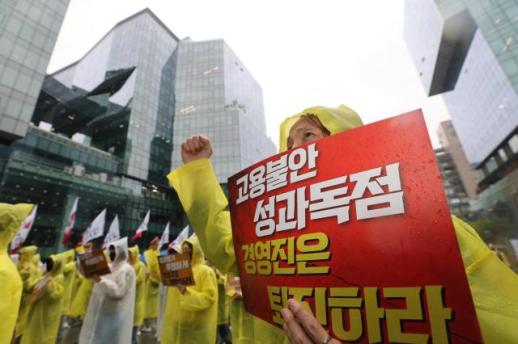 Kakao Union to Strike for Job Security and Compensation Reform The Kakao Union plans to initiate a partial strike on June 10. The union argues that ongoing sales, spin-offs, and restructuring have created job insecurity and demands improvements to the management-centered compensation system. In a statement on June 1, the Kakao branch of the Korean Confederation of Trade Unions said, "Our core demand is to stop the sales, spin-offs, and restructuring resulting from continuous management failures and to secure job stability. We also seek to reform the compensation system that allows management to monopolize excessive rewards while causing job insecurity through poor decision-making." The union explained that the partial strike is intended to address concerns from users about the potential disruption of major services like KakaoTalk. The union stated, "We plan to conduct a four-hour partial strike and a rally in Pangyo on June 10. We will start with this limited action and may escalate the strike depending on the negotiation situation." Previously, negotiations between Kakao and the union had gone through mediation by the Labor Relations Commission, but no agreement was reached, leading the union to secure the right to strike. However, according to the union, no formal negotiations have taken place since the second mediation concluded. A union representative noted, "We have not met separately with the company since the second mediation, and there are no scheduled official meetings following the strike." Regarding the expected participation in the strike, the union stated, "We will know the scale of participation only on the day of the event," and did not provide specific numbers.* This article has been translated by AI. 2026-06-01 09:48:00
 -
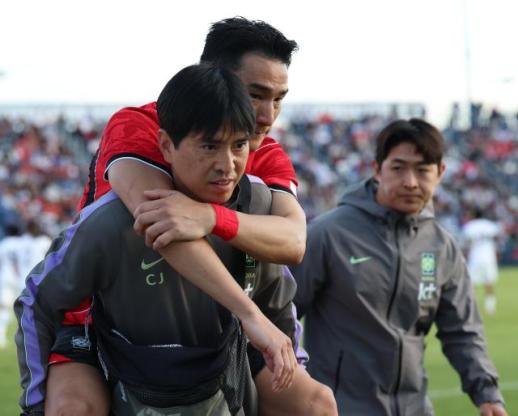 Defender Jo Yu-min Injured, Out of World Cup; Jo Wi-je Replaces Him Jo Yu-min, a central defender for the South Korean national team, will miss the 2026 FIFA North Central America World Cup due to injury. On June 1, the team, led by coach Hong Myung-bo, announced that Jo Yu-min has been released from the squad due to his injury. According to the team, Jo was diagnosed with a partial tear of the plantar fascia in his right foot, requiring an estimated eight weeks for recovery following a medical examination. Jo sustained the injury while playing as a central defender in a friendly match against Trinidad and Tobago on May 31 at Brigham Young University's South Field in Provo, Utah. He fell to the ground after twisting his right ankle while attempting to block an opposing player. After signaling for a substitution, Jo received treatment from the medical staff but was unable to continue and was carried off the field. Subsequent evaluations indicated that he would need to return to South Korea for treatment and rehabilitation, leading to his withdrawal from the team. Jo Wi-je from Jeonbuk Hyundai has been called up as his replacement. He was already in Salt Lake City, Utah, as a training partner and is listed on the preliminary roster of 55 players for the World Cup. He is expected to be included in the final 26-man squad, which is due on June 1. Baek Jun-ho of Stoke City, who was substituted during the match due to concerns over an ankle injury, has been reported to be in good condition.* This article has been translated by AI. 2026-06-01 09:48:00
 -
 LG Group Stocks Surge Amid Anticipation of Jensen Huang and Koo Kwang-mo Meeting LG Group stocks experienced a significant surge on June 1, driven by expectations surrounding the visit of NVIDIA CEO Jensen Huang and his meeting with LG Group Chairman Koo Kwang-mo. This rise is also attributed to a reassessment of the value of artificial intelligence (AI) and robotics businesses. According to the Korea Exchange, as of 9:32 a.m., LG Electronics shares rose by 81,000 won (27.65%) to 374,000 won compared to the previous trading day. LG CNS saw an increase of 29,600 won (26.01%) to 143,400 won, while the holding company LG recorded a rise of 30,500 won (20.80%) to 177,100 won. Market attention is focused on the potential meeting between Huang and Koo. Huang is expected to visit South Korea after attending the NVIDIA annual developer conference 'GTC Taipei 2026,' which opened on the same day. He is scheduled to meet with Koo on June 5 to discuss collaboration in the field of physical AI. Notably, NVIDIA is hosting its first 'Korea Partner Night' dinner event during the conference, raising expectations for expanded AI collaboration with major domestic companies. Analysts suggest that LG Group is entering a phase of valuation reassessment, highlighting the growth potential of its new businesses centered around AI and robotics. On this day, Kiwoom Securities raised its target price for LG from 115,000 won to 200,000 won. This adjustment reflects the increased net asset value (NAV) due to the rise in share prices of key subsidiaries and the likelihood of AI and robotics business values being factored in. Analyst Ahn Young-jun from Kiwoom Securities stated, "Recent stock prices of group companies have risen as the growth potential of new businesses like AI and robotics has come to the forefront. The holding company LG can expect direct benefits not only from the increase in subsidiary values but also from the enhanced capabilities of the group's new businesses." The ultra-large AI model 'EXAONE,' developed by LG AI Research, is also stimulating investor sentiment. Analysts believe that LG's AI technology competitiveness may be highlighted again ahead of the national AI second evaluation scheduled for August.* This article has been translated by AI. 2026-06-01 09:48:00
 -
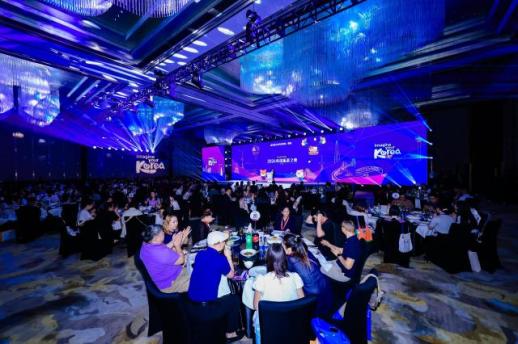 Efforts to Boost Regional Tourism in South Korea Target Foreign Visitors The South Korean tourism industry is actively working to redirect foreign visitors from the metropolitan area to regional destinations. Moving beyond the previous approach of encouraging simple visits to tourist attractions, the industry is focusing on creating direct flight demand from high-income target groups, discovering local content, and improving on-site infrastructure. This strategy aims to enhance the quality and diversity of K-tourism beyond mere quantitative recovery. ◆ Targeting High-Income Chinese Tourists with Direct Flights The first step in revitalizing regional tourism is undoubtedly improving accessibility and expanding the affluent customer base. Recently, the tourism industry has identified the Yangtze River Delta region as a key target to disperse Chinese tourists, who are predominantly concentrated in the metropolitan area. A primary focus is Hangzhou, a city recognized as a 'new first-tier city' in China, known for its economic strength, population, and growth potential. Home to major IT companies like Alibaba, Hangzhou has a resident population of 12.62 million and an annual disposable income per capita of approximately 16 million won. Taking advantage of over 7,000 airline seats operating weekly between Korea and Hangzhou, marketing efforts for direct flights to regional destinations have intensified. At the recent '2026 K-Tourism Roadshow' B2B consultation held locally, over 100 participants, including 39 domestic organizations and local Chinese platforms, discussed developing regional tourism content connecting Hangzhou and Busan. The organization plans to attract visitors to the regions by reflecting the preferences of the Chinese MZ generation, who favor individual travel, through platform marketing linked with diverse industries. ◆ Attracting Tourists with Local Culinary Experiences Having opened the door for regional influx through direct flight routes, the key to retaining these visitors lies in unique local content. Regions facing extinction due to climate change and aging populations are making efforts to secure sustainability by leveraging their unique ingredients. A prime example is the 'Delicious Coexistence on Bi-yang' food festival, which attracted 1,600 tourists over two days at the end of last month. Seven renowned chefs, including Kim Do-yoon and Oh Se-deuk, visited Bi-yang Island to develop new dishes using seasonal ingredients, generating significant interest. Importantly, this initiative is not a one-time festival. New recipes, such as seaweed bibimbap and sea snail bread, are being shared with seven local restaurants on Bi-yang Island for ongoing sales. By combining the region's rustic assets with popular culinary trends, a new demand for tourism is being created, establishing a virtuous cycle that boosts local residents' incomes. ◆ Infrastructure Improvements Key to Eliminating Overcharging As global mega-events approach, local governments are prioritizing proactive assessments of their tourism readiness. They recognize that even with excellent content and direct flight routes, long-term growth is impossible if the reliability of the infrastructure to support these offerings deteriorates. In preparation for the BTS World Tour concert in Busan on June 12-13, the city is launching a comprehensive inspection of the accommodation industry in collaboration with relevant agencies. The plan aims to eradicate persistent issues such as overcharging and unilateral reservation cancellations that have plagued large events. A monitoring campaign called 'Pleasant Interventions' will also be implemented, allowing citizens to report hygiene issues or unfair pricing via QR codes until the end of October. This reflects a sense of urgency to successfully host events that attract global attention, thereby proving the competitiveness of regional tourism. A tourism industry representative stated, "Revitalizing regional tourism cannot be solved simply by increasing overseas promotions. It requires a fair market environment where foreign tourists can confidently spend, supported by content that highlights the unique charm of the regions, to truly usher in a new era of K-tourism in the provinces."* This article has been translated by AI. 2026-06-01 09:45:00
 -
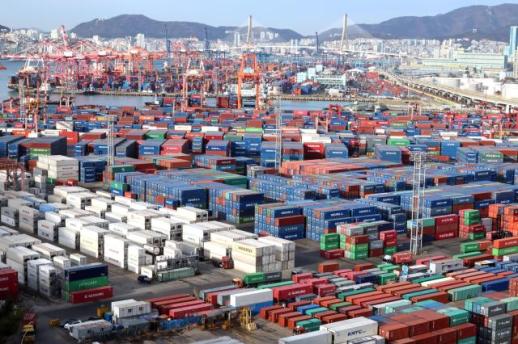 Semiconductor Demand Drives Record $87.7 Billion in May Exports, Surplus Reaches $101.9 Billion South Korea's exports surged over 50% year-on-year in May, reaching a record high. Despite uncertainties stemming from the Middle East conflict, semiconductor exports more than doubled, significantly contributing to the overall increase. The average daily export value also surpassed $4 billion for the first time, with the surplus from January to May exceeding annual records. According to the Ministry of Trade, Industry and Energy and the Korea Customs Service, May's export value totaled $87.747 billion, marking a 53.2% increase compared to the previous year. This achievement represents the highest monthly figure on record, with exports exceeding $80 billion for three consecutive months. South Korea has maintained a positive export trend for 12 consecutive months since June of last year. The average daily export value, adjusted for working days, reached $4.28 billion, the highest ever recorded, surpassing the previous peak of $3.79 billion in March. The robust performance of semiconductor exports played a crucial role in this growth. In May, semiconductor exports soared to $37.16 billion, a staggering 169.4% increase from the previous year, setting a new record. This surge is attributed to rising fixed prices for memory chips, driven by increased investments in artificial intelligence (AI) by major U.S. tech companies, with exports exceeding $30 billion for three consecutive months. Exports of computers and wireless communication devices also saw significant increases, rising to $4.18 billion (up 290.7%) and $1.46 billion (up 12.6%), respectively, due to heightened demand for SSDs used in AI servers and strong sales of new products. Display exports increased by 9.4% to $1.47 billion, influenced by the launch of new mobile products. Consumer goods exports also showed solid growth. Cosmetic exports reached $1.18 billion, a 24.2% increase from last year, marking the highest figure for May. Although agricultural and fishery product exports declined due to reduced shipments of items like coffee and seaweed, processed agricultural products such as noodles and bread increased, resulting in a 4.7% rise to $1.07 billion. Oil product exports surged by 46.6% year-on-year to $5.25 billion, driven by high export prices amid rising oil prices. However, the implementation of maximum price regulations led to a 23.8% decrease in volume, with gasoline, diesel, and kerosene exports dropping by 31.1%, 24.3%, and 99.9%, respectively. Petrochemical product exports rose by 11.1% to $3.7 billion, although volume decreased by 25.5% due to prioritizing domestic supply. In contrast, automobile exports fell by 5.9% to $5.83 billion, impacted by reduced working days, supply shortages due to safety incidents, and logistics disruptions from the Middle East conflict. Steel exports declined by 2.1% to $2.04 billion, reflecting a continued decrease in key products like hot-rolled and thick plates. General machinery exports also dropped by 6.3% to $3.82 billion due to increased logistics costs from the Middle East conflict and U.S. tariffs. Conversely, non-ferrous metal exports rose by 41.5% to $1.67 billion, driven by increased demand for copper and aluminum related to AI data centers. Regionally, exports to China surged by 80.9% to $18.9 billion, driven by a 243% increase in semiconductor exports and solid growth in consumer goods. Exports to the United States also rose by 59.1% to $15.97 billion, primarily due to increased shipments of semiconductors, computers, and electronic devices related to AI investment, despite weak automobile sales. Exports to ASEAN countries reached $15.85 billion (up 58.4%), while exports to the European Union increased by 2.4% to $6.19 billion. However, exports to the Middle East, severely impacted by the conflict, fell by 7.7% to $1.27 billion, largely due to decreased shipments of automobiles and auto parts. Imports rose by 20.8% to $60.8 billion, with energy imports increasing by 15.9% to $11.75 billion. Notably, crude oil imports rose by 25.0% to $8.5 billion, despite a decrease in volume due to the Middle East conflict. Non-energy imports increased by 22.0% to $49.05 billion, significantly influenced by a 71.0% rise in oil product imports to $2.55 billion and a 25.6% increase in semiconductor equipment imports to $2.56 billion. With exports exceeding imports, May's trade surplus reached $26.95 billion, an increase of $20.03 billion from the previous year. This marks the 16th consecutive month of surplus. The cumulative surplus from January to May stands at $101.91 billion, surpassing the previous record of $95.2 billion set in 2017. As exports continue to perform well, the likelihood of surpassing the government's annual export target has increased. The Ministry of Trade set the export target at $740 billion for this year. However, with both the volume and prices of semiconductor exports on the rise, projections indicate a significant expansion in annual export value. From January to May, exports totaled $394.226 billion, comparable to last year's exports of $395.389 billion for the same period. The Korea Institute for Industrial Economics and Trade recently forecasted that this year's exports could increase by 30.3% to $924.4 billion, with a trade surplus of $219 billion. Potential variables include the ongoing Middle East conflict and U.S. tariff policies. Minister of Trade, Industry and Energy Kim Jeong-kwan stated, "Uncertainties in the trade environment, including the resolution of the Middle East conflict, U.S. tariffs, and EU steel TRQ, remain. The government will work closely with major countries to mitigate trade risks for our companies and create a stable export environment." He added, "We will actively support companies' production and export activities by ensuring a stable supply of key raw materials and monitoring supply chains." 2026-06-01 09:45:00
 -
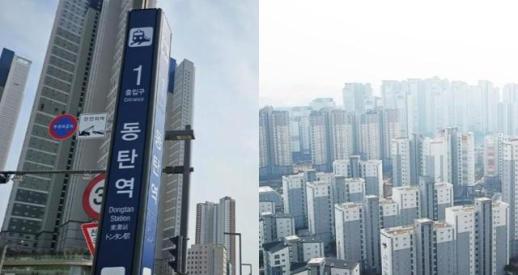 Concerns Rise Over Soaring Home Prices in Dongtan Concerns are growing over rising home prices in the Dongtan New Town area of Hwaseong, Gyeonggi Province. Recently, a post titled "Is this Dongtan?" appeared on the anonymous workplace community platform, Blind. The author, identified as A, who works at Samsung Electronics, shared, "I started looking at apartments near Dongtan Lake Park yesterday, and every real estate office was packed with people looking at homes. When I tried to finalize a deal on a place I liked, the owner raised the price by 20 million won right on the spot." A continued, "In other places, prices were increased by 50 million won, making that property seem like the cheapest option. One house that was listed for 950 million won last month increased to 1.08 billion won after receiving numerous inquiries." As this post circulated online, fears emerged that home prices in Dongtan might be surging again. Internet users reacted, expressing concerns that "only actual buyers will suffer," and questioning whether a new price increase trend was beginning. Comments included, "It seems like homeowners are pulling their listings as prices are expected to rise," and "It's unreasonable to raise prices right before a contract is signed. Ultimately, it's the non-homeowners who will bear the brunt of this." Particularly, some users referenced past surges in apartment prices in Seoul, voicing caution about the current situation. Additionally, the post shared data reportedly released by the Citizens' Coalition for Economic Justice, detailing the average price increase of apartments in Seoul under different administrations. According to the data, during the Roh Moo-hyun administration, the average price rose from 300 million won to 530 million won, an increase of about 80%. The Lee Myung-bak administration saw a decrease of approximately 10%, while the Park Geun-hye administration recorded a rise of about 21%. The Moon Jae-in administration experienced a significant increase of around 119%, and the Yoon Suk-yeol administration saw a modest rise of about 1%. The post also noted that the price of apartments in Apgujeong skyrocketed from 1.5 billion won in 2017 during the Moon administration to 7.5 billion won in 2022, marking an increase of nearly 400%.* This article has been translated by AI. 2026-06-01 09:42:00
 -
 Koyote's Baekga Reveals Past Struggles with Artist Syndrome Baekga of the group Koyote revealed that he once considered leaving the group due to what he described as "artist syndrome." On the May 31 episode of MBC's "Sora and Jinkyung," Baekga appeared as a special guest. During the show, he shared, "Before joining Koyote, I did some modeling work. I participated in various fashion magazine photo shoots and even walked the runway at the Seoul Fashion Week's SFAA Seoul Collection." He added, "My major was photography. I continued with photography before transitioning to Koyote." Baekga explained, "I was not suffering from celebrity syndrome but rather from artist syndrome. I became absorbed in photography and thought, 'I am an artist.'" He recalled a trip to Paris, saying, "While there, I felt a strong urge to live in that environment. Everyone was drinking espresso, and despite its bitterness, I found myself drinking six to seven cups a day. At home, I only listened to jazz and bossa nova music." Reflecting on his struggles, Baekga said, "The reality was that I had to perform dance songs on stage, which was very distressing for me. I told the members, 'I can't continue with Koyote,' and I declared my intention to leave." He humorously noted that he had even prepared to move abroad and obtained an artist visa. However, when he announced his departure, his bandmates offered him more money, saying they would split it 4 to 3 to 3, with Shinji receiving 4, and he and Jongmin receiving 3 each. "That's why I didn't go," he said, eliciting laughter.* This article has been translated by AI. 2026-06-01 09:42:00
 -
 Government Inspects Local River Restoration Ahead of Flood Season 정부가 본격적인 여름철 홍수기를 앞두고 지난해 집중호우 피해를 입은 지방하천 재해복구 현장과 농업용 저수지를 찾아 홍수 대응 상황을 점검했다. 최근 홍수 피해가 국가하천보다 지방하천과 지류·지천에 집중되는 만큼 정부는 정비 우선순위 마련 등 예방 중심 대응체계 강화에 나설 계획이다. 기후에너지환경부에 따르면 금한승 1차관은 1일 충남 서산시 진장천·도당천 지방하천 재해복구사업 현장과 농업용 저수지인 고풍저수지를 방문해 여름철 홍수 대응 상황을 점검했다. 이번 점검은 오는 21일부터 시작되는 홍수기를 앞두고 지방정부가 국비 지원을 받아 추진 중인 지방하천 복구사업 진행 상황을 확인하고 하천과 저수지의 홍수 대응체계를 점검하기 위해 마련됐다. 진장천과 도당천은 지난해 7월 기록적인 집중호우로 피해를 입은 지방하천이다. 진장천은 제방과 호안 등 피해 시설의 기능을 복원하는 사업을 진행 중이며 올해 홍수기 전 마무리할 예정이다. 도당천은 제방 보강 등을 포함한 개선복구 사업을 추진하고 있으며 올해 착공해 2028년 준공을 목표로 하고 있다. 진장천은 지난해 시간당 최대 114.9㎜의 폭우로 제방과 호안이 유실되면서 98억2000만원의 피해가 발생했다. 복구비는 706억4000만원 규모다. 도당천 역시 제방 붕괴와 호안 유실 등으로 16억9000만원 상당의 피해를 입었다. 금 차관은 이어 총저수량 836만t 규모의 고풍저수지를 찾아 홍수 조절 기능과 운영 상황을 점검했다. 고풍저수지는 농업용수 공급에 지장이 없는 범위에서 사전 방류 등을 통해 저류 공간을 확보하고 하류 지방하천의 홍수 피해를 줄이는 역할을 맡고 있다. 특히 정부는 최근 홍수 피해가 국가하천보다 지류·지천 등 지방하천에서 반복적으로 발생하고 있다는 점에 주목하고 있다. 이에 따라 올해 안에 홍수 위험성이 높은 지방하천 정비 우선순위를 마련하고 한정된 예산을 위험 구간에 집중 투입하는 등 지방정부의 예방 정비사업을 체계적으로 지원할 계획이다. 기후부는 이날 금강홍수통제소와 한국농어촌공사 등 관계기관 간 협조체계도 점검했다. 최근 기후변화 영향으로 국지성 집중호우가 잦아지는 만큼 하천과 저수지를 연계한 홍수 대응 역량을 강화하겠다는 구상이다. 금한승 1차관은 "지방하천의 홍수 피해를 최소화할 수 있도록 재해복구 사업 관리를 철저히 하고 저수지 물그릇 확보 등 홍수대책도 차질 없이 추진하겠다"고 말했다.* This article has been translated by AI. 2026-06-01 09:33:00