

Journalist

Park Sae-jin
-
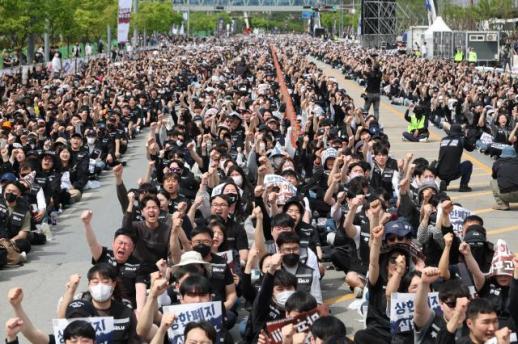 Korea's chip irony: record Samsung Elec shares and mass workers rally PYEONGTAEK, April 23 (AJP) -On the same day the KOSPI scaled a record high and South Korea posted its strongest quarterly growth in five years, tens of thousands of workers at the very heart of that boom took to the streets — protesting what they called a widening gap between record profits and compensation. “Even at this very moment, our colleagues are leaving,” shouted Thursday Woo Ha-kyung, acting head of the National Samsung Electronics Union, her voice hoarse as it carried across a sea of nearly 40,000 workers. The setting itself underscored the contradiction. Sprawling across a site roughly the size of Yeouido and employing around 60,000 workers, the campus is a monument to South Korea’s semiconductor supremacy — the very engine powering the country’s headline growth. Yet on this day, it became a stage for discontent. Workers arrived in waves, many clad in black vests, some traveling hours by bus, others taking leave to join what is fast becoming the largest show of labor force in Samsung’s history. “I took a day off to be here. I keep asking myself how we got to this point,” one union official said quietly. The rally, though limited to two hours, carried the unmistakable weight of escalation. A full general strike — scheduled from May 21 to June 7 — now looms, threatening only the second walkout since the company’s founding. At stake is not just pay, but the distribution of one of the most lucrative earnings cycles in corporate history. The union is demanding that 15 percent of annual operating profit be returned to workers as bonuses and that caps on performance pay be scrapped — a structure they argue better reflects the industry’s boom-bust reality. Management has drawn a firm line, insisting such demands are legally indefensible and financially destabilizing, warning that dismantling bonus limits could erode funds for research and future investment. The clash is unfolding against a backdrop of extraordinary profits. Samsung Electronics posted 57 trillion won in operating profit in the first quarter alone, with projections pointing to roughly 300 trillion won for the year — the bulk driven by its semiconductor division. To union leaders, the disparity is glaring. “Chairman Lee Jae-yong’s stock value has surged by tens of trillions, executives are taking home massive bonuses — yet for workers it’s ‘no performance, no reward,’” Woo said. “A standard that somehow stops at the executive floor.” The rally’s most arresting moment came when Choi Seung-ho, head of the enterprise-wide union’s Samsung Electronics branch, rose above the crowd — literally — delivering his speech from a crane lift suspended high in the air. “We are here because we can no longer endure this,” he declared, denouncing what he called an opaque and unequal compensation system. Below him, the scale of the gathering briefly overwhelmed the surrounding infrastructure. Workers queued for up to 30 minutes just to cross a single 100-meter intersection leading into the campus, moving in slow, disciplined lines under heavy police presence. Tensions flickered at the edges — a minor scuffle broke out when a livestreamer pushed through the crowd — but the union largely maintained order under a strict “no-response” directive. Elsewhere, a small group of shareholders staged a counter-protest, voicing unease over demands that could eclipse returns to the company’s 4.6 million investors. The economic stakes are substantial. Union estimates suggest an 18-day strike could inflict losses of 20 trillion to 30 trillion won — roughly 1 trillion won per day — once production disruptions and equipment downtime are factored in. The timing is especially fraught. With global uncertainty rising amid Middle East tensions and supply chain disruptions, semiconductors have become even more critical to South Korea’s economic resilience. Even as chants of “Transparently change!” reverberated across Pyeongtaek, Samsung Electronics shares closed at a record 224,500 won — a stark reminder of the widening gulf between financial markets and the factory floor. 2026-04-23 17:48:55
 -
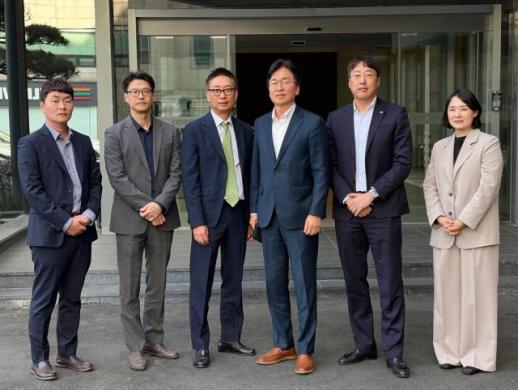 Korea Pharmaceutical and Bio-Pharma Association Names Moon Jong-hoon PR Committee Chair The Public Relations Committee under the Korea Pharmaceutical and Bio-Pharma Association held its regular general meeting on April 22 at the association’s office in Bangbae-dong, Seocho-gu, Seoul, and completed the election of a new chair and the formation of its executive team, the association said April 23. The committee is a consultative body of public relations and external communications professionals from pharmaceutical and biotechnology companies. Moon Jong-hoon, a director at Chong Kun Dang, was elected chair. Park Jae-hyeon, an executive director at Jeil Pharmaceutical, and Yoo Jeong-jae, a head at JW Pharmaceutical, were chosen as vice chairs. The secretariat will be led by Lee Jeong-seok, a director at SillaJen, and Jeon Ha-na, a team leader at Hugel. Jeong Chan-ung, deputy head of the association, will serve as both secretary-general and auditor. The chair and other executive members will serve two-year terms. The meeting also approved the 2025 financial settlement and the 2026 business plan as originally proposed. Moon said he felt a “heavy sense of responsibility” in taking the post at what he called an important turning point for the pharmaceutical and biotechnology industry, and pledged to strengthen communication among member companies and expand information exchanges between the association and the media.* This article has been translated by AI. 2026-04-23 17:48:16
 -
 South Korea to Auction 19 Trillion Won in Treasury Bonds in May; 1.1 Trillion Won FX Stabilization Bonds The Ministry of Economy and Finance said it will issue 19 trillion won in Korean Treasury bonds next month through competitive auctions with primary dealers participating, citing improved market conditions including inflows tied to the World Government Bond Index. The amount is up 1 trillion won from the previous month. The ministry said Thursday the issuance by maturity will be: 3 trillion won in 2-year notes; 3.1 trillion won in 3-year notes; 3.2 trillion won each in 5-year and 10-year notes; 600 billion won in 20-year bonds; 5 trillion won in 30-year bonds; 800 billion won in 50-year bonds; and 100 billion won in inflation-linked Treasury bonds. Primary dealers and the general public may subscribe to a set amount on a noncompetitive basis at the auction’s awarded yield for each maturity. The ministry said it will separately announce whether it will conduct noncompetitive subscriptions through a subscription-based method in May, depending on market conditions. To support liquidity in the Treasury market, the ministry said it plans a 500 billion won switch operation between off-the-run 10-year, 20-year and 30-year issues and the 30-year benchmark issue. To cover temporary funding shortfalls caused by timing mismatches between revenue and spending within the fiscal year, the ministry said it will also issue 10 trillion won of 63-day fiscal securities in May. It said fiscal securities — short-term government debt that must be repaid within the fiscal year — and temporary borrowing from the Bank of Korea are used within a National Assembly-approved ceiling of 40 trillion won. The fiscal securities auctions will be open to 32 institutions, including Monetary Stabilization Bond auction participants, Treasury primary dealers, preliminary primary dealers and government cash management institutions, the ministry said. As of Thursday, the outstanding balance of fiscal securities was 22.5 trillion won, and temporary borrowing from the Bank of Korea stood at 5.3 trillion won, the ministry said. On an average outstanding basis for this year, the figures were 9.9 trillion won and 1.3 trillion won, respectively. The ministry also said it will issue 1.1 trillion won of one-year, won-denominated foreign exchange stabilization bonds in May through competitive auctions, up 300 billion won from the previous month. A total of 31 institutions, including primary dealers, preliminary primary dealers and eligible Monetary Stabilization Bond auction institutions, will participate, it said. * This article has been translated by AI. 2026-04-23 17:39:07
 -
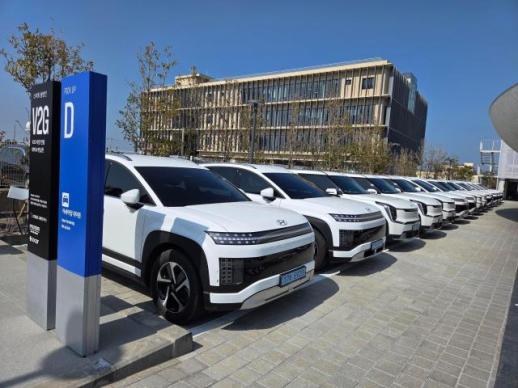 Tariffs and rising costs bite Hyundai despite record quarterly revenue SEOUL, April 23 (AJP) - Despite posting record revenue, Hyundai Motor saw its profitability come under intense pressure as tariffs and rising costs eroded margins. Revenue rose 3.4 percent year on year to 45.9 trillion won, marking the highest first-quarter figure on record. The increase was supported by strong sales of high-margin SUVs and hybrid vehicles, even as global industry demand contracted 7.2 percent. Hybrid vehicles accounted for 17.8 percent of total sales, with the U.S. market reaching a record 24.8 percent. This helped the company expand global market share despite weakening demand. Operating profit, however, fell 30.8 percent to 2.51 trillion won, with the operating margin narrowing to 5.5 percent from 8.2 percent a year earlier. The result came in at the lower end of market expectations, with estimates compiled by FnGuide pointing to operating profit in the range of 2.4 trillion to 2.6 trillion won. A breakdown of earnings drivers showed that tariff-related costs were the single largest drag on profitability, reducing operating profit by 860 billion won. Lower volumes cut earnings by 247 billion won, while a weaker product mix — driven by higher incentive spending — reduced profit by a further 337 billion won. The earnings pressure came despite relatively resilient sales. Wholesale volumes declined to 976,000 units from 1.0 million a year earlier, reflecting weaker industry demand and temporary disruptions, including supply chain issues and geopolitical uncertainty. Cost pressures were also evident in the company's structure, with the cost of sales rising to 82.5 percent of revenue, up 2.7 percentage points from a year earlier, driven largely by higher raw material prices. The automaker said raw material costs - including nickel, lithium and precious metals — added more than 200 billion won in additional expenses in the first quarter and are expected to remain elevated into the second quarter, even as some prices begin to stabilize. It also acknowledged production disruptions following a fire at a key engine valve supplier, though it expects to normalize output from April and recover lost production in the second half through global production adjustments. Regional dynamics also weighed on profitability. Incentive spending remained elevated in Europe amid tightening emissions regulations, while India emerged as a rare bright spot, with record sales and minimal incentive burden. Despite pressure in its core automotive business, Hyundai's financial arm delivered stable earnings growth supported by asset expansion, partially offsetting the decline in vehicle operations. Looking ahead, the company said it is accelerating autonomous driving development through collaboration with Nvidia to secure data and enhance competitiveness. It is also shifting its China strategy toward export-driven growth, with exports already accounting for around 40 percent of local sales. Shares of Hyundai Motor closed at 532,000 won, down 1.7 percent on the day. 2026-04-23 17:38:43
 -
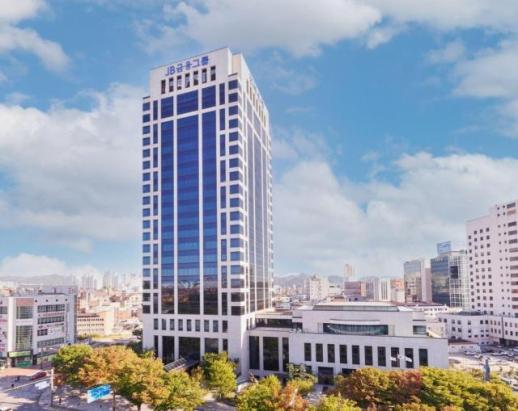 JB Financial Posts Q1 Net Profit of 166.1 Billion Won, Lifted by JB Woori Capital JB Financial Group said in a regulatory filing on the 23rd that it posted first-quarter net profit of 166.1 billion won, up 2.1% from a year earlier. The group reported a return on equity attributable to controlling shareholders of 11.2% and a return on assets of 0.94%. Its preliminary common equity Tier 1 ratio stood at 12.61%, up 0.03 percentage points from the end of last year. By affiliate, JB Woori Capital led results with net profit of 72.7 billion won, a 24.3% increase from a year earlier. Banking units Jeonbuk Bank and Gwangju Bank posted net profit of 39.9 billion won and 61.1 billion won, respectively, weighed down by higher selling, general and administrative expenses tied to special retirement programs and losses from securities valuation. JB Asset Management and JB Investment reported net profit of 1.1 billion won and 3.0 billion won, respectively. The group’s second-tier subsidiary Phnom Penh Commercial Bank in Cambodia posted net profit of 12.4 billion won, up 21%. JB Financial also said its board approved a quarterly cash dividend of 311 won per common share, about double the 160 won paid for the first quarter of last year.* This article has been translated by AI. 2026-04-23 17:36:06
 -
 Chip rally, GDP surprise drive KOSPI to fresh record high SEOUL, April 23 (AJP) - Geopolitical uncertainty failed to derail South Korea’s stock rally, with the KOSPI closing at a fresh all-time high Thursday as strong chip earnings and an upside GDP surprise lifted investor sentiment. The benchmark index closed at 6,475.81, up 0.90 percent, while the KOSDAQ ended at 1,174.31, down 0.58 percent. The Bank of Korea said first-quarter real GDP expanded 1.7 percent from the previous quarter, nearly double its February forecast of 0.9 percent and the fastest growth in five and a half years, supported by stronger-than-expected semiconductor demand. Semiconductor shares extended gains after Samsung Electronics marked a record closing high, gaining 3.22 percent to close at 224,500 won ($151.5). Meanwhile, SK hynix reported record first-quarter earnings, reinforcing expectations for robust AI-driven memory demand, while its shares rose 0.16 percent to 1,225,000 won. However, battery shares retreated after a sharp recent rally driven by expectations that Middle East tensions would strengthen demand for electric vehicles and U.S. energy storage systems. Shares of LG Energy Solution fell 3.72 percent to close at 466,500 won. Samsung SDI, which had gained for six straight sessions, declined 4.40 percent to 630,000 won. Auto shares also weakened. Shares of Hyundai Motor swung between gains and losses before closing lower, down 1.66 percent to 532,000, as investors weighed record revenue against a sharp drop in profitability. The company said on Thursday that its first-quarter consolidated operating profit fell 30.8 percent from a year earlier to 2.51 trillion won, with more than 1 trillion won in profit decline driven by U.S. auto tariffs, higher warranty provisions tied to exchange-rate volatility and weaker global demand amid the Iran war. Revenue, however, rose 3.4 percent year-on-year to a record 45.94 trillion won for a first quarter, supported by strong hybrid vehicle sales and improved performance in its financing business. Its operating margin stood at 5.5 percent. Affiliate Kia also slipped 1.00 percent to 158,400 won. Meanwhile, energy and industrial names outperformed, with Doosan Enerbility jumping 5.78 percent to 122,600 won. The gains came after a memorandum of understanding (MOU) signed during Tuesday’s South Korea-Vietnam summit between Korea Electric Power Corp. and PetroVietnam, Vietnam’s National Oil and Gas Group to explore the feasibility of cooperation in nuclear power development. Samsung C&T also advanced 6.31 percent to close at 320,000 won and HD Hyundai Electric rose 3.58 percent to 1,129,000 won. The KOSDAQ traded lower through much of the session, briefly falling below 1,153 at midday before trimming losses to close down 0.58 percent at 1,174.31, pressured by foreign and institutional selling. Declines were led by battery stocks, with EcoPro falling 4.32 percent to 157,200 won, EcoPro BM sliding 5.73 percent to 205,500 won and biopharma stock Alteogen edging down 0.56 percent to 357,500 won. In the currency market, the Korean won weakened slightly, with the dollar trading at 1,480.30 won, compared with the previous close of 1,476.0 won. Markets elsewhere in Asia closed lower, with Japan’s Nikkei 225 closing at 59,140.23, down 0.75 percent, China’s Shanghai Composite ending at 4,093.25, down 0.32 percent, and Hong Kong’s Hang Seng Index closing down 0.99 percent at 25,904.09. Investor sentiment weakened as renewed military tensions, including reports of air defenses activated in parts of Tehran, fueled concerns over broader conflict escalation, while oil prices surged toward $97 a barrel. 2026-04-23 17:29:23
 -
 South Korea Chicken Market Shifts to bhc Lead as BBQ, Kyochon Battle for No. 2 South Korea’s chicken franchise market is increasingly taking on a “one leader, two challengers” structure centered on bhc. With bhc pulling further ahead on sales, BBQ and Kyochon Chicken are locked in a close fight for second place. As of April 23, industry officials said Dining Brands Group, which operates bhc, posted 614.7 billion won in standalone sales last year, becoming the first in the sector to surpass 600 billion won in annual revenue. Sales rose 19.9% from 512.7 billion won a year earlier, while operating profit increased 23% to 164.5 billion won. The company’s momentum has been driven by successful new menu items. “Quasak King,” launched last year, topped 7 million in cumulative sales in about a year, matching the popularity of its signature “Bburinkle.” “Sweet Chili King” also exceeded 1 million units within three months of launch. bhc also benefited from maintaining a stable supply system for fresh and cut chicken despite external supply uncertainty, supporting franchisee profitability. BBQ, which had long competed with bhc for the top spot, saw growth slow and the gap widen again. In 2024, BBQ narrowed the sales gap to 6.6 billion won and aimed to reclaim No. 1, but last year its sales rose just 4.3% to 527.8 billion won. Operating profit fell 19.4% to 69.0 billion won. The sales gap with bhc expanded to about 86.9 billion won. BBQ said the results reflected upfront spending tied to its 30th anniversary marketing, overseas expansion and logistics infrastructure. BBQ now operates about 700 stores in 57 countries, including the United States, and is focusing on strengthening its competitiveness abroad. Kyochon Chicken, in third place, rebounded and closed in on BBQ. Kyochon F&B posted 517.4 billion won in sales last year, up 7.6% from a year earlier, returning to the 500 billion won range for the first time in three years. Operating profit jumped 126.2% to 34.9 billion won. The sales gap with second-place BBQ narrowed to about 10.4 billion won from 22.4 billion won in 2024. Kyochon attributed the improvement to new products such as Mala Red, growth in subscribers to its app, and stronger demand tied to rising interest in professional sports. Industry watchers said the key storyline this year is likely to be the battle between BBQ and Kyochon for No. 2, rather than a fight for the top spot. Each company is refining its strategy. bhc is maintaining a plan to launch two new products a year, introduced “Soy Garlic King” in March, and is focusing on efficiency by deploying its automated frying robot, “T-bot.” BBQ is emphasizing “execution and results,” pursuing AI-centered management innovation and strengthening its global strategy with the United States, Europe and China as key hubs. Kyochon plans to bolster growth by developing new menu items and expanding new businesses such as sauces and craft beer. An industry official said, “With uncertainties growing at home and abroad — including rising raw material prices and intensifying competition in the delivery market — marketing and new-product competition is likely to become even fiercer.”* This article has been translated by AI. 2026-04-23 17:28:24
 -
 Bank of Korea to Issue Up to 6.6 Trillion Won in Monetary Stabilization Bonds in May The Bank of Korea said on the 23rd it plans to issue up to 6.6 trillion won ($) in Monetary Stabilization Bonds next month. It will sell 6 trillion won through competitive bidding and 500 billion to 600 billion won through subscription-based sales. Competitive auctions will be held seven times: four auctions for 91-day bills (May 4, 11, 18 and 26) and one each for 1-year (May 13), 2-year (May 6) and 3-year (May 20) maturities. The subscription auction is set for May 27. For early redemptions, the central bank will auction 1 trillion won on May 8 and 2 trillion won on May 19.* This article has been translated by AI. 2026-04-23 17:27:15
 -
 Hyundai E&C, DL E&C tout design and financing in Seoul Apgujeong 5 redevelopment bid Hyundai Engineering & Construction and DL E&C, both bidding for the redevelopment of Apgujeong District 5 in Seoul’s Gangnam district, have unveiled their proposed terms. Hyundai E&C is emphasizing a luxury residential complex featuring AI-based services and panoramic river-view design, while DL E&C is pitching a construction cost of 11.39 million won per 3.3 square meters and what it calls the industry’s lowest interest rate. Hyundai E&C said April 23 it proposed the name “Apgujeong Hyundai Galleria” for the complex. The company said the name combines “Apgujeong Hyundai,” long seen as a symbol of top-tier housing, with “Galleria,” a department store it described as a landmark for upscale lifestyle in the area. Hyundai E&C said it will work with Hyundai Motor Group to apply advanced robotics across the site, including demand-responsive transport, or DRT. It said residents would be able to call an unmanned DRT shuttle from their homes as part of a mobility system linking Apgujeong “like a single city.” The proposal also includes nano-mobility support, porter robots and robo-stations for contactless deliveries, parking and EV-charging robots for a smart parking system, and unmanned firefighting robots. On design, Hyundai E&C said it would go beyond 100% Han River views for all units by offering “Zero Wall” wide panoramic views extending up to 240 degrees, and apply a 3-meter coffered ceiling height to enhance openness. It also proposed upscale amenities, including a large community facility called “Club Apgujeong,” described as 12 pyeong per household, and a “The Circle 420” loop-style community space it said would be the first of its kind in Korea. Hyundai E&C said it plans to work with Hanwha so residents can access services through a dedicated membership, including use of VIP lounges at Galleria’s luxury store, shopping benefits and exclusive programs. A Hyundai E&C official said Apgujeong is an area where preference and expectations for “Apgujeong Hyundai” are high beyond Districts 2 and 3, where the existing complex stands. The official said the company will carry forward District 5’s identity while completing “Apgujeong Hanyang” as a new “Apgujeong Hyundai.” DL E&C proposed the name “ACRO Apgujeong,” applying its high-end ACRO brand, and highlighted what it described as more predictable and stable construction and financing terms. It said it made a firm offer of 11.39 million won per 3.3 square meters, more than 1 million won below the estimated construction cost presented by the association, and offered a “zero burden from price increases” solution aimed at insulating the project from inflation spikes. DL E&C said it proposed a “zero added margin” rate for essential project financing, calling it among the lowest rates in recent redevelopment projects. It also set a construction period of 57 months, four months shorter than Apgujeong District 2, to reduce interest costs on members’ relocation loans and project financing, it said. The company also proposed an unusual loan-to-value ratio of 150% for relocation financing, saying it was a response to tighter lending rules and higher borrowing costs that have made relocation funding harder to secure. On profitability, DL E&C proposed “zero” construction costs for commercial facilities and offered to expand retail space to 5,069 pyeong (about 16,730 square meters) from the association’s original plan. It said that would increase commercial sales revenue by 660 million won per household. It also said it would increase usable area per household by 1,535 pyeong (about 5,065 square meters) to maximize members’ asset value. A DL E&C official said the company included multiple fixed terms to minimize members’ burden and risk, calling them conditions rarely seen in other redevelopment projects. The official said DL E&C also concentrated its product design capabilities to deliver Apgujeong District 5 as a high-end residential complex aiming to be the best in South Korea. Apgujeong District 5, a redevelopment of Apgujeong Hanyang Apartments Phases 1 and 2, is being 추진되고 있다 under Seoul’s fast-track integrated planning program. Once completed, it is set to include 1,397 households across eight buildings, from five basement levels to 68 stories above ground. It is the only Apgujeong redevelopment project being contested through competitive bidding. * This article has been translated by AI. 2026-04-23 17:25:04
 -
 Prime Minister Kim Min-seok Visits Yeosu Petrochemical Complex to Review Naphtha Supply Prime Minister Kim Min-seok visited LG Chem’s plant at the Yeosu National Industrial Complex in South Jeolla Province on the 23rd, toured its naphtha cracking center (NCC) and urged steady production and supply of petrochemical products to help stabilize domestic supply chains. After receiving a briefing from LG Chem officials on global naphtha supply and demand, Kim shared concerns about the crisis facing the petrochemical industry, including instability in naphtha supplies linked to the Middle East, and discussed steps to stabilize supply. An LG Chem official said petrochemical products make up about 70% of everyday items people use, adding that the number of products totals about 50,000. The petrochemical industry said it will actively cooperate with government policy by working to expand naphtha imports and by doing its best to ensure smooth supplies of basic feedstocks such as ethylene and propylene, as well as key products including polyethylene (PE) and polypropylene (PP). Kim also instructed the Ministry of Trade, Industry and Energy to make every effort to stabilize naphtha supply by maintaining a close coordination system with petrochemical companies. The government said it will keep its emergency economic response system in place and respond with full force to minimize industrial damage stemming from developments in the Middle East. * This article has been translated by AI. 2026-04-23 17:24:16