

Journalist

Park Sae-jin
-
 Prosecutors seek 15-year prison sentence for ex-interior minister in appeals case SEOUL, April 22 (AJP) - Prosecutors on Wednesday again sought a 15-year prison term for former Interior and Safety Minister Lee Sang-min in his appeals trial over allegations related to disgraced former President Yoon Suk Yeol's martial law debacle in December 2024. Lee was sentenced to seven years in prison in his first trial in February this year. During a hearing at the Seoul High Court, prosecutors said Lee played a key role in carrying out Yoon's botched declaration of martial law by instructing police and fire agencies to cut off power and water to major institutions and news outlets on Yoon's orders with the aim of "completely paralyzing" media critical of the abrupt overnight fiasco. "The case is tantamount to terrorism against democracy," they criticized, adding that insurrection or its attempt is a serious crime that would make heavy punishment unavoidable even if it is merely planned. They argued that the absence of casualties and the fact that the debacle failed should not be grounds for a reduced sentence, and called for strict punishment to prevent a recurrence. They also pointed to his uncooperative behavior in investigations and perjury during hearings, saying these should be considered in sentencing. Prosecutors also suspected that he was aware of Yoon's plan in advance, citing evidence that he had spoken with key officials such as former Prime Minister Han Duck-soo and former Defense Minister Kim Yong-hyun. The appellate court is expected to deliver a sentence sometime next month as it must be concluded within three months of the first trial verdict, meaning the ruling would be made before May 12. 2026-04-22 17:14:27
 -
 Panel urges overhaul of Korea broadcasting development fund to include platforms Calls are growing to overhaul South Korea’s Broadcasting and Communications Development Fund beyond temporary fee reductions, as media consumption shifts toward platform-based services. Speakers said the current system, built largely around traditional broadcasters, needs a redesign to remain sustainable. Lee Sang-geun, a non-standing member of the Broadcast Media and Communications Commission, said at an April 22 seminar at the National Assembly that “the fund can be addressed in the short term through reductions, but it is difficult for that to be a fundamental solution.” He added that a broader reset is needed, “including revisions to the Broadcasting Act.” The fund supports the development of the broadcasting and telecommunications industry and efforts to strengthen public interest programming. Under the Framework Act on the Development of Broadcasting and Communications, it is collected from terrestrial broadcasters, general programming channels and mobile carriers, among others, and is currently structured around legacy broadcasting operators such as cable TV system operators. Lee said the approach of placing the burden mainly on existing operators has clear limits as the overall market shrinks. He said platform operators that do not pay into the fund are expanding their influence, deepening imbalances across the system. That has fueled arguments for expanding the fund’s scope to include new media operators such as over-the-top streaming services. Lee said, however, that the current legal framework makes that difficult and that legal groundwork, including changes to the Broadcasting Act, would need to come first. The commission also signaled support for structural changes. Seong Jae-sik, the planning and coordination officer and head of the finance team in the innovation planning office, said collection rates have been adjusted by sector to reflect crises, but “the overall market has now reached a critical point,” making it time to reexamine the system broadly. As a key task, Seong pointed to integrating currently separate fund notices and unifying the collection framework. “Applying different standards even among similar operators raises fairness issues,” he said, adding that consolidation is needed to set consistent criteria. Still, changes to collection rates are unlikely to move quickly. Seong said that even if reforms are pursued within the year, time is tight. He said the commission plans first to commission research covering the overall collection system, including pay TV and terrestrial broadcasters and general programming program providers. Seong said a central issue is how to fill any funding gap if burdens are reduced. He said imposing the fund on platform operators such as OTT services and portals should be reviewed over the long term. He also said spending may need adjustment, but noted that fund projects are decided through consultations with fiscal authorities, making unilateral changes by the commission difficult. Any spending restructuring, he said, would need to be pursued step by step through interagency talks. Because interests are deeply intertwined, Seong said, reforms require sufficient deliberation. He said the commission will push mid- to long-term changes based on research and discussion. 2026-04-22 17:09:21
 -
 China’s ‘Streetlight Escape Challenge’ Sends Woman to Police for Rescue A woman trying a viral “streetlight escape challenge” in China became stuck around a streetlight pole and had to be rescued by police. Hong Kong’s South China Morning Post reported on April 22 that the woman, identified by her surname Song, lives in Jiangsu province in eastern China. She attempted the challenge while out for a walk after dinner, after seeing it online. The stunt involves sitting with a streetlight pole between the legs, crossing the legs around it, then trying to untangle and free oneself. While it can look easy on video, participants can end up tightly locked in place and unable to get out. Song initially tried it casually, but the more she struggled, the more firmly her legs caught on the pole. Unable to free herself, she called police. Officers who responded calmed her and guided her to adjust her posture, then helped her unwind her legs. She suffered only temporary numbness in her legs and was not seriously injured, the report said. Videos of successful attempts have circulated on mainland Chinese social media, with participants slowly rotating around the pole to find an angle to pull one leg free. Failures, however, have led to commotions involving passersby, family members, food delivery workers and, in some cases, police. Police involved in Song’s rescue warned that the challenge carries hidden safety risks. They said people without sufficient knee flexibility, or who cannot support their body weight, could suffer joint injuries. Prolonged pressure on leg blood vessels can also cause tingling and swelling and, in severe cases, damage to lower-limb tissue. “Just because it’s popular online doesn’t mean you should try it blindly,” police said, urging people to avoid actions that put themselves in danger. The incident sparked debate on Chinese social media. One user wrote that most viral challenges are simply meant to attract attention and questioned why people follow them without thinking. Others said they wanted to try it. Another user said the belief that one can do better than the people in videos appears to encourage such attempts. China has repeatedly seen waves of unusual online challenges. Past trends have included tying ankles with cable ties and trying to escape, climbing into deep buckets, and wrapping the body in multiple layers of winter blankets.* This article has been translated by AI. 2026-04-22 17:06:24
 -
 Vietnamese Media Expert Breaks Down How Korea Built Global Soft Power Through Hallyu As President Lee Jae-myung visited Vietnam, a Vietnamese media expert said South Korea’s soft power is creating a virtuous cycle in which global interest leads to sustained consumption of Korean cultural products. The expert said the Korean Wave is not a passing trend but the result of a strategic alignment among the state, companies and cultural workers. Vietnamese online outlet Vietnamnet on 21 (local time) published an opinion piece by media expert Nguyen Dinh Thanh analyzing how Korea built its soft power and why it has succeeded. “There is no magic wand behind Hallyu,” the piece said, calling it the product of a systematic national strategy. ◆ Reaching the top tier across cultural fields Nguyen wrote that South Korea “today is achieving world-class success in every area of the cultural industry.” He cited the K-pop film <K-pop Demon Hunters> being nominated at the 2026 Academy Awards for best animated feature and best original song, and pointed to works including Parasite, Snowpiercer and Squid Game. He said Korea has become a major film power “in just 30 years.” In music, he wrote, BTS and Blackpink — the girl group with the most YouTube subscribers worldwide — have shown global reach. In webtoons, he said, Naver and Kakao dominate the global digital comics market and serve as a major source of film scripts. In esports, he said Faker of T1 — dubbed the “Michael Jordan of gaming” — helped make Korea a hub for competitive gaming. In literature, he noted Han Kang won the 2024 Nobel Prize in Literature, showing Korea can export culture through books as well as film and pop music. ◆ Twelve factors behind Hallyu’s success The piece listed 12 drivers behind those results: artist training; audience development; training for creators and production staff; changes in thinking and systems for arts education; infrastructure investment; financial investment; systematic cultural promotion; training cultural-industry professionals; investment in supporting industries and logistics; optimized intellectual property management; strong copyright protection; and innovation through digital transformation and the use of AI. It highlighted artist-development programs such as the Korean Academy of Film Arts, run by the Korean Film Council (KOFIC), saying talent training is the first and most essential element of Hallyu’s success. Nguyen concluded that professional workforce development, investment by government and business, stronger institutions, and arts and cultural education together laid the groundwork for Korea’s rise as a “cultural powerhouse.” The piece said Korea’s cultural-industry success stems from building a complete, closed value chain, adding that the experience can inspire discussion, cooperation and exchanges to learn from Korea’s specific approach. It said the view of Hallyu as a national strategy — not merely a cultural phenomenon — is spreading in Southeast Asia’s media circles.* This article has been translated by AI. 2026-04-22 17:03:19
 -
 Experts urge platform accountability as youth social media time limits fall short Calls are growing for national-level rules and technical safeguards to regulate teenagers’ use of social media, with experts warning that simple screen-time limits cannot solve overdependence. At a National Assembly seminar on April 22 titled “Seeking responses to trends in regulating children and adolescents’ social media,” participants debated both the direction and limits of youth-protection policies. Yoon Hye-kyung, a researcher at Korea University’s law school, said childhood and adolescence require a “function of forgetting” that allows young people to learn from mistakes and recover emotionally, but the digital environment can block those opportunities. She said regulation should be phased to match developmental stages rather than imposed as a blanket ban. Yoon cited overseas cases to highlight limits of current approaches. In Australia, she said, measures introduced in the name of protecting youth have drawn criticism for potentially restricting freedom of expression and opportunities for creative activity. She also pointed to risks of personal data leaks during age verification and said tech-savvy teens can often bypass controls, undermining effectiveness. She said legislation in some U.S. states has also faced setbacks. In Ohio, which enacted a parental-consent law for social media controls, the requirement was viewed as an excessive restriction because it could block access to beneficial information as well, violating the principle against overbroad limits. California, which introduced an “age-appropriate design code” requiring child protections at the platform-design stage, also received a ruling finding it unconstitutional, she said. Issues included insufficient proof that protections would work and concerns that age checks could drive the collection of even more personal data. Yoon listed key tasks as introducing tailored, age-based phased regulation; making digital safety education a legal requirement; and building a cooperative governance framework between platforms and the government. “Rather than simply blocking teens from using social media, we need detailed regulatory design, education and a social consultative body,” she said. In a subsequent discussion, speakers also urged stronger platform responsibility. Jin Min-jung, a researcher at the Korea Press Foundation, said smartphones are “teenagers’ life itself,” where friendships, information searches and leisure all take place. “Kids are already skilled at finding ways around restrictions, so simple time limits have clear limits,” she said. Jin said the approach should focus on changing structures that encourage addiction, emphasizing improvements in platform design, including technical measures that limit functions based on age and developmental stage. The Korea Communications Commission’s Broadcasting Media and Communications Committee also voiced agreement with that view. Choi Seon-kyung, director of the committee’s User Policy Division, said the root cause of social media overdependence is “intentional design” by platform operators seeking to increase time spent for profit. She said the committee is closely watching court precedents in California and New Mexico. Choi added that the committee will actively support seven bills currently pending in the National Assembly. 2026-04-22 17:01:02
 -
 Singer Kim Ho-joong’s stake in agency valued at about 5 billion won while he serves prison term Singer Kim Ho-joong, who is serving a prison sentence after being convicted in a drunk hit-and-run case, still holds a sizable equity stake in his affiliated company, according to entertainment industry reports. On 22, industry sources said Kim owns 7.43% of ArtMNC. The stake is estimated to be worth about 5 billion won. Kim’s agency, formerly known as Saenggak Entertainment, changed its name to ArtMNC after the 2024 Kim case and has pursued a diversification strategy beyond its artist-management focus, the reports said. The company has expanded into areas such as health care and media content based on intellectual property. It acquired the diet health supplement brand “Deepte 3 Days” and brought in the K-culture platform company “StudioMNC,” moving toward a broader entertainment group spanning manufacturing, distribution and media. The industry has noted that the company’s value has risen compared with before Kim’s crash, suggesting it has moved beyond “artist risk,” the reports said. Kim was arrested and indicted after a May 2024 crash on a road in Apgujeong-dong, Seoul’s Gangnam district, in which he hit a taxi coming from the opposite direction and fled, according to the reports. He was convicted of charges including dangerous driving causing injury under the Act on the Aggravated Punishment of Specific Crimes and is serving a 2 1/2-year prison term.* This article has been translated by AI. 2026-04-22 17:00:17
 -
 Foreign Money Pours Into Samsung, SK Hynix as Korea Stocks Rally on Semiconductors The Kospi extended its run of record highs for a second straight session, easily clearing the 6,400 level. With uncertainty lingering over whether the war in the Middle East will end, the rally has been clear, but caution has also grown. The gap between the headline index and individual stocks has widened, with gains increasingly concentrated in the market’s two largest semiconductor names, Samsung Electronics and SK Hynix. About 40% of combined buying by institutions and foreign investors has flowed into the two stocks, and the exchange-traded fund market is also being reshaped around semiconductors. Analysts said the concentration could intensify further if a 2x leveraged ETF tied to Samsung Electronics and SK Hynix launches in late May. Semiconductors drive most of Kospi market-cap gains 22일 Korea Exchange data showed that as of April 21, when the Kospi set a record, Samsung Electronics’ market capitalization stood at 1,280.335 trillion won and SK Hynix’s at 872.348 trillion won. Their weights in the Kospi were 24.45% and 16.66%, respectively, putting their combined share above 40%. At the end of last year, their weights were 20.41% and 13.63%, meaning they rose 4.04 percentage points and 3.03 percentage points in a little over four months. From Dec. 30 to April 21, the Kospi’s total market capitalization increased by 1,758 trillion won. Over the same period, Samsung Electronics and SK Hynix together accounted for 967 trillion won of that increase, more than 55%. Nearly 70% of April foreign net buying went to the two chipmakers From April 1 to 21, institutions posted net purchases of 5.68 trillion won in the domestic stock market. Samsung Electronics (1.784 trillion won) and SK Hynix (555 billion won) made up 41% of that total. Foreign investors were even more concentrated. Of their 4.999 trillion won in net buying over the same period, nearly 70% went to Samsung Electronics (2.165 trillion won) and SK Hynix (1.319 trillion won). The strength in large semiconductor stocks has also widened the gap between the Kospi and the Kosdaq. The Kospi’s market capitalization rose 50% from 3,477.8404 trillion won at the end of last year to 5,236.2070 trillion won, while the Kosdaq grew 29% from 505.9260 trillion won to 653.0304 trillion won. As of April 21, Kosdaq’s top company by market value, EcoPro, was valued at 22.2270 trillion won, below the level of the Kospi’s 40th-largest company, SK Innovation, at 22.5690 trillion won. Semiconductor-heavy ETFs gain popularity The semiconductor tilt is also showing up in ETFs. Asset managers have been rolling out products that hold Samsung Electronics and SK Hynix as core positions, stepping up competition in semiconductor-focused ETFs. The “RISE Samsung Electronics SK Hynix Bond Mixed 50 ETF,” listed in February, surpassed 1 trillion won in net assets as of April 20, setting the fastest record among domestic bond-mixed ETFs. Samsung Asset Management, Hana Asset Management and Kiwoom Investment Asset Management have launched similar products. Mirae Asset Management introduced the “TIGER Semiconductor TOP10 Covered Call Active ETF,” which concentrates on semiconductor companies while using a covered-call strategy. Korea Investment Management is running the “ACE AI Semiconductor TOP3+ ETF,” which invests about 75% in three stocks: Samsung Electronics, SK Hynix and Hanmi Semiconductor. Leveraged ETF launch in May could accelerate inflows Market participants expect the concentration to deepen, particularly with a leveraged ETF tied to Samsung Electronics and SK Hynix scheduled for late May. Analysts said leveraged products can amplify inflows and outflows as prices move, potentially reinforcing the large-cap-driven trend. Many in the market expect semiconductor strength to persist, citing improving earnings expectations rather than flows alone. This month, major domestic securities firms raised profit forecasts for the semiconductor sector, projecting continued increases in average selling prices centered on high-bandwidth memory, or HBM. Kim Dong-won, a researcher at KB Securities, said, “Companies’ adoption rate of AI agents will rapidly expand from 5% in 2025 to around 40% by the end of 2026,” adding that “memory is emerging as a key factor that determines overall AI system performance.” A financial investment industry official said, “As long as the AI investment cycle continues, it will be difficult for semiconductor-centered fund flows to reverse easily,” and added, “With the expansion of the ETF market, the concentration in large-cap stocks is being structurally reinforced.” 2026-04-22 16:55:52
 -
 EVs Emerge as Grid Assets as Global Race to Commercialize V2G Accelerates As interest in electric vehicles rises again amid the war involving the United States and Israel and Iran, major countries are moving faster to use EVs as core infrastructure in domestic energy systems, industry officials said. Automakers and other sources said efforts are expanding in South Korea, the United Kingdom, the United States, Japan and the Netherlands to treat EVs as power assets, not just transportation. The push centers on vehicle-to-grid, or V2G, technology, which links EV batteries with the power grid so electricity can flow both ways. V2G can be implemented in EVs equipped for bidirectional charging and discharging, along with power control and communications functions. Under the model, vehicles charge during low-demand periods such as late at night and supply electricity back to the grid during peak demand. The approach can improve supply-demand balancing and energy efficiency, while owners receive incentives such as discounted charging fees and opportunities to earn revenue. V2G is drawing particular attention in places with a high share of renewable power, including parts of Europe and South Korea’s Jeju Island, where solar and wind output can swing sharply by weather and time of day. In those regions, EVs using V2G are seen as a way to improve the economics of renewables and stabilize the grid. ◆ Global V2G race intensifies as countries build access and rules The U.K. is widely viewed as among the most advanced in commercializing V2G services, lowering barriers for EV owners through simplified procedures such as dedicated service offerings. Last year, British energy company Octopus Energy launched what it described as its first commercial V2G package, bundling an EV lease, installation of a V2G charger and an electricity plan. Owners can participate by simply plugging in, without going through separate and complex power-selling transactions. The package also offers incentives tailored to Britain’s high electricity prices, including fully waiving charging fees if the EV remains connected to a V2G charger for a set minimum time, drawing a strong response from local owners. The Netherlands is running what it calls Europe’s first large-scale, city-level V2G demonstration model, the Utrecht Energized project, linking EVs, V2G charging stations and local solar systems. Utrecht, the country’s fourth-largest city, has solar panels on 35% of its buildings, which can lead to frequent daytime overproduction. EVs using V2G store surplus electricity in their batteries and supply it to the grid when needed. The system automatically decides and manages charging and discharging based on real-time supply and demand. In the United States and Japan, where disasters often damage power grids, efforts are also growing to position EVs as key energy infrastructure. California is a leading example, with wildfire, extreme heat and aging infrastructure making blackout risks persistent. The state’s Public Utilities Commission is testing how quickly power can be restored by linking EVs to local grids. Research has also found that if all EVs projected to be on the road by 2035 — about 14 million — were used, they could supply uninterrupted electricity to all households in the region for three days. Japan is likewise promoting EVs as a central element of disaster-response power infrastructure, a need that gained urgency after the 2011 Great East Japan Earthquake caused about 160 trillion won in damage. During the 2024 Noto earthquake in Ishikawa Prefecture, EVs were deployed to provide emergency power to homes as well as evacuation shelters and hospitals. Japan’s government has also included, in its purchase-subsidy evaluation criteria, measures such as signing disaster cooperation agreements with local governments to maximize EV use. ◆ Hyundai Motor Group leads Korea pilot as public-private council launches In South Korea, moves to commercialize V2G using EVs are gaining momentum. Hyundai Motor Group stands out, running pilot services to build a V2G ecosystem and verify technology based on dedicated EV models and bidirectional charging. Since December, Hyundai Motor Group has been testing 55 EVs, including the Ioniq 9 and EV9, on Jeju Island to verify the stability of links between charging infrastructure and the power grid. With a high share of renewable generation such as solar and wind, Jeju is seen as well suited for V2G, including storing and supplying surplus electricity using EV batteries. Work is also underway to prepare rules for commercialization. A V2G public-private consultative body launched under the Ministry of Climate, Energy and Environment brings together central and local governments, power-sector institutions, automotive and ICT companies, and academia. The group is discussing a mid- to long-term roadmap covering electricity pricing plans, settlement and compensation methods, legal revisions and technical standards. Under current rules, EVs are not clearly defined as participants in the power market or as “distributed energy resources,” leaving limited legal basis to formally recognize electricity supplied to the grid. Standards also remain to be set on who can participate in power transactions and how compensation for supplied electricity should be calculated. Last month, Climate Minister Kim Sung-hwan cited “expanding V2G” as one of seven innovation projects at a presidential town hall meeting on Jeju. He described energy storage systems, including EV batteries, as a key energy source to complement renewables and pledged bold and swift change. An industry official said Korea needs to speed up detailed institutional design alongside pilot services for V2G commercialization to gain traction. The official added that commercialization could accelerate the shift to EVs and help expand strategic energy assets at the national level. * This article has been translated by AI. 2026-04-22 16:54:43
 -
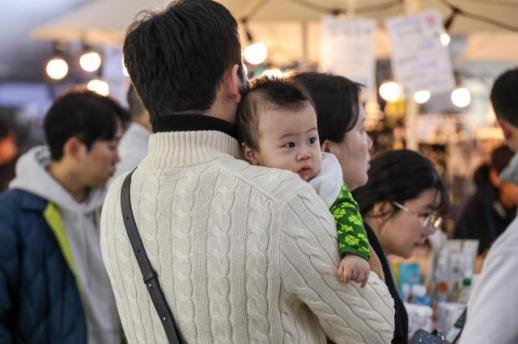 Korea's birth rate crawls near 1 in February on record births in the month SEOUL, April 22 (AJP) -South Korea's fertility rate edged closer to the 1.0 threshold in February as births grew at a record pace, lifting the monthly tally to its highest level in seven years. According to the Ministry of Data and Statistics Wednesday, the number of births reached 22,898 in February, up 2,747, or 13.6 percent, from a year earlier — marking the highest February figure in seven years since 2019. The increase was the third-largest on record in absolute terms for February and the fastest growth rate since data collection began in 1981. The data extend a sustained recovery trend, with births rising for 20 consecutive months since July 2024. The total fertility rate — the average number of children a woman is expected to have over her lifetime — rose to 0.93 in February, up 0.10 from a year earlier. Adjusted for February’s shorter calendar, officials said the figure represents a relatively strong reading. A breakdown by age shows the rebound was led decisively by women in their 30s, the core childbearing cohort. The birth rate for women aged 30–34 climbed to 86.1 per 1,000, up 9.1 from a year earlier, while that for those aged 35–39 rose to 61.5, up 9.2 — the largest gains across age groups. Among younger cohorts, the rate for women aged 25–29 edged up 1.6 to 23.9, while births among those aged 40 and above rose modestly by 0.7 to 5.1. The rate for women aged 24 and under, however, slipped 0.2 to 2.2. By birth order, first-born children accounted for 63.0 percent of total births, up 1.2 percentage points from a year earlier, while the shares of second-born and third-or-higher երեխան declined by 0.5 and 0.6 percentage points, respectively. Despite the rise in births, South Korea’s population continued to shrink, as deaths outpaced births. The number of deaths stood at 29,172 in February, down 3.5 percent on-year, partly due to milder and drier weather conditions compared to last year. Still, the country recorded a natural population decline of 6,275 during the month. Marriage figures — a leading indicator of future births — showed a temporary pullback. The number of marriages fell 4.2 percent on-year to 18,557 in February, snapping a 22-month streak of increases since April 2024. Officials attributed the decline largely to fewer working days due to the Lunar New Year holiday, noting that on a comparable basis, marriages would have likely increased. Divorces also declined sharply, falling 15.6 percent on-year to 6,197 — the lowest February figure since 1997. Authorities cited both a longer-term downtrend and fewer administrative working days during the holiday period. The latest data follow a strong start to the year. In January, births rose 11.7 percent on-year to 26,916, pushing the monthly fertility rate to 0.99 — its highest level since monthly tracking began in 2024. The recent gains are partly attributed to demographic effects, including the so-called “second echo boom,” as those born in the early 1990s enter peak marriage and childbearing years, as well as a backlog of delayed marriages following the COVID-19 pandemic. 2026-04-22 16:51:04
 -
 Jeonbuk Gov. Kim Kwan-young Wishes Rep. Ahn Ho-young Recovery After Hunger Strike Hospitalization Jeonbuk Gov. Kim Kwan-young on Tuesday wished Rep. Ahn Ho-young a speedy recovery after Ahn was rushed to a hospital with hypoglycemic shock following a hunger strike that began after the Democratic Party’s primary for Jeonbuk governor. Ahn has demanded a renewed inspection, saying oversight was not properly conducted into allegations involving candidate Lee Won-taek and claims that his meal expenses were paid by others. In a Facebook post, Kim wrote that Ahn looked so gaunt he could barely stand, adding, “Tears blurred my vision.” Kim said the question Ahn raised “is not a personal matter,” but a plea about whether “fairness and justice are alive in Jeonbuk politics,” and an appeal that “the will of residents, not a script from the center,” should come first. “Rep. Ahn’s lonely struggle will not be in vain,” Kim wrote, adding, “Jeonbuk’s future will ultimately be decided by the people of Jeonbuk.” Kim also said Ahn’s life and health were the priority, urging him to end the protest and take care of himself. He said he hoped to shake hands with Ahn again and pledged to carry out his responsibilities in provincial administration. Kim also appeared Tuesday morning at an emergency news conference at the National Assembly held by Democratic Party Supreme Council members Lee Eon-ju and Kang Deuk-gu. Kim, who was expelled from the party over allegations involving the distribution of cash-filled envelopes, said he supports Ahn’s call for a renewed inspection into Lee. * This article has been translated by AI. 2026-04-22 16:50:37