
Journalist

Park Yong-jun
-
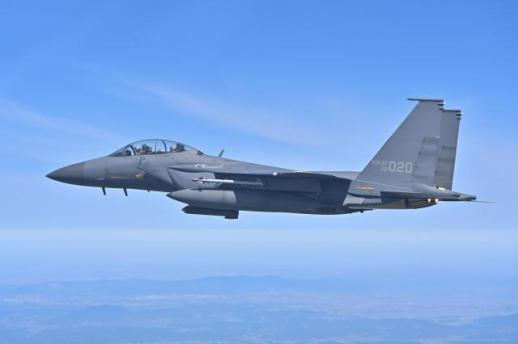 K-chip and defense boom reshapes career paths for Korea's elite talent pipeline SEOUL, May 28 (AJP) - Over the past year, South Korea's manufacturing powerhouses — semiconductors and defense — have staged an epic rise with soaring share prices and record earnings reshaping the ambitions of the country's brightest young people. Semiconductor departments at Yonsei University and Korea University, once considered niche engineering tracks, are now competing directly with medical schools for top science students. The Air Force, meanwhile, has become one of the country's most sought-after military branches as recruits look to gain experience tied to careers in aerospace and defense. Jongro Academy, one of South Korea's largest cram schools focused on top-tier university admissions, reports that admission cutoffs for semiconductor contract departments tied to Samsung Electronics and SK hynix climbed into the top 1 percent range this year. Korea University's semiconductor engineering department recorded a 1.47 cutoff in its academic excellence admissions track for 2026, a sharp improvement from 2.40 in 2021. Some admissions analysts say the programs are now competitive with lower-tier medical schools and could even surpass certain engineering departments at Seoul National University this year. Lim Sung-ho, head of Jongro Academy, said the admissions market is undergoing a historic transformation. "Regional medical schools and semiconductor contract departments at Yonsei and Korea universities have become equivalent choices," Lim said. "I have never seen anything like this in my 30 years working in this field." The trend has become so widespread that South Koreans have coined a new admissions term, "uichihan-yaksu-ban," adding semiconductor departments to the traditional elite grouping of medical, dental, veterinary and pharmacy schools. Hefty salaries, generous stock incentives and surging share prices have broken the long-held dominance of medical schools over the country's top students. The momentum followed a stellar first quarter that reinforced expectations of a memory-chip bonanza during the AI transition. In the first quarter of 2026, Samsung Electronics posted record revenue of 133.9 trillion won and operating profit of 57.2 trillion won, while SK hynix reported revenue of 52.6 trillion won and operating profit of 37.6 trillion won. Their stock prices have surged four- to fivefold in less than a year. Samsung Electronics shares have risen from roughly 80,000 won to 307,000 won over the past year, while SK hynix has jumped from about 230,000 won to 2.24 million won. SK hynix joined the exclusive $1 trillion valuation club this week, following Samsung Electronics. Samsung's semiconductor staff are set to receive bonuses of up to 626 million won this year, while SK hynix employees received profit-sharing bonuses worth up to 2,964 percent of annual base salary — pushing some payouts above 300 million won, roughly the median annual income of ordinary Korean salaried workers. The scale of the payouts has become a national talking point, with some workers reportedly abandoning overseas MBA and training programs in order to remain eligible for bonuses. The long-neglected defense sector is also drawing top talent. The Air Force is attracting unprecedented numbers of applicants as young men increasingly link military service to future careers in the defense and aerospace industries. Data submitted by the Military Manpower Administration to Democratic Party lawmaker Park Sun-won showed that 80,968 people applied this year for 18,000 Air Force enlisted positions, producing a competition rate of 449.8 percent. The March intake reached 936.4 percent, with nearly 15,000 applicants competing for 1,600 positions — the highest monthly figure in at least five years. February's competition rate stood at 891.9 percent, while April reached 849.6 percent. Applications have climbed rapidly in recent years. Total Air Force applicants rose from 46,313 in 2022 to 55,591 in 2023 and 92,664 in 2024. The overall competition rate increased from 257.3 percent in 2022 to 496.5 percent in 2024, before easing slightly this year. The Air Force, once avoided because its mandatory service period is longer than the Army's, is increasingly viewed as a gateway into aerospace engineering, aircraft maintenance, communications systems, software and drone technology. The turning point coincides with the dramatic rise of the defense segment amid sprawling wars in Ukraine and the Middle East. Defense exports hit a record $17.3 billion in 2022 after overseas contracts involving the K2 tank, K9 self-propelled howitzer, FA-50 light attack aircraft and Chunmoo rocket launcher. The boom accelerated after the United Arab Emirates signed a deal for the Cheongung-II missile defense system in 2021, followed by Poland's massive orders for Korean weapons systems in 2022. Companies including Hanwha Aerospace, Korea Aerospace Industries, LIG Nex1 and Hanwha Systems are expanding recruitment in aerospace, radar, satellites, electronic warfare and software engineering. The enthusiasm for semiconductors and defense also reflects broader anxieties among Korean youth over slowing social mobility and weakening job security outside a handful of strategic industries. Artificial intelligence is beginning to reshape hiring in accounting, law and office administration, while semiconductors and defense are increasingly viewed as rare sectors still offering rising wages, export growth and long-term industrial investment. 2026-05-28 10:22:15
 -
 Gmarket to End Homeplus Same-Day Delivery Service Gmarket, an e-commerce platform under the Shinsegae Group, will discontinue its same-day delivery service for Homeplus. This decision comes as Homeplus undergoes corporate restructuring amid ongoing financial difficulties and the suspension of operations at some of its stores. According to the retail industry on May 27, Gmarket plans to end the Homeplus same-day delivery service on June 30. Gmarket launched the 'Homeplus Same-Day Delivery Specialty Section' in July 2015, allowing customers to receive orders placed by 4 p.m. on the same day. The service offered fresh produce, meat, and household items based on Homeplus's nationwide store network. Gmarket partnered with Homeplus to meet the demand for fresh food among online shoppers, leveraging the supermarket's logistics network for quick deliveries.However, since Homeplus filed for corporate rehabilitation in March 2022 to initiate proactive restructuring, the service has faced disruptions. In September and October of last year, same-day delivery was suspended at several locations, including Gayang, Siheung, and Jeonju Wansan.Recently, there was some hope for improvement when Homeplus sold its supermarket division, Homeplus Express, to NS Shopping, a subsidiary of Harim Group. However, financial challenges remain significant. Homeplus is expected to receive approximately 120 billion won from the sale by the end of next month, but reports indicate difficulties in paying employee salaries and normalizing supply deliveries.Currently, Homeplus has temporarily suspended operations at 37 of its 104 hypermarket locations until July 3. This reduction in store operations is likely to weaken the foundation for online same-day delivery services.As uncertainty grows regarding Homeplus's operational status, industry insiders believe Gmarket's decision to end the service reflects this instability. One industry source stated, "Given that Homeplus has suspended operations at 37 stores for nearly two months, Gmarket likely determined it could not maintain the same-day delivery service as before."A Gmarket representative noted, "We plan to introduce various delivery services in the future to provide a better online shopping experience."Meanwhile, the deadline for the approval of Homeplus's rehabilitation plan is set for July 3. If a buyer is not found by then, the possibility of liquidation cannot be ruled out.* This article has been translated by AI. 2026-05-28 10:22:03
 -
Gmarket to End Homeplus Same-Day Delivery Service Gmarket, an e-commerce platform under the Shinsegae Group, will discontinue its same-day delivery service for Homeplus. This decision comes as Homeplus undergoes corporate restructuring amid ongoing store closures and financial difficulties, leading to the end of the Homeplus dedicated section that has operated for nearly a decade.According to the retail industry on the 27th, Gmarket plans to terminate the Homeplus same-day delivery service effective June 30. Gmarket launched the 'Homeplus Same-Day Delivery Specialty Section' in July 2015, allowing customers to receive orders placed by 4 p.m. the same day. The service has offered fresh produce, meats, and household items based on Homeplus's nationwide store network. Gmarket partnered with Homeplus to meet the demand for fresh food among online shoppers, utilizing the supermarket's logistics infrastructure for quick delivery.However, the service has faced disruptions since Homeplus filed for corporate rehabilitation in March of last year to initiate proactive restructuring. In September and October of last year, same-day delivery services were suspended at several locations, including Gayang, Siheung, and Jeonju Wansan.Recently, there were hopes for a turnaround after Homeplus sold its supermarket division, Homeplus Express, to NS Shopping, a subsidiary of Harim Group. However, the financial challenges remain significant. Homeplus is expected to receive approximately 120 billion won from the sale by the end of next month, but reports indicate difficulties in paying employee salaries and normalizing supply deliveries.Notably, Homeplus has temporarily suspended operations at 37 of its 104 hypermarket locations until July 3. This reduction in store operations is likely to weaken the foundation for online same-day delivery services.As uncertainty looms over Homeplus's ability to resume normal operations, industry insiders believe Gmarket's decision to end the service reflects this reality. One industry source stated, "Given that Homeplus has suspended operations at 37 stores for nearly two months, Gmarket likely determined it was unsustainable to maintain the same-day delivery service as before."A Gmarket representative commented, "We plan to introduce various delivery services in the future to enhance the online shopping experience."Meanwhile, the deadline for Homeplus's rehabilitation plan approval is set for July 3. If a buyer is not found by then, liquidation remains a possibility.* This article has been translated by AI. 2026-05-28 10:21:52
-
Gmarket to End Homeplus Same-Day Delivery Service Gmarket, an e-commerce platform under the Shinsegae Group, will discontinue its same-day delivery service for Homeplus. This decision comes as Homeplus undergoes corporate rehabilitation amid ongoing store closures and financial difficulties, leading to the termination of the Homeplus dedicated section that has been in operation for nearly a decade.According to the retail industry on the 27th, Gmarket plans to end the Homeplus same-day delivery service on June 30. Gmarket launched the 'Homeplus Same-Day Delivery Specialty Section' in July 2015, allowing customers to receive orders placed by 4 p.m. the same day. The service offered fresh produce, meat, seasonal fruits, vegetables, and household goods based on Homeplus's nationwide store network. At that time, Gmarket partnered with Homeplus to meet the demand for fresh products among online shoppers, utilizing the large supermarket's logistics network for quick delivery.However, the service has faced disruptions since Homeplus filed for corporate rehabilitation in March of last year to initiate proactive restructuring. In September and October of last year, same-day delivery services were suspended at some locations, including Gayang, Siheung, and Jeonju Wansan.Recently, there were hopes for a turnaround as Homeplus sold its supermarket division, Homeplus Express, to NS Shopping, a subsidiary of Harim Group. However, the financial challenges remain significant. Homeplus is expected to receive approximately 120 billion won from the sale of Express by the end of next month, but reports indicate difficulties in paying employee salaries and normalizing supply deliveries.Notably, Homeplus has temporarily suspended operations at 37 of its 104 large supermarket locations until July 3. This reduction in store operations is likely to weaken the foundation for online same-day delivery services.As uncertainty looms over Homeplus's ability to resume normal operations, industry insiders believe Gmarket's decision to end the service reflects this reality. One industry source stated, "Given that Homeplus has suspended operations at 37 stores for nearly two months, Gmarket likely determined it was difficult to maintain the same-day delivery service as before."A Gmarket representative commented, "We plan to introduce various delivery services in the future to provide a better online shopping experience."Meanwhile, the deadline for the approval of Homeplus's rehabilitation plan is set for July 3. If a buyer is not found by then, the possibility of liquidation cannot be ruled out.* This article has been translated by AI. 2026-05-28 10:21:30
-
 Russian Military Deaths Approach 500,000 as UK Intelligence Warns of Battlefield Losses According to a recent assessment by UK intelligence, the number of Russian military personnel killed since the start of the Ukraine war is nearing 500,000. This comes as warnings emerge about Russia's increasing cyber attacks and threats to infrastructure targeting the UK and Europe. On May 27, Anne Keast-Butler, head of the Government Communications Headquarters (GCHQ), stated during her first annual threat assessment speech at Bletchley Park that new intelligence indicates nearly 500,000 Russian soldiers have died since the war began. She noted, "This figure suggests that President Putin is losing on the battlefield." Previously released figures often combined deaths and injuries, but this announcement specifically highlights the death toll, providing a clearer picture of troop losses. GCHQ believes the threat from the war extends beyond the battlefield. Keast-Butler remarked, "Russia continues to target the UK's critical infrastructure, democratic processes, supply chains, and public trust." Key areas of concern include undersea cables and energy pipelines in waters surrounding the UK. She emphasized that protecting these vital cables and pipelines, through which data and energy flow, is a primary task for GCHQ, which is responding in ways that reveal Russia's intentions and underwater operational capabilities. Cyber attacks and attempts to smuggle Western technology are also significant areas of focus. Keast-Butler stated, "GCHQ is working to thwart Russia's attempts at technology smuggling and cyber attacks, while also countering reckless sabotage and assassination attempts." She noted that it is rare for heads of intelligence agencies to speak publicly and emphasized that the UK is at a critical juncture. "The risk of miscalculation is higher than I have ever seen," she warned. 2026-05-28 10:21:00
 -
 Beware of 'Group Accounts' Used in Rental Fraud The Financial Supervisory Service (FSS) has issued a consumer alert after reports of fraudulent activities involving so-called 'group accounts' that appear to be personal accounts. These accounts are being misused for rental fraud and voice phishing schemes. On May 28, the FSS announced it has issued a 'caution' alert to prevent further victimization from these deceptive group accounts that impersonate individual names. A 'group account' is created using a name that resembles a personal name, allowing individuals to open accounts under the guise of a group. For instance, a group name like 'Residents' Association for Road Expansion in Hong-eun-dong' could be shortened to 'Hong Gil-dong.' Financial institutions are required to open accounts under the real name of individuals or the official name issued by the tax office for groups. The issue arises because these group accounts can easily be mistaken for personal accounts. If a transaction partner sees that the name on the contract matches the account holder's name, they may transfer money without suspicion, not realizing the recipient is a group rather than an individual. In one case, a real estate agent created a group account in the name of a landlord to misappropriate security deposits from tenants. According to the FSS, the agent, identified as A, misled landlord B into believing a rental contract was signed while receiving approximately 800 million won in security deposits through a group account named after B. The FSS believes that financial crimes exploiting these group accounts cannot be easily avoided through standard consumer precautions alone. As a result, it plans to improve account management practices among financial institutions. They will be instructed to exercise particular caution when a group name that could be mistaken for an individual's name is used to apply for an account. Additionally, the financial sector will implement a policy to append the term '(Group)' next to the group name when issuing accounts. Consequently, account names will appear as 'Hong Gil-dong (Group)' instead of just 'Hong Gil-dong.' This change is expected to be rolled out by banks in June. The FSS particularly urges caution when transferring large sums, such as security deposits, noting that if the account name includes '(Group)' next to what appears to be an individual's name, it indicates that the account belongs to a group, not an individual. 2026-05-28 10:16:51
 -
 KOSPI flattens as foreign selling and narrow breadth test record run SEOUL, May 28 (AJP) - South Korea's benchmark KOSPI traded little changed on Thursday morning after hitting a record high the previous day, as foreign investors turned net sellers and the artificial intelligence (AI)-driven rally broadened beyond the country's two chip giants that had carried the market into batteries, displays and components. About an hour after trading began, the index stood at 8,220.63, down 0.1 percent, after briefly slipping toward 8,080 before recovering from a weaker start. The junior KOSDAQ fell more sharply, down 1.77 percent at 1,113.06. Foreign investors sold a net 1.62 trillion won of KOSPI shares, against net buying of 1.23 trillion won by individuals and 357 billion won by institutions — a pattern that has marked the rally's recent sessions, with overseas money repeatedly taking profit even as the index has reached fresh highs. The narrowness that had concerned analysts deepened. Advancing issues numbered 200 against 669 declines on the main board, an even thinner breadth than the previous session — when fewer than a hundred names had risen alongside a record close. With Samsung Electronics easing to 311,500 won and SK Hynix gaining only modestly, the heavyweights that powered Wednesday's rally were no longer leading; instead, money flowed into the next ring of AI beneficiaries. Batteries and battery materials were the standout. LG Energy Solution surged nearly 11 percent to 424,000 won, with the secondary-battery production theme up 5.61 percent overall. Samsung SDI rose 6.35 percent. The move came alongside renewed strength in display and component shares, with LG Display advancing 5.73 percent and the multilayer ceramic capacitor segment up 5.18 percent — sectors that had paused on Wednesday as flows concentrated into newly listed leveraged exchange-traded funds tracking Samsung Electronics and SK Hynix individually. Those same single-stock ETFs reversed lower on Thursday, a sign that the speculative concentration in the two chipmakers had begun to unwind. Hyundai Motor rose to 693,000 won, while Samsung Electro-Mechanics climbed to 1,673,000 won, reinforcing the rotation toward names with operating exposure to AI infrastructure rather than direct memory leverage. The currency market told a similar story. The won slightly weakened to 1,504 against the dollar from the previous session's close, a sign that foreign investors remain cautious even as domestic investors continue to push stocks higher during the market's record-setting run. Asian markets that had rallied alongside Seoul earlier in the week also paused. Japan's Nikkei 225 fell 0.68 percent to 64,515.29, while Hong Kong's Hang Seng H-shares declined 1.33 percent and China's Shanghai Composite slipped 1.25 percent. The retreat came despite a firm overnight session in New York, where the Dow Jones Industrial Average and the Nasdaq Composite both closed at fresh highs — a divergence indicating that the Asia chip trade, not global risk sentiment, was where the fatigue lay. For now, the question is whether the rotation into the broader AI value chain marks a healthy broadening of a rally that had grown dangerously concentrated, or the first stage of a profit-taking phase in which foreign sellers set the direction even as the index level holds. The breadth, the flows and the won each suggest the second reading remains the more honest one. 2026-05-28 10:15:42
 -
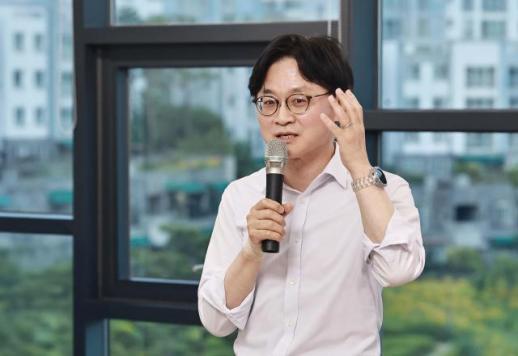 Minister Kim Jung-kwan: Export Potential Exceeds $900 Billion, Achieving 'Top 5' Exporter Status Possible Kim Jung-kwan, the Minister of Trade, Industry and Energy, expressed cautious optimism regarding this year's export outlook, stating, "There is a possibility that we could exceed $900 billion." During a press briefing on May 27 in Sejong, he noted that while semiconductor exports have surged by over 130%, overall exports have still increased by about 15% even when excluding this sector. He believes this positions South Korea favorably to achieve its goal of becoming one of the world's top five exporters. Earlier this year, the government set an annual export target of $740 billion, which is a 4.3% increase from last year's record export figure of $709.3 billion. However, a recent report from the Korea Institute for Industrial Economics and Trade projected that due to rising global demand for artificial intelligence (AI), this year's exports could reach $924.4 billion. Minister Kim highlighted that while exports are often dominated by large corporations, small and medium-sized enterprises (SMEs) have also seen a 10% increase in exports, which he described as very encouraging. He emphasized that there are many markets where SMEs can successfully penetrate with their consumer goods. He added, "We are looking at markets in China and India, and we will adopt the mindset that 'the world is vast and there are many places to export.' I hope for a strong second half of the year." Regarding the submarine bidding competition with Germany for a contract with Canada, he maintained a cautious stance, stating, "We have the tangible Jangbogo-class submarines, while Germany is still in the design phase. Our submarine's price and specifications are ahead of Germany's, and we have a collaborative industrial cooperation package prepared by Hyundai Motor and Hanwha." He acknowledged some concerns, noting, "Canada is a NATO member and an old friend, which brings some uncertainties. I have heard that there are discussions about splitting the construction of 12 submarines equally between South Korea and Germany. However, I would like to align our efforts with the historical context of Admiral Yi Sun-sin's 12 ships." On the recent wage agreement reached between Samsung Electronics and its labor union, he remarked, "I feel this opportunity could be a double-edged sword for Samsung Electronics. I hope the internal stakeholders can make this a stepping stone for future success." Minister Kim refrained from commenting on nuclear power exports and the first U.S. investment project, stating, "We are in contact with several countries regarding nuclear power, but it is still in progress, so it feels premature to discuss it. As for the U.S. investment project, discussions are moving in a constructive direction, but it is difficult to set a timeline as we are analyzing commercial viability." Regarding the manufacturing AI transition initiative (M.AX), which he has prioritized since taking office, he stated, "We have established a 'Best 11' framework based on 11 sectors, including process areas, manufactured goods, and industrial complexes. However, currently, our main focus is on semiconductors, and we aim to develop two or three key players in the second half of the year." He also mentioned his recent visit to Seongshim Bakery, saying, "We need to see more examples like Seongshim Bakery utilizing M.AX. The data generated should expand from points to lines and surfaces. While government support is necessary for the spread of AI factories, voluntary corporate engagement is also essential. Even if it's not a massive model, we can enhance competitiveness in the manufacturing sector." Addressing concerns about potential labor market disruptions due to M.AX, he noted, "We are approaching a situation where demographic changes are preventing us from passing the baton to the next generation. It is crucial to maintain competitiveness without replacing people. The government needs to provide retraining opportunities for the youth so they can transition to different roles."* This article has been translated by AI. 2026-05-28 10:15:00
 -
 LG Display Begins Mass Production of 240Hz RGB Stripe OLED Panels LG Display has officially begun mass production of organic light-emitting diode (OLED) panels optimized for both gaming and office use, aiming to lead the trend of OLED adoption in the monitor market.On May 28, LG Display announced it has successfully commercialized the world's first 240Hz RGB stripe OLED panel.The RGB stripe OLED features a structure where red, green, and blue (RGB) subpixels are arranged in a line, allowing for clearer representation of small text and numbers compared to previous models. This design reduces eye strain during prolonged screen use, enhancing comfort for tasks such as document editing, stock trading, coding, and content creation.The significance of this mass production lies in OLED's expanding influence in the premium monitor market. With the recent rise in AI PC adoption and an increase in multitasking and high-resolution work, there is a rapidly growing demand for next-generation displays that provide both sharp text representation and immersive image quality.LG Display's 240Hz RGB stripe OLED panel achieves a high resolution of 160 PPI and a refresh rate of 240Hz. PPI, or pixels per inch, indicates the number of pixels within one inch of the screen; a higher number means denser pixels, resulting in more detailed text and images. This panel is designed to meet the needs of users for work, entertainment, and high-performance gaming all in one monitor.This panel is the first to implement a high-density pixel structure of 160 PPI within an RGB stripe configuration, optimized for viewing high-quality content.LG Display plans to start mass production of 27-inch panels, which are in high demand in the market, in collaboration with major global monitor brands, and will expand its lineup in the future. This strategy aims to reaffirm its competitive edge in OLED technology while accelerating the transition to OLED in the high-end monitor market, which has traditionally been dominated by premium liquid crystal displays (LCDs).Lee Hyun-woo, head of LG Display's large display division, stated, "The world’s first commercialization of the 240Hz RGB stripe OLED proves the strength of OLED technology. As a technology-driven company, we will accelerate the expansion of OLED in the monitor market based on our technological leadership and business competitiveness, leading the premium market."* This article has been translated by AI. 2026-05-28 10:12:00
 -
 LG Electronics Launches Ultra-Low Power 'LG e-Paper' Display to Expand Commercial Market LG Electronics is accelerating its entry into the commercial display market with the introduction of its energy-efficient 'LG e-Paper Display.' The company announced on May 28 that it will begin launching the LG e-Paper Display in South Korea next month, followed by a rollout in European and other international markets. This product mimics the texture of paper posters while allowing for prolonged image retention. It boasts enhanced energy efficiency and installation convenience compared to traditional digital signage. The display utilizes electronic ink panel technology, which moves and fixes charged micro-color particles using an electric field to create images. Once an image is displayed, it can be maintained without additional power supply. The power consumption when changing images is significantly lower than that of existing digital signage, making it ideal for commercial spaces that require long-term content display, such as menu boards, price tags, and promotional signs. The product features a 32-inch size with QHD (2560×1440) resolution and a 16:9 aspect ratio. It employs a reflective display that utilizes ambient light, providing a wide viewing angle and reducing eye strain. To enhance color reproduction, the company has implemented its own image quality improvement algorithm, addressing the limitations of electronic ink-based products and delivering more natural and vivid colors. Battery performance has also been improved. The new model includes a 72Wh high-capacity battery and an ultra-low power system-on-chip (SoC), enabling extended operation. It can be fully charged in about three hours using the included charger after power is turned off. The design allows for a magnetic auxiliary battery to be attached to the back, and it supports wireless charging to enhance usability based on installation environments. Additionally, the display features a 'power management' function that automatically controls power based on user-defined content transition schedules, ensuring the display is powered on only when needed. This reduces unnecessary power consumption and extends battery life, easing management burdens for corporate clients operating multiple displays. The LG e-Paper Display can also integrate with LG's commercial display operation solution, 'LG SuperSign CMS.' This allows users to remotely monitor product status via a web browser, easily change settings or content, and manage multiple e-Paper displays simultaneously or by schedule. Content operation is also supported through USB storage devices or the client's own CMS server. The design emphasizes competitiveness, featuring a paper-thin appearance achieved by removing the backlight, with an overall thickness of 17.8 mm and a minimum thickness of 8.6 mm. Weighing just 3.1 kg, it can be installed relatively easily in various spaces, such as walls or store interiors. This design excellence was recognized with an award at the 'Red Dot Design Award 2026.' Min Dong-seon, head of LG Electronics' MS Business Division ID Business Unit, stated, "The LG e-Paper Display, with its ultra-lightweight, ultra-slim design and groundbreaking ultra-low power technology, will provide new options for B2B customers."* This article has been translated by AI. 2026-05-28 10:06:43