

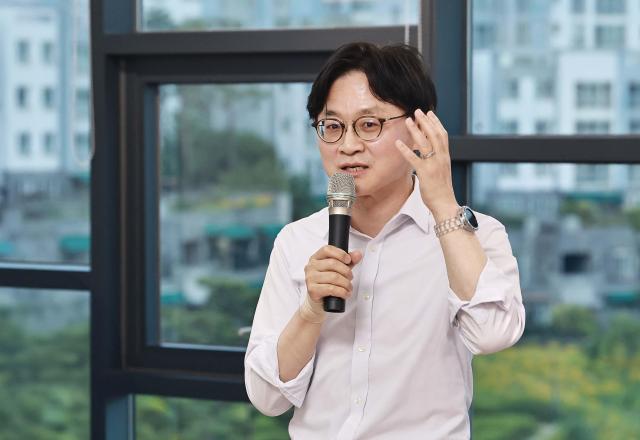
During a press briefing on May 27 in Sejong, he noted that while semiconductor exports have surged by over 130%, overall exports have still increased by about 15% even when excluding this sector. He believes this positions South Korea favorably to achieve its goal of becoming one of the world's top five exporters.
Earlier this year, the government set an annual export target of $740 billion, which is a 4.3% increase from last year's record export figure of $709.3 billion. However, a recent report from the Korea Institute for Industrial Economics and Trade projected that due to rising global demand for artificial intelligence (AI), this year's exports could reach $924.4 billion.
Minister Kim highlighted that while exports are often dominated by large corporations, small and medium-sized enterprises (SMEs) have also seen a 10% increase in exports, which he described as very encouraging. He emphasized that there are many markets where SMEs can successfully penetrate with their consumer goods.
He added, "We are looking at markets in China and India, and we will adopt the mindset that 'the world is vast and there are many places to export.' I hope for a strong second half of the year."
Regarding the submarine bidding competition with Germany for a contract with Canada, he maintained a cautious stance, stating, "We have the tangible Jangbogo-class submarines, while Germany is still in the design phase. Our submarine's price and specifications are ahead of Germany's, and we have a collaborative industrial cooperation package prepared by Hyundai Motor and Hanwha."
He acknowledged some concerns, noting, "Canada is a NATO member and an old friend, which brings some uncertainties. I have heard that there are discussions about splitting the construction of 12 submarines equally between South Korea and Germany. However, I would like to align our efforts with the historical context of Admiral Yi Sun-sin's 12 ships."
On the recent wage agreement reached between Samsung Electronics and its labor union, he remarked, "I feel this opportunity could be a double-edged sword for Samsung Electronics. I hope the internal stakeholders can make this a stepping stone for future success."
Minister Kim refrained from commenting on nuclear power exports and the first U.S. investment project, stating, "We are in contact with several countries regarding nuclear power, but it is still in progress, so it feels premature to discuss it. As for the U.S. investment project, discussions are moving in a constructive direction, but it is difficult to set a timeline as we are analyzing commercial viability."
Regarding the manufacturing AI transition initiative (M.AX), which he has prioritized since taking office, he stated, "We have established a 'Best 11' framework based on 11 sectors, including process areas, manufactured goods, and industrial complexes. However, currently, our main focus is on semiconductors, and we aim to develop two or three key players in the second half of the year."
He also mentioned his recent visit to Seongshim Bakery, saying, "We need to see more examples like Seongshim Bakery utilizing M.AX. The data generated should expand from points to lines and surfaces. While government support is necessary for the spread of AI factories, voluntary corporate engagement is also essential. Even if it's not a massive model, we can enhance competitiveness in the manufacturing sector."
Addressing concerns about potential labor market disruptions due to M.AX, he noted, "We are approaching a situation where demographic changes are preventing us from passing the baton to the next generation. It is crucial to maintain competitiveness without replacing people. The government needs to provide retraining opportunities for the youth so they can transition to different roles."
* This article has been translated by AI.
Copyright ⓒ Aju Press All rights reserved.