
Journalist

Pei Guangjiang
-
 Robots Redefining Work: Humanity at a Crossroads The recent demonstration of a humanoid robot by the American startup Figure AI, which sorted packages for over 80 hours without stopping, marks a significant shift in the concept of labor. The robot autonomously recharged when its battery was low, allowing another robot to immediately take over its tasks, symbolizing a fundamental change in the nature of work. This event illustrates that the realm of repetitive tasks traditionally handled by humans is no longer solely theirs. The key aspect of this demonstration is 'continuity.' Humans require rest, experience fatigue, and make mistakes, while robots can work continuously for 24, 48 hours, or even longer if conditions are met. Since the Industrial Revolution, machines have assisted human labor, but they are now moving beyond assistance to replacement. This trend will extend beyond factories to logistics, distribution, and even offices. Similar changes are already underway globally. Amazon's logistics centers in the U.S. employ hundreds of thousands of robots to enhance efficiency, while China's JD.com operates unmanned warehouses with minimal human intervention. Japan's Fanuc has realized a factory where 'robots make robots.' The question is no longer whether this technology is possible, but when it will be fully adopted. This transformation is not merely an evolution of automation; it represents a structural shift that reduces the need for human labor. Moreover, this trend is irreversible. Efficiency Drives Market Choices Perspectives on technological advancement often oscillate between optimism and pessimism. While some hope that robots will take on dangerous and laborious tasks, allowing humans to engage in more creative work, others fear that jobs will vanish entirely. However, this debate overlooks a crucial premise: the market operates on efficiency, not ethics. From a corporate standpoint, robots are the 'ideal workers.' They do not require wages, do not strike, and make fewer mistakes. If companies can manage maintenance costs, robots are far more economical than human workers. Under these conditions, the incentive for companies to retain human labor diminishes. The assertion that 'technology should complement humans' is morally sound but lacks persuasive power in the real market, as businesses are unlikely to choose inefficiency voluntarily. Thus, the essence of the issue lies not in technology but in structure. Technology merely indicates direction, while institutions and policies make choices. Without a social consensus on how to distribute the excess profits generated by robots and AI, maximizing efficiency is likely to lead to increased inequality. Concepts like 'robot tax' or 'technology dividend,' discussed in some European countries, stem from this awareness. They advocate for sharing the costs saved and productivity gains from automation across society. This approach does not aim to regulate businesses but seeks to alleviate the concentration of technological benefits among specific groups. Ultimately, the core question remains: Should the direction of technology be left solely to the market, or should society intervene to adjust it? The answer to this question will shape the future structure of labor. Disappearing Jobs, Divided Humanity: Education Alone Is Not Enough Many experts emphasize education as a solution in the age of AI, arguing that fostering creativity and problem-solving skills can create new jobs. However, this approach has significant limitations, as not everyone can become a highly creative talent. The labor market is already polarizing. In the U.S. and Europe, wages for highly skilled workers are soaring, while mid-level office jobs and repetitive tasks are rapidly disappearing, leading to the phenomenon known as the 'collapse of middle-class jobs.' This is not merely a cyclical change but a structural transition. Reforming education alone will not resolve this issue. While education can broaden opportunities, it cannot change the distribution of abilities. Ultimately, some will transition to high-value sectors, but many may struggle to find new roles. Therefore, solutions must be more pragmatic. Rather than converging human roles into 'high-level creative labor,' they should be restructured across various levels. Sectors where human interaction is crucial, such as caregiving, healthcare, education, culture, and services, need to be expanded. This involves strategically developing areas that are difficult for technology to replace. Japan is actively fostering the caregiving industry in response to its aging society, while Europe is creating jobs in cultural and welfare sectors. This is not merely a welfare policy but a reconfiguration of labor structures. The value of humanity is increasingly shifting from 'how much one produces' to 'what experiences and relationships one creates.' In a Post-Labor Society, What Will Humanity Become? A more fundamental question arises: In a society where labor diminishes, what will humanity's role be? In industrial society, work was not just a means of livelihood but a core aspect of identity. Occupations signified personal value and social standing. However, this structure is now unstable. In a society where robots handle production, 'non-working humans' could become the norm rather than the exception. This necessitates a new distribution structure, which is why concepts like universal basic income are being discussed. Finland's basic income experiment, though limited, offers meaningful insights. Ensuring a minimum income can enhance individual life stability and create opportunities for new activities. However, expanding this to a national level presents financial challenges. Therefore, an approach that simultaneously designs for growth and distribution is essential. How to share the wealth generated by AI and robots, and what kind of society to build on that wealth, are critical questions. If technological advancement operates solely to maximize the wealth of a few, social conflicts will inevitably intensify. Conversely, if a structure is created to share the benefits of technology, the reduction of labor could enhance the quality of human life. Here, redefining humanity is crucial. Defending human fatigue and errors in industrial settings as part of being human is less convincing, as such inefficiencies can lead to accidents and losses. Instead, human value should be rediscovered outside of labor, in areas such as relationships, creativity, empathy, and community activities. Some countries are already shifting policies to reduce working hours and enhance quality of life. Discussions around a four-day workweek are gaining traction, and the value of leisure and self-development is being emphasized. This signals not just a change in working conditions but a transformation in the standards of human life. Ultimately, we stand at a crossroads. Will technology create a society that displaces humans, or will it foster a society that enhances human life? The sight of robots working tirelessly for 80 hours is not an endpoint; it is a question. How we answer that question will determine whether the post-labor era becomes a crisis or an opportunity. Now is the time to decide the direction.* This article has been translated by AI. 2026-05-18 12:03:19
 -
 Ministry of Science and ICT Showcases K-AI Applications Across Industries The Ministry of Science and ICT is accelerating the disclosure of applications for its proprietary AI foundation model to promote its use in various industries. Domestic AI models are being integrated into real services across sectors such as law, gaming, cosmetics, translation, and education, marking a significant step in building the 'K-AI ecosystem'. On May 18, the ministry unveiled examples of the K-AI ecosystem centered around companies participating in the proprietary AI foundation model initiative. Upstage's proprietary AI model, 'Solar Open', is being utilized in the legal AI service 'Super Lawyer' in collaboration with the legal tech firm Law & Company. Super Lawyer supports essential tasks for lawyers, including case law searches, legal reviews, and document drafting, aiming to enhance efficiency and productivity in complex legal work. Krafton showcased its use of SK Telecom's proprietary AI model 'A.X K1' to improve the Korean communication capabilities of in-game characters in 'PUBG'. The company explained that it is enhancing data sophistication to boost the communication quality of the Ally model within the game. Kim Hyun-seung, head of AI application research at Krafton, stated, "The gameplay of PUBG Ally is collaborative and proactive, unlike traditional NPCs. We are leveraging SKT A.X K1, which excels in understanding Korean language and cultural context, to improve the quality of Korean dialogue for PUBG Ally." Cheon Seong-jun, technical project manager for SKT's Omnimodal Foundation Model team, expressed hope that the collaboration would support more natural and immersive AI interactions in the gaming environment. An example of AI-driven cosmetic ingredient development was also presented. LG AI Research's AI model 'ExaOne Discovery' has learned from extensive molecular structure and chemical reaction data, reducing the time required for cosmetic ingredient development from 22 months to just one day. The Ministry of SMEs and Startups and the Korea Startup Promotion Agency are building an ecosystem that enables startups to leverage AI for commercialization based on a proprietary AI model developed by NC AI, facilitating the development of AI solutions tailored to businesses and industrial settings. Additionally, on May 11, the Ministry of Science and ICT revealed more K-AI application cases. Notable examples included LG Uplus's lifestyle AI agent 'Exio' utilizing LG AI Research's 'ExaOne', Flitto's translation AI service based on Upstage's 'Solar Open', SKT's vehicle AI agent 'A.X Auto', and Motif Technologies' AI math learning service 'Qanda'.* This article has been translated by AI. 2026-05-18 12:00:57
 -
 Jeong Cheong-rae Calls for Judgment on 'Insurrection Nominations' at 5.18 Memorial Jeong Cheong-rae, the leader of the Democratic Party, stated that the People Power Party's nomination process ahead of the June 3 local elections will face severe judgment from the public for its support of insurrection. Speaking to reporters after attending the 46th anniversary ceremony of the Gwangju Uprising at the 5.18 Memorial Park, Jeong said, "I came here to plead for the spirits of the Gwangju martyrs to judge the insurrection nominations of the party that calls for insurrection. I believe that if there is a will from above, the insurrection nominations will be judged harshly in the name of history, the constitution, and democracy." Jeong also expressed regret over the failed constitutional amendment aimed at embodying the spirit of the Gwangju Uprising, which was thwarted by the People Power Party's lack of cooperation. He said, "I cannot help but feel ashamed and sorry to the spirits of Gwangju. However, we will not stop here." He declared, "We will do our utmost to ensure that the spirit of the Gwangju Uprising is included in the preamble of the constitution and to eliminate any thoughts of emergency rule by figures like Chun Doo-hwan and Yoon Suk Yeol." Additionally, Jeong paid tribute to the martyrs who participated in the Gwangju Uprising, stating, "I know very well that the existence of today's Yoon Seok-yeol government and the Democratic Party is thanks to the sacrifices of the democratic martyrs who fought for democracy. I express my deep gratitude to the democratic spirits."* This article has been translated by AI. 2026-05-18 11:58:48
 -
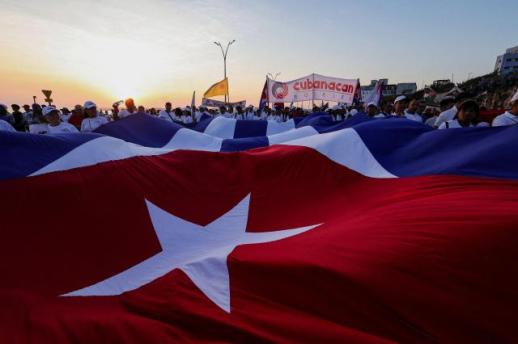 Cuba Acquires Over 300 Drones from Iran and Russia, Discusses Attacks on U.S. Bases Cuba has reportedly acquired over 300 drones from Iran and Russia and is discussing plans to use them to attack U.S. military bases. Axios reported on May 17, citing confidential information, that the Cuban military has begun planning attacks on the Guantanamo Bay U.S. military base, U.S. naval vessels, and Key West, Florida, using these drones. According to the report, since 2023, Cuba has been deploying various types of attack drones from Russia and Iran to strategic locations within the country. In the past month, Cuba has also requested additional drones and military equipment from Russia. U.S. intelligence agencies do not believe that an attack from Cuba is imminent or that Cuba is actively pursuing plans to target the United States. However, they are monitoring the situation closely, noting that the Cuban military is refining its drone tactics amid deteriorating relations with the U.S., which could lead to armed conflict. The expansion of Cuba's drone capabilities and the presence of Iranian military advisors in the country have raised significant concerns within the Trump administration. Axios reported that this information could serve as a justification for future U.S. military actions. A senior U.S. official stated, "It is concerning that a range of rogue actors, from terrorist organizations to drug cartels, Iran, and Russia, are utilizing such technology so close to home. This represents an escalating threat." In response, the Cuban embassy stated on X (formerly Twitter) that, like any nation, Cuba has the right to defend itself against external aggression. This right to self-defense is protected under international law and the U.N. Charter. The embassy further claimed, "Individuals in the U.S. who seek to subjugate and effectively destroy the Cuban nation through military aggression and war are not wasting a moment in fabricating excuses, spreading falsehoods, and distorting the necessary logical preparations for potential aggression as if it were something special." Recently, the U.S. has intensified its diplomatic and security pressure on Cuba. According to Axios, CIA Director John Ratcliffe visited Cuba on May 14, warning local officials against engaging in hostile actions. A CIA official noted that Ratcliffe conveyed that Cuba should not become a platform for hostile agendas from adversarial forces in the Western Hemisphere.* This article has been translated by AI. 2026-05-18 11:58:04
 -
 Samsung braces for 'make-or-break' labor talks as strike deadline looms SEOUL, May 18 (AJP) - While the catastrophic risk of a full-scale chip strike looms larger than ever over South Korea's tech industry, Samsung Electronics' management and its largest labor union locked horns in a critical, last-ditch round of government-mediated talks on Monday to avert a historic shutdown. The high-stakes showdown comes just three days before a planned 18-day walkout by up to 50,000 workers, a disruption that industry insiders warn could inflict a staggering 100 trillion won (US$74 billion) blow to the global semiconductor supply chain. The two sides convened for a second round of post-mediation talks at the National Labor Relations Commission in Sejong at 10 a.m. Following the collapse of the first round of talks last week, the emergency weekend intervention by Labor Minister Kim Young-hoon and direct appeals from Samsung Electronics chairman Lee Jae-yong managed to bring both parties back to the negotiating table. The stakes are unprecedentedly high, as the National Labor Relations Commission Chairman Park Soo-keun stepped in to directly arbitrate the session rather than acting as a mere observer. While union leaders expressed their commitment to negotiating in good faith, the atmosphere remained highly charged following preliminary weekend meetings where the union fiercely reacted to government hints of potential executive intervention. The dispute centers primarily on the company's profit-sharing bonus (OPI) system. The National Samsung Electronics Union, representing nearly 50,000 workers, is demanding the abolition of the current 50 percent salary cap on bonuses and seeking a formalized commitment to allocate 15 percent of the company's operating profit toward employee incentives. Samsung management, while promising top-tier compensation tied to market leadership, has maintained that institutionalizing the removal of the bonus cap infringes on corporate governance and poses long-term financial risks. Adding to the pressure, President Lee Jae Myung issued a calculated warning on Monday morning, stating on social media that corporate management rights must be respected just as much as labor rights. While acknowledging the historical context of workers' rights to corporate profits, the president noted that constitutional basic rights can be legally restricted for the public good, signaling that the administration remains prepared to invoke "emergency adjustment powers" to halt the strike if negotiations fail. An invocation of emergency powers would legally force the union to suspend any strike action for a 30-day cooling-off period, though such a move risks triggering a wider and more aggressive standoff between the government and major national labor umbrella groups. The stakes are immensely high, with industry analysts warning that a total walkout could inflict up to 100 trillion won ($74 billion) in damages to the national economy. The National Labor Relations Commission is is expected to announce the outcome of the negotiations later in the day. 2026-05-18 11:29:27
 -
 ASIA DEEP INSIGHT: May 18 Democratization Movement must move toward forgiveness Forty-six years have passed since the tragic uprising in Gwangju transformed the moral landscape of modern South Korea. Time has altered governments, generations, economies, and technologies. Yet the memory of 5·18 민주화운동 (May 18 Democratization Movement) continues to live with unusual intensity in the Korean conscience, because the events of that spring were never merely political. They were profoundly human. The 5·18 movement is no longer a regional grievance, nor simply a chapter in South Korea’s democratic transition. It has become one of the defining moral foundations of the Republic of Korea — a moment when ordinary citizens stood before the violence of state power and insisted that human dignity mattered more than fear. This year’s 46th anniversary ceremony, held once again along Geumnam-ro and the restored former South Jeolla Provincial Office rather than solely within the cemetery grounds, carried deep symbolic meaning. History returned to the streets where it was lived. Democracy stepped back into the public square where blood, courage, terror, and hope once coexisted. But memory alone cannot complete history. A nation truly matures not when it remembers endlessly, but when it finds the moral courage to transform memory into reconciliation. South Korea has reached precisely such a moment. For decades, the country has focused — rightly — on uncovering truth, preserving testimony, and restoring the honor of the victims. Yet another historical task remains unfinished: the difficult passage from accusation toward repentance, from grief toward healing, and ultimately from division toward forgiveness. This does not mean forgetting. Nor does it mean erasing responsibility. On the contrary, reconciliation becomes meaningful only when truth is fully acknowledged and when those connected to historical wrongdoing approach the past with genuine humility. In that sense, one of the most important gestures still absent from modern Korean history would be a sincere visit by the families of former President Chun Doo-hwan and other central figures associated with the military crackdown to the National May 18th Democratic Cemetery. Such an act should not be political theater. It should not be staged for cameras or partisan advantage. It should be profoundly human — an acknowledgment that no state, no ideology, and no government possesses the moral right to treat human life as expendable. The deepest tragedy of authoritarian power is not merely political oppression. It is the moment when power begins to regard human beings as instruments rather than sacred lives. That lesson lies at the heart of every great civilization. The Bible teaches: “Blessed are the peacemakers.” Buddhist scripture teaches that hatred cannot overcome hatred, but only compassion can do so. Confucius taught that virtue must transcend vengeance. The Tao Te Ching reminds humanity that force may dominate briefly, but gentleness ultimately endures longer than violence. Civilizations differ in language and theology, yet their moral conclusions converge. Human life is sacred. Power without compassion ultimately destroys itself. The tragedy of the May 18 Democratic Uprising demonstrated precisely this truth. In May 1980, the state possessed guns, tanks, command structures, and martial authority. The citizens possessed almost nothing except conscience and solidarity. Yet history eventually sided not with armed force, but with those who defended human dignity. That is why Gwangju endures. Not because of ideology. Not because of regional politics. But because the city revealed, in one of history’s darkest hours, the enduring moral strength of ordinary human beings protecting one another. Citizens shared rice balls with strangers. Students donated blood for the wounded. Taxi drivers formed barricades. Mothers searched desperately for missing sons. The essence of Gwangju was not hatred. It was human love under unbearable pressure. For this reason, the ultimate spirit of Gwangju cannot end in perpetual anger alone. If democracy is to become morally complete, then the nation must eventually find the courage to pursue reconciliation grounded in truth. That responsibility belongs first to those connected to the perpetrators. Genuine repentance must precede healing. A society cannot build lasting peace upon denial or historical distortion. But reconciliation also requires extraordinary moral courage from the victims and their families. Forgiveness does not erase pain. Rather, it prevents pain from becoming an eternal prison. South Korea today faces growing polarization, ideological hostility, and a dangerous culture of mutual demonization. Political opponents increasingly speak of one another not as fellow citizens, but as enemies. In such an atmosphere, the unfinished lessons of Gwangju become even more urgent. The central purpose of politics must never be domination. It must be the protection of human life and human dignity. Without that principle, democracy itself becomes hollow. There is a haunting symbolism in the fact that Chun Doo-hwan, once among the most powerful men in the nation, reportedly remains without a settled burial place, his ashes still unresolved within history itself. Whether one interprets this spiritually or historically, the image carries undeniable weight: power that disregards human life rarely finds lasting peace. History does not ask nations to forget. It asks whether they possess the wisdom to break cycles of hatred before hatred becomes inheritance. The future of South Korea will not be secured merely by economic growth, military strength, or technological innovation. It will also depend upon whether the country can transform historical suffering into moral maturity. That is the higher question now emerging from Gwangju after 46 years. Can truth lead to repentance? Can repentance lead to forgiveness? Can forgiveness finally lead to national reconciliation? Only then will the spirit of the May 18 Democratic Uprising become fully complete — not merely as a democratic uprising remembered in textbooks, but as a universal human lesson about the sanctity of life, the limits of power, and the possibility of moral renewal after tragedy. 2026-05-18 11:16:58
 -
 T'way Air gains license to change name to Trinity Air SEOUL, May 18 (AJP) - South Korean low-cost carrier T'way Air is moving ahead with its transition to Trinity Air after receiving approval from the Ministry of Land, Infrastructure and Transport for its new corporate name. T'way Air said Monday that it received a revised license from the ministry on May 15 to change its name to Trinity Air. The new name, Trinity, comes from the Latin word “Trinitas,” meaning the unity of three. The company said the name reflects its plan to expand beyond air travel by combining aviation, accommodation and travel services to offer a more integrated customer experience. The license change follows the company’s decision to adopt the new name at its annual shareholders’ meeting on March 31. However, the airline will not begin operating under the new name immediately. As an international air carrier, T'way Air must complete approval procedures with foreign aviation authorities before launching services under the Trinity Air name. The transport ministry approved the license change on condition that the airline take measures to prevent consumer confusion, maintain its safety management system and complete necessary approvals from overseas aviation authorities. Until all related procedures are completed, the airline will continue to operate under the T'way Air name. Its airline code, TW, and flight numbers will also remain unchanged. Passengers with existing reservations can use their tickets without any additional changes. “This license approval marks an important first step in our transition to Trinity Air,” a T'way Air official said. 2026-05-18 11:15:26
 -
 Seoul bans brakeless fixie bicycles in public roads after fatal accidents surge SEOUL, May 18 (AJP) - Seoul has formally banned brakeless fixed-gear bicycles, or so-called fixie bicycles, from public roads, bike lanes and parks across the city, following a fatal accident last summer and a 50.4 percent jump in youth bicycle crashes that police have linked to a viral fixie trend among middle and high school students. The Seoul Metropolitan Government accnounced the enactement of the ordinance on Monday after passing it at the city's 6th Ordinances and Rules Review Council on May 13. The revision prohibits brakeless fixie bicycles from operating on roads under the Road Traffic Act, bicycle lanes under the Bicycle Act, urban parks under the Park and Greenery Act, and Han River parks. Adult violators face fines of up to 200,000 won ($132) or short-term detention under Article 156 of the Road Traffic Act. The ordinance follows the July 2025 death of a middle school student who lost speed control while riding a brakeless fixie on a downhill side street in southwestern Seoul, and collided with an air-conditioning outdoor unit. Police said that the student, who was not wearing a helmet, died from head trauma. Records showed the victim had posted trick-riding videos on social media before the crash. The accident triggered a regulatory cascade. In August 2025, the police classified brakeless fixies as "vehicles" under the Road Traffic Act and began full enforcement on September 17 after a one-month grace period, with skidding and foot-braking explicitly singled out as dangerous methods. Underage riders trigger parental warnings; repeat offenses can lead to child neglect charges under the Child Welfare Act. Busan moved first at the municipal level in December 2025, banning rental shops from leasing brakeless fixies. Seoul's ordinance is the first to ban the bikes from public spaces outright. The legal foundation was already in place. The Bicycle Use Activation Act defines a bicycle as having a driving, steering and braking mechanism, meaning a brakeless fixie is not legally a bicycle at all, according to a Kookmin Ilbo analysis in September 2025. The accident data is stark. Bicycle accidents in Korea reached 5,571 in 2024, up 8.3 percent year-on-year, with deaths up 17 percent to 75, according to Korea Road Traffic Authority data released by the Ministry of the Interior and Safety in October 2025. Bicycle-versus-pedestrian collisions jumped 24 percent. Riders under 20 accounted for 1,620 accidents, up 50.4 percent from the prior year. Police data showed fixie-specific accidents rose 63 percent, with most occurring at night in alleys or near parks. More than 70 percent of youth bicycle accidents involved unlicensed riding, and 50 percent involved no protective equipment. The bikes often fail safety standards before reaching the road. A Korea Consumer Agency survey of 20 fixies sold through online retailers and specialty shops found 55 percent had only a front brake and 20 percent had no brakes at all, according to a Reportera analysis published in April. Adding front and rear brakes costs 30,000 to 100,000 won. The fixie's appeal among Korean teenagers is rooted in global culture and amplified by domestic social media. Fixed-gear bicycles originated as 19th-century velodrome equipment and entered street culture through New York and San Francisco bike messengers. The 2012 film Premium Rush pushed fixie culture into mainstream youth subcultures globally. In Korea, TikTok, Instagram Reels and YouTube Shorts circulate trick-riding clips featuring "skidding", locking the rear wheel via reverse pedaling, and a popular webtoon further accelerated youth interest. Enforcement gaps remain. Police have acknowledged difficulty prosecuting underage riders under Article 48 without proof that they caused actual danger to another person, leaving brake-removal alone insufficient grounds for charges against minors. The Seoul ordinance gives the city its first location-based enforcement tool that does not depend on demonstrating downstream harm — extending the same model Korea has applied to e-scooters since 2021. 2026-05-18 11:01:39
 -
 KOSPI sinks as U.S. tech selloff and Samsung strike fears dampen sentiment SEOUL, May 18 (AJP) - South Korean stocks opened sharply lower on Monday, with the benchmark KOSPI falling below 7,300, after weeks of an unprecedented rally. The drop, the lowest since May 4, came as investors reacted to a global technology selloff and rising U.S. bond yields, while uncertainty over Samsung Electronics' ongoing labor dispute added further pressure. The index opened down 0.67 percent at 7,443.29 points before extending losses and falling as low as 7,142.71 in early trade, a drop steep enough to trigger a sell-side sidecar at 9:19 a.m. amid a simultaneous plunge in KOSPI 200 futures. The selloff came after the yield on the benchmark 10-year U.S. Treasury note climbed to as high as 4.60 percent on Friday, its highest level in roughly 15 months, fueling concerns that persistent inflation could keep interest rates elevated for longer than markets had expected. The junior KOSDAQ also slipped 4.29 percent to 1,081.30, while the South Korean won weakened slightly to 1,504.20 per dollar from 1,500.80 in the previous session. The decline also followed sharp losses on Wall Street late last week, where the Nasdaq fell 1.54 percent and semiconductor shares slid sharply as rising Treasury yields pressured technology stocks. Oil prices also rose sharply amid concerns over prolonged disruptions around the Strait of Hormuz, adding to worries that inflation could remain stubbornly high. Brent crude futures settled up 3.4 percent at US$109.26 a barrel, while U.S. West Texas Intermediate crude climbed 4.2 percent to $105.42. U.S. President Donald Trump's summit with Chinese President Xi Jinping also did little to calm markets, as the two leaders ended talks without concrete progress on broader geopolitical tensions involving Iran and Gulf countries including the Strait of Hormuz. The global semiconductor selloff spilled directly into Seoul, where Samsung Electronics traded at 270,000 won, down 0.18 percent, while SK hynix fell 3.13 percent to 1,762,000 won as investors pulled back from AI-linked chip stocks. Samsung Electronics has been facing growing labor tensions after its union threatened a strike later this week following a breakdown in wage negotiations. The union has been demanding higher incentives and the removal of caps on performance bonuses in proportion to the company's strong operating profits in its chip division amid an artificial intelligence (AI)-driven semiconductor supercycle. Investors worry that the electronics giant's prolonged dispute could raise labor costs or disrupt semiconductor production at a time when global AI demand remains heavily concentrated in advanced memory chips. The impending strike has added to uncertainty on the South Korean bourse, as semiconductors make up a large share of the country's exports and Samsung dominates it by market capitalization, leaving the sector especially sensitive to both global demand shocks and domestic labor risks. Losses spread broadly beyond semiconductors. Among major technology and industrial shares, Samsung SDI fell 4.95 percent to 960,000 won, LG Energy Solution dropped 5.52 percent to 394,000 won and Doosan Enerbility slid 5.96 percent to 104,200 won. Automakers also came under pressure, with Hyundai Motor falling 7.43 percent to 648,000 won and Kia declining 4.94 percent to 159,700 won. Defense and shipbuilding-related shares weakened as well, with HD Hyundai Heavy Industries dropping 7.34 percent to 593,000 won and Hanwha Aerospace slipping 1.15 percent to 1,202,000 won. Financial and biotech shares also moved lower, as KB Financial fell 3.08 percent to 150,800 won, Samsung Biologics declined 3.88 percent to 1,364,000 won and Samsung C&T dropped 5.04 percent to 376,500 won. Losses were equally broad on the KOSDAQ, where secondary-battery, biotech and robotics shares all traded sharply lower. Among battery-related stocks, EcoPro BM fell 2.57 percent to 185,600 won, while EcoPro dropped 5.26 percent to 122,400 won. Robotics firm Rainbow Robotics plunged 9.26 percent to 735,000 won, and aerospace company Korea Aerospace Industries slipped 3.76 percent to 107,400 won. Biotech shares also weakened, with Alteogen falling 5.42 percent to 349,000 won, Samchundang Pharm declining 7.47 percent to 359,000 won, HLB dropping 5.30 percent to 49,150 won and ABL Bio sliding 8.55 percent to 109,100 won. Jusung Engineering stood out as the only major gainer, surging 21.04 percent to 169,700 won. Despite the broad selloff, investors appear to remain on watch for upcoming catalysts that could shape the direction of AI-related semiconductor stocks. Nvidia is scheduled to report earnings results later this week, with markets closely watching whether the chipmaker can beat revenue forecasts of $78 billion and achieve a gross margin of 75 percent. Also in focus will be management's comments on demand from China, after Washington recently approved the sale of H200 chips to the country. Investors also remain attentive to developments in Nvidia's next-generation Blackwell chips and the timeline for its Rubin architecture, given the implications for South Korean suppliers such as Samsung Electronics and SK hynix. Elsewhere in Asia, markets moved lower as investors reacted to rising global bond yields and persistent inflation concerns. Japan's Nikkei 225 fell 1.40 percent to 60,547.46, pressured by profit-taking in semiconductor shares, Hong Kong's Hang Seng Index dropped 1.06 percent to 25,687.49 and China's Shanghai Composite Index also edged down 0.19 percent to 4,127.62. 2026-05-18 10:58:30
 -
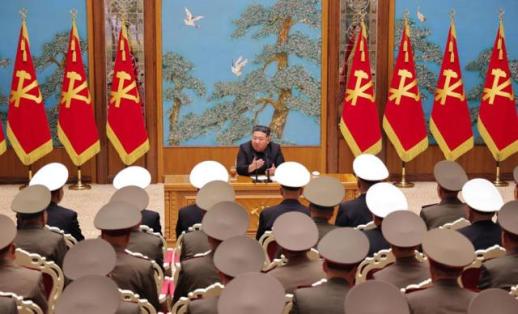 North Korean leader orders 'strengthening of front-line units along border with South Korea' SEOUL, May 18 (AJP) - North Korean leader Kim Jong-un has ordered the strengthening of front-line units along the border with South Korea and called for turning the area into an "impregnable fortress," state media reported on Monday. According to the state-run Korean Central News Agency (KCNA), Kim convened a meeting with military and defense officials the previous day to outline plans for "remodeling the military organizational structure and strengthening the first-line units and other major units in military and technical aspects," describing it as an important decision to "more thoroughly deter war." He urged, "The training for perfecting combat readiness is the main task of the army," reiterating the importance of "readjusting the training system and intensifying the practical training in keeping with the changing aspects of modern warfare." He also said the country's army "should continue to carry forward its tradition of overwhelming the enemy with ideology and faith by steadily waging the ideological revolution with firm belief in its cause," which would enable it to "reliably maintain its honor and position as the strongest army in the world." Sunday's gathering came just a few weeks after Kim visited a munitions factory and ordered new self-propelled howitzers to be deployed along border with South Korea "within this year." The new 155-mm self-propelled howitzer has sufficient range to strike targets in South Korea, posing a direct threat to Seoul. 2026-05-18 10:11:49