

Journalist

Per Stenius
-
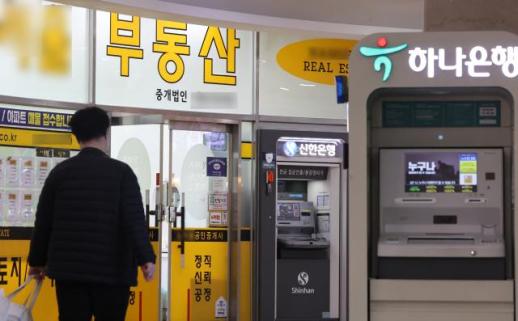 April Mortgage Rates Drop 0.03% for First Decline in Seven Months Mortgage rates for housing loans fell last month for the first time in seven months. The share of fixed-rate loans dropped below half, reaching its lowest level in four years and nine months. According to the Bank of Korea's "Weighted Average Interest Rate" statistics released on May 29, the weighted average mortgage rate for new loans at deposit banks was 4.31% in April, a decrease of 0.03 percentage points from the previous month. This marks the first decline since October of last year. While fixed-rate mortgage rates increased due to the rise in the government-backed housing loan rates, the overall drop in mortgage rates was influenced by a higher proportion of lower-rate variable loans. The overall household loan rate also fell from 4.51% in March to 4.43% in April, a decrease of 0.08 percentage points. This decline was driven by a 0.11 percentage point drop in mortgage and guarantee loan rates, along with a reduction in the share of higher-rate general credit loans. Among mortgages, the share of fixed-rate loans decreased by 13.0 percentage points to 47.8% in just one month. This marks the lowest level since July 2021 (43.9%) and follows six consecutive months of decline since November 2025 (90.2%). The fixed-rate mortgage rate was 4.34%, higher than the variable rate of 4.28%, which likely contributed to this trend. The share of fixed-rate loans among all household loans also fell from 35.5% to 27.8%, the lowest level since July 2022 (21.4%). Lee Hye-young, head of the Bank of Korea's Financial Statistics Team, explained, "The reduction in the fixed-rate share is due to the fact that the fixed-rate level is significantly higher than variable rates, particularly as the government-backed housing loan rates have increased. Borrowers are opting for lower rates." The government-backed housing loan rates were frozen between 3.65% and 3.95% from February to December last year, but have seen three increases this year: 0.25 percentage points in January, 0.15 percentage points in February, and 0.30 percentage points in April, influenced by the ongoing rise in mortgage-backed securities (MBS) issuance rates. In April, corporate loan rates remained unchanged at 4.14%. While rates for large enterprises decreased by 0.02 percentage points, the rates for small and medium-sized enterprises increased by 0.01 percentage points due to some banks engaging in high-interest financing. Overall bank loan rates, which include both household and corporate loans, remained stable at 4.20%, as the decline in household loans was offset by stable corporate loan rates. The monthly savings deposit rate (based on new transactions) rose from 2.82% to 2.92%. The rates for pure savings deposits, such as time deposits (2.87%), and market-based financial products like financial bonds and certificates of deposit (CDs) increased by 0.08 and 0.09 percentage points, respectively. The interest rate spread between loans and deposits, calculated based on new transactions, decreased by 0.10 percentage points to 1.28%, marking three consecutive months of decline. However, the balance-based interest rate spread increased by 0.01 percentage points to 2.28%. As benchmark rates have risen this month, it is expected that loan rates will also increase. However, the Bank of Korea noted that loan rates vary by product, making it difficult to predict exact changes. Lee stated, "This month, both short-term and long-term rates have risen, with long-term rates increasing significantly. Different products are influenced by varying benchmark rates, and the proportion of products offered by banks also affects this, so predictions are challenging."* This article has been translated by AI. 2026-05-29 12:02:00
 -
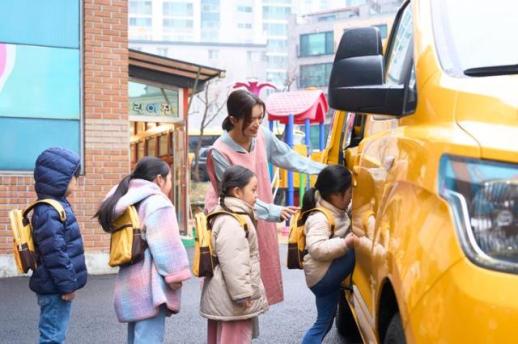 Workplace Childcare Facility Compliance Rate Reaches 94.9% As of 2025, the compliance rate for the mandatory establishment of workplace childcare facilities for businesses with 500 or more employees or 300 or more female employees has reached 94.9%, an increase from the previous year. The government has also released a list of 10 businesses that failed to meet this requirement.On May 29, the Ministry of Employment and Labor and the Ministry of Education announced the results of a survey on compliance with the workplace childcare facility mandate. Out of 1,674 eligible businesses, 1,588 have complied by either establishing workplace childcare facilities or utilizing entrusted childcare services.The requirement applies to businesses with 300 or more female employees or 500 or more total employees. Employers can fulfill this obligation by either setting up their own childcare facilities or contracting with external childcare providers to support employee childcare needs.This year's compliance rate of 94.9% reflects a 1.0 percentage point increase from last year. Among the 1,674 eligible businesses, 1,103 have directly established and operated workplace childcare facilities, while 485 have complied through entrusted childcare services, where employers contract with external providers to subsidize childcare costs for employees.The disclosed list includes hospitals, manufacturers, and retail companies. Notably, Das, a company based in Gyeongju, has been named for the 11th time, having the highest number of children eligible for childcare at 191 among the listed businesses.The B.H. 2nd Plant in Seo-gu, Incheon, has been publicly listed twice, along with SSG.com and MTS Corporation in Icheon, Gyeonggi Province, which cited 'insufficient childcare demand' as the reason for non-compliance.Medical institutions such as Daejeon Korean Hospital, ID Hospital, Jinju Korea Hospital, and Hanaro Leaders Clinic of the Seoul Institute of Science and Technology are also included in the disclosure.The Ministry of Employment and Labor and the Ministry of Education conduct annual checks on compliance with the workplace childcare facility mandate. To enhance the effectiveness of the system, they operate a public disclosure system for businesses that fail to comply.The published list includes the names of the businesses, the owners, the number of employees, the cumulative number of disclosures, and reasons for non-compliance. The government aims to encourage voluntary compliance among businesses through this disclosure.Kwon Chang-jun, Deputy Minister of Labor, stated, "Workplace childcare facilities are a crucial foundation for balancing work and family life, supporting both parents' careers and sustainable corporate growth. We will strengthen on-site support through briefings and consulting to promote the expansion of workplace childcare in more businesses."* This article has been translated by AI. 2026-05-29 12:02:00
 -
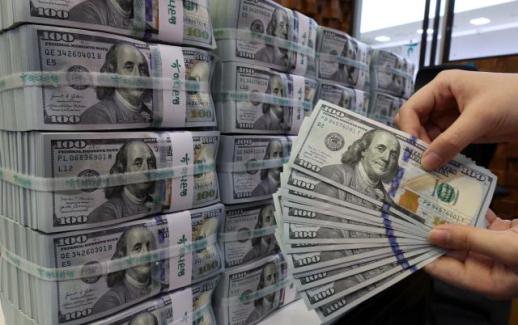 April Foreign Currency Deposits Increase by $8.5 Billion as Investors Expand Deposits Last month, foreign currency deposits held by domestic residents increased by over $8.5 billion, rebounding after a record decline the previous month. According to the Bank of Korea's report on 'Trends in Resident Foreign Currency Deposits' released on May 29, the balance of foreign currency deposits held by residents at foreign exchange banks was recorded at $110.68 billion as of the end of April. Resident foreign currency deposits refer to deposits made by Korean nationals, domestic companies, foreign nationals residing in Korea for more than six months, and foreign companies operating in Korea. Both corporate and individual deposits saw increases. The balances for corporate and individual deposits were reported at $94.88 billion and $15.8 billion, respectively, with corporate deposits rising by $8.08 billion and individual deposits increasing by $430 million. By currency type, the balance of dollar deposits rose by $7.68 billion from the end of March to reach $93.32 billion. Yen deposits increased by $400 million to $8.22 billion, while euro deposits rose by $260 million to $6.57 billion. The Bank of Korea attributed the increase to a rise in investor deposits at securities firms, inflows of funds for overseas investments by pension funds, and large corporations receiving current account payments. It noted that yen deposits increased due to higher investor deposits at securities firms, while euro deposits saw a slight rise due to some companies issuing bonds. Domestic investors turned to net selling of U.S. stocks last month, selling $468.93 million worth of shares. This is interpreted as the proceeds from dollar sales not being exchanged but instead deposited. The average monthly exchange rate based on weekly closing prices remained high, increasing from 1,448.38 won in February to 1,492.50 won in March and 1,485.03 won in April.* This article has been translated by AI. 2026-05-29 12:02:00
 -
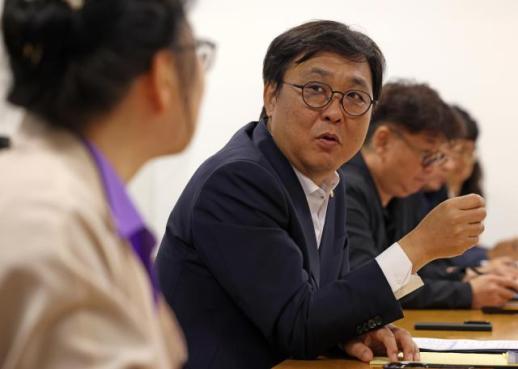 South Korea's Culture Minister Vows to Crack Down on Illegal Webtoon Site 'Newtoki' "'Newtoki' has struck again. However, we will not be caught off guard. We will pursue and block it in any form," said Choi Hwi-young, South Korea's Minister of Culture, Sports and Tourism, on May 28. He pledged to relentlessly track down the country's largest illegal webtoon and web novel distribution site, 'Newtoki', and warned that legal action would be taken against content delivery network (CDN) providers that support such illegal operations. During the 3rd meeting of the Cultural Arts Policy Advisory Committee's Webtoon Subcommittee held at the National Museum of Modern and Contemporary Art in Jongno, Seoul, Minister Choi assured the webtoon industry that the government would "catch 'Newtoki' to the end." The government has implemented an emergency blocking system for copyright infringement sites since May 11, but 'Newtoki' has been evading authorities by frequently changing its domain, leading to a cat-and-mouse chase. Industry representatives at the meeting unanimously agreed that 'Newtoki' must be eradicated as it plays a central role in illegal distribution. Kim Byeong-soo, president of the Regional Comic Webtoon Association, stated, "Other illegal sites take webtoons from 'Newtoki' and use them. If 'Newtoki' is caught, small illegal distributors will be unable to upload content." The operator of 'Newtoki' is reportedly a South Korean who naturalized in Japan in 2022. While the industry is calling for the operator's extradition to South Korea, there has been no visible progress to date. Minister Choi emphasized, "We will move faster than the rabbit," referring to 'Newtoki'. He stated, "The government, which has the power of public authority, must not turn a blind eye to criminal acts." The Ministry of Culture has secured emergency blocking authority for illegal content distribution sites through amendments to copyright law. As a result of the government's swift action, the amendments were passed in four months, and the system has been in effect since May 11. Minister Choi particularly stressed the need for a strong response against CDN providers. CDNs operate by replicating content from overseas servers to domestic servers, which allows illegal sites to circumvent access blocks imposed by internet service providers (ISPs). He noted, "I heard that the copyright holder of the Japanese manga 'One Piece' won a lawsuit against a CDN provider," emphasizing that all businesses must make every effort to protect copyright, or they risk exposure to lawsuits. Four major Japanese publishers, including Shueisha, which publishes 'One Piece', successfully sued the U.S. CDN provider Cloudflare for approximately 500 million yen (about $4.7 million) in damages for providing services to pirate manga sites. Concerns were also raised about illegal webtoon sites luring teenagers to illegal gambling sites. Comic artist Won Soo-yeon pointed out, "Teenagers enter illegal sites to read free comics and end up on a path that ruins their lives. Serious issues arise, such as gambling and gaming with their parents' credit cards." Minister Choi stated, "Illegal webtoon sites are generating revenue through illegal gambling advertisements," and warned that if related businesses, including CDN providers, do not take necessary actions and allow these sites to operate, they will face pressure to take responsibility.* This article has been translated by AI. 2026-05-29 11:58:00
 -
 Xiaomi Launches 17T Smartphone with Leica Camera Features Xiaomi has introduced its new smartphone, the 17T, featuring a Leica camera and artificial intelligence (AI) photography capabilities, priced around 700,000 won (approximately $530). This launch is expected to intensify competition in the mid-range AI smartphone market, which has been dominated by premium devices in South Korea. On May 29, Xiaomi Korea officially launched the flagship smartphone Xiaomi 17T and began pre-orders. Official sales will start on June 5 through Xiaomi Korea's official online and offline stores, as well as major retail channels like Coupang and Naver Brand Store. The key feature of the new device is its camera system, developed in collaboration with Leica. The Xiaomi 17T is the first in the T series to include a Leica 5x telephoto camera, supporting up to 10x optical zoom and 120x AI ultra zoom, based on a 50-megapixel telephoto camera with optical image stabilization. It is designed to capture clear images even in environments where subjects are far away, such as concert halls or sports stadiums. The device also includes features like 'Leica Live Moment' to record moments before and after a shot, and 'Leica Live Portrait' for enhanced portrait photography. "The Xiaomi 17T inherits the Leica optical tuning and OIS technology from the Xiaomi 17 Ultra while providing a flagship smartphone experience at a price point of around 700,000 won," said Summer Fung, CEO of Xiaomi Korea. "It will offer a new option for domestic users who value both content consumption and photography experiences." The performance and battery life have also been optimized to push the limits of mid-range smartphones. The Xiaomi 17T is equipped with the MediaTek Dimensity 8500 Ultra chipset, a 6,500mAh silicon-carbon battery, and supports 67W fast charging, catering to long-duration photography and content consumption needs. The display features a 6.59-inch 1.5K AMOLED panel with a maximum refresh rate of 120Hz and brightness of up to 3,500 nits. It also includes Xiaomi Vision Care technology, which has received TÜV Rheinland's quadruple eye protection certification, making it the first of its kind. The pricing for the 12GB RAM and 256GB storage model is set at 799,800 won, while the 12GB RAM and 512GB model is priced at 879,800 won. Customers who pre-order will receive Redmi Headphones Neo and a 67W GaN dual-port charger, along with three months of YouTube Premium, four months of Spotify Premium, and three months of Google AI Pro benefits. In addition to the smartphone, Xiaomi also unveiled three new AIoT products: the Redmi Headphones Neo with up to 42dB adaptive active noise cancellation, the entry-level Xiaomi Smart Camera C201, and the Xiaomi Rainbow Battery. Industry analysts believe that Xiaomi is targeting the domestic mid-range smartphone demand by emphasizing camera, battery, and AI features. While the South Korean market is dominated by Samsung and Apple, there is a growing demand for high-performance smartphones at reasonable prices due to high inflation and extended replacement cycles. If the Xiaomi 17T achieves strong sales, it could further intensify competition in the mid-range smartphone market.* This article has been translated by AI. 2026-05-29 11:38:00
 -
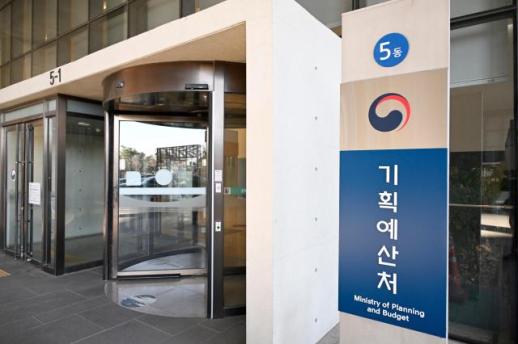 Government Revenue from Public Charges Decreased by 3.3% Last Year Last year, a decrease in tobacco export volume led to a reduction in the National Health Promotion Charge, while a rate cut also lowered the burden from the Power Industry Fund. As a result, the total public charges collected by the government fell by 3.3% compared to the previous year. On May 29, Vice Minister Lim Gi-geun chaired the third meeting of the Public Charge Management Committee, where the "2025 Comprehensive Report on Public Charge Management" was finalized. This report will be submitted to the National Assembly by the end of this month. Public charges are imposed in addition to taxes based on the principle of beneficiary and cause for the execution of specific public interest projects. Notable examples include the National Health Promotion Charge levied on tobacco consumers, the development charge that recovers a portion of profits from land development projects, and the traffic impact charge imposed on owners of large facilities in urban traffic management areas. Currently, 82 public charges are managed by 19 ministries, including the Ministry of Climate, Energy and Environment (21 charges), the Ministry of Land, Infrastructure and Transport (15 charges), and the Financial Services Commission (8 charges). The Comprehensive Report on Public Charge Management provides overall information related to public charges and serves as a financial statement for the national budget. The total amount collected from public charges last year was 23.4 trillion won, a decrease of 800 billion won (3.3%) from the previous year’s 24.2 trillion won. This marks the first decline in five years since 2020. By ministry, the Ministry of Climate collected the most at 6.47 trillion won, followed by the Financial Services Commission at 5.77 trillion won and the Ministry of Health and Welfare at 2.88 trillion won. The significant drop in the National Health Promotion Charge, which decreased by 279.5 billion won due to reduced tobacco export volume, contributed greatly to this decline. Additionally, the rate for the Agricultural Land Preservation Charge was adjusted from 30% to 20%, and the rate for the Power Industry Fund was reduced from 3.7% to 2.7%, resulting in decreases of 112.4 billion won and 311.2 billion won, respectively. In total, 44 public charges saw a reduction in collection, amounting to 1.4 trillion won. Conversely, efforts to secure funding for financial support for low-income households led to an increase of 136.8 billion won in contributions to the Korea Financial Services Agency, while contributions to regional credit guarantee foundations and the Central Credit Guarantee Foundation rose by 95.5 billion won. Additionally, the collection from 37 public charges, including the School Site Charge (340 billion won), increased by 600 billion won. The majority of the collected funds, totaling 19.8 trillion won (84.4%), were allocated to central government funds and special accounts. In terms of expenditure, 7.1 trillion won (30.1%) was directed towards financial support for small businesses and low-income households, the largest share. The industrial and energy sectors received 5.1 trillion won (21.8%), while the health and medical sectors, including National Health Promotion, accounted for 2.9 trillion won (12.3%), primarily utilized for public interest projects. Vice Minister Lim Gi-geun stated, "The public charge system, as a pillar of national finance, will be carefully managed to contribute to mitigating social externalities and applied transparently and equitably to the public and businesses. We will ensure that the funds are efficiently returned to essential public interest projects, such as supporting low-income finance and building industrial foundations."* This article has been translated by AI. 2026-05-29 11:38:00
 -
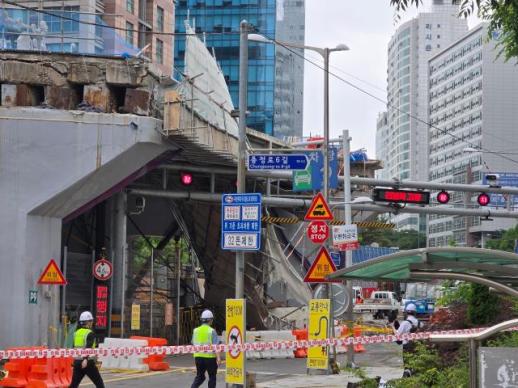 Seoul's Seosomun Overpass Demolition Resumes, Train Operations Plummet to 73% Demolition work on the Seosomun Overpass in Seoul, which collapsed and resulted in three fatalities, resumed early on May 29, four days after the incident. While the bridge deck and girders have been removed, the demand for transportation ahead of the weekend has caused train operations, including KTX services, to drop to a low of 70%, leading to significant passenger disruptions. On May 29, the Ministry of Land, Infrastructure and Transport announced that all 16 girders, which posed the greatest safety risk to the demolition work, had been safely removed. Following the accident, the ministry activated a central accident response headquarters composed of experts from relevant agencies and has held eight situational assessment meetings to develop and implement a demolition plan. To minimize traffic congestion over the weekend, the response headquarters is making a concerted effort to resume operations on the Gyeongui Line by May 30. The government plans to complete the remaining demolition work by 5 a.m. tomorrow, along with the restoration of the overhead lines and tracks, to ensure a safe recovery of the site. The Seoul Western District Office of the Ministry of Employment and Labor held a meeting the previous evening to review and conditionally approve the demolition plan submitted by the city. Consequently, the previously halted recovery and demolition work resumed at midnight on May 29. To minimize the risk of structural collapse, the city deployed four excavators equipped with hydraulic crushers instead of cranes. After intensive work, the upper structure of the overpass was completely crushed and removed by around 5 a.m. on May 29. Korea Railroad Corporation (KORAIL) will now proceed with the restoration and inspection of tracks and overhead lines to gradually normalize train operations. Despite the swift progress on-site, the increase in train services ahead of the weekend has caused the overall train operation rate to drop to 73.7%, raising concerns about further disruptions to passenger and freight services. According to KORAIL, a total of 542 train services were operated on this day, a decrease of 193 services compared to the usual 735, resulting in a significant drop in the operation rate. This figure is considerably lower than the rates of 80.8% and 82.3% recorded on the day after the accident and the day before, respectively. In particular, high-speed trains like KTX operated only 270 services, down by 113 from normal, resulting in an operation rate of 70.5%. Ongoing track closures between Haengsin Station and Seoul Station, as well as between Seoul Station and Cheongnyangni Station, have led to unavoidable delays. Regular trains (Saemaul and Mugunghwa) also saw their operation rate drop to 77.3%, with Mugunghwa services limited to routes up to Daejeon Station and Seo Daejeon Station on the Gyeongbu, Honam, and Jeolla lines. Subway services in the metropolitan area also faced disruptions. Train operations on the Gyeongui-Jungang Line between Seoul and Susaek have been suspended for four days due to blocked access to the northern train depot at Seoul Station. Additionally, the subway Line 2 between Hongdae and Euljiro was temporarily limited from the first train of the day for safety inspections before returning to normal operations. As passenger inconvenience peaked, ticket counters at Seoul Station and Yongsan Station experienced severe congestion as travelers sought to change their travel plans or voiced complaints. KORAIL urged passengers to check train operation statuses through the mobile app 'KORAIL Talk' or the website before traveling. A KORAIL official stated, "The change in demolition methods by the city is expected to shorten the time for debris removal, allowing for an earlier entry into the restoration phase. However, while we aim to complete facility restoration by around 5 a.m. on Saturday, immediate resumption of 100% operations according to the regular schedule will be challenging due to necessary procedures like test runs. We anticipate that all trains, including KTX, will return to normal operations by the 31st." 2026-05-29 11:22:00
 -
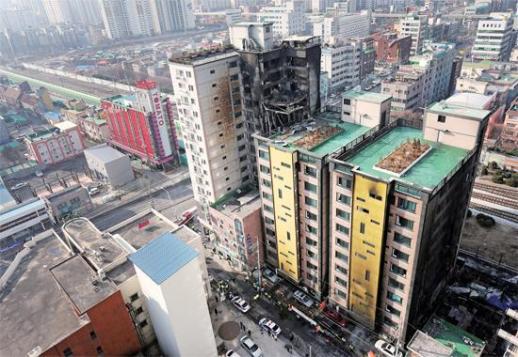 Revisiting Housing Regulations: Lessons from the Uijeongbu Fire On the morning of January 10, 2015, black smoke billowed from the center of Uijeongbu, Gyeonggi Province. A fire that started on the first floor of an urban residential building spread to the upper floors and then to an adjacent building. Residents were forced to flee to the roof, where they were rescued by firefighting helicopters. Among the 170 residents in the affected area, nearly 130 were killed or injured. The fire was caused by a short circuit from a motorcycle parked on the first floor. However, the building's structure exacerbated the damage. Due to its location in a commercial area, sunlight access regulations were not applied, and the narrow gaps between buildings served as pathways for the flames to spread. There were also no sprinklers. In October of that year, the Ministry of Land, Infrastructure and Transport tightened regulations on the spacing and exterior finishing standards for buildings in commercial areas. The government had only tightened these regulations after the tragedy, which had previously been relaxed to allow for faster construction. In December of the same year, the Ministry imposed additional restrictions on goshiwon, or small residential facilities for single occupants. It prohibited the installation of bathtubs and cooking facilities in individual rooms and banned the division of goshiwon into smaller units for sale. The rationale was clear: to prevent goshiwon from being used as de facto independent living spaces. If goshiwon were allowed to transform into one-room apartments, they could bypass minimum housing standards regarding light, ventilation, and space. Eleven years have passed, and those two regulations are once again under scrutiny. Same Ministry, Opposite Solutions On May 26, the Ministry announced a plan to supply 110,000 non-apartment housing units. It will lift restrictions on the number of units and floors in urban residential buildings, lower parking requirements, and ease sunlight access regulations. Days later, reports emerged that the government plans to abolish the ban on bathtubs in goshiwon. This was a key element of the multi-use facility construction standards introduced 11 years ago. It is also said that the mandatory learning facility requirement will be revised. The legal definition of goshiwon is "a facility that provides accommodation and has facilities for learners to study within a designated space." If the learning requirements are weakened, goshiwon will drift further from its legal status as a "study accommodation" and become closer to one-room living spaces, which is precisely the transformation that was intended to be prevented 11 years ago. The two issues are labeled differently. One focuses on expanding supply, while the other aims to alleviate the rental crisis for single-person households. However, the underlying concept is the same. Whenever there is a shortage of normal housing, the government's response tends to lean toward non-residential solutions. When apartment supply is restricted, the focus shifts to non-apartment options; when rental prices rise, the emphasis shifts to non-residential facilities. The government's solutions for single-person households consistently emerge from options that fall outside the realm of standard housing, leading to smaller, weaker, and lower-standard living conditions. Reversing Its Own Minimum Standards The government's justification centers on "alleviating the rental crisis." However, will lifting the bathtub ban truly lower rents? Before that, it is essential to revisit why the government prohibited bathtubs 11 years ago. The facilities banned at that time were not limited to bathtubs. Cooking facilities and balconies for individual rooms were also included in the ban. The commonality among these three is clear: they all contribute to making a room a "self-sufficient living unit." Hygiene, food preparation, and exposure to fresh air. When all three are present in a room, it becomes a self-sufficient living space. However, goshiwon are classified as non-residential. Housing standards regarding light, ventilation, space, and noise do not apply. The moment a bathtub is allowed, transforming a room into a self-sufficient living unit, the occupant is legally living in a non-residential space while practically residing in a housing situation. They bear all the burdens of living while maintaining their non-residential status. Goshiwon rooms are typically 2 to 3 pyeong (approximately 70 to 105 square feet), with some as small as 1 pyeong (about 35 square feet). Adding a bathtub to such a small space raises questions about the feasibility of living there. Minimum Housing Standards: Their Purpose The entity responsible for defining minimum housing standards is the Ministry of Land, Infrastructure and Transport. The Housing Act mandates that the Minister of Land, Infrastructure and Transport establish the minimum housing standards necessary for the public's comfortable living. The Ministry has set the minimum area for single-person households at 14 square meters (approximately 150 square feet), which must include a bedroom, kitchen, flush toilet, and bathing facilities. This standard is often criticized as being too small, especially when compared to Japan (25 square meters) and the UK (38 square meters). Earlier this year, the Ministry itself indicated plans to raise this standard. The issue lies in the fact that the same ministry is simultaneously pursuing contradictory paths. While it claims to be expanding the minimum housing standards, it is also loosening restrictions on non-residential living spaces that fall below those standards. The ministry, which deems 14 square meters too small, is moving toward further blurring the identity of rooms that are even smaller, often just one or two pyeong. The Ministry's desired solution cannot be the expansion of one-pyeong rooms. So, what will happen to rents? Allowing bathtubs is more likely to serve as a justification for upgrading facilities rather than lowering rents. If goshiwon with bathtubs are introduced, facility costs will rise, leading to increased rental prices. The market may shift toward more expensive "premium goshiwon" priced around 500,000 won, reducing the availability of low-cost goshiwon that were previously the last option for single-person households. This could lead to a polarization where the cheapest housing options become more expensive. Statistics indicate a trend contrary to the government's claims. According to last year's housing survey, the proportion of households falling below minimum housing standards increased to 3.8%, up from the previous year. Among young households, the figure rose sharply to 8.2%. The percentage of young people living in non-residential accommodations like goshiwon reached 17.9%. More people are living in conditions that do not meet the minimum housing standards set by the Ministry. Yet, the Ministry's response is to further legitimize living spaces that fall outside those standards. Breaking its own minimum standards in response to a rental crisis is not a solution to the problem. Why Were Those Regulations Established 11 Years Ago? The reason for revisiting the Uijeongbu fire is not to use the tragedy as a political critique but to remember the costs associated with the relaxed regulations intended for rapid supply. The same applies to goshiwon. In 2008, fires in goshiwon in Gangnam and Yongin resulted in the deaths of six and seven people, respectively. In 2016, another fire claimed seven lives, and in 2018, a fire at the Gukil goshiwon in Jongno resulted in seven fatalities. It was only after the Gukil goshiwon fire, which injured 11 others, that the government tightened regulations once again. In 2020, the government amended the enforcement decree of the Building Act to mandate the installation of fire sprinklers and strengthen standards for aging goshiwon. As a result, the number of goshiwon fires was halved the following year, providing evidence that stricter regulations positively impacted safety. The current review of lifting the bathtub ban does not pertain to safety. It is essential to clarify this point for fairness. The easing of sunlight access regulations in the Uijeongbu case does not involve safety standards like sprinklers or finishing materials. The government can argue that it is not compromising safety. However, both issues lead to the same destination. One concerns the "minimum safety standards," while the other pertains to the "minimum housing rights standards." Both are lines clearly drawn by the Ministry for valid reasons. People died in Uijeongbu, and people died in Jongno. Why were those lines established? To prevent narrow gaps from becoming pathways for flames and to stop non-residential spaces from transforming into housing that forces people into lower-standard living conditions, ensuring that the costs of rapid supply do not return as tragedies. Has the Reason for Those Regulations Disappeared? So, has the reason for establishing those regulations 11 years ago disappeared? Data from government-affiliated institutions clearly illustrates this point. An analysis comparing 2008 and 2018 by the Korea Research Institute for Human Settlements shows that the proportion of households in the bottom 20% of housing area living in non-residential accommodations like goshiwon increased from 0.7% to 9.4%, a 13-fold increase over ten years. This indicates that the very scenario the regulations aimed to prevent—non-residential spaces effectively becoming residential—has grown larger in that time. The number of single-person households has also significantly increased. In 2015, single-person households made up about 27% of the population, but by 2023, this number had risen to 7.829 million households, accounting for 35.5% of the total. The group the regulations aimed to protect has not diminished; rather, it has grown substantially. The trend of people being pushed out of housing has not decreased either. In 2024, the proportion of general households living in non-residential accommodations like officetels, goshiwon, and goshi-tels is expected to rise to 6.0%, an increase from the previous year. The concerns from 11 years ago have not lessened; more people are being pushed toward lower-standard living conditions than ever before. So, Where Will the Solution Be Found? The starting point for solutions is already present in the government's announcement materials. In the May 26 plan, the Ministry emphasized financial measures rather than regulatory relaxation. It introduced new special PF guarantees and sales guarantees for non-apartment housing and raised the loan limit for business operators from 70 million won to around 100 million won. It also established new fund loans and mortgage guarantees for businesses remodeling non-residential spaces into standard housing. The government itself identified the causes of the sluggish non-apartment market as PF issues, construction costs, and declining sales potential, directing its solutions toward these areas. Taking one step further, instead of loosening sunlight access regulations and creating narrow gaps again, the government could focus on solidifying PF and sales guarantees to ensure that projects can actually move forward. Instead of lifting the bathtub ban and allowing non-residential spaces to masquerade as one-room accommodations, the government could enhance support for remodeling non-residential spaces into standard housing. Both paths are extensions of the direction already outlined in the government's announcement materials. Ultimately, this could lead to creating solutions for single-person households within the realm of standard housing. Programs like the Youth Purchase Rental, Youth Jeonse Rental, Happy Housing, and Youth Safe Housing offered by LH and SH all meet standard housing criteria and are supplied below market rates. The issue is not the lack of channels but the insufficient volume of available options. A key factor exacerbating the rental crisis is not the lack of affordable housing but the displacement of tenants from jeonse (long-term lease) arrangements who have nowhere to go. Loosening restrictions on non-residential spaces does not provide a solution to either issue. The government's announcement materials also contain pathways closer to solutions. The problem lies in the fact that, on the other hand, it is simultaneously moving in the opposite direction regarding its own established minimum standards. As long as the ministry, which deems 14 square meters too small, continues to pursue a path that legalizes living spaces that fall below even half that size, no solutions for single-person household housing will emerge. The Ministry must confront the lines it has drawn: the standards tightened after the Uijeongbu fire, those tightened after the Jongno goshiwon fire, and the 14 square meter standard it established in the Housing Act. It must remember the reasons for the regulations established 11 years ago.* This article has been translated by AI. 2026-05-29 11:20:00
 -
 Toss Bank Reports First Quarter Net Profit of 29.6 Billion Won, Up 58% Year-Over-Year Toss Bank has significantly improved its performance, driven by an expanding customer base. On May 29, Toss Bank announced that it recorded a net profit of 29.6 billion won in the first quarter of this year, a 58% increase compared to 18.7 billion won during the same period last year. The total number of customers reached 14.87 million, up 19.3% from 12.47 million a year earlier. The bank surpassed 15 million customers at the end of April. The monthly active user count was 10.2 million at the end of March and increased to 11 million by the end of May. In the first quarter, the loan balance stood at 15.5 trillion won, marking a 4.4% increase from the same period last year. Toss Bank explained that it has enhanced its risk management system based on its proprietary credit evaluation model (TSS 3.0) and specialized review models. The loan portfolio has also diversified. The share of guaranteed loans in total loans reached 38.5%, up 12.9 percentage points from 25.6% a year earlier, driven by growth in loans for small business guarantees and rental deposits. During the first quarter, Toss Bank launched loans for professionals and stable-rate rental loans, with plans to introduce mortgage loans later this year. The total deposit balance was recorded at 29.0455 trillion won. In January, the bank launched dedicated accounts and card products for small business owners, expanding its deposit and loan offerings for this segment. The non-interest income segment also saw a reduction in losses. The non-interest loss for the first quarter was 7 billion won, more than halving from 15.2 billion won in the same period last year. As of the end of March, the cumulative sales amount for wealth management (WM) services reached 27.7 trillion won, an increase of about 4 trillion won compared to the end of last year. Toss Bank plans to expand its asset management services after obtaining a full license for fund sales brokerage this month. The transaction volume of debit cards increased by 26% compared to the same period last year. The overseas remittance service launched in January also contributed to the improvement in non-interest income, according to the bank. Financial health indicators have improved as well. The delinquency rate for the first quarter was 1.07%, down 0.19 percentage points from the same period last year. The non-performing loan (NPL) ratio decreased by 0.11 percentage points to 0.87%. The BIS capital adequacy ratio rose to 16.62%, up 0.72 percentage points from 15.90% a year earlier. The loan loss reserve ratio increased by 35.19 percentage points to 320.81% compared to the same period last year. In the inclusive finance sector, the share of loans to low- and medium-credit borrowers in the first quarter was recorded at 34.75%. The supply of policy financial products for the underprivileged, such as the Sunshine Loan Bank and the Saitdol Loan, amounted to 457.4 billion won in the first quarter, bringing the cumulative supply to 2.5628 trillion won. A Toss Bank official stated, "The quality growth of our loan portfolio and improvement in non-interest profitability have been reflected in our results, based on a large customer base. We will pursue responsible inclusive finance based on our strengthened financial health."* This article has been translated by AI. 2026-05-29 11:14:00
 -
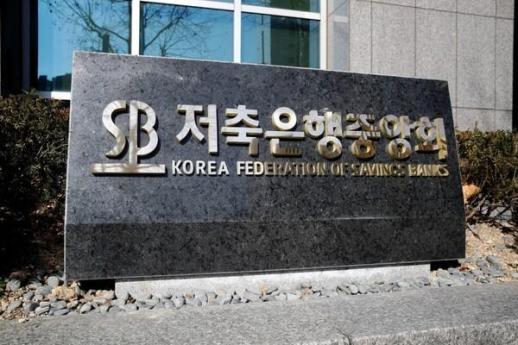 Savings Banks Report 333.8 Billion Won Profit in Q1 Despite Rising Delinquency Rates Savings banks in South Korea reported a net income of 333.8 billion won in the first quarter of this year, continuing their profitability trend. While the increase in non-interest income and a reduction in provisions for bad debts contributed to improved performance, the delayed economic recovery and weakened repayment ability among borrowers led to a rise in delinquency rates. According to the Savings Bank Association's report on the first quarter of 2026, the net income for the sector was 333.8 billion won, an increase of 289.8 billion won compared to 44 billion won during the same period last year. The improvement in performance was driven by increased non-interest income and a decrease in the burden of provisions. Operating profit for the first quarter reached 422 billion won, up 370.6 billion won from 51.4 billion won a year earlier. Interest income rose slightly to 1.36 trillion won, an increase of 12 billion won, while non-interest income surged to 294.4 billion won, up 267.7 billion won. The amount allocated for provisions decreased by 104 billion won to 801.8 billion won compared to the same period last year. The total assets of savings banks also saw a slight increase. As of the end of March, total assets amounted to 119.3 trillion won, up 13 trillion won from the previous quarter. Loans increased by 15 trillion won to 95 trillion won. Notably, loans to small and medium-sized enterprises rose by 12 trillion won, from 42 trillion won at the end of last year to 43.2 trillion won by the end of March. Deposits increased by 6 trillion won to 99.6 trillion won compared to the previous quarter. Capital adequacy remained at a healthy level. The BIS ratio at the end of March was 16.0%, up 0.1 percentage points from 15.9% at the end of the previous quarter. The Savings Bank Association explained that the increase in capital was due to profit generation outpacing the growth in risk-weighted assets associated with loan expansion. The liquidity ratio stood at 170.8%, exceeding the legal requirement of 100% by 70.8 percentage points. The provision coverage ratio was also above the legal standard at 108.3%. However, asset quality indicators worsened. The delinquency rate for savings banks rose to 6.7% at the end of March, up 0.7 percentage points from 6.0% at the end of the previous quarter. The delinquency rate for corporate loans increased from 8.0% to 8.9%, a rise of 0.9 percentage points, while the delinquency rate for household loans edged up from 4.7% to 4.8%. The ratio of non-performing loans also increased to 8.6%, up 0.2 percentage points from the previous quarter.* This article has been translated by AI. 2026-05-29 11:08:00