

Journalist

RYU SO HYUN
-
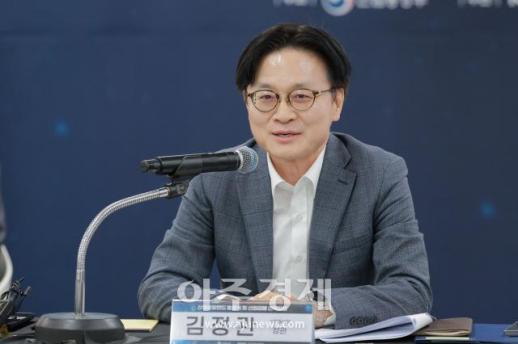 Industry Minister Urges Steady Oil and Naphtha Supply in Talks with Oman The South Korean government is engaging with Oman to diversify its oil supply and enhance the use of the Duqm Port, a bypass route for the Strait of Hormuz. The Ministry of Trade, Industry and Energy announced that Minister Kim Jeong-kwan held a video conference on June 1 with Mohammed Al Yousuf, chairman of the Oman Free Trade Zone Authority. The two sides discussed key economic cooperation issues, including stable resource supply, plant contracts, and logistics facilitation. Since the outbreak of conflict in the Middle East, the government has been working to secure stable resources and minimize the impact on supply chains and exports. Notably, a presidential envoy delegation visited Oman in April, achieving a commitment to secure 5 million barrels of crude oil and 1.6 million tons of naphtha by the end of the year. This amount exceeds the total crude oil imports of 4.5 million barrels from the previous year. Oman is also a strategic location that allows for bypassing the Strait of Hormuz, a key transit route for Middle Eastern crude oil and liquefied natural gas (LNG). If alternative routes combining ports and land transport networks within the region, such as Duqm Port, are secured, stable oil supply can be maintained even amid heightened risks in the Strait of Hormuz. To expand cooperation with Oman, which has potential as an alternative logistics hub and resource supplier outside the Strait of Hormuz, the Ministry of Trade arranged this meeting. During the discussion, Minister Kim requested support to ensure the smooth supply of crude oil and naphtha as agreed upon in the envoy delegation's talks in April. He also highlighted the successful execution of major projects in Oman, such as the Duqm refinery and the Mena solar power plant, and expressed interest in participating in new projects. Additionally, they discussed utilizing Oman's major ports as alternative logistics hubs to bypass the Strait of Hormuz. Minister Kim noted, "Our companies are facing challenges with customs payments and refunds in Oman, as well as duplicate inspections and quarantines at the Saudi Arabian border during the transportation of goods through Duqm Port. We need cooperation to simplify these procedures to ensure swift delivery of goods to their final destinations." The two sides agreed to promptly resume the Korea-Oman Economic Cooperation Committee, which has not met since 2016, to discuss economic issues. Minister Kim emphasized, "Oman, with its geographical advantage outside the Strait of Hormuz and abundant energy resources, is an important partner for strengthening future cooperation in the Middle East. Through this meeting and the upcoming Economic Cooperation Committee, we will actively seek ways to enhance cooperation in resource security, plants, and logistics."* This article has been translated by AI. 2026-06-01 16:03:00
 -
 Kakao Games Reveals Official Title for 'Project OQ' as 'World of Goblins' Kakao Games announced on June 1 that the official title for its upcoming multiplayer online role-playing game (MMORPG) 'Project OQ' will be 'World of Goblins.' 'World of Goblins' is a 2.5D MMORPG featuring retro-style pixel graphics. Utilizing the Unity engine and proprietary graphic technology from developer Supercat, the game aims to deliver a unique visual experience with intuitive gameplay that is accessible to all players. The game is characterized by its incorporation of traditional Korean folklore and various themes related to goblins throughout its world. Players will embark on adventures and experience growth in a distinctively atmospheric setting. A 'skill deck building system' will allow players to combine skills without job restrictions, enabling them to tailor their combat styles. The game will also offer cooperative content centered around clans (PvE) and large-scale player-versus-player (PvP) battles. Kakao Games plans to launch 'World of Goblins' in the third quarter of this year, with pre-registration starting in July. The company will gradually release more information regarding game content and service schedules in the coming months. * This article has been translated by AI. 2026-06-01 16:03:00
 -
 Vietnam Real Estate Faces Survival Competition as Prices Stabilize Investor expectations in Vietnam's real estate market are noticeably declining. The strategy of holding properties in hopes of price appreciation is no longer effective, leading to an urgent need for cash recovery and liquidity. Consequently, the market is transitioning from a rapid growth phase to one characterized by adjustment and selectivity. On June 1, local media outlets, including Vietnam Finance, reported that the Ministry of Construction's housing and real estate market report for the first quarter of 2026 indicates that new apartment prices remain high. In Hanoi, the average price is approximately 12.8 million VND (about $736) per square meter, surpassing Ho Chi Minh City's average of about 11.2 million VND (approximately $644). The LUMIÈRE Hanoi Seasons Garden, located on Nguyen Chai Street, is expected to have selling prices ranging from 12 to 18 million VND per square meter. LUMIÈRE is a luxury residential brand developed by Masterise Homes. However, since late last year, there have been increasing instances where properties in some suburban projects in Hanoi are not selling even after significant price reductions of several hundred million VND. A resident of the Ha Dong area, identified as Mr. A, listed his two-bedroom apartment in the Thuong Khu area for sale at the beginning of this year but has yet to find a buyer. "Previously, apartment prices were rising almost every month, leading many to believe that buying would soon yield profits," he said. "However, buyers have become much more cautious, and the speed of transactions has slowed significantly compared to before." He noted that he has already reduced his asking price by about 300 million VND (approximately $1,725) but the apartment remains unsold. In another project in western Hanoi, studio apartments that were once priced around 3.1 billion VND are now listed between 2.5 and 2.6 billion VND. Investor B commented, "Investor sentiment has completely changed. Previously, many thought prices would continue to rise, so they were willing to hold onto properties for a few more months. Now, the primary goal is to sell and secure cash." Experts suggest that the price surges of 2024-2025 and the supply shortage had previously stimulated investor sentiment, but now the financial burden has increased significantly. Investors who have relied on leverage for an extended period are facing heavy monthly interest costs, while price increases are insufficient to cover these expenses. Pham Duc Toan, CEO of EZ Property, commented on the current market trend, stating, "Investors who entered the market at these high prices are facing considerable cash flow pressures." Some investors in eastern Hanoi are even listing properties below their original costs or foregoing premiums altogether. The changes in the market are also evident in the flow of funds. Cao Thi Thanh Huong, Deputy Director of Savills Vietnam, explained, "Currently, bank credit is increasingly prioritizing projects that meet actual housing demand, particularly in the mid-range housing sector." This indicates a shift in bank funding toward projects that cater to genuine demand and affordable housing. She added, "Foreign investors still highly value the potential of the Vietnamese housing market, but they are now more selective, focusing on projects with clear legal status and substantial development capabilities." This trend reflects a growing emphasis on legal transparency and development capacity in foreign investments. Can Van Luc, chief economist at BIDV, characterized the current situation as a phase of 'competitive corporate capabilities.' He noted that only businesses with legal clarity, compliance, and appropriate product offerings will have an advantage in attracting investment in the future. Nguyen An Khe, chairman of G6 Group, also assessed that the market has officially entered an adjustment cycle. He stated, "Prices surged too quickly in 2024-2025, exceeding the market's absorption capacity, and now speculative demand is rapidly declining, leading to a more segmented market." * This article has been translated by AI. 2026-06-01 16:00:00
 -
 Samsung's shipment of HBM4E samples seen as strategic move ahead of Jensen Huang's Seoul visit SEOUL, June 1 (AJP) - Samsung Electronics' shipment last week of next-generation High Bandwidth Memory 4E (HBM4E) samples is widely seen as a strategic overture to Nvidia, just ahead of chief executive Jensen Huang's visit to South Korea, multiple experts said. In a timed move, Samsung announced last Friday that it has begun shipping the industry's first 12-layer HBM4E samples to global customers. The rollout comes just days before Huang's upcoming visit to Seoul, following his appearance at the weeklong Computex trade show in Taipei, which wraps up on Friday. The Nvidia CEO is expected to meet South Korean technology companies including Naver and LG, during his stay. "I think there is something to the idea that this is a signal timed to Huang's scheduled visit to Seoul," Kim Duk-ki, a professor at Sejong University's Department of Semiconductor Systems Engineering, told AJP on Monday. "It is not bad from Nvidia's perspective at all, as it would encourage competition." Kim said Nvidia stands to benefit from Samsung competing more aggressively with SK hynix, which has dominated HBM supply to the chip designer. As demand for AI infrastructure grows, global tech firms have been scrambling to secure sufficient memory supplies. "Nvidia has every reason to want a competitive dynamic between suppliers," Kim said. "Stable volume is the priority, and competition helps ensure that." The new 12-layer HBM4E component uses Samsung's sixth-generation 10-nanometer-class (1c) DRAM process paired with a 4-nanometer logic base die, boosting performance by more than 20 percent compared with previous-generation HBM4 chips. On the technical side, Kim noted that data movement — rather than computation — consumes the most energy in AI workloads, making memory bandwidth and efficiency a critical bottleneck. HBM addresses this by stacking multiple memory dies to dramatically increase data throughput, driving the exponential growth in demand. "The growth in memory demand has been exponential and continues to accelerate," Kim said. "Samsung is utilizing this window to aggressively position itself for the next-generation supply chain." Huang's Seoul itinerary, later this week or early next week, is also expected to include meetings with South Korean tech executives to discuss hardware supply chains and broader AI partnerships. 2026-06-01 15:59:12
 -
 Israel Expands Offensive in Southern Lebanon Amid Ceasefire Extension Israel is expanding its military offensive in southern Lebanon. Although a ceasefire has been extended, ground operations are moving northward, raising the possibility of strikes in Beirut. The United States has proposed a new de-escalation plan, but the risk of escalation on the ground is increasing. On June 1, Israeli Prime Minister Benjamin Netanyahu announced that he had instructed the military to expand ground operations in Lebanon. The Israel Defense Forces (IDF) reported that they have taken control of Bofort Fortress and the surrounding ridges, as well as the Wadi al-Saluki area. Bofort Fortress is a high ground overlooking southern Lebanon and northern Israel. This marks the first time Israeli forces have regained control of the area since their withdrawal from southern Lebanon in 2000. Capture of Bofort Fortress; Advancing Toward Nabatiyah… Expanding Southern Front Israel claims that this advance is a response to attacks from Hezbollah. Reuters reported that Hezbollah launched one of its most intense assaults on northern Israel since the ceasefire in April. As a result, schools have been closed and movement restrictions have been imposed. The IDF believes Hezbollah is using low-cost suicide drones to bypass air defenses and inflict casualties on Israeli forces. Israeli ground operations are moving further north. According to Reuters, the IDF has advanced about 10 kilometers toward the Zahrani River after entering the Litani River area. Netanyahu stated, "We will deepen and widen our control over areas previously held by Hezbollah." The IDF has also issued evacuation warnings to residents south of the Zahrani River. Another area under consideration for further entry is Nabatiyah. The Jerusalem Post reported that the IDF is conducting military operations around Nabatiyah, a key Hezbollah stronghold located about 20 kilometers from the Israel-Lebanon border. If ground troops reach this area, it would represent the deepest incursion into Lebanon during the current conflict. Potential Strikes on Beirut… U.S. Attempts to Prevent Escalation with New Proposal Airstrikes are also intensifying. Lebanese security sources and state media reported that the IDF conducted over 40 airstrikes across southern Lebanon on the same day. Reports indicate that eight people were killed in an attack on the village of Deir al-Zahrani the previous night. According to Lebanese government figures, the death toll in the current conflict has surpassed 3,370. Israel has reported 24 soldiers and four civilians killed during the same period. There are concerns that the scope of airstrikes may extend to Beirut. Beirut is the political and economic center of Lebanon, housing government institutions and financial and commercial functions. If strikes reach this area, tensions could escalate beyond the southern border conflict to encompass all of Lebanon. The Jerusalem Post reported that Israeli officials have requested U.S. permission to strike within Beirut. The outlet noted that with no progress in U.S.-Iran negotiations and Israel-Lebanon discussions, Israeli officials are hoping for a favorable response from the U.S. The U.S. is focusing more on establishing a resolution than on permitting strikes. According to Reuters, U.S. Secretary of State Marco Rubio presented a new de-escalation plan to Lebanese President Joseph Aoun and Netanyahu, proposing that if Hezbollah halts all attacks, Israel would refrain from escalating in Beirut. However, coordination is proving difficult. President Aoun has attempted to push the proposal forward, but Nabih Berri, the Speaker of the Lebanese Parliament, stated that while he could guarantee Hezbollah's compliance with the ceasefire, "Israel must stop firing first." The U.S. does not view this as a sufficient willingness to accept the proposal, believing that as long as Hezbollah continues its attacks, it will be challenging to prevent further Israeli responses. International concern is also growing. France has called for an emergency meeting of the United Nations Security Council due to Israel's expanded military operations in Lebanon. The British Foreign Secretary has demanded a halt to Israel's operations in Lebanon, while the German Foreign Minister expressed "serious concerns" regarding the southern advance. 2026-06-01 15:54:00
 -
 Korea, China ease food trade rules, opening wider door for K-food exports SEOUL, June 01 (AJP) - South Korea and China have agreed to streamline registration procedures for Korean food exporters and to permit shipments of meat-based instant noodles, widening the export channel for the country's increasingly popular K-food, Seoul's food safety regulator said. The Ministry of Food and Drug Safety said Monday it held its 16th Korea-China food safety cooperation meeting in Qingdao, China, and the 17th Korea-China Food Standards Expert Council in Jeju, both on May 28. Under the new arrangement, Korean firms seeking to ship food to China had previously been required to file registrations with Chinese authorities themselves, but the ministry will now handle bulk registration for all categories except livestock products. The change is expected to slash the registration period to about 10 days from roughly three months, the ministry said, with the revised rules likely to take effect in August. The National Food Safety Information Service plans to publish a report dissecting the detailed amendments to China's General Administration of Customs notice issued in March. The talks also cleared meat-based instant noodles for export, a category long barred from the Chinese market. Such products may now enter China provided they use meat from approved countries and undergo proper heat treatment. The agreement comes as K-food rides record momentum, with the country's food exports reaching $10.41 billion in 2025 and ramen alone topping $1.5 billion for the first time, up 21.9 percent on the year, the agriculture ministry said. Shipments to China, K-food's second-largest market, rose 5.1 percent to about $1.59 billion as spicy Korean varieties win shelf space. 2026-06-01 15:48:45
 -
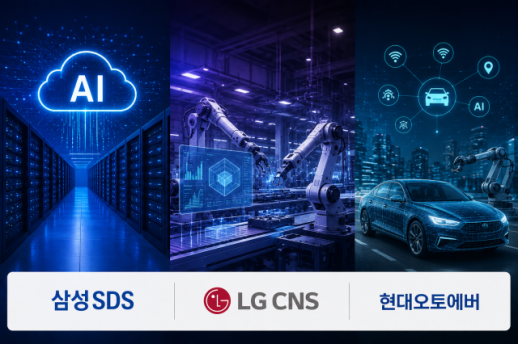 Three Major SI Companies Experience Surge Amid AI Infrastructure Boom Shares of South Korea's three major system integration (SI) companies have surged, breaking free from their previous undervaluation as they were often seen merely as internal trading firms. The shift in global artificial intelligence (AI) investment from hardware, particularly semiconductors and servers, to the software and infrastructure needed to implement AI in real-world applications has positioned Samsung SDS, LG CNS, and Hyundai AutoEver as key players in the AI transformation era. According to the Korea Exchange, as of 2 p.m. on June 1, Samsung SDS shares rose 25.8% to 376,000 won. Hyundai AutoEver saw a 4.6% increase, reaching 974,000 won, while LG CNS climbed 17.2% to 133,400 won, leading the overall strength in the SI sector. The emergence of AI has been driven by infrastructure companies focused on graphics processing units (GPUs), servers, and networking equipment, primarily led by Nvidia. However, as businesses move beyond merely considering the adoption of generative AI to actively implementing it across factories, logistics centers, and data centers, the role of SI companies in building and operating these systems is becoming increasingly significant. Analysts note that the benefits of AI investment are shifting from hardware to software and system integration. There is growing demand for AI data center construction, smart factory enhancements, and the development of robotic control platforms, all of which require the expertise of SI firms. The revenue structures of SI companies are also undergoing rapid changes. Previously, they relied heavily on maintenance-focused business models after system implementation, which limited their corporate valuation. In contrast, businesses related to AI data centers, AI transformation, and robotic operation platforms have high technological entry barriers and long-term contracts, allowing for stable revenue generation. Continuous operational and management revenue post-implementation is expected to enhance profitability and growth compared to the past. Samsung SDS is accelerating its push into the infrastructure market by expanding its AI data center business, leveraging its capabilities in enterprise cloud and high-performance computing (HPC). As the adoption of generative AI becomes more widespread among companies, the demand for data centers for AI training and inference is expected to grow significantly. LG CNS is emerging as a leader in the 'physical AI' sector, which involves AI controlling robots and equipment in real-world environments. The company is expanding its platform business that connects AI and robotics, drawing on its digital transformation experience in manufacturing and logistics. The rapid increase in the proportion of AI and cloud business indicates a shift from traditional SI services to AI service-oriented operations. Hyundai AutoEver is expected to benefit from the transition to software-defined vehicles (SDVs) and the expansion of its robotics business. As the Hyundai Motor Group increases its investments in autonomous driving and robotics, the demand for vehicle software and robotic operating systems is also rising. The market anticipates that as robotics become more prevalent, robotic control platforms will emerge as a new growth driver, generating recurring revenue. An industry insider commented, "The recent surge in stock prices signals a shift in how the market evaluates SI companies. Previously, reliance on affiliates was seen as a discount factor for corporate value, but in the AI era, the ability to implement AI in industrial settings and operational experience has become the key competitive advantage."* This article has been translated by AI. 2026-06-01 15:48:00
 -
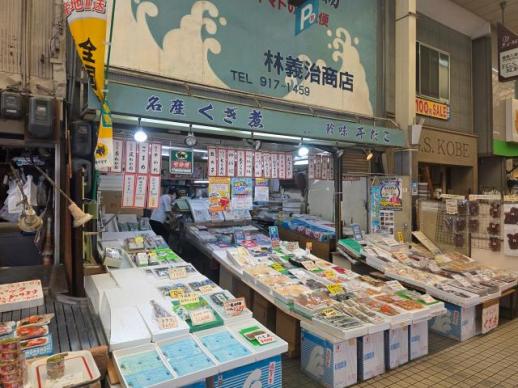 K-Food Gains Popularity in Japan's Hyogo Prefecture Last year, K-Food achieved record-high exports, and the response in the Japanese market has been enthusiastic. To confirm the popularity of high-quality Korean seafood, a visit was made to the Uonotana Fish Market in Hyogo Prefecture on May 29. Upon entering the market, neatly packaged seafood caught the eye. A brief thought about whether Japanese consumers might prefer domestic products was quickly dispelled during an interview with a vendor, which highlighted the popularity of K-Food. Toshimichi Ohigashi, the owner of the "Ori Shop" at the market, stated, "In recent years, Japan's abalone production has decreased, leading to an increase in imports of Korean abalone." The presence of Korean seafood, including abalone and flounder, was evident throughout the market. When asked about Japanese consumers' reactions to Korean abalone, Ohigashi noted, "It tastes good and is popular. Compared to Japanese abalone, it is also more affordable, attracting many buyers." Japanese fishermen are also aware of the growing popularity of Korean seafood. On the same day, Hiroyuki Nishimoto, head of business development at the Hyogo Prefecture Fisheries Cooperative, confirmed that the demand for Korean seafood is increasing. Factors contributing to the rise in imports of foreign seafood in Japan include environmental changes and a decline in domestic fishing. In Hyogo, the nearby sea has become excessively clean, resulting in a decrease in plankton, which is a food source for seafood. Consequently, the catch has diminished. Additionally, an aging population has led to a reduction in labor within the fishing industry and a decline in seafood consumption, further impacting the market. These environmental changes have created an opportunity for Korean seafood to gain a stronger foothold in Japan. While cheaper Chinese seafood is often used as restaurant ingredients, Korean exports are utilized in higher-end dishes. Nishimoto noted, "I understand that mackerel and anago (conger eel) are popular. The younger generation, particularly those in their 20s and 30s, seems to consume a lot of Korean seaweed due to their interest in Korean culture." Regarding competition with Chinese seafood, he remarked, "Upper-class consumers prefer quality products even if they are more expensive, so securing high quality is essential." 2026-06-01 15:48:00
 -
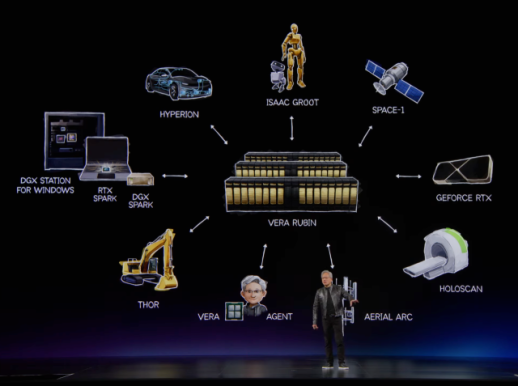 NVIDIA Launches Next-Gen AI Platform 'Vera Rubin' with Samsung and SK Hynix NVIDIA's next-generation AI platform, 'Vera Rubin,' has officially entered full production. Jensen Huang, CEO of NVIDIA, announced on June 1 at the GTC Taipei 2026 event that "Vera Rubin is now in full production" and will incorporate memory from Samsung Electronics, SK Hynix, and Micron. Vera Rubin is the successor to the Blackwell platform, which currently dominates the AI server market. Named after the astronomer Vera Rubin, NVIDIA is developing a new AI superchip architecture that combines the 'Rubin' GPU and 'Vera' CPU. It features next-generation HBM4 (high-bandwidth memory) and significantly enhances both AI training and inference performance. According to NVIDIA, the Rubin platform offers much higher AI processing capabilities compared to its predecessor and is designed for the era of AI agents and inference-based AI. Huang predicted that "the AI agent market will grow thousands of times larger than it is now," forecasting explosive growth in the AI industry. Notably, the presence of South Korean semiconductor companies has drawn attention in this announcement. Samsung Electronics and SK Hynix are identified as key players in the next-generation HBM4 supply chain. Industry experts believe that as Vera Rubin enters mass production, demand for HBM will surge, benefiting the South Korean memory sector. Indeed, Samsung has recently begun shipping HBM4E samples, and the market is closely watching the potential expansion of NVIDIA's supply chain. SK Hynix is also regarded as a crucial supplier of the next-generation HBM4. Vera Rubin is not just another AI semiconductor. NVIDIA is pursuing a 'vertically integrated AI ecosystem' that encompasses AI chips, networks, data centers, and AI agent software. Huang emphasized, "NVIDIA will integrate all stacks of agent AI," which has raised expectations for growth across the data center, power infrastructure, AI cloud, and HBM memory industries. What is Vera Rubin? Vera Rubin is the successor to NVIDIA's existing Blackwell platform. It is not merely a GPU but a next-generation AI infrastructure platform that integrates CPU, GPU, network, storage, and AI software into one massive AI supercomputer. The platform includes core technologies such as NVIDIA Vera CPU, Rubin GPU, BlueField-4 DPU, Spectrum-6 Ethernet network, and NVLink 6 switches. Notably, NVIDIA claims that Vera Rubin can enhance AI agent throughput by up to ten times compared to the previous generation, Grace Blackwell. The AI industry anticipates that AI agents capable of planning and executing tasks will lead the next market wave, moving beyond generative AI like ChatGPT. NVIDIA positions Vera Rubin as the dedicated infrastructure for such AI agents. Modular Design Reduces Server Assembly Time One of the most notable changes in this platform is its modular design. Traditional AI servers often require complex installation and maintenance, leading to system shutdowns even for minor component issues. In contrast, Vera Rubin is designed with replaceable major components, significantly reducing maintenance time. NVIDIA explained that the new design minimizes cables, cutting the installation process from about two hours to just five minutes. Considering that a substantial portion of AI data center operating costs comes from maintenance and power, this change is seen as a key improvement that enhances profitability rather than just convenience. Revolutionizing Inference Costs for AI NVIDIA emphasizes that Vera Rubin is not merely a performance upgrade. The AI industry is entering a phase where inference costs are becoming more critical than model training costs, as substantial computations are required for AI to deliver real services. Vera Rubin focuses on significantly lowering inference costs by utilizing ultra-fast data connection technologies and optical communication-based networks. Huang stated, "AI agents perform thousands of steps of inference, tool usage, and information retrieval with a single request," adding that "Vera Rubin is designed for this new era of AI." Expectations for Samsung and SK Hynix South Korean companies are also growing their expectations for benefits. Vera Rubin is set to feature the next-generation HBM (high-bandwidth memory) HBM4. Industry analysts believe that Samsung Electronics and SK Hynix will play significant roles in the supply chain. As demand for HBM in AI servers continues to rise, the expansion of Vera Rubin's production could provide new growth opportunities for memory companies. Particularly, as the AI agent market begins to grow, competition in data center construction is expected to intensify. This could benefit companies across the memory, server, network equipment, and cloud sectors. 2026-06-01 15:45:00
 -
 iM Life Launches Revised Guaranteed Variable Annuities with Over 9% Increased Payouts iM Life announced on June 1 that it has revised and relaunched its flagship guaranteed variable annuity products: 'iM StartPRO Variable Annuity Insurance,' 'iM MasterPRO Variable Annuity Insurance,' and 'iM TravelPRO Variable Annuity Insurance.'The revisions focus on enhancing retirement income security. The new products increase annuity payouts by more than 9% compared to previous offerings, allowing customers to receive larger payments after retirement. This design aims to maintain the real purchasing power of retirement assets and ensure stable cash flow amid prolonged inflation.Notably, the revised structure strengthens the lifetime annuity feature, enabling policyholders to receive higher payouts the longer they live. For instance, a 40-year-old male who enrolls in the 'iM MasterPRO Variable Annuity Insurance' and pays a monthly premium of 300,000 won for 10 years will see his annual annuity increase by 580,000 won to a total of 7.04 million won starting at age 70.With these product revisions, iM Life aims to enhance its competitiveness in the guaranteed annuity market. Kwak Chan-hee, head of iM Life's Sales Strategy Division, stated, "We have considered how to provide customers with more substantial retirement benefits, not just stopping at product launch. We will continue to introduce innovative annuity solutions in the future."* This article has been translated by AI. 2026-06-01 15:42:00