
Journalist

Ra Mason
-
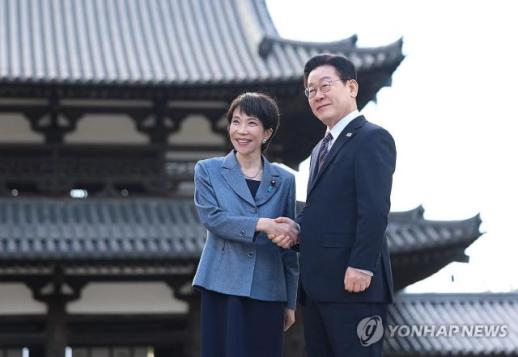 Japanese Prime Minister Visits Andong as Korea-Japan Relations Shift to 'Hometown Diplomacy' Diplomacy often carries a stronger message when tied to a specific location. The venue of a summit is not merely a matter of protocol; it symbolizes the direction and atmosphere of the relationship. In this context, the Korea-Japan summit scheduled for May 19 in Andong, North Gyeongsang Province, may encapsulate the recent changes in Korea-Japan relations. Japanese Prime Minister Sanae Takaiichi will visit Andong, the hometown of President Lee Jae-myung. This visit serves as a reciprocal gesture following President Lee's trip to Nara, Japan, in January, which is Takaiichi's political base and hometown. The Blue House described this as the "first realization of mutual hometown visits between the leaders." This marks a shift from traditional shuttle diplomacy between Seoul and Tokyo to a new phase of 'hometown diplomacy,' where leaders visit each other's political and cultural roots directly. The upcoming summit in Andong is also seen as highly symbolic within Japan. Officials from the Japanese Foreign Ministry suggest that Takaiichi's background as a politician from the Kansai region may influence this diplomatic style. The Kansai area has historically engaged in active exchanges with the Korean Peninsula, and a significant Korean community has developed around Osaka, Kyoto, and Nara. Many in Japanese diplomacy view Takaiichi as a politician with relatively less distance from Korean culture and sentiments. In fact, Nara, Takaiichi's political base, has deep historical connections with the Korean Peninsula. It is known for retaining strong influences from Baekje and Silla cultures during the formation of ancient Japanese culture. This context adds significance to President Lee's visit to Nara in January, which was interpreted as more than just a local visit. The Andong summit also connects to the historical flow of Korea-Japan diplomatic relations. A notable example is the 2004 summit between President Roh Moo-hyun and Prime Minister Junichiro Koizumi in Jeju. At that time, tensions were high due to the Dokdo issue and historical conflicts, yet the leaders chose Jeju as the meeting location. This decision aimed to reduce diplomatic tension and foster trust in a more human atmosphere. However, the upcoming Andong summit represents a step further than the Jeju meeting. While Jeju was characterized as 'neutral space diplomacy,' Andong embodies a more direct form of 'hometown diplomacy.' It involves sharing the life spaces and cultural roots of the leaders, aiming to build trust as a diplomatic asset rather than merely a social event. The symbolism of Andong is significant. It is a center of Korean Confucian culture and traditional spirit, home to Hahoe Folk Village, Dosan Seowon, and the lineage culture. The visit of a Japanese prime minister to such a space carries implications beyond a simple local itinerary. The image of a Japanese leader visiting the heart of Korean traditional culture sends a diplomatic message in itself. This summit is particularly noteworthy amid changing international dynamics. The North Korean situation remains unstable, and the U.S.-China strategic competition is intensifying. Coupled with unrest in the Middle East, risks related to energy and maritime security are also rising. The Japanese government has publicly emphasized that "the importance of Korea-Japan relations and Korea-U.S.-Japan cooperation is growing," reflecting this backdrop. Ultimately, both Korea and Japan find themselves in urgent need of stabilizing their relationship. Japan's security strategy, centered on the U.S., faces challenges without cooperation from Korea, while Korea also recognizes the necessity of collaboration with Japan in terms of supply chains, advanced industries, and economic security. Of course, historical issues remain a challenge. However, diplomacy ultimately hinges on how well future needs can manage past conflicts. The Andong summit indicates that Korea-Japan relations are moving beyond mere practical diplomacy to a stage where they are adjusting the 'temperature of the relationship.' Just as the Jeju summit between Roh Moo-hyun and Koizumi remains a symbolic moment in that era of Korea-Japan relations, the upcoming Andong summit between Lee Jae-myung and Takaiichi is likely to be frequently referenced in discussions about the future of Korea-Japan relations. This time, it is neither Seoul nor Tokyo, but each leader's hometown. This shift itself speaks to a new direction in Korea-Japan relations. 2026-05-17 16:13:09
 -
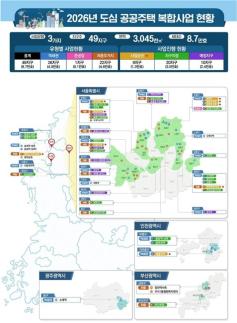 Gangnam Among 44 Areas Applying for Urban Public Housing Project, Expecting 60,000 Units Seoul's urban public housing complex project, aimed at redeveloping aging residential areas through public-led high-density development, has attracted participation from 44 locations, including the three districts of Gangnam, with expectations of supplying approximately 60,000 new housing units. According to the Ministry of Land, Infrastructure and Transport on May 17, proposals from residents were submitted from 44 locations across 16 districts in Seoul by the application deadline on May 8. The urban public housing complex project is designed to facilitate development in aging urban areas where private redevelopment and reconstruction efforts are challenging. It is characterized by the ability to expedite the process by omitting steps such as establishing associations or management plans. This application process allowed residents to propose projects directly. After review by the districts, recommended sites will be evaluated by a selection committee involving the Ministry and the Seoul city government, with final candidate sites expected to be announced in July. Notably, projects with a participation rate exceeding 30% will receive maximum evaluation points, and approximately 61% of the proposals, or 27 locations, met this criterion. By type, there are 16 residential-commercial high-density zones centered around transit stations (covering 674,000 square meters), 25 housing supply activation zones in low-rise residential areas (covering 1,983,000 square meters), and 3 residential-industrial convergence zones in semi-industrial areas (covering 159,000 square meters). The government plans to temporarily relax the floor area ratio for transit-oriented and low-rise residential types to a maximum of 1.4 times the legal limit until April 2029. This is intended to enhance project viability and encourage increased supply in urban areas. Currently, among 49 urban public housing complex sites nationwide, 29 (approximately 48,000 units) have already been designated as complex zones, with 9 (about 13,000 units) having received project approval. The Ministry anticipates that the urban public housing complex project in the northern area of Jemulpo Station in Incheon’s Michuhol District will begin construction five years after its selection as a candidate site. This project, which will feature up to 49 floors and approximately 3,500 units, is noted as the first successful case of public-led development utilizing a REITs (Real Estate Investment Trust) model. Additionally, significant construction projects in Seoul are expected to commence next year, with notable sites including Eunpyeong District's Jeungsan 4 District and Yeonsinnae Station, as well as Shin-gil 2 District in Yeongdeungpo and Banghak Station and Ssangmun Station in Dobong District. Lee Jae-pyeong, Director of Housing Supply Policy at the Ministry, stated, "The high interest and participation from residents in this application process reflect the community's expectations for the urban public housing project. We will actively support the swift and smooth advancement of projects following the selection of candidate sites based on improved systems."* This article has been translated by AI. 2026-05-17 16:03:57
 -
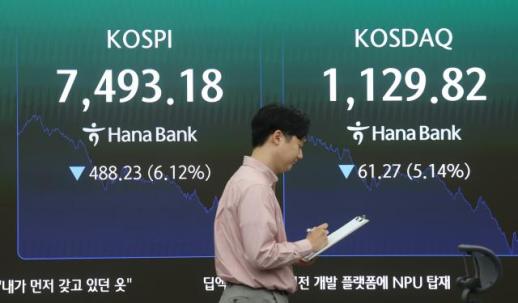 Record Borrowing Fuels Major Korean Brokerages' Q1 Interest Income Surpassing 600 Billion Won As the domestic stock market continues to thrive, the scale of borrowing for investment, known as "debt investment," has reached an all-time high. Consequently, major Korean brokerages reported interest income of 600 billion won in the first quarter of this year. According to reports from the top ten domestic brokerages (Mirae Asset Securities, Korea Investment & Securities, Samsung Securities, KB Securities, NH Investment & Securities, Shinhan Investment Corp., Meritz Securities, Kiwoom Securities, Hana Securities, and Daishin Securities) released on May 17, the total interest income from margin trading for these firms in Q1 amounted to 600 billion won. This figure represents a 55.9% increase compared to 384.6 billion won during the same period last year. It also marks a 14% rise from the previous quarter (Q4 2025), which saw interest income of 526.2 billion won, despite a market contraction due to provisions for real estate project financing. The surge in interest income is attributed to a significant influx of retail investors seeking leverage as the KOSPI index, which hovered around 4,200 at the end of last year, surpassed 6,000 during the first quarter. In fact, the average daily balance of margin trading in Q1 reached 31.1 trillion won, crossing the 30 trillion won mark for the first time. This figure is a 79.3% increase from the average of 17.3 trillion won in Q1 of last year and a 19.2% rise from the previous quarter's average of 26 trillion won. Given that brokerages are applying high interest rates ranging from 5% to nearly 10% for loans depending on the duration, investors are estimated to be bearing an average interest rate of around 8-9% for their debt investments. The reliance on interest income from debt investments varies significantly among brokerages. Some firms derive over 25% of their quarterly net profit from margin trading interest, while others see this income account for less than 10% of their total net profit. However, as the overall performance of brokerages has improved, the contribution of margin trading interest to net profit has actually decreased compared to last year. In Q1, the total net profit of the top ten brokerages was 4.33 trillion won, with margin trading interest accounting for 13.8% of this total, down from 18.7% in Q1 of last year and a sharp decline from 26.1% in the previous quarter.* This article has been translated by AI. 2026-05-17 16:00:35
 -
 WHO Declares International Health Emergency Over Ebola Outbreak in Congo and Uganda The World Health Organization (WHO) has declared an "International Public Health Emergency" (PHEIC) in response to the Ebola outbreak in the Democratic Republic of Congo and Uganda. However, the organization stated that the situation does not meet the criteria for a global pandemic. According to reports from the Associated Press and others, WHO announced on May 17 via social media platform X (formerly Twitter) that the outbreak poses a public health risk to other countries due to the international spread of the disease, which has already been documented. As of May 16, the WHO reported eight confirmed Ebola cases, 246 suspected cases, and 80 suspected deaths across at least three health zones in Ituri Province, including Bunia, Lwampala, and Mongbwalu. The Africa Centers for Disease Control and Prevention (CDC) noted that there are 336 suspected cases of Ebola. In Uganda's capital, Kampala, two confirmed cases have recently been identified, one of which resulted in death. Both individuals had traveled to the Democratic Republic of Congo, although no direct link between them has been established, according to WHO. A confirmed case was also reported in Kinshasa, the capital of the Democratic Republic of Congo, involving a person who had returned from Ituri. This outbreak has been linked to the Bundibugyo strain of the Ebola virus. WHO noted a high positivity rate, with eight out of 13 initial samples testing positive, and there has been an increase in reports of suspected cases and clusters of deaths throughout Ituri Province, raising concerns that the actual number of infections may be significantly higher than official counts. WHO Director-General Tedros Adhanom Ghebreyesus stated, "There is considerable uncertainty regarding the actual number of infections and the geographical spread of this outbreak. Our understanding of the epidemiological links among suspected cases is also limited." WHO highlighted that at least four healthcare workers have died from suspected viral hemorrhagic fever symptoms, raising concerns about the potential for transmission within healthcare facilities and gaps in infection prevention and control measures. The absence of approved treatments or vaccines for the Bundibugyo virus has further exacerbated the seriousness of the situation. Nevertheless, WHO emphasized that the outbreak does not qualify as a global pandemic. WHO has urged the Democratic Republic of Congo and Uganda to activate their national disaster and emergency response systems immediately. It recommended enhancing surveillance, contact tracing, laboratory testing, and infection prevention measures in both the affected and neighboring regions. Confirmed cases should be isolated and treated promptly, while contacts should be monitored daily for 21 days following exposure, with international travel restrictions advised. Additionally, WHO recommended implementing exit screening for individuals exhibiting unexplained fever symptoms at international airports, seaports, and major land border checkpoints. However, it advised against closing borders or imposing travel and trade restrictions, warning that such measures, if implemented without scientific justification, could drive movement through unofficial border channels, complicating containment efforts. The Democratic Republic of Congo has experienced repeated Ebola outbreaks since the virus was first identified there in 1976. This outbreak is particularly concerning as it is caused by the relatively rare Bundibugyo strain, rather than the more commonly reported Zaire strain. Ebola is a deadly infectious disease that causes fever, muscle pain, vomiting, and diarrhea, and is transmitted through contact with the bodily fluids of infected individuals, contaminated materials, or deceased persons. Its high fatality rate has led to recurrent large-scale health crises in the African region.* This article has been translated by AI. 2026-05-17 15:56:16
 -
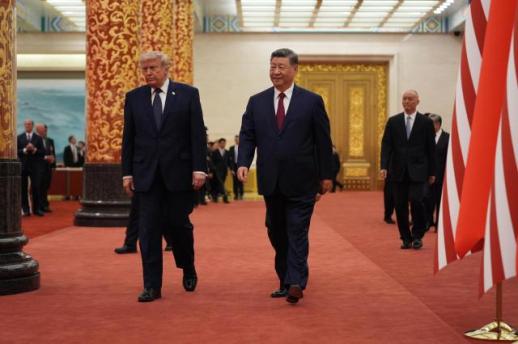 Trump Uses Taiwan as Negotiation Leverage Amid U.S.-China Talks Japanese media reported that while U.S. President Donald Trump and Chinese President Xi Jinping avoided direct conflict during their recent summit in Beijing, tensions surrounding Taiwan have intensified. Trump suggested that arms sales to Taiwan could be used as a bargaining chip in negotiations with China, raising concerns that the U.S. commitment to Taiwan's defense may be wavering. Although both nations publicly advocate for 'stability,' Japan perceives the situation as an 'unstable stability' influenced by Taiwan, supply chains, and U.S.-China transactions. Asahi Shimbun highlighted Trump's remarks during a Fox News interview on May 16, where he stated that Taiwan arms sales depend on China and described them as “very good negotiation material.” He avoided giving a definitive answer on whether he would approve arms sales, saying, “We could do it, or we could not.” Asahi noted that this statement could undermine the longstanding U.S. practice of not consulting China prior to arms sales to Taiwan. Asahi particularly pointed out the 'Six Assurances' established by the Reagan administration in 1982, one of which stipulates that the U.S. would not consult China regarding arms sales to Taiwan. This has been a key aspect of U.S. policy toward Taiwan. However, Trump indicated that he does not regard this practice as significant, stating, “The 1980s was quite a long time ago.” If arms sales to Taiwan become a bargaining tool with China, it could raise questions about the U.S. commitment to Taiwan's security. Nikkei also reported on May 17 that while the U.S. and China presented a 'constructive strategic stability relationship,' the Taiwan issue remains a major flashpoint. The stability that China refers to is predicated on the U.S. respecting its stance on Taiwan. Xi warned during the summit that mishandling the Taiwan issue could lead to confrontation and put U.S.-China relations in a precarious position. Nikkei noted that Trump’s mention of using Taiwan arms sales as a negotiation card could provoke a backlash from China if implemented, while withholding sales could heighten anxiety in Taiwan and Japan, keeping the Taiwan issue as a significant destabilizing factor in U.S.-China relations. Japanese media focused more on the underlying implications of the U.S.-China summit rather than its immediate outcomes. Asahi described the meeting as an example of “unstable stability.” While both countries avoided direct confrontation over tariffs and export regulations, this was interpreted not as a resolution of conflicts but as a result of mutual dependence on each other’s vulnerabilities, such as rare earth elements and advanced technology. Asahi likened this to the détente of the Cold War era, noting that history shows such arrangements can be fragile. Yomiuri Shimbun also assessed that the tangible outcomes of the summit were limited. Trump emphasized a “great trade deal,” but specifics were confined to increased soybean imports from China and orders for Boeing aircraft. Yomiuri highlighted Trump’s display of personal rapport with Xi, noting that after a stroll in the Zhongnanhai gardens, Trump remarked, “We have really gotten close,” underscoring the strengthening of ties between the two leaders. Particularly concerning for Yomiuri was Trump’s reference to a 'G2' (Group of Two) dynamic, calling the U.S. and China “two great countries.” This terminology could imply an equal status for the U.S. and China as superpowers, raising concerns that Trump may be pursuing an international order prioritizing national interests alongside Xi. This has led to fears that Japan’s interests may not be adequately represented in potential U.S.-China negotiations. There are also analyses suggesting that China aims to buy time through this summit. Yomiuri posited that China seeks to delay confrontations with the Trump administration while securing time to recover from its real estate slump and sluggish consumption. Asahi noted that while China agreed to low-level demands such as increasing purchases of U.S. products, it avoided making concrete commitments on issues like the situation in Iran, indicating that the summit was largely conducted on China’s terms. Asahi reported a growing confidence within China that it can negotiate on equal footing with the U.S. This trend poses challenges for Japan as well. Asahi pointed out that while leaders and business figures from various countries, including the U.S., are engaging with China, Japan's relations with China have cooled to the point of a breakdown in dialogue. There are concerns that Japan may be sidelined in both diplomatic and economic spheres as the U.S. and China strengthen their ties. The potential for the U.S. to negotiate with China over Taiwan, the timing of U.S.-China interactions regarding supply chains, and Trump’s G2-style diplomacy could all limit Japan’s options. Major Japanese media do not view the U.S.-China summit as merely a step toward improving relations. While both countries have clearly decided to avoid reigniting a trade war and continue dialogue, this stability rests on precarious factors such as the Taiwan issue, supply chain dependencies, China’s strategy to buy time, and Trump’s transactional diplomacy. In particular, if Taiwan arms sales are treated as a bargaining chip in negotiations with China, the stability of U.S.-China relations could mark the beginning of new instability for security in East Asia, a point emphasized by major Japanese outlets.* This article has been translated by AI. 2026-05-17 15:54:43
 -
 Companies Pretend to Use AI Effectively While Downsizing Employees "To survive, we must use AI effectively. So, let's just pretend to do so." The phenomenon of 'AI washing,' where companies exaggerate their use of artificial intelligence, is permeating organizations from top to bottom. Employees are shifting unnecessary tasks to AI to boost their usage scores, while management is using AI as a pretext for layoffs despite a lack of profitability. According to the IT industry on May 17, Amazon has implemented its internal AI agent platform, 'Mesiclo,' mandating that over 80% of developers use AI tools weekly and tracking individual token consumption on an internal leaderboard. Tokens represent units of text processed by AI, with higher usage leading to increased consumption. Mesiclo is designed to automate repetitive tasks such as code deployment, email sorting, and Slack message handling. However, some employees have been found engaging in 'token macing,' using AI for tasks that do not require it. This practice reflects a superficial increase in usage that impacts performance evaluations. Similar cases have been reported at Meta and Microsoft last month. Research from Gartner, which surveyed 350 executives from global companies with annual revenues exceeding $1 billion, revealed that 80% of firms implementing AI and automation technologies have conducted workforce reductions. However, most companies that have downsized under the guise of AI have shown low returns on investment (ROI). In contrast, companies performing well are utilizing AI as a tool for productivity enhancement rather than layoffs. According to outplacement firm Challenger, Gray & Christmas, the number of layoffs attributed to AI this year has already reached 49,135, nearing last year's total. In March and April, AI was the leading cause of layoffs. This situation exemplifies Goodhart's Law, which states that once a measure becomes a target, it ceases to be a good measure. The pressure to demonstrate 'AI engagement,' whether through token consumption or layoff announcements, prioritizes numerical management over actual performance, highlighting a structural issue. Sam Altman, CEO of OpenAI, pointed out in February that there is a tendency to blame layoffs on AI, a form of AI washing. Dario Amodei, CEO of Anthropic, initially claimed that AI would replace half of entry-level white-collar jobs but has since retracted that statement.* This article has been translated by AI. 2026-05-17 15:51:00
 -
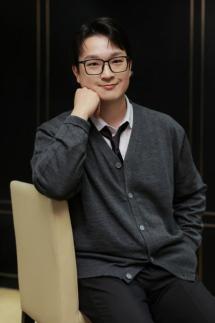 Interview with Director Kim Min-ha: 'Girls Do Not Die... We Want to Keep Winning' Short films like 'Red Mask KF94' and 'Burger Song Challenge,' along with the movies 'Amoeba Girls and School Ghost Stories: Founding Day' and 'Student Teaching,' showcase Kim Min-ha's talent for twisting familiar realities with peculiar imagination and a sense of comedy. In her feature films, she has layered the friendship of girls with the anxieties of the times, making her unique style more evident. "Movie ratings are either 1 or 10," she joked, indicating the strong support from her audience."Those who rated it 1 and those who rated it 10 call each other viral. But now I feel like I understand a bit about what the audience wants. Once we officially release the film, I expect more feedback, but from the reactions at the preview, I thought, 'I understand what these people want to see.' So, I felt the urge to take a gamble. Basically, making this kind of personal film while trying to gain everyone's recognition seems to lead to unhappiness. If I break down that fence, everything I have could collapse too. Right now, I think I'm working to not lose the audience that appreciates my films."Her new film 'Student Teaching' is a high school horror-comedy about enthusiastic student teacher Eun-kyung facing a death mock exam against a ghost from the college entrance exam. Although it continues the narrative of her previous work 'Amoeba Girls and School Ghost Stories: Founding Day,' the production process was not smooth. While the previous film garnered 30,000 viewers and built a fan base, it still faced harsh evaluations in the market."'Amoeba Girls and School Ghost Stories' was originally planned as a series. We intended to continue with titles like 'Founding Day' and 'Student Teaching.' However, after 'Founding Day' attracted 30,000 viewers, expectations for the series diminished. While I'm grateful for the 30,000 viewers, it's hard to consider it a commercial success by the market's standards. So, instead of continuing the series title, we released it under the name 'Student Teaching.'"The production environment also changed significantly. They had to complete the film with a budget much smaller than initially anticipated. Nevertheless, most of the staff who had worked on the previous film returned. For Kim, that time was also a survival process for making the film."We ended up filming with less than half of the budget we thought we needed. 95% of the staff were the same as the previous film, and they all had a passion for the project. At the start, I gathered the staff and said, 'The production cost is this much. It's less than half of what we originally planned. So, feel free to leave; I won't hold it against anyone.' Yet, no one left. Everyone stayed. We filmed by cutting down on what was possible. The actors also worked very hard. We shot tightly, and I edited the film myself to submit it to festivals, but I completely burned out."A turning point came unexpectedly when 'Amoeba Girls and School Ghost Stories: Founding Day' was released on an online streaming service, gaining significant popularity. On social media, it was referred to as a 'Girls Night Movie,' revealing another potential."Last September, when 'Amoeba Girls and School Ghost Stories' was released on OTT, it became a 'boom.' It gained traction as a 'Girls Night Movie.' With an audience supporting the film, discussions about making 'Student Teaching' began. I often found myself emotional during that time. This film is about the friendship of girls. But as it became a 'Girls Night Movie'... isn't 'Girls Night' a time for friends to gather and share their friendship? Ultimately, I feel that the friendship and laughter of girls saved this film. I cried a lot reading the reviews."The affection of fans for the previous work became an important guideline for Kim Min-ha in creating the sequel. He wanted to maintain the attitude that audiences loved while avoiding repeating the same story. He aimed to convey the message that 'girls win' while addressing the sadness of contemporary issues through the lens of educational authority and public education."What I wanted to keep as a series was the sentiment that 'girls do not die, girls win.' I wanted to carry that forward. What I wanted to do differently is that I believe comedy should contain the sadness of the times. While the previous work had sadness about competition, this film aims to capture the sadness surrounding educational authority, the disappearance of traditional schools, and the expansion of private education. So, I thought it wouldn't be the same as the previous work."The issue of educational authority became a significant focus for Kim after his short film 'Burger Song Challenge' was selected as the closing film for the 2023 Education Film Festival. The closing ceremony coincided with the 49th memorial of the late teacher Seo Yi-cho and 'Public Education Suspension Day.' Teachers dressed in black filled the audience, and after watching the film, many expressed that they found comfort in it. Kim felt the weight of the reality of crumbling educational authority more profoundly than before."In 2023, my short film 'Burger Song Challenge' was selected as the closing film for the Education Film Festival. The closing ceremony was on the day of the 49th memorial of the late teacher Seo Yi-cho and 'Public Education Suspension Day.' Teachers dressed in black watched the film and told me they found comfort in it. I realized that the issue of crumbling educational authority was much larger than I had thought. From that moment, I wanted to create a film addressing the sadness surrounding this issue."This experience also influenced the direction of 'Student Teaching.' Kim felt that the issue of educational authority was not just a social issue reported in the news but a sadness that the current era carries. In this process, he incorporated the disappearance of traditional learning spaces, the instability of public education, and the growing private education market into the film."As I became interested in the issue of educational authority, I realized it was much more serious than I had thought. It felt like more than just a social issue; it felt like a sadness of our time. So, I decided that 'Student Teaching' should include a story about educational authority. We were taught that 'we do not step on the shadow of our teachers' as a virtue. But I became curious about how that sentiment has disappeared. In that process, I also looked into the background of the disappearance of traditional schools. Shamefully, I thought traditional schools naturally disappeared during modernization, but I learned that there was history and sadness behind it. Those emotions intertwined, leading me to think about the instability of public education and the reality of the expanding private education market. It's strange and sad that while the number of students decreases, private education continues to grow. Ultimately, I believe all of this reflects the sadness of our current era."'Student Teaching' does not provide answers to these issues. Kim also expressed a desire to create a moment for the audience to reflect rather than present solutions. He believes that embedding the sadness of the times within a comedic genre is his approach to comedy."This film does not provide answers. However, if it can serve as a moment for audiences to reflect on the issues of educational authority, the history of disappearing traditional schools, and the reality of expanding private education, I would consider it a success. I wanted to include the sadness of the times within a film that is meant to be enjoyed and laughed at."The casting of Han Sun-hwa also aligned with this perspective. While choosing a popular face was part of the decision, Kim emphasized the importance of balancing comedy and sadness. He aimed for humor that is funny but not foolish, light yet not trivial. Han Sun-hwa resonated with this vision and helped anchor the film."I had many serious discussions with actress Han Sun-hwa. We talked about how to convey this sadness and how to make it funny without being foolish. She effectively anchored the film. For her, the comedic aspects were secondary; the primary focus was on the sadness of educational authority. She empathized with this sadness. Fans who come expecting Han Sun-hwa will see a different side of her talent in this work."Finally, Kim reflected on the sentiments received from audiences who appreciated her previous work. Although the film elicited strong opinions, the responses from viewers who accurately understood her style and attitude left a lasting impression. In particular, a review stating, "Choosing the wrong answer because you know the right one" resonated with Kim as a guiding principle for the series moving forward."There was a line from a review of 'Amoeba Girls and School Ghost Stories: Founding Day' that deeply moved me. It said, 'Choosing the wrong answer because you know the right one.' In genre films, there is often a path considered the right answer. However, 'Amoeba' is seen as a film that continuously deviates and goes off-road. I thought, 'Ah, this is something I must not forget when making this series in the future.'"* This article has been translated by AI. 2026-05-17 15:47:32
 -
 Jung Cheong-rae Urges Democratic Unity for Jeonbuk's Development Jung Cheong-rae, chairman of the Democratic Party, called on May 17 for a unified Democratic presence in Jeonbuk's upcoming gubernatorial election, targeting independent candidate Kim Kwan-young. He emphasized that having a Democratic president, governor, and lawmakers is essential for effective development in the region, particularly highlighting the importance of collaboration on projects like the Saemangeum development. "For Jeonbuk to thrive, we need to be united as the Democratic Party," he stated. Speaking at the opening of Park Ji-won's campaign office for the National Assembly by-election in Jeonbuk's Gimje, Jung argued that a cohesive Democratic presence is necessary for progress. He reiterated, "With the president, governor, and all lawmakers from the Democratic Party, everything will function smoothly like a well-oiled machine." Jung also addressed the need for collaboration on regional development, stating, "Shouldn't President Lee and Jeonbuk work together for development?" He stressed that unity within the Democratic Party is crucial for successful initiatives. Earlier that day, after attending a mass at Nabawi Cathedral in Iksan, Jung spoke with reporters about Kim Kwan-young's independent candidacy after leaving the Democratic Party. He asserted that the government and party must operate as one team to ensure efficiency in all matters. "If any of these roles are not filled by the Democratic Party, it could create challenges in working together effectively," he noted.* This article has been translated by AI. 2026-05-17 15:42:30
 -
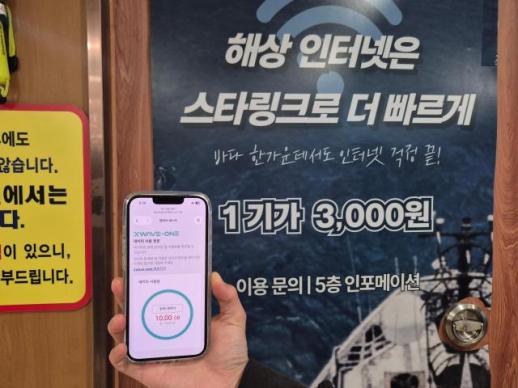 KT SAT Introduces Starlink Internet on Ulleungdo Cruise Ship "It feels like the internet is faster on the ship than at home." On May 12, aboard the New Sea Dao Pearl, a large passenger ferry traveling between Pohang and Ulleungdo, a video call was made via KakaoTalk with a friend on land. The call maintained high quality without interruptions or audio delays for about 40 minutes, using approximately 1GB of data with no noticeable drop in speed. The onboard communication environment exceeded simple web browsing and video calls, proving suitable for actual development work. Using OpenAI's Codex, a so-called 'Vibe coding' method was employed to implement a news keyword AI agent, completing a task that took about 10 minutes on land in approximately 16 minutes onboard. Generative AI-based coding was successfully performed while the ferry was in motion. According to the Korea Intelligent Information Society Agency (NIA), the download speed in the cruise cabin reached 181.34 megabits per second (Mbps), nearly identical to the corridor measurement of 180.68 Mbps. Historically, internet access on large passenger ferries was limited. Existing geostationary satellite services offered maximum speeds of around 2 Mbps, making even simple message sending difficult for over 1,000 passengers. However, with KT SAT's introduction of Starlink's low Earth orbit satellite service, the onboard communication environment has significantly improved. George Hoon, head of KT SAT's Global and Marine Customer Service Solutions Task Force, stated, "In the past, it was challenging to send even a single message when many passengers were onboard. By combining Starlink with our own solutions, we have made it possible to achieve internet conditions comparable to those on land while at sea." KT SAT has also applied its proprietary solution, 'XWAVE-ONE.' This solution adds features such as network separation for passengers, crew, and operational networks, which were difficult to implement with Starlink alone. Hoon explained, "Starlink does not have the necessary network separation or billing functions for ship operations, so we needed to develop a solution. XWAVE-ONE allows for the separation of passenger and operational networks and enables usage management, making it a ship-specific solution." One of the most notable services is KT's table order service, 'HiOrder,' installed in each cabin. Passengers can order drinks, snacks, and even local specialties from Ulleungdo through the cabin screen. This has enabled onboard commerce services while establishing a stable high-speed Wi-Fi environment within the moving vessel. To achieve this, KT SAT also conducted a separate design process for wireless access points (AP) tailored to the cruise ship's internal structure. Lee Bong-ha, a member of KT SAT's Global and Marine Customer Team, emphasized, "Our staff measured and adjusted the AP locations by going directly into the cabins and restrooms to ensure stable communication quality even when the door is closed and inside the restroom." This service not only improves cruise internet access but also expands revenue models for shipping companies. According to KT, the service currently generates an average additional net profit of over 1.5 million won per day based on operational standards. In the future, KT aims to establish a total of 150 HiOrder units on the Ulleungdo cruise, targeting related revenue of over 10 million won. KT SAT is currently in discussions with overseas shipping companies based on the XWAVE-ONE solution. Hoon noted, "There are not many cases of combining network separation, authentication, and billing systems with Starlink-based ship networks, and we are receiving inquiries from overseas shipping companies regarding this matter." 2026-05-17 15:39:37
 -
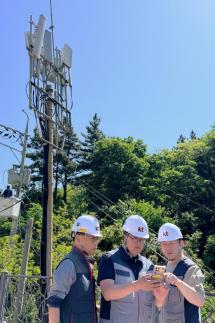 KT Ensures Reliable Communication Services on Ulleungdo Island On May 12, a passenger ferry departed from Pohang around midnight and arrived approximately six hours later at Ulleungdo, South Korea's easternmost island, located about 208 kilometers from the mainland. Despite its isolation risks during severe weather, Ulleungdo maintains a communication network with stability comparable to that of the mainland. According to KT, approximately 3,800 of the 5,500 households on Ulleungdo subscribe to internet services, while over 4,200 households use IPTV services. Yoon Chang-ho, head of the Pohang Operations Team at KT's Daegu-Gyeongbuk Access Operations Center, stated, "KT is the only telecom provider on Ulleungdo offering internet service at speeds of up to 10 gigabits per second (10Gbps). Beyond standard commercial services, we also play a crucial role in the national disaster communication network for the Ulleungdo and Dokdo regions." ◇KT Builds Unique Microwave Backup Network to Ensure Connectivity The backbone of Ulleungdo's communication network is its redundancy structure. The island is connected to the mainland via an undersea fiber optic cable, which poses a risk of total communication disruption during typhoons or underwater accidents. In response, KT has established a microwave (MW) backup network, the only one among South Korea's major telecom companies, connecting the mainland to Ulleungdo. This network aims to maintain essential national communication and internet services in the event of an undersea cable failure. The Gamulgyo relay station, located in Ulleung-eup, serves as a key point in the maritime communication network connecting Ulleungdo and Dokdo. One side of the station faces Mount Hambak in Gangwon Province, while the other faces Dokdo. The top of the tower is equipped with long-range maritime coverage LTE antennas, and 5G equipment is installed in the middle section. Through this communication network, KT provides reliable services not only to the residents of Ulleungdo but also to distant fishing vessels. Currently, nine KT staff members, including two dedicated employees and seven from the group, are stationed on the island to handle outages and maintenance. Kim Won-hun, deputy head of the Pohang Operations Team, noted, "We are actively installing base stations in the highlands of Ulleungdo to improve overall communication quality." ◇Communication Support Extends to Jukdo and Dokdo Coast Guard KT's communication support for island regions also extends to Jukdo, a small island near Ulleungdo, and Dokdo. Currently, Jukdo is home to a single family. KT has established a customized communication support system that converts LTE signals to provide internet services for the residents. As a result, residents of Jukdo can access internet and 5G smartphone services. Lee Chang-ha, head of the Dongdaegu Engineering Team at KT's Daegu-Gyeongbuk Access Operations Center, explained, "Given the challenging environment for installing fiber optic cables, we have adopted a method to convert LTE signals for internet service. We regularly check the quality status and monitor for any outages." Dokdo also saw its communication network established by KT in November 2018, making it the first provider on the island. Since then, continuous equipment upgrades have enabled wireless transmission speeds of up to 1 gigabit per second (Gbps). ◇Engineers Work to Restore Internet Amid Heavy Snow Maintaining and managing the communication network on Ulleungdo goes beyond simple facility maintenance. Due to the island's unique characteristics, which include frequent severe weather and isolation risks, the safety and daily lives of residents are at stake. Jeong Hyun-yong, from KT Service's Southern Daegu Headquarters, shared his experience of restoring communication equipment during heavy snowfall while working on Ulleungdo. He recounted, "At that time, over 1.2 meters of snow had accumulated, blocking the entrance to residents' homes. The outdoor internet lines were also severed, so I had to clear the snow and restore the communication facilities on-site." He added, "I worked for about an hour, digging through the snow to ensure residents' safety. Such situations are common on Ulleungdo." During winter, severe weather can disrupt ferry services, making it difficult to procure communication materials. In these cases, on-site engineers temporarily install personal equipment or office devices to support internet and TV access for elderly residents. Kwon Dae-hyun, from KT Service's Southern Daegu Headquarters, emphasized, "In Ulleungdo, communication is not just a convenience; it often relates directly to safety. Our most important role is to ensure that residents can live without inconvenience." 2026-05-17 15:28:33