
Journalist

Ra Mason
-
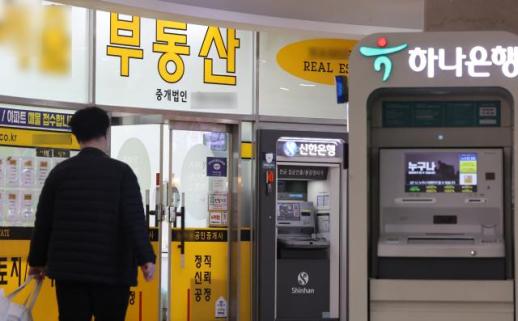 Household Loans Increase by 2.1 Trillion Won, Driven by Housing Loans Last month, household loans from banks increased significantly, primarily driven by housing-related loans. According to the Bank of Korea's report on 'Financial Market Trends' released on May 17, the balance of household loans from deposit banks, including policy mortgage loans, stood at 1,174.9 trillion won at the end of last month, marking an increase of 2.1 trillion won from the previous month. The rise in household loans was largely attributed to an increase in housing loans. The balance of housing loans rose by 2.7 trillion won to 937.6 trillion won last month. After remaining stable in March, housing loans turned upward in April due to increased housing transactions and demand for interim payments, despite a slowdown in demand for rental funds. In contrast, the balance of other loans, including credit loans, decreased by 600 billion won to 236.5 trillion won. This decline followed an increase in March driven by stock investment demand, but in April, repayments increased as individuals sold off stocks. Park Min-cheol, head of the Bank of Korea's Market Analysis Team, stated, "Overall, household loans showed a relatively low growth rate and did not deviate significantly from the government's total management target." The balance of corporate loans from banks reached 1,397.7 trillion won, reflecting an increase of 10.7 trillion won from the previous month. Loans to small and medium-sized enterprises rose by 5.7 trillion won, driven by demand for corporate lending and value-added tax payments from major banks. Corporate loans to large enterprises increased by 5 trillion won from the previous month due to heightened demand for repayments of short-term notes, dividend payments, and corporate bond redemptions at the end of the quarter. As for corporate bonds, the scale of net repayments surged from 300 billion won in March to 3.9 trillion won as companies increased funding through commercial paper and loans amid rising interest rate volatility. Regarding the outlook for household loans, Park noted, "The leading indicator for household loans can be seen in the housing market. As the housing market in the metropolitan area approaches the end of the grace period for the transfer tax on multiple homeowners, related listings have been absorbed, leading to an increase in prices and a significant rise in transaction volume. While household loans are expected to continue a limited growth trend due to tightened financial sector management, there are still factors of instability in the metropolitan housing market, so it remains to be seen whether a stable trend will emerge."* This article has been translated by AI. 2026-05-17 12:03:00
 -
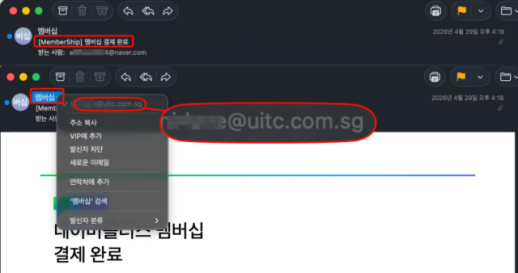 Phishing Emails Masquerading as Naver Plus Membership Notifications Phishing emails disguised as Naver Plus membership payment notifications are being circulated, aiming to steal user account information. These emails trick users into clicking links that lead to fake security pages where they are prompted to enter their passwords. According to the IT industry on May 17, Naver has issued a warning through its customer service about phishing emails posing as "Naver Plus Membership Payment Completed" notifications, urging users to exercise caution. Naver stated, "The phishing emails are titled 'Payment Completed.' The company clarified, "Official Naver notification emails do not use this format." Users should also carefully check the sender's email address, as phishing emails use domains other than the official Naver domain 'navercorp.com.' Additionally, clicking the 'Go to My Membership' button in the phishing email redirects users to a fraudulent domain. The phishing email browser displays a warning labeled 'Attention Required.' Naver emphasized, "Naver login and security settings pages only request information from 'nid.naver.com.'" If users have entered their account information on the phishing page, they should change their Naver account password as soon as possible. They should also update passwords for any other sites using the same ID and password as their Naver account. Phishing attempts impersonating Naver have been repeatedly confirmed. Last August, a new phishing scheme exploiting the frequently used 'easy login' feature was discovered. Naver has previously advised users to verify the domain in the browser's address bar when using the easy login feature.* This article has been translated by AI. 2026-05-17 11:48:55
 -
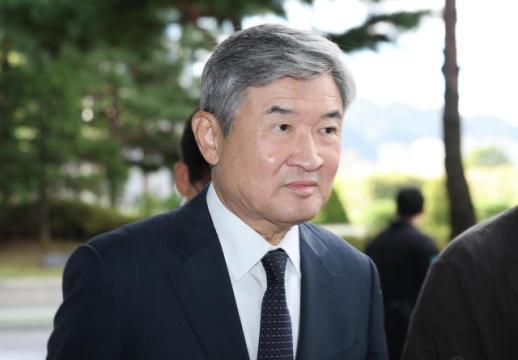 Verdict Expected for Former National Intelligence Chief Jo Tae-yong on May 21 Jo Tae-yong, the former head of the National Intelligence Service, is set to receive a verdict on charges of dereliction of duty and violating the National Intelligence Service Act for failing to report the planned emergency martial law declaration to the National Assembly. According to legal sources, the Seoul Central District Court's Criminal Division 32, led by Judge Ryu Kyung-jin, will hold the first-instance verdict hearing on May 21 for Jo, who has been indicted and detained since last November. Jo was arrested by the special prosecutor's team led by Cho Eun-seok for allegedly failing to fulfill his duties as the head of the National Intelligence Service during the emergency martial law declared on December 3, 2024. The special prosecutor's team determined that Jo neglected his responsibilities by not informing the National Assembly about former President Yoon Suk-yeol's plans for the martial law declaration, despite receiving reports from former NIS Deputy Director Hong Jang-won that the military was dispatched to arrest key political figures, including Lee Jae-myung and Han Dong-hoon. Additionally, after the martial law was lifted, Jo is accused of providing closed-circuit television (CCTV) footage of Hong's movements only to the ruling People Power Party while withholding similar footage of his own movements from the opposition Democratic Party, violating the prohibition against political involvement as stipulated in the National Intelligence Service Act. Jo also faces charges of perjury for allegedly providing false testimony to the National Assembly and the Constitutional Court, as well as submitting false responses to the National Assembly's investigation into the martial law allegations. Furthermore, he is accused of participating in the destruction of evidence related to the deletion of information from the secure phone of former President Yoon and Deputy Director Hong. During the closing arguments held on April 3, the special prosecutor's team requested a seven-year prison sentence for Jo, stating, "The defendant was aware of the unconstitutional and illegal martial law declaration plans by the president but completely ignored his constitutional duty to prevent or report it to the National Assembly." They emphasized that the head of a national intelligence agency facilitating a conspiracy to commit insurrection and attempting to destroy evidence afterward is a serious offense. In contrast, Jo's defense team firmly denied all charges throughout the trial, asserting his innocence. They argued that Jo was not in a position to be fully aware of the president's martial law declaration plans and that even if he had known, he lacked the authority to physically or legally prevent the president's decision to mobilize the military. They contended that the NIS itself was not directly involved in executing the martial law and that the submission of CCTV footage was merely a routine administrative task without any political intent to assist a specific party. They also maintained that the deletion of secure phone information was part of the agency's security protocols, not an act of evidence destruction. The upcoming verdict for Jo is expected to establish legal standards regarding the role of intelligence leaders in national crises. Legal experts suggest that if Jo's testimony during the Constitutional Court impeachment trial is ruled as perjury, it could serve as strong evidence supporting the illegality of former President Yoon's martial law declaration process.* This article has been translated by AI. 2026-05-17 11:45:54
 -
 FIFTY FIFTY Releases 'After School Exorcism Club' MV Featuring Acting Debut FIFTY FIFTY has unveiled the music video for 'After School Exorcism Club,' marking the members' first foray into acting and generating significant buzz around the project.The music video was released on the KITZ YouTube channel, showcasing the five members of FIFTY FIFTY as they transform into the characters of the exorcism club, highlighting their upcoming adventures. The video captures the essence of a high school occult comedy, featuring vibrant visuals and the members' engaging portrayals.'After School Exorcism Club' tells the story of five quirky high school girls who band together to exorcise a spirit haunting their school. As the group's first acting project, it has attracted attention even before its release. The content is part of a larger project that shares a universe with FIFTY FIFTY's upcoming album 'Imperfect-I'mperfect,' set to be released on June 1, and includes not only a short-form drama but also a feature film and mid-form series.The music video features the new album track 'STARSTRUCK,' which showcases FIFTY FIFTY's innovative approach, blending a quirky yet hip atmosphere. It connects the music and drama's narrative, allowing fans to enjoy both the album and the video content together.Following the video's release, comments have poured in, with viewers praising the members' acting skills. Comments included, "Let's go to Hollywood," "The members act really well. I was truly surprised by Kina," "It feels like a horror blockbuster," and "The story and concept seem really fun," reflecting a growing anticipation for the main content.KITZ stated, "Viewers can expect to see a different side of FIFTY FIFTY as they take on acting roles. We anticipate this will provide a new experience that combines music and storytelling."KITZ has consistently produced content featuring K-pop artists in leading roles, starting with NCT's Jeno and Jaemin in 'Wind Up,' followed by VERIVERY's Kangmin in 'Jump Boy LIVE,' and CRAVITY's Hyungjun in 'Kill the Romeo.' After 'After School Exorcism Club,' upcoming projects include Lee Min-ki and MONSTA X's Hyungwon in 'The Grim Reaper's Life Extension Project,' and Younghoon, Iruda, and Kim Dong-jun in 'Love WiFi-Gung.'Meanwhile, FIFTY FIFTY's KITZ premium short-form drama 'After School Exorcism Club' is available for viewing on KITZ.* This article has been translated by AI. 2026-05-17 11:37:46
 -
 Polls Show Democratic Candidates Leading in Seoul and Busan Recent polling indicates that candidates from the Democratic Party are leading their People Power Party counterparts in the key battlegrounds of Seoul and Busan ahead of the June 3 local elections. According to the National Election Survey Deliberation Commission, a survey commissioned by KBS and conducted by Korea Research from May 11 to 14 found that Jung Won-o, the Democratic candidate for Seoul Mayor, received 43% support, while Oh Se-hoon, the People Power Party candidate, garnered 32%. By age group, Jung received 61% support from voters in their 40s and 69% from those in their 50s, significantly outpacing Oh, who received 22% and 18% support from the same age groups, respectively. However, Oh led among voters in their 30s and those aged 70 and older, with 40% and 46% support, compared to Jung's 28% and 33%. Notably, a significant portion of voters remain undecided. Among respondents, 28% indicated they might change their preferred candidate, while 71% stated they would continue to support their current choice. In a similar survey conducted for the Busan mayoral race, Jeon Jae-soo, the Democratic candidate, received 42% support, leading Park Hyung-jun of the People Power Party, who garnered 33%. Jeon also outperformed Park among voters in their 40s and 50s, receiving 64% and 55% support, respectively, compared to Park's 19% and 32%. Park, however, led among voters aged 30 and under and those aged 70 and older, with 38% and 42% support, while Jeon received 16% and 30% in those age groups. In Busan, 20% of respondents indicated they might change their preferred candidate, while 78% expressed continued support for their current choice. The surveys were conducted with 800 eligible voters from both Seoul and Busan, using telephone interviews. The margin of error for the polls is ±3.5 percentage points at a 95% confidence level (for more details, refer to the National Election Survey Deliberation Commission website). * This article has been translated by AI. 2026-05-17 11:36:58
 -
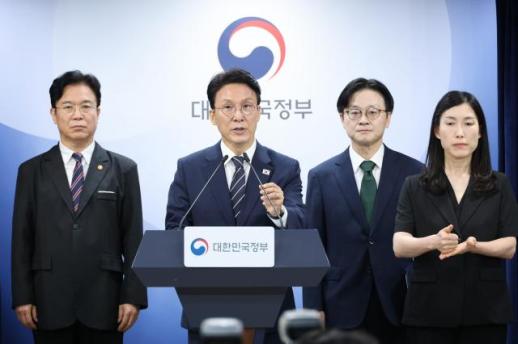 Prime Minister Kim Warns Samsung Strike Could Cost Up to 100 Trillion Won The government stated on May 17 that it is "very concerned about the significant damage to the national economy" if a strike at Samsung Electronics materializes, emphasizing that it recognizes the situation as extremely serious. Prime Minister Kim Min-seok explained that the economic damage could reach up to 100 trillion won, warning that South Korea could lose the strategic advantage it has gained in the global AI semiconductor race to competing nations. He urged both labor and management to make efforts to find common ground. In a public address at the Government Seoul Building, Kim requested that the Samsung Electronics union prioritize dialogue and compromise over a strike, stating, "If a situation arises where significant damage to the national economy is expected due to a strike, the government will have no choice but to consider all possible measures, including emergency mediation, to protect the economy." The government held its second emergency ministerial meeting that morning. Kim remarked, "The government is acutely aware of the current situation," and expressed the need to convey the government's firm stance to the public, urging both sides to resolve this crisis through dialogue and compromise rather than resorting to extreme measures like a strike. He added that negotiations on May 18 represent a crucial opportunity to prevent a strike, stressing that both labor and management should not take this moment lightly. Samsung Electronics accounts for 22.8% of South Korea's exports (as of the first quarter of 2026) and comprises 26% of the total market capitalization, employing over 120,000 people and serving as a core pillar of the economy alongside more than 1,700 partner companies, according to Kim. Kim warned, "If this strike occurs, the economic losses we face will be beyond imagination," noting that even a single day of halted operations at Samsung's semiconductor plants could lead to direct losses of up to 1 trillion won. He further expressed concern that, due to the nature of semiconductor production lines, a brief stoppage could lead to months of disruption, with potential economic damages from wafer disposal during a strike estimated to reach up to 100 trillion won. "Most concerning is that South Korea could entirely relinquish the strategic advantage it has painstakingly secured in the global AI semiconductor war to competing nations," he added. Kim reiterated his strong request to both labor and management at Samsung Electronics, urging them to quickly establish a reasonable and mutually beneficial solution through sincere dialogue that aligns with the public's expectations. He concluded by stating, "The government will actively support dialogue between labor and management to prevent any strike under any circumstances," and urged both sides to seek a path of cooperation for the future of South Korea's economy and businesses." Kim emphasized, "However, if a situation arises where significant damage to the national economy is anticipated due to a strike, the government will have no choice but to consider all possible measures, including emergency mediation, to protect the economy."* This article has been translated by AI. 2026-05-17 11:34:00
 -
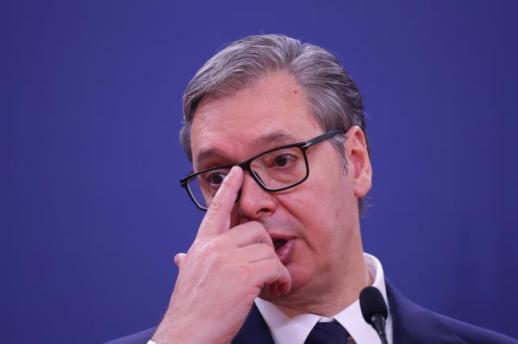 Serbian President to Visit China for Talks with Xi Jinping Following Putin's Trip Aleksandar Vučić, the President of Serbia, is expected to visit China soon for talks with President Xi Jinping. According to reports from TASS and other outlets on May 16, Vučić announced during a public address that he would meet with Xi a few days after Russian President Vladimir Putin's visit to China. "We are waiting for final confirmation. I understand that President Putin will visit China on the 19th and 20th, as has already been announced. A few days later, we will visit China to meet with President Xi," Vučić stated. Putin is scheduled to make a state visit to China at the invitation of Xi to mark the 25th anniversary of the signing of the Treaty of Friendship and Cooperation between the two countries. This visit comes just four days after U.S. President Donald Trump concluded his trip to China. While the U.S. and China have struggled to reach clear agreements on key issues such as Iran, Taiwan, and trade disputes, there are expectations that Russia and China will showcase their strategic partnership during this summit. Vučić emphasized, "It is a special honor for us to officially visit China following President Trump and President Putin. I have high hopes for this visit." Serbia, under Vučić's leadership, is considered one of the most pro-China countries in Europe. The nation has actively participated in China's Belt and Road Initiative, which aims to connect Central Asia and Europe through land and maritime routes, and has pursued infrastructure projects such as power plants and railways. Additionally, while Vučić has expressed a desire for Serbia to join the European Union, he continues to maintain close ties with Russia. His attendance at last year's Victory Day celebrations in Moscow, where he stood alongside Putin, has raised concerns in the West regarding Serbia's alignment amid increasing pressure on Russia.* This article has been translated by AI. 2026-05-17 11:30:00
 -
 Korean Film 'Gunch' Receives Standing Ovation at Cannes, Tops Domestic Box Office Pre-Sales Film 'Gunch' has generated significant buzz after its world premiere at the Cannes Film Festival, where it received a standing ovation, and it has now topped the domestic box office pre-sales ahead of its release.According to the Korean Film Council's integrated ticketing system, as of 8:27 a.m. on May 17, 'Gunch' recorded a pre-sale rate of 28.1%, with 94,743 tickets sold, placing it at the top of the pre-sale rankings. It surpassed competing foreign films, including 'Michael,' which opened last week, as well as 'The Devil Wears Prada 2' and 'Super Mario Galaxy.''Gunch' depicts the struggle of isolated survivors against evolving infected individuals in a high-rise building sealed off due to an unidentified infection outbreak. It is the latest work from director Yeon Sang-ho, known for establishing the K-zombie genre with films like 'Train to Busan' and 'Peninsula.'The film's pre-release interest was confirmed at the Cannes Film Festival, where it premiered on May 16 (local time) in the Midnight Screenings section at the Palais des Festivals. The 2,300-seat theater was filled with local audiences and film industry professionals, including director Yeon Sang-ho and actors Jun Ji-hyun, Koo Kyo-hwan, Ji Chang-wook, and Shin Hyun-bin.Park Chan-wook, the jury president of this year's Cannes competition, welcomed the 'Gunch' team on the red carpet alongside Thierry Frémaux, the festival's executive director. As the cast and director entered the theater before the screening, applause lasted for about five minutes, and after the film concluded, a standing ovation lasted approximately seven minutes.After the screening, Yeon Sang-ho expressed his gratitude, stating, "It is such an honor to present 'Gunch' again at the Cannes Film Festival, a dream come true. The overwhelming support will be a memorable experience for a long time as I continue to make films."'Gunch' portrays the desperate fight of those trapped inside a high-rise building in downtown Seoul following an unidentified mass infection outbreak.Following its premiere at Cannes and the surge in domestic pre-sales, 'Gunch' has emerged as one of the most anticipated films in theaters this May. Given its pre-sale success against a backdrop of strong foreign films, there is keen interest in whether it will translate into box office success after its release. The film is set to hit domestic theaters on May 21.Meanwhile, the 79th Cannes Film Festival will continue until May 23, featuring South Korean films such as Na Hong-jin's 'Hope' in the competition section, Jung Joo-ri's 'Dora' in the Directors' Fortnight, and Choi Won-jung's short film 'Rhapsody of Birds' in the La Cinef section.* This article has been translated by AI. 2026-05-17 11:27:55
 -
 ASIA DEEP INSIGHT: Is Bloomberg's National Dividend controversial coverage misreporting or overinterpretation? The press is not merely an institution that relays facts. In the age of global finance, international news agencies shape market psychology and, at times, influence the trajectory of national economies themselves. Vast pools of capital moving through New York, London, Hong Kong, and Singapore now react more swiftly to a single headline on a financial terminal than to the smokestacks of factories. In that sense, the recent dispute between Bloomberg L.P. and the South Korean presidential office over the so-called “National Dividend” proposal transcends an ordinary quarrel over journalism. It reflects a deeper collision — one involving the responsibilities of global financial media, the precision of public policy messaging, and the fundamentally different economic vocabularies of East and West. At the center of the controversy stood a Facebook post by Kim Yong-beom, the chief presidential policy aide. Kim referred to the expanding national wealth generated by advances in artificial intelligence and the semiconductor industry, invoking the phrase “National Dividend” while also mentioning Norway’s sovereign wealth fund model. His broader concern was not difficult to discern. In an era defined by AI-driven productivity revolutions, how should the gains of national growth be shared with society at large? Bloomberg, however, interpreted the proposal as a plan to redistribute corporate “excess profits” to the public. That interpretation quickly triggered concerns in financial markets that the South Korean government might be contemplating a windfall tax or some form of state-led redistribution of corporate earnings. Foreign investors grew visibly uneasy. Some reports even suggested that the remarks had contributed to a sharp decline in the Kospi index. The presidential office immediately pushed back. Officials argued that Kim had never advocated the direct confiscation of corporate profits. Rather, they said, he was discussing how to allocate “surplus tax revenues” generated by booming AI and semiconductor sectors. The office went so far as to send an official letter of protest to Bloomberg, emphasizing that Kim had neither proposed a windfall tax nor advocated transferring private-sector profits directly to citizens. So who, then, was correct? A sober reading suggests that the episode cannot easily be reduced to either outright misinformation or deliberate distortion. At the same time, the controversy was too consequential to dismiss as a mere misunderstanding. Markets did react. Investors did become nervous. Words mattered. Indeed, Kim’s original remarks included phrases such as “excess profits,” “National Dividend,” and “Norway’s sovereign wealth fund.” From the perspective of global investors — particularly those shaped by American financial culture — such language was bound to raise alarms. In the grammar of Wall Street, any government discussion linking “national dividends” and “excess profits” can easily be interpreted as a signal of redistributionist intent or increased state intervention in markets. Yet when Kim’s fuller explanation and the presidential office’s clarification are considered together, the central emphasis appears to have been different. The discussion was less about seizing corporate profits than about determining how to utilize increased tax revenues generated by rapid industrial expansion. In other words, the focus was not on redistributing “excess profits” themselves, but on allocating “surplus tax income” produced by economic growth. Ultimately, the controversy is best understood as a collision between ambiguous political language and the interpretive instincts of global financial journalism. Bloomberg, Market Reactions, and the Presidential Office’s Response Bloomberg occupies a uniquely influential position in global finance. Its terminals are embedded in the daily operations of investment banks, hedge funds, sovereign wealth funds, and asset managers across the world. A Bloomberg headline is not merely news; it is often interpreted as a market signal. The issue lay in the interpretive framework applied to Kim’s remarks. Bloomberg framed the “National Dividend” proposal as resembling a redistribution of corporate excess profits, a reading that inevitably unsettled investors. At the time, South Korean markets were already facing multiple pressures: fears of prolonged high U.S. interest rates, volatility in global technology stocks, and profit-taking in semiconductor shares. In such an environment, any policy signal that could be construed as punitive toward corporate earnings was likely to provoke anxiety among foreign investors. Still, attributing market declines solely to Kim’s remarks would also be an oversimplification. Numerous forces were affecting the market simultaneously. To claim that “Kim’s comments caused the Kospi to plunge” risks exaggerating the direct impact of a single political statement. The presidential office nevertheless responded forcefully. Officials accused Bloomberg of employing an “inaccurate framing” that contributed to market confusion. They reiterated that no windfall tax had been proposed and that the government had never intended to transfer private-sector profits directly to citizens. There was also a practical reason behind Seoul’s unusually sharp reaction. South Korea remains deeply dependent on global capital flows. In such an economy, a single policy misunderstanding can reverberate through currency markets, equities, and bond yields simultaneously. From the government’s perspective, correcting what it viewed as a misleading interpretation became a matter of financial stability. Yet policymakers, too, may draw lessons from the episode. Global markets do not interpret political language in the same way domestic audiences do. Terms such as “National Dividend” or “excess profits” may resonate within Korea as concepts of shared prosperity and inclusive growth, but internationally they can easily be read as indicators of market interventionism or anti-business sentiment. That is precisely why precision in policy communication matters. Kim Yong-beom’s Underlying Concerns and the Divided Expert Response The broader concerns raised by Kim are hardly unique to South Korea. Across the world, the rise of AI and platform-based economies has intensified debates over wealth concentration and the distribution of technological gains. In the United States, discussions surrounding Big Tech monopolies and digital taxation continue to intensify. The European Union has expanded efforts to regulate digital platforms and strengthen fair taxation mechanisms. The notion that the benefits of the AI revolution should improve society as a whole is increasingly a global concern. Kim’s argument was not fundamentally different. If AI and semiconductor industries propel South Korea into a new era of economic expansion, how should the resulting increase in public revenues be shared with the broader population? His reference to Norway’s sovereign wealth fund was particularly revealing. Norway transformed oil revenues from the North Sea into a long-term national asset designed to benefit future generations. It was not merely a welfare mechanism, but a strategic system for preserving and managing national wealth. The challenge, however, lies in South Korea’s political and financial sensitivities. Korea is among the fastest-moving financial markets in the world. Foreign participation is substantial, and global news flows exert enormous influence. In such an environment, a single phrase can matter more than the underlying policy itself. Experts remain divided Progressive economists argue that contemplating mechanisms for broader social participation in AI-era prosperity is both natural and necessary. Because AI industries tend to reinforce winner-takes-all dynamics, they contend that governments must explore new forms of social safety nets and wealth-sharing structures. Market-oriented analysts, however, emphasize the dangers of ambiguous language. In a country so dependent on international capital, policymakers must consider not only domestic political interpretations but also how their words will be translated by global investors. In that sense, the controversy was less about ideology than about a clash between political language and financial-market language. Western Media’s Limited Understanding of Asia — and the Need for a New AJP Era The episode also exposes another structural issue: the limited understanding of Asia within parts of the Western financial media establishment. Global finance remains heavily centered around New York and London. American free-market assumptions and Wall Street’s investment logic often shape the interpretive framework of international reporting. As a result, East Asia’s distinct development models and traditions of state-market coordination are not always fully understood. Countries such as South Korea, Japan, Singapore, and Taiwan developed through close interaction between governments, industries, and society. Discussions about sharing the benefits of growth therefore emerge within a different historical and cultural context than they do in the West. Yet Western financial media sometimes interpret these approaches too narrowly as signs of state intervention or redistributionism. The Bloomberg controversy reflects the limitations of that framework. At the same time, Asia cannot simply blame Western media. Asian governments and institutions must also improve their ability to communicate policy in language global markets can accurately interpret. Mutual understanding must evolve in both directions. The 21st century will not belong exclusively to the West. As Asia increasingly becomes the center of global economic growth, the world will require new media platforms capable of explaining Asian history, culture, economic structures, and policy thinking with nuance and depth. That is where AJU PRESS — AJP, or Asia Joint Press: Asia First Press — may hold particular significance. Its role should extend beyond merely translating Korean news into English. It should aspire to interpret Asia’s civilization, technology, economics, and political thought through an authentically Asian lens for a global audience. At its core, journalism is about understanding. When societies fail to understand one another, markets become unstable, politics becomes distorted, and mistrust deepens. The world now urgently needs a new era of journalism — one in which East and West move beyond mutual misunderstanding toward shared understanding and common prosperity. 2026-05-17 11:27:46
 -
 Iran Conflict and Hormuz Blockade Impact South Korea's Economy The conflict in Iran, triggered by U.S. and Israeli airstrikes, has now lasted nearly three months, with the Strait of Hormuz under full blockade for over two months. Although this war is taking place 7,000 kilometers away from South Korea, the impact on the South Korean economy, which heavily relies on Middle Eastern energy, is significant. International oil prices have surged, leading to shortages of petrochemical products, raising concerns across various sectors of industry and daily life. In a country that produces no oil, instability in the Middle East poses a direct threat to both the industrial ecosystem and the livelihoods of its citizens. Diversifying energy import sources and increasing the share of renewable energy have long been national challenges for South Korea. Previous governments have acknowledged the need for energy security and transition. However, the administration of Yoon Suk Yeol, which took office in 2022, has faced criticism for lowering its renewable energy targets during a time when many countries were accelerating their energy transitions in response to the Russia-Ukraine war. In an era where energy is both a hostage and a weapon, energy security is no longer a matter of choice. Ensuring a stable energy supply and expanding renewable energy have become critical tasks directly linked to national survival. The Yoon administration has set a goal to triple renewable energy capacity within five years. The key challenge is turning this goal into reality. There are numerous issues to address, including expanding the power grid, resolving site conflicts, ensuring community acceptance, and adjusting the burden on the industrial sector. MBC 'Straight' will explore the voices of those directly experiencing the energy shock. The program will also revisit the previous government's energy policies and investigate the necessary solutions and urgent tasks to turn the current crisis into an opportunity for energy transition. The broadcast is scheduled for today at 8:30 PM.* This article has been translated by AI. 2026-05-17 11:21:00