
Journalist

Samuel Garrett
-
 K-pop identity and global expansion take center stage at Kookmin University special lecture SEOUL, April 20 (AJP) - Professor Lee Gyu-tag from George Mason University Korea examined the cultural evolution and future trajectory of K-pop during a guest lecture at Kookmin University on April 16. Speaking as the featured guest for the 663rd Thursday Special Lecture, Lee explored how the genre's identity has shifted from a local South Korean product to a global phenomenon, the prominent university said Monday. The lecture defined K-pop not merely as a broad term for all South Korean popular music, but as a specific cultural genre built upon a distinct production method and industrial structure. Professor Lee identified the "total management system"—integrating planning, production, and distribution alongside music, performance, and digital content—as a core element that evolved independently while being influenced by the division of labor models found in overseas music industries. The meaning of the "K" in K-pop is undergoing a transformation as the genre expands globally. While early efforts emphasized South Korean identity, Professor Lee analyzed how recent strategies have shifted toward the global market, citing the release of English-language songs and the inclusion of members from diverse nationalities, such as the trajectory seen with BTS. Professor Lee also noted that the term "K-pop" was first adopted abroad before being reintroduced to South Korea, helping to shape its current identity. He explained that the genre is unique because it is defined not only by its producers but also by the perceptions and evaluations of its international audience. The competitive strength of the genre lies in its business model, the way it builds relationships with fans, and the "maximalist" characteristics found in its performance and style. While citing experimental cases where the "K" is removed or groups consist of various nationalities, Professor Lee maintained that the South Korean production system and cultural context remain the central foundation. The lecture concluded with an assessment that the inherent ambiguity of K-pop could serve as a bridge for further expansion. Professor Lee emphasized the importance of understanding cultural context and pursuing balanced development for the industry moving forward. KMU has operated its Thursday Special Lecture as a regular course featuring external speakers for 30 years, marking the first and longest-running program of its kind among South Korean universities. Approximately 670 speakers from various fields have participated, including former President Roh Moo-hyun, Cardinal Stephen Kim Sou-hwan, author Rhyu Si-min, and film director Park Chan-wook. 2026-04-20 15:03:35
 -
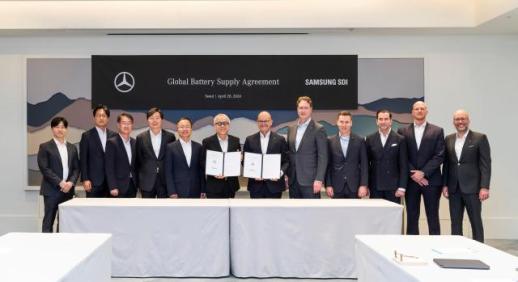 Samsung SDI strikes first battery supply deal with Mercedes-Benz SEOUL, April 20 (AJP) - Samsung SDI announced it has signed a multi-year contract to supply electric vehicle batteries to Mercedes-Benz, marking the Korean battery maker's first supply agreement with the German premium automaker. The deal, signed at the Andaz Seoul Gangnam hotel on Monday, will see Samsung SDI provide high-performance cells built with high-nickel NCM (nickel, cobalt, and manganese) cathode chemistry for Mercedes-Benz's next-generation electric vehicles. Samsung SDI CEO Choi Joo-sun and Mercedes-Benz Chairman Ola Kallenius were among senior executives from both companies who attended the signing ceremony. Under the agreement, the batteries will be fitted in upcoming compact and mid-size electric SUVs and coupe models as Mercedes-Benz seeks to sharpen its electrification lineup. The cells are designed to maximize driving range through high energy density while delivering long cycle life, high power output and Samsung SDI's proprietary safety solutions. "This partnership represents the union of the innovative DNA that both companies possess," a Samsung SDI spokesperson said said, adding that the contract was significant in securing battery orders aimed at leading the global EV market. The Mercedes-Benz deal marks Samsung SDI's return to the EV contract table after a string of energy storage deals, including a 1.5 trillion won ($1 billion) agreement in March to supply prismatic ESS batteries to a U.S. energy firm. The company has been pivoting aggressively toward the fast-growing North American storage market amid sluggish global EV demand, but the latest contract signals it is pursuing both fronts simultaneously. Samsung and Mercedes-Benz said they also plan to deepen strategic cooperation in next-generation battery development and future mobility technologies. Shares of Samsung SDI was trading at 540,000 won on 3:21 p.m., 5.26 percent higher than the day before. 2026-04-20 15:00:07
 -
 Horror film emerges as surprise box-office draw SEOUL, April 20 (AJP) - Horror film "Salmokji: Whispering Water" held onto the top spot at the domestic box office for a second consecutive week, driven by strong word of mouth among younger moviegoers. According to the Korean Film Council on Monday, Lee Sang-min's directorial debut feature attracted 472,109 moviegoers over the weekend, bringing its cumulative total to 1.46 million since its release earlier this month. It already surpassed its break-even point of 1 million moviegoers in just about ten days after its release on April 8, extending its unexpected box-office run. The 95-minute film revolves around a film crew that visits a reservoir where an unidentified figure has been spotted, only to encounter something hidden in the dark waters below. Word of mouth has spread online, with viewers taking to social media to share their views, fueling curiosity about the film. In particular, its open-ended conclusion has sparked heated debate over interpretations, prompting many to watch it again. 2026-04-20 14:14:02
 -
 Dongkook Life Science Wins EU CEP for Iopamidol API, Expands Contrast-Agent Supply Chain Dongkook Life Science said April 20 it has obtained a Certificate of Suitability, or CEP, for its iopamidol active pharmaceutical ingredient. A CEP is a quality certification for APIs issued by the European Directorate for the Quality of Medicines & HealthCare, or EDQM, and is a key requirement for entering the European pharmaceutical market. Iopamidol is a nonionic iodine-based contrast agent used in CT scans. The company said demand for diagnostic imaging is rising, and that securing quality at the API stage is closely tied to the competitiveness of finished drugs. Dongkook Life Science previously obtained approval from China’s National Medical Products Administration, or NMPA, for its gadobutrol API, an MRI contrast agent. In Japan, a manufacturer of a finished drug using the company’s gadobutrol API has cleared the Pharmaceuticals and Medical Devices Agency, or PMDA, approval process, securing a supply base. The company said this links Europe, China and Japan into a global supply chain for contrast agents. “We plan to increase the share of overseas sales by advancing quality and strengthening production capabilities,” a company official said. * This article has been translated by AI. 2026-04-20 14:00:46
 -
 HK inno.N, NextGen Bioscience to Co-Develop Idiopathic Pulmonary Fibrosis Drug Candidate NXC680 HK inno.N said on the 20th that it has signed a joint research and development agreement with NextGen Bioscience to co-develop NXC680, a drug candidate for idiopathic pulmonary fibrosis, or IPF. The companies said the deal is aimed at combining HK inno.N’s R&D capabilities with NextGen’s work on the candidate to move it into clinical development and explore global commercialization potential. Under the agreement, HK inno.N will handle optimization of the finished-drug formulation and run clinical trials, while NextGen will supply the active pharmaceutical ingredient and provide research data. The two companies plan to jointly conduct a Phase 1 clinical trial. NXC680 has shown potential to treat pulmonary fibrosis in nonclinical studies and has received orphan drug designation from the U.S. Food and Drug Administration. In South Korea, it has obtained approval for a Phase 1 investigational new drug application. Song Geun-seok, a vice president at HK inno.N, said the company will work to increase the value of competitive candidates in areas with high unmet medical needs and, over the mid to long term, strengthen its new-drug portfolio for the global market.* This article has been translated by AI. 2026-04-20 13:57:25
 -
 SK hynix rolls out new memory for Nvidia's Rubin SEOUL, April 20 (AJP) -South Korean chipmaker SK hynix announced Monday that it has begun mass production of its SOCAMM2 192GB memory module, a product specifically optimized for Nvidia's next-generation "Vera Rubin" AI platform. Based on 10-nanometer-class sixth-generation (1c) LPDDR5X DRAM, the new AI server module aims to resolve memory bottlenecks in massive AI models and maximize GPU processing speeds. The product reconfigures low-power mobile memory for server environments, offering a combination of high bandwidth, low power consumption, and easy module replacement. According to SK hynix, SOCAMM2 delivers more than twice the bandwidth and over a 75 percent improvement in energy efficiency compared to conventional server RDIMMs. The module acts as a "middle memory" layer between High Bandwidth Memory (HBM) and DDR5 system memory. By adopting an LPDDR-based structure, the product significantly lowers power and cooling costs for data centers. "Through close cooperation with Nvidia, we will resolve bottlenecks in AI infrastructure and provide optimal performance," said Kim Ju-seon, President of AI Infra at SK hynix. "With the supply of SOCAMM2 192GB, we have set a new standard for AI memory performance." The module features a press-fit connector structure, ensuring high signal integrity and making replacement and expansion easier compared to traditional onboard LPDDR setups. The deepened partnership comes as the U.S. tech giant accounts for a significant portion of the chipmaker's business. According to its recent business report, sales to Nvidia reached 23.26 trillion won last year, making up 24 percent of SK hynix's total revenue. Reflecting strong investor sentiment toward its AI-driven momentum, shares of SK hynix were trading at 1,170,000 won as of 11:35 a.m. on Monday, up 3.72 percent from the previous session. 2026-04-20 11:55:16
 -
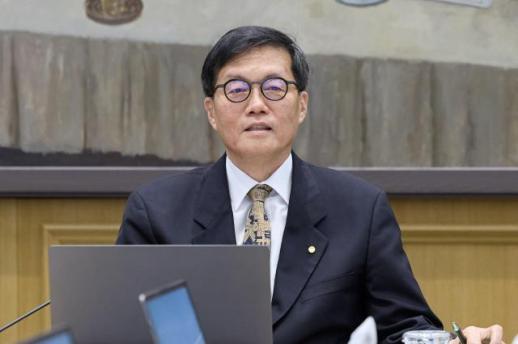 BOK's Rhee swan song: central bank must act as think tank beyond rate tools SEOUL, April 20 (AJP) — Bank of Korea Governor (BOK) Rhee Chang-yong emphasized the central bank’s dual role as a think tank in his swan-song remarks before retiring Monday, even as critics argued the Bank of Korea strayed into non-monetary areas such as housing and education under his watch. In his final speech before stepping down, Rhee reflected on the limits of traditional policy tools after navigating multiple crises over the past four years. “Managing various crises over the past four years, I have realized once again that it is becoming increasingly difficult to achieve stability and growth through monetary and fiscal policies alone,” he said, stressing that deeper socioeconomic reforms are essential for policy effectiveness. He pointed in particular to changes in the foreign exchange market, warning that its structure has shifted in ways that constrain conventional responses. Rhee said the market, once dominated by foreign capital flows, is now increasingly driven by domestic actors such as corporations, individuals and the National Pension Service. “We have entered an era where domestic overseas investment fluctuates based on various factors, including the labor market, tax policies, pension systems and geopolitical risks, rather than just interest rate differentials,” he said. Under such conditions, relying solely on market intervention or interest rate adjustments to manage exchange rates could produce unintended side effects, he warned. Rhee also addressed structural challenges including low birth rates and sluggish growth, making clear that short-term policy measures would be insufficient. Labor and education reforms, he said, remain the only viable medium- to long-term solutions. He reiterated his long-held view that the central bank should expand its role beyond traditional monetary policy. “My belief that we should look beyond the boundaries of monetary and financial policy to become the nation’s top think tank remains the same,” Rhee said, urging continued research into structural issues such as housing, youth employment and elderly poverty. Reflecting on his tenure, Rhee described it as a period of “constantly having to exceed expected boundaries,” shaped by successive global and domestic shocks. Following the inflation surge triggered by the Russia-Ukraine War shortly after he took office, the central bank raised its benchmark rate to 3.5 percent, including two “big step” hikes. Those tightening measures were followed by a series of disruptions, including instability in real estate finance, the collapse of Silicon Valley Bank, rising household debt, surging housing prices in the Seoul metropolitan area and exchange rate volatility driven by Middle East tensions. Rhee cited inflation control as a key achievement. Consumer prices, which peaked at 6.3 percent in July 2022, eased to the high-2 percent range in late 2023 and have remained in the low-to-mid 2 percent range since 2024. He also pointed to the first decline in the household debt-to-GDP ratio in two decades as a meaningful milestone. The ratio, which peaked at 99.2 percent in the third quarter of 2021, has since fallen to the high-80 percent range. Additional achievements included the introduction of Korean-style forward guidance and the publication of more than 20 structural reform reports aimed at improving policy communication. Since 2022, the central bank has regularly issued “BOK Issue Notes” addressing non-monetary topics such as demographic shifts and changes in the global trade order. Internationally, Rhee was appointed as the first head of a non-reserve currency central bank to chair the Committee on the Global Financial System at the Bank for International Settlements. Despite these gains, Rhee acknowledged that financial and foreign exchange markets remain unsettled. The Korean won weakened about 9 percent from 1,367 per dollar in June 2025 to around 1,490 in April 2026, a sharper decline than other major Asian currencies such as the Japanese yen and Chinese yuan, which fell by only 1 to 2 percent over the same period. “It weighs heavily on my heart to leave while the foreign exchange and financial markets have not sufficiently stabilized due to the ongoing conflict in the Middle East,” Rhee said, expressing hope that stability would eventually return based on South Korea’s experience in managing past crises. Since taking office on April 21, 2022, Rhee has been credited with managing crises through timely interest rate adjustments in the early stage of his tenure, and expanding the central bank’s scope through the publication of issue notes. However, he also faces criticism for failing to take bolder monetary action against household debt, - holding benchmark rate still at 2.5 percent for 7 consecutive sessions - which surpassed 1,800 trillion won ($1.21 trillion), and the weakening won toward the end of his term. Shin Hyun-song, former head of the monetary and economic department at the BIS, is expected to succeed Rhee from Tuesday. Shin is clearly distinguished from Rhee by his track record of hawkish stances including preemptive interest rate hikes and balance sheet reductions during past crises such as the U.S. financial crisis and the Russia-Ukraine war, as well as his consistent emphasis on the intrinsic role of central banks. The National Assembly has yet to adopt a confirmation report due to ongoing controversies surrounding Shin’s foreign assets and alleged "paper residence." Whether President Lee Jae Myung will move forward with the appointment later today remains a key focus of attention. The won opened at 1,479.5 per dollar in the Seoul foreign exchange market, up 4 won from the previous session. 2026-04-20 11:53:31
 -
 Asian markets open the week on positive note despite Hormuz uncertainties SEOUL, April 20 (AJP) - Most Asian markets opened the week higher Monday despite conflicting developments in the Middle East ahead of the Tuesday expiration of the truce between the United States and Iran. Hopes had risen last week that the conflict might ease and that the Strait of Hormuz would reopen, but Iran said over the weekend that the strait remained closed. Reports that two Indian-flagged vessels were forced to turn back added to concerns over the security of shipping through the critical waterway. U.S. President Donald Trump said on Truth Social that Iran’s actions in the strait amounted to a “total violation” of the ceasefire and warned that Washington could take further action if Tehran rejected what he described as a “fair and reasonable deal.” A new round of negotiations is expected this week in Pakistan, led by Vice President JD Vance, in a renewed push to end the conflict. However, significant gaps remain, and Iran has signaled it may not attend the talks, calling U.S. demands excessive. Pakistan previously brokered the two-week ceasefire, which is set to expire Tuesday. Despite the geopolitical overhang, regional equities advanced. Japan’s Nikkei 225 rose 1 percent to 59,075.49, holding above the 59,000 level after reaching a record high last week. China’s Shanghai Composite Index edged up 0.45 percent to 4,052.13, while Hong Kong’s Hang Seng Index gained 0.34 percent to 26,228.18. China kept its benchmark lending rates unchanged for an 11th straight month, as policymakers weighed the economic impact of the Middle East conflict against resilient domestic growth and easing deflationary pressures. The People’s Bank of China held the one-year loan prime rate at 3.0 percent and the five-year rate at 3.5 percent. South Korean equities also traded higher, with the KOSPI rising 1.21 percent to 6,266.65 and the KOSDAQ gaining 0.86 percent. Among gainers, Doosan Enerbility climbed more than 5 percent, supported by expectations that heightened geopolitical risks could accelerate nuclear energy projects, particularly in the United States. Chipmakers were also firm. Samsung Electronics reversed early losses to rise 0.69 percent, while SK hynix gained 3.06 percent. Battery stocks rallied, with LG Energy Solution advancing 3.95 percent, while SK Square climbed 3.96 percent to a record high, supported by improving earnings expectations for SK hynix. In contrast, automakers were under pressure, with Hyundai Motor falling 0.74 percent and Kia edging down 0.03 percent. Financial stocks were largely steady, with KB Financial Group rising slightly, while Samsung Life Insurance slipped marginally. On the secondary board, battery materials and biotech shares led gains. EcoPro and EcoPro BM moved higher, while Alteogen and HLB also advanced. In the currency market, the Korean won strengthened modestly, with the dollar trading at 1,474.30 won, compared with the previous close of 1,483.5 won. 2026-04-20 11:32:11
 -
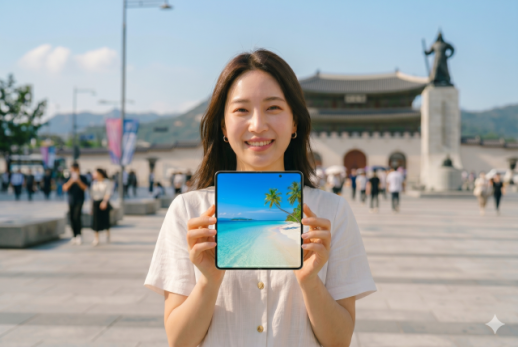 South Korean researchers develop wrinkle-free technology for foldable displays SEOUL, April 20 (AJP) - A research team at the Korea Advanced Institute of Science and Technology has developed a core technology that fundamentally eliminates the wrinkle problem in foldable smartphone displays by redesigning the adhesive areas between the screen and its support plate, the prominent science institute said Monday. According to the Korea Advanced Institute of Science and Technology (KAIST), the new technique ensures that folding stress is distributed across the device rather than concentrating on a single point, allowing for a smooth surface even after tens of thousands of uses. This breakthrough is expected to serve as a turning point for the foldable market as the industry looks to expand the technology to tablets and laptops. The persistent crease on foldable screens has long been a major drawback, causing visual distortion and reduced durability. While global smartphone manufacturers have invested heavily in research and development to address this issue, they have yet to completely remove the visible line where the device folds. Industry experts have often identified this physical flaw as the primary barrier to the wider adoption of foldable devices. Professor Lee Phil-seung and his team at the KAIST Department of Mechanical Engineering began their research to address common frustrations experienced by mobile users. After disassembling dozens of used foldable phones and conducting numerous experiments, the team discovered that the key lay in how the display is bonded to the internal support structure. By redesigning the adhesive zones, the researchers ensured that the mechanical strain of folding is spread out rather than pinching the screen at a specific point. To verify the performance of the prototype, the researchers used straight LED lights to test for surface irregularities. Unlike commercial products, where the reflected light appears bent or distorted at the fold, the KAIST prototype maintained a perfectly straight reflection. The team confirmed that no visual distortion occurred even under testing conditions sensitive enough to detect surface curves smaller than 0.1mm. The technology is designed to be durable enough to withstand tens of thousands of folding cycles with minimal deformation. Because the structural changes are straightforward, the researchers believe the method can be easily integrated into existing manufacturing processes for various devices beyond smartphones, including tablets and notebooks. "We have solved a difficult challenge that global companies could not resolve using a relatively simple and clear method," Professor Lee said. "We expect this technology to spread across the next generation of displays, including laptops and tablets, further strengthening the technical competitiveness of South Korea." KAIST has registered a patent for the technology in South Korea and has filed additional patent applications in the United States, China, and the European Union. According to the university, the simplicity of the design makes it highly viable for mass production. 2026-04-20 11:18:32
 -
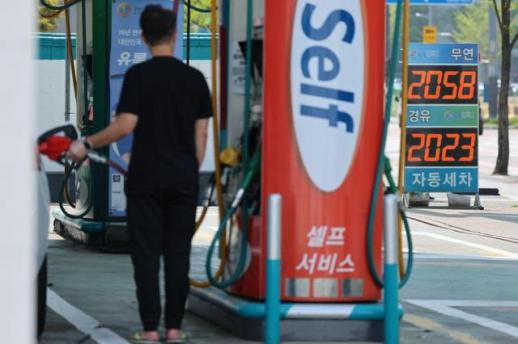 Pump prices keep soaring as diesel approaches 2,000 won per liter SEOUL, April 20 (AJP) - Diesel prices are approaching 2,000 Korean won (about US$1.36) per liter after gasoline's already crossed that threshold amid surging fuel prices due to supply disruptions amid the prolonged conflict in the Middle East. If this trend continues, the average diesel price nationwide is likely to breach that level within days. As the prospect of talks between the U.S. and Iran looms, it remains uncertain when the Strait of Hormuz, a critical chokepoint for roughly one-fifth of the world's oil supply, will reopen, one of the key factors affecting domestic fuel prices. According to Opinet, a website providing information on oil prices operated by the Korea National Oil Corporation, the average diesel price stood at 1,995.65 won per liter on Sunday, up 0.38 won from the previous day. Diesel rose by about 1 won a day on average last week, suggesting it could break the 2,000-won threshold this week, which would mark the first time in about four years since 2022 when prices surged in the aftermath of Russia's war in Ukraine. In some parts of Seoul as well as the country's southern resort island of Jeju and North Chungcheong Province, diesel prices have already exceeded 2,000 won. Gasoline, which is typically more expensive than diesel, has been above 2,000 won per liter for days. Its average price stood at 2,002.02 won on Sunday, up 0.51 won from the previous day. The national average crossed 2,000 won last Thursday for the first time in four years, and has remained above that level since. Fuel prices are expected to rise further as uncertainty grows, with U.S.-Iran negotiations that had appeared to be progressing now back in doubt. Iran's Islamic Revolutionary Guard Corps (IRGC) said the strait has been closed again since last Saturday, contradicting a statement by Foreign Minister Abbas Araghchi, who said, "In line with the ceasefire in Lebanon, the passage for all commercial vessels through the Strait of Hormuz is declared completely open for the remaining period of the ceasefire on the coordinated route." Tensions have further escalated as about 10 tankers that transited the strait when it briefly reopened are now reported to have come under attack following Iran's reclosure of the waterway. Amid mounting uncertainty over the Middle East conflict, the government is pursuing efforts to diversify its crude imports while closely monitoring developments in the strait, which accounts for 61 percent of South Korea's crude supply. Seven tankers belonging to South Korean refiners are reportedly stranded in the strait. 2026-04-20 11:15:45