
Journalist

Samuel Garrett
-
 Seoul shares details of Korean vessels with Iran amid Hormuz transit talks SEOUL, April 14 (AJP) - South Korea has shared information on its vessels stranded near the Strait of Hormuz with Iran as part of ongoing negotiations over maritime transit, government sources said Tuesday. Jeong Byeong-ha, special envoy of the foreign minister, reportedly provided details about South Korean ships and crew members during talks with senior Iranian officials, focusing on the safety of vessels currently unable to pass through the strategic waterway. Iran had previously indicated that information on South Korean vessels would be necessary to coordinate any potential transit arrangements, officials said. According to the Ministry of Oceans and Fisheries, a total of 26 South Korean vessels and 173 crew members remain unable to pass through the Strait of Hormuz. Seoul had previously maintained that all vessels, including those of South Korea, should be allowed to transit freely and had taken a cautious stance toward bilateral negotiations focused solely on Korean ships. Observers are now watching whether the latest information-sharing signals a shift in the government's approach. However, prospects for near-term progress remain uncertain following the collapse of ceasefire negotiations between the United States and Iran, which analysts say could delay any meaningful resolution to the transit issue. 2026-04-14 10:13:30
 -
 South Korea shares information with Iran on stranded vessels in Strait of Hormuz SEOUL, April 14 (AJP) - South Korea has reportedly shared information on its vessels stranded in the Strait of Hormuz with Iran, multiple government sources said on Tuesday. The development comes just a day after special envoy Chung Byung-ha arrived in Tehran the previous day to request that some 173 crew members aboard about a dozen South Korean vessels stranded in the strait, a critical chokepoint for roughly one-fifth of the world's oil supply, be allowed to pass through the strategic waterway amid heightened tensions in the region. During discussions with Iranian officials, he appeared to provide details on South Korean vessels to ensure their safety. Seoul had previously resisted providing such details, maintaining that all vessels, regardless of nationality, should be allowed free passage. However, Iran has insisted that any talks on ship transit would require Seoul to provide specific information about its vessels, as it seeks to coordinate and approve passage under its own security framework. According to the Ministry of Oceans and Fisheries, 26 South Korean vessels carrying 173 crew members remain stranded in or near the strategically vital waterway. South Korea had been cautious about engaging in bilateral negotiations with Iran solely applying to South Korean ships, prompting pundits to speculate the latest move could signal a shift from that stance. But prospects for a near-term breakthrough in reopening the strait remain uncertain, as recent ceasefire talks between U.S. and Iran have collapsed, raising concerns that the prolonged conflict in the Middle East could be further dragged out. 2026-04-14 09:38:58
 -
 Gyeongbokgung to Host King Danjong-Themed Programs Tied to Royal Tomb Sites As the film 'The Man Who Lives With the King' draws audiences, visitors will be able to follow the traces of King Danjong and Queen Jeongsun through programs at major heritage sites including Gyeongbokgung, Jangneung, Sareung and Jongmyo. According to the Korea Heritage Service on the 14th, a special program will run at Gyeongbokgung's Saenggwabang from April 27 to May 3, three times a day for seven days. Each session lasts 70 minutes. The program, held 18 times in total, features a hands-on experience with simple foods made using ingredients linked to Danjong, along with stories from his childhood. It includes segments titled Meeting Danjong, Being With Danjong (a simple meal experience using wild greens), Connecting With Danjong (writing a letter) and Returning to Everyday Life. Participation is free by advance reservation. Starting at noon on April 20, applicants can reserve up to two tickets per Ticketlink account on a first-come, first-served basis. A separate two-day, one-night field trip program will be offered three times — in April, May and October — tracing what organizers described as the tragic yet affectionate path of Danjong and Queen Jeongsun. The itinerary begins at Changdeokgung and continues to Cheongnyeongpo and Jangneung in Yeongwol, then to Sareung in Namyangju, and ends at Yeongnyeongjeon Hall at Jongmyo, where the couple's spirit tablets are enshrined. From April 20 to April 30, a quiz will be held on the Royal Culture Festival's official Instagram account asking participants to identify the name of the Gyeongbokgung building where Danjong stayed in the film. Twenty winners will be selected by drawing to receive a coupon for the K-Heritage online mall and tickets to the closing ceremony of the 2026 fall Royal Culture Festival. In July, organizers will also hold a public contest seeking videos and photos that use generative artificial intelligence to reinterpret 'life with the king' in a modern way. Detailed schedules and participation instructions for each program will be announced in stages on the websites of the Royal Tombs and Palaces Heritage Headquarters and the Korea Heritage Agency Foundation.* This article has been translated by AI. 2026-04-14 09:21:36
 -
 KakaoBank, Busan Bank sign MOU for joint lending to small businesses KakaoBank and Busan Bank are teaming up to boost regional economic activity and expand financial support. KakaoBank said it signed a memorandum of understanding with Busan Bank on April 13 at Busan Bank’s headquarters to pursue a joint lending program for small and midsize businesses. Under the agreement, the two lenders will work on launching joint loan products for small businesses and sole proprietors, expanding financing support and rolling out related financial services. They said the effort is aimed at improving local companies’ access to funding and strengthening “productive financing.” KakaoBank plans to combine its platform reach, built on 27 million customers, and digital technology with Busan Bank’s regional corporate-finance infrastructure, creating a cooperation model in which an internet-only bank and a regional bank grow together. “This agreement will be an example of broadening the inclusiveness of regional finance and contributing to the expansion of productive financing,” KakaoBank CEO Yoon Ho-young said. “We will work in mutual growth with the regional economy based on technology and data.” Busan Bank CEO Kim Seong-ju said the bank will continue expanding digital-based financial services for sole proprietors and small and midsize businesses.* This article has been translated by AI. 2026-04-14 09:12:00
 -
 China’s Biotech Pipeline Nears U.S. Share, Driving Big Pharma and Korean Partnerships China’s biotech sector is rapidly closing the gap with the United States, reshaping global collaboration in drug discovery, licensing and co-development. As China’s share of new drug candidates rises, global pharmaceutical giants such as AstraZeneca and Pfizer — along with major South Korean drugmakers — are stepping up partnerships with Chinese companies. McKinsey & Company said on the 13th that last year’s global share of new drug candidates was led by the United States at 33%, followed by China at 30.5% and South Korea at 6%. The gap between the United States and China narrowed to 2.5 percentage points in just one year. McKinsey also said Asia, as of 2024, was driving the global pipeline for innovative drugs, highlighting China’s surge. In 2023, China’s share was 23% versus 36% for the United States, a 13-point gap. At the current pace, some forecasts say China could overtake the United States in global share of new drug candidates as early as next year. AstraZeneca last March signed a strategic collaboration with Beijing-based Sineron Bio, an artificial intelligence-driven peptide drug startup, to develop a first-in-class macrocyclic peptide for chronic disease treatment. Under the deal, AstraZeneca gained access to Sineron Bio’s Synova platform. The platform is designed as an intelligent, high-throughput, large-scale macrocyclic peptide R&D system to support research programs exploring future treatment options for chronic diseases, including rare diseases, autoimmune disorders and metabolic diseases. Pfizer is also using an AI model from China’s CrystalPi to advance small-molecule drug research. The deals underscore that China’s biotech industry is emerging not only as a manufacturing base but also as a source of early-stage discovery and platform technologies. Market observers describe the partnerships as evidence that global drugmakers are increasingly recognizing Chinese firms’ technical capabilities. Some also say the rise in global dealmaking involving China’s AI-biotech sector reflects growing technological maturity. South Korean companies are also bringing in promising Chinese candidates and expanding development ties. JW Pharmaceutical on April 8 signed an exclusive license-in deal with China’s Gan & Lee Pharmaceuticals for the GLP-1 receptor agonist candidate “bofanglutide” in South Korea. JW Pharmaceutical secured exclusive rights for development, regulatory approval, marketing and commercialization in the country. Gan & Lee agreed to provide regulatory data needed for clinical trial plan approval and product authorization in South Korea. HK inno.N last year acquired South Korean development and commercialization rights from China’s Sciwind Biosciences for the GLP-1 analog “ecnoglutide.” The candidate is in Phase 3 clinical trials in China for type 2 diabetes and obesity. HK inno.N is pursuing development in South Korea for obesity and diabetes treatments. Samsung Bioepis also signed a joint research partnership with Chinese biotech Frontline Biopharma to develop, manufacture and commercialize candidates in the antibody-drug conjugate, or ADC, field. A biotech industry official said South Korea’s industry long focused on catching up with U.S. and European technologies, but is now moving to secure next-generation modalities through co-development with China. The official said China’s biotech sector is growing quickly, supported by its large population and active government policies.* This article has been translated by AI. 2026-04-14 08:30:00
 -
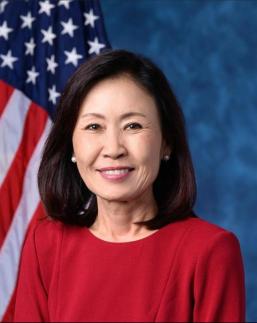 Korean-American former Rep. Michelle Steel tapped as US ambassador to South Korea SEOUL, April 14 (AJP) -Korean-American former California congresswoman Michelle Steel (Park Eunjoo in Korean) has been nominated as Ambassador Extraordinary and Plenipotentiary to South Korea, the White House said Monday as President Donald Trump finally moves to fill the post that has remained vacant throughout much of his second term. The nomination, which requires Senate confirmation, was submitted to Congress as Washington seeks to restore a formal diplomatic channel in Seoul after more than a year without a Senate-approved envoy. The ambassadorship has been vacant since the departure of Philip Goldberg, who was appointed by former President Joe Biden. Senior State Department official Kevin Kim has been serving as chargé d’affaires since October, following an earlier interim role by Joseph Yun. Steel, a Korean American Republican, served two terms in the U.S. House of Representatives, representing California districts covering Orange County from 2021 to 2025. She narrowly lost her reelection bid in 2024 to Democrat Derek Tran. Born in Seoul in 1955, Steel emigrated to the United States in her early twenties after spending part of her youth in Japan. Her political career began in California, where she served on the State Board of Equalization and later as an Orange County supervisor before entering Congress. She was also part of the House Republican leadership’s whip team under Steve Scalise. Her nomination had been widely anticipated since the early days of Trump’s second term, with Republican leaders including Mike Johnson and Kevin McCarthy reportedly backing her as a Korea-savvy figure within the party. If confirmed, Steel would become the second Korean American to serve as U.S. ambassador to South Korea after Sung Kim, and one of the few political appointees with both linguistic and cultural fluency in Korea. Her appointment is expected to restore high-level diplomatic bandwidth between Washington and Seoul, where the absence of a permanent envoy had raised concerns about Korea’s standing in U.S. foreign policy priorities. Observers say Steel’s direct political ties to Trump, combined with her Korean heritage and language skills, could position her as a more effective conduit between the two governments compared with career diplomats. The nomination also opens the possibility of a historic alignment, with both Seoul and Washington potentially represented by female ambassadors in each other’s capitals for the first time. 2026-04-14 07:41:12
 -
 South Korea’s Self-Employed Debt Shifts to Nonbank Lenders, Raising Default Risks Debt held by South Korea’s self-employed is nearing a breaking point and is emerging as a broader financial risk as more borrowers are pushed out of banks and into higher-cost nonbank lenders. As bank lending standards tighten, delinquencies and business closures are rising in tandem, reinforcing a negative cycle. According to Korea Credit Data on April 13, outstanding loans to sole proprietors totaled 729.2 trillion won at the end of last year, up 13.2 trillion won from a year earlier (716 trillion won). Bank lending stayed around 433 trillion won over the year, but nonbank loans rose 14 trillion won, to 296 trillion won from 282 trillion won, lifting the overall total. Mutual finance institutions, often cited as a blind spot in household loan oversight, also led nonbank lending to sole proprietors, accounting for 32.1% of the total. These second-tier lenders, including mutual finance, typically charge higher interest rates than banks but apply looser screening, making it easier for vulnerable borrowers to enter. That also means credit problems can spread faster. Bank delinquency rates were managed at about 0.6%, but savings banks’ delinquency rate rose to 5.4% at the end of 2025 from 5.0% at the end of 2024. Mutual finance institutions’ delinquency rate increased to 2.9% from 2.7% over the same period. By amount, delinquent loans at banks remained at 2.4 trillion won, while nonbank delinquent loans jumped 17.9% to 10.5 trillion won from 8.9 trillion won. In a period of rising interest rates, interest burdens can climb quickly, increasing default risks among borrowers with weak repayment capacity. The structural weakness is also showing up in closures. Of 3.62 million businesses that held sole proprietor loans last year, 507,000, or 14.0%, were already closed. The closure share was 8.5% among businesses with bank loans, compared with 17.3% among those borrowing from nonbank lenders. Experts said the issue has moved beyond simple debt growth and into a stage of structural risk. As bank regulations tighten, funding demand shifts to nonbanks, which can feed higher interest burdens, rising delinquencies and more closures. If distress among the self-employed concentrates in nonbank lenders, financial risks could spread across the broader market. Seon Yong-uk, an associate research fellow at the Korea Institute for Small and Medium Enterprise, said nonbank loan balances and delinquency rates among small merchants have remained high since the COVID-19 pandemic. “If a recovery in domestic demand is not supported, there is little room for small merchants’ business performance to improve, making it difficult for their loan soundness to improve structurally,” he said.* This article has been translated by AI. 2026-04-14 06:03:20
 -
 BIGBANG Brings Trot to Coachella, Kicking Off 20th Anniversary Activities Korean trot music made an unexpected appearance at Coachella, one of the United States’ best-known music festivals. BIGBANG appeared at the Coachella Valley Music and Arts Festival on April 12 (local time) in California. G-Dragon, Taeyang and Daesung performed an official set under the name BIGBANG, signaling the start of activities marking the group’s 20th anniversary. It was BIGBANG’s first official performance since its 2017 “Last Dance” tour, nine years ago. The group took the Outdoor Theater stage, a venue comparable in scale to the main stage, and performed 17 songs. The set included hits such as “Bang Bang Bang,” “Fantastic Baby” and “Haru Haru,” along with solo tracks including “Home Sweet Home” and “Ringa Linga.” Daesung drew particular attention by performing his solo song “Look at Me, Gwisun,” creating a moment in which Korean trot rang out at a major U.S. festival and quickly spread across online communities and social media. Daesung displayed large Korean subtitles reading, “Hello. I’m Daesung,” then performed his new song “Hando Chogwa” and his signature track “Look at Me, Gwisun,” drawing loud cheers from fans in attendance. G-Dragon told the crowd, “BIGBANG’s 20th anniversary has just begun,” adding, “Huge things are coming. We’ll make the 20th anniversary coming-of-age celebration fun.” To close the main set, BIGBANG performed “Bad Boy” and “We Like 2 Party,” telling fans, “This year marks BIGBANG’s 20th anniversary. We’re still together like this.” The group ended the show after an encore of “Spring Summer Fall Winter.” BIGBANG is scheduled to return to Coachella for a second performance on April 20, and is also expected to embark on a global tour. 2026-04-13 18:27:19
 -
 Moral stance, strategic risk: Lee's remarks test Korea's diplomatic balance SEOUL, April 13 (AJP) - South Korea’s entry into the widening global debate over the Middle East conflict has exposed the delicate balance between values-based diplomacy and strategic restraint, after President Lee Jae Myung’s remarks on civilian casualties triggered an unusually sharp backlash from Israel. Over 1,700 civilians, including 254 children, were reported killed in Iran before the ceasefire, while more than 600 were killed in Israeli air raids in Lebanon, according to local authorities and media reports. Lee’s decision to join international condemnation of civilian casualties — framed in universal human rights terms — appeared to have strained ties with Israel, a country with which South Korea has maintained historically close relations. The episode comes at a time of intensifying global scrutiny over Israel’s military campaign and rising instability across the Middle East, complicating the diplomatic calculus for middle powers like South Korea. Israel’s role in the evolving regional dynamics has added further complexity. While a ceasefire between the United States and Iran was reached over the weekend, Israel was not directly involved in the negotiations. Prime Minister Benjamin Netanyahu made no reference to the agreement in a public address, even as he faces growing domestic criticism over his handling of the situation. Despite the ceasefire, Israeli forces have continued military operations in southern Lebanon, according to Lebanese state media, drawing accusations from Iran that Israel is undermining de-escalation efforts. The developments have prompted diplomatic pressure from Washington, with U.S. officials urging Israel to exercise restraint. In a sign of cautious engagement, Israeli and Lebanese ambassadors to the United States are expected to hold rare direct talks in Washington. The human toll of the broader conflict has continued to mount. In Lebanon, more than 2,000 people have been killed in recent fighting between Israel and Hezbollah, while casualties have also been reported in Gulf states and Israel itself. The United States has confirmed the deaths of 13 service members in the course of the conflict. European leaders have stepped up criticism of Israel’s military actions as the conflict has widened. Spanish Prime Minister Pedro Sánchez has been among the most outspoken, describing the situation in Gaza as a “catastrophic situation of genocide” and urging the European Union to suspend its cooperation agreement with Israel. He also warned against what he called reckless escalation, saying global leaders must not be “playing Russian roulette with the destiny of millions.” Other European leaders have echoed similar concerns, warning that a major ground offensive could have devastating humanitarian consequences and urging immediate de-escalation and renewed diplomatic engagement. Discussions within the European Union have also expanded to potential reviews of arms exports and trade relations, signaling a gradual shift from previously unified political support. Tensions have further intensified following the escalation between Israel and Iran earlier this year. Coordinated U.S. and Israeli strikes on Iranian nuclear and military facilities prompted retaliatory missile and drone attacks by Iran, raising fears of a broader regional war. Although a tentative ceasefire between Washington and Tehran was reached in April, clashes involving Israel and Iran-backed groups, including Hezbollah, have continued, underscoring the fragility of the situation. Against this backdrop, Lee posted a message on X (formerly Twitter) on Friday, writing: “National sovereignty and universal human rights must be respected, and wars of aggression must be denied — this is both the spirit of our Constitution and international common sense.” “Just as my life and property are precious, so are those of others. Respect is reciprocated,” he added. While Lee did not explicitly reference a specific incident, his remarks were widely interpreted as a response to controversy surrounding a video he had shared earlier, which allegedly showed Israeli Defense Forces mishandling bodies in a war context. The video, later clarified to have been filmed in September 2024, triggered accusations of misinformation and a diplomatic backlash from Israel. What might have remained a minor misstep quickly escalated into a broader diplomatic dispute, touching on domestic political divisions, diplomatic protocol, and questions about South Korea’s role on the global stage. A diplomatic breach — or a new normal? Israel’s Foreign Ministry responded unusually sharply, publicly condemning Lee’s remarks and accusing him of trivializing the Holocaust — a move that broke with conventional diplomatic practice, where such disputes are typically handled through private channels. South Korean lawmakers from the ruling Democratic Party of Korea pushed back. Rep. Hong Ki-won, a former diplomat, said dissatisfaction with a foreign leader should be conveyed privately, adding that public condemnation by a foreign ministry was “highly inappropriate.” Rep. Kim Young-bae also defended Lee, saying his remarks were not directed at any specific country but reflected universal principles of human rights embedded in international law. He criticized Israel for escalating the issue through a formal statement. Opposition lawmakers offered a starkly different view. Members of the conservative People Power Party accused Lee of undermining national interests through “impulsive remarks” that complicate diplomacy. “Even after facts emerged, the president escalated tensions rather than resolving them,” said Foreign Affairs Committee Chair Kim Seok-ki. The risks of moral diplomacy For some observers, Lee’s comments reflect an attempt to position South Korea as a principled middle power willing to speak out on global issues. Cho Kuk, leader of the Rebuilding Korea Party, defended the president’s stance as both morally justified and strategically meaningful. “It is valid from the perspective of international human rights law and meaningful in terms of national interest within cold geopolitical realities,” he said. Yet critics argue such moral positioning carries strategic costs. Yossi Shain, an Israeli politician and former member of the Knesset, framed the issue in security terms, noting parallels between Israel’s threats from Hezbollah and Iran and South Korea’s confrontation with North Korea. “Telling Israel not to defend itself is like telling Korea not to defend itself against North Korea,” he said. Another layer of the controversy highlights the role of misinformation in shaping political discourse. Paul Franks, a professor at Yale University, criticized the president’s reliance on what he described as misleading online content. “This exemplifies the trend of public figures failing to do their homework and being taken in by internet misinformation,” he said. “If they are fooled, what chance does the ordinary person have?” Franks also took issue with Lee’s invocation of the Holocaust, stressing that it was not merely a war crime but “the industrialization of genocide.” Edieal Pinker, another Yale professor, suggested political incentives may also be at play. “There is no short-term cost to governments from criticizing Israel,” he said, noting that such positions can be politically expedient despite potential long-term diplomatic consequences. Beyond the immediate fallout, the episode reflects broader global trends of polarization and fragmentation. Elad Segev, a communication scholar at Tel Aviv University, pointed to the destabilizing effects of rapid technological, social and political change, arguing that such conditions create fertile ground for polarization and misinformation, amplified by social media. For South Korea, the controversy raises fundamental questions about its role on the global stage: whether to remain a cautious actor focused on regional stability and alliance management, or to adopt a more vocal stance on global values despite the risk of diplomatic friction. Even European powers are grappling with similar dilemmas, balancing human rights concerns with strategic and security interests. The Embassy of the Islamic Republic of Iran in Seoul said human rights violations by Israel, particularly against Palestinians, have become “systematic and ongoing,” calling for an immediate end to such practices and greater international accountability. The Israeli Embassy in Seoul said it had no specific comment regarding Lee’s remarks. 2026-04-13 18:04:31
 -
 Soaring fuel costs squeeze fishermen amid prolong Middle East crisis INCHEON, April 13 (AJP) - South Korea's average diesel price soared to 1,986 won (about US$1.34) on Monday amid the prolonged conflict in the Middle East. Diesel for fishing trawlers now costs around 280,000 won per drum (or 200 liters), up about 60 percent from a month earlier, adding to the financial burden on fishermen. 2026-04-13 17:59:56