
Journalist

Seán Canney
-
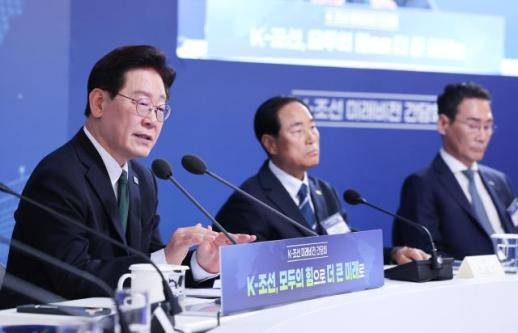 President Yoon Congratulates Mexico on Hosting the First World Cup President Yoon Suk Yeol spoke with Mexican President Claudia Sheinbaum Pardo on May 14, reaching a consensus on expanding cooperation between the two countries.Chief Presidential Secretary Kang Yu-jeong stated in a written briefing that the two leaders evaluated their ongoing friendly exchanges, which have continued since their first bilateral summit in nine years during the G7 summit last June, including a letter exchange in January.The leaders expressed their admiration for the tens of thousands of fans who gathered at Mexico's Zocalo Square on May 6 to see BTS, agreeing to strengthen cultural exchange cooperation between their nations.President Yoon emphasized the need to expedite the resumption of free trade agreement (FTA) negotiations, noting that Mexico is South Korea's largest trading and investment partner in Latin America. He expressed hope that both countries, sharing similar positions amid increasing global economic uncertainty following the Middle East conflict, would enhance cooperation in various fields, including energy.In response, President Sheinbaum expressed great interest in enhancing practical cooperation with South Korea, including economic ties.Additionally, President Yoon congratulated Mexico on hosting its third World Cup, the first to be held in three countries, and wished for its success. The tournament will take place from June 11 to July 19 across 16 cities in the United States, Canada, and Mexico.Chief Secretary Kang reported that both leaders agreed to accept President Sheinbaum's invitation to visit Mexico and to prepare thoroughly for discussions on further developing bilateral relations.* This article has been translated by AI. 2026-05-14 13:03:18
 -
 Coupang Launches Emergency Relief Program with Rocket Delivery Coupang announced on May 14 that it is launching an "Emergency Relief Coupang Hope Box" program to deliver relief supplies to disaster victims via its rocket delivery service during domestic disasters and emergencies. The company plans to stockpile 2,500 sets of emergency relief supplies at its fulfillment center in Sejong, ready for immediate dispatch in the event of a disaster. This number was determined based on the patterns of domestic disasters, the annual number of disaster victims, and the needs of evacuation shelters. Sejong is strategically located for nationwide delivery connections. On May 13, Harold Rogers, Coupang's interim CEO, visited the fulfillment center to inspect the stockpiled relief supplies. "Let’s actively help disaster victims facing difficulties when disasters occur nationwide by utilizing our rocket delivery logistics network," Rogers said. Coupang has established an operational system to quickly deliver emergency relief supplies to disaster sites across the country, including the Yeongnam and Honam regions. After delivery, the relief supplies will be handed over to the disaster relief organization Peace Winds Korea, which will distribute them to evacuees in temporary shelters. The emergency relief supplies consist of ten items from Coupang's private brand subsidiary CPLB, including living boxes, comforters, pillows, towels, socks, compressed wet wipes, and foldable three-layer mattresses. If disasters persist or the scale of damage increases, additional relief supplies will be produced and distributed based on the situation on the ground. Jung Seok-yun, the executive director of Peace Winds Korea, stated, "The speed of initial response is crucial in disaster situations. We expect that combining Coupang's nationwide logistics network and delivery capabilities will enable faster and more reliable emergency relief." Last year, Coupang delivered over 35,000 relief items, including daily necessities and snacks, to wildfire-affected areas in Uiseong, North Gyeongsang Province, in March. In July of the same year, it also supported over 40,000 relief items, including daily necessities, hygiene products, and clothing, to areas affected by heavy rainfall.* This article has been translated by AI. 2026-05-14 13:02:08
 -
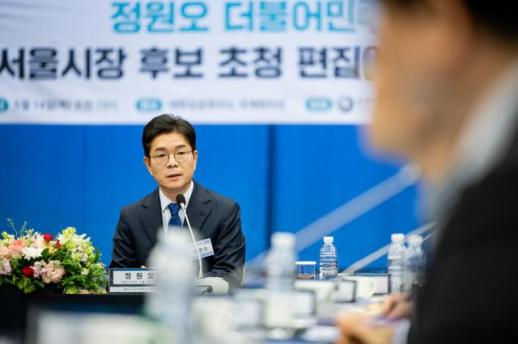 Jung Won-oh Denies Assault Allegations, Accuses Opponents of Fabrication Jung Won-oh, the Democratic Party's candidate for Seoul Mayor, stated that a 31-year-old assault case is indeed related to the May 18 Democratic Uprising, asserting, "This is also reflected in the court ruling." He announced plans to respond legally against the People Power Party, which has raised allegations of false explanations regarding the incident. Speaking at a forum hosted by the Editors' Association in Seoul's Jung-gu on the morning of May 14, Jung claimed that the repeated disclosures by the People Power Party regarding the assault case are inaccurate. In response to related questions, he stated, "The claims made by Kim Jae-seop (of the People Power Party) are false and fabricated," adding, "This is clear from the court ruling and the articles that were reported at the time." The court ruling indicated that Jung assaulted a secretary of a National Assembly member from the Democratic Liberal Party during a dispute over the punishment of those involved in the June 27 elections and the May 18 incident while he was serving as a secretary to the Yangcheon District Mayor in 1995. Jung challenged, "Please consider whether the unilateral claims of a member of the Minjoo Party, as recorded in the Yangcheon Council minutes, hold more weight than the court ruling," asserting, "While I understand what the People Power Party aims to achieve through manipulation, what awaits them is the judgment of the law." He continued, "The Democratic Party filed a complaint the previous day for violations of election law based on false facts, and the truth will be revealed clearly in the future." However, he refrained from commenting on whether he had apologized to the victim of the incident, stating only, "The campaign will respond to various claims at a press conference today." Earlier, on May 13, Kim Jae-seop of the People Power Party claimed, based on the Yangcheon Council minutes, that the 1995 assault incident involving Jung occurred after he demanded that a female employee of a café stay overnight and was refused, contradicting Jung's assertion that it was a dispute stemming from political differences. While Jung remained silent throughout the day, his campaign office released clarifications citing media reports and court rulings from that time, denying the allegations. On the same day, Joo Jin-woo, a member of the People Power Party, released audio recordings purportedly from the victim of the assault. The individual in the recording stated, "I have no memory of any argument related to May 18 or receiving an apology afterward."* This article has been translated by AI. 2026-05-14 13:00:14
 -
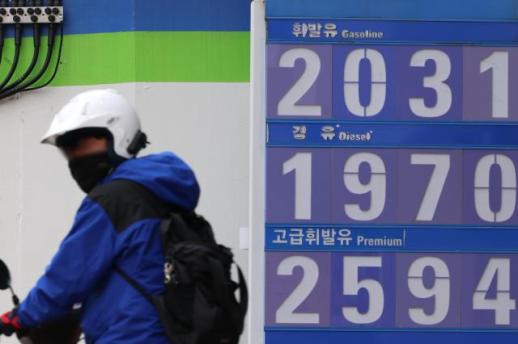 Gasoline and Diesel Consumption Drops 3% and 8% Following Price Cap Implementation 정부가 석유제품 최고가격제를 시행 중인 가운데 제도 시행 이후 휘발유와 경유 소비량이 각각 3%, 8% 감소한 것으로 나타났다. 양기욱 산업통상부 산업자원안보실장은 14일 중동전쟁 대응본부 일일브리핑을 통해 "석유제품 소비량은 3월 소폭 상승했지만 4월과 5월 1~2주 모두 하락세를 나타냈다"며 "최고가격 시행 이후 9주간 휘발유와 경유 소비량도 감소 추세를 나타내고 있다"고 말했다. 산업부에 따르면 3월 휘발유 소비는 4% 증가한 반면 경유 소비는 1% 감소하면서 전체 소비량은 1% 증가했다. 4월은 휘발유 7%·경유 11% 줄어들면서 총 10% 감소했고 5월 1~2주는 휘발유 2%·경유 6% 감소하며 총 4% 줄었다. 양 실장은 "5월 1주 석유제품 소비량은 크게 감소한 가운데 2주차에는 늘어난 것으로 집계됐다"며 "국제 가격을 반영했으면 소비량이 더 내려갔을 가능성도 있지만 어떤 방식이 바람직한지는 논쟁할만한 이슈일 것"이라고 설명했다. 국내 에너지 물가 상승률은 높은 수준이지만 국제 평균을 밑도는 상황이다. 경제협력개발기구(OECD)가 최근 발간한 보고서에 따르면 올해 3월 기준 회원국들의 에너지 물가 상승률은 8.1% 수준이다. 석유파동 이후 가장 높은 수준인 가운데 한국은 5.2% 수준으로 미국(12.5%), 독일(7.6%), 프랑스(7.1%) 등 주요국에 비해 상대적으로 낮다. 각국에서도 고유가에 대응한 정책에 나서고 있다. 일본과 헝가리, 폴란드 등은 정유사 보조금 지급과 가격상한제 등 고강도 유가안정 정책을 통해 유가 상승률을 낮게 유지하고 있다. 유류세 비중이 높은 유럽국가의 경우 유류세 인하와 동시에 시장관리에 나서고 있다. 양 실장은 "우리나라의 석유제품 최고가격제가 예외적이라는 주장도 있지만 다른 국가에서도 국민 물가 부담과 경기 위축 등을 우려해 다양한 정책을 도입하고 있다"며 "에너지발 인플레이션이 전체 경제에 미치는 영향이 큰 만큼 전세계가 정책적인 노력을 기울이고 있다"고 내다봤다. 이달 내에 정유사 손실보전 고시를 만들기로 한 것과 관련해 산업부 관계자는 "이미 정유사들과 소통하고 있는 상황에서 현재도 진행 중"이라며 "첫 고시에 '원가 등에 기반해 손실보전을 계산한다'고 돼 있는 만큼 원가를 계산해 손실보전을 하는 것이 원칙"이라고 말했다. 최고가격제 종료 시점과 관련해 양 실장은 "최고가격제가 급격하게 종료될 경우 가격이 오를 가능성도 있다"며 "전쟁 전으로 유가가 돌아가지는 않더라도 국제유가가 100달러 이하로 내려가는 상황을 살펴봐야 할 듯 하다"고 짚었다. 한편 산업부는 4~5월 국내 정유사의 비축유 스와프(SWAP) 신청 물량은 약 3100만 배럴로 집계됐다고 밝혔다. 기업의 요청에 따라 나프타 생산 비중이 높은 콘덴세이트에 대해서도 스와프를 완료했다.* This article has been translated by AI. 2026-05-14 12:57:09
 -
 Samsung Heavy Industries Secures $750.5 Million Contract for Two LNG Carriers Samsung Heavy Industries announced on May 14 that it has secured a contract worth 750.5 billion won ($750.5 million) for two liquefied natural gas (LNG) carriers from a shipping company in the Oceania region. This order, along with the LNG-FSRU contract disclosed on May 4, underscores Samsung Heavy Industries' commitment to strengthening its competitiveness in the LNG value chain lineup. Since the beginning of this year, Samsung Heavy Industries has been on a robust order streak, driven by a selective order strategy focused on eco-friendly and high-value vessels. This has heightened expectations for achieving its annual order target. To date, Samsung Heavy Industries has secured a total of 19 vessels, including nine LNG carriers (one LNG-FSRU), two ethane carriers, two gas carriers, two container ships, and four oil tankers, amounting to $3.9 billion. This figure represents approximately 68.4% of its annual target of $5.7 billion for new ship orders, achieving more than two-thirds of its goal before the first half of the year concludes. Industry experts believe that the recent supercycle in shipbuilding is likely to sustain the trend of LNG-focused orders for the foreseeable future. Consequently, there are optimistic projections for additional orders for Samsung Heavy Industries in the second half of the year. In particular, the growing demand for eco-friendly vessels globally has renewed interest in LNG-related ship types. As the proportion of high-value vessels increases and stable workloads continue, expectations for improved profitability are also rising. A representative from Samsung Heavy Industries stated, "With the recent orders for LNG carriers following the LNG-FSRU, the momentum in LNG vessel orders is gaining strength. We will continue to pursue selective orders focused on profitability across all areas of the LNG value chain to maintain this upward trend in orders."* This article has been translated by AI. 2026-05-14 12:55:56
 -
 AI Technology Dominates Agenda Ahead of Trump-Xi Meeting in Beijing Donald Trump and Xi Jinping are set to meet in Beijing, where the issue of artificial intelligence (AI) technology dominance has emerged as a key agenda item. As tensions rise over advanced semiconductor exports and the use of AI models, attention is focused on whether the two nations can establish communication channels regarding AI. Bloomberg reported on May 13 that while the AI agenda was relatively minor during last year’s U.S.-China summit in Busan, it is expected to be more prominently discussed in this Beijing meeting. The last-minute inclusion of Jensen Huang, CEO of NVIDIA, in Trump’s delegation underscores this trend. NVIDIA is a leading producer of advanced semiconductors central to the AI boom and is at the heart of the U.S.-China tech rivalry. Huang is recognized as a representative figure of U.S. semiconductor technology and has maintained regular contact with Chinese officials. Bloomberg noted that following Huang's addition to the delegation, Chinese AI-related stocks rose, reflecting investor optimism about increased access to advanced AI semiconductors in China. The Trump administration has been pushing for expanded sales of U.S. technology companies to China. In December, Trump authorized the export of NVIDIA's next-generation AI chip, the H200, to China, but reports indicate that the Chinese government has yet to allow related purchases. However, the U.S. remains cautious about Chinese AI companies leveraging American technological advancements. Companies like OpenAI, Anthropic, and Google have expressed concerns that their AI models could be unfairly utilized in the development of products by Chinese competitors such as DeepSeek, Moonshot, and Minimax. Michael Kratsios, the White House Chief Technology Officer, is also part of the delegation. A former AI company executive, he is known for drafting a memo in April warning about the risks of China developing cheaper and faster technologies using U.S.-made AI models. Bloomberg cited policy experts suggesting that Kratsios may convey similar messages in Beijing. U.S. officials have stated that AI issues will be raised during the summit, although specific agenda items have not been disclosed. Prospects for Communication Mechanism Agreements Over Major Deals Bloomberg forecasts that significant agreements, such as easing U.S. export controls or expanding semiconductor sales, are unlikely to materialize. However, there is potential for the establishment of a new communication mechanism between the U.S. and China to discuss AI issues more regularly. The cybersecurity risks posed by AI could also be a topic of discussion. The U.S. views rapidly advancing AI technology as a factor that could exacerbate cross-border threats, including cyberattacks, misinformation, and military miscalculations. Additionally, the Chinese government’s recent order to reverse Meta Platforms' acquisition of the Chinese AI startup Manus is seen as another source of conflict, with analysts interpreting it as a measure to prevent the outflow of technology and talent to the U.S. Other sensitive issues, including critical minerals, the Iran conflict, Taiwan, and trade, are also expected to be broadly discussed during the summit. However, the wide range of topics may hinder the likelihood of reaching substantial agreements. Despite this, AI governance is cited as an area where limited cooperation between the U.S. and China could occur. Sun Chenghao, a researcher at Tsinghua University’s Center for International Security and Strategy, recently suggested that both sides could focus on the cross-border risks posed by AI and explore ways to promote risk classification and assessment systems that more countries can adopt, while also jointly seeking possible responses.* This article has been translated by AI. 2026-05-14 12:53:37
 -
 Trump Arrives in Beijing for Summit with Xi Jinping During his visit to China, President Donald Trump arrived at the Great Hall of the People in Beijing for a summit, where he was welcomed by Chinese President Xi Jinping. According to reports from AFP and other news agencies, Trump arrived at the venue around 10 a.m. local time, shaking hands with Xi before reviewing a guard of honor from the People's Liberation Army. Following the arrival ceremony, Trump is scheduled to hold talks with Xi at the Great Hall and participate in a dinner hosted by the Chinese leader at 6 p.m. On the final day of his visit tomorrow, Trump is expected to engage in a photo session, enjoy tea time, and have lunch with Xi.* This article has been translated by AI. 2026-05-14 12:51:44
 -
 Japanese Kitchen Furniture Brand Faces Consumer Backlash Over Delayed Installations A Japanese kitchen furniture brand is facing criticism from domestic consumers for delaying construction despite receiving a substantial deposit. One consumer, referred to as A, stated, "I signed a contract in mid-January with a promise of completion, but the construction has been delayed for nearly four months."According to A's report on May 14, the domestic distributor of the Japanese system kitchen brand Cleanup Kitchen has not completed the installation despite receiving a deposit of 60 million won (approximately $50,000). A had contracted for kitchen systems and tables in late November last year, requesting that the work be finished before moving in January, but claims the project remains stalled. Photos provided show exposed plumbing and wiring, with markings on the walls, indicating the site has been abandoned without kitchen furniture.The company has attributed the delays to a shortage of parts in Japan and shipping delays, but A claims they have not provided a clear timeline for completion or solutions to the issues.The situation has been exacerbated by the company's lack of communication. A expressed frustration, saying, "The company has avoided contact or failed to respond to messages, and I was even blocked from receiving calls. The Gangnam showroom where I signed the contract has closed, and they haven't informed me where they have relocated." A added, "Last month, they even wrote a letter promising to finish the installation within a week, but they failed to keep that promise."On May 11, a visit to the Cleanup Kitchen showroom in Gangnam revealed that demolition was underway. The sign remained, but most of the interior had been removed. A staff member at the site stated, "Demolition started the day before, and I have no information on where they are relocating."A representative from the domestic distributor explained in a phone call that delays in construction were due to supply issues stemming from the ongoing conflict in the Middle East, which has caused raw material prices to rise by over 30%. Cleanup Kitchen's headquarters in Japan stated, "There is nothing we can do to assist at this time, but we will report that inquiries have been made regarding this issue."Consumer complaints related to delays and incomplete work in interior construction continue to rise. According to data submitted to the National Assembly by Kim Seung-won, a member of the Democratic Party, the Korea Consumer Agency recorded 25,476 consumer consultations related to interior construction from 2020 to August of last year. Of these, 6,266 cases, or 24.6%, were related to incomplete contracts, while 6,827 cases, or 26.8%, involved quality issues.During the same period, there were 2,556 applications for consumer compensation related to interior construction, but the average settlement rate at the compensation stage was only 34%. This means that 6 to 7 out of 10 victims do not recover their losses.An industry insider noted, "If some construction has been completed, it is difficult to apply fraud charges because it does not appear to be intentional deception. For high-value interior contracts, it is essential to specify materials, delivery times, compensation for delays, and liability for defects in the contract."Additionally, a survey conducted by the Korea Consumer Agency involving 40,000 people included interior construction among the 'warning markets' alongside wedding services and school uniforms, indicating significant consumer concern. Kim Seung-won remarked, "Despite thousands of cases of interior construction damage occurring each year, consumer compensation remains inadequate. The consistent occurrence of these issues reflects a failure in management and oversight, as well as systemic neglect."* This article has been translated by AI. 2026-05-14 12:48:56
 -
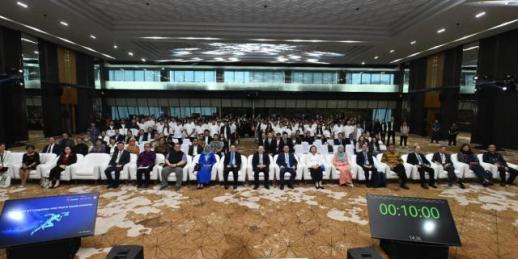 Huawei Hosts ICT Talent Development Event in Jakarta Huawei has launched initiatives to enhance ICT talent development in the Asia-Pacific region by hosting the 10th Huawei ICT Competition APAC finals and awards ceremony at the ASEAN headquarters in Jakarta. According to Huawei, over 8,600 students from 14 countries and regions, including South Korea, participated in this year's competition. Students showcased their ICT skills in practical and innovation categories, which included cloud, network, and computing tracks. After several selection rounds, more than 160 students from 13 countries and regions advanced to the APAC finals. In his opening remarks, ASEAN Secretary-General Kao Kim Hourn emphasized, "Nurturing young talent is the driving force behind creativity, innovation, and entrepreneurship in the ASEAN region. As highlighted in the ASEAN Digital Masterplan 2030, digital talent is at the core of ASEAN's future vision." During the event, Huawei also announced new collaborations and initiatives aimed at fostering artificial intelligence (AI) talent. Peter Pan, Huawei's Vice President for Asia-Pacific, stated, "On the 10th anniversary of the Huawei ICT Competition, we will continue to expand innovation and collaboration, actively supporting the development of the next generation of digital talent in the Asia-Pacific region." In the innovation category, the team from the National University of Singapore won the grand prize for their recognition of innovation and commercial and social value. In the practical category, the University of Danang - University of Science and Technology from Vietnam won the grand prize in the computing and cloud track, while Bulacan State University took the top prize in the network track. The 16 teams, including the grand prize winners, will represent the APAC region in the global finals scheduled for June in Shenzhen, China. The event also featured the first international release of a white paper titled "ICT Job Roles and Core Competencies in the Intelligent Era." This white paper was jointly developed by Huawei, the International Data Corporation (IDC), the OpenAtom Foundation, and the Global Intelligent Internet of Things Consortium. It outlines changes in ICT job roles and core competencies, as well as educational directions for the intelligent era. Notable attendees included ASEAN Secretary-General Kao Kim Hourn, Fauzan Azima, Director General of Research and Development at Indonesia's Ministry of Education, Culture, Research, and Technology, and other key figures from various organizations. Additionally, Huawei Korea signed agreements with domestic universities last August to support the global IT leadership development of South Korean youth. The partnerships were established with Dongguk University, Ewha Womans University, and Hanyang University, based on Huawei's flagship corporate social responsibility program, "Seeds for the Future."* This article has been translated by AI. 2026-05-14 12:45:43
 -
 U.S. and China Discuss Lowering Trade Barriers on Non-Sensitive Goods The United States and China are discussing ways to lower trade barriers, focusing on non-sensitive goods. Instead of pressuring China to change its state-led, export-driven economic model, the two countries are looking to manage trade volumes by identifying specific items they can sell to each other. While sensitive technologies will remain restricted, there are attempts to revive trade in energy, agricultural products, and some consumer goods. According to Reuters on May 13, U.S. President Donald Trump and Chinese President Xi Jinping are expected to discuss reducing tariffs or trade barriers on approximately $30 billion worth of goods from each country during their summit this week. The focus will be on non-sensitive products that are not directly tied to national security. This initiative reflects a shift in the U.S. trade strategy toward China. Previously, the U.S. demanded that China alter its economic model. The current negotiations emphasize managing tradeable areas within their differing economic systems rather than pressuring for systemic changes in China. Jamison Greer, the U.S. Trade Representative (USTR), described this approach as a "Board of Trade" concept. In a recent interview with Fox Business, he stated, "This is not about changing how China governs or operates its economy. We can find ways to optimize trade between the two countries to create a more balanced relationship." He explained that this is akin to using an "adapter" to connect two incompatible economic systems. U.S. Treasury Secretary Scott Vessen and Chinese Vice Premier He Lifeng met for about three hours at Incheon Airport in South Korea to coordinate economic agendas ahead of the summit. However, no separate statement was issued following their meeting. Reuters cited four sources familiar with the Trump administration's goals, indicating that the framework of reducing trade barriers on $30 billion from each side could serve as a starting point for a new mechanism. It remains unclear whether specific items will be determined during the summit. Reuters reported that it is still uncertain whether Trump and Xi will finalize particular products or if they will be addressed in subsequent meetings. Wendy Cutler, a former USTR negotiator, noted that both sides are seeking common ground on product categories worth between $30 billion and $50 billion. Energy and agricultural products are likely to be prioritized. The U.S. aims to increase its sales of energy and agricultural goods to China. Currently, China imposes an additional 10% tariff on all U.S. imports. Specifically, it has retaliatory tariffs of 10% on crude oil, 15% on liquefied natural gas (LNG), 15% on coal, and up to 55% on beef. The U.S. may also adjust tariffs on certain consumer goods imported from China. During the first phase of the trade war in 2019, the U.S. imposed a 7.5% tariff on various Chinese consumer products, including televisions, flash memory, smart speakers, Bluetooth headphones, bedding, multifunction printers, and footwear. An additional 10% temporary tariff, set to expire in July, is applied on top of this tariff. However, it is unlikely that these discussions will lead to a comprehensive easing of U.S.-China trade tensions. U.S. tariffs and export controls on sensitive technologies will remain in place. Non-sensitive goods account for a small portion of overall U.S.-China trade. Cutler remarked, "The basket of non-sensitive goods currently represents a very small part of total trade with China." Trade between the U.S. and China has already significantly decreased. According to data from the U.S. Census Bureau, the trade volume between the two countries fell from $582 billion in 2024 to $415 billion in 2025, a 29% decline. During the same period, the U.S. trade deficit with China decreased by approximately 32% to $200 billion, marking the lowest level in 20 years. Investment cooperation is still in its early stages. The two sides are also expected to discuss a "Board of Investment" concept to address investment issues. However, Greer indicated at a Hudson Institute event last month that he does not believe the relationship is at a stage to discuss large-scale, two-way investment programs with China. Domestic opposition in the U.S. also poses a variable. Congress and industries such as automotive, steel, and technology are opposed to agreements that would allow Chinese investments in the U.S. auto industry, citing concerns that Chinese capital could undermine the U.S. manufacturing base.* This article has been translated by AI. 2026-05-14 12:43:12