
Journalist

Seán Canney
-
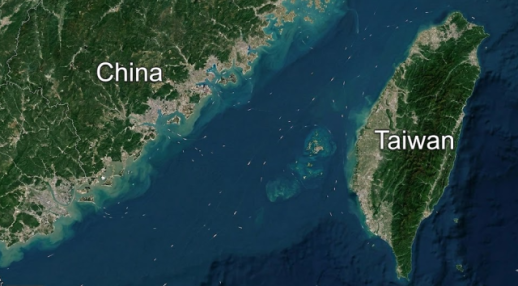 OPINION: Hormuz, Malacca, the Taiwan Strait — and Korea's strategic choice As the recent Middle East war raises the specter of a closure of the Strait of Hormuz and even the possibility of transit tolls being imposed there, the international community has once again been forced to confront the strategic significance of maritime straits. What happens in Hormuz does not remain confined to the Gulf. It is deeply interconnected with other international straits and so-called global choke points that sustain the arteries of world commerce. The 1982 United Nations Convention on the Law of the Sea expanded territorial waters from three nautical miles to twelve. As a consequence, 116 straits that had previously been used freely for international navigation suddenly came within the territorial seas of coastal states. This created the danger that previously unrestricted transit could become subject to sovereign limitations. To resolve this dilemma and preserve a balance between the interests of coastal states and user states, the international community introduced the legal concept of “transit passage” for straits used in international navigation. Under this framework, ships, submarines, and aircraft are guaranteed the right of continuous and expeditious passage through such straits and the airspace above them without interference. Should transit passage in the Strait of Hormuz ever be denied — or should tolls be imposed upon vessels exercising that right — it would constitute a direct challenge to the very foundations of the Law of the Sea Convention. More importantly, it would establish a dangerous precedent capable of destabilizing the legal order governing international straits across the globe. For Koreans, the Strait of Malacca and the Singapore Strait are far more familiar and, in many respects, even more strategically sensitive. Every day, volumes of crude oil and refined petroleum products exceeding those transiting Hormuz pass through these waterways. The flow of general cargo is incomparably greater. More than 30 percent of South Korea’s import and export cargo, as well as nearly 90 percent of its crude oil imports, move through these straits. Moreover, while the narrowest point of Hormuz measures roughly 39 kilometers across, the narrowest section of the Singapore Strait is barely 3.7 kilometers wide. From a purely strategic perspective, the Malacca–Singapore route is therefore significantly more vulnerable. It is for this reason that the recent suggestion by Indonesia’s finance minister that tolls should be imposed on vessels transiting the Malacca Strait attracted such attention. The proposal was ultimately withdrawn amid opposition from Malaysia and Singapore, as well as criticism within Indonesia itself. Yet if the maritime order governing Hormuz were fundamentally altered, there can be no guarantee that the attitudes of other coastal states would remain unchanged. The Taiwan Strait represents another critical choke point. More than 45 percent of South Korea’s import and export cargo and over 85 percent of its imported crude oil pass through these waters. Although its narrowest point is approximately 130 kilometers wide, nearly half of the world’s container ships traverse the strait, making it one of the busiest maritime corridors on Earth. Should tensions between China and Taiwan escalate into armed conflict, or should the strait become blocked for any sustained period, the economic consequences for both Korea and the global economy would be almost impossible to overstate. The present crisis in Hormuz, therefore, raises a series of fundamental questions regarding the nature of maritime straits themselves. Can coastal states impose transit fees on international straits in the same manner that tolls are levied on the Suez Canal or the Panama Canal? Who truly owns a strait? And who possesses the right to control it? The distinction is crucial. Artificial waterways such as the Suez and Panama canals were constructed commercially within the sovereign territory of individual states, and international agreements explicitly recognize their right to collect tolls. International straits are fundamentally different. In such waterways, the right of transit passage — far stronger than the innocent passage accorded to foreign ships within territorial seas — applies. International straits are therefore not spaces subject to the unrestricted sovereign control of coastal states. They are, in effect, global public goods in which uninterrupted passage is guaranteed for the international community as a whole. Yet reality is never governed by law alone. International law provides norms and principles, but effective control over maritime straits is profoundly shaped by military power and geopolitical realities. When coastal states militarize islands, reefs, or surrounding maritime terrain — or attempt to extend control beyond what international law permits — the legal order painstakingly constructed by the international community comes under severe strain. This is precisely the challenge now emerging before us. What, then, are the implications for South Korea? South Korea is one of the world’s quintessential maritime trading nations, heavily dependent upon imported energy and raw materials. Any disruption to energy flows passing through Hormuz or Malacca would inflict enormous damage upon the Korean economy. Likewise, South Korea’s trade is deeply dependent upon East Asian sea lanes, including the Taiwan Strait. For Seoul, this issue must therefore be understood not as a distant regional dispute, but as a structural risk directly linked to national survival. First, South Korea must consistently support the principles of freedom of navigation and transit passage, which form the foundation of the international maritime order. Second, Korea must accelerate efforts to diversify its energy supplies and supply chains in order to reduce excessive dependence upon any single maritime corridor. Third, the country must strengthen both its naval capabilities and its capacity for international maritime cooperation to protect vital sea lanes. Above all, however, Korea requires strategic balance. Rather than aligning reflexively with the position of any particular state, Seoul’s long-term national interest lies in maintaining a principled stance grounded in international law and multilateralism. The message connecting Hormuz, Malacca, and the Taiwan Strait is unmistakably clear. When rules collapse, middle powers and trading nations suffer first — and often suffer most. Maritime straits are not the exclusive property of any single nation. They are lifelines of the international community itself. 2026-05-14 12:41:25
 -
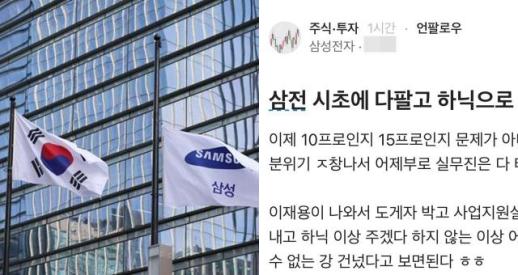 Samsung Workers Consider Switching to SK Hynix Amid Ongoing Strike As the strike by Samsung Electronics' labor union intensifies, reactions are emerging on online communities suggesting that investors should sell their Samsung shares and switch to SK Hynix. Amid a booming semiconductor market, the prolonged labor dispute is affecting investor sentiment. On May 13, the National Samsung Electronics Labor Union (전삼노), the largest union at Samsung, announced it would continue its strike without further negotiations with management. The union stated, "There will be no additional discussions until the strike concludes," with estimates suggesting at least 50,000 workers may participate. Concerns are growing in the industry about potential disruptions to semiconductor production. The controversy has gained traction on online platforms. One Samsung employee posted on the anonymous community 'Blind' with the title, "Sell all your Samsung shares and jump to Hynix." The employee, referred to as A, commented, "It’s no longer about a 10% or 15% issue," and added, "The atmosphere has become so hostile that the staff is in a mode of passive resistance." A further stated, "Unless Chairman Lee Jae-yong directly intervenes to reorganize the executive team and offer compensation on par with SK Hynix, we have crossed the river of no return." A also expressed a bleak outlook for Samsung investments, saying, "That will never happen. Run away." In response to A's post, netizens commented, "Isn't it more profitable to cut them loose with severance pay than to give them bonuses?" and "There’s no irreplaceable talent; they seem unaware they are cutting their own livelihoods." Others added, "If you don’t want to work, just quit; there are plenty of people waiting to take your place," and "If we concede now, we’ll have to keep conceding in the future." Meanwhile, as SK Hynix shows strength in the high-bandwidth memory (HBM) market due to a recovery in the semiconductor sector, Samsung is facing scrutiny over labor disputes and concerns about its foundry competitiveness, leading to a growing comparative sentiment among investors. With the possibility of a prolonged strike by the Samsung union, debates surrounding the company’s corporate culture, bonus system, and management responses continue to unfold online. As the gap between Samsung and the union remains wide, attention is focused on the potential impact on semiconductor production and investor sentiment. 2026-05-14 12:41:24
 -
 SK Hynix Tops Job Seekers' Interest with 600 Million Won Bonus A recent survey revealed that SK Hynix is the company attracting the most interest from job seekers. According to Incruit, an analysis of job seeker views on its recruitment news page showed that as of the second week of May, SK Hynix accounted for 6.1% of total views, placing it at the top. Kia followed in second place with 5.1%, while Hyundai Motor Company ranked third with 4.5%. Samsung Electronics secured fourth place with 4.4%, and Korea Airports Corporation, the only public institution in the top ten, came in fifth with 4.0%. Other notable companies included Korea Investment & Securities (3.6%), CJ Group (3.2%), KT&G (2.9%), LG Electronics (2.6%), and Hanmi Pharmaceutical (2.5%). The heightened interest in SK Hynix among job seekers appears to stem from an agreement reached between the company and its labor union last September, which decided to distribute 10% of operating profit as performance bonuses (PS) and eliminate the cap on these bonuses. Based on the total number of employees, it is projected that each SK Hynix employee could receive an average performance bonus of 600 million won next year. An Incruit representative stated, "We plan to provide information on company recruitment news for the remainder of the first half on our recruitment news page, and we are helping enhance job seekers' chances of success through our comprehensive Incruit Success Store."* This article has been translated by AI. 2026-05-14 12:40:08
 -
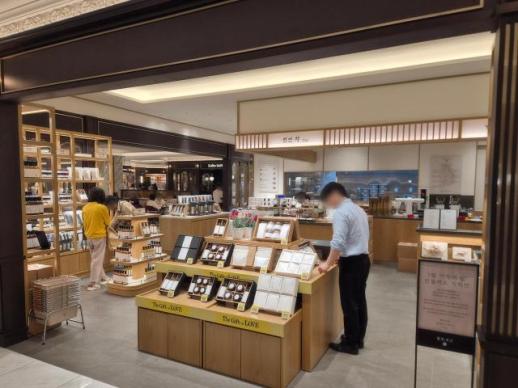 Shinsegae Launches Premium Rice Subscription Service Despite a yearly decline in per capita rice consumption, interest in the quality of rice has been rising. In response to this demand, Shinsegae Department Store has launched a premium rice subscription service. On May 14, Shinsegae announced that it began its "Fermentation: Store" brand's "Online Rice Subscription Service" at the end of last month. The service delivers top-quality rice, curated by rice sommeliers and Korean chefs, directly to customers' doorsteps. Based on the philosophy that freshness is key to taste, the service ensures that freshly milled rice is delivered every two weeks. The subscription model was developed in response to changing consumer preferences for premium products. According to research by the Korea Rural Economic Institute, the percentage of consumers checking rice varieties when purchasing rose from 12.3% in 2021 to 16.4% in 2024. The service was inspired by positive customer feedback. Rice from the "Fermentation: Store" was supplied to Shinsegae's Korean dining venue, "Jaju Hansang," where diners praised the quality, leading to the development of the subscription service. The flagship product is "Okro," a blend of domestic rice varieties Samgwang, Baekjinju, and Yeori-hyang. It has been noted for its chewy texture and harmonious aroma. This blend is the result of years of collaboration between rice sommeliers and chefs from the Korean Food Research Institute. Since its launch in 2024, Okro has seen steady growth, with sales increasing by 15% from January to April this year compared to the same period last year. The service also offers various packaging sizes to accommodate different household needs, ranging from 450 grams to 1 kilogram for smaller packages, and larger options of 4 kilograms and 10 kilograms. The 10-kilogram option is available exclusively through the subscription service. Online, customers can choose from four sample rice blends and four mixed subscription options, with one-month and three-month subscription plans available. A promotional discount of up to 23% is offered throughout May, and subscriptions can be made through Beyond Shinsegae and SSG.com. This rice subscription service is part of Shinsegae's ongoing expansion of subscription services in the food category. In 2020, Shinsegae pioneered the "Bread Subscription Service," becoming the first department store to offer such a service, allowing customers to pick up one bread item daily for a monthly fee of 50,000 won. Additionally, Shinsegae offers a seasonal fruit subscription service for VIP customers (Emerald grade and above), with options for deliveries twice a month (120,000 won) or four times a month (240,000 won), allowing customers to choose their preferred delivery days from Tuesday to Friday, excluding Mondays. Han Hee-jung, head of the Korean Food Research Institute at Shinsegae, stated, "We will continue to discover and present high-quality food products from Korean artisans, adhering to the philosophy of Fermentation: Store, which seeks to preserve traditional methods while pursuing refined Korean cuisine."* This article has been translated by AI. 2026-05-14 12:38:54
 -
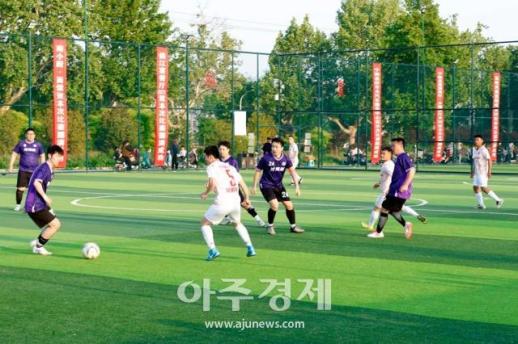 Ningyang's Gongcho League Revitalizes Local Economy Through Sports The second Gongcho soccer and basketball league, held in Ningyang County, Tai'an City, Shandong Province, is gaining attention as a new regional sports model that combines sports with culture, tourism, and consumption. The event is seen as more than just a sports competition; it connects local culture and tourism resources while serving as a platform for revitalizing the local economy. A total of 34 teams, comprising over 530 employees, are participating in the league, with matches taking place every weekend during the evening over a span of nine weeks. Participants from various professions, including industrial workers, teachers, and self-employed individuals, are engaging in this accessible community sports league, attracting significant interest from local citizens. The opening ceremony featured traditional music performances, cultural displays, a fashion show showcasing national styles, and youth drum performances, creating a unique atmosphere distinct from typical sports events. Culturally themed performances combined with sports competitions have become a hallmark of the Ningyang Gongcho League. To facilitate participation, the league organizers have scheduled all matches on weekends and evenings, allowing participants to join freely after work and fostering camaraderie and networking. In actual matches, teams from the Ningyang County Education and Sports Bureau faced off against local business teams in spirited contests. One teacher remarked, "In the classroom, I teach for 45 minutes, but on the field, I have to endure for 60 minutes," sharing a laugh about the experience. The league is also being broadcast live online, enabling residents who cannot attend in person to watch the games in real time. This initiative has helped enhance community spirit and a sense of belonging among local residents. Outside the venues, exhibition and experience booths showcased local specialties, traditional handicrafts, and cultural products. Citizens participated in both watching the games and engaging in consumption and experiential activities, illustrating how sports events can stimulate local tourism and economic activity. A representative from the Ningyang County General Association stated, "The core of this event is to connect sports and culture with tourism and consumption, enriching the cultural lives of employees while injecting new vitality into the local economy." Looking ahead, Ningyang County plans to expand its series of Gongcho tournaments beyond soccer and basketball to include table tennis and badminton, aiming to foster a regional community sports brand.* This article has been translated by AI. 2026-05-14 12:37:01
 -
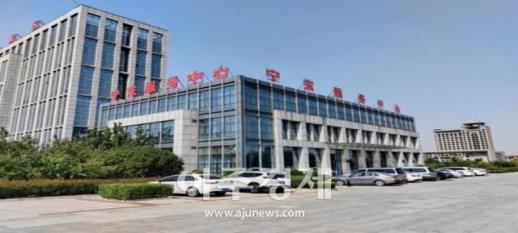 Ningyang County Accelerates Chemical Projects Through Industrial Chain Reform Ningyang County in Tai'an City, Shandong Province, is enhancing the administrative efficiency of high-end chemical industry projects through industrial chain integration reform, aiming to strengthen local industrial competitiveness. Recently, the diverse biological potassium carbonate project in Ningyang County completed 14 key administrative procedures, including site approval, environmental assessment, and construction permits, in just 18 business days, marking the start of full-scale construction. Previously, these procedures took over 60 days, indicating a significant improvement in administrative speed. This year, Ningyang County is promoting a 'one-stop integrated reform' in the high-end chemical industry sector, leveraging the advantages of its provincial chemical industrial park. To facilitate this, a dedicated service team composed of specialized personnel has been established, implementing a 'project manager + parallel pre-review' system to provide close support throughout the entire process for key projects. In particular, for related industrial projects, the administrative team participates from the investment attraction stage to design customized approval processes, conducting simultaneous document pre-reviews and administrative guidance. This approach minimizes gaps between investment attraction and licensing procedures. Ningyang County has also transitioned from a sequential review process to a parallel one, introducing a 'conditional approval + post-completion' system that has reduced administrative processing times by over 60%. Additionally, the county is providing integrated support in policy funding, financial assistance, talent acquisition, and housing support, enhancing tailored assistance for businesses. Locally, this reform is being recognized as a practical model that reduces institutional burdens on companies and promotes early project commencement and production operations.* This article has been translated by AI. 2026-05-14 12:34:12
 -
 Samsung C&T to Train 100 Young Job Seekers in Construction Management Samsung C&T's construction division announced on May 14 that it will offer practical training for young job seekers aspiring to work in construction and safety management. The program aims to train construction and safety managers in collaboration with Samsung C&T's partner companies. This initiative is part of the 'Large and Small Business Coexistence Job Program,' overseen by the Ministry of SMEs and Startups and managed by the Korea SMEs and Startups Agency and the Korea Economic Cooperation Center since 2018. According to the company, a total of 586 participants have completed the training program up to last year, with 551 graduating. Among them, 335 successfully secured jobs with partner companies. The program is open to young job seekers aged 34 and under (up to 39 when including military service) who hold at least an associate degree. Candidates with majors or certifications in safety, construction, electrical, facilities, or civil engineering will be given preference. Samsung C&T plans to recruit 100 participants, with 50 for construction management and 50 for safety management. Interested applicants can register on the Multi-Campus website until June 26, with training scheduled to begin on July 1 and lasting approximately six weeks. The training is free, including lunch support, and participants may receive up to 600,000 won in training allowances based on attendance. During the training period, Samsung C&T will also operate a recruitment linkage program with about 40 partner companies to actively support the hiring of talent by these firms. Additionally, Samsung C&T ranked second in the construction sector of the K-Brand Index for listed companies, as selected by the Asia Brand Research Institute last year. This index is calculated based on various weighted criteria, including trends, media presence, social engagement, and community activity.* This article has been translated by AI. 2026-05-14 12:33:06
 -
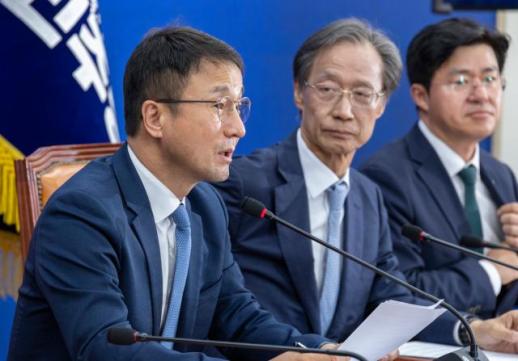 Ruling Party Aims to Finalize National Assembly Committee Appointments by June The Democratic Party announced plans to complete the appointments of National Assembly committee chairs and committees by next month. Additionally, the party intends to continue pressing for a plenary session on May 20 to elect the National Assembly leadership. Lee Joo-hee, the party's floor spokesperson, spoke with reporters after a policy meeting on the 14th, stating, "Internally, we plan to begin the formation of the committees for the second half of the term. We will gather individual lawmakers' opinions throughout May, with the actual adjustment process taking place in June." However, Lee indicated that the specific timeline for the committee formation is likely to be after the June 3 local elections, explaining, "While we believe it is best to proceed as quickly as possible, the reality is that we are approaching the election campaign, making it challenging. Substantial discussions and final decisions will occur in June." Regarding the issue of committee distribution, particularly the demand from the People Power Party for the chairmanship of the Legislation and Judiciary Committee, Lee remarked, "It is difficult to make judgments in the current situation. I believe they will take sufficient time to consider the appointments." Furthermore, the Democratic Party emphasized its ongoing demand for a plenary session on May 20 to elect the National Assembly leadership, which includes candidates Cho Jung-sik and Nam In-soon, who were selected as the party's nominees for Speaker and Deputy Speaker, respectively. Lee reiterated, "We are continuously calling for a plenary session to elect the National Assembly leadership. To prevent a disruption of constitutional order, we must complete the selection of the leadership before the current Speaker's term ends. We hope that discussions will proceed smoothly, given that the People Power Party has already completed its leadership selection."* This article has been translated by AI. 2026-05-14 12:30:39
 -
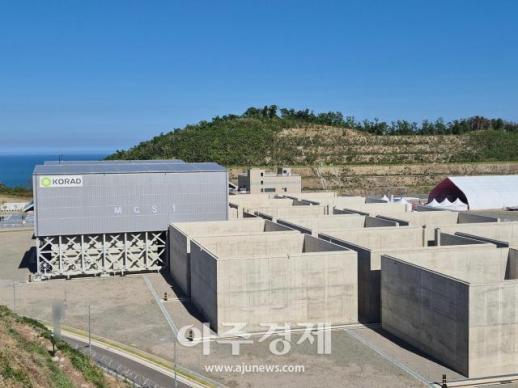 Massive Concrete Facility to Store 125,000 Drums of Low-Level Nuclear Waste Opens in Korea "That’s not a roof; it’s a crane."On May 13, a visit to the low-level radioactive waste disposal facility in Gyeongju, North Gyeongsang Province, revealed a massive steel structure that resembled a factory roof from a distance. However, upon closer inspection, it was identified as a Mobile Crane Shelter (MCS) designed to transport radioactive waste drums. This structure, which serves both as a roof to shield against rain and as a crane, was the first thing that caught the eye at the site. ◆From Caverns to Surface... World’s First Combined Disposal Facility EstablishedThe Ministry of Climate, Energy and Environment and the Korea Radioactive Waste Management Corporation held a ceremony on this day to mark the completion of the Phase Two surface disposal facility. This facility, which allows for the separate handling of low-level and very low-level waste, completes the world’s first combined disposal system on a single site, following the existing cavern disposal facility.In the center of the site, large concrete boxes with open tops were lined up. A total of 20 disposal cells can each hold approximately 6,300 200-liter drums. With the completion of this Phase Two facility, an additional 125,000 drums can now be disposed of. Including a 'Future Area' for potential additional disposal cells, the facility can be expanded to accommodate up to 250,000 drums.The disposal process is straightforward yet complex. The waste, which has undergone preliminary inspections at nuclear power plants and research facilities, is transported in specialized containers by land and sea. The dedicated transport vessel, Cheongjeongnuriho, is equipped with a double-hull and double-engine structure for safety, along with location tracking and automatic collision prevention systems.Once the drums arrive at the site, they must pass acceptance and disposal inspections before being moved to the disposal cells. Specialized trucks deliver the drums directly to the disposal area, where the MCS crane lifts them and stacks them neatly. After filling each layer, the gaps between the drums are filled with grout—a thin cement slurry—to stabilize them.Lee Kyung-hwan, head of the construction management team at the Korea Radioactive Waste Management Corporation, explained, "We fill the gaps between the drums with a thin cement mixture to prevent any movement. After disposing of up to nine layers, we will install a concrete slab on top to completely seal it."He added, "Even after sealing all disposal cells, we will install a cover and continuously monitor for any radiation leakage into the surrounding environment." ◆Five Layers of Protection and Fire Prevention Enhance SafetyThe most frequently mentioned word at the site was 'water.' The core of waste management is to keep waste away from water.The surface disposal facility is designed with a five-layer multi-barrier system, including the waste drums, backfill material, disposal cell, concrete cover, and bedrock. During disposal, the roof of the Mobile Crane Shelter prevents rainwater from entering, and after disposal, the upper slab and final cover minimize contact between water and waste.Beneath the disposal cells, an underground inspection tunnel connects to drainage, ventilation, communication, and lighting systems. This structure is designed to drain any infiltrating water. Lee stated, "We plan to continuously monitor radiation levels in groundwater and the surrounding environment even after operations cease."In light of recent wildfires in North Gyeongsang Province, fire prevention measures have also been strengthened. Surrounding the disposal cells, a water curtain (tower) system has been installed to prevent the spread of fires. Lee noted, "The installation and testing of fire protection equipment have been completed, and we have established an operational system that considers extreme disaster scenarios."At the site, preparations are also underway to address future increases in waste. Currently, the annual acceptance and disposal volume is about 4,000 drums, which is expected to rise to 8,000 by 2030 and 12,000 by 2050. This increase is anticipated due to the ramp-up of nuclear power plant decommissioning, which will significantly boost waste generation.To prepare for this, the corporation is also advancing plans for a Phase Three landfill disposal facility, aimed for completion in 2031, which will handle an additional 160,000 drums of very low-level waste.The actual acceptance of waste into the Phase Two surface disposal facility is expected to begin by the end of this year. The corporation stated, "Following the operational commencement report and inspection period, we plan to start disposing of some waste in the Phase Two facility as early as November."* This article has been translated by AI. 2026-05-14 12:28:05
 -
 Korean Privacy Commission Fines Boram Group 540 Million Won for Data Breach The Personal Information Protection Commission (PIPC), an independent administrative agency established to oversee the handling and protection of personal data, has imposed a total fine of 542.5 million won ($540,000) and an additional penalty of 11.4 million won ($11,400) on Boram Development and six other affiliates of the Boram Group for violating the Personal Information Protection Act. On May 13, during its ninth plenary session, the PIPC approved the fines and corrective measures against Boram Development and its six affiliates, which include Boram Leaders, Boram Life, Boram People, Boram Anycall, Boram Siloam, and Boram Plus. The PIPC began its investigation after receiving a report of a data breach from Boram Development in May 2024. The investigation revealed that Boram Development had been managing customer personal information from six affiliates as part of its customer relationship management (CRM) operations. However, it was found that the company failed to implement adequate safety measures, such as access control management and security vulnerability assessments, during the operation of its systems. The PIPC determined that hackers exploited vulnerabilities on the company's website through an SQL injection attack, gaining access to the database and leaking customer information, including names, mobile phone numbers, and email addresses. As a result, the PIPC imposed a fine of 531 million won ($530,000) on Boram Development for failing to comply with safety measures. An additional penalty of 11.4 million won was levied for delays in notifying affected customers and for not destroying personal data that was retained beyond its retention period. Furthermore, the six affiliates were fined a total of 11.5 million won ($11,500) for neglecting their responsibilities in managing and supervising the handling of personal data. The PIPC ordered these companies to publicly disclose the details of the sanctions on their websites. In addition, the PIPC issued a corrective order requiring the Boram Group to review its overall personal data handling practices and management systems, as well as to enhance transparency in its contractual relationships with service providers. This is aimed at improving the overall level of personal data protection across the Boram Group.* This article has been translated by AI. 2026-05-14 12:25:21