
Journalist

Seán Canney
-
 Trump and Xi Meet: Implications of Their Summit U.S. President Donald Trump and Chinese President Xi Jinping met again in Beijing on May 14. The summit between the world's top superpower and the second-largest economy is always a significant event that can influence global order, but this meeting carries particular weight and symbolism. The backdrop includes the ongoing war in Ukraine, conflicts in the Middle East, competition for dominance in artificial intelligence (AI), the semiconductor race, issues surrounding Taiwan, control of rare earth elements, supply chain restructuring, and the dominance of the dollar versus the internationalization of the yuan. This summit is not merely a diplomatic event between the two nations; it represents a significant exploration of who will shape the world order in the mid-21st century and how. The U.S. seeks to maintain the existing hegemonic order, while China aims to establish a new multipolar system. The world watches with both anxiety and anticipation as these two leaders navigate their relationship. The two leaders held a summit for over two hours at the Great Hall of the People in Beijing. Following the meeting, they moved to the Temple of Heaven, a sacred site where Chinese emperors once prayed for national peace and a good harvest. A state dinner followed in the evening. China's choice of the Temple of Heaven as one of the meeting venues is no coincidence. It symbolizes the authenticity of Chinese civilization and the concept of the Mandate of Heaven. This site was where emperors of the Ming and Qing dynasties confirmed their divine right to rule, reflecting China's self-perception as a civilization-state with a history spanning thousands of years, rather than just a modern nation-state. The image of Trump and Xi walking together on the rainy stone paths of the Temple of Heaven was particularly symbolic. Trump described the experience as “wonderful,” but notably refrained from discussing Taiwan. This silence encapsulates the complex realities facing the U.S. today. The U.S. remains the world's strongest nation, but it is increasingly unable to dominate all fronts as it once did. The war in Ukraine continues to drag on, and tensions between Iran and Israel are escalating in the Middle East. Domestically, the U.S. faces deepening issues of budget deficits, high interest rates, deindustrialization, and social polarization. While the U.S. pressures China in the AI and semiconductor sectors, it cannot ignore the reality that global supply chains would be destabilized without China. China, too, faces challenges. It grapples with structural issues such as a real estate market slump, local government debt, youth unemployment, and sluggish domestic demand. However, it remains the world's largest manufacturing nation and maintains significant influence in the supply chains for rare earth elements, batteries, solar energy, and electric vehicles. Through this summit, China aimed to project itself as a “civilization-state” on par with the U.S. The significance of the Temple of Heaven lies in this context. The U.S. is a relatively young empire, with just over 250 years of history, while China sees itself as the heir to a 5,000-year-old civilization. Xi's invitation to Trump to the Temple was not merely ceremonial; it was a strong message that China is not a fleeting state but a civilization with a long history, philosophy, and order. The summit's key agenda items can be summarized into six main topics. First is the issue of tariffs and trade. Trump appears to have strongly urged for increased purchases of U.S. soybeans, grains, and meat, mindful of American farmers and manufacturing workers. China, facing economic slowdown, also needs stability in the U.S. market. Ultimately, both nations are in a structure where they need each other despite their conflicts. Second is the semiconductor and AI issue. The U.S. is restricting exports of advanced AI semiconductors and equipment to curb China's technological rise. However, China is rapidly pursuing domestic alternatives, particularly through companies like Huawei. This competition is not just about technology; it is about who will control the operational framework of future civilizations. Third is the issue of rare earth elements and supply chains. Recently, China has utilized rare earth export controls as a strategic card, as it dominates key materials for electric vehicles, semiconductors, and defense industries. While the U.S. is pushing for supply chain diversification, completely severing dependence on China in the short term is challenging. Fourth is the Taiwan issue. This was the most sensitive yet cautiously addressed topic during the summit. Xi reportedly warned that mishandling the Taiwan issue could increase the risk of conflict between the two nations. The U.S. cannot easily abandon Taiwan, but it also finds it difficult to confront China directly. The Taiwan Strait is likely to become one of the biggest geopolitical risk areas for the global economy moving forward. Fifth is the Middle East issue. With the recent escalation of conflict between Iran and Israel, the U.S. finds itself needing China's role, given China's strategic relationship with Iran. China, which previously mediated reconciliation between Saudi Arabia and Iran, seeks to showcase its diplomatic influence once again. Sixth is the issue of the dollar and yuan. Beneath the surface of this summit lies an invisible competition over the international financial order. The U.S. aims to maintain the dollar's dominance, while China seeks to expand the yuan's internationalization. If the yuan's share in energy and trade payments increases, it could shake the foundations of the global financial order. However, the most significant takeaway from this summit is the fact that “dialogue continues amidst conflict.” The U.S. and China may seek to contain each other, but they are also in a relationship that is difficult to sustain without one another. Both nations face challenges without the other, and the global economy would struggle to cope with a complete separation. Particularly in Northeast Asia, the situation is likely to enter a new phase following this summit. China will aim to minimize U.S. intervention in the Taiwan issue, while the U.S. will seek to strengthen security cooperation with Japan and South Korea. Japan is likely to accelerate its military buildup, and North Korea will closely monitor changes in U.S.-China relations. Ultimately, Northeast Asia is poised to become the frontline of U.S.-China competition. While the Cold War era centered on military confrontations between the U.S. and the Soviet Union, the new Cold War is likely to involve a complex competition encompassing AI, semiconductors, energy, maritime issues, and supply chains. So what should South Korea focus on? South Korea must look at structures rather than emotions. The U.S. is our key security ally, while China is one of our largest trading partners. We cannot survive by aligning with only one side. Therefore, South Korea should not merely align itself between the U.S. and China but should strive to create a strategic balance based on its technological, industrial, and diplomatic capabilities. Particularly in sectors such as semiconductors, AI, shipbuilding, nuclear power, batteries, and defense, South Korea already possesses global competitiveness. The important thing is not to view itself as a “middle power” but to recognize its potential as a strategic nation amid the reconfiguration of Northeast Asian order. The rain at the Temple of Heaven was not just a weather phenomenon. It may have signaled a transition to a new season in the global order. And on that rainy path, the U.S. and China were calculating their futures through different civilizational lenses.* This article has been translated by AI. 2026-05-14 18:12:00
 -
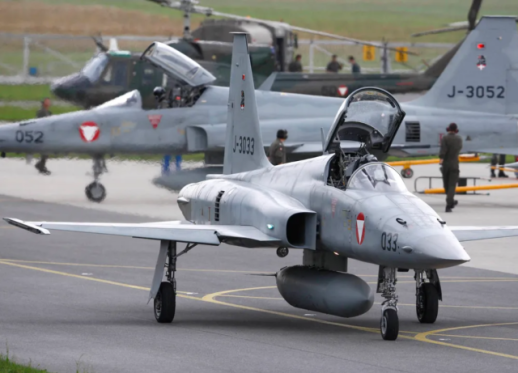 Air Force chief to accelerate F-5 phaseout, prepare manned-unmanned combat systems SEOUL, May 14 (AJP) - Air Force Chief of Staff Gen. Son Seok-rak said South Korea will accelerate the phaseout of its aging F-5 fighter jets from 2030 to 2027, as the Air Force prepares to shift toward manned-unmanned combat systems. “We are preparing to withdraw the F-5 fighter jets from service before the end of next year,” Son said during a meeting with defense ministry correspondents in Seongnam, Gyeonggi Province, on Wednesday. The F-5 has long served as one of the Republic of Korea Air Force’s key light fighter jets. Introduced in the 1970s and later produced locally as the KF-5, the aircraft helped expand South Korea’s fighter fleet at a time when the country was strengthening its independent air defense capabilities. Son said the Air Force is also pushing to introduce low-cost unmanned assets such as LUCAS by the early 2030s, which could be deployed in large numbers during the initial stage of a war. “We are aiming to develop AI pilots by the 2040s and further prepare for a transition to unmanned combat squadrons,” he said. Son said the KF-21 alone would not be enough to meet future operational needs, stressing the need to speed up the development of unmanned attack aircraft and unmanned combat aircraft. “We will complete a manned-unmanned teaming system and connect it to a sixth-generation fighter system in the 2040s and 2050s,” he said. He added that unmanned systems are not intended to replace humans, but to enhance combat power. “The judgment and expertise of pilots will become even more important,” Son said. The Air Force is also stepping up efforts to build AI-based command and operational systems. Son said the Air Force is currently operating “Air Wars,” a generative AI platform developed in-house. “We have established the military’s first AI-based work management system,” he said. “The Air Force is also taking part in designing generative AI platforms for the defense ministry and the defense acquisition sector.” 2026-05-14 18:09:28
 -
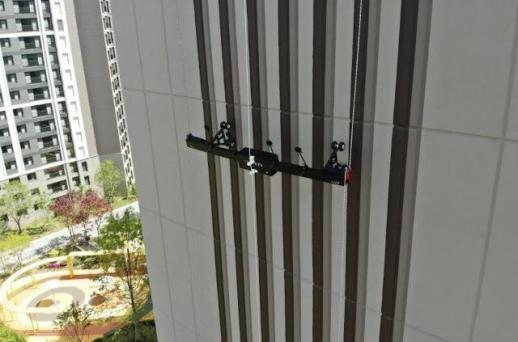 Hoban Construction Tests AI-Based Technology for Detecting Wall Cracks Hoban Construction has enhanced its diagnostic capabilities through the introduction of an AI-based wall crack inspection robot, marking a significant step in smart construction technology.On May 13, Hoban Construction announced the successful completion of a field demonstration of the AI wall crack inspection robot at a residential complex in Gyeonggi Province. This demonstration was the result of an open innovation collaboration with FD Tech, a company recognized as a promising technology in the 'AI Bridge Commercialization Project' by the Seoul Economic Promotion Agency. Hoban Construction provided the testing site and supported technology validation.The robot utilizes AI analysis to inspect the internal condition of walls, automatically determining the presence and location of cracks and damage. This advancement is expected to enhance the objectivity and reliability of inspection results while significantly improving site safety by reducing the need for human involvement in high-risk tasks.Technologically, the robot employs four cameras for close-up imaging and utilizes non-destructive testing, acoustic, and ultrasonic technologies to accurately diagnose wall damage. Its portability and ease of assembly also contribute to reduced preparation time for inspections.Hoban Construction plans to refine quality management through simultaneous internal and external wall diagnostics and intends to use accumulated data for crack history management and prioritizing repairs in the overall maintenance of buildings. Following the validation of the technology's accuracy based on the demonstration results, the company aims to establish an 'All-in-One Crack Management Process' that integrates inspection and repair.FD Tech, the developer of this technology, specializes in AI-based facility inspection robots and has received recognition for its technological prowess, having won an innovation award at CES 2026.Hoban Group's construction division is expanding its site-centered smart construction technologies. Last month, the company signed a memorandum of understanding with AI specialist Upstage and is collaborating with Pobicon to jointly develop automated quantity estimation and cost estimation processes, accelerating its digital transformation.A Hoban Construction official stated, "With the demonstration completed, we will undergo additional refinement processes before deploying it on-site. We are continuously reviewing the introduction timeline to expedite its application in future construction projects."* This article has been translated by AI. 2026-05-14 18:01:03
 -
 Korean arms gain strategic role as Southeast Asia balances US-China rivalry SEOUL, May 14 (AJP) - Southeast Asian countries are increasingly turning to South Korean weapons as they seek to modernize their militaries while navigating the intensifying rivalry between the United States and China. The trend is drawing growing attention as Washington expands its Indo-Pacific security operations beyond the Korean Peninsula and Japan, while Southeast Asian nations continue pursuing flexible defense ties with both major powers. According to industry sources, some U.S. Forces Korea units recently took part in multinational drills in the Philippines, an unusual move that underscored how U.S. assets stationed in South Korea could be used more flexibly for regional contingencies. The deployment followed remarks last month by Gen. Xavier Brunson, commander of the South Korea-U.S. Combined Forces Command and U.S. Forces Korea, who proposed a “kill web” concept linking South Korea, Japan and the Philippines through a cyber-based network for intelligence sharing and joint military operations during a contingency. At the same time, Thailand has moved to deepen military engagement with China while maintaining its long-standing defense relationship with the United States. China’s defense ministry said it would hold the “Assault 2026” joint exercise in Thailand this month, focusing on operations in mountainous and jungle terrain. The drills come as Thailand continues to participate in Cobra Gold, one of the region’s largest U.S.-led multinational exercises. A report by the Asan Institute for Policy Studies said South Korea’s advanced technology, its status as a “non-threatening power,” and its relatively neutral image have made it an attractive partner for Southeast Asian countries seeking to modernize their militaries. In that environment, South Korean weapons are emerging as a practical option for countries seeking advanced but relatively affordable systems that are not directly tied to either Washington or Beijing. Indonesia has been South Korea’s largest customer in Southeast Asia, accounting for 55 percent of defense exports to the region over the past two decades, according to an analysis by the International Institute for Strategic Studies. Jakarta has imported Korean-made T-50 and KT-1 trainer aircraft, as well as Jang Bogo-class submarines, while also participating in the KF-21 fighter development program. The relationship has evolved beyond simple arms purchases into broader technology cooperation and joint development. Philippines has also emerged as one of Seoul’s key defense partners, particularly as Manila seeks to strengthen its air and maritime capabilities amid tensions in the South China Sea. The Philippine military operates FA-50PH light attack aircraft and has moved to expand its fleet, with Korea Aerospace Industries signing a deal in 2025 to supply 12 additional FA-50 jets after its initial contract for 12 aircraft in 2014. South Korea has also supplied frigates and corvettes to the Philippine Navy, making Korean weapons a major component of Manila’s military modernization efforts. Thailand, while carefully balancing ties between the United States and China, has likewise adopted Korean-made defense systems. The Royal Thai Air Force operates the T-50TH, a Thai variant of South Korea’s T-50 advanced trainer and light attack aircraft, while the country has also acquired Korean-built naval assets. The reported use of Korean-made guided munitions during Thailand’s border clashes with Cambodia in 2025 highlighted how Korean weapons are no longer merely procurement items, but could increasingly become part of real-world regional security dynamics. Malaysia has expanded its purchases of Korean defense systems from aircraft to naval air defense platforms. Kuala Lumpur signed a deal in 2023 to acquire 18 FA-50M light combat aircraft from Korea Aerospace Industries, strengthening South Korea’s role in Malaysia’s air force modernization program. In April 2026, Malaysia also signed a contract worth about $94 million with LIG Defense & Aerospace to purchase the Haegung, or K-SAAM, ship-launched surface-to-air missile system, which is expected to be installed on three Malaysian Navy vessels. The agreement marked the first overseas sale of the Haegung system. IISS senior fellow Thomas Daniel said developing countries have long sought defense equipment compatible with Western systems, a demand that “the major players have overlooked.” However, he also pointed to a potential challenge for Seoul as global demand for Korean weapons rises, questioning whether Southeast Asian buyers, which typically place smaller orders, could be pushed “to the back of the line.” Vietnam has recently emerged as a new market for South Korean ground weapons, with bilateral defense cooperation reaching a symbolic turning point through the K9 deal. In 2025, Hanwha Aerospace signed a deal worth about $250 million to supply 20 K9 self-propelled howitzers to Vietnam, marking South Korea’s first arms export to the country. The deal is significant not only because Vietnam has long relied heavily on Russian weapons, but also because it reflects how two countries that were once adversaries during the Vietnam War are now moving toward a strategic defense partnership. Vietnam’s purchase of the K9 is also seen as part of a broader effort to diversify defense procurement sources amid growing uncertainty surrounding Russian supply chains. Ian Storey of Singapore’s ISEAS-Yusof Ishak Institute said South Korea has become an attractive option for Southeast Asian countries because Seoul offers advanced weapons at lower prices than Western suppliers and is more willing to transfer technology to support local defense industries. “South Korean arms are hi-tech and cheaper than Western defense equipment,” he said. Prashanth Parameswaran, a regional security analyst, said South Korea’s expanding security ties with ASEAN countries have created opportunities for Seoul but also pose challenges. While deeper defense cooperation gives South Korea room to expand its role as a regional security partner, it also exposes Seoul to the political risks of becoming more directly involved in Southeast Asia’s disputes and broader great-power competition. For Seoul, the question is whether it can remain primarily an arms supplier or whether growing demand for Korean weapons will push it toward a broader strategic role in Asia’s security order. As more Southeast Asian countries integrate Korean systems into their military modernization programs, defense exports may become increasingly difficult to separate from diplomacy and regional security politics. 2026-05-14 17:58:52
 -
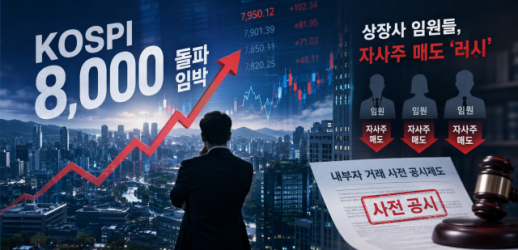 Executives Sell Shares as KOSPI Approaches 8,000 Mark As the KOSPI index approaches the 8,000 mark, executives at listed companies are increasingly selling their shares. This trend of insider profit-taking has resurfaced amid a recent surge in the stock market, raising concerns among general investors who view it as a potential signal of a market peak. According to the Financial Supervisory Service's electronic disclosure system, there have been 39 instances this month where insiders, including executives, sold shares worth over 100 million won. A review of monthly insider selling trends shows a concentration at the beginning of the year, with 80 cases in January and 83 in February, followed by a decline to 75 in March and 65 in April. However, as the stock market has sharply risen in May, previously quiet insiders are now re-entering the market to realize profits. Industry experts agree that insider stock sales cannot be dismissed as mere personal decisions. Executives, who are the first to receive information about a company's management and undisclosed data, may indicate potential declines in stock prices through their sales. Indeed, stocks of companies that have recently disclosed insider sales have consistently faced downward pressure. A notable example is LS Electric, which saw its stock price soar due to favorable conditions in the power equipment sector. On May 12, LS Electric disclosed that Vice President An Gil-young, Executive Director Lee Yoo-mi, and Executive Director Seo Jang-cheol sold their shares. The amounts they liquidated were 353.54 million won for Vice President An, 355.07 million won for Executive Director Lee, and 330.20 million won for Executive Director Seo. On the day of the disclosure, LS Electric's stock price fell by 7.07% compared to the previous trading day. The company stated that the executives sold a portion of the shares awarded as performance bonuses based on personal judgment. Other companies, such as Doosan Enerbility and Nuriplex, which have also recently disclosed insider sales, have continued to experience stock declines following their announcements. This has led to a perception that those with insider information are exiting at the peak of stock price increases. To mitigate market shocks from insider trading, the 'Pre-disclosure System for Insider Trading of Listed Companies' was introduced in July 2024. However, there are concerns about its effectiveness, as it primarily protects minority shareholders from significant stock price drops due to large-scale sales, while smaller transactions remain in a regulatory blind spot. Kim Min-ki, a researcher at the Capital Market Research Institute, noted that the current pre-disclosure system focuses on large transactions exceeding 1% of total issued shares or 5 billion won. He explained that the main purpose is to prevent sharp stock price declines that occurred with past block trades and to enhance market transparency. Kim assessed that the introduction of a cooling-off period of up to 30 days has reduced the frequency of sudden stock price crashes. He added that the increase in pre-disclosure of insider sales, even in a bullish market, has positive aspects for general investors by lessening sudden shocks and addressing information asymmetry. Additionally, it reduces suspicions of insider trading for the insiders themselves. However, Kim pointed out that if the sale amount does not meet the 5 billion won threshold, there is no obligation for pre-disclosure, resulting in only post-sale disclosures. He highlighted that the system does not prevent all insider sales, leaving small and non-targeted transactions subject to market reactions only after the fact. Experts emphasize that discussions are needed to eliminate these regulatory gaps while preserving the system's intent. There are calls to lower the pre-disclosure threshold from 5 billion won or to enhance monitoring based on cumulative trading volumes over a certain period. Additionally, there are suggestions to reform regulations to focus on actual owners to prevent 'split sales' or proxy trading using family members or associates. A financial industry official stated, "Even with pre-disclosure, the signal of insider sales remains, which can still impact stock prices. However, it allows investors to recognize this in advance, increasing predictability and making it harder for insiders to trade at favorable times, thus enhancing market transparency and fairness."* This article has been translated by AI. 2026-05-14 17:58:43
 -
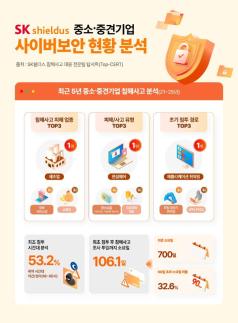 SK Shieldus Highlights Importance of Continuous Security for SMEs Amid Cyber Threats SK Shieldus announced on May 14 that it has analyzed major cyber threat trends affecting small and medium-sized enterprises (SMEs) based on data accumulated over the past five years, coinciding with SME Week. The analysis revealed that SMEs take an average of 106.1 days to recognize and investigate security incidents after they occur. In some cases, the delay reached as long as 700 days, with 32.6% of incidents taking more than 90 days to address. As the use of artificial intelligence (AI) expands, the complexity of corporate systems increases, placing a greater burden on SMEs, which often have limited security personnel and infrastructure. According to the Korea Internet & Security Agency (KISA), approximately 89.4% of ransomware reports last year came from SMEs. This analysis was conducted by SK Shieldus' incident response team, Topsert, using data from domestic corporate incident responses between 2021 and 2025. Over the past five years, the primary types of incidents affecting SMEs were ransomware (44.9%) and data breaches (42.9%), followed by cryptocurrency mining attacks. The main infiltration routes for attacks were application vulnerabilities (20.8%), file upload vulnerabilities (18.9%), and VPN vulnerabilities (15.4%). Additionally, malicious emails, watering hole attacks, and externally exposed URLs were identified as significant attack vectors. This year, notable incidents included data breaches from malicious emails and watering hole attacks, ransomware infections through brute force attacks, and cryptocurrency mining attacks stemming from supply chain breaches. Notably, the initial infiltration times were concentrated during nighttime and early morning hours (6 PM to 5 AM), accounting for 53.2% of all attacks. SK Shieldus highlighted the potential response gaps during these hours but noted that attack attempts continue throughout the day, underscoring the need for a 24/7 monitoring system. By industry, the manufacturing sector accounted for the highest proportion of incidents at 47.4%, followed by information services (15.8%) and finance (10.5%). Incidents were also reported across various sectors, including education and retail, indicating that security threats are spreading across industries. SK Shieldus explained that in manufacturing, the close connection between production equipment and operational systems means that security incidents can lead to production line shutdowns, delivery delays, and disruptions in the supply chain. In response, SK Shieldus is supporting the establishment of continuous security response systems for SMEs through its managed detection and response (MDR) service, which offers threat detection, analysis, and response 24/7, available on a subscription basis. A representative from SK Shieldus stated, "As AI technology spreads, cyber attacks are becoming increasingly sophisticated, making it difficult for limited personnel to respond to all threats. We will continue to expand support for SMEs to help them build professional security response systems while alleviating their burdens."* This article has been translated by AI. 2026-05-14 17:55:57
 -
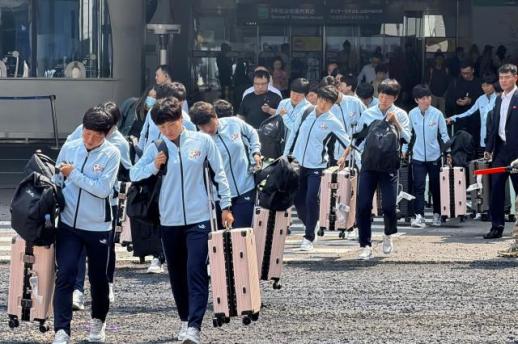 North Korea Women's soccer team to visit South Korea for AFC semifinal this weekend SEOUL, May 14 (AJP) - The Unification Ministry here has approved a visit by North Korea's women's soccer team to participate in the Asian Football Confederation (AFC) Women's Champions League next week. A total of 39 North Korean footballers and sports officials are set to arrive on Sunday for the tournament's semifinal match against Suwon FC Women, scheduled for May 20 in Gyeonggi Province. They will be allowed to stay in South Korea until May 24. It will be the first time in seven years and five months that a North Korean team has visited South Korea for a sports event, since the International Table Tennis Federation (ITTF) World Tour Grand Finals in Incheon in December 2018. It will also be the first visit by a North Korean women's soccer team since the 2014 Asian Games in the same port city, 12 years ago. The ministry said up to 300 million won will be spent from the inter-Korean cooperation fund to help cover cheering-related expenses, with about 3,000 people from some 200 civic groups expected to participate. The ministry said it has provided guidance on "generally prohibited items" and advised a ban on political or religious messages under AFC regulations. 2026-05-14 17:54:16
 -
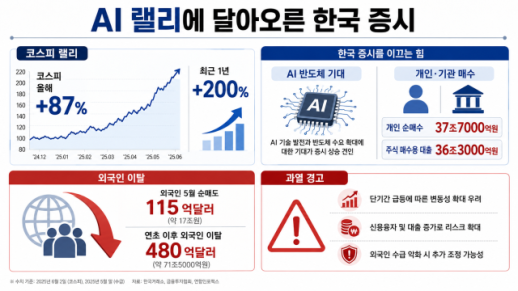 KOSPI Rises to World's Highest Amid AI Semiconductor Rally, Foreign Investors Exit The South Korean stock market is experiencing the steepest rise in the world, driven by a rally in artificial intelligence (AI) semiconductors. While domestic retail and institutional investors are pushing the index higher, foreign capital is quickly exiting the market. There are warnings that the stock market may be overheating as borrowing for investment increases. According to Bloomberg, the KOSPI index has surged 87% this year, the highest among major global indices tracked by the outlet. The index's increase over the past year has reached approximately 200%. The total market capitalization of the South Korean stock market has grown to $4.6 trillion (about 6,850 trillion won), with Samsung Electronics surpassing a market cap of $1 trillion (approximately 1,490 trillion won), making it the second most valuable company in Asia. At the heart of this surge is the semiconductor sector. The expansion of AI investments has led to a significant increase in demand for memory chips, boosting expectations for the performance of Samsung Electronics and SK Hynix. SK Hynix reported a fivefold increase in quarterly profits due to rising memory prices. President Yoon Suk Yeol's expectations for stock market support and financial reforms have also stimulated domestic investor sentiment. Notably, retail investors are rapidly entering the market. Domestic individuals have purchased 37.7 trillion won worth of Korean stocks this year. Many who had been cautious for much of last year are now joining the AI rally. Domestic institutions have also joined the buying spree. Loans for stock purchases have reached unprecedented levels. According to the Korea Financial Investment Association, the balance of loans for stock purchases was 36.3 trillion won at the beginning of May, a 32% increase from the end of last year. There are concerns that the actual scale of leveraged investments may be even larger when considering unreported loans. The investment fervor is even spreading to accounts held by minors. Data from Toss Securities indicates that new account openings for individuals under 18 increased nearly tenfold in the first quarter compared to a year ago. Trading volumes have surged to record levels, and daily fluctuations of over 5% in the KOSPI have become more frequent. Bloomberg reported that the KOSPI has emerged as the index with the largest price swings among major global indices. In contrast, foreign investors are pulling out of the South Korean stock market. According to Bloomberg, foreign investors sold off $11.5 billion (approximately 17 trillion won) worth of Korean stocks in May. If the current trend continues, May is projected to see the third-largest monthly outflow of foreign capital on record. In February and March, there were unprecedented levels of foreign exits. The cumulative outflow this year has also been substantial. Foreign capital has exited the South Korean stock market by approximately $48 billion (about 71.5 trillion won) since the beginning of the year. If this trend continues, it could set a record for the largest annual outflow. The scale of foreign exits from the South Korean stock market is more than double the amount sold off in the Indian market, which is less directly connected to the AI investment trend. Despite the foreign exit, some analysts believe that stock prices are not excessively high compared to earnings. Bloomberg noted that the KOSPI is trading at about 8.5 times projected earnings for the next year, which is lower than the 21 times for the S&P 500 index. Some Wall Street banks have raised their KOSPI targets to 8,500, 9,000, and even as high as 10,000 in optimistic scenarios. However, the risk of a significant price drop following the surge has increased. Just the day before, Kim Yong-beom, head of the presidential office's policy office, mentioned the possibility of a 'citizen dividend' utilizing excess AI profits, leading to a loss of approximately $300 billion (about 447 trillion won) in KOSPI market capitalization within two hours. The stock prices later recovered more than half of that loss, and the government clarified that the statement was a 'personal opinion, not policy.' The key issue in the market is whether the memory semiconductor sector has entered a long-term boom. Domestic investors are optimistic about further gains based on the expansion of AI demand and improvements in semiconductor performance. In contrast, foreign investors are wary of the potential for the memory market to continue its cycle of booms and busts.* This article has been translated by AI. 2026-05-14 17:53:46
 -
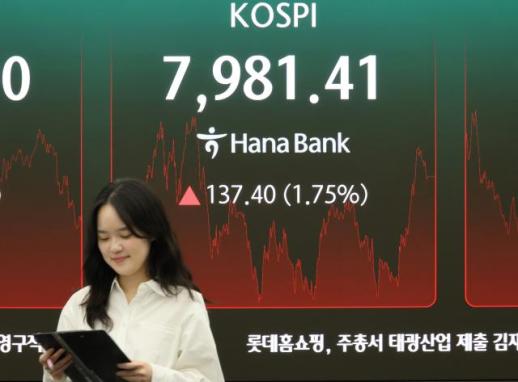
 KOSPI closes at record high, approaches 8,000 on AI rally SEOUL, May 14 (AJP) - South Korea's main KOSPI extended its record-setting climb to outshine regional and global peers as it moved closer to a new four-digit milestone. The benchmark index touched a high of 7,991.04 before settling at 7,981.41 Thursday, up 137.40 points, or 1.75 percent from the previous session. Retail investors bought 1.84 trillion won ($1.26 billion) worth of shares and institutions added 190.6 billion won, while foreign investors sold 2.14 trillion won. Samsung Electronics rose 4.23 percent to 296,000 won and briefly touched 299,500 won during the session, approaching the closely watched 300,000-won threshold. The rally followed a JP Morgan note reaffirming its buy rating on the stock despite ongoing labor disputes at Samsung’s chip operations. The bank said stronger memory pricing and the broader AI-driven semiconductor upcycle would likely outweigh near-term operational risks. SK hynix slipped 0.30 percent to 1,970,000 won after briefly hitting a record high of 1,994,000 won. The divergence between Samsung and SK hynix reflected a broader rotation within semiconductor shares, as investors shifted toward Samsung after SK hynix’s recent AI-driven rally. AI-related software and infrastructure shares also gained sharply. LG CNS surged 17.1 percent to 86,100 won after unveiling a new enterprise AI platform and a Korean-language large language model developed with Cohere. The company said internal testing showed competitive performance against leading global AI models. Elsewhere, LG Display gained 8.3 percent to 15,340 won on expectations of stronger demand for advanced display panels tied to AI devices, while Jeju Semiconductor jumped 28.4 percent to 75,600 won as speculative buying continued in smaller chip-related stocks. Airline shares also advanced. Korean Air rose 6.02 percent to 27,300 won as investors focused on the planned integration of Hanjin Group’s three low-cost carriers, Jin Air, Air Busan and Air Seoul, which analysts expect could reduce competition and improve profitability in Korea’s budget airline market. Construction shares moved higher on renewed momentum in Seoul’s redevelopment market. Daewoo E&C climbed 12.6 percent to 32,600 won after strong subscription demand and rising apartment prices in Seoul’s Seocho district boosted sentiment toward builders with major residential exposure. On the downside, shipbuilding and power equipment shares pulled back following recent gains. HD Hyundai Heavy Industries fell 8.5 percent to 671,000 won, while Doosan Enerbility slipped 2.4 percent to 117,100 won and Samsung Heavy Industries dropped 2.9 percent to 30,150 won as investors locked in profits after a sharp rally tied to defense and energy infrastructure themes. The junior KOSDAQ rose 1.20 percent to close at 1,191.09 after moving between 1,162.20 and 1,194.03 during the session. Retail investors bought 91.3 billion won worth of shares and institutions added 58.9 billion won, while foreign investors sold 135.4 billion won. Alteogen surged 8.76 percent to become the KOSDAQ market’s largest stock by capitalization, while EcoPro BM and EcoPro gained 6.04 percent and 5.41 percent, respectively. Elsewhere in Asia, Hong Kong’s Hang Seng Index rose 0.2 percent to 26,439.80, Japan’s Nikkei 225 fell 1.0 percent to 62,654.10, and China’s Shanghai Composite slipped 0.9 percent to 4,205.40. The rally in Seoul followed another strong session on Wall Street, where the S&P 500 rose 0.58 percent to a record 7,444.25 and the Nasdaq Composite climbed 1.20 percent to 26,402.34 as investors continued to bet that AI-driven earnings growth would offset inflation concerns. NVIDIA rose 2.3 percent overnight, while Micron Technology climbed 4.8 percent. The Korean won closed little changed at 1,491.00 per dollar, up 0.40 won from the previous session. 2026-05-14 17:53:16
 -
 AI Reshapes Asia's Industrial Landscape When the U.S. market falters, the KOSPI often follows suit. A downturn in China's economy typically leads to sell-offs in South Korea. This year, however, is different. Neither the Middle East conflict nor the U.S.-China power struggle has managed to shake the markets. This week, the key variable was expected to be the U.S.-China summit. Yet, the KOSPI continues its march toward an all-time high. Having already surged nearly 80% this year, it is achieving the best performance among major global indices. South Korea has surpassed the United Kingdom to become the eighth-largest stock market in the world, valued at $4.04 trillion. Six of the world's top ten stock markets are now in Asia. The market is beginning to prioritize AI over geopolitical concerns. This is not merely a thematic rally; the industrial order itself is changing. Even a single response from ChatGPT relies on GPUs, memory, power grids, and data centers to function. While AI may appear to be software, it actually operates on a vast hardware supply chain, with Asia at its core. Taiwan dominates the foundry sector. Without TSMC, there is no AI. Over 90% of the world's most advanced chip production passes through this company. In the first quarter of 2026, TSMC's revenue increased by 35% year-on-year to $35.6 billion, with net profit soaring by 58%. This year, its capital expenditure guidance is set to reach up to $56 billion, a 40% increase from the previous year. TSMC's clients are expected to spend over $1.2 trillion on data center capital expenditures by 2028. South Korea controls the memory bottleneck. In the AI era, High Bandwidth Memory (HBM) is not just a common component; it is a critical infrastructure that determines processing speed. SK Hynix is projected to surpass Samsung for the first time in operating profit in 2025, reaching 47.2 trillion won, with its stock price rising by 210%. The company holds a market share of 57-62% in HBM, and its production for 2026 is already sold out. Bank of America has labeled this year as a "1990s-style memory supercycle." This fervor is spreading beyond semiconductors to power equipment, transformers, shipbuilding, and batteries. This is why HD Hyundai Electric and LS ELECTRIC have backlogs filled for several years. Japan supplies the equipment needed to manufacture chips. Tokyo Electron, Advantest, and Lasertec benefit every time TSMC and SK Hynix expand their operations. The Nikkei 225 index surpassed 60,000 for the first time in April 2026, soaring 5.58% on the first trading day after Golden Week, led by SoftBank, which rose 18%. JP Morgan's year-end target is set at 70,000. China and Hong Kong are building their own ecosystems. With advanced chip imports from NVIDIA blocked, China surprised the world with its DeepSeek R1. The Hang Seng Index rose by 28% in 2025. Alibaba announced a $52 billion investment in AI infrastructure over three years. The price-to-earnings ratio for Hang Seng Tech is 24, lower than the Nasdaq 100's ratio of 25-31. While the U.S. has created a leading model, China is constructing a parallel ecosystem around it. The structural logic is straightforward. Software originated in the U.S., but the supply chain that powers it is in Asia. Once, Asia was known as the "world's factory" based on cheap labor. Now, it is shifting to become the central axis of critical infrastructure supporting the global AI system. What is happening in the market is not just a technological rally; it is a once-in-a-generation shift in industrial value. The KOSPI stands at the center of this flow. This is why the market remains resilient despite bubble concerns; investors are betting on a reorganization of the industrial order rather than a short-term trend. Intelligence was born in California. However, the power, memory, semiconductors, and factories that make that intelligence operational now pulse from Asia.* This article has been translated by AI. 2026-05-14 17:51:32