
Journalist

Seán Canney
-
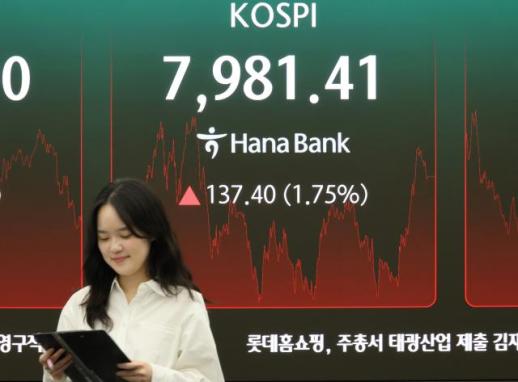 AI Reshapes Asia's Industrial Landscape When the U.S. market falters, the KOSPI often follows suit. A downturn in China's economy typically leads to sell-offs in South Korea. This year, however, is different. Neither the Middle East conflict nor the U.S.-China power struggle has managed to shake the markets. This week, the key variable was expected to be the U.S.-China summit. Yet, the KOSPI continues its march toward an all-time high. Having already surged nearly 80% this year, it is achieving the best performance among major global indices. South Korea has surpassed the United Kingdom to become the eighth-largest stock market in the world, valued at $4.04 trillion. Six of the world's top ten stock markets are now in Asia. The market is beginning to prioritize AI over geopolitical concerns. This is not merely a thematic rally; the industrial order itself is changing. Even a single response from ChatGPT relies on GPUs, memory, power grids, and data centers to function. While AI may appear to be software, it actually operates on a vast hardware supply chain, with Asia at its core. Taiwan dominates the foundry sector. Without TSMC, there is no AI. Over 90% of the world's most advanced chip production passes through this company. In the first quarter of 2026, TSMC's revenue increased by 35% year-on-year to $35.6 billion, with net profit soaring by 58%. This year, its capital expenditure guidance is set to reach up to $56 billion, a 40% increase from the previous year. TSMC's clients are expected to spend over $1.2 trillion on data center capital expenditures by 2028. South Korea controls the memory bottleneck. In the AI era, High Bandwidth Memory (HBM) is not just a common component; it is a critical infrastructure that determines processing speed. SK Hynix is projected to surpass Samsung for the first time in operating profit in 2025, reaching 47.2 trillion won, with its stock price rising by 210%. The company holds a market share of 57-62% in HBM, and its production for 2026 is already sold out. Bank of America has labeled this year as a "1990s-style memory supercycle." This fervor is spreading beyond semiconductors to power equipment, transformers, shipbuilding, and batteries. This is why HD Hyundai Electric and LS ELECTRIC have backlogs filled for several years. Japan supplies the equipment needed to manufacture chips. Tokyo Electron, Advantest, and Lasertec benefit every time TSMC and SK Hynix expand their operations. The Nikkei 225 index surpassed 60,000 for the first time in April 2026, soaring 5.58% on the first trading day after Golden Week, led by SoftBank, which rose 18%. JP Morgan's year-end target is set at 70,000. China and Hong Kong are building their own ecosystems. With advanced chip imports from NVIDIA blocked, China surprised the world with its DeepSeek R1. The Hang Seng Index rose by 28% in 2025. Alibaba announced a $52 billion investment in AI infrastructure over three years. The price-to-earnings ratio for Hang Seng Tech is 24, lower than the Nasdaq 100's ratio of 25-31. While the U.S. has created a leading model, China is constructing a parallel ecosystem around it. The structural logic is straightforward. Software originated in the U.S., but the supply chain that powers it is in Asia. Once, Asia was known as the "world's factory" based on cheap labor. Now, it is shifting to become the central axis of critical infrastructure supporting the global AI system. What is happening in the market is not just a technological rally; it is a once-in-a-generation shift in industrial value. The KOSPI stands at the center of this flow. This is why the market remains resilient despite bubble concerns; investors are betting on a reorganization of the industrial order rather than a short-term trend. Intelligence was born in California. However, the power, memory, semiconductors, and factories that make that intelligence operational now pulse from Asia.* This article has been translated by AI. 2026-05-14 17:51:32
 -
 Kim Jae-won Discusses His Role as Sun-rok in 'Yumi's Cells 3' Kim Jae-won, who gained fame as the "first love memory manipulator" in the drama "Our Blues," has now earned the title of the nation's favorite younger man. Since his debut in "Our Blues," he has steadily built his filmography, recently achieving success with Netflix's "Lady Dua" and TVING's "Yumi's Cells 3," solidifying his unique presence in the industry. His ability to create chemistry with co-stars and evoke the excitement of relationships showcases his new potential."I’m really happy to receive so much attention and love, being called the 'nation's favorite younger man.' Besides that, this project being the third season makes it significant as it wraps up the long journey from seasons 1 and 2. I feel proud that we concluded that journey well," he said.TVING's original series "Yumi's Cells 3," written by Song Jae-jung and Kim Kyung-ran and directed by Lee Sang-yeob, depicts the romance between Yumi (played by Kim Go-eun), now a star writer, and Sun-rok (played by Kim Jae-won), who unexpectedly enters her mundane life. Based on the webtoon of the same name, "Yumi's Cells" has captured Yumi's life, love, and growth from its first season in 2022 to its third season in 2026."I often thought about how deeply one can become attached to a character. I really hope Sun-rok and Yumi can live happily together. As a long-time viewer of 'Yumi's Cells,' I wish for Yumi to live happily for her entire life," he expressed.Each season of "Yumi's Cells" has built on Yumi's relationships, showcasing her journey of love and growth. In season 1, she met her boyfriend Gu-woong (played by Ahn Bo-hyun) through a blind date, while season 2 featured Yu-babi (played by Park Jin-young), who supported Yumi's aspirations as a writer. Season 3 focuses on Yumi's relationship with her younger boyfriend, Shin Sun-rok. Kim Jae-won portrays the beloved character Shin Sun-rok, adding excitement to Yumi's final romance."It would be a lie to say I felt no pressure. It felt like being introduced as 'my boyfriend' to relatives during a family gathering. So many people were watching and had expectations for this character. In the original work, Sun-rok is depicted as a unicorn-like younger man, almost perfect without flaws. While there was pressure regarding that, I also saw it as a great opportunity to portray such a fantasy-like character. Therefore, I prepared for this role with a unique commitment, giving 200% instead of 100%," he said.Unlike the previous seasons, which each had 14 episodes, season 3 consists of only 8 episodes. Fans expressed disappointment at the shorter format, wishing for more time to explore Yumi and Sun-rok's story. Kim Jae-won acknowledged that a longer format could have allowed for more detailed storytelling but emphasized that the priority was to accurately portray Sun-rok within the given episodes."Personally, I think Sun-rok is a bit different from the characters Yumi has encountered so far. He is the type to move forward without hesitation once he is sure. Since he is not a calculating character, I believe we could present his story more compactly. While a longer format would have been nice, I focused on expressing Sun-rok well, regardless of the length of the episodes," he explained.Kim Jae-won identified Sun-rok's greatest charm as his straightforwardness. He believes that the essence of Sun-rok lies in his unwavering commitment to Yumi once he decides to love her, rather than any physical attributes."Many people mention his height and appearance, but I see those as secondary charms. Sun-rok's biggest strength is his ability to move forward without hesitation once he is sure of his feelings. Although there must have been realistic challenges, from the moment he decided, 'I love this person' and 'I will protect Yumi for life,' he moved forward without calculation. I think that’s the main reason Sun-rok could reach marriage with Yumi," he said.Given that the series is based on a webtoon, achieving a visual resemblance to the original character was also a significant task. Kim Jae-won mentioned that he carefully considered his hairstyle, glasses, and clothing, as well as his demeanor at work and after hours, to embody the character Sun-rok as envisioned by fans of the original work."I made a lot of effort to match the physical appearance. At work, Sun-rok has a half-up hairstyle and wears angular glasses to appear somewhat cold. Conversely, after work, he has curly hair down and wears pajamas, adopting a relaxed posture that he wouldn’t show at the office. While I’m not a homebody, I found moments of exhaustion after work relatable to Sun-rok, so I infused some of my own experiences into the character," he shared."Yumi's Cells" differs from other dramas in its filming approach. The 'cells' representing characters' emotions require actors to consider their presence even when off-screen. Unlike the seasoned production team, Kim Jae-won, who joined in season 3, needed time to adapt to this unique style."I knew from behind-the-scenes footage that the staff read the cells' lines, but I discovered that some lines were read while others were not. Curious, I asked the director, who explained that it depended on whether the scene would be split later. For instance, in scenes where the cells express Sun-rok's feelings or when he seems to deny them, the director requested specific details, like turning his head in a certain direction. Watching the broadcast, I realized how it was directed to show that 'I love this person enough to ignore the cells.' Those aspects were really interesting," he noted.The romance between Yumi and Sun-rok progressed more rapidly after their mutual confirmation of feelings. Within the 8-episode structure, they had to convincingly navigate their relationship from initial feelings to marriage. Kim Jae-won said he tried to genuinely believe in Sun-rok's love by focusing on his emotions while acting alongside Kim Go-eun."Once Sun-rok and Yumi started meeting with certainty, there was hardly any time left. We had to compact everything into just two episodes. Since fans of the original work already know the ending, I thought they would expect to see how the couple reaches marriage and the atmosphere surrounding it. So, I pondered how much Sun-rok could love Yumi and thought about actually loving Go-eun noona as Sun-rok," he explained.In expressing Sun-rok's love, Kim Jae-won emphasized the importance of loving genuinely rather than focusing on age differences or seniority. He noted that Kim Go-eun's charming presence greatly contributed to shaping Sun-rok's emotions."I aimed to love Go-eun noona as she is. The age difference didn’t matter at all. She is such a lovely person, making it easy to immerse myself in the role. During filming, she had a short haircut that reminded me of Ponyo from the animated film 'Ponyo on the Cliff by the Sea,' so I affectionately called her 'Ponyo.' I tried to capture that lovely feeling and gaze in my performance," he said.In concluding the interview, he cautiously shared his future aspirations. Rather than confining himself to specific genres or characters, he expressed a desire to continue discovering new facets of himself as an actor. For Kim Jae-won, what matters now is becoming an actor who is unafraid to make new choices and not remain stuck in a familiar image."What I most clearly desire is to be recognized as an actor who always challenges himself with new roles. I don’t have a specific goal in mind, but as a newcomer, there’s so much I want to try. I’ve never seriously attempted action, so I want to challenge myself in that area, and I’d also like to try historical dramas. I’ve wanted to explore film as a genre, and I recently had the opportunity to do so, filming without regrets. I want to continue challenging myself with things I haven’t done before and become someone who isn’t afraid to take risks."* This article has been translated by AI. 2026-05-14 17:49:25
 -
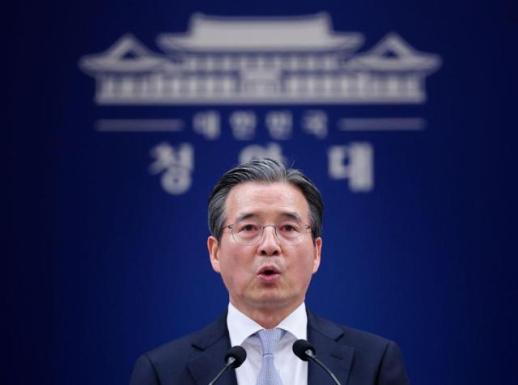 BLUE HOUSE INSIGHT: Dialogue on 'excess profits, excess tax revenues, and future of South Korea in AI age' SEOUL, May 14 (AJP) - The recent Facebook essays by presidential policy chief Kim Yong-beom have stirred unusual debate in Seoul's financial and policy circles. Some dismissed them as overly ambitious. Others saw them as one of the first serious attempts to grapple with a profound question now emerging before advanced economies: What happens when artificial intelligence transforms not only industries, but the fiscal structure and social contract of an entire nation? At its core, Kim's argument begins with a deceptively simple observation. The rise of the KOSPI toward 7,500 points — and even speculative discussion of 10,000 — may not merely reflect market exuberance. It may instead signal something far more structural: the possibility that South Korea is entering a new economic era shaped by artificial intelligence infrastructure and semiconductor dominance. The central concept is what Kim calls "structural excess profits." If companies such as Samsung Electronics and SK hynix continue generating extraordinary profits from AI memory chips, high-bandwidth memory technologies, and next-generation data-center infrastructure, the implications extend far beyond equity markets. Such profits would produce massive increases in corporate tax revenues, income-tax receipts from highly paid engineers and specialists, and expanding trade surpluses. Together, these would generate what Kim describes as "excess tax revenues." The deeper question, however, is not whether such revenues may emerge. The deeper question is what kind of nation South Korea chooses to become if they do. Kim's writings are therefore neither stock-market prophecy nor technological utopianism. They are, rather, an attempt to begin a national conversation about how the gains from the AI era should be distributed, institutionalized, and transformed into a new social contract. To better understand that argument, AJP imagines the following extended conversation between Kim Yong-beom and "Financial Master ABC," a fictional but analytically minded interlocutor representing the broader public. The core point is straightforward. What is happening in the Korean economy today cannot be understood merely through the old framework of cyclical booms and busts. Exports are rising. Semiconductors are thriving. The KOSPI is climbing. Anyone can observe those things. But the more important question is this: what if South Korea's industrial structure itself is changing in the age of AI? If that is true, then taxes, welfare systems, entrepreneurship policy, education, and even national strategy must all be reconsidered. So the real issue is not whether the KOSPI reaches 7,500 or even 10,000? Exactly. Stock indices are outcomes, not causes. What truly matters is corporate profitability. Ultimately, stock prices are a function of earnings. If semiconductor firms begin generating profits on a scale fundamentally different from the past, then the benchmarks through which we interpret Korean markets must also change. The real problem is that we are still trying to understand today's economy using the psychological framework of the KOSPI 2,000 or 3,000 era. Critics argue that this is simply another semiconductor cycle — that Korea has seen booms before. That criticism is understandable. Korean semiconductors have always moved through cycles of expansion and contraction. But the current AI-driven demand structure is fundamentally different from the smartphone or PC cycles of the past. Artificial intelligence is not merely a software phenomenon. It is becoming a vast industrial infrastructure system connected to data centers, electric grids, cooling technologies, advanced memory, batteries, robotics, and industrial automation. Products such as high-bandwidth memory do not create one-time demand. They require continuous upgrades and generational replacement. That is what differentiates this moment from earlier memory cycles. But at the level of national economies, AI resembles electricity, railroads, or telecommunications infrastructure more than a traditional software industry. As AI increasingly moves into the physical world, what matters is not only algorithms. It is also memory semiconductors, power systems, batteries, precision machinery, sensors, and robotics manufacturing capacity. Very few countries possess this full physical supply chain. And you believe South Korea is uniquely positioned? South Korea occupies an unusually strategic position because it possesses integrated strengths across memory semiconductors, batteries, displays, shipbuilding, power equipment, precision manufacturing, and industrial automation. The U.S. dominates design and platforms, but its manufacturing base is comparatively limited. China possesses vast manufacturing scale but faces geopolitical trust constraints. Japan remains strong in materials and industrial equipment. Taiwan leads in foundries. Korea, however, possesses multiple pillars of the AI infrastructure ecosystem simultaneously. That is not merely industrial competitiveness. It is geopolitical leverage. Then what exactly are "excess profits"? In most industries, competition eventually compresses margins. But industries characterized by high technological barriers, limited suppliers, and structurally expanding demand can sustain profits far above historical norms for prolonged periods. That is what I mean by excess profits. If Korean firms secure such positions within AI memory and infrastructure industries, then Korea's economy may enter an entirely different phase from the one we have historically known. And those excess profits become excess tax revenues? When corporations earn extraordinary profits, corporate-tax revenues surge. Highly paid engineers and workers generate larger income-tax receipts. Expanding exports strengthen trade balances, affect exchange rates, and increase national purchasing power. The effects spread far beyond corporate balance sheets. They reshape national revenues, household incomes, asset markets, inflation dynamics, and fiscal capacity. That is how excess profits can become excess tax revenues. But Korea has experienced semiconductor windfalls before. Yes. In 2021 and 2022, Korea already experienced unusually large tax surpluses linked to semiconductor strength. But at the time, policymakers treated them largely as temporary cyclical gains rather than part of a potentially deeper structural transformation. Boom years generated excess revenues. Downturns produced fiscal shortfalls. The cycle repeated itself. If the current AI-driven cycle proves larger and longer-lasting, then we cannot continue responding with the same reactive framework. What, then, should government do? First, policymakers must look beyond traditional GDP metrics alone. Exports, trade balances, corporate earnings, nominal income growth, and terms of trade may provide a more accurate picture of what is happening. Second, if excess tax revenues emerge, governments should establish principles in advance regarding how those resources will be used. Third, Korea must redesign institutions for the AI era — entrepreneurship systems, educational transitions, cultural ecosystems, immigration policy, and social welfare frameworks. Why do you believe GDP alone is insufficient? Industries such as semiconductors evolve so rapidly that traditional statistical systems struggle to capture reality in real time. When performance, density, and energy efficiency all improve simultaneously, it becomes increasingly difficult to separate price changes from quality improvements. Corporate profits may surge dramatically while real GDP appears comparatively modest. The issue is not that statistics are wrong. It is that they may lag behind structural transformation. The most controversial idea in your essays is the so-called "national dividend." Is this universal basic income? Not necessarily. The important issue is not the label, but the principle. The excess profits generated by AI infrastructure industries are not solely the result of individual corporations. They are built upon half a century of collective national investment — education, taxation, industrial policy, infrastructure, and social sacrifice. If so, then part of those gains should eventually be returned to society in some structured form. Critics may interpret that simply as redistribution. Which is precisely why careful institutional design matters. The resources could support youth entrepreneurship, AI transition education accounts, rural revitalization, artists and creators, strengthened pensions, or regional innovation infrastructure. The essential point is this: if extraordinary fiscal gains emerge, they should not simply be consumed politically year by year without long-term principles or social consensus. So is this fundamentally about growth or redistribution? It is about both. In the AI era, growth and distribution cannot be separated cleanly. Excess profits naturally concentrate. Shareholders, elite engineers, and owners of metropolitan assets may receive enormous gains, while many middle-class households and regional communities fall behind. A country can become richer overall while internal inequality deepens sharply. If that imbalance is ignored, even growth itself becomes unsustainable. You also stress entrepreneurship and culture. Why? Because AI changes the nature of human value creation itself. If AI automates routine labor, expanding public-sector jobs alone cannot sustain long-term vitality. What remains uniquely human are judgment, creativity, relationships, aesthetics, meaning, and expression. That is why entrepreneurship and culture become central. AI tools are beginning to give individuals and small teams productivity once available only to large corporations. Governments should therefore lower the risks of entrepreneurial failure and create systems allowing innovation to emerge outside Seoul as well. Culture, too, is no longer a peripheral leisure industry. In the AI age, it becomes part of the infrastructure of human identity itself. You also raised immigration. Low birth rates and aging demographics are among Korea's greatest structural constraints. Korea must attract high-level technological talent while also ensuring stable labor supply in caregiving and essential services. This is not merely labor importation. It is national redesign. If Korea becomes a genuine AI infrastructure hub, it may also become one of Asia's most attractive destinations for global talent. In the end, what kind of country should Korea become? Korea should aspire to become more than simply a supplier of AI infrastructure. It should become the first country capable of transforming AI-era excess profits into broader human flourishing. Technology may be created by corporations. But civilization is ultimately built by society. If Korea designs this transition wisely, it could evolve beyond a successful export economy into one of the defining national models of the AI era itself. Kim's essays initially feel unfamiliar because they combine ideas rarely discussed together in Korean public discourse: KOSPI 10,000, AI infrastructure monopolies, national dividends, demographic redesign, entrepreneurial safety nets, cultural investment, and fiscal transformation. Yet beneath the complexity lies a remarkably coherent framework. First, the AI era is binding semiconductors, data centers, electric grids, batteries, robotics, and advanced manufacturing into a single infrastructure ecosystem. Second, South Korea is one of the very few nations capable of supplying that ecosystem comprehensively. Third, if this strategic position strengthens structurally, Korean firms may generate excess profits on a scale historically unfamiliar to the country. Fourth, those profits may produce unprecedented tax revenues. And fifth, Korea must begin deciding now how those gains should be institutionalized and distributed. The central issue is therefore not whether the government should "hand out money." The deeper issue is how an advanced society manages structurally generated abundance. Industrial-era states built highways, ports, factories, and schools. Information-era states built broadband networks and digital infrastructure. AI-era states may need to build entrepreneurial safety nets, lifelong transition education, regional innovation ecosystems, cultural resilience, and new immigration frameworks. Two dangers must be avoided simultaneously. The first is excessive optimism — the belief that AI demand will expand forever, that Korean firms will permanently dominate, and that tax surpluses will arrive automatically. The second is excessive cynicism — dismissing every structural change as merely another semiconductor cycle or reducing every conversation about national dividends to simplistic populism. Serious national strategy emerges between those extremes. If excess tax revenues materialize, some portion should strengthen fiscal stability and future sovereign reserves. But another portion may need to support the social transition costs of the AI age itself. Young people may require entrepreneurial opportunities and second chances. Middle-aged workers may need retraining pathways. Elderly citizens may need stronger retirement security. Regional communities may require new industrial and cultural anchors. Ultimately, the most important question raised by Kim's essays is not whether Korea can become wealthier again. The deeper question is whether Korea, if it does become wealthier, will finally learn how to use that wealth wisely. South Korea successfully navigated industrialization. It successfully navigated digitization. Now it stands before a third historical threshold: the age of AI infrastructure. Beyond that threshold lies a choice. Korea may remain a conventional cyclical export economy. Or it may evolve into something historically new — a technological civilization-state capable not only of generating extraordinary wealth, but also of transforming that wealth into a richer and more humane society. Excess profits emerge from corporate excellence. But the use of excess tax revenues reveals the character of a nation itself. When governments merely collect those resources, it is finance. When societies reinvest them into people, regions, culture, and the future, it becomes civilization. 2026-05-14 17:46:41
 -
 Director Jung Juri and Cast of 'Dora' Set for Cannes Film Festival Premiere Film 'Dora' is set to have its world premiere at the 79th Cannes Film Festival's Directors' Fortnight. Director Jung Juri, who previously debuted with 'Dohiya' and followed up with 'Next Sohee,' will be joined by actors Kim Do-yeon and Ando Sakura to meet local audiences.On May 14, the production team for 'Dora' announced that Director Jung Juri and actors Kim Do-yeon and Ando Sakura are departing for Cannes, sharing their thoughts on the festival invitation. 'Dora' has been officially invited to the Directors' Fortnight at this year's Cannes Film Festival for its world premiere.Director Jung previously gained recognition at Cannes with her debut feature 'Dohiya' (2014), which was selected for the Un Certain Regard section, and her second feature 'Next Sohee' (2022), which was the closing film of the Critics' Week. With 'Dora,' she continues her relationship with Cannes, marking her third feature film at the festival. Jung expressed, "I am thrilled to be able to showcase the film right after its completion. I look forward to meeting audiences from around the world and returning to greet our local viewers soon."Kim Do-yeon, who plays the title role of Dora, will walk the Cannes red carpet for the first time with this film. She stated, "It means a lot that my first Cannes experience coincides with Dora's first steps. Director Jung allowed me to fully embody Dora on set, and senior actor Ando Sakura awakened me with new energy in every scene. I am excited to see what the moment will be like when the Cannes audience meets Dora. I hope the time we spent together resonates honestly in that space."Ando Sakura, who plays another lead character, Nami, also expressed his anticipation. He said, "Last summer, even in situations where language was a barrier, I found myself looking deeper at my surroundings to share feelings in any way possible. While films transcend language and culture, I realized that the space in front of the camera can also be a place to share our hearts without words. I sincerely hope to meet you all at my first Directors' Fortnight screening."Ando Sakura returns to Cannes after starring in 'Shoplifters' (2018) and 'Monster' (2023). This marks his first appearance in a Korean film with 'Dora.''Dora' tells the story of a family that leaves Seoul for a summer vacation at a seaside villa, where Dora, who suffers from an unknown illness, experiences love for the first time, causing everything to gradually unravel. The film explores the cracks and emotional turmoil that begin within the closest of relationships—family.The project is an international co-production involving four countries: South Korea, France, Luxembourg, and Japan. It is produced by South Korea's Red Peter, in collaboration with France's The French Connection and ARTE France Cinéma, and Luxembourg's Les Films Fauves. The production team from various countries worked together from filming to post-production, with French cinematographer Irina Lubtchansky handling the camera. Visual effects (VFX) were created in South Korea and France, sound work was done in South Korea and Luxembourg, and color grading took place in France.This year, several Korean films have also been invited to Cannes. Na Hong-jin's 'Hope' is in the competition section, while Yeon Sang-ho's 'Goonjeon' is featured in the Midnight Screenings. Park Chan-wook has been appointed as the first Korean jury president. In an interview with AFP on May 11, a day before the festival's opening, Park stated, "Awards should be given to works that will remain for 50 or 100 years. Ultimately, the artistic achievement of the film is what matters most."'Dora,' primarily funded by Solaire Partners through K-Wave Media, aims for a domestic release in the second half of 2026 following its Cannes world premiere. Domestic distribution will be handled by Episode Company, which is presenting 'Dora' as its first distribution project, while international distribution will be managed by Finecut.* This article has been translated by AI. 2026-05-14 17:45:48
 -
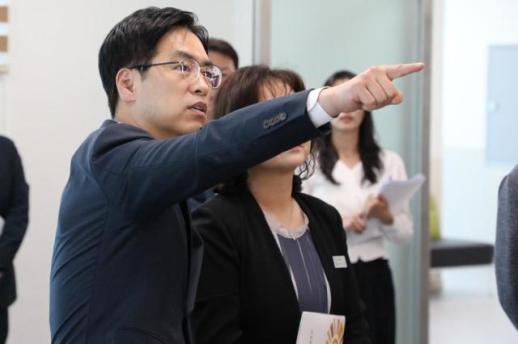 Ministry of Interior to Begin Second Round of High Oil Price Relief Payments on May 18 The Ministry of Interior announced on May 14 that Vice Minister Kim Min-jae visited Gongju, South Chungcheong Province, to assess preparations for the second round of high oil price relief payments, set to begin on May 18. During his visit, he listened to local concerns and checked the readiness of the facilities. Kim visited the Okryong-dong community center to ensure that residents applying for the relief payments would not face any inconveniences. He emphasized the importance of thorough preparations, especially since this second round will include about 70% of the population, including those who did not apply in the first round. He inspected the availability of offline payment methods, such as prepaid cards, and noted that many elderly residents who visit the center may struggle with online applications. Kim requested that sufficient indoor waiting space and guidance staff be provided, especially as temperatures rise. Additionally, he urged the promotion of the opportunity for those who missed the first application period to apply during the second round, ensuring that all eligible individuals can receive the relief payments without gaps in coverage. The second round of high oil price relief payments will begin simultaneously online and offline at 9 a.m. on May 18. Eligible amounts include 130,000 won for single-income households with one employee, 140,000 won for two-person households, 80,000 won for single-income households with regional subscribers, and 120,000 won for two-person households. To prevent congestion and system overload during the first week of applications, a system based on the last digit of applicants' birth years will be implemented. Kim stated, "As the number of eligible individuals expands in this second round, meticulous preparations are necessary to ensure that every citizen can apply and receive their payments without inconvenience. While the current workload is significant, the Ministry of Interior and local governments will work closely to ensure a smooth and prompt payment process for the public."* This article has been translated by AI. 2026-05-14 17:44:03
 -
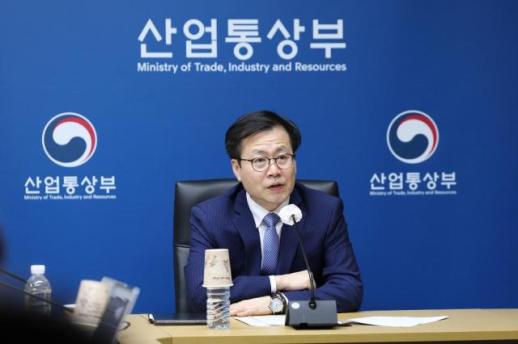 Korea's Trade Chief Pledges Support Amid EU and Mexico Outreach Yeo Han-goo, the head of the Trade Negotiation Bureau at the Ministry of Trade, Industry and Energy, stated, "The government will mobilize all trade capabilities to support our companies operating abroad in securing stable investments and competitiveness."On May 14, the ministry announced that Yeo met with Valdis Dombrovskis, the European Commissioner for Trade and Economic Security, in Brussels on May 11 to discuss the EU's plans to strengthen steel import regulations and to convey the concerns of the Korean industry while seeking cooperation.This meeting was held as the EU is set to implement the 'Steel Oversupply Response Act' starting in July, which includes raising tariffs on 30 steel products and introducing import quotas (TRQ). Yeo requested a cautious approach from the EU to ensure that Korean steel products are not subjected to unreasonable restrictions due to the new regulations.He emphasized that the EU is Korea's second-largest steel export market and explained that these measures could impact not only the steel industry but also the supply chains and production stability of Korean companies manufacturing automobiles and electronics locally.In response, the EU acknowledged the strategic importance of the steel industry for both Korea and the EU and expressed a willingness to seek mutually beneficial solutions through high-level and technical discussions.Earlier, on May 10, Yeo held a meeting with Korean companies operating in the EU to assess the challenges faced by the steel, automotive, and battery sectors. Attending companies reported that various industrial and environmental regulations, including the Industrial Acceleration Act (IAA) and the Carbon Border Adjustment Mechanism (CBAM), have increased their operational burdens. They specifically expressed concerns that the upcoming steel import regulations could extend the burden to downstream industries such as automotive and electronics.Korean battery companies operating in Poland evaluated the EU Commission's decision last December to include the battery industry as a target for support under 'energy-intensive industries' as a positive step, expecting relief from electricity costs and reduced manufacturing expenses. The ministry explained that it has continuously raised the need for support for the battery industry in discussions with the EU and Polish governments.Yeo also visited Mexico from May 12 to 13, where he met with key figures, including Economy Minister Marcelo Ebrard, to emphasize the need for progress on the Korea-Mexico Free Trade Agreement (FTA).He explained that Korean companies operating in Mexico are facing difficulties due to tariff increases on countries without an FTA with Mexico and requested stable implementation of tariff reduction systems, expansion of duty-free quotas for automobiles, and the introduction of new quotas for electronics.Additionally, he conveyed the requirements of Korean companies regarding origin standards during the review process of the United States-Mexico-Canada Agreement (USMCA).Both countries agreed on the necessity of improving trade and investment relations and decided to establish ministerial-level strategic dialogues and working groups. Yeo met with local political and business leaders to explain the importance of Korean investment in Mexico and sought cooperation for advancing the FTA.Korean companies operating in Mexico highlighted the need for the Korea-Mexico FTA, citing increased operational burdens due to U.S. Section 232 tariffs, Mexico's tariff hikes, and strengthened labor laws.Yeo stated, "In an uncertain trade environment, the government is actively pursuing a diversification policy. We will support our companies through expanded tariff reduction incentives and FTA progress with Mexico, our top trading partner in Latin America."* This article has been translated by AI. 2026-05-14 17:42:55
 -
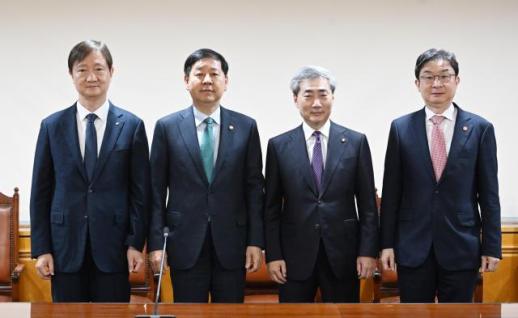 Financial chiefs monitor market volatility, Samsung strike risks SEOUL, May 14 (AJP) -The so-called 'financial four (F4)' - chiefs responsible for fiscal, monetary, and financial policies - gathered Thursday to monitor recent volatility in the financial and foreign exchange markets, assess risks stemming from the war in the Middle East, and discuss market stabilization measures. Notably, the meeting also addressed the potential impact of a general strike at Samsung Electronics, the nation's largest company, on the financial market and the real economy. Koo Yun-cheol, Deputy Prime Minister and Minister of Economy and Finance, presided over the joint market monitoring meeting at the Korea Federation of Banks in Seoul. The meeting was attended by Bank of Korea (BOK) Governor Shin Hyun-song, Financial Services Commission Chairman Lee Eog-won, and Financial Supervisory Service Governor Lee Chan-jin. The policy chiefs evaluated that the Korean economy continues to show higher-than-expected growth driven by robust semiconductors, with the fundamentals of the macroeconomy and financial markets remaining solid. Still, the volatility in the won-dollar exchange rate has expanded recently due to the prolonged Middle East conflict, rising international oil prices, and uncertainty regarding the monetary policies of major economies. Korea's gross domestic product (GDP) grew 1.7 percent in the first quarter, doubling the previous consensus of 0.9 percent. However, during the same period, the average exchange rate reached 1,469 won per dollar, weakening by more than 1 percent from 1,453.5 won in the previous quarter. Government bond yields also rose by an average of 35.4 bps for the three-year bond and 41.1 bps for the 10-year bond. KOSPI has grown into a globally top-tier market based on the competitiveness and earnings of key industries like semiconductors. However, they shared the consensus that efforts to improve the structure of the capital market must continue for it to solidify its position as a world-class market. As of Thursday's close, Samsung Electronics and SK hynix accounted for 48.1 percent of the total KOSPI market capitalization, raising concerns about a "K-shaped" polarization in the securities market. Regarding the weakness in the bond market, officials explained that the recent rise in treasury bond yields resulted from global inflation concerns, shifts in expectations for major countries' monetary policies, and strong first-quarter GDP growth. The government evaluated that the structural demand base for the bond market is improving, supported by healthy fiscal soundness and capital inflows following the inclusion in the World Government Bond Index (WGBI). They agreed the recent weakness of the won is excessive relative to the country's economic fundamentals. The government diagnosed that recent net selling of domestic stocks by foreign investors and an increase in offshore speculative trading have increased exchange rate volatility. They pointed out foreign exchange liquidity remains at a good level, and institutional improvements such as the WGBI inclusion, the National Pension Service’s new framework, and the Return-to-Korea Investment Account (RIA) are contributing to the stabilization of supply and demand. They projected that the exchange market would stabilize quickly if external uncertainties, such as the Middle East war, ease, supported by a record-high current account surplus. The meeting also touched upon the labor conflict at Samsung Electronics. Participants expressed concern that a general strike could pose significant risks to growth, exports, and the overall financial market, emphasizing the need for a swift resolution through principled negotiations. The management and labor union of Samsung Electronics have held negotiations since their first 2026 wage talk meeting on December 11 last year, but failed to bridge differences over the restructuring of the performance-based bonus system and the removal of the salary cap. The union secured the right to strike with a 93.1 percent approval rate in a March 18 vote and has intensified its struggle through rallies. Following mediation by the Ministry of Employment and Labor and the National Labor Relations Commission, post-adjustment procedures were held from May 11 to 13 but failed to reach a final agreement. Immediately after the breakdown of talks, the union announced it would go on a full-scale strike for 18 days, from May 21 to June 7. 2026-05-14 17:36:56
 -
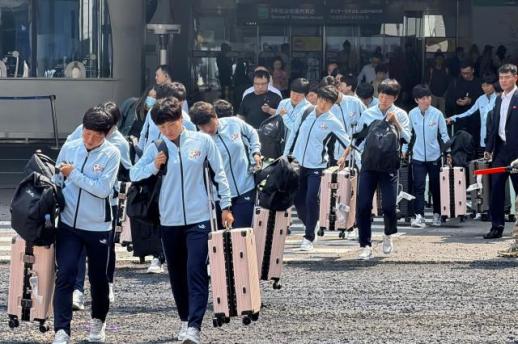 South Korea Approves Visit of North Korean Women's Football Team South Korea's Ministry of Unification announced on May 14 that it has approved the visit of the North Korean women's football team, Naegohyang, to participate in the Asian Football Confederation (AFC) Women's Champions League (AWCL) semifinals scheduled for May 20 in Suwon. The approved delegation consists of 39 members, the same number initially submitted by North Korea to the AFC. The visit is authorized from May 17 to May 24. Once the visit is approved, an entry permit will be issued, which is required under South Korea's Inter-Korean Exchange and Cooperation Act for North Korean officials visiting the South. The entry permit serves as a document to verify identity in place of a passport during the entry screening process. A Ministry of Unification official stated that North Korea defines inter-Korean relations as involving two separate states. Regarding the possibility of the North Korean delegation presenting passports during entry screening at Incheon International Airport on May 17, the official said, "The screening will fundamentally follow the Inter-Korean Exchange and Cooperation Act, but if the North Korean football team presents passports, it will be used as supplementary material for photo verification on a practical level." The Naegohyang women's football team is set to arrive at Incheon International Airport on May 17 and will face Suwon FC Women at the Suwon Sports Complex on May 20. This marks the first time a North Korean sports team has visited South Korea for a competition since the International Table Tennis Federation (ITTF) World Tour Grand Finals held in Incheon in December 2018, and it is the first visit by the North Korean women's football team since the 2014 Asian Games in Incheon. The Ministry of Unification has decided to support up to 300 million won (approximately $250,000) from the Inter-Korean Cooperation Fund for the expenses of cheering groups from the private sector. According to a reference document released by the Ministry, the joint cheering group organized by over 200 civic organizations, including the National Council for Reconciliation and Cooperation, will consist of approximately 3,000 members. The Ministry stated, "We respect the autonomous discussions and negotiations of civic groups and are communicating to ensure that cheering is conducted in an orderly manner within the framework of AFC regulations," adding that it has provided guidance on prohibited items and the ban on political and religious messages in the stadium. As a result of discussions with civic organizations, the joint cheering group has agreed to use cheering tools such as banners, cheering towels, cheering sticks, and club flags from both sides, in accordance with AFC regulations.* This article has been translated by AI. 2026-05-14 17:35:04
 -
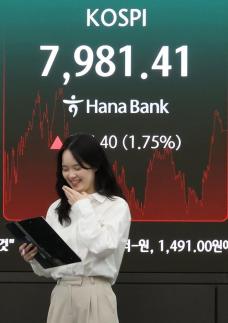 KOSPI Hits Record High, Just 19 Points Away from 8000 The KOSPI continued its upward trend throughout the trading session, closing at a record high. Although it fell short of breaking the 8000 mark, it ended just 19 points shy of that milestone. On May 14, the Korea Exchange reported that the KOSPI rose by 137.40 points, or 1.75%, to close at 7981.41. The index opened at 7873.91, up 29.90 points, and steadily increased throughout the day. In terms of trading volume, both individual and institutional investors contributed to the index's rise. In the main market, individuals purchased a net 22.9 billion won, while institutions bought a net 1.289 billion won. In contrast, foreign investors sold a net 23.048 billion won, taking profits. Lee Kyung-min, a researcher at Daishin Securities, noted, "Foreign investors have been net sellers for six consecutive trading days. However, the intensity of their selling has eased, and the impact on the index has been limited due to the buying from individuals and institutions." Large-cap stocks showed mixed performance across sectors. Samsung Electronics rose by 4.23%, Hyundai Motor by 0.28%, LG Energy Solution by 2.79%, and Samsung C&T by 1.63%. Conversely, SK Hynix fell by 0.30%, SK Square by 1.60%, Samsung Electro-Mechanics by 0.49%, Doosan Enerbility by 2.42%, and HD Hyundai Heavy Industries dropped by 7.37%. The KOSDAQ index also maintained its upward trajectory, closing at 1191.09, up 14.16 points or 1.20%. The index opened at 1187.02 and fluctuated throughout the day but ultimately finished higher. In the KOSDAQ market, foreign and institutional investors sold a net 130.1 billion won and 72.8 billion won, respectively. Meanwhile, individual investors bought a net 143.3 billion won, indicating a trend of bargain hunting. The top KOSDAQ stocks exhibited a mixed trend as well. Alteogen rose by 8.90%, EcoPro BM by 5.53%, EcoPro by 4.44%, and Samchundang Pharm by 0.38%. On the other hand, Rainbow Robotics fell by 3.99%, Kolon TissueGene by 6.92%, Rino Technology by 0.36%, Rigakem Bio by 0.96%, and HLB by 0.37%. 2026-05-14 17:33:12
 -
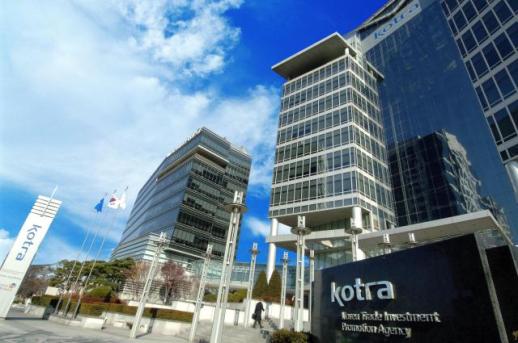 KOTRA Expands Market for K-Robots and AI in Vietnam KOTRA is supporting the entry of domestic robotics and artificial intelligence (AI) companies into Vietnam, which is emerging as a hub for advanced manufacturing. As Vietnam expands its investments in smart manufacturing and automation, the demand for K-robots and manufacturing AI solutions is also increasing. KOTRA announced that it will operate a "K-Robot Pavilion" at the Vietnam International Machinery Industry Expo (VINAMAC EXPO 2026) from May 14 to 16 at the I.C.E International Exhibition Center in Hanoi, in collaboration with the Korea Robotics Industry Promotion Agency. VINAMAC is Vietnam's leading manufacturing exhibition, now in its 23rd year. It attracts over 300 companies from around 20 countries and more than 10,000 industry professionals annually, covering a wide range of advanced manufacturing fields, including industrial machinery, robotics technology, automation, transportation, and control. Five innovative Korean robotics companies are participating in the Korean Pavilion, showcasing automation equipment, sensors, and components for smart processes. They are also conducting over 50 export consultations with 17 local buyers, including Vietnam's automation company, ITEK Automation Solutions. Vietnam has recently accelerated its manufacturing modernization efforts. The Vietnamese government is promoting the development of automation, robotics, AI, and smart factory industries through its "Smart Manufacturing Development Strategy." According to market research firm TechSci Research, Vietnam's robotics market is projected to reach approximately $400 million by 2025, with an expected annual growth rate of around 4% until 2030. Exports of Korean-made robots to Vietnam are also on the rise. According to customs statistics, exports of industrial robots to Vietnam surged by 67% in 2022 compared to the previous year, reaching $15.29 million in 2025, a 12.4% increase. In the past three years, exports of transport and loading robots have increased thirteenfold, and exports of automation solutions have risen by 40%. Industry experts anticipate that rising labor costs and a shortage of skilled workers in Vietnam will drive demand for solutions that combine process automation packages with maintenance, rather than simple equipment. Interest from local manufacturing, robotics, and system integration (SI) companies has been strong since the first day of the expo. A representative from a Vietnamese SI company visiting the Korean Pavilion remarked, "The K-Robot Pavilion is impressive as it is structured like a complete smart factory package. We focused on consulting with companies that possess applicable technologies for our clients, and we plan to continue discussions on actual project applications with several of them." Following the Hanoi robotics exhibition, KOTRA will hold a "Korea-Vietnam AI Innovation Day" in Ho Chi Minh City on May 20. This event aims to uncover overseas demand for AI transformation in manufacturing through consultations and pitches from domestic AI innovation companies. KOTRA's Southeast Asia and Oceania Regional Headquarters Director, Koo Bon-kyung, stated, "Collaboration in advanced industries between our two manufacturing powerhouses can provide opportunities for both Korean and Vietnamese companies in exports and technology development. As Vietnam transitions from a production base to a hub for advanced manufacturing, we will do our utmost to help our robotics and AI industries seize new opportunities."* This article has been translated by AI. 2026-05-14 17:31:21