
Journalist

Seo Hye Seung
-
 OpenAI Expects to Spend $50 Billion on Computing Capacity This Year, Executive Says OpenAI, the developer of ChatGPT, expects to spend $50 billion (about 73 trillion won) this year to secure computing capacity for running its AI services and developing new models. Bloomberg News reported that OpenAI President Greg Brockman disclosed the estimate while testifying May 5 in a court proceeding tied to a legal dispute with Tesla CEO Elon Musk. The testimony came in litigation Musk filed against OpenAI. Musk alleges the company is abandoning its founding mission to develop AI for the public good and is seeking to shift toward a profit-driven structure. He sued CEO Sam Altman, Brockman and others. Brockman said OpenAI’s computing costs have surged from about $30 million in 2017 to tens of billions of dollars this year, reflecting the growing computing power needed to build more advanced AI models and serve more users. Since launching ChatGPT in late 2022 and helping ignite the generative AI boom, OpenAI has moved aggressively to secure AI chips and data centers. The company has not yet turned a profit, but it is widely seen as central to an AI infrastructure investment race involving major cloud providers and chipmakers. OpenAI previously told investors in February that it plans to spend about $600 billion through 2030. The company has also said it has committed to investing more than $1.4 trillion in AI infrastructure over the coming years. OpenAI recently raised $122 billion in funding, described as among the largest in Silicon Valley history, but concerns are growing about the financial strain from its massive AI infrastructure spending.* This article has been translated by AI. 2026-05-06 11:21:22
 -
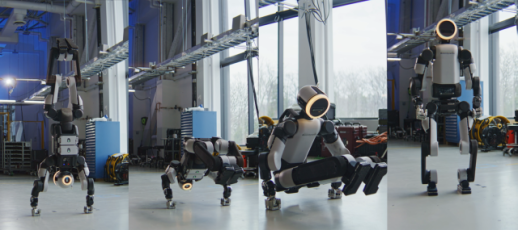 Hyundai-owned Boston Dynamics upgrades Atlas humanoid ahead of U.S. plant rollout Hyundai Motor Co.’s humanoid robot Atlas, slated for deployment at the automaker’s U.S. production facilities, has demonstrated advanced gymnastics moves, fueling expectations it could handle more demanding manufacturing work. Boston Dynamics on May 5 (U.S. local time) posted a video on its YouTube channel showing Atlas performing a series of gymnastics positions. In the 43-second short, Atlas moves into a handstand and then holds its body nearly horizontal while supporting itself only on its hands. Around the 19-second mark, Atlas performs an “L-sit,” forming an L shape while balancing on its hands. It holds the position for about five seconds before flipping up to stand upright. The company said the routine goes beyond simple balance or repeated motions, requiring precise, simultaneous control of the upper body, core and arm joints. It also reflects improved ability to hold steady positions, separate from previously shown aerial flips. The demonstration drew favorable reactions ahead of full-scale training planned at U.S. production sites, with viewers noting the difficulty of the moves even for humans. Comments on YouTube included: “The gymnastics moves are really cool,” “Getting ready for the next Olympics,” and “I really like that it’s almost silent.” Boston Dynamics said the video shows Atlas can carry heavy objects, move them and work from irregular postures on a factory floor. Observers pointed to the robot’s ability to support its full body weight steadily on a very small contact area—both hands—as a sign it has reached an advanced technical stage. Boston Dynamics said the routine used a reinforcement learning-based whole-body control system. The video also shows “001” engraved on the side of Atlas’ torso, identifying it as the first development model. The development model includes autonomous learning capability and flexibility designed to adapt to a wide range of work environments. Hyundai Motor Group plans to deploy the Atlas development model first at Hyundai Motor Group Metaplant America, or HMGMA, and conduct process-by-process verification. A Hyundai Motor official said earlier videos focused on logistics tasks or flip-style movements, while the latest clip highlights precise control of the body in static positions. The official described it as a demonstration of high-difficulty work capability ahead of planned deployment at U.S. plants in 2028.* This article has been translated by AI. 2026-05-06 11:15:15
 -
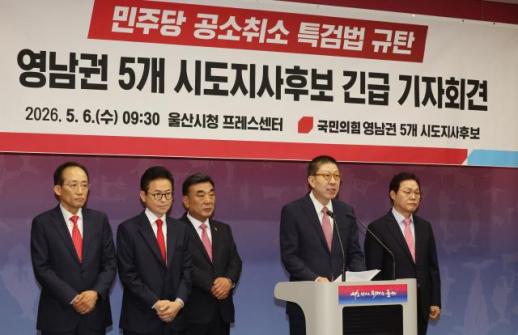 PPP Yeongnam gubernatorial candidates denounce DP’s prosecution-cancellation special counsel bill The People Power Party’s five mayoral and gubernatorial candidates in the Yeongnam region on the 6th condemned the Democratic Party’s push for a “special counsel bill to cancel prosecutions,” calling it a measure that would let the president “erase his own crimes.” Kim Du-gyeom, the PPP’s Ulsan mayoral candidate; Park Heong-joon, the Busan mayoral candidate; Choo Kyung-ho, the Daegu mayoral candidate; Lee Cheol-woo, the North Gyeongsang governor candidate; and Park Wan-soo, the South Gyeongsang governor candidate made the remarks at a news conference at Ulsan City Hall’s press center. They said they would “block to the end, together with the public, the unconstitutional attempt by President Lee Jae-myung and the Democratic Party.” They argued that allowing a special counsel appointed by the president to cancel the president’s own trial would amount to improper interference in judicial procedures and a violation of the constitutional principle of separation of powers, calling it “a judicial coup disguised as legislation” and “judicial insurrection.” The candidates said Lee’s trial is currently suspended during his term and “poses no obstacle to governing,” but that seeking to eliminate his case through prosecution cancellation while in office would be an unconstitutional act that directly contradicts South Korea’s constitutional order. They also said the proposal violates the principle of equality, arguing that the president is “one citizen before the law,” and that rejecting that principle would place the president above the Constitution. “Power that seeks to stand above the law is anti-democratic and anti-republican, and the Republic of Korea, a democratic republic, strongly rejects this,” they said. The candidates criticized Lee’s request that the ruling party gather public opinion on adopting the special counsel measure, saying it appeared to be political calculation aimed at avoiding fallout in local elections less than a month away, rather than a commitment to uphold the Constitution. They claimed it was effectively an admission that the president himself is behind what they called an attempt to “launder” alleged crimes. They said the bill should not pass the National Assembly, but added that even if it does, Lee “must” exercise his veto. If he does not, they said, it would mean the president is abandoning his duty to defend the Constitution and betraying the oath made to the public. * This article has been translated by AI. 2026-05-06 11:09:15
 -
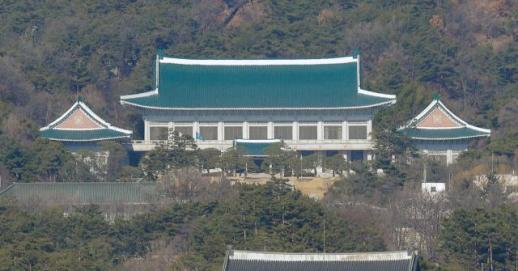 South Korea to Send Special Envoy Yang Kyung-sook to Costa Rica President’s Inauguration The government will dispatch former lawmaker Yang Kyung-sook as President Lee Jae-myung’s special envoy to the inauguration of Costa Rican President Laura Fernandez on May 8. According to a written briefing issued Tuesday by senior Cheong Wa Dae spokesperson Kang Yoo-jung, Yang plans to meet with Fernandez to explain the Lee administration’s governing philosophy and foreign policy and to deliver Lee’s message on developing ties with the new Costa Rican government, along with a presidential letter. Kang said Yang will attend inauguration-related events, including a reception hosted by Costa Rica’s foreign minister and an inaugural reception hosted by the incoming president. Kang said Yang will also convey the Lee government’s intent to strengthen practical cooperation in areas such as the economy, infrastructure and education.* This article has been translated by AI. 2026-05-06 11:07:18
 -
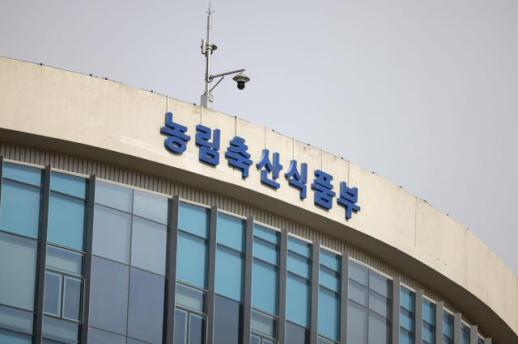 South Korea Moves to Stabilize Agricultural Film Supplies Amid Mideast War Risks As the prolonged war in the Middle East raises concerns about shortages of agricultural film, the South Korean government is launching a pilot program with private-sector partners to stabilize supplies. Under the plan, the government will work with petrochemical companies to provide raw materials to manufacturers, which will produce agricultural film and deliver it to local agricultural cooperatives. The Ministry of Agriculture, Food and Rural Affairs said Tuesday it will carry out the pilot with Jinju Horticultural Nonghyup, which operates its own film plant. The Ministry of Trade, Industry and Energy will work with Hanwha Solutions to supply raw materials for agricultural film within this week, and Jinju Horticultural Nonghyup will use them to produce film and supply it to six materials sales outlets run by local Nonghyup cooperatives. Agricultural film is used during the farming season to manage moisture, suppress weeds and block pests. In summer, farmers also use specialized film to reduce sun-scorch damage. The agriculture ministry said supplies needed for spring farming have been secured nationwide, but it sees regional imbalances. To address that, it has been working with Nonghyup to support local cooperatives in areas with low inventories. “This is the first case of producing and supplying film through cooperation with the trade ministry and Nonghyup to ensure stable supplies of agricultural film,” said Kim Jeong-uk, director general for agro-industry innovation policy at the ministry. He said the ministry will continue to monitor supply and demand and “do its best” to ensure stable supplies. * This article has been translated by AI. 2026-05-06 11:06:25
 -
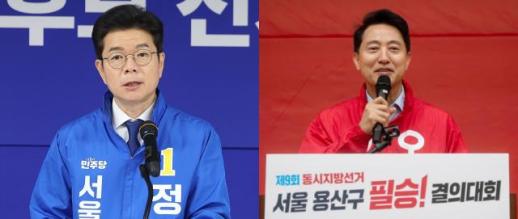 Ruling, Opposition Parties Trade Attacks in Key Races Ahead of June 3 Local Elections The ruling and opposition parties are intensifying their fight over key battlegrounds ahead of the June 3 local elections. The Democratic Party has nominated Jung Won-oh, a former Seongdong District chief, for Seoul mayor and Jeon Jae-soo, a former oceans and fisheries minister, for Busan mayor, highlighting an image of candidates who “get things done.” The People Power Party, meanwhile, is leaning on incumbency advantages and the issue of a special counsel tied to canceling indictments to rally conservative voters. Democratic Party lawmaker Park Sung-joon, People Power Party lawmaker Kim Jae-seop, Rebuilding Korea Party lawmaker Shin Jang-sik and New Reform Party lawmaker Cheon Ha-ram appeared Tuesday on CBS Radio’s “Park Seong-tae’s News Show,” trading barbs over the June 3 local elections and by-elections in contested districts. Criticism focused first on Jung, the Democratic Party’s Seoul mayoral candidate. Kim said the narrowing gap in polls reflects Jung’s slipping support rather than a consolidation of conservative voters, calling Jung’s view of Seoul “inexperienced” and “amateurish.” He said Jung’s “competent” image is deflating under scrutiny and argued that, with the indictment-cancellation issue added, “the Democratic Party will have a very hard time in Seoul.” Cheon also said Jung’s numbers in Seoul have stalled despite high presidential approval ratings, adding that questions remain about Jung, including controversy over overseas trips. Park pushed back, saying the election should test who can do the job. He said Oh “has done nothing,” asking what Oh accomplished during four terms. The Busan mayoral race also drew sharp exchanges. Park said Jeon has competitiveness as a “new product,” describing the contest as a clash between Jeon as a symbolic figure and People Power Party candidate Park Hyung-joon as an “old-era” figure. Kim countered that Jeon’s “Cartier” legal risk and a special counsel on allegedly fabricated indictments have given conservative voters a reason to turn out, saying the Busan race has “shifted a lot” thanks to the indictment-cancellation issue. Cheon added that Jeon could face growing difficulty, citing a case in which Jeon’s aide became a defendant on allegations of destroying evidence. In Pyeongtaek-eul, Gyeonggi Province, where multiple candidates are competing, the lawmakers differed on whether consolidation would occur. Kim said conflict in Pyeongtaek-eul between candidate Kim Yong-nam of the “new Lee Jae-myung” camp and Cho Kuk’s camp aligned with Roh Moo-hyun and Moon Jae-in would erupt, predicting People Power Party candidate Yoo Eui-dong would win. Shin said Yoo, despite serving three terms, failed to secure what he promised with the government and has no achievements beyond being “a Pyeongtaek person,” predicting a two-way race between Kim and Cho. Cheon said support for the president would not transfer directly to Cho and predicted that, over time, votes would move to Kim. 2026-05-06 11:02:51
 -
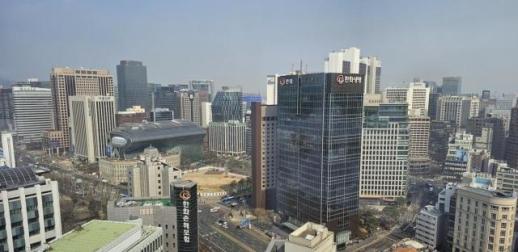 AI boom reshapes South Korea's top 500 companies by sales SEOUL, May 6 (AJP) - South Korea's top 500 companies by sales saw a major reshuffle, with 35 firms newly joining or dropping off the list amid the growing influence of artificial intelligence-related sectors including semiconductors, defense, and batteries. According to a report released Tuesday by corporate tracker CEO Score, electronics giant Samsung Electronics remained No. 1 with 333.61 trillion won (US$230 billion) in sales as of the end of last year, up 10.9 percent from a year earlier and the highest on record. Hyundai Motor ranked second with 186.25 trillion won, followed by its affiliate Kia with 114.14 trillion won. Together, the two surpassed 300 trillion won in combined sales for the first time. Korea Electric Power Corporation was fourth with 97.43 trillion won, leaving the top four unchanged from the previous year. SK hynix moved up two spots to No. 5 after posting 97.15 trillion won in sales, boosted by surging demand for high-bandwidth memory (HBM). CEO Score cited the jump as a clear example of how growth in the AI chip market is reshaping corporate rankings. Defense company Hanwha rose three spots to No. 7 on increased orders, while SK On jumped to No. 9 from No. 60 following mergers among its affiliates. SK Innovation made the biggest leap, climbing 190 places on a sharp increase in dividend income. Sales levels required to make the top 500 also rose, with the minimum threshold climbing by 733 billion won or 5.5 percent, to 1.40 trillion won, while total sales of all 500 companies grew 4.7 percent to 4,305 trillion won. Thirty-five companies newly joined the list, up two from a year earlier. They included firms that grew through mergers and acquisitions, such as Hanwha Hotels & Resorts and Sono International, as well as fast-growing players like Musinsa, a streetwear brand that has become one of South Korea's hottest fashion platforms. Meanwhile, companies in construction, shipping, and aviation sectors dropped off the list. By industry, auto and auto-parts companies made up the largest group with 49 firms, followed by IT and electronics with 39, retailers with 39, services with 38, and petrochemicals and refiners with 37. 2026-05-06 10:55:34
 -
 Trump Revives Tariff Push Using Trade Act Section 301 After Supreme Court Ruling President Donald Trump has revived his tariff drive by turning to Section 301 of U.S. trade law after the Supreme Court blocked his earlier approach. With broad tariffs facing legal limits, the administration is shifting its legal basis to keep up pressure. Inside the United States, industries are split over additional duties, while abroad the European Union has mounted open opposition. The Office of the U.S. Trade Representative said on May 5 (local time) it is holding Section 301 hearings through May 8 on what it calls structural overcapacity. The review covers 16 economies, including China, the EU, South Korea, Japan, Mexico and Vietnam. The process is meant to determine whether their policies and practices burden U.S. industry and could serve as grounds for future tariffs. In February, the U.S. Supreme Court ruled illegal global tariffs Trump imposed under the International Emergency Economic Powers Act. After that, the Trump administration imposed a temporary 10% tariff on imports worldwide and moved to rely on other trade laws, including Section 301. The current hearings are widely seen as a follow-up step. U.S. industry groups have taken opposing positions. The steel industry argued that excess capacity not only in China but also in the EU and South Korea is worsening global oversupply and that additional tariffs are needed. The American Soybean Association warned new tariffs could again disrupt U.S.-China negotiations. The footwear retail industry also opposed the move, saying it could raise consumer-goods prices. The EU responded most forcefully, urging the United States to honor existing trade agreements. After the United States warned it could raise tariffs on EU-made cars and trucks back to 25%, the EU said both sides should return to the 15% level they had agreed on. French President Emmanuel Macron said the bloc should consider, if necessary, its Anti-Coercion Instrument. South Korea, rather than escalating publicly as the EU has, emphasized market principles and restructuring efforts. In the hearing, the South Korean government said “Korea’s industrial structure is based on market-economy principles” and that “voluntary restructuring and institutional support are being carried out even for items with overproduction.” On its trade surplus with the United States, it also cited the complementarity of the two countries’ industries and cooperation on strategic investment.* This article has been translated by AI. 2026-05-06 10:55:14
 -
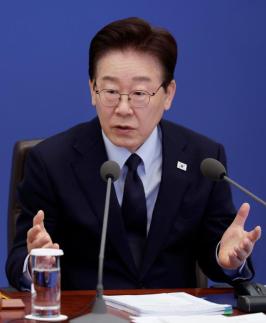 President Lee Calls for Step-by-Step Constitutional Amendments Ahead of Assembly Vote President Lee Jae-myung said Tuesday that pursuing constitutional change in stages, as agreement is reached, is the most realistic approach. Speaking at a Cabinet meeting and emergency economic review session at Cheong Wa Dae, Lee said a National Assembly vote on a constitutional amendment bill is expected to take place Wednesday. Lee said South Korea has undergone major political, economic and social changes since the current Constitution was adopted in 1987, but the Constitution has “stood still” for 40 years. He compared it to clothing that no longer fits a country that has changed and grown, arguing it needs to be altered. He added that under the current Constitution, it is difficult to fully safeguard the country’s present level, people’s living conditions and the nation’s future. At the same time, Lee said a full-scale revision would be burdensome and hard to achieve because of political interests. He urged a practical approach: do what is possible now rather than postponing everything. Lee said it should be self-evident to prevent any attempt to declare martial law illegally — when the country is not under martial law — to maintain power or pursue private interests, and to use the military to impose dictatorship. He questioned who could oppose writing “reasonable controls” on emergency martial law into the Constitution, adding that those who do oppose it are effectively defending illegal martial law. With the anniversary of the May 18 Democratic Uprising approaching, Lee said a tragedy like the Gwangju May 18 incident — in which weapons entrusted to protect the nation were used to kill citizens and destroy constitutional order — must never happen again. He said both ruling and opposition parties have publicly agreed to include the spirit of May 18 and the spirit of the Bu-Ma Democratic Protests in the Constitution’s preamble. He criticized opposition to doing so now, saying it makes no sense when there is a real opportunity to add it to the preamble. Lee also said strengthening local autonomy is something all citizens agree on, and urged political leaders to act on what they have long said in unison by putting it into practice in Wednesday’s vote. * This article has been translated by AI. 2026-05-06 10:54:21
 -
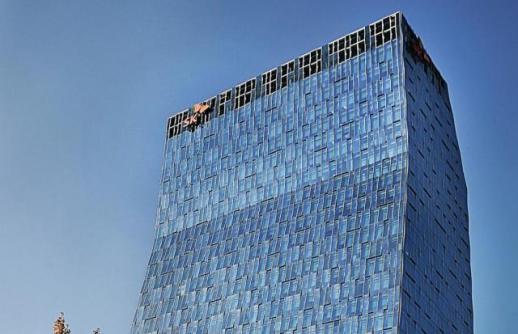 SK Telecom Added to Dow Jones Sustainability World Index, Only Korean Telecom Included SK Telecom (SKT) has been added to the 2026 Dow Jones Best-in-Class (DJ BIC) World Index, the company said Tuesday. The index is used by investors as a benchmark after assessing companies’ economic, environmental and social performance. The DJ BIC is a revamped version of the Dow Jones Sustainability Index (DJSI) following a September 2025 overhaul, and is published annually by S&P Global. SKT has been included consistently since its first entry in 2008, except in 2020. The World Index is the top tier, selecting only the top 10% by industry from about 2,500 companies worldwide by market capitalization. SKT was the only South Korean telecom included this year. SKT said the latest inclusion reflects companywide efforts including board-led accountability, supply-chain ESG management, climate response and stronger industrial safety and health measures. An SKT official called it “the result of continuously advancing our sustainability management system.” The company said it strengthened governance, including recording a 100% board attendance rate in 2024, and expanded ESG inspections, training and consulting for partner companies. It also said it is pursuing a “2050 net zero” strategy through its ESG committee, building a carbon management system that includes improving power efficiency and shifting to renewable energy. In safety and health, it said it was named an excellent company for three consecutive years in a shared-growth cooperation program. Eom Jong-hwan, head of SKT’s sustainability management office, said the company will continue to advance ESG management “to fulfill the responsibilities that come with being included in the DJ BIC World Index,” and “continue sustainable growth together with customers.” 2026-05-06 10:48:26