
Journalist

Seo Hye Seung
-
 Trump Raises Pressure on Iran Over Hormuz; Lee Jae-myung Government Urged to Set Clear National-Interest Line U.S. President Donald Trump is again increasing pressure in the Middle East. The United States, targeting Iran, has even raised the possibility of controlling the Strait of Hormuz as it steps up military and diplomatic pressure. The strait is a key route for global oil shipments and is vital for South Korea, since a large share of the Middle Eastern crude it imports passes through it. The situation is no longer just a regional dispute; it is becoming a broader crisis tied to Washington’s strategy to check China, a reshaping of global supply chains and energy security concerns. The Lee Jae-myung government has faced a difficult foreign-policy test soon after taking office. The United States is pressing allies to expand their roles, and European countries are accelerating talks on international coordination to secure maritime safety. Lee has reportedly moved to respond by considering participation in a Britain- and France-led international video conference on the Strait of Hormuz. South Korea’s government, however, should be most wary of “pragmatic diplomacy” without clear principles. Pragmatism should mean flexibility grounded in national interests. Without a clear standard, it can look like indecision. Approaches that either unsettle ties with the Middle East to avoid displeasing Washington, or heighten concerns about strains in the South Korea-U.S. alliance by focusing only on Middle East variables, both carry risks. South Korea relies on its alliance with the United States as the core of its security, while its energy structure remains heavily dependent on the Middle East. That makes this more complex than choosing one side. The Strait of Hormuz issue can directly affect international oil prices, the exchange rate, inflation and industrial competitiveness. Markets are already voicing concern that if Middle East risks become prolonged, South Korea’s growth outlook and financial markets could face significant pressure. A central problem is that South Korean diplomacy still appears driven by short-term responses. Each time tensions rise, the government is seen adjusting its stance and weighing how far to go, without a clear sense of strategic priorities. Standards are not clearly defined on how much to cooperate if the United States makes requests, where to draw the line between military involvement and support for maritime safety, or what role to play between economic sanctions and diplomatic mediation. For the Lee government’s stated goal of “pragmatic diplomacy centered on national interests” to carry real meaning, it must first define what those national interests are. National interests are not the same as a government’s political calculations. Managing relations with the United States matters, but so do energy security and industrial stability. Once foreign policy is approached through domestic political camps, national strategy is bound to wobble. The Hormuz situation also highlights vulnerabilities in South Korea’s economic structure. Its crude import mix still depends heavily on the Middle East, and preparations for maritime logistics risks are not sufficient. That is why discussions on diversifying supply chains, expanding strategic stockpiles and redesigning energy security must move in parallel. Diplomatic rhetoric alone cannot prevent a crisis. What is needed now is not a binary choice of siding with the United States or the Middle East. South Korea must clearly define its national interests and act consistently by that standard. Alliances are important, but cannot come ahead of national interests. At the same time, national interests should not be used as a pretext to undermine trust in an alliance. Diplomacy ultimately requires balance. Trump’s pressure is likely to intensify. The world is already moving toward a new order in which economics and security are increasingly intertwined. South Korea has reached a point where it cannot hold out with an ambiguous posture. The Lee government now needs to show, beyond the word “pragmatic,” what standards will guide the country’s actions. 2026-05-06 10:30:18
 -
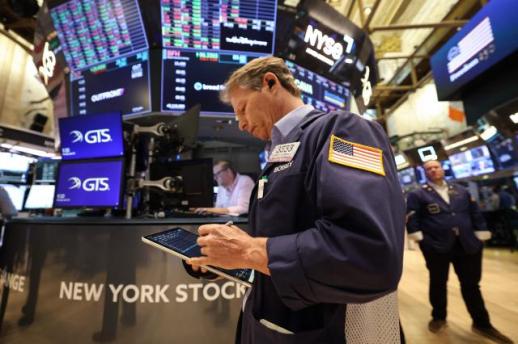 SEC Proposes Ending Quarterly Reporting Requirement, Allowing Semiannual Option U.S. securities regulators have unveiled a proposed rule change that would end the requirement for public companies to file quarterly earnings reports and allow them to opt for semiannual reporting instead. MarketWatch and other outlets reported that the Securities and Exchange Commission said in a statement on May 5 (local time) that it is proposing amendments to rules and forms so listed companies can choose semiannual reports in place of quarterly filings. Under current rules, U.S.-listed companies must file three quarterly reports and one annual report each fiscal year. If adopted, the proposal would let companies choose to file one semiannual report and one annual report instead of quarterly reports. Companies that choose semiannual reporting would file a new form, Form 10-S. The deadline would be set at 40 or 45 days after the end of the first half of the fiscal year, depending on the company’s filing status. The SEC said the changes are intended to give companies and investors flexibility to choose the reporting cycle that best fits their needs. It also said it plans to revise Regulation S-X, which sets financial statement requirements for periodic reports, registration statements and proxy disclosures, to reflect the new semiannual option and simplify existing requirements. SEC Chairman Paul Atkins said in the statement, “The rigidity of SEC rules has limited companies and investors from deciding for themselves which interim reporting cycle is most appropriate,” adding that if the proposal is finalized it would provide greater regulatory flexibility. The proposal will go through a 60-day public comment period after it is published in the Federal Register, and then be put to a vote by the SEC. President Donald Trump said in September last year that companies should not be forced to report quarterly and should report results semiannually. The Wall Street Journal reported in March that the SEC was preparing a related proposal. Some investors have raised concerns that fewer earnings reports could reduce corporate transparency and credibility. The Investment Company Institute said in a statement on May 5 that it is important to strike a balance between reducing unnecessary compliance burdens and maintaining the quality of the disclosure system that supports investor confidence.* This article has been translated by AI. 2026-05-06 10:24:15
 -
 Samsung Securities jumps more than 6% on expectations for Interactive Brokers tie-up Samsung Securities shares rose sharply on expectations of cooperation with a global brokerage firm. According to the Korea Exchange, Samsung Securities was trading at 147,300 won as of 9:55 a.m. on the 6th, up 6.82% (9,400 won) from the previous session. The securities industry said Samsung Securities has recently begun a pilot service with U.S. online brokerage platform Interactive Brokers (IBKR) to support foreign investors trading South Korean stocks. The process for foreigners to trade South Korean shares had been complicated, but under the partnership, IBKR users can invest in South Korean stocks more easily through Samsung Securities. In a report released on the 6th, Baek Du-san, an analyst at Korea Investment & Securities, said Samsung Securities shares rose 28% on the 4th, attributing the move to heightened attention on news of a partnership with IBKR, which is strong in online stock trading. Baek said foreign individual investors, including IBKR customers, can use Samsung Securities as an intermediary to trade South Korean stocks through the IBKR app, comparing it to how South Korean individuals can easily trade U.S. stocks through domestic brokerage apps. He added that the business model became possible due to regulatory and policy changes, including the launch of an integrated foreign investor account in 2017, the abolition in 2023 of the requirement for financial investment firms to immediately report transaction details for that account (T+2), designation as an innovative financial service, and revisions to financial investment business rules. Those changes allow overseas brokerages that do not operate securities businesses in South Korea to provide South Korean stock trading services through partnerships with local brokerages, he said.* This article has been translated by AI. 2026-05-06 10:15:51
 -
 Brokerage Stocks Jump as KOSPI Breaks 7,000, Mirae Asset Securities Up 15% As the KOSPI index climbed above 7,000 to set a new record, South Korean brokerage shares rose broadly. According to the Korea Exchange, as of 10 a.m. on the 6th, Mirae Asset Securities was trading at 81,000 won, up 15.22% from the previous session. Samsung Securities rose 5.22% to 145,100 won. Other brokerage-related stocks also gained, including Kiwoom Securities (up 10.53%), Korea Investment Holdings (up 5.15%), NH Investment & Securities (up 4.12%), Hyundai Motor Securities (up 10.67%), Yuanta Securities (up 16.09%), SK Securities (up 5.78%), DB Financial Investment (up 7.37%) and Hanwha Investment & Securities (up 16.73%). The KOSPI rose 2.25% from the previous session to 7,093.01, pushing past 7,000 and extending its run of record highs. The rally was seen as drawing buying on expectations of higher trading activity and improved brokerage earnings. Jang Young-im, a researcher at SK Securities, said April’s average daily trading value and margin loan balances “held at solid levels,” adding that “with the stock market continuing to show strength, a favorable environment for the securities industry is also continuing into the second quarter.”* This article has been translated by AI. 2026-05-06 10:15:00
 -
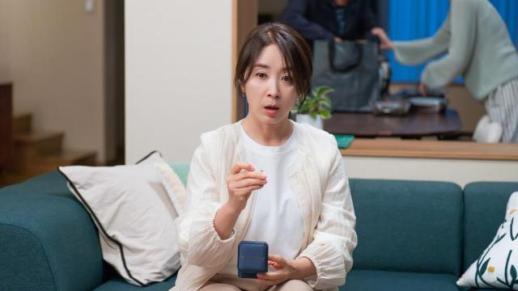 Actress Yoon Yu-seon Caps 'Yumi's Cells' Season 3, Continues Busy OTT Run Actress Yoon Yu-seon appeared in the final episode of TVING’s original series “Yumi’s Cells” Season 3, adding warmth to the drama’s closing. Yoon played Yeong-sim, the mother of Yumi (Kim Go-eun), in the last episode of the recently concluded season. “Yumi’s Cells” Season 3 follows Yumi, now a star writer, as she meets an unexpected figure, Sun-rok (Kim Jae-won), and falls in love again. In the series, Yeong-sim is a steady presence by Yumi’s side and looks on Sun-rok with kindness. Though her screen time was brief, Yoon delivered a calm, gentle performance that reinforced the character’s warmth. Returning as part of Yumi’s family after Seasons 1 and 2, she helped bring a familiar tone to the finale. The cameo also aligns with Yoon’s recent run of projects. She returned last month in Netflix’s “Bloodhounds” Season 2 as Yoon So-yeon, the mother of Geon-woo (Woo Do-hwan). The action series, starring Woo and Lee Sang-yi as they take on an illegal boxing league, rose to No. 1 in Netflix’s non-English TV category after its release. In “Bloodhounds” Season 2, Yoon portrayed a mother determined to protect her son from injustice, using restrained emotion and a firm gaze to add weight to the story. Her role helped anchor the characters’ emotional arc amid the high-tension action. Yoon has also expanded her work beyond acting into variety shows and hosting. She recently appeared on an entertainment program with her husband, attorney Lee Seong-ho, sharing their daily life as a couple. She also took on her first solo MC role on Channel A’s “The Body Geniuses,” a tailored health-solution program offering information for healthier living, meeting viewers with a steady, approachable hosting style. With steady work across dramas, streaming series, variety programs and hosting, Yoon continues to broaden her range, with attention on what she will do next. 2026-05-06 10:11:09
 -
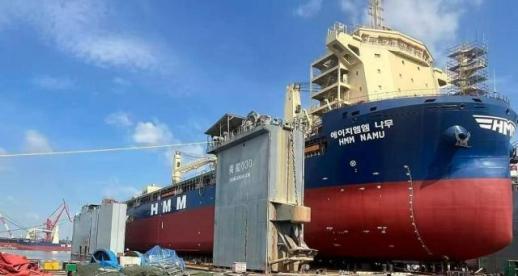
 South Korea Labor Ministry Raids HD Hyundai Heavy Industries Over Ulsan Submarine Fire Labor authorities have launched a forced investigation into a recent fire aboard a submarine at a shipbuilding site in Ulsan. The Ministry of Employment and Labor said Tuesday it was conducting searches and seizures at HD Hyundai Heavy Industries' Ulsan headquarters and other locations over a Navy submarine fire at the company's Ulsan shipyard that killed a worker in her 60s. About 60 people, including labor inspectors and police, were deployed. Authorities are securing computers and related materials and focusing on whether fire-prevention measures and evacuation steps were properly carried out. The fire broke out at about 1:58 p.m. on April 9 on the Hong Beom-do, a 214-class (1,800-ton) Navy submarine undergoing maintenance at the Ulsan shipyard in Ulsan's Dong District. Most workers evacuated, but A, a woman in her 60s employed by a subcontractor, was trapped inside. After the fire was put out, firefighters searched the vessel and found her at about 4:38 p.m. near an interior passageway. Rescue efforts were hampered by the extremely tight space and repeated explosions after water used in firefighting came into contact with electrical equipment. Authorities dried the submarine and dismantled high-capacity batteries before recovering her body about 33 hours after the fire began. The Labor Ministry's Ulsan office said it will use the seized materials to determine whether required safety measures were followed and who is responsible. It will also review possible violations of the Occupational Safety and Health Act and the Serious Accidents Punishment Act. A ministry official said authorities will actively use measures such as searches, seizures and custodial investigations at workplaces where serious accidents occur or where similar incidents recur due to failures to follow basic safety rules.* This article has been translated by AI. 2026-05-06 10:10:15
 -
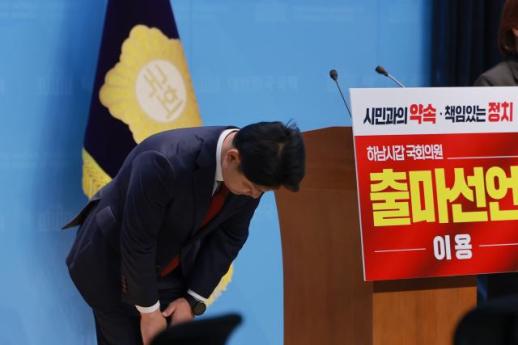 Lee Yong Announces Bid for Hanam Gap By-Election, Apologizes for Yoon Administration Lee Yong, a former lawmaker from the People Power Party, announced May 6 that he will run in the parliamentary by-election in Gyeonggi Province’s Hanam Gap district, pledging to “restore the rule of law and democracy” and “open a bigger future for Hanam.” Lee, who served as chief aide to Yoon Suk Yeol during Yoon’s presidential campaign and was known as a close protector, apologized, saying he is not free of responsibility “now that the Yoon Suk Yeol administration has disappointed and hurt the public.” Speaking at a news conference at the National Assembly press center, Lee said, “If you helped create an administration, you must also take responsibility when it fails.” “Creating an administration was the reason a party exists, and I carried out my duties as a People Power Party lawmaker,” he said. “But now that the administration has disappointed and hurt the public, I am not free of responsibility. I’m sorry. I sincerely apologize.” He added, “I will not make excuses or hide. I will not avoid the public’s punishment,” and said he would change first, take responsibility where needed, fix what must be fixed, and rebuild trust through actions rather than words. Taking aim at former Democratic Party lawmaker Choo Mi-ae and Lee Kwang-jae, a Hanam Gap candidate, Lee said the election is “a contest between someone running for Hanam and someone who came to Hanam for an election,” adding, “Hanam is not a nest where migratory birds stop briefly and leave.” Lee said he did not leave Hanam after losing the last general election because “an election ending does not mean promises to citizens end.” He said he spent the past two years visiting neighborhoods across the city and met residents for talks and other outreach sessions as few as five times a day and as many as 20. He said he would keep promises to Hanam residents and put their lives at the center of his politics, and urged voters to “judge the arrogant Lee Jae-myung administration” on June 3 and to restore livelihoods and ensure Hanam’s development continues without interruption. * This article has been translated by AI. 2026-05-06 10:09:14
 -
 Trump Says Pope Is Soft on Iran Nuclear Issue; Pope Reaffirms Opposition to All Nuclear Arms U.S. President Donald Trump and Pope Leo XIV have again traded sharp words, this time over Iran’s nuclear issue. After Trump said the pope was taking a complacent approach to Iran’s pursuit of nuclear weapons, the pope pushed back, saying the Catholic Church has long opposed all nuclear arms. The pope spoke to reporters Monday aboard the papal plane as he returned to Rome from a trip to Africa. “I am only delivering the message of the Gospel and peace,” he said. He added that “the Catholic Church has opposed all nuclear weapons for years,” distancing himself from the claim. The exchange flared again after Trump’s recent remarks in an interview with conservative host Hugh Hewitt, in which Trump said the pope was being complacent about Iran’s nuclear weapons issue. The Associated Press reported, however, that the pope has not supported Iran’s nuclear armament and instead reaffirmed his longstanding opposition to all nuclear weapons. The clash is not new. On April 13, Trump attacked the pope, suggesting he was weak on crime and problematic in diplomacy. The pope responded at the time that he was not afraid and would continue criticizing the suffering caused by war. The timing has drawn attention as U.S. Secretary of State Marco Rubio is scheduled to meet the pope at the Vatican this week. U.S. officials said the visit was planned in advance, not an improvised effort to smooth things over, but Trump’s latest comments have fueled speculation that the meeting now carries added political weight.* This article has been translated by AI. 2026-05-06 10:07:24
 -
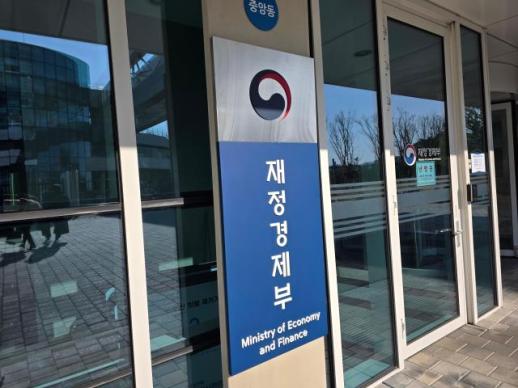 No Public Agency Earns Top Safety Rating; Korea Coal Corp. Rated Very Poor No public agency earned an “excellent” (Grade 1) rating in last year’s government safety management assessment, officials said. Korea Coal Corp. was the only agency rated “very poor” (Grade 5), while Korea Expressway Corp., Korea East-West Power Co. and Korea Land and Housing Corp. (LH) were among those rated “poor” (Grade 4). The Finance and Economy Ministry said it confirmed the results on Tuesday at the fifth meeting of the Public Institutions Steering Committee, chaired by Vice Finance and Economy Minister Heo Jang, approving the “2025 Public Institutions Safety Management Rating Review Results.” Reflecting measures announced in September to strengthen safety management at public institutions, the government expanded the review 대상 from 73 agencies a year earlier to 104 and tightened evaluations of construction sites, where fatal accidents account for a large share, the ministry said. In the assessment of last year’s safety performance, none of the 104 agencies received Grade 1. A total of 21 received Grade 2, 77 received Grade 3, five received Grade 4 and one received Grade 5, the ministry said. Korea Coal Corp. ranked last with a “very poor” rating, with officials citing weaknesses across its safety management system. The “poor” group included state-run companies such as Korea Expressway Corp., Korea East-West Power and LH. As in the previous year, no agency received Grade 1. Compared with a year earlier, the number of Grade 2 agencies rose by one, Grade 3 agencies increased by 26, and agencies rated Grade 4 or below rose by four, leaving most clustered in the middle. Since the safety rating system was introduced in 2020, the share of agencies in the mid-to-upper tiers (Grades 2 and 3) has increased to 94.2% of all institutions, the ministry said. The government said agencies rated Grades 4 and 5 must complete consulting and training from safety 전문기관 and report improvement results quarterly to their supervising ministries. “The safety management rating review system is strengthening accountability among public institution management and helping establish a safety culture,” Heo said. “But public concerns about safety persist, so we will continue to develop the system.”* This article has been translated by AI. 2026-05-06 10:06:32
 -
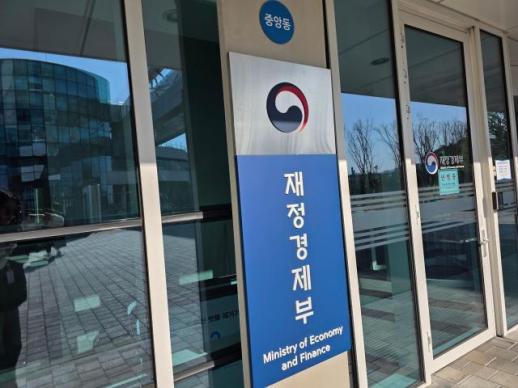 No Public Agencies Flagged for Poor Disclosure Compliance in 2025 Review; 18 Earn Top Marks Public agencies’ disclosure quality improved overall in the 2025 integrated disclosure review, with no institutions classified as poor performers for the first time in two years, the Finance and Economy Ministry said Tuesday. The ministry said it approved “the 2025 integrated disclosure inspection results and follow-up measures” at the fifth 2026 Public Institution Steering Committee meeting, chaired by Second Vice Minister Heo Jang, on April 30. Under the 2007 law on the management of public institutions, all public agencies must disclose key management information through a public system. The ministry conducts regular annual checks to improve the reliability of the disclosures. The review found 18 “excellent disclosure institutions” that received no penalty points for integrated disclosure violations for three consecutive years, or two years for other public institutions. That was up four from the previous year. Fourteen institutions were classified as “improved disclosure institutions,” meaning their penalty points fell by at least 50% for two straight years. This year, the number of institutions receiving an “institutional caution” or labeled a “poor disclosure institution” fell to zero, the ministry said. An institutional caution applies to agencies with more than 20 penalty points in a year, while poor disclosure institutions are those with more than 40. The ministry attributed the improvement to joint efforts by the government and public agencies, including tailored training and consulting for weaker performers and incentives for top performers. It also cited stronger internal controls and advance checks to prevent disclosure errors. The ministry said it will reflect the results in performance evaluations for state-owned enterprises and quasi-government agencies, as well as evaluations of other public institutions conducted by supervising ministries. It plans incentives for excellent disclosure institutions, including exemption from the next year’s disclosure inspection and preferential treatment in management evaluations. “As the public’s expectations for the right to know and for transparency at public institutions have risen, the quality of management disclosures must continue to improve,” Heo said. He added that the government will use the integrated disclosure inspection system to further raise disclosure standards.* This article has been translated by AI. 2026-05-06 10:05:37