
Journalist

Seo Hye Seung
-
 Vietnam Draws $18.24B in FDI in First Four Months, Led by Singapore and South Korea Vietnam is boosting growth momentum by expanding both foreign direct investment and public spending. In the first four months of this year, total registered FDI reached $18.24 billion, up 32.0% from a year earlier, while disbursed FDI rose 9.8% to $7.4 billion, the highest for the period in the past five years. Singapore ranked as the top investor with $6.05 billion, and Thai Nguyen and Nghe An led provinces in attracting capital. Vietnam’s Finance Ministry said total registered FDI as of April 27 — including newly registered capital, adjusted capital and foreign investors’ capital contributions and share purchases — totaled $18.24 billion. New registrations alone amounted to $12.15 billion across 1,249 projects. The number of projects rose 3.7% from a year earlier, while registered capital more than doubled. New capital flowed mainly into manufacturing. Processing and manufacturing drew $8.12 billion, or 66.8% of newly registered capital. Electricity, gas, water supply and air conditioning attracted $2.31 billion, or 19.0%, with other sectors accounting for $1.72 billion, or 14.2%. By source country, Singapore invested $6.05 billion, representing 49.8% of newly registered capital. South Korea followed with $4.08 billion, or 33.6%. China invested $524.1 million, Japan $462.0 million, Hong Kong $329.2 million and the Netherlands $318.5 million. By locality, Thai Nguyen remained No. 1 with more than $5.75 billion. Nghe An ranked second with more than $2.2 billion. Ho Chi Minh City attracted $983.0 million across 656 projects, followed by Dong Nai with $596.0 million, Bac Ninh with more than $473.0 million and Ha Tinh with more than $412.0 million. Disbursed FDI totaled $7.4 billion in the first four months. Manufacturing accounted for $6.12 billion, or 82.7%, followed by real estate at $540.5 million and electricity, gas, hot water, steam and air conditioning at $270.6 million. Public investment also increased. Investment disbursed from the state budget reached 187.1 trillion dong, equal to 19.7% of the annual plan and up 10.4% from a year earlier. Spending managed by local governments rose 11.4% to 161.7 trillion dong, while centrally managed spending increased 4.6% to 25.4 trillion dong. Nghe An reported strong results in its own investment drive. In the first four months, it approved 18 new projects and adjusted 58, with new and additional capital exceeding 65.219 trillion dong, up 8.74 times from a year earlier. FDI alone topped $788.0 million. The province also recorded 1,883 newly established businesses, up 58.6%, and 589 firms resuming operations. Vietnamese companies also stepped up overseas investment. Total outbound investment reached $713.9 million, 2.3 times the level a year earlier. Laos accounted for $198.0 million, or 27.7%, followed by Kyrgyzstan with $149.9 million and the United Kingdom with $82.8 million. With inbound FDI, public investment and outbound investment all rising in the first four months, Vietnam’s investment flows are broadening at home and abroad.* This article has been translated by AI. 2026-05-04 14:08:26
 -
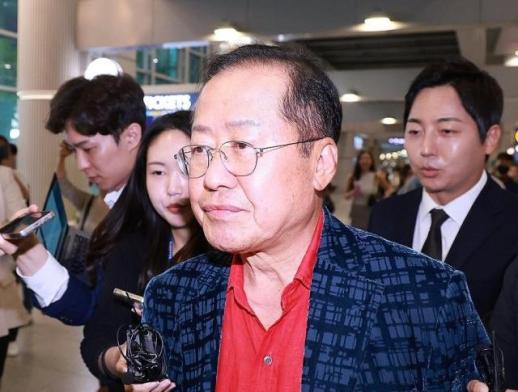 Hong Joon-pyo Slams Conservative Candidates as ‘Shameless’ Ahead of June 3 Local Elections Hong Joon-pyo, former mayor of Daegu, on Monday criticized conservative figures running in the June 3 local elections and by-elections, calling them “shameless” and “thick-faced.” In a Facebook post, Hong said they were seeking office after “ruining the administration,” adding that they were running in by-elections and local government races “just to save themselves.” He also faulted parties for nominating them and voters for supporting them, saying South Korea’s conservative camp had become “a bizarre mess.” He added that some people, after being cut from consideration, did not leave the party and instead focused on attacking from within, asking how elections could succeed under those conditions. Using a metaphor, Hong said it would be better to leave a well and spit than to keep trying to drink from it while spitting into it. “A local election is a local election,” he wrote, but warned that “the bigger confusion will come after the local elections.” * This article has been translated by AI. 2026-05-04 14:07:38
 -
 Japan Airlines’ Mileage Programs Tested as Fuel Surcharges Surge Japanese airlines’ mileage businesses are facing a key test as a surge in global oil prices drives up the real cost of award tickets and pushes carriers to tighten program rules. According to the Nikkei business daily, All Nippon Airways and Japan Airlines sharply raised international fuel surcharges for tickets issued starting May 1, after jet fuel prices jumped following the effective closure of the Strait of Hormuz. On one-way flights from Japan to Europe, ANA raised its surcharge from 31,900 yen to 56,000 yen, while JAL lifted its fee from 29,000 yen to 56,000 yen. Some routes saw increases close to double. The higher charges also hit travelers using miles. For example, a June round-trip economy award ticket between Tokyo and London previously required about 55,000 miles plus about 100,000 yen in additional payments, but now requires about 150,000 yen. Even with miles, the cash outlay has risen sharply, weakening the appeal of “bonus” tickets. Mileage programs were designed to secure loyal customers, expanding rapidly after their introduction in the 1990s by allowing points earned from flight distance to be redeemed for tickets. ANA surpassed 10 million members within seven years of launching its program. Over time, miles became a broader revenue model tied to finance and retail, as card and insurance companies bought miles to offer as customer perks and more consumers accumulated miles without flying. For airlines, mileage operations can be a high-margin business: miles sold externally trade at higher prices than general-purpose points, while redemptions are concentrated on the airline’s own tickets. JAL’s mileage, card and other businesses in finance and e-commerce posted EBIT of 45.5 billion yen for the fiscal year ended March 2026, about 20% of the total. The segment’s profit margin was 20%, far above the airline’s core aviation business at 9%. Still, the model is harder to sustain if earning grows while redemption becomes more difficult. Complaints have risen that seats are hard to book even with miles, as award inventory has tightened, especially in business and first class. With fuel surcharges also climbing, Nikkei said the perceived value of miles is falling quickly. Airlines are responding. ANA said it will tighten requirements for premium member card benefits starting in fiscal 2028, restricting some perks such as lounge access if annual spending via ANA cards and smartphone payments falls below 3 million yen. Previously, once status was obtained, members could keep benefits by paying the annual fee; the new structure will require a minimum level of spending. The change is expected to affect Japan’s culture of pursuing elite status, often referred to domestically as “mile runs.” Carriers are also continuing to expand ways to earn miles. JAL recently invested in online life insurer Lifenet Insurance and said it will consider developing insurance products that accrue miles. But industry observers warn that expanding earning opportunities may have limited pull if redemption value keeps eroding. The central challenge, the report said, is restoring the value of using miles. Airlines are considering broader redemption options, including low-cost carriers and non-aviation services, but the report said there is no fundamental solution without making award tickets attractive again. With oil prices adding pressure, Japan’s airline mileage businesses built over more than three decades are at a structural turning point.* This article has been translated by AI. 2026-05-04 14:06:20
 -
 Royal night revived through open-air concert at Changdeok palace SEOUL, May 03 (AJP) -The glow of lanterns and the sound of centuries-old melodies filled Changdeokgung as a 100-member traditional Korean music ensemble transformed the royal palace into an open-air nighttime stage during a rare spring performance in central Seoul. Held from May 1 to 3 at Injeongjeon Hall, the palace’s main throne hall, the “2026 Royal Palace Concert: Music of Great Peace” invited visitors to step into a royal setting once reserved for kings, court ceremonies and state rituals of the Joseon Dynasty. The concert marked the first time the annual spring gugak performance was staged at the palace’s central ceremonial court, adding fresh life to the UNESCO World Heritage site after sunset. One hundred musicians — including professors, students and alumni from Ewha Womans University’s Korean music department — performed beneath the palace rooflines in an ensemble led by artistic director Kwak Eun-a. The program opened with the stately court piece “Sujecheon,” followed by “Cheonnyeonmanse,” “Suryong-eum” and “Taepyeongga,” alongside a geomungo solo in the style of Han Gap-deuk. A contemporary gayageum composition, “Sound of the Night,” added a modern layer to the historic atmosphere. As cool spring air swept through the stone courtyard, the palace’s wooden halls amplified the deep resonance of strings, drums and wind instruments, blurring the distance between past and present. The night concluded with all 100 musicians joining in a finale performance of “Arirang,” as audience members quietly sang along beneath the illuminated palace eaves — reviving, if only briefly, the soundscape of a royal Korean night centuries ago. 2026-05-04 14:05:21
 -
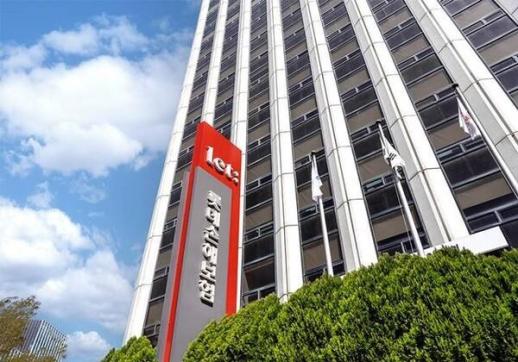 Lotte Insurance Resubmits Turnaround Plan With Capital-Raising Options Lotte Insurance said its newly resubmitted management improvement plan includes steps to bolster capital adequacy, including a capital increase, a potential third-party acquisition and possible transfer of all or part of its business. The company’s earlier plan was not approved, and it subsequently received a formal management improvement order from regulators. With that backdrop, the specificity and feasibility of the new capital-raising measures are expected to be central to the Financial Services Commission’s review. Lotte Insurance said May 4 that it submitted the plan to financial authorities on April 30. The plan includes cutting expenses, disposing of troubled assets, improving staffing and organizational operations, and increasing capital. It also calls for drawing up plans related to a merger, becoming a subsidiary of a financial holding company under the Financial Holding Companies Act, a third-party acquisition, and transferring all or part of its business. Lotte Insurance submitted its first management improvement plan to the commission in January, but it was not approved. The commission then issued a management improvement order, a step above a management improvement recommendation under Korea’s prompt corrective action framework. Industry watchers said the key issue in the review will be whether the capital-strengthening measures are workable. They noted that after the first plan failed to win approval, regulators are likely to focus on whether proposals such as a capital increase or acquisition-related steps are concrete enough to execute. The commission is expected to decide whether to approve the plan within one month of its submission. If approved, Lotte Insurance would proceed with the measures recognized by authorities, including cost cuts, troubled-asset cleanup, operational changes and capital strengthening. If not approved, additional revisions or follow-up steps remain possible. * This article has been translated by AI. 2026-05-04 14:00:17
 -
 KT&G Named to Dow Jones Sustainability World Index for Second Straight Year KT&G said it was included for a second consecutive year in the top-tier “World Index” of the Dow Jones Best-in-Class Indices (DJBIC), a global ESG (environmental, social and governance) assessment that recognizes leading sustainability performance. The company said Monday it was also included in the Dow Jones “Asia Pacific” and “Korea” indices. DJBIC is an annual sustainability evaluation published by S&P Global, and is used by global investors as a benchmark for responsible investment. The World Index includes only the top 10% of companies for ESG performance among roughly 2,500 firms with the largest global market capitalization, KT&G said. It said it was ranked No. 1 within its industry group after receiving high marks across governance, environmental and social categories. KT&G said it earned the highest score in governance-related items including board independence, diversity policies and having an ESG governance structure. In the environmental category, it cited recognition for climate-change response and water-resource management based on its “2030 Green Impact” environmental management vision. In the social category, it said it scored highly for efforts such as implementing human-rights management. “This World Index inclusion is the result of the global capital market objectively recognizing our continued efforts to advance ESG management,” said Shim Young-a, head of ESG management at KT&G. “We will continue to strengthen execution of ESG management in step with enhancing our core business competitiveness and establish ourselves as a trusted company.” KT&G said it is also strengthening its compliance and ethics management system. In January, it elevated its compliance management center to a compliance management office to enhance companywide compliance and ethics oversight. It also designates June 2 each year as “KT&G Corporate Ethics Day” and shares ethics messages with employees. * This article has been translated by AI. 2026-05-04 13:48:31
 -
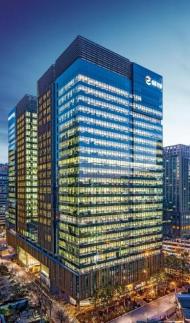 GS E&C Wins $4.9 Billion Seocho Jinheung Apartment Rebuild Contract in Seoul GS Engineering & Construction will build the reconstruction project for Seocho Jinheung Apartments in Seoul’s Seocho district. The company said in a regulatory filing on Monday that it was selected as the contractor for the Seocho Jinheung Apartments reconstruction and maintenance project near 385 Seocho-daero. The complex was completed in 1979. The existing site consists of seven buildings with 615 households. After reconstruction, it is planned to become a residential complex ranging from five basement levels to 58 stories above ground, with 879 households in total. The construction cost is about 679.3 billion won, equal to 5.46% of the company’s consolidated revenue as of the end of last year. GS E&C proposed the new name ‘Seocho Xi Cullinus.’ Dutch architecture firm MVRDV will take part in the exterior design, and U.S.-based LERA will handle structural design. Landscape design is to be led jointly by SWA, which has worked on Disney World landscaping, and Everland, Samsung C&T’s resort unit. The company expects the project to take 53 months from the actual start of construction. 2026-05-04 13:42:20
 -
 Democratic Party race for National Assembly speaker heats up with three candidates The race to choose the National Assembly speaker for the second half of the year began in earnest on May 4 as the Democratic Party opened candidate registration. Five-term lawmakers Kim Tae-nyeon and Park Jie-won and six-term lawmaker Cho Jung-sik each declared their candidacies, setting up a three-way contest. With the Democratic Party holding a majority of seats, its internal primary is widely seen as the decisive contest. Kim pitched an “effective, working Assembly,” Park called for “ending insurrection forces and completing reforms,” and Cho emphasized a “livelihood-focused Assembly.” Kim told a news conference at the Assembly that he proposed the 2020 “Working National Assembly Act” and the 2026 “Effective Working National Assembly Act.” “To complete the era of popular sovereignty through institutions and protect Korea’s future amid a wave of major transformation, we need an Assembly that works well. I, Kim Tae-nyeon, am the right person,” he said. He said the framework is ready to be implemented, arguing that plenary sessions would open automatically, bills would be handled within deadlines, and committee chairs who do not work could be replaced. Kim also pledged to complete legislation for the “popular sovereignty government’s” policy agenda, make constitutional revision a reality, create a strategic council for the people’s economy, elevate parliamentary diplomacy to a national strategy, and turn the Assembly into a venue for social dialogue. Park, the party’s oldest lawmaker, said “insurrection forces” were still blocking the president’s governance and reforms toward what he called a “real Republic of Korea.” He accused the main opposition party of rejecting even minimal constitutional changes, including adding the March 15 uprising, the Bu-Ma Democratic Protests and the May 18 Gwangju Uprising to the Constitution’s preamble and tightening requirements for martial law, while “handpicking and nominating insurrection forces.” “We must make the Lee Jae-myung government a success and open wide the door to the Seventh Republic and recreate the administration — only then can we finally end the insurrection,” Park said. “This is the last wish I want to fulfill as Park Jie-won, who has been able to live again thanks to the people and party members. Give a chance to Park Jie-won, who will support you better,” he added. Park’s pledges included proactive steps on prosecution and judicial reform to “complete the revolution of light,” building a “K-Assembly that works,” strengthening lawmaker diplomacy and special envoys, and creating a tentative “National Assembly Future Special Committee” to prepare for AI, future energy, robots, the population and regional extinction crisis, and low birthrates and aging. Cho, the party’s most senior lawmaker by terms and who stepped down the previous day as the president’s special adviser for political affairs, said the Lee Jae-myung government was showing the public “the effectiveness of politics” through fast results. “Now it’s time to show the public the effectiveness of the National Assembly as well,” he said. “What matters most for a speaker from the ruling party is coordination with the government and stability. As a proven six-term lawmaker, I, Cho Jung-sik, am the right person,” he said, calling the bid his third run for speaker and his final political challenge in Yeouido. Cho’s key pledges included building a “livelihood-focused Assembly” and a “popular sovereignty Assembly,” completing constitutional revision, strengthening the Assembly’s role and standing, and expanding parliamentary diplomacy. Two four-term lawmakers, Nam In-soon and Min Hong-cheol, also entered the race for the deputy speaker post allocated to the Democratic Party. Nam urged support for “a female deputy speaker who communicates and listens,” saying she would raise the Assembly’s sensitivity to human rights. Min said he believed a deputy speaker from Yeongnam — often described as difficult terrain for the party — could become “the signal flare for victory.” The Democratic Party plans to pick its nominees for speaker and deputy speaker on May 13 and later put them to a plenary vote. The party will combine an online vote of dues-paying members (20%) held over two days starting May 11 with an in-person vote by lawmakers on the day of selection (80%). Election in the plenary session requires approval by a majority of all lawmakers. With the Democratic Party holding a majority, passage is expected to be smooth. The Assembly speaker ranks second in the state protocol order and has authority to open plenary sessions and bring bills to the floor. The new speaker’s approach is expected to shape the legislative calendar and handling of contentious bills in the second half of the year.* This article has been translated by AI. 2026-05-04 13:15:18
 -
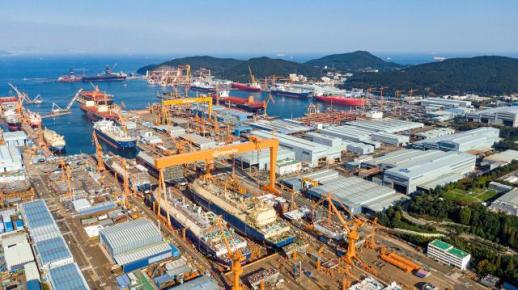 Hanwha Ocean Wins $3.7 Billion Order for Three Very Large Ammonia Carriers Hanwha Ocean said Monday it has won an order worth 507.4 billion won ($3.2 billion) from an African shipowner for three very large ammonia carriers, or VLACs. Including the latest deal, the company said it has secured orders for a total of 10 ammonia carriers so far this year, expanding its presence in the segment. Hanwha Ocean has continued to develop technology for building zero-carbon ships, including obtaining approvals in principle in 2022 from Bureau Veritas and Lloyd's Register for an ammonia carrier design. Last year, it also began work with the Korean Register on developing a 150,000-cbm very large ammonia carrier. The VLAC market has faced greater short-term uncertainty as exports have fallen amid the war in the Middle East, the company said. Still, it said overall cargo volumes have been maintained as exports from other regions, including the United States, have increased. With major importers concentrated in Asia, a shift in export weight from the Middle East to the United States and other areas is lengthening shipping distances. Against that backdrop, ammonia carriers are emerging as a new specialized ship type for South Korea's shipbuilding industry, following LNG carriers, where South Korean companies hold more than 80% of the market, the company said. Hanwha Ocean said it will continue its selective order strategy focused on high value-added and eco-friendly vessels to respond flexibly to market volatility, and will keep strengthening competitiveness in ship types tied to rising demand for vessels using cleaner fuels. The company said it has booked orders this year for 18 ships — 10 very large crude carriers, four LNG carriers, three VLACs and one wind turbine installation vessel — totaling about $3.2 billion. "As ammonia is considered a key energy source in the transition to a hydrogen economy, demand for carriers is also expected to rise steadily," an industry official said. "South Korean shipbuilders are likely to maintain market leadership based on their technology and construction experience."* This article has been translated by AI. 2026-05-04 13:12:15
 -
 Daewoong Pharma Wins Approval to Use Fexuclue in H. pylori Eradication Therapy Daewoong Pharmaceutical said Sunday that South Korea’s Ministry of Food and Drug Safety has approved its gastroesophageal reflux disease drug, Fexuclue Tablets 40 mg (fexuprazan hydrochloride), for use in combination antibiotic therapy to eradicate Helicobacter pylori. Fexuclue can be taken regardless of meals. With the added indication, its approved uses now include treatment of erosive GERD, improvement of gastric mucosal lesions in acute and chronic gastritis, prevention of nonsteroidal anti-inflammatory drug-induced peptic ulcers, and combination therapy for H. pylori eradication. H. pylori infection has a high prevalence in South Korea, at about 50%, and is known to contribute to chronic gastritis, gastric ulcers, duodenal ulcers and gastric cancer, prompting recommendations for active eradication treatment. As resistance to clarithromycin, used in first-line eradication therapy, has increased, demand has grown in clinical practice for a wider range of treatment options, the company said. Daewoong Pharmaceutical said results from a domestic Phase 3 trial conducted at multiple institutions from February 2024 to April last year showed Fexuclue’s treatment effect was particularly pronounced in patients with clarithromycin resistance. A company official said the eradication rate for a Fexuclue-based regimen in the clarithromycin-resistant group was 54.76%, about 26 percentage points higher than a lansoprazole-based regimen at 28.57%.* This article has been translated by AI. 2026-05-04 13:06:16