
Journalist

Seo Hye Seung
-
 Hyundai Faces Sales Decline in Turkey Amid EU Electrification Shift Hyundai Motor Company is experiencing challenges as it transitions to electrification in Europe. The Turkey plant, which previously produced only internal combustion engine vehicles, is undergoing a production line change ahead of its first electric vehicle, leading to a significant drop in sales. This decline reflects the transitional impact of aligning with the European Union's green regulations. According to Hyundai, its Turkey subsidiary (HMTR) sold a total of 39,116 vehicles in the first quarter of this year. This marks a decrease of 22,696 units compared to 61,812 units sold during the same period last year, representing a decline of approximately 36.7%. The drop in sales from the Turkey subsidiary far exceeds the overall sales decline for Hyundai. In the first quarter, Hyundai's total factory sales reached 547,626 units, down 13,560 units from 561,186 units during the same period last year. The more than 20,000-unit decline from the Turkey subsidiary diluted the increases from other production facilities. Notably, the poor performance of HMTR in the first quarter was primarily driven by a decrease in exports rather than domestic sales. Export volumes fell to 29,570 units in the quarter, down 21,930 units (43%) from 51,500 units in the same period last year. Domestic sales decreased from 10,312 units to 9,546 units, a drop of only 766 units (7%). Essentially, the decline in exports significantly impacted overall sales performance. The sharp decline in sales from the Turkey subsidiary is linked to Hyundai's transition of its European production system. Starting in August, the Turkey plant will begin producing the Ioniq 3, a strategic model for Europe, with sales commencing in September. Consequently, HMTR will inevitably reduce production of internal combustion engine vehicles as it prepares for the mass production of its first electric vehicle model. Adjustments to the existing internal combustion engine lineup have already begun. For instance, the small hatchback i10 was discontinued at the end of last year as part of the electrification strategy. Sales of the i10, which reached 8,577 units by July last year, plummeted to just 20 units by December. There have been no sales of the i10 this year. The reduction in existing models and the preparation for new electric vehicle production have created a temporary sales gap. Looking ahead, the role of the Turkey subsidiary is expected to expand as a production hub for electric vehicles. HMTR, which has traditionally produced internal combustion engine compact cars like the i10 and i20 for Europe, will enhance its electrification production capabilities with the launch of the Ioniq 3. Most of the vehicles produced at this facility have been exported to major European markets, making the transition of the Turkey plant's vehicle types directly relevant to Hyundai's sales strategy in Europe. The increasing emphasis on green policies across European countries also underscores the urgency for Hyundai to accelerate its electrification transition. Enhancing local production capacity is crucial for ensuring regulatory compliance and supply stability. With the Ioniq 3, Hyundai's electrification strategy in Europe is expected to gain momentum. An industry insider stated, "Given the stringent environmental regulations in Europe, it is essential to shift the local production system toward electric vehicles. The short-term performance decline of the Turkey subsidiary can be viewed as a transitional phenomenon during this line change process."* This article has been translated by AI. 2026-05-11 03:53:37
 -
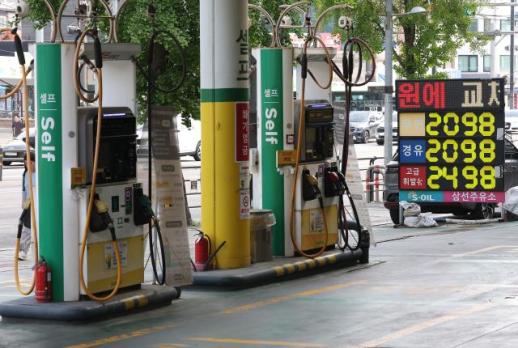 One Month After Gas Station-Refinery Cooperation Pact, Concerns About Effectiveness Grow Amid rising oil prices due to the conflict in the Middle East, the "Social Dialogue Cooperation Agreement between Gas Stations and Refineries to Overcome the Middle East Crisis" was signed a month ago under the leadership of the ruling party. However, concerns about its effectiveness have emerged. Although the agreement includes provisions to abolish the post-settlement system and ease exclusive transactions, the specific implementation criteria remain unclear. According to a report by Aju Economy on May 10, many gas stations are reportedly unaware of the agreement's details. Critics argue that measures intended to stabilize oil prices and improve the oil distribution structure have not been effectively applied on the ground, leading to confusion. The key points of the cooperation agreement, signed on April 9, include changing the existing full purchase contracts to a mixed contract that stipulates purchasing "at least 60%" and abolishing the post-settlement system, which had been a major complaint from gas stations, although it can still be allowed upon request. However, the refining industry claims that the agreement has not significantly changed existing trading practices. An industry insider stated, "There are hardly any substantial changes compared to before," adding that the post-settlement system was originally optional and that exclusive contracts could be renewed annually. One of the main concerns for the refining industry is the issue arising from the easing of the "60% exclusive contract volume." If gas stations displaying a specific refinery's brand are allowed to sell up to 40% of products from other companies, it could lead to unclear quality control and accountability. An industry representative expressed, "The biggest practical concern is how to allocate responsibility if issues arise with the quality and quantity of products mixed with those from other companies while displaying a specific refinery's logo," adding that there is also a dilemma regarding whether to provide the same marketing services and benefits to mixed-selling gas stations as those offered to branded facilities. While the government and lawmakers expedited the signing of the agreement, the lack of detailed guidelines on how to implement it on the ground has been identified as a problem. An industry representative noted, "We are currently in discussions to implement the agreement's related contents." In contrast, a gas station representative stated, "We were not even properly informed that the cooperation agreement was signed," expressing that the lack of official communication made it feel like mere media play. With even the gas stations directly involved not receiving information about the agreement, there are criticisms that the political sphere is merely highlighting the achievement of signing the agreement under the pretext of stabilizing oil prices and promoting cooperation. Key issues remain unresolved, including accountability for quality due to the easing of exclusive contracts, standards for post-settlement after its abolition, and brand management for mixed-selling gas stations, but specific follow-up coordination at the government level is still lacking. A gas station representative remarked, "While we agree with the intention to alleviate the burden on people's livelihoods amid oil price instability, we have no idea if it will be effective. The agreement will be meaningless if not implemented, so we hope to see measures applied on the ground as soon as possible."* This article has been translated by AI. 2026-05-11 03:51:57
 -
 Controversy Surrounds Samsung Union Leader Amid Strike Threat As Samsung Electronics faces the largest strike threat in its history, a moral controversy surrounding the union leadership is intensifying. Choi Seung-ho, chairman of the Samsung Group Corporate Labor Union (Corporate Union), is under scrutiny for his inappropriate remarks and allegations of creating a blacklist of union members who do not participate in the strike, leading to growing criticism of his qualifications even within the union.On May 10, industry sources reported that Choi responded harshly to a union member in the community, saying, "Are you part of the executive committee? Why are you acting like a rat?" and indicated that the member would be expelled. Despite the member's request for an opportunity to explain, Choi publicly stated, "I will change your status to a non-member and discuss your permanent expulsion with the executive committee." This behavior has been criticized by some members as an oppressive tactic that stifles free expression within the organization.The internal conflict within the union is deepening due to Choi's 'communication breakdown' approach, which excludes differing opinions. The second union, the National Samsung Electronics Labor Union (Jeonsamno), sent a formal letter on May 7 requesting an apology for Choi's threatening remarks regarding the exclusion of member feedback from negotiations.Jeonsamno criticized Choi's actions, stating, "This goes beyond personal attacks and seeks to erase the voices of our members from the negotiation table," adding that it severely undermines trust among workers and between unions. They demanded that Choi apologize and demonstrate a proactive attitude to restore inter-organizational trust.Earlier, on May 4, the third union, the Samsung Electronics Labor Union Donghaeng, which focuses on the DX sector, announced it would withdraw from joint negotiations, stating, "The Corporate Union has ignored and excluded our union's opinions while abusing its majority status." They also accused Choi of ongoing derogatory remarks that could be classified as insults under criminal law.Choi's inappropriate behavior is not a new issue. Amid the looming threat of the largest strike in the company's history, he faced backlash for taking a vacation to Southeast Asia at the end of last month, which many employees viewed as irresponsible. The government is also closely monitoring the situation.Choi previously issued a public apology after making remarks that appeared to belittle other unions while advocating for the demands of his own. In response to comments from President Lee Jae-myung targeting the Samsung Electronics union, Choi remarked in the union community, "This is about LG Uplus. They are asking for 30%, while we should settle for a reasonable level of 15%." However, when comparing the requested bonuses, the average demand from Samsung Electronics' semiconductor division is around 600 million won per person, while the LG Uplus union's request falls short of 30 million won per person. This led to a backlash from the LG Uplus union, prompting the Corporate Union to express sincere apologies and bow their heads in response.* This article has been translated by AI. 2026-05-11 03:48:25
 -
 Samsung Management and Labor Meet Amid Ongoing Disputes Over Bonuses Samsung Electronics' management and labor representatives have resumed talks under government mediation, navigating a significant strike threat—the largest in the company's history. However, substantial challenges remain, including disagreements over bonuses, conflicts within the union, and ongoing legal disputes, making a swift resolution unlikely.According to industry sources, the superior enterprise labor union at Samsung Electronics (superior enterprise union) will engage in post-adjustment discussions with management at the Central Labor Relations Commission in Sejong City for two days starting May 11, following a meeting with the Gyeonggi Provincial Labor Office. This marks the first dialogue between the two sides in 45 days since their last meeting in March.While post-adjustment talks lack legal binding power, they typically involve the labor commission facilitating a final agreement with the consent of both parties. This session will be conducted under a 'single mediator procedure' led by a jointly recommended commissioner.Despite returning to the negotiation table, significant differences over bonuses persist. Management proposes to allocate 10% of operating profit as a bonus fund if the semiconductor (DS) division achieves top sales and operating profit in the domestic market, moving away from the previous cap of 50% of annual salary. They also suggested guaranteeing up to 75% bonuses for the system LSI and foundry divisions, which are currently facing chronic losses.Conversely, the union demands the complete elimination of the bonus cap and the allocation of 15% of operating profit for bonuses. With projections indicating that Samsung Electronics' operating profit could reach up to 350 trillion won this year, if the union's demands are met, bonuses for employees in the DS division could average around 600 million won each. This would require a total bonus fund of approximately 45 to 50 trillion won, exceeding last year's research and development expenditure of 37.7 trillion won by about 32%.Internally, the union is experiencing fractures as members from different divisions have conflicting interests. The mobile and consumer electronics (DX) divisions, which are struggling with poor performance, face significant challenges in justifying bonuses comparable to those of the memory division. The Samsung Electronics Labor Union Together, which primarily represents the DX division, has formally requested that issues affecting DX members be included in negotiations.Some union members are advocating for a portion of the bonus fund to be distributed as a common bonus across all divisions, aiming to alleviate internal discord under the principle of 'One Samsung.' However, the superior enterprise union, which holds the negotiating power, has distanced itself from this proposal, stating it is not under consideration for this year's negotiations. With over 70% of union members belonging to the DS division, the strategy appears to focus on maintaining a compensation system based on divisional performance.The challenge remains that even if post-adjustment talks reach an agreement, the potential for strikes persists. In 2024, after the first strike in Samsung's history, internal dissent led to a general strike despite a labor-management agreement. Concerns are growing that similar 'post-agreement turmoil' could recur. Consequently, a second hearing on the injunction against strike actions is scheduled for May 13, which could be a critical turning point.If the court grants the injunction sought by management, the union could lose significant momentum for a strike. Conversely, if the court denies the request, the union may gain a strong justification to escalate strike actions. The Suwon District Court has indicated it will deliver its decision by May 20 at the latest.An industry insider remarked, "If no dramatic concessions are made in this hard-won final negotiation, Samsung Electronics risks facing its largest production disruption in history, entangled in legal disputes and the turmoil of strikes. Both sides need to prioritize practical survival over mere posturing for their respective positions."* This article has been translated by AI. 2026-05-11 03:47:56
 -
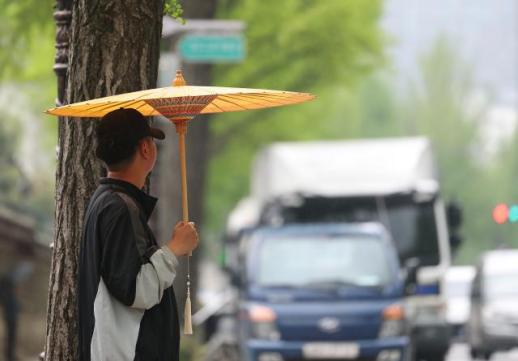 Rain Expected Across South Korea on Monday; Bring an Umbrella On Monday, May 11, spring rain is expected across various regions of South Korea.According to the Korea Meteorological Administration on May 10, rain is forecasted to begin in the capital region and central areas in the morning, while northern North Jeolla and northern and central North Gyeongsang provinces will see rain starting in the afternoon. The capital region and some areas in Gangwon Province are expected to experience a lull in rainfall by night.Expected precipitation includes 5 to 10 mm in Seoul, Incheon, Gyeonggi Province, and the five islands of the West Sea; 5 to 20 mm in inland and mountainous areas of Gangwon; around 5 mm on the eastern coast of Gangwon; and 5 to 30 mm in Daejeon, Sejong, South Chungcheong, and North Chungcheong provinces, as well as in Daegu and North Gyeongsang. Jeju Island is expected to have mostly clear weather.Morning low temperatures nationwide are forecasted to range from 9 to 16 degrees Celsius, while daytime highs are expected to reach between 19 and 25 degrees Celsius. Sea waves are predicted to be 0.5 to 1.5 meters in the East and West Seas, and 0.5 to 1.0 meters in the South Sea.In the offshore waters (about 200 km from the coastline), wave heights are expected to be 0.5 to 2.0 meters in the East and South Seas, and 0.5 to 2.5 meters in the West Sea.* This article has been translated by AI. 2026-05-11 03:47:13
 -
 'Salmon's Eye' Surpasses 3 Million Viewers, Becomes Second-Biggest Korean Horror Film The film 'Salmon's Eye' has surpassed 3 million viewers, making it the second-highest-grossing horror film in South Korea's box office history. According to the Korean Film Council's integrated ticketing system, 'Salmon's Eye' exceeded 3 million viewers as of the afternoon of May 10. This achievement surpasses the record set by the 2018 film 'Gonjiam: Haunted Asylum,' which previously held the second spot. 'Salmon's Eye' quickly gained traction after exceeding its break-even point of 800,000 viewers shortly after its release, reaching 1 million viewers within just ten days. The film continued to attract audiences steadily, ultimately reaching the milestone of 3 million viewers. The horror film depicts a filming crew that encounters something dark and mysterious in a reservoir after capturing an unidentified figure on a road view. Directed by Lee Sang-min, the film has garnered attention as an immersive horror experience. Director Lee Sang-min expressed his gratitude through the film's distributor, Showbox. He stated, "Recently, I've been enjoying doing things I've always wanted to do, like spending the whole day reading at the library, watching movies I've wanted to see, or reading comics at a bookstore. I also traveled with friends not long ago. I love walking, and the nice weather has allowed me to enjoy long walks lately." He also thanked the audience, saying, "As with any film, especially horror, I believe it is completed thanks to the viewers who experience it together in theaters and scream along with us. I sincerely thank all the viewers who helped complete 'Salmon's Eye' and supported Team 'Salmon's Eye.'" Since its release, 'Salmon's Eye' has gained popularity as an experiential horror film, showcasing the strength of Korean horror cinema by surpassing the break-even point and attracting 3 million viewers this year.* This article has been translated by AI. 2026-05-11 03:45:58
 -
 State-Owned Banks Face Employee Exodus Amid Wage Disparities State-owned banks, once regarded as 'jobs for life,' are losing their appeal. Lower salaries compared to commercial banks and ongoing discussions about relocating to regional areas during election seasons are contributing to a rise in employee turnover.According to data from the Public Institution Management Information Disclosure System, Alio, the turnover rate for male employees at the Industrial Bank of Korea reached 9.0% last year. This marks a threefold increase from 3.0% in 2021. In contrast, the turnover rate for female employees rose slightly from 1.5% to 1.6% during the same period. The turnover rate at IBK Industrial Bank also increased, with male turnover rising from 1.7% in 2021 to 6.2% last year, while female turnover went from 1.0% to 1.3%. Similarly, the Export-Import Bank of Korea saw its male turnover rate increase from 3.2% to 4.1%, and female turnover rise from 0.7% to 2.6%.As employee departures increase, the average tenure at these banks is decreasing. The average length of service at the Industrial Bank fell from 199 months in 2021 to 185 months last year. IBK's average tenure decreased from 209 months to 195 months, while the Export-Import Bank's average tenure dropped from 155 months to 151 months.The rising turnover rates at state-owned banks can be attributed to wage disparities with commercial banks. Last year, the average salary for employees at these state banks was 115.94 million won, approximately 4 million won lower than the average salaries at the four major commercial banks: Kookmin, Shinhan, Hana, and Woori.The issue of relocating financial public institutions to regional areas during election seasons has also accelerated employee departures. Since the push for the Industrial Bank's relocation to Busan began in 2022, the number of resignations increased from 30 to 100. Ahead of this year's local elections, candidates for the Daegu mayoralty from both major parties have pledged to relocate IBK to Daegu, with the Export-Import Bank and the Korea Deposit Insurance Corporation also under consideration for relocation.Additionally, the less favorable wage peak system at state-owned banks has impacted employee retention. While commercial banks offer retirement incentives and educational funds for children equivalent to two to three years' salary, employees opting for voluntary retirement at state-owned banks receive only 45% of their salary during the wage peak period as severance pay.* This article has been translated by AI. 2026-05-11 03:44:27
 -
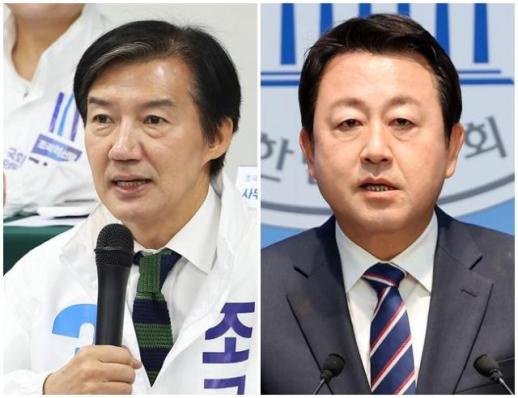 Tensions Rise Between Jo Guk and Kim Yong-nam Over Pyeongtaek Election Tensions are escalating between Jo Guk, leader of the Innovation Party, and Kim Yong-nam, the Democratic Party candidate, as they prepare for the Pyeongtaek by-election. The conflict has now expanded into a broader party-level dispute. On May 10, Democratic Party spokesperson Park Ji-hye issued a written briefing stating, "Jo and the Innovation Party should focus on long-term, unifying politics for a decisive victory." She added that the actions of Jo and the Innovation Party during the Pyeongtaek by-election are raising concerns among citizens who hope for unity within the progressive camp. She emphasized, "While promoting a 'Zero People Power' policy, targeting Kim only serves to create division within the progressive camp. Jo and the Innovation Party should direct their criticisms towards the candidate endorsed by the People Power Party, which has not properly apologized for its internal conflicts." In response to the Democratic Party's remarks, the Innovation Party expressed discomfort. Spokesperson Im Myung-hee stated, "We are committed to unifying politics with the Democratic Party, but Kim must clarify whether the belief that 'the state should protect the lives and safety of its citizens' is misguided, rather than attacking Jo or the Innovation Party." She also expressed regret over Kim's comments labeling Jo a criminal, stating, "This reflects the very political prosecution that the public has rejected, which is deeply regrettable." She pointed out that the true meaning of a decisive victory is that it benefits everyone. Meanwhile, the Pyeongtaek race has drawn candidates from the progressive camp, including Jo, Kim, and Kim Jae-yeon, the leader of the Progressive Party, raising concerns about vote fragmentation. On the conservative side, former three-term candidate Yoo Yi-dong and Hwang Kyo-ahn, leader of the Liberty and Innovation Party, have also announced their candidacies. Currently, the likelihood of a unified front appears low, suggesting a competitive three-to-two dynamic that may favor the conservative camp.* This article has been translated by AI. 2026-05-11 03:43:00
 -
 Mongolia Emerges as a New Battleground for K-Distribution Mongolia is emerging as a battleground for South Korea's retail industry. With a young demographic and the popularity of K-content, businesses are expanding beyond convenience stores and large supermarkets to include private brand (PB) specialty stores and restaurant franchises. According to data from the Korea Customs Service on May 10, South Korea's exports to Mongolia rose from $271.16 million in 2020 to $660.46 million last year. This marks a more than twofold increase over five years, reflecting a consistent upward trend in exports during this period. Analysts attribute this export growth to the influence of K-content. In Mongolia, where over 60% of the population of approximately 3.5 million is under the age of 34, the popularity of K-content has led to a surge in exports of South Korean consumer goods, including cosmetics and food products. Cosmetic exports skyrocketed from $31 million in 2023 to $45 million last year, while exports of K-food items such as ramen, snacks, and seasoned seaweed grew by 8%, 40%, and 38%, respectively. Recognizing Mongolia's growth potential, South Korean retailers are intensifying their efforts to penetrate the market. E-Mart plans to open three No Brand specialty stores in Mongolia this year. The company entered the Mongolian market in 2016 as a master franchise and currently operates six stores. E-Mart aims to expand its business by establishing No Brand as a separate specialty store. To facilitate this, it signed a business agreement with SKY Hypermarket LLC, the operator of E-Mart in Mongolia, at the end of last month. The goal is to increase the number of No Brand specialty stores to 15 by 2028 and to establish a dedicated logistics cluster, with plans to expand to 50 stores within ten years. The K-distribution wave in Mongolia is prominently represented by convenience stores. BGF Retail's CU has been operating 556 stores since entering Mongolia in 2018, while GS25, which entered in 2021, has expanded to 292 stores, increasing its market share. These stores have positioned themselves as key cultural spaces for Mongolia's 2030 generation by offering differentiated products such as Korean-style instant foods like tteokbokki and gimbap. Restaurant franchises and beverage brands are also accelerating their entry into the Mongolian market. CJ Foodville's Tous Les Jours, which entered Mongolia in 2016, operates 24 stores and has sold over 1.7 million cakes in ten years. MegaMGC Coffee, known for its affordable coffee, opened its first store in May 2024 and has expanded to eight locations in just over two years. Lotte Chilsung Beverage's beer brand, Crush, which entered the market in 2024, is now available in over 2,000 locations, including convenience stores and large supermarkets. This has contributed to a nearly 90% increase in Lotte Chilsung's beer exports to Mongolia last year compared to the previous year. The strong performance in exports to Mongolia has also led to a 40% increase in global beer exports last year. An industry insider noted, "Mongolia is a new emerging market that the South Korean retail industry is focusing on to reduce its dependence on China. With convenience stores and large supermarkets already established, competition for market share among franchises, PBs, and beverage brands is expected to intensify in the future."* This article has been translated by AI. 2026-05-11 03:41:06
 -
 Park Min-sik and Han Dong-hoon Open Campaign Offices in Busan Amid Tensions The campaign offices of Park Min-sik, the People Power Party candidate for the June 3 by-election in Busan's North District, and Han Dong-hoon, an independent candidate, opened simultaneously on May 10, sparking a competitive atmosphere. The People Power Party leadership, including Jang Dong-hyuk, attended Park's opening to showcase their support, while Han's event focused on local residents. The Democratic Party candidate, Ha Jung-woo, also launched his campaign office on the same day, marking the start of the election battle.At the opening of Park's office in the Daehyang Building, Jang stated, "Isn't it time to renew the People Power Party?" He emphasized that someone like Park, who has steadfastly upheld conservatism, should lead the party's transformation rather than those who sow seeds of conflict and division. Jang acknowledged the disappointment among voters due to internal strife within the party, asserting that Park Min-sik is needed, someone who truly loves the party, rather than those who seek to exploit it. He also claimed, "To prevent the tax bomb that will explode after the election, we need a true fighter like Park Min-sik who knows how to fight properly."Jang dismissed Han, stating, "He is someone who should not be in politics and does not know how to do politics," criticizing him as a candidate supported by Lee Jae-myung, who he accused of damaging the country.The event saw significant attendance from the party leadership, including Jang and floor leader Song Eon-seok, as well as senior members like Kwon Young-se, Kim Ki-hyun, Na Kyung-won, and Ahn Cheol-soo. Busan mayoral candidate Park Hyung-jun and former Minister of Land, Infrastructure and Transport Won Hee-ryong were also present.Meanwhile, Han's campaign office opening took place about a 10-minute walk away. Members of the pro-Han faction did not attend, as the People Power Party leadership had previously warned that supporting a candidate outside their party would lead to disciplinary action, prompting Han to discourage attendance.The audience at Han's event was primarily made up of local residents and supporters. Han remarked, "Today's opening is different from other events." He explained that he had initially planned to gather influential figures for a media showcase but changed his mind after meeting a local woman who had made him a rice ball lunch. He stated, "We transformed our opening into a festival with the residents," pledging to develop the North District and rebuild conservatism while stopping the current administration's excesses.Han's opening intensified the election competition, with notable attendees including Jeon Jae-soo, the Busan mayoral candidate serving as Han's campaign chair, former Busan mayor Moon Jeong-soo, honorary campaign chair Kim Young-chun, and Congressman Kim Young-jin. Han expressed his commitment, saying, "As a son of North District, I will dedicate my expertise in artificial intelligence to the future of our district."* This article has been translated by AI. 2026-05-11 03:38:55