
Journalist

Seo Hye Seung
-
 LG Energy Solution Targets ESS Sales Share Above 35% by Year-End * This article has been translated by AI. 2026-04-30 10:16:13
 -
 Korea Bar, Patent Attorneys Split After Court Ruling on Mandatory Association Membership The Korean Bar Association welcomed a Constitutional Court decision finding unconstitutional a provision of the Patent Attorney Act that requires all patent attorneys to join a single association. The Korea Patent Attorneys Association expressed regret and said it would move to revise the law. In a statement issued April 30, the bar association said it “strongly welcomes” the court’s decision for recognizing the patent profession’s “unique dual qualification system” and the structural conflict it has produced. It called the ruling an important starting point for reforms aimed at providing better intellectual property legal services to the public. The bar association said the Patent Attorney Act has long recognized two paths to qualification: passing the patent attorney exam and holding a lawyer’s license. It argued that despite this dual structure, Article 11 forced all patent attorneys to join a single association without regard to those differences. Noting that seven of the court’s nine justices found the provision unconstitutional, the bar association said the decision effectively confirms unconstitutionality and urged the National Assembly to meet the court’s legislative deadline of Oct. 31, 2027. It said the ruling sets a constitutional standard that the independent will and professional interests of lawyer-patent attorneys should no longer be sacrificed within a single-organization system. The bar association said it would take part in legislative discussions to ensure the ruling leads to practical reforms that protect the rights of lawyer-patent attorneys and the public. The Korea Patent Attorneys Association said the decision “ignores the essence of the problem” and leaves structural conflict unresolved. It argued that the conflict of interest between patent attorneys and lawyers stems from the current system that automatically grants patent attorney qualifications to lawyers, and said the only fundamental solution is to abolish that automatic qualification system entirely. Association President Jeon Jong-hak said the ruling was meaningful in that it reaffirmed the constitutionality of mandatory membership in the association itself. But he said the automatic qualification system for lawyers was shown to be the root cause and that the group would immediately begin work on revising the Patent Attorney Act to abolish it. Jeon said that as intellectual property becomes directly tied to national competitiveness, the patent attorney system should be designed from the perspective of industry and the country, not professional turf. He said the association would strengthen its role in boosting industrial competitiveness and protecting technology through institutional improvements. The Constitutional Court ruled April 29 that the provision requiring all patent attorneys to join the Korea Patent Attorneys Association violates the Constitution. The National Assembly must revise the provision by October next year. Of the nine justices, four — Kim Sang-hwan, Kim Hyeong-du, Jeong Hyeong-sik and Oh Young-jun — issued a constitutional nonconformity opinion, while three — Kim Bok-hyeong, Cho Han-chang and Ma Eun-hyeok — found it unconstitutional. Justices Jeong Jeong-mi and Jeong Gye-seon dissented, finding it constitutional. 2026-04-30 10:14:32
 -
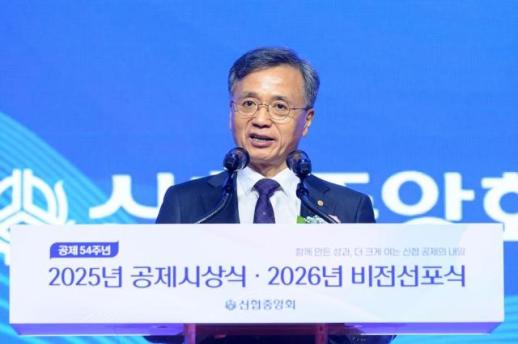 Korea Credit Union Insurance Arm Targets 10 Trillion Won in Assets The Korea Credit Union Federation said it aims to expand its mutual-aid insurance business and build insurance assets to 10 trillion won, while strengthening financial protection for members on the back of stable growth. The federation said it held its “2025 Insurance Awards and 2026 Vision Declaration” on April 29 at its training center in Daejeon, where it reviewed 2025 performance and shared its 2026 direction. For 2026, it outlined priorities including stronger competitiveness in member-focused protection products, expanded support for front-line sales, improved service quality and a stronger cooperation framework between local credit unions and the federation. It said the goal is for the insurance business to contribute more directly to members’ financial stability and to broaden credit unions’ earnings base. “2026 is a critical period when CU Insurance must further strengthen front-line sales capabilities and product competitiveness based on a stable growth foundation,” said Son Seong-eun, the federation’s head of credit and insurance business. “With a goal of 10 trillion won in insurance assets, we will actively support timely delivery of the protection services members need.” As of the end of 2025, CU Insurance reported insurance assets of 6.3 trillion won and a risk-based capital ratio of 325%. “CU Insurance began as cooperative insurance to share unexpected life risks and protect one another,” Chairman Ko said. “We will continue to build a tighter protection safety net so members can live with peace of mind, grounded in the mutual-aid values at the heart of insurance.”* This article has been translated by AI. 2026-04-30 10:13:23
 -
 Dr.SEED Expands Offline Scalp Care With Musinsa Mega Store Seongsu Launch Scalp care brand Dr.SEED is expanding its offline presence. The company said it has opened a shop-in-shop at Musinsa Mega Store Seongsu, which opened on the 24th, and is offering customized products tailored to different scalp conditions. Musinsa Mega Store Seongsu is a large offline retail space where shoppers can experience fashion and beauty brands in one place, and it is positioned as a symbol of Musinsa Beauty’s push to expand offline touchpoints. Through the new location, Dr.SEED is introducing its “custom care by scalp condition” concept in an in-person setting. The brand categorizes users’ scalp conditions by type and recommends matching products, aiming to help customers choose items suited to their needs. At the Seongsu store, shoppers can find three lines tied to scalp types: the flagship Black Bean line, the Tea Tree & Lime line for oily scalps, and the Peppermint & Lemon line for dry scalps and dandruff concerns. Dr.SEED’s official online store also carries related items, including Black Bean shampoo, Black Bean scalp hair tonic, Tea Tree & Lime shampoo, and Peppermint & Lemon shampoo. The signature Black Bean line is a scalp care range that uses black bean ingredients. It is designed as a three-step routine—shampoo, hair pack and hair tonic—for everyday use. On Dr.SEED’s official store, the Black Bean vegan hair-loss three-item set is introduced as a shampoo, hair pack and hair tonic bundle. The Tea Tree & Lime line targets oil-heavy scalps, while the Peppermint & Lemon line is aimed at consumers with dandruff and other scalp concerns. The company said each line was developed with usability by scalp type in mind and designed for comfortable use after testing. Store visitors can check products in person and receive guidance on configurations suited to their scalp condition and concerns. The company said the move is expected to broaden brand experience by offering offline trials to consumers who previously encountered the products mainly online. “Noting that care methods can vary depending on scalp condition, we built our product lines accordingly,” a Dr.SEED official said. “Through this launch, we will expand touchpoints with consumers and increase opportunities for brand experience.” Dr.SEED said it plans to run various promotions to mark its entry into Musinsa Mega Store Seongsu.* This article has been translated by AI. 2026-04-30 10:10:04
 -
 South Korea Launches Broad AI Strategy to Upgrade Data, Manufacturing and Government South Korea’s Ministry of Science and ICT is moving ahead with a comprehensive strategy to respond to a sweeping shift driven by artificial intelligence, spanning data 확보, research and development, industrial deployment and global expansion. The government plans to invest more than 60 trillion won in national strategic technologies over the next five years and accelerate its push to become one of the world’s “top three AI powers” by expanding AI-based innovation across manufacturing, public administration and public safety, among other areas. Bae Kyung-hoon, deputy prime minister and minister of science and ICT, chaired the eighth meeting of ministers for science and technology relations at the Government Complex Seoul on Wednesday and discussed seven agenda items, including a draft plan titled “Data Policy Directions in the Era of the AI Transformation.” “AI is having a real impact on solving difficult scientific challenges and on people’s daily lives,” Bae said, adding that the government would expand global cooperation to advance AI-driven science and technology innovation, strengthen the ecosystem and promote responsible use. The meeting reviewed policy directions to energize the data ecosystem, a plan to support “manufacturing AX” based on tacit knowledge to bolster industrial competitiveness, and a rollout plan to expand an AI-based public work platform known as “OnAI.” In manufacturing, the government plans to turn skilled workers’ experience and know-how into data and apply it to AI models and robots. Through a 2026 supplementary budget, it will support building process-by-process datasets totaling 48 billion won and use them to expand manufacturing AI and robotics solutions. In government administration, the OnAI work-management platform will be expanded to about 40 central government ministries. With mobile services enabling access to work networks and collaboration regardless of location, the government expects more efficient decision-making in the public sector. The government also plans to strengthen drug interdiction capabilities using advanced technology, applying detection tools at airports, seaports and other sites and building cooperation among relevant ministries and research institutions to shift toward prevention-focused responses. Investment in national strategic technologies will also be increased, with more than 60 trillion won over five years to concentrate support on key R&D projects and speed results through designated specialized research institutes and expanded corporate support. The government will also step up AI-driven innovation in materials research. By 2030, it plans to develop AI models for materials, build autonomous experimentation centers and upgrade data infrastructure, aiming to shorten research timelines while developing new materials. A global expansion strategy will proceed in parallel. Existing overseas IT support centers will be converted into KAIN (Korea AI Innovation Network) to provide region-specific support in North America, Asia and the Middle East, among other areas, and help domestic AI companies expand overseas. The government said the strategy is intended to build an AI ecosystem that combines data, technology and talent and to secure global competitiveness.* This article has been translated by AI. 2026-04-30 10:08:48
 -
 South Korea FTC to Base Fines on Last Full Year Before Violation Ends; Retaliation Penalty Up to 30% South Korea’s competition watchdog will change how it calculates administrative fines, shifting the sales base period from the business year immediately before a violation to the business year immediately before the violation ends. It will also raise penalties for retaliation in the agency and franchise sectors, allowing fines to be increased by up to 30% when businesses retaliate over reports to the Fair Trade Commission. The Fair Trade Commission said April 30 it will seek public comment on proposed amendments to enforcement decrees under the subcontracting, franchise and distribution laws from that day through June 9. It also said it will issue an administrative notice through May 20 on revisions to its fine guidelines under the subcontracting, franchise, distribution and agency laws. The changes are part of the fine-system overhaul announced last year. To deter repeat violations, the FTC will strengthen the cap on fine increases so that even a single prior violation within the past five years can raise a fine by up to 50%, and repeated violations can raise it by up to 100%, depending on the number of offenses. The agency said the move is aimed at preventing repeated illegal conduct such as collusion. The FTC will also tighten its response to retaliation. It already increases fines when a business retaliates because someone reported it to the FTC or sought dispute mediation. In the agency sector, the maximum increase for retaliation will rise to 30% from 20%. In the franchise sector, where there had been no separate rule, the FTC will add a basis to increase fines by up to 30% for retaliation. Grounds and ranges for fine reductions will be narrowed. Previously, companies could receive reductions of 10% each — up to 20% total — for cooperating with investigations and deliberations. Under the revision, a reduction of up to 10% will apply only when a company cooperates throughout both the investigation and deliberation stages. The FTC will also cut the reduction available for voluntary corrective action. A reduction of up to 50% had been possible, but it will be limited to up to 10% and only when the effects of the violation have been substantially removed. In addition, the FTC will create a basis to revoke, on its own authority, a reduction granted for cooperation if a company later reverses its statements during litigation. * This article has been translated by AI. 2026-04-30 10:07:39
 -
 Korea Fair Trade Commission Warns of Refund Delays as Prepaid Installment Firms Drop to 76 South Korea’s Fair Trade Commission said Thursday the number of registered prepaid installment transaction companies fell to 76 in the first quarter, down from 77. The commission said two companies canceled their registrations during the quarter and one newly registered. Four companies reported changes to key information such as executives or addresses. A Plus Life and Baramil Good Life changed their representatives, The Better Life changed its address, and Utopia Future changed its email address, the commission said. The commission urged consumers signing prepaid installment contracts to closely review notices from the consumer damage compensation insurance institution to help prevent losses tied to closures or registration cancellations. It also warned that companies that frequently change their name or address may pose a higher risk of weak operations or business suspension. It said consumers should be especially cautious with companies that have not signed a consumer damage compensation contract, because there is no safeguard to recover payments if the company shuts down or another incident occurs. The commission said some companies have failed to refund payments — excluding penalties — within three business days after consumers cancel prepaid installment contracts for mutual-aid services and savings-type travel products, or have delayed payment. Consumers who suffer losses such as delayed refunds can seek counseling or file for relief through the Korea Consumer Agency, it said.* This article has been translated by AI. 2026-04-30 10:06:45
 -
 National Fire Agency, Pediatric Emergency Society to Upgrade 119 Child Emergency Response The National Fire Agency said April 30 it confirmed practical cooperation steps with the Korean Society of Pediatric Emergency Medicine after holding a meeting the previous day to strengthen response systems for pediatric emergency patients and improve transport. The agency said the talks were arranged as hospitals face growing difficulty accepting pediatric emergency patients amid regional imbalances in pediatric medical resources and a shortage of residents. It said the goal is to combine firefighters’ pre-hospital response capabilities with the society’s expertise to find more fundamental solutions. The two sides agreed on three priority tasks aimed at improving survival rates for pediatric emergency patients and said they would move immediately to implement them. First, they will fully revise the 119 emergency call consultation manual to reflect children’s physiological characteristics, which differ from adults. The agency said it will refine phone-triage protocols and symptom-specific transport guidance — including for seizures and foreign-body ingestion — with advice from the society to help field crews make faster, more accurate decisions. Second, they will overhaul training for paramedics to raise and standardize pediatric emergency care skills. The agency said it will actively cooperate as the society designs its own pre-hospital pediatric emergency care education program, and will develop and distribute customized simulation training content based on surveys of field training needs. Third, they agreed to make more active use of 119 air ambulances (firefighting helicopters) to address limits in pediatric specialty infrastructure, which is heavily concentrated in the Seoul metropolitan area, and to reduce transport delays. The agency and the society said they will work to improve the efficiency of using firefighting aviation resources so critically ill children can be transported quickly, within the golden time, to the most appropriate hospital anywhere in the country. Commissioner Kim Seung-ryong of the National Fire Agency said pediatric emergency response requires more careful and precise expertise, and that cooperation with the society would help strengthen the nation’s safety net. “By combining field experience with the society’s specialized skills, we will do everything we can so our children can receive optimal emergency medical services anywhere in the country,” he said.* This article has been translated by AI. 2026-04-30 10:05:39
 -
 LG’s EXAONE AI to Power Korea’s Safety Report System, Pilot Service Due This Year LG AI Research is accelerating the use of artificial intelligence in public safety services. LG AI Research said April 30 that it has completed the first phase of development of an “AI Safety Report System” based on its EXAONE model, in cooperation with the Korea Electronics Technology Institute (KETI), and will launch a pilot service within the year. The system is designed to analyze more than 39,000 safety reports filed each day and automate the full workflow — from intake to screening and classification, transfer to the responsible department, and sending a reply. The current Safety Report System uses some keyword-based automatic classification, but accuracy can drop when reports include typos or unclear wording. Reports with photos or videos are handled by staff who review the material and then route it to the relevant agency. LG AI Research said its vision-language model, EXAONE 4.5, addresses those limits by understanding and reasoning over visual information such as photos and videos to improve screening and classification. KETI plans to use the refined report text generated by EXAONE to further break down key categories, shorten transfer times for high-urgency cases and reduce administrative workload. For example, if a user uploads a photo of a clogged storm drain, EXAONE analyzes the image and automatically generates the report text. If the case is classified as high priority — such as a flood risk during the rainy season — it can be sent directly to the response department without intermediate steps, enabling faster action. The two organizations said that as more safety-report data accumulates, they expect to analyze patterns by time, region, type and frequency, and use the results to help develop policies that respond proactively to emerging safety risks. “Through cooperation with LG, we will be able to reduce the administrative burden and operating costs of public services and strengthen citizen safety,” KETI President Shin Hee-dong said. “We will create a model case of AI transformation that people can feel.” Lim Woo-hyung, co-head of LG AI Research, said, “By using EXAONE, we will improve both the speed and quality of safety administration and contribute to improving people’s quality of life.” Separately, LG AI Research said it is also developing “K-EXAONE” and is participating in the Ministry of Science and ICT’s “Independent AI Foundation Model (Dokpamo)” project. It said K-EXAONE earned the top technology score in the first evaluation and ranked first in contributions within the open-source ecosystem. 2026-04-30 10:04:40
 -
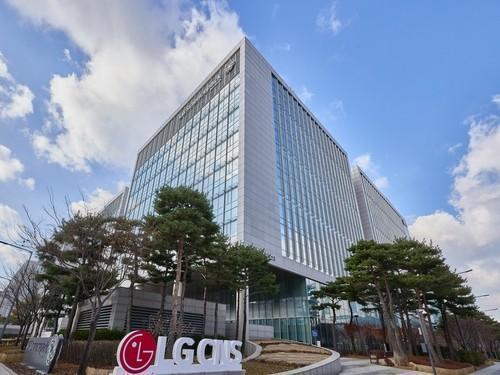 LG CNS Q1 operating profit surges 19 pct on AI, cloud growth SEOUL, April 30 (AJP) - South Korean IT services firm LG CNS posted first-quarter operating profit of 94.2 billion won ($63.4 million), up 19.4 percent from a year earlier, as surging demand for artificial intelligence and cloud services fueled growth across its business lines. According to regulatory filing released Thursday, revenue for the January to March period climbed 8.6 percent on-year to 1.315 trillion won, with the company's AI and cloud division accounting for about 58 percent of the total at 765.4 billion won. The segment grew 6.7 percent year-on-year, buoyed by the expansion of agentic AI-based multi-agent services into defense, finance, manufacturing and biopharmaceuticals. Net profit jumped 41.2 percent to 80.9 billion won, while the operating margin widened 0.7 percentage points to 7.2 percent. "Despite heightened global uncertainty stemming from U.S.-Iran geopolitical risks, energy price volatility and swings in interest rates and exchange rates, LG CNS expanded its external business on the back of solid technology and execution capabilities," said CFO Song Kwang-ryun said during an earnings call. Its digital business services division recorded revenue of 321.9 billion won, a 11.9 percent year-on-year rise driven by next-generation IT system buildouts for major financial institutions including NH NongHyup Bank and Shinhan Investment. The smart engineering segment also gained 10.4 percent to 227.8 billion won on the back of factory automation and logistics projects. The company is also betting on physical AI, investing in U.S. robotics firm Dexmate to build a lineup spanning bipedal humanoids, quadrupeds and wheeled robots, and plans to publicly launch a proprietary robot training platform next month. Its first overseas AI data center in Indonesia is slated for completion by year-end. LG CNS has moved to ride the broader AI boom by forging partnerships with global heavyweights such as OpenAI and Palantir, supplying ChatGPT Enterprise to about 10 corporate clients since February while co-developing high-value AI projects through a joint engineering team with the U.S. data analytics firm. Shares of LG CNS traded at 66,000 per stock at 10:00 a.m., 1.05 percent lower than the day before. 2026-04-30 10:03:23