
Journalist

Seo Hye Seung
-
 Blue House Unveils Plan to Strengthen Civil Service, Including Fast-Track Promotions The Blue House said April 29 it will pursue a broad overhaul to strengthen the civil service, including training specialist officials, revamping promotion systems and expanding recruitment from the private sector. Presidential Chief of Staff Kang Hoon-sik told a briefing at the Blue House press center that the government needs stronger expertise and skills among public officials “not only to overcome emergency situations, but to turn crises into opportunities and make a leap forward.” The government has operated a task force at the Blue House since late last year and, with relevant ministries, prepared five major initiatives aimed at boosting public-sector capacity. First, it plans to develop specialist civil servants who are not rotated through posts. In areas requiring high expertise — including artificial intelligence, international trade and labor supervision — officials would serve for at least seven years, and the government would manage them across ministries rather than within individual agencies. By converting existing general-service officials into specialists, the government plans to secure more than 700 this year and increase the total to more than 1,200 by 2028. When adding new positions, it would designate a set share as specialist posts and run a “two-track” personnel system. The plan also introduces a “fast-track” promotion program for fifth-grade officials to help capable working-level staff move more quickly into management. Promotions would come earlier after performance and competency reviews, starting with 100 people this year and expanding gradually to embed a results-oriented culture. To increase openness, the government will expand the inflow of private-sector talent. It plans to raise the share of open recruitment posts at the director-general and division director levels in central ministries to at least 12% by 2030, abolish salary caps tied to positions, and ease the burden of restrictions on post-retirement employment, Kang said. It also plans to step up personnel exchanges between local and central governments and among ministries. A project-based exchange system to provide “one-stop” support for large regional projects will be piloted in integrated local governments, with the aim of leveling up government capacity and flexibly using talent inside and outside government to deliver policy results more quickly. The government will also build a tailored training system to strengthen job skills. It plans to introduce self-directed learning accounts that officials can use for items such as AI subscriptions or professional certifications, along with “learning days” of up to three days a year dedicated to capacity building. In addition, it will systematically manage overseas human networks and gradually integrate and link network information scattered across overseas missions, ministries and public institutions, with the goal of maximizing national interests and protecting citizens. Kang said the government will “immediately revise relevant laws and regulations and move quickly to implement” the initiatives, adding that the measures will help the government and civil service “make a breakthrough leap” in a rapidly changing environment. He said the government will continue to pursue reforms to remove entrenched practices in the civil service to support more proactive and responsible administration.* This article has been translated by AI. 2026-04-29 15:37:54
 -
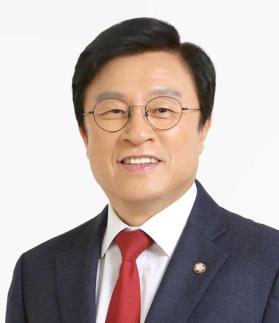 Rep. Park Hyeong-su urges balanced expansion of renewables and nuclear power Rep. Park Hyeong-su of the People Power Party said South Korea needs a major shift to an “energy mix” that can deliver both stable power supplies and carbon reductions, calling for balanced expansion of renewable energy and nuclear power. In written remarks for the “2026 Ajunews Energy Forum” held Tuesday at the Korea Press Center in central Seoul, Park said the country should not repeat “past mistakes” of concentrating national capacity on a single energy source based on ideology or bloc politics. Park, whose constituency includes Uiseong, Cheongsong, Yeongdeok and Uljin counties in North Gyeongsang Province, said Shin Hanul nuclear power plant is operating in Uljin and plans are being pursued to build a national industrial complex for nuclear hydrogen. He added that Yeongdeok is also seeking to attract a new nuclear plant, saying he feels the importance of energy policy “more keenly than anyone.” He cited a government outlook that new electricity demand from future core industries such as semiconductors, artificial intelligence data centers and electric vehicles will more than double, saying a supply environment is emerging that would be difficult to handle with a structure centered only on fossil fuels and renewables. According to demand projections released during the government’s work on the 12th Basic Plan for Long-term Electricity Supply and Demand, South Korea’s power consumption in 2040 is expected to rise to as much as 694.1 TWh, with peak demand reaching up to 128.2 GW. Compared with the previous plan, projected new demand from future core industries jumped to 173 TWh from 79 TWh. Park said choices made by the current generation should not cause future generations to lose competitiveness on the global stage, adding that he hopes the forum will help find practical solutions to protect both South Korea’s energy security and industrial competitiveness.* This article has been translated by AI. 2026-04-29 15:37:01
 -
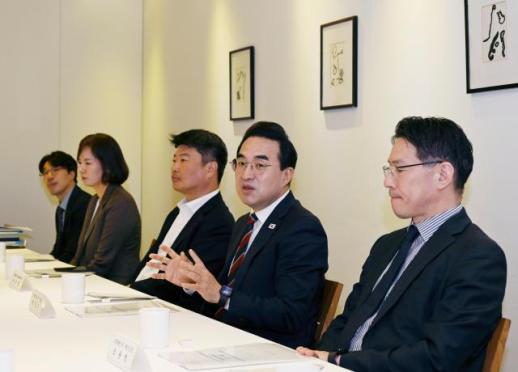 Budget Minister Park Hong-geun Pledges Constant Dialogue With Private Fiscal Advisers Park Hong-geun, minister of the Ministry of Planning and Budget, said on the 29th that he will strengthen communication between the government and the private sector by building a standing communication system for the Fiscal Policy Advisory Council. Park held a luncheon meeting that day with the council’s private-sector members to discuss policy issues broadly. He shared key points from a town hall meeting held the previous day and stressed the importance of government-private sector communication and cooperation. “The Fiscal Policy Advisory Council has played a central role as a channel for government-private communication in key national fiscal decisions,” Park said, thanking members for their work and dedication, which he said helped improve the quality of fiscal policy. He also called for more active engagement, saying that with policy conditions changing faster and more widely than ever, holding only two to four regular meetings a year could limit the government’s ability to reflect diverse policy needs raised in the field in a timely way. He said closer government-private communication is needed more than ever. In response, Park said the council plans to move beyond a regular-meeting format and establish an always-on communication system. He added that after the luncheon, the ministry plans to open and operate a group chat to enable ongoing exchanges. Private-sector members who attended freely discussed a range of views on overall fiscal policy, including institutional improvements and priority investment directions. Park said the government will closely review issues raised at the meeting as well as suggestions later posted in the group chat and reflect them in major policies, including the 2027 budget proposal. * This article has been translated by AI. 2026-04-29 15:36:11
 -
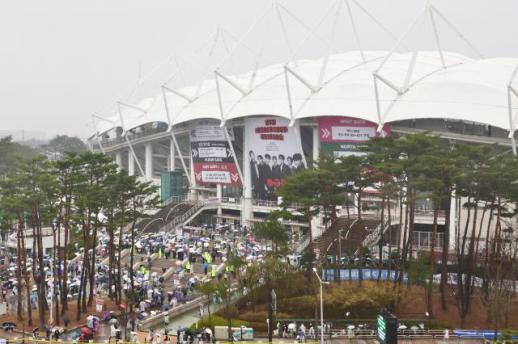 South Korea benchmarks BTS tourism success as Goyang visitor numbers surge SEOUL, April 29 (AJP) - Foreign arrivals in a satellite city northwest of the capital increased 35 times during a three-day BTS concert series that took place on April 9, 11, and 12, providing South Korean authorities with a statistical mandate to overhaul regional tourism strategies, a report released by the culture ministry showed Tuesday. The massive influx of travelers into Goyang, traditionally overlooked in favor of Seoul's central districts, suggests that high-profile cultural events can serve as a primary engine for provincial economic growth if integrated with local infrastructure. This sudden wave of visitors has provided a blueprint for the government’s transition toward a scalable model for provincial revitalization. By analyzing high-density data on spending and movement, the ministry said that it aims to anchor transient global fandom into long-term growth for cities struggling with stagnant local economies. According to the Ministry of Culture, Sports, and Tourism report, foreign visitor arrivals in Goyang City's Daehwa area increased by 3,377 percent compared to the same period last year. This surge in foot traffic translated into a 3,699 percent jump in credit card spending by international visitors within the immediate neighborhood. The data indicates that these travelers are staying longer and spending more than the average visitor to South Korea. Fans attending BTS' Goyang shows remained in the country for an average of 7.4 days, compared to the 6.1-day average recorded for general tourists in the first quarter of 2026. Individual spending also trended higher, with concertgoers averaging 2.91 million won ($1,969) in expenses, outstripping the 2.45 million won spent by typical visitors. In total, foreign credit card spending in the area injected 337.8 million won into the local economy over the three-day period. Central to this economic ripple effect was "The City," an integrated program that linked BTS' stadium event to pop-up stores and exhibitions in Seoul's tourist hubs, including Myeong-dong and the Dongdaemun Design Plaza. This strategy effectively widened the tourist footprint, drawing visitors to the National Museum of Modern and Contemporary Art and other regional sites. The government now intends to apply these findings to other metropolitan areas to counter the concentration of tourism in the capital. Minister Choe Hwi-yeong has authorized a two-week "Welcome Week" in Busan this June to coincide with upcoming performances, featuring specialized exhibition spaces and travel routes focused on music video filming locations. Later this year, the ministry plans to utilize this data-driven approach to support four upcoming K-pop concerts and two new cultural exhibition spaces across the country. Kang Jeong-won, the ministry's tourism policy chief, stated, "The important thing is to move beyond the 'performance' itself as a single tourism product and connect 'K-culture' with regional tourism contents so that visits to the metropolitan area can lead to the regions". 2026-04-29 15:35:28
 -
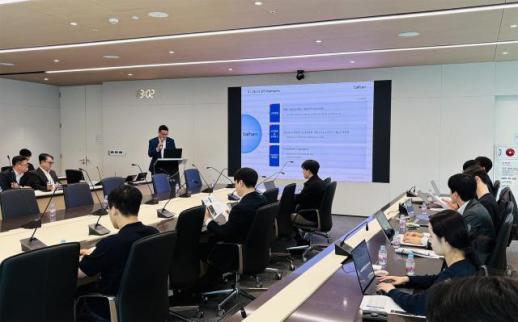 Daehan Cable Posts Record Q1 Results on Strong High-Voltage Cable Demand Daehan Cable said it posted its best-ever quarterly results, citing expanding global investment in power grids and rising demand for extra-high-voltage cables. In a preliminary earnings filing on Tuesday, the company said consolidated first-quarter revenue totaled 1.0834 trillion won ($1.0834 trillion won), with operating profit of 60.4 billion won. Revenue rose 26.6% from a year earlier and operating profit jumped 122.9%. The company said the figures were the highest since it began compiling consolidated quarterly results under Korean International Financial Reporting Standards in 2010. It also marked a second straight quarter with revenue above 1 trillion won, following 1.0090 trillion won in the fourth quarter of last year. Daehan Cable said higher revenue from extra-high-voltage projects in key overseas markets, including the United States and Singapore, led the improvement. It cited rapidly growing global demand for power infrastructure as AI use expands and data centers increase. Profitability also improved. The first-quarter operating margin was 5.6%, up 2.84 percentage points from the five-year average of 2.76%. Orders continued to rise. New orders in the first quarter totaled 734.0 billion won, and the order backlog stood at 3.8273 trillion won at the end of the quarter. The company said the backlog was a record and more than 3.5 times larger than at the end of 2021, shortly after it joined Hoban Group. Daehan Cable also held an investor relations briefing for institutional investors and analysts, highlighting its order win for an extra-high-voltage submarine cable project for a solar power development on Bigeumdo Island in Sinan, and its response status for the "West Coast Energy Expressway" project. The company said it plans to step up efforts in related markets based on its competitiveness in submarine cables and HVDC cables. Its financial structure improved as well. The debt-to-equity ratio fell to 117.2% in the first quarter from 266% in 2021, and the current ratio was 143.7%. A company official said the results reflected recognition in global markets for its technology and quality competitiveness, adding that Daehan Cable will continue strengthening competitiveness in strategic products such as extra-high-voltage grids, submarine cables and HVDC cables.* This article has been translated by AI. 2026-04-29 15:35:12
 -
 DP Lawmaker Park Hae-cheol Says Carbon Neutrality Is Essential to Competitiveness Rep. Park Hae-cheol of the Democratic Party of Korea said April 29 that carbon neutrality to respond to the climate crisis is “no longer a choice but a necessity,” citing rapidly rising electricity demand as the artificial intelligence industry expands. In a written congratulatory message for the “2026 Ajunews Energy Forum” held at the Press Center in Seoul’s Jung District, Park said, “We are now standing before the huge wave of a major energy transition.” He said the reshaping of global supply chains and securing energy security have become key tasks that will determine national competitiveness. Park said power demand is increasing quickly with the rapid growth of the AI industry, heightening the need for a stable energy supply system and the construction of an intelligent power grid. He added that policymakers should carefully consider a public-led restructuring of supply chains and concerns that the public interest could be undermined during the energy transition. “Energy transition is not simply a change in fuels,” he said, calling it a process that innovates the broader industrial structure and creates future growth engines. Park said he hopes the forum will help lay the groundwork for South Korea’s push to become a leading energy power.* This article has been translated by AI. 2026-04-29 15:31:52
 -
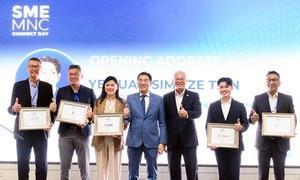 Malaysia Semiconductor Association Hosts Networking Session for Multinationals and SMEs The Malaysia Semiconductor Industry Association, or MSIA, held a networking session on April 28 in Kuala Lumpur to narrow perception gaps between foreign-owned companies and local small and medium-sized enterprises, and to encourage cooperation. MSIA President Wong Siew Hai said the semiconductor industry is becoming more advanced and complex, creating differences in understanding between multinational firms and SMEs. He said the event would help both sides broaden their understanding so they can work together more effectively. Representatives from U.S. companies including Micron Technology, Intel, Texas Instruments, SanDisk and Lam Research took the stage to outline business opportunities, procurement requirements and market-entry processes. The program also included a session on advanced packaging, with talks covering market analysis, technology trends and challenges.* This article has been translated by AI. 2026-04-29 15:31:12
 -
 Coupang to Challenge FTC Move Naming Kim Beom-seok as Group’s Controlling Person Coupang said Tuesday it will pursue an administrative lawsuit after South Korea’s Fair Trade Commission changed Coupang’s designated “same person,” or controlling person, from a corporate entity to Coupang Inc. Chairman Kim Beom-seok, calling the move “double regulation.” In a statement, Coupang said Coupang Inc. owns 100% of its Korean unit, and the Korean unit in turn owns 100% of its subsidiaries and sub-subsidiaries, describing the structure as transparent. It said Kim and his relatives do not hold shares in the Korean affiliates, leaving “no concern at all” about private benefit or self-dealing. Coupang added that as a U.S.-listed company, Coupang Inc. is under strict oversight, including compliance with U.S. Securities and Exchange Commission related-party disclosure requirements. It said the Korean unit has continued to meet the conditions that allow a corporation to be designated as the controlling person, and argued that tougher regulation amounts to double regulation. The company also said Kim’s younger brother is not an “executive” as defined under South Korea’s fair trade law — such as a CEO, director, auditor or manager — and holds no stake in the Korean affiliates. “Coupang will faithfully explain its position through an administrative lawsuit,” it said. Coupang plans to file an objection with the FTC within seven days and, if it is not accepted, proceed with litigation. Earlier, as it pushed back against claims by civic groups that Kim should be designated as the controlling person, Coupang said the vice president named in those claims was seconded from Coupang Inc. and works on improving global logistics efficiency. It said he is not an executive under the fair trade law and holds only some Coupang Inc. listed shares, like employees at a similar level. Under the controlling-person designation rules, the principle is to treat the natural person who effectively controls a business group as the controlling person. However, a corporation may be designated if “exception conditions” are met. Those conditions include: the scope of the business group is the same whether the controlling person is treated as an individual or a corporation; the individual who effectively controls the group does not invest in domestic affiliates other than the top company; the individual’s relatives do not invest in domestic affiliates or participate in management by serving as executives; and there are no debt guarantees or loans between the individual and relatives and the domestic affiliates. The designation is also expected to have broader repercussions. In U.S. politics, where lawmakers are sensitive to perceived discrimination against American companies, Republican members of the U.S. House of Representatives have already increased pressure, including sending a letter of protest. The issue has also raised debate over whether it could violate the Korea-U.S. free trade agreement’s most-favored-nation obligation by treating the United States less favorably than third countries, and even the possibility of an investor-state dispute (ISD) has been mentioned.* This article has been translated by AI. 2026-04-29 15:29:00
 -
 South Korea, Latvia agree to expand defense cooperation SEOUL, April 29 (AJP) - Defense Minister Ahn Gyu-back met with Latvian parliamentary speaker Daiga Mierina in Seoul on Wednesday, according to the Ministry of National Defense. Calling Latvia a "cooperative partner that shares universal values such as liberal democracy, the rule of law, and human rights," Ahn said during the meeting that Mierina's visit to South Korea would help broaden practical cooperation between the two countries. While discussing ways to expand bilateral cooperation in defense, the two agreed to strengthen strategic communication and cooperation amid growing global uncertainty including the prolonged conflict in the Middle East, and to support peace and stability on the Korean Peninsula and in Europe. Ahn highlighted South Korea's defense technology and its stable production and logistics capabilities, expressing hope that South Korean defense firms could contribute to Latvia's efforts to strengthen its defense. They also agreed to work together on drones and counter-drone systems, with plans to deepen industrial cooperation and build more stable supply chains in a forward-looking, mutually beneficial way. 2026-04-29 15:28:11
 -
 DeepMind CEO Demis Hassabis Reunites With Lee Sedol in Seoul, Says Korea Can Win in AI Era “Ten years ago, the match in Seoul marked the start of the modern AI era. The legacy of those ‘divine moves’ is now opening a golden age of science to solve humanity’s hardest problems.” Demis Hassabis, co-founder and CEO of Google DeepMind, sat down again with Lee Sedol, a top-ranked professional Go player, at a special dialogue event at ‘Google for Korea 2026’ held April 29 at the Westin Josun Hotel in central Seoul. Calling Seoul “a symbolic place where the modern AI era began,” Hassabis looked back to 2016, when AlphaGo faced Lee in what was billed as a match of the century. “It feels like yesterday, and it also feels like 100 years ago,” he said, describing a decade in which AI moved from a single breakthrough to broad impact across science and industry. ‘10 years after AlphaGo’…AI relationship shifts from rivalry to collaboration Under the theme “Back to Seoul: Where the future began,” the two men who once battled across a Go board met again as partners discussing how AI can help tackle major challenges. Hassabis pointed to AlphaFold, an AI system for predicting protein structures that he said led to the 2024 Nobel Prize in chemistry. He said AI has moved beyond a specialized domain like Go and is now entering a stage where it can help solve scientific problems such as drug development and battery innovation. “Ten years ago in Seoul, AlphaGo proved AI’s potential and laid the technical foundation for solving scientific challenges,” he said. “Today, AI is driving change in almost every area of science.” He added that the technology that began with AlphaGo is opening a path toward artificial general intelligence, or AGI, which he said could bring “a new golden age of discovery.” Lee described the 2016 match as “the starting point that redefined the meaning of my life.” He said he once took pride in the creativity of his play but realized, after seeing AlphaGo, that he had been “a frog in a well.” “Everything has changed to the point that it feels like there is nothing left for human Go,” he said. Lee also warned that in the AI era, humans could lose the initiative in thinking, and said society needs to consider AI as a partner for collaboration. After the talk, the two signed a Go board at the venue. If the board a decade ago symbolized a contest between humans and AI, the signatures underscored a shift toward cooperation. Series of meetings with business leaders…expanding AI cooperation with Korean companies Hassabis’ trip to South Korea has focused on expanding cooperation with major Korean companies. The day before, he met in succession with Samsung Electronics Chairman Lee Jae-yong, SK Group Chairman Chey Tae-won, Hyundai Motor Group Chairman Chung Euisun and LG Group Chairman Koo Kwang-mo to discuss broader cooperation in semiconductors, humanoids and physical AI. On April 29, a breakfast event titled the “2026 Leaders AI Roundtable” was also held with Google DeepMind Vice President Karim Ayoub and representatives from Hyundai Motor Group, LG Electronics, SK Telecom, Kakao and CJ. Google shared ways to apply its Gemini AI model to Korean companies’ hardware and services. In opening remarks, Google Korea President Yoon Koo said the company is expanding cooperation with Samsung Electronics across the Android ecosystem and is developing next-generation XR devices, including “Galaxy XR,” together from an early stage. In the dialogue, Hassabis called South Korea “a country with both cutting-edge technological capabilities and strong potential.” “Korea has very strong semiconductor and robotics industries, and it has leading universities and research institutions, so it can become a true winner in the AI era,” he said. He also offered an outlook for the next decade, saying AI is moving beyond screens into the physical world. “Over the next 10 years, AI agents will assist with everything from administrative work to daily life, and humans will focus on more creative work,” he said, predicting “a new era of prosperity.” * This article has been translated by AI. 2026-04-29 15:27:38