
Journalist

Seo Hye Seung
-
 Justice Ministry Drops Appeals in 863 State Compensation Suits Over Past Abuses The Justice Ministry said it has withdrawn or waived appeals in 863 damages lawsuits filed against the state by victims of major past human rights abuses, including the Brothers Home case, Seongam Academy, the Samcheong re-education camp and the Yeosu-Suncheon Oct. 19 incident. The ministry said on the 29th it has taken steps to strengthen remedies for victims of past abuses, including refraining from routine appeals in state compensation cases, withdrawing or waiving appeals, and stopping statute-of-limitations defenses in cases that have received truth-finding decisions. As of March, the ministry said it had withdrawn or waived appeals in a total of 863 suits involving 3,587 plaintiffs: 116 Brothers Home cases (756 people), 42 Seongam Academy cases (357 people), 608 Samcheong cases (1,570 people) and 97 Yeosu-Suncheon Oct. 19 cases (904 people). Justice Minister Jeong Seong-ho also ordered blanket withdrawals and waivers of appeals in state compensation suits: on Aug. 5 last year for Brothers Home and Seongam Academy, on Sept. 29 for Samcheong, and on Oct. 13 for the Yeosu-Suncheon Oct. 19 incident. As a result, 2,202 victims received compensation totaling about 199.579 billion won. Prosecutors, citing the difficulty many victims face in pursuing legal procedures on their own, have also been using court-ordered retrials more actively. The ministry said prosecutors have secured not-guilty rulings in cases including the Jeju 4·3 incident and cases involving fishermen who were abducted and later returned, helping restore victims' reputations. The ministry and prosecutors have also begun reviewing records of deferred prosecution decisions, not only convictions. Deferred prosecution is a decision not to indict despite acknowledging wrongdoing, and it has continued to leave victims stigmatized as criminals. The Seoul Southern District Prosecutors Office said it reopened a case on its own authority and changed the disposition to "no charges" for a suspect who in 1983 had been handled under the National Security Act for possessing "Das Kapital." The Seoul Central District Prosecutors Office and the Gyeongju branch office also moved to change dispositions in cases involving the Assembly and Demonstration Act and cases tied to abducted-and-returned fishermen. Prosecutors are expected to continue actively considering "no charges" decisions based on relevant records and findings by the Truth and Reconciliation Commission, even when co-defendants have not sought retrials or when retrials are still pending. A Justice Ministry official said, "These measures are the result of efforts to support, administratively and judicially, the core values of the people-sovereignty government: protecting human rights and addressing past abuses." The official added, "The Justice Ministry and prosecutors will continue to closely review petitions, including identifying retrial cases and canceling deferred prosecutions, and will do our utmost to restore honor so that not a single wronged victim is left behind."* This article has been translated by AI. 2026-04-29 14:13:55
 -
 Actress Tang Wei Faces Online Speculation About Second Pregnancy After Shanghai Event Actress Tang Wei has become the subject of online speculation that she is pregnant with a second child. According to the entertainment industry on the 29th, Tang appeared at a brand event held April 26 in Shanghai, China. She wore a loose black dress and low-heeled shoes, and images of what some described as a visible baby bump spread quickly online. Fans said she appeared to be expecting, and Chinese media outlets also reported the claims, fueling the speculation. In March, Tang was also seen on a date with her husband, director Kim Tae-yong, in Sanlitun in Beijing. At the time, she wore an oversized check shirt that appeared to cover her abdomen, prompting similar talk. Tang’s side has not issued an official statement. Tang met Kim through the film “Late Autumn.” They married in July 2014 and have a daughter. Tang was born in 1979 and is 47, while Kim was born in 1969 and is 57. Separately, Tang has announced she will appear again in a film by director Park Chan-wook. It has been described as a Western about revenge and punishment set in a frontier era. Tang previously worked with Park on “Decision to Leave,” released in 2022.* This article has been translated by AI. 2026-04-29 14:13:11
 -
 Kakao Adds ‘Share Together’ Feature for KakaoTalk Gift Vouchers Kakao has launched a “Share Together” feature on KakaoTalk Gift that allows users to use gift vouchers with family members and other contacts. Kakao said April 29 that it added a new “Share Together” tab to the KakaoTalk gift box, enabling vouchers previously stored for individual use to be shared with members of a family account. Previously, sharing a voucher often required taking a screenshot or copying and sending a message. Kakao said the new feature reduces those steps and makes it easier to use vouchers directly within the gift box. To use it, users can create a family account in the “Share Together” tab or join an existing account by invitation. Linked members can view and manage shared vouchers in the gift box without separately sharing images. Members can also check expiration dates and whether a voucher has been used in real time. Notifications are sent when a voucher is used to help prevent duplicate use, Kakao said. Kakao said it plans to expand voucher use from an individual-centered model to a shared experience among family and friends and to continue improving the user experience for the service. A Kakao official said the feature focuses on making vouchers more flexible to use while strengthening connections among members. “We will continue to upgrade the service so users can enjoy a more convenient and richer gift experience,” the official said. * This article has been translated by AI. 2026-04-29 14:12:19
 -
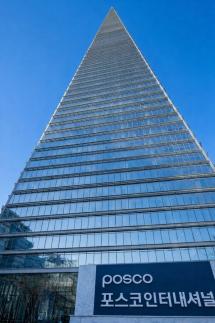 POSCO International to Work With Hana Financial, Dunamu on Blockchain Remittances POSCO International said it will work with Hana Financial Group and blockchain firm Dunamu on a blockchain-based global remittance business. The company said the three parties signed a memorandum of understanding in Seoul on the 29th at Hana Financial Group’s headquarters to cooperate on blockchain-based overseas remittances and intercompany fund transfers. Attendees included POSCO International President Lee Kye-in, Hana Financial Group Vice Chairman Lee Eun-hyung and Dunamu CEO Oh Kyung-seok, the company said. Under the agreement, the companies will cooperate on blockchain-based remittances, build financial infrastructure to improve global cash-management efficiency, and explore digital finance business opportunities. The companies said traditional remittances routed through the SWIFT network typically process payment instructions and settlement separately, which can lead to delays and higher costs. The partnership aims to link instructions and settlement in real time using blockchain technology to improve speed, transaction transparency and cost efficiency. POSCO International said it carries out about 40,000 overseas remittances a year through its network in 51 countries. It plans to apply blockchain to real cash flows generated in global trade transactions, verify effectiveness and expand use in stages. Hana Financial Group and Dunamu previously conducted a proof of concept for blockchain-based remittance technology and confirmed that sensitive information, including transaction details, could be transmitted securely on Dunamu’s in-house blockchain platform, the GIWA chain. The new cooperation moves that work into an environment involving actual fund transfers. The three companies said they will also push to build a blockchain-based real-time remittance cooperation model within the year. POSCO International will lead application to real global trade transactions; Hana Financial Group will handle foreign-exchange operations and functions such as remittance, settlement and payments; and Dunamu will provide technical infrastructure based on the GIWA chain and support operation of blockchain transaction records. Lee of POSCO International said the company had built “a foundation for a mid- to long-term partnership” with leading domestic firms in digital finance and digital assets, adding that it would expand its role in the digital finance ecosystem through the three-way cooperation. Lee Eun-hyung of Hana Financial Group called the partnership “an important turning point” in linking digital assets, industry and finance, and said commercialization would deliver new value to participants across the industrial ecosystem. Oh of Dunamu said he hopes the GIWA chain’s technology will help build a more efficient and transparent on-chain financial environment, adding that the company will provide technical support for future changes in finance driven by blockchain. POSCO International also noted it recently issued about 140 billion won in blockchain-based foreign-currency digital bonds with HSBC, describing it as the first such issuance by a nonfinancial company in South Korea. It said it has been expanding digital transformation in funding and payments, including by introducing a blockchain-based global payment system in cooperation with JPMorgan Chase last year.* This article has been translated by AI. 2026-04-29 14:06:18
 -
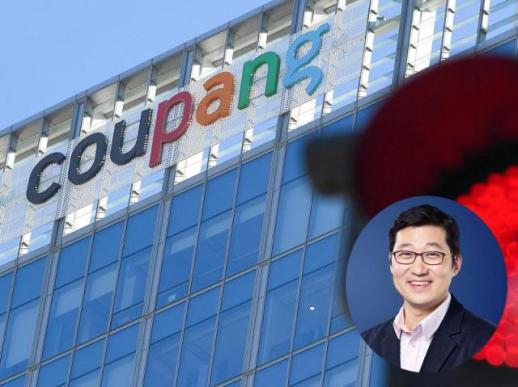 FTC recasts Coupang under founder control, testing Korea-US fault lines SEOUL, April 29 (AJP) -South Korea’s antitrust watchdog on Wednesday designated Bom Kim as the legal head of Coupang, placing the U.S.-listed e-commerce giant under the country’s full conglomerate regulatory regime after a data breach scandal and despite U.S. pressure. The decision by the Korea Fair Trade Commission (FTC) reclassifies the group’s “same person” — a legal term denoting ultimate control — from the corporate entity Coupang Inc. to Kim himself. The shift expands disclosure obligations, broadens the scope of affiliates and tightens oversight of intra-group transactions under Korea’s antitrust framework. It marks the first time in nearly four decades that a head of a U.S.-incorporated company is treated as a controlling individual behind a business entity in operation in Korea. “Under current law, a corporate entity can be designated as the ‘same person’ only when there is no risk of private interest, including where relatives of the controlling individual do not participate in the management of domestic affiliates. The government determined that this condition has been breached," observed Kim Hong-yu, a business professor of Kyung Hee University. "Kim’s brother, Kim Yoo-seok, served at a vice president level and exercised influence over key business decisions through involvement in logistics and delivery policy. This was judged to constitute managerial participation rather than passive employment, invalidating the basis for corporate designation,” he added. The company thus far had operated as a regulatory outlier since being classified as a large business group in 2021 after surpassing the 5 trillion won ($3.4 billion) asset threshold, maintaining that its governance — a single ownership chain with no family stakes in domestic affiliates — did not fit the traditional chaebol model. The FTC’s decision effectively rejects that distinction, applying a framework designed for family-controlled conglomerates to a platform company with dispersed global ownership. The FTC said Coupang no longer met the conditions for corporate designation, citing findings that Kim’s younger brother, a senior executive, exercised substantive influence over key operations, including logistics and delivery policy — effectively participating in management. Under Korean law, once a natural person is designated as the same person, regulatory oversight extends beyond formal ownership to include relatives and related entities. Kim must now submit annual filings detailing family shareholdings and governance structures, while transactions involving related parties will face closer scrutiny under rules aimed at preventing private benefit and unfair intra-group support. For Coupang, the compliance could have structural ramifications, which explains why it is legally challenging the Seoul move. Lee Seong-yeob, a professor at Korea University’s Graduate School of Management of Technology, said the change could be a turning point. “Coupang’s move from a large business group without a designated controlling person to a regular conglomerate group led by Bom Kim means it will now face chaebol-style regulations, including disclosure obligations and restrictions on self-dealing,” he pointed out. “It is significant because it enhances management transparency at a platform company and imposes direct legal responsibilities and obligations on the controlling individual.” Coupang said it will file an administrative suit, arguing the designation amounts to duplicative oversight for a firm already subject to strict disclosure rules as a U.S.-listed company. “As a U.S.-listed company, we are under stringent oversight obligations,” the company said, adding that neither Kim nor his relatives hold equity in Korean affiliates and that its structure leaves “no concern about improper private interest.” The legal dispute is expected to hinge on whether operational influence — absent ownership — constitutes control under Korean law. The latest FTC ruling comes against a backdrop of intensifying scrutiny of Coupang’s business practices and political reach. A major personal data breach last year triggered regulatory investigations and public backlash in South Korea, sharpening concerns over platform accountability as the company has become embedded in daily life for millions of users. Coupang, incorporated in Delaware and listed on the New York Stock Exchange, occupies a hybrid position: legally American, financially global, but operationally Korean, with more than 90 percent of its revenue generated in South Korea. Coupang reported revenue of about 45.5 trillion won last year, with operating profit rising to 2.28 trillion won and net profit to 1.58 trillion won. It also transferred roughly 1.46 trillion won to its U.S. parent, a move the company described as capital allocation rather than profit extraction, but which drew criticism in South Korea as most earnings are generated domestically. The Coupang issue has loomed largely over Korea-U.S. relations, partly as the result of aggressive lobbying. Coupang significantly expanded its lobbying efforts in Washington. Disclosures show the company nearly doubled its U.S. lobbying spending in early 2026 to about $1.8 million, widening engagement beyond trade agencies to include senior government offices such as the White House and National Security Council as regulatory pressure mounted in Korea. U.S. policymakers have already raised concerns over Seoul’s treatment of the company, viewing investigations — including those tied to the data breach — as potentially unfavorable to American firms. In recent weeks, U.S. lawmakers have urged the Korean government to avoid what they described as discriminatory regulatory actions. 2026-04-29 14:05:06
 -
 South Korea Defense Minister Ahn Kyu-back Meets Latvian Speaker to Discuss Defense, Arms Cooperation Ahn Kyu-back, South Korea’s defense minister, met Daiga Mierina, speaker of Latvia’s parliament, at the Ministry of National Defense in Yongsan, Seoul, on the 29th and discussed ways to expand bilateral cooperation in defense and the defense industry. Ahn said the two countries are cooperative partners that share universal values such as liberal democracy, the rule of law and human rights, and he expressed hope that Mierina’s visit to South Korea would help broaden practical cooperation. The two sides shared the view that uncertainty in the international security environment has been growing and agreed to keep strengthening strategic communication and cooperation to support peace and stability on the Korean Peninsula and in Europe. Ahn outlined South Korea’s defense industry capabilities, citing advanced technology and stable production and logistics support, and said he hopes South Korean defense firms can contribute as Latvia works to strengthen its defense capabilities. They also agreed that cooperation, including on drone and counter-drone systems, could expand into industrial cooperation and supply-chain stabilization, and said they would develop defense and defense-industry ties in a forward-looking, mutually beneficial direction. * This article has been translated by AI. 2026-04-29 14:01:13
 -
 Israel’s president moves to mediate plea deal talks in Netanyahu corruption trial Israeli President Isaac Herzog has begun efforts to mediate a “judicial agreement” over Prime Minister Benjamin Netanyahu’s corruption trial. The Times of Israel reported on April 28 (local time) that Herzog plans to broker talks between Netanyahu’s side and prosecutors to reach a “judicial agreement,” rather than decide whether to accept or reject the prime minister’s request for a pardon. An invitation signed by the president’s legal adviser reportedly said that before reviewing whether to grant a pardon, the sides should first seek an agreement to end the trial. The presidential office urged both sides to negotiate with openness and good faith and asked them to respond by May 3. Netanyahu previously requested a pardon in November last year, saying the trial was fueling national division and interfering with his duties as prime minister. U.S. President Donald Trump, who is close to Netanyahu, has also reportedly sent Herzog multiple messages urging an end to the trial. Netanyahu is on trial after being indicted in three cases, including allegations that he took bribes in exchange for providing favors to wealthy individuals, as well as fraud and breach of trust. He denies all charges. Now in its sixth year, the Netanyahu trial is widely seen as a central issue deepening Israel’s political divisions. Netanyahu’s side has argued the investigation was a “political witch hunt” driven by the media and investigative authorities.* This article has been translated by AI. 2026-04-29 13:59:29
 -
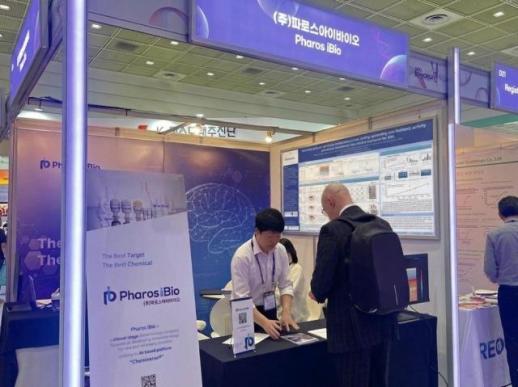 Pharos iBio to Showcase AI, Quantum Computing Drug-Discovery Strategy at BIO KOREA 2026 Pharos iBio, an artificial intelligence-based drug development company, said Tuesday it is taking part in BIO KOREA 2026 at COEX in Seoul through April 30, where it will present research technologies and key results based on AI and quantum computing. Now in its 21st year, BIO KOREA is a major South Korean health care event that shares the latest trends in the biohealth industry and promotes cooperation among global companies and research institutions. About 270 companies from 20 countries are participating, including Johnson & Johnson and Amgen. Pharos iBio said it will operate a dedicated booth to introduce its AI drug discovery platform, Chemiverse®, and its main pipeline programs, and to hold partnership talks with global counterparts. At a session titled “Paradigm shifts in drug development amid the spread of AI and quantum computing technologies” on Tuesday, Chief Scientific Officer Chae Jong-cheol will join as a panelist to discuss strategies to improve efficiency in AI-based drug development and ways to raise the success rate of identifying drug candidates, the company said. The company said Chae, a quantum computing specialist leading upgrades to Chemiverse, will also share insights on the productivity and economic value of AI-applied research and development. Pharos iBio’s key pipeline includes lasmotinib for acute myeloid leukemia, PHI-501 for hard-to-treat solid tumors, and PHI-601, a next-generation menin inhibitor. Lasmotinib targets FLT3 mutations. The company said global Phase 1 trials confirmed safety and efficacy, and it is preparing to enter global Phase 2. It added that the drug has shown potential to boost anticancer effects when combined with a menin inhibitor, drawing attention as a next-generation AML treatment approach. PHI-501 is being developed as an oral solid-tumor treatment that simultaneously inhibits BRAF and DDR1/2 signaling. PHI-601 is a next-generation menin inhibitor aimed at the high-value oncology drug market. The menin inhibitor market is a high-value area attracting global drugmakers. U.S. market research firm Strategic Market Research projects it will grow from about $500 million in 2024 to about $900 million in 2030. “BIO KOREA is a place to see global technology trends and research directions,” said Kim Gyu-tae, head of business development at Pharos iBio. “Through this participation, we will expand open innovation opportunities and strengthen global partnerships.”* This article has been translated by AI. 2026-04-29 13:58:27
 -
 Haitai’s Palazo Launches P.FREDDO Gelato Line for Convenience Stores Italian gelato brand Palazo is moving into convenience-store distribution, aiming to make premium gelato easier to buy. Haitai Confectionery said on the 29th it is launching P.FREDDO, a Palazo brand made exclusively for retail distribution channels. Sales begin at GS25 on the same day, with a buy-one-get-one-free promotion running through May. The company said this is the first case of gelato, rather than ice cream, being sold at a convenience store. Haitai Confectionery plans to expand placements to additional distribution channels within the year. P.FREDDO reflects the premium identity of Palazo’s parent brand, “Palazzo del Freddo.” The company said it emphasizes originality based on the tradition and know-how of the FASSI family, a Rome gelato maker whose craft has been passed down for five generations since 1880. Palazo previously relied on handmade production methods, making large-scale distribution difficult. Haitai Confectionery said upgraded facilities and accumulated manufacturing expertise now allow mass production while maintaining gelato’s distinctive texture, enabling sales beyond specialty shops and into everyday retail outlets such as convenience stores. The initial lineup includes two flavors: “Fresh Chocolate” and “Fresh Yogurt Strawberry.” The company said both were among the top-selling menu items at its stores and are designed to appeal to a broad range of consumers. It said the products reduce air content to preserve gelato’s chewy texture and highlight the natural flavors of ingredients such as fresh chocolate and fresh yogurt. A Palazo official said consumers can enjoy the original gelato’s chewy texture and flavor by leaving it at room temperature for about three minutes. The official added that the company will broaden distribution beyond GS25 and expand the product lineup to lead South Korea’s premium gelato market.* This article has been translated by AI. 2026-04-29 13:54:29
 -
 Shinjo Logitec CEO Kwon Soon-wook Eyes Global Growth in Specialized Logistics "I’m confident we can take full responsibility for logistics transport that others can’t do — and that everyone will be satisfied with," Kwon Soon-wook said. Kwon made the remarks April 24 at Shinjo Logitec’s headquarters in Busan. Founded in 1998, the company has built 27 years of expertise in specialized cargo logistics and is combining ultra-heavy transport capability with digital technology to expand in global markets. Its track record includes work on the International Thermonuclear Experimental Reactor, or ITER. After being selected in 2015 as an official logistics provider for the ITER construction project, Shinjo Logitec transported ultra-precision fusion equipment — with a tolerance of 0.001 millimeter and weighing up to 600 tons — to the site in France, the company said. It said a government agency awarded it a letter of appreciation last year in recognition of that work. More recently, Shinjo Logitec said it successfully transported 478 metric tons of oversized equipment for a major South Korean company. It reported revenue of 44.2 billion won as of 2025 and said it has set a revenue target of 70 billion won for this year. Kwon said the company’s next push centers on digital transformation and advanced technology. He pointed to “1BOX.Click,” a container loading optimization program that systematizes Shinjo Logitec’s container loading plan, or CLP, know-how using AI algorithms. The program automatically calculates site constraints and route-by-route freight rate ratios to produce an optimal loading plan, the company said. It said it plans to expand the tool into a smart logistics platform with real-time recalculation on tablets and links to augmented reality. Shinjo Logitec said the system can cut logistics costs by at least 5 million won per shipment. A company official said the approach goes beyond filling space, adjusting placement by precisely calculating a cargo’s center of gravity. The official said that know-how helps maximize transport safety. The company said it will begin a demonstration test of a dehumidifying container by the end of May to address corrosion issues. It also said it plans to break ground on a specialized logistics plant in Gwangyang in the second half of 2026. Kwon said Shinjo Logitec’s core strength is a “one-stop turnkey solution” that covers everything from route-optimization simulations to unloading and final placement. He said the company will continue investing in research and development and upgrading digital technology to become an innovation-driven leader in global logistics.* This article has been translated by AI. 2026-04-29 13:48:39