
Journalist

Seo Hye Seung
-
 South Korea Defense Minister Ahn Kyu-back Meets Latvian Speaker to Discuss Defense, Arms Cooperation Ahn Kyu-back, South Korea’s defense minister, met Daiga Mierina, speaker of Latvia’s parliament, at the Ministry of National Defense in Yongsan, Seoul, on the 29th and discussed ways to expand bilateral cooperation in defense and the defense industry. Ahn said the two countries are cooperative partners that share universal values such as liberal democracy, the rule of law and human rights, and he expressed hope that Mierina’s visit to South Korea would help broaden practical cooperation. The two sides shared the view that uncertainty in the international security environment has been growing and agreed to keep strengthening strategic communication and cooperation to support peace and stability on the Korean Peninsula and in Europe. Ahn outlined South Korea’s defense industry capabilities, citing advanced technology and stable production and logistics support, and said he hopes South Korean defense firms can contribute as Latvia works to strengthen its defense capabilities. They also agreed that cooperation, including on drone and counter-drone systems, could expand into industrial cooperation and supply-chain stabilization, and said they would develop defense and defense-industry ties in a forward-looking, mutually beneficial direction. * This article has been translated by AI. 2026-04-29 14:01:13
 -
 Israel’s president moves to mediate plea deal talks in Netanyahu corruption trial Israeli President Isaac Herzog has begun efforts to mediate a “judicial agreement” over Prime Minister Benjamin Netanyahu’s corruption trial. The Times of Israel reported on April 28 (local time) that Herzog plans to broker talks between Netanyahu’s side and prosecutors to reach a “judicial agreement,” rather than decide whether to accept or reject the prime minister’s request for a pardon. An invitation signed by the president’s legal adviser reportedly said that before reviewing whether to grant a pardon, the sides should first seek an agreement to end the trial. The presidential office urged both sides to negotiate with openness and good faith and asked them to respond by May 3. Netanyahu previously requested a pardon in November last year, saying the trial was fueling national division and interfering with his duties as prime minister. U.S. President Donald Trump, who is close to Netanyahu, has also reportedly sent Herzog multiple messages urging an end to the trial. Netanyahu is on trial after being indicted in three cases, including allegations that he took bribes in exchange for providing favors to wealthy individuals, as well as fraud and breach of trust. He denies all charges. Now in its sixth year, the Netanyahu trial is widely seen as a central issue deepening Israel’s political divisions. Netanyahu’s side has argued the investigation was a “political witch hunt” driven by the media and investigative authorities.* This article has been translated by AI. 2026-04-29 13:59:29
 -
 Pharos iBio to Showcase AI, Quantum Computing Drug-Discovery Strategy at BIO KOREA 2026 Pharos iBio, an artificial intelligence-based drug development company, said Tuesday it is taking part in BIO KOREA 2026 at COEX in Seoul through April 30, where it will present research technologies and key results based on AI and quantum computing. Now in its 21st year, BIO KOREA is a major South Korean health care event that shares the latest trends in the biohealth industry and promotes cooperation among global companies and research institutions. About 270 companies from 20 countries are participating, including Johnson & Johnson and Amgen. Pharos iBio said it will operate a dedicated booth to introduce its AI drug discovery platform, Chemiverse®, and its main pipeline programs, and to hold partnership talks with global counterparts. At a session titled “Paradigm shifts in drug development amid the spread of AI and quantum computing technologies” on Tuesday, Chief Scientific Officer Chae Jong-cheol will join as a panelist to discuss strategies to improve efficiency in AI-based drug development and ways to raise the success rate of identifying drug candidates, the company said. The company said Chae, a quantum computing specialist leading upgrades to Chemiverse, will also share insights on the productivity and economic value of AI-applied research and development. Pharos iBio’s key pipeline includes lasmotinib for acute myeloid leukemia, PHI-501 for hard-to-treat solid tumors, and PHI-601, a next-generation menin inhibitor. Lasmotinib targets FLT3 mutations. The company said global Phase 1 trials confirmed safety and efficacy, and it is preparing to enter global Phase 2. It added that the drug has shown potential to boost anticancer effects when combined with a menin inhibitor, drawing attention as a next-generation AML treatment approach. PHI-501 is being developed as an oral solid-tumor treatment that simultaneously inhibits BRAF and DDR1/2 signaling. PHI-601 is a next-generation menin inhibitor aimed at the high-value oncology drug market. The menin inhibitor market is a high-value area attracting global drugmakers. U.S. market research firm Strategic Market Research projects it will grow from about $500 million in 2024 to about $900 million in 2030. “BIO KOREA is a place to see global technology trends and research directions,” said Kim Gyu-tae, head of business development at Pharos iBio. “Through this participation, we will expand open innovation opportunities and strengthen global partnerships.”* This article has been translated by AI. 2026-04-29 13:58:27
 -
 Haitai’s Palazo Launches P.FREDDO Gelato Line for Convenience Stores Italian gelato brand Palazo is moving into convenience-store distribution, aiming to make premium gelato easier to buy. Haitai Confectionery said on the 29th it is launching P.FREDDO, a Palazo brand made exclusively for retail distribution channels. Sales begin at GS25 on the same day, with a buy-one-get-one-free promotion running through May. The company said this is the first case of gelato, rather than ice cream, being sold at a convenience store. Haitai Confectionery plans to expand placements to additional distribution channels within the year. P.FREDDO reflects the premium identity of Palazo’s parent brand, “Palazzo del Freddo.” The company said it emphasizes originality based on the tradition and know-how of the FASSI family, a Rome gelato maker whose craft has been passed down for five generations since 1880. Palazo previously relied on handmade production methods, making large-scale distribution difficult. Haitai Confectionery said upgraded facilities and accumulated manufacturing expertise now allow mass production while maintaining gelato’s distinctive texture, enabling sales beyond specialty shops and into everyday retail outlets such as convenience stores. The initial lineup includes two flavors: “Fresh Chocolate” and “Fresh Yogurt Strawberry.” The company said both were among the top-selling menu items at its stores and are designed to appeal to a broad range of consumers. It said the products reduce air content to preserve gelato’s chewy texture and highlight the natural flavors of ingredients such as fresh chocolate and fresh yogurt. A Palazo official said consumers can enjoy the original gelato’s chewy texture and flavor by leaving it at room temperature for about three minutes. The official added that the company will broaden distribution beyond GS25 and expand the product lineup to lead South Korea’s premium gelato market.* This article has been translated by AI. 2026-04-29 13:54:29
 -
 Shinjo Logitec CEO Kwon Soon-wook Eyes Global Growth in Specialized Logistics "I’m confident we can take full responsibility for logistics transport that others can’t do — and that everyone will be satisfied with," Kwon Soon-wook said. Kwon made the remarks April 24 at Shinjo Logitec’s headquarters in Busan. Founded in 1998, the company has built 27 years of expertise in specialized cargo logistics and is combining ultra-heavy transport capability with digital technology to expand in global markets. Its track record includes work on the International Thermonuclear Experimental Reactor, or ITER. After being selected in 2015 as an official logistics provider for the ITER construction project, Shinjo Logitec transported ultra-precision fusion equipment — with a tolerance of 0.001 millimeter and weighing up to 600 tons — to the site in France, the company said. It said a government agency awarded it a letter of appreciation last year in recognition of that work. More recently, Shinjo Logitec said it successfully transported 478 metric tons of oversized equipment for a major South Korean company. It reported revenue of 44.2 billion won as of 2025 and said it has set a revenue target of 70 billion won for this year. Kwon said the company’s next push centers on digital transformation and advanced technology. He pointed to “1BOX.Click,” a container loading optimization program that systematizes Shinjo Logitec’s container loading plan, or CLP, know-how using AI algorithms. The program automatically calculates site constraints and route-by-route freight rate ratios to produce an optimal loading plan, the company said. It said it plans to expand the tool into a smart logistics platform with real-time recalculation on tablets and links to augmented reality. Shinjo Logitec said the system can cut logistics costs by at least 5 million won per shipment. A company official said the approach goes beyond filling space, adjusting placement by precisely calculating a cargo’s center of gravity. The official said that know-how helps maximize transport safety. The company said it will begin a demonstration test of a dehumidifying container by the end of May to address corrosion issues. It also said it plans to break ground on a specialized logistics plant in Gwangyang in the second half of 2026. Kwon said Shinjo Logitec’s core strength is a “one-stop turnkey solution” that covers everything from route-optimization simulations to unloading and final placement. He said the company will continue investing in research and development and upgrading digital technology to become an innovation-driven leader in global logistics.* This article has been translated by AI. 2026-04-29 13:48:39
 -
 Barrel Signs China Distribution Deal With Tianma Sports to Expand Sales Watersports brand Barrel Co. said it is accelerating its push into China through a partnership with Chinese sports distributor Tianma Sports. Barrel, led by CEO Park Young-jun, said it signed an exclusive distribution and export agreement with Tianma Sports on the 24th. The deal reflects a minimum purchase target agreed by both sides and is valued at about 26 billion won based on export prices. Actual shipment volumes and timing will be set sequentially through individual orders, and the companies plan to expand transaction volumes in stages over the contract period based on initial annual supply quantities. Tianma Sports is a major Chinese sports distributor that handles more than 60 global sports brands, including Nike, Adidas and Under Armour, Barrel said. It has experience operating brand stores on major e-commerce platforms such as Tmall and JD.com, and it runs a 300,000-square-meter smart logistics center that supports nationwide distribution in China. Barrel said Tianma Sports also has strong marketing capabilities on major Chinese digital platforms including TikTok, Xiaohongshu and WeChat. Barrel plans to use Tianma Sports’ online distribution and local marketing infrastructure to raise brand awareness in China. Barrel said the agreement is also significant because it marks a shift in how it operates in China. The company plans to move away from a China-subsidiary-led model to a local-partner distribution structure, aiming to reduce fixed costs and inventory risk while improving profitability and scalability. Barrel said it will prioritize a “Digital First” strategy in China, expanding distribution mainly through key e-commerce platforms such as Tmall and JD.com, then adding offline stores in a phased retail approach. Under the plan, Barrel said it will broaden placements on major online platforms this year. Starting in 2027, it plans to open standalone stores sequentially in prime commercial districts in major Chinese cities including Shanghai and Beijing. Barrel said the deal also supports its strategy to expand beyond a swimwear-focused business into athleisure and lifestyle categories. It plans to strengthen product lineups tailored to Chinese consumers, drawing on its product development experience and brand competitiveness in watersports. The company said it will also pursue localization aimed at key consumer groups in China — those born in the 1990s and 2000s. It plans to expand athleisure and lifestyle products suitable for everyday wear, alongside watersports items, and to strengthen its SMU lineup reflecting local tastes and lifestyle patterns. A Barrel official said the partnership is “an opportunity to reorganize our China business structure around profitability and scalability,” adding that the company will secure mid- to long-term growth drivers through a phased strategy spanning digital and offline channels and Barrel’s watersports identity. Separately, Barrel said it has set a mid- to long-term strategy of transforming into a global watersports platform and is diversifying its business portfolio. It said it recently made an indirect investment in global space company SpaceX as it moves to strengthen its foundation for future growth.* This article has been translated by AI. 2026-04-29 13:47:06
 -
 UAE’s ADNOC Plans Multibillion-Dollar Push Into U.S. Natural Gas The United Arab Emirates’ state oil company ADNOC plans to invest tens of billions of dollars to expand its U.S. natural gas business, seeking to diversify its commodities portfolio and build a global gas operation centered on liquefied natural gas (LNG) as energy-market volatility rises amid the Iran war. According to the Financial Times, ADNOC’s overseas investment platform, XRG, is reviewing 29 potential deals. The aim is to build a vertically integrated gas business spanning production, pipelines, processing plants, liquefaction facilities, regasification terminals and networks linking to end users. XRG Chief Investment Officer Namir Siddiqui, who took office in January, told the FT that “diversifying the commodities portfolio is the goal,” adding that XRG’s business “will be built across the entire gas value chain.” He said the plan to invest tens of billions of dollars across the U.S. gas sector “remains unchanged.” XRG is targeting two sources of demand in the U.S. market: rising global LNG demand and growing domestic gas demand driven by electricity needs from data centers. It is considering a range of approaches, including control acquisitions, drilling joint ventures and minority-stake investments. ADNOC has already taken a stake in the Rio Grande LNG project in Texas and increased its holding in a follow-on phase, positioning that investment as a base for broader expansion. But entry will not be easy. Major players are already established in the U.S. LNG market, and lenders have been cautious about new investments amid concerns about oversupply. Martin Houston, chairman of Omega Oil and Gas, told the FT that XRG has the financial capacity and determination to pursue big goals, but said a fully integrated gas business is highly complex and would take years.* This article has been translated by AI. 2026-04-29 13:46:17
 -
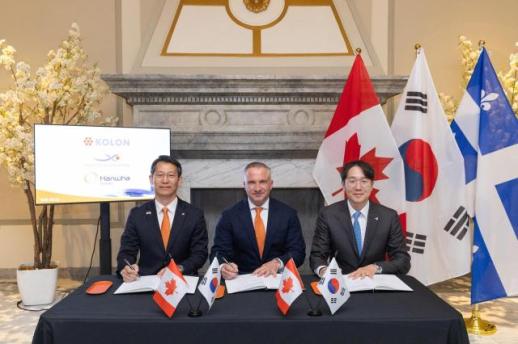 Kolon Spaceworks Expands North America Defense Push With Canada Submarine Teaming Deal Kolon Spaceworks said it is stepping up its push into the North American defense market through cooperation with Hanwha Ocean and Canadian firm Spartec. The company said it signed a teaming agreement, or TA, with Hanwha Ocean and Spartec at ‘CPSP Partners Day’ held April 28 (local time) in Montreal to strengthen competitiveness for Canada’s next-generation submarine program, known as CPSP. Kolon Spaceworks said the agreement establishes a cooperation framework with a local partner that has manufacturing capabilities and helps secure localization capacity needed to carry out the project. Under the CPSP effort, Kolon Spaceworks said it will work with Spartec, a Canadian composites company, to expand in North America based on its own technology. Spartec is headquartered in Erin, Ontario, and has more than 40 years of experience producing composite parts for the automotive, industrial and defense sectors, the company said. Kolon Spaceworks said it plans to use the agreement to find additional local partners and broaden cooperation with institutions, strengthening its mid- to long-term business base in the North American defense market. CEO Ahn Sang-hyun said the deal will reinforce the company’s cooperation network with Canadian partners and contribute to improving competitiveness across Canada’s defense industry. He said Kolon Spaceworks aims to have its core technologies, proven through domestic submarine projects, recognized in global markets and to expand cooperation into aviation and space.* This article has been translated by AI. 2026-04-29 13:39:21
 -
 CertiK report says 2026 digital-asset rules tighten AML and expand security-audit mandates Global Web3 security firm CertiK has released its “2026 Digital Asset Regulation Landscape” report, outlining regulatory trends and compliance challenges across major markets. The report said that as of April 2026, regulatory frameworks for digital assets are becoming more defined in key jurisdictions including the United States, the European Union, Hong Kong and Singapore. It said the industry is moving beyond early-stage self-regulation and reactive enforcement toward comprehensive compliance covering licensing, anti-money laundering (AML), security audits and reserve management. CertiK listed four major shifts: tougher AML enforcement; smart-contract security audits moving into formal regulatory requirements; convergence in stablecoin standards; and changes in institutional participation as bank prudential rules are introduced. Enforcement focus shifts from securities status to AML The report said global enforcement is increasingly centered on controlling fund flows rather than debating whether tokens are securities. From 2024 to 2025, the U.S. Securities and Exchange Commission’s crypto-specific enforcement actions and penalty totals declined, while the U.S. Department of Justice and the Financial Crimes Enforcement Network stepped up AML-related actions, it said. In the first half of 2025 alone, more than $900 million in fines and settlements were imposed in AML-related matters. It cited sanctions involving OKX and KuCoin. OKX reached a $504 million settlement over allegations tied to operating an unlicensed money services business and violating the Bank Secrecy Act. KuCoin agreed to a $297.4 million settlement over similar violations. CertiK said the cases show that exchanges’ transaction monitoring, customer due diligence and sanctions screening have become core regulatory risks, not just internal controls. The report also noted regional differences. Europe has tended to respond by raising the level of AML fines and sanctions, while Asia-Pacific regulators more often rely on license revocations, business restrictions and corrective orders rather than monetary penalties. “The logic of digital-asset regulation is shifting from disputes over an asset’s legal character to controlling fund flows and market access,” the report said, adding that transaction monitoring, suspicious-activity reporting and sanctions screening will be key capabilities for exchanges and custodians. Smart-contract audits become a market-entry requirement CertiK said security regulation is also tightening. Smart-contract audits, once closer to an industry best practice, are increasingly being treated in major jurisdictions as a de facto requirement for licensing, token listings and asset-approval processes. Hong Kong, the United Arab Emirates, Singapore and Brazil are incorporating independent security assessments into licensing reviews or asset approvals, the report said. Hong Kong applies smart-contract audit requirements in its stablecoin issuer authorization process, and Dubai’s Virtual Assets Regulatory Authority requires regular smart-contract audits for licensed entities. The EU’s Digital Operational Resilience Act, or DORA, strengthens obligations for operational resilience, information and communications technology risk management and security testing for financial institutions and related service providers, it said. VARA requires annual smart-contract audits and can order threat-based penetration testing when needed. Brazil’s central bank requires independent technical certification in the licensing process for virtual asset service providers, including cybersecurity, segregated custody and key-management systems. CertiK’s internal analysis found that about 80% of projects that later suffered hacking losses had not undergone an official security audit before the incident, and those projects accounted for more than 89% of total losses. Attack patterns are also changing, the report said. In 2025, about 76% of total losses were attributed to infrastructure-layer issues such as private-key leaks and failures in access-permission management. That indicates operational security, key management and access controls are driving larger losses than traditional code vulnerabilities. CertiK said regulators’ security expectations are expanding beyond code reviews to broader assessments that include key management, operational security, penetration testing and internal controls. Stablecoin rules converge around reserves and licensing The report said stablecoins are the area where global standards are converging fastest. It cited the U.S. GENIUS Act, the EU’s Markets in Crypto-Assets regulation, or MiCA, Hong Kong’s stablecoin rules and Singapore’s payment services licensing framework. While details differ, the report said these regimes generally share core principles: reserves backed by fiat currency or highly liquid assets; limits on algorithmic stablecoins; independent reserve audits; licensing of issuers; and guaranteed redemption rights. However, the report said reserve composition rules, audit frequency, capital requirements and how foreign issuers are recognized are not yet fully aligned. As a result, stablecoin issuers face the challenge of meeting multiple, differing regulatory systems at the same time, not merely securing legal status in one market. For global operators, the report pointed to burdens including conflicting reserve rules across regions, the lack of mutual recognition for licenses and rising compliance costs. It said oversight by central banks and financial regulators is likely to intensify as stablecoins become more connected to payment infrastructure. Basel standards expected to reshape banks’ crypto exposure The report said the structure of institutional and banking participation in digital assets is also changing. It forecast that the Basel Committee on Banking Supervision’s prudential standards for cryptoassets will be incorporated into national regulatory systems in stages. The framework classifies digital assets by risk characteristics and applies differentiated capital requirements depending on what banks hold. Stablecoins and tokenized traditional financial assets that meet regulatory requirements may receive relatively lower risk weights, while unsecured digital assets such as bitcoin would face higher capital charges, it said. CertiK said this is likely to influence banks’ and large financial institutions’ strategies, with institutional capital more likely to concentrate in digital assets that demonstrate regulatory compliance, reserve transparency, securities-like structures and robust custody. “Compliance is no longer optional” CertiK said that while major regulatory systems are gradually converging, the compliance barriers companies must clear continue to rise. It said AML, security audits, reserve management and license maintenance are becoming ongoing costs for digital-asset firms expanding globally. Stefan Muehlbauer, CertiK’s head of U.S. government policy, said, “The era of ambiguous digital asset regulation is already over,” adding that enforceable regulatory systems are spreading quickly across major markets worldwide. “The key question for institutional investors and companies is no longer ‘Do we need compliance?’ but ‘How quickly can we build compliance infrastructure that meets regulatory requirements and can actually be enforced?’” he said. The report said Web3 firms and institutions operating across multiple jurisdictions should incorporate licensing, upgraded AML systems, ongoing security audits and key-management programs into long-term capital planning. It said security and compliance are becoming decisive conditions for market entry as the digital-asset industry moves into formal regulation.* This article has been translated by AI. 2026-04-29 13:37:41
 -
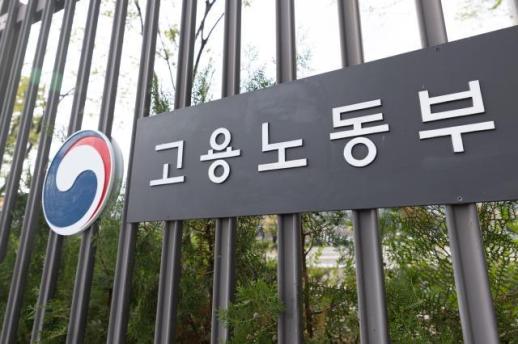 South Korea Labor Ministry Holds Forum With Industrial Accident Victims, Pledges to Close Coverage Gaps The government held a meeting to hear directly from workers injured in industrial accidents and their families during a memorial week for the Day of Workers Killed or Injured in Industrial Accidents. The Ministry of Employment and Labor said Ryu Hyeon-cheol, head of its Occupational Safety and Health Headquarters, hosted a discussion forum on Tuesday afternoon with the Korea Workers’ Compensation and Welfare Service under the theme “Listening to Injured Workers.” The event was organized for the memorial week, held from April 28 to May 4, to remember those killed in industrial accidents and to comfort bereaved families. It was also the first memorial-week event since Ryu took office. About 60 people attended, including members of the bereaved families’ network “Dasisneun,” representatives of industrial accident groups and injured workers. Participants shared difficulties they faced while seeking workers’ compensation, problems in treatment, recuperation and rehabilitation, and areas where they said the system needs improvement. They also held an open discussion on the overall industrial accident insurance system. They called for expanded support to help injured workers return to their jobs and daily lives after treatment, sustained welfare support for families, and greater assistance for related organizations. Ryu said the government would work to “expand the scope of protection by eliminating blind spots in industrial accident insurance, build a fast and accurate compensation system, and support a return to work through early treatment and tailored assistance,” with the goal of making the country safer and healthier for workers. He added that it was meaningful to communicate directly with injured workers and said the ministry would actively review the difficulties and proposals raised at the forum so they can be linked to policy.* This article has been translated by AI. 2026-04-29 13:33:37