
Journalist

Seo Hye Seung
-
 Blue House Concludes Investigation into HMM Namoo Fire in Hormuz Strait The Blue House announced on May 10 that it has completed its on-site investigation into the fire aboard the South Korean vessel HMM Namoo, which occurred near the Hormuz Strait in the United Arab Emirates. A Blue House official stated in a press release that the investigation team has concluded the necessary fieldwork and will return individually based on flight availability following their local activities.The official added, "We have received preliminary findings from the on-site investigation, and we are currently reviewing and evaluating them with relevant agencies. The cause of the Namoo fire will be addressed after this review and evaluation process."The Blue House has maintained a cautious stance regarding the possibility of an attack, emphasizing the need for a thorough investigation to determine the exact cause of the explosion.The government investigation team, consisting of three investigators from the Ministry of Oceans and Fisheries' Marine Safety Tribunal and four forensic experts from the National Fire Agency, began their inquiry into the fire on May 8 at Dubai Port.The team is reportedly examining data, including the voyage data recorder (VDR) and closed-circuit television (CCTV) footage, while also interviewing crew members and conducting on-site inspections.* This article has been translated by AI. 2026-05-11 03:10:32
 -
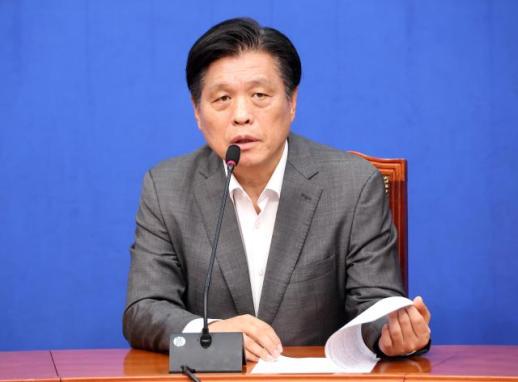 Democratic Party Denounces Kim Kwan-young's Independent Candidacy The Democratic Party has sharply criticized Kim Kwan-young, the Jeonbuk governor who declared his independent candidacy on May 7, calling his actions "shameless." Kim was expelled from the party over allegations of distributing money envelopes and has supported Democratic Party lawmaker Ahn Ho-young, who staged a hunger strike after the party selected Lee Won-taek as its Jeonbuk gubernatorial candidate amid accusations of meal expense reimbursements. Jo Seung-rae, head of the Democratic Party's National Normalization Election Committee, stated at a press conference on May 10 that Kim is permanently ineligible for rejoining the party. He explained that the party's constitution prohibits the reinstatement of individuals expelled for sexual offenses or those who leave the party to run for office against the party's decisions. Jo criticized the notion that the Democratic Party is a place where individuals can freely enter and exit at will, responding to speculation that Kim could return to the party if elected as an independent. He also addressed Kim's claims that the party engaged in unfair candidate selection, stating, "Such assertions are blatant falsehoods, and we are considering legal action." Additionally, Jo issued a warning to the Justice Reform Party, suggesting that those who have been disciplined or denied candidacy within the Democratic Party should not expect to be welcomed back later. He remarked, "Some believe they will eventually be absorbed into the party, but that is a misconception." He added that he does not believe the Justice Reform Party is acting as a party in this regard, viewing any such actions as individual deviations that could harm mutual trust.* This article has been translated by AI. 2026-05-11 03:08:56
 -
 Harim Group Becomes Third Largest SSM Operator with Homeplus Express Acquisition Harim Group's subsidiary, NS Shopping, has acquired Homeplus Express, the supermarket division of Homeplus, raising expectations for business synergy. The acquisition is expected to accelerate vertical integration in food production, logistics, and distribution based on Homeplus Express's nationwide store network. According to the retail industry on May 10, Harim Group is re-entering the domestic offline retail market in the form of a corporate supermarket (SSM) through NS Shopping's acquisition of Homeplus Express. This marks the group's return to the sector after selling NS Mart to E-Mart in 2012, a span of 14 years. On May 7, Homeplus, which is undergoing corporate rehabilitation, and NS Shopping signed a contract for the transfer of the Express business rights. The sale price is reported to be 120.6 billion won, falling short of the initially speculated 300 billion won. However, NS Shopping has agreed to settle some of Homeplus Express's debts, which is expected to increase the actual financial burden, although the specific amount has not been disclosed. With this acquisition, Harim Group has quickly ascended to become the third-largest player in the SSM sector. As of the end of last year, Homeplus Express operated 295 stores, ranking behind GS The Fresh (585 stores) and Lotte Super (338 stores). Notably, 90% of its stores are located in the metropolitan area and major cities, which is considered a significant advantage. Industry experts view Harim Group's acquisition of Homeplus Express as a strategic move aimed at leveraging synergies with its food business. Homeplus Express caters to the shopping needs of single-person households and homemakers, providing a platform for Harim Group to sell its meat products, home meal replacements (HMR), and processed foods directly. Additionally, establishing a structure that integrates production, distribution, and sales could help secure stable sales channels for its food business. There is also speculation about utilizing Homeplus Express stores as urban delivery hubs, potentially entering the quick commerce market. Furthermore, if linked with the Yangjae urban logistics center, which Harim Group aims to complete by 2029, it could create a delivery system that combines a large logistics hub with urban store networks. NS Shopping believes that combining its existing home shopping and online channels with Homeplus Express's offline store network will broaden opportunities for partner companies. By leveraging its 25 years of experience in handling agricultural products and food, NS Shopping can provide small food partners with opportunities to enter offline stores, while Homeplus Express partners can expand their sales channels through online and mobile platforms. However, challenges remain. Competition among SSMs, e-commerce, and convenience stores is intensifying, leading to a shrinking market for SSMs. The speed at which Harim Group can restructure the Homeplus Express store network into a retail hub will be a critical factor in its success. An NS Shopping official stated regarding the acquisition of Homeplus Express, "This will be an important turning point for strengthening our competitiveness across online and offline channels based on our expertise in food and distribution. We will carefully review all matters to ensure that the remaining procedures proceed smoothly." Meanwhile, following the sale of Homeplus Express, Homeplus has begun restructuring its remaining business segments, including hypermarkets, online operations, and headquarters. From May 10 to July 3, it plans to temporarily suspend operations at 37 of its 104 hypermarket locations, focusing on the remaining 67 stores that contribute more significantly to the business.* This article has been translated by AI. 2026-05-11 03:07:05
 -
 Vietnam Responds Swiftly to U.S. Intellectual Property Warning The United States designated Vietnam as a "Priority Foreign Country" (PFC) in its 2026 Special 301 Report, prompting the Vietnamese government to quickly formulate a response. This marks the first time in 13 years that such a severe designation has been issued, raising concerns that it could lead to unfavorable trade measures, including tariffs. According to Vietnamese media outlet VOV, the U.S. Trade Representative (USTR) classified Vietnam as a PFC in its report released on April 30. This is the highest level of warning issued to a specific trading partner since Ukraine in 2013. The USTR cited five reasons for Vietnam's designation as a PFC: ineffective enforcement against copyright infringement in the digital environment, insufficient action against counterfeit goods and trademark violations, limitations in border enforcement mechanisms, a lack of substantial measures against unauthorized software use within companies, and weak criminal regulations against the unauthorized interception of encrypted cable and satellite signals. In response, the Vietnam Chamber of Commerce and Industry (VCCI) stated that this issue requires careful examination. The department noted that if a formal investigation is initiated based on U.S. consultations and evaluations, the process could be lengthy and may lead to unfavorable trade measures, including tariffs. During the first term of President Donald Trump, the U.S. initiated a Special 301 investigation against China in 2017 concerning intellectual property rights and technology transfer, using it as a basis for imposing additional tariffs. Many of those measures have remained in place since then. The Special 301 provision allows the U.S. to take retaliatory actions if it determines that a trading partner is infringing on intellectual property rights. However, the WTO department noted that Vietnam has made consistent efforts in recent years to strengthen intellectual property protection through legal and institutional reforms and to enhance enforcement capabilities. Examples include amendments to intellectual property laws, improved inter-agency cooperation in handling violations, and inspections of the digital environment and product distribution stages. The Vietnamese government has also officially requested that the U.S. objectively and comprehensively assess its protection and enforcement efforts. Vietnam Moves Quickly to Prepare In this context, the response of Vietnamese companies has become a critical task. The WTO department advised businesses to reassess their compliance with intellectual property laws throughout their production, sales, and export processes. Companies deeply integrated with the U.S. market, partners, or supply chains should urgently review their internal compliance systems. They should first verify whether the software currently in use is legal, whether images, trademarks, packaging, designs, and promotional content are used legally, and whether the sources and usage rights of data, designs, technical documents, digital works, and marketing materials are clearly secured. It is also essential to maintain internal documents that can prove ownership or usage rights of related intellectual property assets. For companies providing intermediary infrastructure, such as digital platforms, e-commerce, data centers, and social networks, stricter standards have been proposed. They should enhance procedures for managing content and sellers, improve systems for receiving and processing infringement reports, and promptly remove products, stores, or content with clear violations. In high-risk areas, such as websites dealing with medical supplies, food, health supplements, and large-scale copyrighted content, early prevention and close cooperation with authorities are even more critical. Exporting companies to the U.S. are advised to ensure compliance checks on intellectual property, as well as enhance information transparency across their supply chains, digitization of materials, and traceability. The WTO department explained that this is not only a risk management measure in anticipation of potential unfavorable actions from the U.S., but also a key condition for meeting international market compliance, origin, quality, and transparency standards. Should the USTR officially initiate an investigation, related companies and industry associations are advised to actively provide information and opinions through appropriate channels. Demonstrating how they have refined their compliance management and the changes in Vietnam's legal reforms and enforcement efforts could be crucial in the U.S. evaluation process. The WTO department analyzed that the 2026 Special 301 Report signals that intellectual property should be recognized as a core element of modern governance and long-term competitiveness, beyond mere legal issues. Ultimately, investments in compliance, risk control, supply chain digitization, standardization of internal processes, and market diversification will provide a solid foundation for responding to the changing international trade environment.* This article has been translated by AI. 2026-05-11 03:04:59
 -
 Park Hyung-jun Calls for Unity Among Conservative Candidates in Busan Park Hyung-jun, the candidate for Busan mayor from the People Power Party, stated on May 10 that candidates Park Min-sik, representing the People Power Party, and independent Han Dong-hoon, running in the Busan North District, must unify to secure a conservative victory in the upcoming June 3 local elections and by-elections. During a meeting of the election campaign committee held at the party's office in Busanjin-gu, Park emphasized, "The most crucial step for electoral victory is the unification of conservatives, yet the Busan North District election is once again jeopardizing this unity." He further criticized the situation, stating, "Candidates on the ground are acutely aware of the detrimental effects of division, as the election in this small district is shaking the entire Busan election landscape." Park expressed concern that the current three-way race would lead to voter fragmentation. He noted, "Recent polls indicate that about 65% of conservative voters desire unification." He cautioned that if conservative candidates engage in a fierce battle under the complacent belief that they can win despite the three-way race, conservative voters will become divided, and moderate voters will turn away. He urged candidates to recognize this reality and take on their responsibilities seriously. Emphasizing the need for conservative unity, Park stated, "To prevent the 'special investigation law' aimed at absolving one's own crimes and to safeguard democracy in South Korea, Busan, as a critical battleground in this election, must become a stronghold of democracy." He asserted that only through conservative and civic unification can the administration of Lee Jae-myung be restrained from overreach.* This article has been translated by AI. 2026-05-11 03:03:38
 -
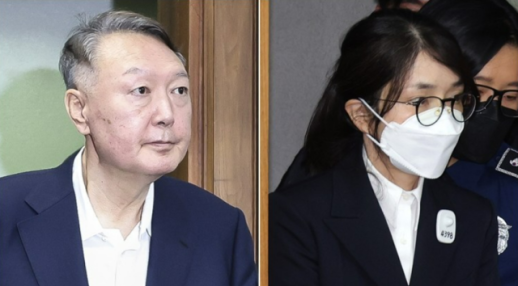 Yoon Suk Yeol and Kim Geon-hee's Supreme Court Appeal Advances The Supreme Court is set to hear the appeal of former President Yoon Suk Yeol and his wife, Kim Geon-hee, after their sentences were increased in the appeals court. According to legal sources on May 10, the Supreme Court is expected to begin proceedings for the couple's appeal case soon. On May 6, the Supreme Court received the records of Yoon's case regarding allegations of obstructing the Corruption Investigation Office's arrest. The formal assignment of the case to a designated panel and presiding justice has not yet occurred. The case involves five allegations against Yoon, including violations of the right to deliberate and vote on martial law by cabinet members, the post-facto creation and destruction of martial law declarations, issuing false public announcements after declaring martial law, instructing the deletion of classified phone records, and obstructing the execution of arrest warrants. This is the first criminal appeal trial for Yoon related to the martial law situation, and it is the 'first case' handled by the dedicated insurrection trial division established at the Seoul High Court. Yoon was previously indicted on charges of obstructing special public duties and abusing his authority, and on January 16, he was sentenced to five years in prison in the first trial, prompting an appeal. On April 29, the appeals court increased his sentence to seven years, adding two years to the original term. The appeals court reversed the first trial's not guilty verdict on charges of false advertising against foreign media (abuse of authority) and violations of the deliberation rights of the ministers of Land, Infrastructure and Transport, and Trade, Industry and Energy, as well as allegations of instructing the overseas publicity secretary to issue false information. Kim Geon-hee, who has been indicted on charges related to stock manipulation and receiving money from the Unification Church, is also preparing for her appeal. Initially, the first trial found her not guilty of violating capital market laws and political funding laws related to a 'free opinion poll' involving Nam Tae-kyun, while partially convicting her of soliciting bribes under the specific crimes aggravated law related to the Unification Church, resulting in a sentence of one year and eight months. On April 28, the appeals court more than doubled her sentence to four years. The appeals court determined that Kim was a 'co-offender' in the stock manipulation case and interpreted the timing of the stock manipulation offenses in relation to the statute of limitations differently than the first trial. While the first trial did not find her complicit with the stock manipulation group, the appeals court concluded that she had participated knowingly and as a co-conspirator. Additionally, the appeals court divided the trading periods into three phases: the first (October 2010 to January 2011), the second (March 30, 2011), and the third (July to August 2012). Unlike the first trial, which ruled that the first and second phases were barred by the statute of limitations, the appeals court viewed these as a single crime (continuing offense) and deemed them punishable. The appeal trial will focus on legal interpretations where the first and second trials diverged, as it is a legal review rather than a factual one. Key issues in Kim's case will include the conspiracy in stock manipulation, the recognition of continuing offenses, and the application of the statute of limitations. In Yoon's case, attention will be on the establishment of abuse of authority and the interpretation of martial law-related authority. There is also interest in whether the Supreme Court will meet the three-month ruling deadline stipulated in the special investigation law. According to the law, the deadline for Kim's case is July 28, and for Yoon's case, it is July 29. However, since these are not mandatory provisions, there may be a focus on careful deliberation over speed.* This article has been translated by AI. 2026-05-11 03:01:50
 -
 KOSPI Surges Past 7,000 as Demand for Borrowing Hits Record 40 Trillion Won KOSPI has surpassed the 7,000 mark for the first time, leading to a significant influx of funds from individual investors into the stock market. The demand for borrowing to invest in stocks has surged, pushing the balance of minus accounts to a record 40 trillion won. Meanwhile, demand deposits have decreased for the second consecutive month, prompting some banks to raise interest rates on deposits.As of May 7, the balance of minus accounts at the five major banks—KB Kookmin, Shinhan, Hana, Woori, and NH NongHyup—stood at 40.5029 trillion won. This marks an increase of 715.2 billion won in just three business days since the end of April, when the balance was 39.7877 trillion won. The current balance is the highest since January 2023, when it reached 40.5395 trillion won. In terms of monthly growth, this is the largest increase in two years and seven months, surpassing the previous high in October 2023.This surge is attributed to a combination of household loan regulations and the rise in KOSPI. The balance of minus accounts began to expand significantly in October 2022, reaching over 40 trillion won by the end of November 2022. As various regulations, including the June 27 and October 15 real estate measures, reduced the limits on mortgage loans, the balance of minus accounts increased sharply. The recent rise in KOSPI past 7,000 has further fueled this increase.In May, over 5 trillion won has exited from demand deposits, reflecting expectations of continued stock market growth. The balance of demand deposits at the five major banks was 696.0511 trillion won as of May 7, down 5.013 billion won from 696.5524 trillion won at the end of April. This follows a decrease of 3.3557 trillion won in April, indicating a trend of funds leaving for two consecutive months.In response to this situation, some banks are taking defensive measures to retain deposits. NH NongHyup Bank has raised the interest rate on its NH All One e-deposit from 2.95% to 3.10%. KakaoBank and K-Bank have also introduced deposit products with interest rates over 3%. However, there are predictions that these rate increases may not significantly alter the flow of funds. A financial industry source stated, "In a situation where stock prices have risen by more than 10%, even a slight increase in interest rates is unlikely to stop the movement of funds."* This article has been translated by AI. 2026-05-11 03:00:15
 -
 Seoul Mayoral Candidates Unveil Pet and Transportation Policies Seoul mayoral candidates Jung Won-oh of the Democratic Party and Oh Se-hoon of the People Power Party each unveiled their respective policies on pets and transportation on May 10, aiming to capture voter attention during the holiday period. Jung announced his "Happy Pet Family Seoul" pledge on his Facebook page in the morning and later visited a pet training and stray dog shelter at the Gyeongdong Market to hear from the community. The core of his proposal is to establish a welfare system for pets that covers everything from adoption to care, medical treatment, and burial. As part of this initiative, he plans to gradually implement a "standard veterinary fee system" to reduce the financial burden of pet medical expenses. Jung stated, "Excessive medical costs lead to abandonment and anxiety in pet ownership," adding, "We will create an environment where pet owners can care for their animals with transparency and predictability in costs." The Seoul Animal Welfare Support Center will be expanded into a central hub for animal welfare, assisting with reporting, rescue, care, medical treatment, adoption, and relocation of stray and lost animals. Plans are in place to establish public pet boarding facilities and dog parks in all 25 districts. Jung emphasized, "We will create a new standard for coexistence and respect between pet owners and non-pet owners in Seoul." Oh Se-hoon, on the same day, announced his transportation policy at his campaign office in Gwancheol-dong, focusing on enhancing transportation infrastructure in northeastern, northwestern, and southwestern Seoul, as well as integrating the climate card and expanding its application. Oh pledged to invest 20.8 trillion won to focus on "connecting transportation arteries." He aims to expedite the completion of seven urban rail lines, including the Gangbuk Cross-Line, Myeonmok Line, Western Line, Mokdong Line, Nankok Line, Uiwisinsel Extension Line, and the Northeast Line. Funding will come from public contributions and revenue from the sale of public land through the "Gangbuk Renaissance Fund." This fall, he plans to introduce the "Seoul Climate Companion Pass," which will integrate the climate card created during his previous term with the government’s K-Pass. This pass will expand its usage to include the GTX-A and the Seoul section of the Shinbundang Line, and extend eligibility for young people up to 42 years old. Citizens aged 70 and above who use public transport fewer than 15 times a month will receive a 100% subsidy for transportation costs. Additionally, a wireless communication-based train interval maintenance system will be introduced to efficiently reduce subway wait times, and the number of autonomous express buses and late-night buses will be significantly increased, starting with a service at 3:30 a.m. Oh stated, "Transportation is one of the most important policies related to the quality of life for Seoul citizens, alongside housing," and assured that he would ensure a solid financial plan so that citizens would not worry about feasibility. Meanwhile, Oh reiterated his call for a one-on-one debate with Jung. After his policy announcement, Oh told reporters, "It is unfortunate that Jung has declined to participate in the one-on-one debate scheduled for May 11 following the Kwanhun Debate." He added, "We need an opportunity to discuss housing supply, price stabilization, and the real estate issues stemming from the Lee Jae-myung administration's loan regulations and tax increases, and to show this to the citizens."* This article has been translated by AI. 2026-05-11 02:58:34
 -
 NATO Proposes Satellite Launch Cooperation with South Korea, Japan, Australia, and New Zealand NATO has proposed participation in its satellite launch cooperation initiative, known as the "StarLift" plan, to South Korea, Japan, Australia, and New Zealand, four partners in the Indo-Pacific region. According to the Nihon Keizai Shimbun (Nikkei) on May 10, NATO has recently reached out to these four countries regarding their involvement in the StarLift initiative. The StarLift plan aims to quickly launch replacement satellites using the launch facilities of partner nations in the event of issues with existing satellites or launch equipment, with a focus on restoring satellite networks. Both military and commercial satellites are expected to be included in this initiative. NATO has reported that China and Russia are enhancing their military capabilities in space, particularly through reconnaissance satellites. As countries expand their networks of reconnaissance and communication satellites, concerns have grown over potential interference or destruction of satellites, especially following reports of Russian satellites tracking others. In response to the potential for attacks in space, NATO initiated the StarLift plan in 2024, with participation from over ten member countries, including France, Germany, and Italy. The Nikkei reported that the Japanese government has responded positively to NATO's proposal and is currently coordinating among relevant ministries. However, Japan will need a separate agreement to participate, and there are numerous logistical issues to address, including the transportation procedures for launch facilities and related equipment across borders. South Korea, Japan, Australia, and New Zealand, which received the proposal, are part of the four Indo-Pacific partners (IP4) that NATO has been seeking to strengthen cooperation with. NATO is expanding its connections with these partner countries not only in traditional land, sea, and air operations but also in new security domains such as space and cyberspace. Japan's cooperation with NATO in space is also becoming more concrete. The Nikkei reported that Japan has confirmed its participation in NATO's "SpaceNet" initiative, which discusses how to utilize necessary security technologies with companies in the space industry. The Japanese government plans to compile a list of relevant companies to discuss cooperation with NATO.* This article has been translated by AI. 2026-05-11 02:57:14
 -
 Banks Embrace Inclusive Finance Amid Caution as Authorities Push for Public Finance The financial authorities are set to launch an 'Inclusive Finance Task Force' soon, marking a significant step toward publicizing the financial sector's role as emphasized by President Lee Jae-myung. While the heads of major commercial banks express support for the government's initiative to expand inclusive finance, they also voice concerns about uniform target setting and evaluations focused on short-term results. According to the financial sector on May 10, the Financial Services Commission plans to hold a kickoff meeting for the Inclusive Finance Task Force (tentative name) this month. Specific preparations, including the formation of subcommittees and agenda discussions, are currently underway. The establishment of the task force follows recent strong expressions from the Blue House regarding the public functions of finance. President Lee pointed out during a Cabinet meeting on May 6 that he feels “the public nature of financial institutions is too weak.” Kim Yong-beom, head of the Blue House Policy Office, also criticized the issue of financial exclusion for low- and medium-credit individuals as a “structural contradiction that has been meticulously neglected.” The task force is expected to discuss a wide range of topics, primarily focusing on reforming the credit evaluation system. Changes are anticipated in the current credit assessment methods, which fail to adequately reflect the future potential of individual borrowers. Additionally, the task force will address issues related to the existing lending system, which primarily serves high-credit borrowers while imposing barriers for those with medium to low credit scores. In response to the government's direction, the heads of major commercial banks generally expressed agreement. A survey conducted by Yonhap News among five major bank leaders, including Lee Hwan-joo of KB Kookmin Bank, Jung Sang-hyuk of Shinhan Bank, Lee Ho-sung of Hana Bank, Jeong Jin-wan of Woori Bank, and Kang Tae-young of NH Nonghyup Bank, revealed that none of the bank heads denied the public nature of banks. All bank leaders acknowledged that “banks have a quasi-public institution nature,” stating, “While banks operate as businesses based on market principles, they conduct operations on a public foundation that includes state authorization, trust, depositor protection, and financial stability, which imposes a much higher level of public nature and social responsibility than ordinary companies.” Regarding the criticism that vulnerable borrowers are excluded from the existing credit evaluation system, they noted, “It is time to evolve from a simple selective finance model to a data and technology-based 'discovery finance.' We are enhancing financial accessibility through the advancement of credit evaluation by combining existing financial data with non-financial alternative data.” However, there were overall concerns about evaluating how much inclusive finance has been implemented and the potential for profit or loss based on that evaluation. One bank leader pointed out, “If the expansion of uniform inclusive finance is evaluated solely based on loan volume or interest rates, it could ultimately burden the real economy and increase risks across the market in the long run.” Other bank leaders also expressed worries that “excessive interest rate reductions or debt relief could create a sense of relative deprivation and moral hazard for diligent repayers,” and that “a focus on short-term results could distort market functions and worsen soundness,” potentially burdening the autonomy and stability of financial institutions.* This article has been translated by AI. 2026-05-11 02:55:10