
Journalist

Seo Hye Seung
-
 JLR Korea Wraps Up '2026 Destination Defender' Off-Road Event in Jincheon JLR Korea is seeking to strengthen its brand competitiveness by emphasizing the off-road capability of its flagship Defender model. The company said April 28 that it successfully concluded the '2026 Destination Defender' event, held for three days starting April 17 in Jincheon, North Chungcheong Province. Now in its fourth year, Destination Defender is a customer event built around the Defender philosophy of "going beyond the impossible," bringing together owners and fans who share the brand’s outdoor lifestyle and spirit of adventure. During the event, JLR Korea unveiled the Defender Octa Black for the first time and offered hands-on driving experiences. The Defender Octa Black uses Narvik Black — described as the purest black in the palette — as its exclusive exterior color, finished in gloss for a deeper tone. Equipped with a 4.4-liter twin-turbo mild-hybrid V8 engine, it produces 635PS and 76.5 kg·m of torque, delivering strong performance on and off road. Visitors drove on off-road courses and a circuit set up at the Belleforet Moto Arena motorsports venue, experiencing the Defender’s limits across mixed conditions. The off-road program expanded to 15 courses from nine last year, adding sand and mogul-style terrain to hills, water crossings and mud in what the company called its largest and toughest setup yet. On the circuit, participants ran straightaways and winding sections to gauge on-road performance. JLR Korea said the Defender Octa Black reaches 100 kph from a standstill in 4.0 seconds. The model is fitted with 6D Dynamics suspension, designed to provide stable, precise handling across varied surfaces. The event also included a special program marking the launch of the global adventure event 'Defender Trophy,' which the company said symbolizes the Defender spirit of adventure. "As Destination Defender reaches its fourth edition, it is meaningful to share the Defender spirit of adventure with more customers," said Robin Colgan, head of JLR Korea. "By giving people a chance to experience the Defender’s performance firsthand in diverse driving environments, we will continue to spread the brand’s value in everyday life."* This article has been translated by AI. 2026-04-28 16:21:19
 -
 Hotel, Duty-Free and Casino Shares Rise on Expectations for Early May Holiday Travel With an early May holiday stretch approaching, shares tied to hotels, casinos and duty-free shopping have been climbing on expectations of a travel boost. The gains come as foreign visitor numbers to South Korea have been rising, adding to optimism for a holiday-driven pickup in tourism and spending. According to the Korea Exchange on the 28th, major tourism and consumer-related stocks including Hotel Shilla, Hyundai Department Store and Lotte Tour Development posted steady gains over the week from the 20th to the 27th, holding up relatively well despite broader market volatility. Hotel Shilla extended its rally to seven straight sessions and closed up 5.31% at 69,400 won, compared with the previous trading day. The move is widely seen as reflecting expectations that more foreign tourists will arrive during the holiday period. Investors have been encouraged by a recovery in short-haul travel demand, particularly from China and Japan, fueling forecasts that more visitors will come to South Korea over the break. Industry watchers also view the broader inbound trend as improving. As tourism demand that had been gradually recovering after COVID-19 becomes more evident this year, analysts say expectations are growing for better results across duty-free, hotel and casino businesses. Some individual names have also drawn attention. GS P&L, which operates its own hotel chain including the Parnas Hotel in Seoul’s Samseong-dong, has seen its share price rise steadily since the 22nd, a move attributed to expectations for stronger hotel demand being priced in. Securities firms have offered upbeat assessments of the current inbound cycle. Lee Jin-hyeop, an analyst at Hanwha Investment & Securities, said, “The current domestic inbound cycle is better than Japan’s cycle in 2023 to 2024,” citing signs of a recovery in China’s economy this year and a stronger yuan reflecting that trend. Still, some in the market cautioned that the post-holiday trajectory will matter. With part of the holiday optimism already reflected in prices, the key variable for share performance will be whether actual tourist arrivals and spending meet expectations.* This article has been translated by AI. 2026-04-28 16:19:39
 -
 KOVO Names Lee Ho-jin as Its Ninth President The Korea Volleyball Federation (KOVO) has appointed Lee Ho-jin, former chairman of Taekwang Group, as its ninth president. KOVO said it made the appointment at a board meeting and extraordinary general meeting held on the 28th at its conference room in Sangam-dong, Mapo-gu, Seoul. Team general managers had agreed at a meeting on the 18th to recommend Lee as the next president, and he accepted. His three-year term begins in July. KOVO said Lee was recommended for his strong willingness to lead the federation and for advantages as an owner of a club. It said having an owner serve as president was viewed as enabling more stable, long-term planning for league development, youth programs and international projects. The federation also cited Lee’s long-standing support for volleyball, following his father, the late former chairman Lee Im-yong. Taekwang Group has been closely tied to Korean volleyball for 55 years since founding the Taekwang Industries volleyball team in 1971, the predecessor of the women’s professional team Heungkuk Life. The group also runs volleyball programs at its affiliated Sewha Middle School and Sewha High School, focusing on identifying and developing prospects. Lee graduated from Seoul National University with a degree in economics, earned an MBA at Cornell University, and completed doctoral coursework in economics at New York University. He joined Heungkuk Life Insurance in 1993 and later served as CEO and chairman of Taekwang Industries. Since February, he has also served as owner of the Heungkuk Life volleyball club. KOVO said Lee helped stabilize the federation’s finances by securing Heungkuk Life Insurance as the V-League title sponsor for three years starting with the 2026~2027 season. It said he plans to work to raise the profile of professional volleyball and strengthen its international competitiveness.* This article has been translated by AI. 2026-04-28 16:18:53
 -
 Rentokil Initial Korea promotes toilet seat cleaner service for public restroom hygiene Public restrooms used by many people can look clean but still harbor hygiene blind spots. Toilet seats, in particular, can be exposed to bacteria and viruses including E. coli, Staphylococcus aureus and enterococci. The company also noted that flushing can disperse contaminants into the air, a so-called “sneeze effect,” underscoring the need for careful management. Because many users repeatedly touch the same surfaces, the gap between visible cleanliness and actual microbial contamination can be significant, with a constant risk of cross-contamination. High-contact points such as toilet seats, flush levers and door handles are widely seen as core areas for hygiene control, driving demand for approaches that let users supplement routine cleaning themselves. To address those risks, Rentokil Initial Korea said it is operating its “Initial toilet seat cleaner service.” The service allows users to spray cleaner onto toilet paper and wipe the seat themselves, enabling an immediate hygiene check without complicated steps. The company said the approach expands responsibility beyond facility operators to users, helping cover blind spots in shared-space sanitation. The service can also be used on frequently touched areas such as door handles and flush levers, which the company said can help reduce contact-based infection risks. Rentokil Initial Korea said professional technicians visit regularly to replenish supplies and inspect equipment, creating an ongoing maintenance system rather than a one-time installation. The company said that can ease the burden on facility staff while helping maintain a consistent level of hygiene quality. Industry observers also point to public restrooms as a factor that can shape the overall image of a building or store. Perceived hygiene levels are closely tied to user experience and can influence brand trust and willingness to return, they said. With public awareness of hygiene standards rising, detailed management focused on touch points and the adoption of professional solutions are increasingly viewed as essential, according to the analysis. Separately, Rentokil Initial Korea said it is running a “referral promotion” from Jan. 1, 2026, to Dec. 31, 2026, to expand access to its premium hygiene services. The program targets existing customers and people who have used the service in the past, and is designed to broaden new customer contacts through recommendations based on firsthand experience. * This article has been translated by AI. 2026-04-28 16:18:04
 -
 Seohui Construction Posts 144.4 Billion Won Operating Profit, Eyes Housing Law Easing Seohui Construction said it has defended earnings on the back of a stable financial structure and expectations of policy tailwinds, reaffirming its position in the local housing cooperative market. The company said Monday that it posted a debt-to-equity ratio of 49.6% last year and achieved operating profit of 144.4 billion won. Seohui Construction said it increased capital while reducing debt, earning an assessment that its financial health ranks among the industry’s upper tier. As more builders see profitability squeezed by high interest rates and rising raw material costs, the company attributed its performance to a selective strategy focused on projects with stronger returns. Market watchers say Seohui Construction could be a major beneficiary if a Housing Act revision under discussion at the National Assembly passes. The bill would ease the land-ownership requirement for local housing cooperative projects to about 80% from 95%. The change could shorten project timelines and cut financing costs, raising expectations for broader activity in the sector. Industry officials expect Seohui Construction, which has built experience and management capabilities in such projects, to benefit directly from the policy shift. A Seohui Construction official said the company uses an in-house feasibility analysis system to screen for strong project sites with a lower risk of conflict, adding that it expects a significant first-mover advantage after any policy revision. The company is also broadening its portfolio beyond cooperative housing. Seohui Construction recently signed a construction contract for a small-scale housing redevelopment project in Mok-dong, Yangcheon District, entering Seoul’s redevelopment market. It was also named preferred bidder for zones 5 and 6 of the Siheung 5-dong Moa Town project in Geumcheon District, expanding its foothold in urban renewal. Seohui Construction said it is widening its scope to include public housing, Moa housing and trust-based redevelopment projects. Another company official said it plans to strengthen product competitiveness through steps such as launching a new brand and to further solidify its position in urban redevelopment on the back of a stable earnings base.* This article has been translated by AI. 2026-04-28 16:13:02
 -
 Korea’s Completed Unsold Homes Top 30,000 as Mid- to Large-Size Units Pile Up Outside Seoul Completed but unsold homes nationwide — often called “distressed” inventory — have topped 30,000 units, with unsold stock rising fastest in non-capital regions and in mid- to large-size housing, deepening structural imbalances in the market. An analysis of the Ministry of Land, Infrastructure and Transport’s unsold-housing data for the past five years showed that as of February, completed but unsold homes stood at 31,307 units, setting a record high for the sixth straight month. Their share of all unsold homes also surged to 47.3% from 11.3% in 2023. The increase has been most pronounced in larger homes. Unsold mid-size units (60 to 85 square meters of exclusive floor area) totaled 20,524, accounting for 65.6% of the total. Unsold large units (over 85 square meters) reached 4,960, up 107% from a year earlier — the steepest rise among size categories. By contrast, smaller units (40 square meters or less and 40 to 60 square meters) fell or held steady, suggesting demand is absorbing them. Regional gaps were also clear. Jeju (36%), Daegu (31%) and Ulsan (30%) had relatively high shares of units over 85 square meters, while Seoul’s unsold homes were overwhelmingly small units, at 94%. As unsold inventory worsens outside the capital area, the buildup is increasingly concentrated in mid- to large-size homes. The trend is widely attributed to end-user demand clustering in smaller, less expensive homes. Analysts cited high interest rates and tighter lending rules that raise financing burdens, along with shifting demand as one- and two-person households increase. A construction company official said, “The larger the home, the heavier the price burden, and when households aren’t large, they tend to avoid mid- to large-size homes,” adding that as investment demand fades and the market shifts toward owner-occupiers, unsold mid- to large-size units are rising in provincial areas. The burden is concentrated outside the capital region. Of all completed but unsold homes, 27,015 units — 86.3% — were in non-capital areas, with Chungnam (65.5%), Busan (58.5%) and Incheon (44.2%) posting large increases over the past year. The backlog is feeding stress in the construction sector. The Construction Industry Knowledge Information System, known as KISCON, reported 1,088 business-closure filings in the first quarter, up 17.6% from a year earlier, with about 60% coming from non-capital firms. The Korea Research Institute for Construction Policy said the rise in closures reflects a structural shift, not just a normal cycle, as financially weak companies make up a larger share of the industry. It cited higher financing costs from rising rates, a construction slowdown and worsening profitability from accumulated unsold homes, compounded by a global slowdown and growing unpaid construction receivables — weakening liquidity and financial soundness at the same time. Song Seung-hyeon, head of City and Economy, said closures are being driven by a combination of mounting provincial unsold inventory, rising construction costs and heavier financing burdens. “With weak sales blocking cash recovery, higher material and labor costs and high interest rates are overlapping, spreading a liquidity crisis centered on small and midsize builders,” he said. He added that steps should include expanding purchases of unsold homes, supporting project-finance lending and stabilizing construction costs, while also restructuring troubled projects. 2026-04-28 16:12:01
 -
 Google DeepMind chief meets South Korean business leaders to expand AI cooperation SEOUL, April 28 (AJP) - Demis Hassabis, CEO and co-founder of Google DeepMind, held a series of meetings in Seoul on Tuesday with the heads of major South Korean conglomerates including Hyundai Motor and LG Group, according to industry sources. Hassabis reportedly met with Hyundai Motor Chairman Chung Eui-sun earlier in the day and later met with LG Group Chairman Koo Kwang-mo to discuss cooperation aimed at expanding partnerships in artificial intelligence (AI)-related areas. Hassabis, who arrived in Seoul the previous day, met with President Lee Jae Myung at Cheong Wa Dae. He also signed a memorandum of understanding (MOU) with the Ministry of Science and ICT to expand cooperation including plans to open Google DeepMind's first AI center in the country later this year for joint research and collaboration with local researchers and startups. His visit this week came for the first time in about a decade since his trip in 2016 for the best-of-five match between the U.K.-based lab's AI program AlphaGo and baduk or go champion Lee Se-dol. Managing a single win in the five-match series, Lee conceded victory to a then two-year-old AI system, contrary to hopes among many that he would decisively prove the superiority of 3,000 years of human ingenuity over a mere machine. Hassabis is set to meet the world champion again at a forum in the capital scheduled for Wednesday. 2026-04-28 16:11:51
 -
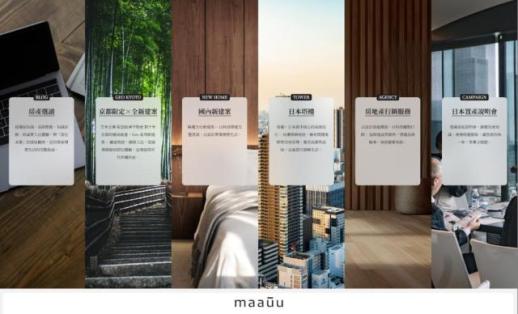 Hankyu Hanshin Real Estate to Broker Japanese Home Sales in Taiwan via maauu Platform Hankyu Hanshin Real Estate said April 24 it signed a business partnership agreement with Taiwan’s 細細生活網路科技, which operates the overseas property sales platform maauu (也有房產). Under the partnership, Hankyu Hanshin Real Estate will provide brokerage services on maauu for home sales involving properties it handles in Japan. The company said interest in and demand for Japanese real estate has been rising in Taiwan, and that the tie-up will allow it to serve Taiwanese customers more closely. It said it aims to expand access to efficient, transparent and reliable brokerage services centered on the homes it handles, along with rental management services that oversee property operations and management. * This article has been translated by AI. 2026-04-28 16:11:04
 -
 Uzbekistan's tax revenues jump 54 percent as regional business activity accelerates SEOUL, April 28 (AJP) - Uzbekistan tax revenues surged 54 percent in the first quarter of 2026 compared to the same period last year, driven by a sharp uptick in provincial commercial activity and property-related receipts. This jump in tax revenues indicates that Uzbekistan's fiscal reforms are effectively capturing a much larger share of domestic wealth, transforming a previously informal economy into a transparent and sustainable national budget. Figures released by the Center for Economic Research and Reforms (CERR) on Tuesday indicate that the fiscal expansion was most pronounced in the Navoi, Syrdarya, Tashkent, and Khorezm regions, where average growth rates hit 33 percent. This jump in collections suggests that the national push to formalize the private sector and broaden the tax base is gaining traction outside the traditional economic center of the capital. The shift reflects a widening of the country's economic geography, as industrial hubs and agricultural regions now contribute a more significant share to the national bottom line. Land tax revenues grew by 33.8 percent and personal income tax receipts rose by 15.2 percent, while customs revenues saw a nationwide increase of 19.5 percent. The Navoi region proved to be a major outlier in trade activity, recording a 77.6 percent spike in customs receipts, followed by the Namangan region at 64.2 percent. Export performance mirrored the domestic gains, with total merchandise exports climbing 30 percent during the quarter. Navoi again led the country with a 71.4 percent increase in export volume, while the Tashkent region recorded 52.4 percent growth. Other regions, including Samarkand, Namangan, and Bukhara, maintained steady export trajectories with growth ranging between 27 percent and 31 percent. These figures indicate that regional manufacturing and processing capabilities are increasingly linking provincial economies directly to international markets. Lending activity provided the liquidity necessary to sustain this growth, as commercial banks increased loan disbursements by 9.1 percent. The Samarkand region saw the most aggressive expansion in credit, with loan volumes soaring 69.5 percent, while lending in the Bukhara, Khorezm, Fergana, and Tashkent regions grew by an average of more than 43 percent. This capital injection coincided with the registration of 22,443 new business entities in March. While the city of Tashkent remains the primary site for new firms with 4,759 registrations, the Khorezm and Samarkand regions combined for nearly 4,000 new enterprises. Market institutionalization also showed gains, as trading volume on the Uzbek Republican Commodity Exchange rose 20.8 percent. The Syrdarya region recorded the highest growth in exchange activity at 68.4 percent, while the Navoi and Namangan regions averaged 33 percent increases. Property tax revenues grew by 10.7 percent nationwide during the review period. Customs revenues in the Republic of Karakalpakstan and the Samarkand region increased by an average of 32 percent. 2026-04-28 16:09:51
 -
 South Korea to Shift High-Speed Rail Signaling to Homegrown KTCS-2, Aiming for $1.2B Savings South Korea is moving to replace foreign-dependent high-speed rail signaling with the Korean Train Control System, known as KTCS-2. The shift is expected to cut costs by about 1.2 trillion won, and the National Railroad Authority said it will also cover the cost of retrofitting onboard equipment, accelerating efforts to standardize the system nationwide. The authority said Monday it will move this month to tender construction contracts for three sections of the Honam high-speed line (Osong~Iksan~Gwangju Songjeong). It will also begin design work for parts of the Gyeongbu Line where high-speed and conventional rail intersect, including the Seoul~Gwangmyeong section and the Daegu urban area. Design work is also set this month for the Daejeon and Daegu urban sections and for the Geoncheon connection line~Pohang section, where KTX and SRT services mainly operate. Once procurement is completed through an August tender for the Suseo high-speed line (Suseo~Jije), the localization of signaling on major high-speed routes is expected to move fully into implementation. The authority is pursuing a roadmap to integrate the national high-speed rail network into a single signaling system by 2028. KTCS-2 is a Korean train control system developed under the authority’s lead by 13 public and private organizations. It is described as the first in the world to control trains through a fourth-generation wireless network, LTE-R. Train control systems are central to rail operations and control, and South Korea has relied on foreign technology, including French systems known as ATC, which the authority said has driven up costs and caused delays when systems are expanded or modified. A core component of KTCS-2 is the radio block center, or RBC, which generates real-time control information based on train location and transmits it wirelessly to trains via LTE-R to calculate optimal operating speeds. The RBC has received the highest safety integrity certification, SIL4, from the international safety assessment body TUV SUD of Germany, the authority said. The most immediate impact is expected to be economic. The authority said its analysis shows that localizing trackside signaling equipment across 643.1 kilometers (399.6 miles) of high-speed lines could reduce project costs by about 94%, or 1.2149 trillion won, compared with existing systems. It said savings are expected to grow further in maintenance as reliance on imported parts and licensing fees declines. The authority said it will also invest about 254.1 billion won to retrofit onboard signaling equipment for 118 KTX and SRT trainsets. An industry official said the move is intended to push standardization by removing the risk that operators might hesitate to adopt the domestic system due to upfront costs. Operational changes are also expected. With wireless, real-time control, the authority said safe separation between trains could be reduced to 8.1 kilometers (5.0 miles) from 10.5 kilometers (6.5 miles), raising line capacity by at least 1.2 times. It also said the probability of failures could be 5.81 times lower than with existing ATC systems, improving on-time performance. A National Railroad Authority official said, “The introduction of KTCS-2 is significant in that it completes rail technology self-reliance by moving away from overseas dependence,” adding that the authority will seek global competitiveness by upgrading to KTCS-3, a next-generation system that includes automatic train operation, or ATO. * This article has been translated by AI. 2026-04-28 16:05:54