

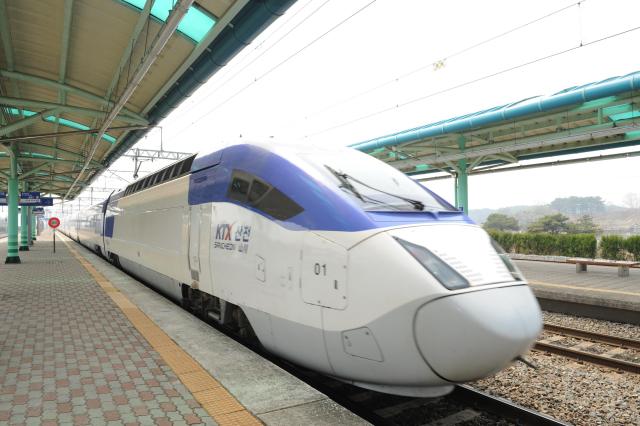
South Korea is moving to replace foreign-dependent high-speed rail signaling with the Korean Train Control System, known as KTCS-2. The shift is expected to cut costs by about 1.2 trillion won, and the National Railroad Authority said it will also cover the cost of retrofitting onboard equipment, accelerating efforts to standardize the system nationwide.
The authority said Monday it will move this month to tender construction contracts for three sections of the Honam high-speed line (Osong~Iksan~Gwangju Songjeong). It will also begin design work for parts of the Gyeongbu Line where high-speed and conventional rail intersect, including the Seoul~Gwangmyeong section and the Daegu urban area. Design work is also set this month for the Daejeon and Daegu urban sections and for the Geoncheon connection line~Pohang section, where KTX and SRT services mainly operate.
Once procurement is completed through an August tender for the Suseo high-speed line (Suseo~Jije), the localization of signaling on major high-speed routes is expected to move fully into implementation. The authority is pursuing a roadmap to integrate the national high-speed rail network into a single signaling system by 2028.
KTCS-2 is a Korean train control system developed under the authority’s lead by 13 public and private organizations. It is described as the first in the world to control trains through a fourth-generation wireless network, LTE-R. Train control systems are central to rail operations and control, and South Korea has relied on foreign technology, including French systems known as ATC, which the authority said has driven up costs and caused delays when systems are expanded or modified.
A core component of KTCS-2 is the radio block center, or RBC, which generates real-time control information based on train location and transmits it wirelessly to trains via LTE-R to calculate optimal operating speeds. The RBC has received the highest safety integrity certification, SIL4, from the international safety assessment body TUV SUD of Germany, the authority said.
The most immediate impact is expected to be economic. The authority said its analysis shows that localizing trackside signaling equipment across 643.1 kilometers (399.6 miles) of high-speed lines could reduce project costs by about 94%, or 1.2149 trillion won, compared with existing systems. It said savings are expected to grow further in maintenance as reliance on imported parts and licensing fees declines.
The authority said it will also invest about 254.1 billion won to retrofit onboard signaling equipment for 118 KTX and SRT trainsets. An industry official said the move is intended to push standardization by removing the risk that operators might hesitate to adopt the domestic system due to upfront costs.
Operational changes are also expected. With wireless, real-time control, the authority said safe separation between trains could be reduced to 8.1 kilometers (5.0 miles) from 10.5 kilometers (6.5 miles), raising line capacity by at least 1.2 times. It also said the probability of failures could be 5.81 times lower than with existing ATC systems, improving on-time performance.
A National Railroad Authority official said, “The introduction of KTCS-2 is significant in that it completes rail technology self-reliance by moving away from overseas dependence,” adding that the authority will seek global competitiveness by upgrading to KTCS-3, a next-generation system that includes automatic train operation, or ATO.
* This article has been translated by AI.
Copyright ⓒ Aju Press All rights reserved.