
Journalist

Seo Hye Seung
-
 Seoul's Housing Market Faces Supply Crunch Amid Increased Capital Gains Tax With the reintroduction of higher capital gains tax rates for multiple homeowners, the Seoul apartment market is expected to enter a significant supply crunch phase. Following the tax's reinstatement, homeowners in the Gangnam area are opting to hold onto their properties, driven by expectations of future redevelopment, while lower-priced areas are experiencing rental market pressures that could further drive up prices. Although regional trends may vary, the overall market sentiment remains consistent. According to industry sources, after the sale of tax-advantaged properties in Gangnam, homeowner expectations have surged. A representative from a real estate agency near Eunma Apartment in Daechi-dong stated, "Only listings with higher asking prices remain now," adding that in redevelopment zones, sellers are eager to increase prices by millions of won depending on the permitting stage. The representative noted, "Once the business implementation permit is granted for Eunma, prices are expected to rise further," and warned of a potential inventory shortage in the future as the tax exemption period has ended. The speed of the supply crunch in Gangnam has already begun to reflect in prices. As of the first week of May, Songpa-gu (0.17%) and Seocho-gu (0.04%) saw price rebounds following the absorption of tax-advantaged listings. As multiple homeowners who missed the opportunity to sell during the tax exemption period shift towards holding or gifting their properties, the influx of new listings is expected to be further restricted. Under the new tax rates effective from May 10, the effective tax rate for homeowners with three or more properties could reach as high as 82.5%, including local income taxes. Industry analysts suggest that this tax burden paradoxically discourages multiple homeowners from listing their properties. A representative from a real estate agency in Daechi-dong remarked, "Homeowners who did not sell during the exemption period have already shifted towards gifting or long-term holding," predicting that this trend will solidify after May 10. Currently, there are no clear variables to reverse the supply crunch, while the government's review of long-term holding tax exemptions is being watched as a potential factor for new listings. A broker in Daechi-dong stated, "If the requirements for long-term holding tax exemptions are tightened, homeowners in the 5-10 year holding period may consider selling," but cautioned that uncertainties remain, including the need for cabinet approval. In the outer areas of Seoul, a different dynamic of supply reduction and price increases is at play. Following the depletion of tax-advantaged listings, a shortage of rental properties is intensifying, leading to increased demand from newlyweds and those seeking to separate households. A representative from a real estate agency in Dongdaemun-gu noted, "With no rental listings available, clients are inevitably turning to the purchase market," and added that the absence of urgent sales and rental options is likely to persist until the second half of the year. Experts warn that the reintroduction of the capital gains tax will likely increase upward pressure on prices in outer Seoul as well. Despite indications of further government regulations, it is anticipated that rental prices, particularly in mid- to low-tier areas, will continue to rise, with sales prices following suit for the foreseeable future. Kim In-man, head of the Kim In-man Real Estate Research Institute, stated, "The price adjustments seen in the Han River belt area in February and March were not indicative of a trend but rather a temporary phenomenon driven by sellers looking to avoid the capital gains tax," adding that the Gangnam area and the Han River belt are already showing signs of recovery, with prices in areas below 1.5 billion won expected to maintain an upward trend. Lee Eun-hyung, a researcher at the Korea Construction Policy Institute, also noted, "The price trend is likely to continue rising in key areas," and emphasized that considering domestic and international variables, it will be challenging for prices in outer Seoul to decline significantly.* This article has been translated by AI. 2026-05-10 13:03:23
 -
 Pearl Abyss Projects Record Q1 Revenue of 300 Billion Won Driven by 'Crimson Desert' Success Pearl Abyss is projected to achieve record revenue of around 300 billion won in the first quarter of this year, driven by the rapid success of its newly launched game, 'Crimson Desert,' which debuted globally in March. According to analysts on May 10, Pearl Abyss is expected to announce its Q1 results on May 12, reporting revenue of 311.9 billion won, operating profit of 143.5 billion won, and net profit of 110.4 billion won. This represents a 272% increase compared to 83.7 billion won during the same period last year. The previous record for Q1 revenue was set in 2019, influenced by the launch of 'Black Desert Mobile' in Japan and 'Black Desert' on Xbox One in North America and Europe, which generated 130.8 billion won. The surge in performance is attributed to the global success of 'Crimson Desert.' This open-world action-adventure game was released on PC and console platforms, attracting users with its vast open world and high degree of freedom, positioning it as a key intellectual property (IP) following Pearl Abyss's flagship title, 'Black Desert.' 'Crimson Desert' garnered significant market interest even during its development. Initially, its release was scheduled for an earlier date, but delays occurred due to worsening development conditions amid the prolonged COVID-19 pandemic and remote work. After approximately seven years of development and multiple postponements, the successful launch of 'Crimson Desert' has heightened expectations for a rebound in Pearl Abyss's performance. Sales have been increasing rapidly. 'Crimson Desert' sold 2 million copies on its first day, followed by 3 million copies within four days, 4 million copies in 12 days, and surpassed 5 million copies in global cumulative sales within 26 days. This rapid sales pace is considered exceptional for a console and PC packaged game developed by a domestic game company. The strong initial performance has further bolstered revenue expectations. Typically, new game sales begin to decline after 2 to 4 months as discounts are introduced. However, 'Crimson Desert' achieved over 5 million copies sold within the first month of release, and there are currently no plans for discounts, reducing concerns about declining average sales prices. User feedback and updates are enhancing expectations for the game's long-term success. The initial reception of 'Crimson Desert' was not entirely positive; it received a Metacritic score of 78 shortly after launch, falling short of expectations due to criticisms regarding difficult controls and user interface (UI) and user experience (UX) issues. However, as updates were implemented and user playtime accumulated, the sentiment shifted. The Metacritic user score rose to 8.7, while Steam user ratings improved from 64 to 80. PlayStation users also increased their ratings from 3.6 to 4.1. As of May 8, user reviews on the global gaming platform Steam remain 'very positive.' Since its launch, Pearl Abyss has conducted a total of seven updates, enhancing content quality and addressing initial criticisms regarding UI and controls. The latest patch on May 1 was a significant update, totaling 37 gigabytes. Analysts are also raising their annual sales forecasts for 'Crimson Desert.' Meritz Securities estimates cumulative sales of 8.5 million copies in Q2, while DS Investment Securities has revised its annual sales forecast upward from 6 million to 8 million copies. However, as packaged games typically see a higher proportion of sales in the early stages, maintaining sales momentum after Q2 will be closely monitored. Future sales may be influenced by the timing of discount sales and the success of additional updates. Pearl Abyss aims to develop 'Crimson Desert' into a flagship IP, and it is expected that user feedback and updates will continue for the foreseeable future. Pearl Abyss CEO Heo Jin-young stated during the regular shareholders' meeting in March that the company will strive to upgrade 'Crimson Desert' based on user feedback to ensure it becomes a long-lasting favorite.* This article has been translated by AI. 2026-05-10 12:30:14
 -
 Democratic Party Launches Election Committee for Local Elections The Democratic Party held the launch ceremony for its National Normalization Election Committee on May 10, aiming to secure victories in the June 3 local elections and the National Assembly by-elections. The committee plans to support the success of the Lee Jae-myung administration by overcoming insurrection and reclaiming local power. During the ceremony at the National Assembly, Jung Cheong-rae, the party leader, stated, "The election is just 24 days away. We are beginning our journey to fulfill our historical mission." Jung will serve as the overall head of the committee, which includes Han Byeong-do, floor leader; Lee Si-jong, former governor of North Chungcheong Province; Ahn Seon-ha, a consultant for the World Health Organization; Geum Hee-jeong, a surgeon and citizen of Daegu; and Lee Bon-ah, a naturalized Korean from Myanmar and advisor to the Democratic Peace and Unification Advisory Council, as co-chairs. According to the committee, Lee is the only three-term metropolitan mayor from the Democratic Party, while Ahn is a multi-talented expert with experience in AI, climate, health, and gender issues. Geum will represent the voices of the Yeongnam region and TK (Daegu and Gyeongbuk), while Lee will convey diverse opinions from women, youth, and multicultural communities. Jung emphasized, "The answer is always found in the field," and noted that this election committee is designed to be closely connected to the public, allowing for quicker engagement. He mentioned that the central committee is composed of individuals who can represent various voices, while influential figures are assigned to local areas. "The central committee is streamlined, while the local teams are robust," Jung added. He assessed that South Korea currently stands at a crossroads, deciding whether to move forward from the wounds of insurrection or regress into the past. He characterized the People Power Party as "arrogant individuals dreaming of insurrection again through the Yoon Again nominations" and called for their judgment. Jung also sought to rally support from the party's base, stating, "This is a golden opportunity to complete the success of the Lee Jae-myung administration and achieve balanced national development." He noted that with the KOSPI surpassing 7,000, South Korea is on the path to normalization, and local governments must unite to realize regional-led growth. He concluded, "Let us fulfill the dream of a prosperous South Korea. If we unite as one team, there is nothing we cannot achieve," asserting that a victory for the Democratic Party is a victory for the Lee Jae-myung administration and the people. 2026-05-10 12:12:09
 -
 Korea's Fair Trade Commission Investigates Myungnyun Jinsagalbi for Loan Practices The Fair Trade Commission (FTC) has initiated disciplinary proceedings against Myungnyun Jinsagalbi's franchise headquarters, Myungnyun-dang, over allegations of high-interest lending and coercive practices towards franchisees. The investigation stems from claims that the company effectively forced franchise owners to use specific suppliers and omitted critical loan-related information. On May 10, the FTC's secretariat announced that it had sent a review report detailing the alleged violations of the Franchise Business Fairness Act to the accused party on May 8, which included findings on the actions, legality, and recommendations for corrective measures. Myungnyun-dang has been under investigation by the FTC since September 2025, following allegations that it provided high-interest loans to franchise owners through a lending company it established after securing low-interest loans from the Industrial Bank of Korea. According to the FTC, Myungnyun-dang allegedly offered loans for franchise setup without adequately considering the financial situations of franchisees. Notably, franchise owners were reportedly burdened with costs for interior construction and equipment that exceeded actual payments. Evidence also suggests that Myungnyun-dang coerced franchisees into using specific suppliers for necessary services, including interior construction and equipment installation. Furthermore, despite providing credit or facilitating loans for franchisees, Myungnyun-dang inaccurately reported 'no relevant information' in the disclosure documents regarding credit provision and facilitation, which are mandatory disclosures. The examiner classified Myungnyun-dang's actions as providing unfair disadvantages, restricting trading partners, and offering false and misleading information. Recommendations for corrective orders, fines, and prosecution have been proposed. An FTC official stated, "We are ensuring that the accused party has ample opportunity to defend itself by allowing the submission of written opinions and requests for evidence review and copying. The committee will make a final decision after deliberation."* This article has been translated by AI. 2026-05-10 12:10:29
 -
 Myeongryun Jinsagalbi Franchise Used Policy Funds for High-Interest Loans The operator of the all-you-can-eat meat restaurant chain Myeongryun Jinsagalbi has been found to have provided high-interest loans to franchise owners using low-interest policy funds. Financial authorities plan to block this structure that shifts financial burdens onto franchisees. On May 10, the Financial Services Commission and the Fair Trade Commission announced measures to address high-interest improper loans by franchise headquarters utilizing policy funds. This follows an investigation prompted by the Myeongryun case, which revealed three instances of franchise headquarters offering high-interest loans to franchisees after receiving policy fund loans, along with one additional case. According to the authorities' investigation, Myeongryun borrowed low-interest funds at an annual rate of 3-6% from policy financial institutions such as the Industrial Bank of Korea. Subsequently, it lent approximately 89.9 billion won to 13 affiliated lending companies established by its major shareholder, which then provided franchisees with high-interest loans ranging from 12-18% under the guise of covering renovation costs. The total amount of loans executed for Myeongryun franchisees reached 145.1 billion won from September 2022 to August of the previous year. The investigation also uncovered evidence that the affiliated lending companies managed their total assets to remain below 10 billion won to evade registration requirements with the Financial Services Commission, suggesting a practice known as “splitting registration” to avoid scrutiny by the Financial Supervisory Service. However, it is reported that Myeongryun has since returned all its lending licenses. Similar structures were identified in other franchise headquarters. One franchise utilized 1.2 billion won in bank funds at an annual rate of 4% backed by the Korea Credit Guarantee Fund, while its CEO's affiliated lending company provided loans totaling 11.4 billion won at an interest rate of 13% to 112 franchisees. The authorities are concerned that franchise headquarters may expand their businesses using low-interest policy funds while imposing high-interest loan burdens on franchisees. Notably, it was found that loans received by franchisees were often used for opening costs such as renovations, with repayments linked to sales or added to payments for essential supplies. In response, the Financial Services Commission will strengthen management of policy loans to franchise headquarters. Moving forward, policy financial institutions must verify whether franchise headquarters hold loans to franchisees when providing new loans or guarantees. They will also check for misuse of funds and monitor changes in loan amounts or new loans at the time of maturity extensions. If inappropriate high-interest loans to franchisees are confirmed, the supply of policy funds will be restricted. New policy loans and guarantees will be halted, and existing loans and guarantees will face limitations on maturity extensions or be encouraged to adopt installment repayments. However, if franchise headquarters voluntarily reduce loan interest rates or resolve issues, they will be exempt from these restrictions. 2026-05-10 12:09:00
 -
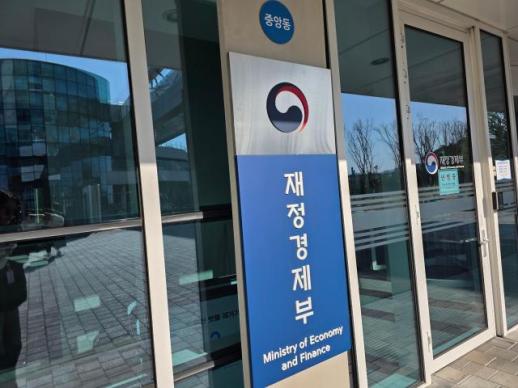 Government Expands Support for Oil Import Companies Amid Ongoing Middle East Conflict As the conflict in the Middle East continues, increasing uncertainty in international oil prices and crude oil procurement has prompted the South Korean government to expand financial support for oil import companies and assist in diversifying import sources. This initiative aims to strengthen responses to the growing financial burdens and supply chain risks faced by the industry. The Ministry of Finance and Economy announced on May 10 that it held the "Second Financial Support Review Meeting for Oil Import Companies" on May 8, in collaboration with the Korea Export-Import Bank, the Korea National Oil Corporation, and domestic oil import firms. The meeting was convened to share the outcomes of industry recommendations raised during the first meeting held on April 8, and to review the current crude oil supply situation, financial support status, and any additional challenges. Participating companies proposed measures including: improving financing conditions, supporting diversification of import sources, deferring tax payments and providing tax incentives, and increasing government stockpiling of oil. Recently, fluctuations in international oil prices and shipping costs have heightened the financial pressures on domestic oil import companies. Analysts note that the reliance on Middle Eastern oil has led to increased payment costs and concerns over supply disruptions. Moon Ji-sung, the Director of International Economic Management at the Ministry of Finance, stated, "Given the significant volatility of the situation in the Middle East, it is essential to closely monitor developments. The risks of potential disruptions in oil exports from Middle Eastern countries and uncertainties within the Organization of the Petroleum Exporting Countries remain." He added, "We are swiftly addressing the recommendations made during the first meeting to alleviate the operational difficulties faced by oil import companies, and we will thoroughly review the government's role in restructuring supply chains for energy security with relevant agencies." During the first meeting, companies had requested stable provision of policy funds for affected businesses until international oil prices stabilize, expanded financial support for crude oil and naphtha purchases, and assistance in identifying alternative supply sources for diversification. The government plans to continue engaging with the industry to assess on-the-ground challenges and enhance related support measures.* This article has been translated by AI. 2026-05-10 12:04:49
 -
 Doosan Fined $2.3 Million for Delayed Subcontract Agreements Doosan, a major system integration (SI) company, has been penalized by the Fair Trade Commission (FTC) for failing to issue subcontract agreements on time over several years.On May 10, the FTC announced it would impose a corrective order and a fine of 230 million won (approximately $2.3 million) on Doosan for violating subcontracting laws by delaying the issuance of written contracts during the outsourcing of system development and management services.According to the FTC, from January 2022 to October 2024, Doosan failed to provide written contracts containing legally required details for 516 SI service agreements with 182 subcontractors before the start of the services. In some cases, contracts were issued up to 291 days after work had begun, with an average delay of 26 days.The 516 agreements in question represent 35% of all contracts (1,473) during that period, with the total subcontracting amount reaching 40.8 billion won, accounting for 34.6% of the overall contract value. The FTC explained that the scale of the violations and their repeated nature warranted the imposition of a fine.Additionally, Doosan issued 'incomplete documents' for some contracts that did not clearly specify payment deadlines and inspection periods. The company was also found to have failed to retain some subcontracting documents for three years. However, the FTC deemed the violations relatively minor and issued a warning regarding those issues.Industry experts interpret this sanction as a response to the prevalent practice of 'contracting after work begins' in the SI sector. It has been repeatedly pointed out that in large projects, subcontracted workers are often deployed before contracts are finalized or pricing discussions occur.This practice leaves smaller subcontractors vulnerable, as they must incur costs for development personnel and resources without clear contract terms, increasing the risk of disputes over payment and project scope.With the recent expansion of investments in AI and data centers, along with rising demand for digital transformation, the importance of effective subcontractor management in the SI market is growing.According to the FTC, the domestic SI market generated 56 trillion won last year, reflecting an average annual growth rate of 6.58% over the past five years. The high level of internal transactions among large corporations underscores the need for a fair subcontracting order.An FTC official stated, "We will continue to focus our specialized investigative capabilities on the advanced industry sector to correct unfair trading practices that infringe on the rights of subcontractors and impose strict penalties for violations to establish a fair subcontracting order."* This article has been translated by AI. 2026-05-10 12:03:19
 -
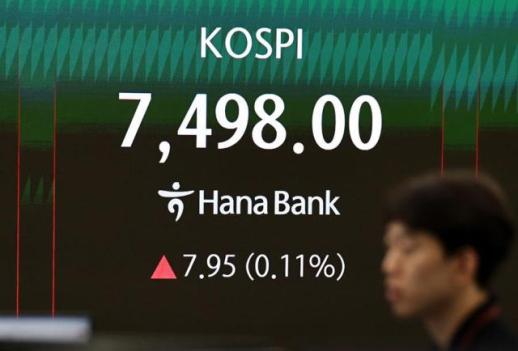 More South Koreans borrow to invest in stocks amid KOSPI's historic rally SEOUL, May 10 (AJP) - South Koreans are increasingly borrowing money again to invest in stocks amid a frenzy fueled by a recent record-breaking rally in the Korean stock market. According to financial data released on Sunday, outstanding balances on interest-bearing overdrafts at the country's five major banks - KB Kookmin, Hana, NH NongHyup, Shinhan and Woori - stood at 40.50 trillion Korean won (US$29 billion) as of last week. The amount surged by 715.2 billion won in less than a week from the end of April, marking the fastest increase and the highest level since 2023, when individual investors rushed to take advantage of ultra-low interest rates to buy stocks and cryptocurrency. The surge came amid renewed expectations for the long-depressed South Korean bourse, as the Korea Composite Stock Price Index (KOSPI), which had fallen below 2,500 points in January last year shortly after disgraced former President Yoon Suk Yeol's botched, short-lived martial law debacle, has since fully recovered and continued its historic rally, closing at 7,498 points last Friday after briefly surpassing the psychologically important, unprecedented level of 7,500 in intraday trading. The benchmark KOSPI's record bull run into uncharted territory, driven by an artificial intelligence (AI)-fueled chip supercycle, appears to be prompting more investors to take out loans and pour their money into stocks in search of higher returns. Even those who had shunned the stock market for years are returning, though some still hesitate, fearing they may have already missed the peak. Cash parked in bank accounts has also been on the decline, with liquid balances at the five major banks dropping by 501.3 billion won to 696.51 trillion won over the same period, a sign that more people are pulling their money out to invest in stocks rather than leaving it in banks. "Stock investment is likely the main factor, but some of the borrowed money may also be used for housing costs, as tighter loan regulations have made it harder for households to secure funds through other means," said one banking staffer. 2026-05-10 11:51:06
 -
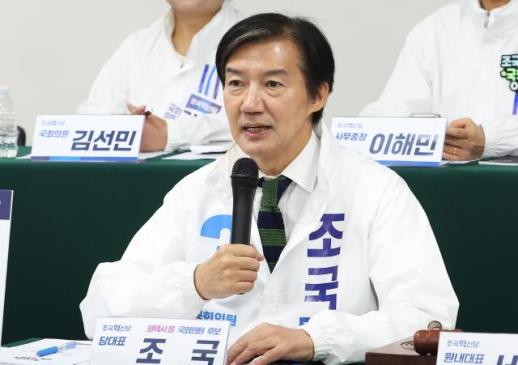 Jokuk Proposes Amendments to Pyeongtaek Support Special Law Jokuk, leader of the Jokuk Innovation Party, stated on May 10 that Pyeongtaek needs responsible support from the government and the National Assembly to take a significant leap forward. He announced the adoption of the "Pyeongtaek Support Special Law Amendment" as the party's official stance. During a field meeting with 11 members of the Jokuk Innovation Party at the Godeok STV Knowledge Industry Center in Pyeongtaek, Jokuk emphasized the importance of the amendment. "Pyeongtaek is home to the world's largest single semiconductor factory, the Samsung Electronics campus, and the largest U.S. military base, Camp Humphreys," he said. "We aim to elevate Pyeongtaek, a strong leader and beneficiary in artificial intelligence and a symbol of the Korea-U.S. alliance." He argued that the Pyeongtaek Support Special Law needs revision. While acknowledging that many projects have been carried out under the law enacted in 2005, he pointed out that it is insufficient to support national security and industrial strategy, highlighting its many gaps. Jokuk noted that despite four extensions of the deadline, including the passage of a bill on May 7, the sunset clause has left Pyeongtaek city and project stakeholders in a state of uncertainty. "To ensure stable business operations and a consistent development strategy, the sunset clause must be eliminated," he stressed. On this day, the members of the Jokuk Innovation Party confirmed the amendment to the Pyeongtaek Support Special Law as the party's official position. The proposed amendments include: 1) establishing and implementing measures to improve transportation for local residents, 2) legalizing national subsidies outlined in the enforcement decree, and 3) abolishing the sunset clause. After the adoption of the amendment as the party's official stance, Jokuk stated, "The amendment supported by the Jokuk Innovation Party will serve as a strong backing for me and a source of hope for the residents of Pyeongtaek. The Jokuk Innovation Party will demonstrate to the residents of Pyeongtaek that we act, not just speak."* This article has been translated by AI. 2026-05-10 11:48:18
 -
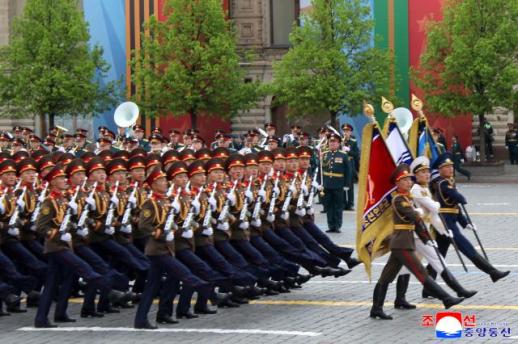 North Korean Troops Participate in Russia's Victory Day Parade North Korean state media reported that the country's military took part in Russia's Victory Day military parade commemorating the end of World War II. The Korean Central News Agency (KCNA) stated on May 10 that the "81st anniversary celebration of the Great Patriotic War victory" took place in Moscow's Red Square the previous day, with the "Korean People's Army combined forces participating at the invitation of Russia." Army Colonel Choi Young-hoon led the troops in the march, and Russian President Vladimir Putin expressed his gratitude to the commanders after the parade concluded. The Workers' Party's official newspaper, Rodong Sinmun, also covered the event extensively with photographs, detailing the atmosphere on-site. The newspaper reported, "As the song 'The Struggle for Justice' was played, the Russian flag and the victory banner appeared in the square," and included excerpts from President Putin's speech. It added, "The troops of the Democratic People's Republic of Korea, who displayed immortal feats in battles to liberate Kursk, marched alongside the Russian military units." Additionally, the newspaper noted that President Putin met with veterans, participants of the special military operation, and commanders of the People's Army who took part in the parade. The report also highlighted that President Putin issued a congratulatory letter on May 6 in honor of Victory Day, including parts of its content, emphasizing the significance of the event. On the same day in Pyongyang, members of the Russian embassy in North Korea visited the Liberation Tower to lay flowers in commemoration of Victory Day. The Liberation Tower symbolizes the Soviet soldiers who died fighting to expel Japanese forces from the Korean Peninsula in 1945. During the ceremony, held with North Korean honor guards present, participants observed a moment of silence while the national anthems of Russia and North Korea were played in tribute to the Soviet heroes.* This article has been translated by AI. 2026-05-10 11:39:19