
Journalist

Seo Hye Seung
-
 Sony Raises PS5 Prices in South Korea as Memory Costs Surge Surging semiconductor demand tied to the spread of artificial intelligence has driven memory prices sharply higher, prompting a steep increase in Sony's PlayStation 5 console prices in South Korea. The so-called “chipflation” is spreading across consumer IT devices. Sony Interactive Entertainment Korea said on the 27th it will raise PS5 prices in the Korean market, with the new prices taking effect May 1. The PS5 Digital Edition will rise 43.48% to 858,000 won from 598,000 won. The PS5 Disc Edition, which supports physical discs, will increase 26.74% to 948,000 won from 748,000 won. The higher-end PS5 Pro will climb 16.1% to 1,298,000 won from 1,118,000 won. The adjustment follows moves in other markets. Earlier this month, Sony Interactive Entertainment raised PS5 prices by about $100 in major markets including the United States. At the time, SIE Vice President Isabelle Tomatis said, “Amid continued cost pressure across the global economic environment, a price adjustment was unavoidable.” Industry officials point to structural shifts in the memory-chip market. As demand for AI servers jumps, chipmakers are focusing production on high-bandwidth memory and higher-capacity products, while supplies of consumer DRAM and NAND flash are tightening, analysts say. Memory prices have been rising quickly. Counterpoint Research said first-quarter DRAM prices jumped more than 50% and NAND flash more than 90%. TrendForce forecast additional second-quarter increases of 90% to 95% for DRAM and 55% to 60% for NAND flash from the previous quarter. The trend is extending beyond game consoles. Prices for laptops and smartphones, which also rely heavily on memory components, are rising as well. Samsung Electronics and LG Electronics have recently raised laptop prices by as much as nearly 1 million won compared with previous models, and new smartphone launch prices are also moving higher. * This article has been translated by AI. 2026-04-27 16:28:09
 -
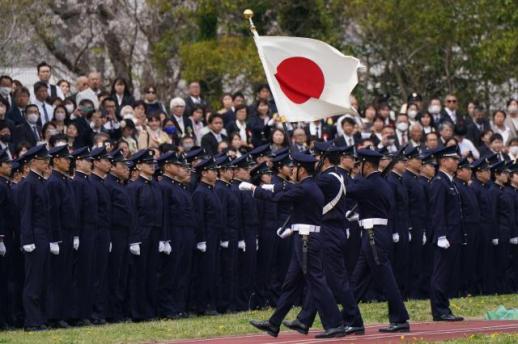 Korea-Japan rivalry may spill over to defense after Tokyo's lift of weapons ban SEOUL, April 27 (AJP) - The historic industrial rivalry between South Korea and Japan—once defined by a relentless "car war"—is migrating toward a high-stakes defense-industrial faceoff. As Tokyo pivots away from decades of postwar pacifist constraints to permit the export of lethal platforms, it enters a market where Seoul currently enjoys a global "golden age." While both nations operate as critical linchpins of the U.S. security architecture in Asia, their defense-industrial bases (DIBs) are products of fundamentally different strategic environments and threat perceptions. Despite hosting significant U.S. troop presences—roughly 28,500 in South Korea and 50,000 in Japan—the two nations have developed asymmetric military doctrines that have, in turn, shaped their industrial strengths. South Korea maintains a high-intensity, "total war" posture against North Korea, supporting a conscription-based force of 450,000 that prioritizes heavy armor and artillery. In contrast, Japan’s Self-Defense Forces operate as an all-volunteer force of 250,000 bound by Article 9 of its Constitution. Japan’s geography as an archipelago has necessitated a focus on "island defense" and "active deterrence," prioritizing maritime interdiction and aerospace superiority over ground-based power projection. This divergence has allowed South Korea to emerge as the world’s "arsenal for democracy" in land systems. Seoul’s competitive advantage lies in its integrated defense ecosystem, offering a "triple threat" of rapid delivery, cost-efficiency, and battlefield-proven reliability. Platforms like the K9 self-propelled howitzer and the K2 Black Panther tank are optimized for the European theater, where the threat of conventional land warfare has returned. Poland’s massive acquisition of K-defense systems underscores Seoul’s ability to scale production at a pace Western competitors often struggle to match. Furthermore, the Cheongung-II missile defense system’s reported 90 percent success rate against Iranian-origin threats in the Middle East has transitioned South Korea from a "budget alternative" to a premier Tier-1 provider of kinetic defense. Japan, meanwhile, is shedding its image as a "hidden supplier" of sub-components to become a visible lead integrator in the sea and air domains. The Soryu- and Taigei-class submarines, incorporating world-leading lithium-ion battery technology for extended undersea endurance, represent a quantum leap in conventional deterrence. Japan's recent breakthrough in the surface vessel market—specifically Canberra’s selection of a Mitsubishi Heavy Industries’ Mogami-class variant for the Royal Australian Navy—marks a watershed moment. This multi-billion-dollar deal signals Tokyo’s emergence as a major competitor in complex maritime procurement, moving beyond its previous role as a "reluctant exporter." South Korean shipbuilders, including HD Hyundai Heavy Industries and Hanwha Ocean, also participated in the 2024 tender but failed to make the final shortlist. Mitsubishi Heavy Industries ultimately secured the contract after competing against Germany’s ThyssenKrupp, highlighting strengths in stealth capabilities, reduced crew requirements and faster construction timelines. However, Japan’s resurgence introduces a new strategic vulnerability for the South Korean defense sector. Professor Kim Houng-yu, a member of the Korea Defense Industry Association, notes that Japanese companies hold world-class capabilities in missile sensors and optical systems, which he describes as “critical and strategic components” in modern weapons development. This technological leverage introduces a significant strategic risk for Seoul. Professor Kim warns that Japan’s growing influence in these niche areas could mirror the 2019 export restrictions on semiconductor materials. “If Japan designates these as strategic items and limits exports, Korean firms that rely on them could face serious challenges,” Kim said. He argues that to avoid a repeat of past industrial dependencies, South Korea must secure its own technological foundation. “To avoid this, South Korea must move toward full defense self-reliance and secure core technologies such as optics.” The emerging rivalry mirrors the 20th-century trajectory of the automotive and semiconductor sectors, where South Korea moved from assembling Japanese designs to dominating the global market. Yet, in the defense sector, the challenge is no longer just "catch-up" growth; it is technological sovereignty. For Seoul, the rise of a rearmed Japan serves as a catalyst for full-spectrum self-reliance. As the Indo-Pacific grows more volatile, the competition between the "K-Defense" mass-production model and Japan’s "High-Tech Shield" will not only determine market share but also the future of the region's security-industrial autonomy. 2026-04-27 16:26:12
 -
 Attorney Won Chang-yeon Chosen as New Managing Partner of Law Firm Dongin Attorney Won Chang-yeon, a member of the Judicial Research and Training Institute’s 28th class, has been selected as the new managing partner of Law Firm (LLC) Dongin, according to reporting by Ajunews on Monday. Dongin recently chose Won through an internal election, the report said. An official announcement is expected soon. Won, born in November 1963, graduated from Yonsei University with a degree in political science and diplomacy and earned a master’s in law from Yonsei University’s Graduate School of Legal Studies. He also completed Seoul National University’s specialized legal program covering mergers and acquisitions theory and practice. He passed the 38th bar exam in 1996 and completed the Judicial Research and Training Institute. After working at law firms Aram and Human, he joined Dongin in 2006. He served as a representative attorney from 2018 to 2022 and has again been listed as a representative attorney since last year. Won’s practice has focused on M&A, corporate restructuring, management control disputes, finance and securities, and real estate project financing. His work has included advising Korea Asset Management Corp. on the sale of special nonperforming loans worth 1 trillion won, as well as advising and litigating on M&A deals and control disputes involving multiple listed companies. In management control disputes, he has handled cases tied to corporate governance, including injunctions to block new share issuances, injunctions related to placing items on meeting agendas, injunctions to inspect and copy shareholder registers, and court petitions to convene extraordinary shareholders’ meetings. In finance and securities, he has worked on asset-backed securities, acquisition financing and cases involving the Capital Markets Act. The selection comes ahead of the end of Managing Representative Attorney Hwang Yun-gu’s term, which runs through the end of this month. Dongin is expected to shift to the new managing-partner structure starting next month. A Dongin official said observers expect Won’s prior experience leading the firm could put the focus on organizational stability and strengthening corporate advisory work, though the specific management direction is expected to be clarified after the official announcement. Dongin is regarded as a law firm with strength in criminal litigation. It has also been working to bolster its advisory capabilities in areas including M&A, fair trade, tax, intellectual property, and environment and energy. * This article has been translated by AI. 2026-04-27 16:19:46
 -
 Dong-A Socio Holdings Q1 Operating Profit Falls 6% Despite Revenue Growth Dong-A Socio Holdings said profitability weakened in the first quarter as higher costs offset revenue growth. The company said on the 27th that, on a consolidated basis, first-quarter revenue rose 6.9% from a year earlier to 351.0 billion won, while operating profit fell 6.0% to 19.1 billion won. The company attributed the decline in operating profit to higher cost ratios at its operating subsidiaries, citing the impact of external conditions. Healthcare unit Dong-A Pharmaceutical posted revenue of 188.0 billion won, up 10.5%, driven by growth in Bacchus and over-the-counter drug sales. Operating profit rose 22.1% to 20.6 billion won. Bacchus and OTC products grew 11.0% and 17.3%, respectively, while health functional foods slipped 2.1%. STgen Bio, a contract manufacturer of biopharmaceuticals, reported revenue of 18.0 billion won, down 5.7%. Operating profit plunged 89.1% to 200 million won due to fixed-cost burdens. The company said results can vary by quarter depending on customer order schedules, adding that planned annual orders totaling 21.1 billion won are proceeding as scheduled. Logistics unit Yongma Logistics recorded revenue of 110.6 billion won, up 9.6% from a year earlier, helped by new client wins. Operating profit, however, fell 10.4% to 3.8 billion won due to higher fuel costs and rising prices for logistics materials.* This article has been translated by AI. 2026-04-27 16:19:02
 -
 Dongsuh Foods’ Maxim Plant in Seoul Unveils Spring Makeover and Lavender Latte Maxim Plant, a landmark coffee venue in Seoul’s Hannam-dong operated by Dongsuh Foods, has refreshed its look for spring with a purple-themed design and a seasonal menu. The company has positioned the site as a coffee culture space, rotating interiors and offerings by season. Dongsuh Foods said on the 27th that Maxim Plant, which opened in April 2018, has logged about 1.55 million cumulative visitors, supported by seasonal staging, specialty coffee and hands-on content. This spring’s concept is “a brief, complete rest with a cup of coffee.” The area in front of the first-floor folding doors has been set up as a flower-shop-style photo zone, while green plants above the central counter add a fresh feel. The seasonal drink is a lavender latte, made with spring-blend espresso and lavender syrup. The company said it balances grape-like notes and acidity with the softness of milk, leaving a fragrant, sweet finish. On the third floor, the brewing lounge is running a “Synesthesia Coffee” program. Visitors use a tablet to choose flavor, acidity and roast level, receive a tailored bean recommendation, and are provided matching poetry and music. Customers can listen on a headset at dedicated seats while drinking their coffee. Maxim Plant also offers a basic class on coffee fundamentals and programs that let visitors try roasting and extraction. To mark the venue’s eighth anniversary, Dongsuh Foods plans a members-only 1+1 promotion for its popular blend beans “Deep Dive” and “Golden Sky.” A Dongsuh Foods official said the spring season combines lavender-based drinks and a brighter setting to help visitors take a break in the city, adding that the company will continue to introduce differentiated menus and content.* This article has been translated by AI. 2026-04-27 16:18:19
 -
 HD Construction Equipment Q1 2026 Operating Profit Jumps 88.3% to 190.7 Billion Won HD Construction Equipment said in a regulatory filing on the 27th that it posted first-quarter 2026 revenue of 2.3049 trillion won and operating profit of 190.7 billion won. Revenue rose 22.1% from a year earlier and operating profit climbed 88.3%. The company attributed the revenue gain to a broad recovery in global demand for construction equipment and faster growth in industrial and defense engine sales. Operating profit also increased sharply as profitability improved in the construction equipment business and the engine unit delivered steady earnings. The results come after HD Hyundai Construction Equipment and HD Hyundai Infracore launched an integrated company on Jan. 1, with the firm saying “one-team” synergies have begun to show as the market rebounds. HD Construction Equipment said its eight-region sales structure helped it respond quickly in the market with the Hyundai and Develon brands. It also cited companywide coordination across production, sales, purchasing and research and development to strengthen cost competitiveness. The company said integrated assembly and delivery centers in Europe and North America cut delivery times by 30% and reduced costs by 20%, while its China manufacturing base was consolidated from a dual Jiangsu-Yantai setup into Yantai to improve efficiency. By business, construction equipment revenue rose 26.9% to 1.9275 trillion won. Operating profit was 148.6 billion won, for an operating margin of 7.7%. The engine business posted revenue of 336.1 billion won, up 10% on higher industrial engine sales and steady growth in defense engine revenue. Operating profit increased 8% to 47.3 billion won, and the operating margin was 14.1%. An HD Construction Equipment official said the company will continue to expand construction equipment sales while diversifying profit sources, including engines and the aftermarket business.* This article has been translated by AI. 2026-04-27 16:17:15
 -
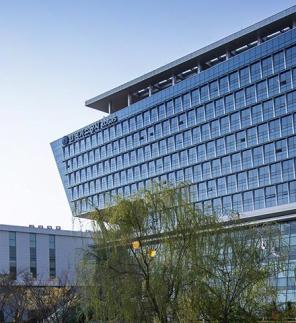 One in Four South Korean Public Agencies Faces Leadership Vacuum as Appointments Stall About one in four public institutions in South Korea is operating with a vacant top post or in a transition period after a term has ended, according to government data. The prolonged delays are drawing concern that policy execution could weaken, particularly at agencies responsible for industry and energy, as geopolitical risks in the Middle East and domestic and external economic strains such as a weak currency and high inflation intensify. As of Monday, the public institution management information system ALIO showed that 35 of 342 state-run enterprises, quasi-government agencies and other public institutions had no chief executive, or 10.2%. Another 31 institutions, or 9.1%, were being led by their outgoing heads on an acting basis because successors had not been appointed even after terms expired. An additional 17 institutions, or 5%, were set to see their leaders’ terms end in the first half of this year. In total, roughly 25% were either in a leadership vacuum or approaching a changeover. Several agencies tied to industry and energy policy remain without permanent leadership. Korea South-East Power, the Korea Power Exchange and the Korea Institute for Advancement of Technology Evaluation and Planning have vacant top posts. At Korea Gas Corp., KEPCO KPS and KEPCO MCS, incumbent chiefs are continuing in their roles after their terms ended because appointments have been delayed. Korea Gas Corp. is a prominent case. President Choi Yeon-hye is still performing her duties after her term expired because a successor has not been named. The company narrowed applicants to five candidates through a recruitment process in November, but it moved to reopen the search after union opposition and a determination of disqualification by the supervising Ministry of Trade, Industry and Energy. Korea Gas Corp. planned to close applications for president candidates at 6 p.m. Monday, but with the selection process typically taking about three months, an appointment within the first half of the year appears unlikely. At KEPCO KPS, President Kim Hong-yeon, who took office in June 2021 for a three-year term, has remained in place for nearly two years after his term ended because a successor has not been chosen. The company’s board recently sought to reorganize its executive recommendation committee, but all related agenda items were voted down during internal discussions, further delaying follow-up work, according to reports. In the industrial sector, the Korea Institute for Advancement of Technology Evaluation and Planning entered an acting-leadership system after its previous head, Jeon Yun-jong, recently moved to lead the Korea Institute for Advancement of Technology. The schedule for recruiting a successor remains unclear. The Energy Economics Institute and the Korea Radioactive Waste Agency are among institutions whose leaders’ terms are also set to expire in the first half of the year. In political circles, some expect delayed appointments to accelerate only after the June local elections. Others have raised concern that top posts could again be used as a tool for post-election patronage. Experts warned that extended leadership gaps could weaken policy responsiveness as uncertainty grows at home and abroad. An industry official said, “It is highly likely that the delayed appointments will be wrapped up sequentially only after the local elections,” adding, “With many pending issues piling up, the selection process should be sped up.”* This article has been translated by AI. 2026-04-27 16:16:15
 -
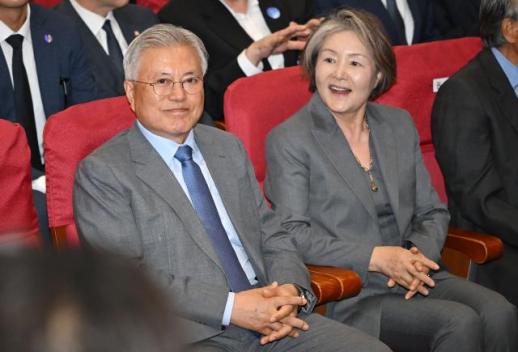 Moon Urges Kim Jong Un to Meet Boldly With Trump as Panmunjom Declaration Turns 8 Former President Moon Jae-in urged North Korean leader Kim Jong Un to “boldly sit down” with U.S. President Donald Trump, saying dialogue remains the quickest and safest way to break the current stalemate. Moon made the remarks in a commemorative speech on April 27 at the National Assembly Members’ Office Building during an event marking the eighth anniversary of the April 27 Panmunjom Declaration, hosted by the Democratic Government Korean Peninsula Peace Inheritance and Development Council and the Ministry of Unification. “True security cannot be guaranteed by building up military power and raising higher walls of isolation and severance,” Moon said. He said he hoped that, as eight years ago, improved inter-Korean ties could again serve as a bridge to U.S.-North Korea talks. “Inter-Korean dialogue will be the fastest and safest breakthrough to resolve the current deadlock,” he said. Moon also called on Trump to show “his unique decisiveness and wisdom” to bring North Korea back to the negotiating table. “Establishing peace on the Korean Peninsula is an especially difficult and arduous journey,” Moon said. But he argued that if the two Koreas overcome those challenges and build a “model of coexistence and peace” on the peninsula, it could become a major milestone for repairing a fractured world order. Moon said “the role of the Lee Jae-myung government is clear,” urging it to strengthen and carry forward past achievements while wisely overcoming earlier limits by starting a new “peace relay.” He said he “sincerely hopes” the stalled peace process will be restarted so the Korean Peninsula can become a place of sustainable peaceful coexistence and prosperity rather than confrontation. On April 27, 2018, Moon and Kim adopted the “Panmunjom Declaration for Peace, Prosperity and Unification of the Korean Peninsula” at an inter-Korean summit in Panmunjom, centered on improving inter-Korean relations and building a peace regime. * This article has been translated by AI. 2026-04-27 16:14:14
 -
 Daeryuk & Aju, Lin Begin Merger Process, Signaling Shake-Up in Midtier Law Firms Daeryuk & Aju and Lin have begun formal steps toward a merger, a move that could accelerate a reshuffle among South Korea’s midtier law firms. If completed, the combined firm would jump into the top tier by both revenue and headcount. According to the legal community on the 27th, the firms plan to sign a memorandum of understanding on the 29th at Daeryuk & Aju’s main conference room in Donghun Tower in Yeoksam-dong, Seoul’s Gangnam district. The agreement would bring into the open merger talks that have been underway behind the scenes and start full integration procedures. The MOU follows more than a month of working-level discussions. The firms have been in talks since last month, and an MOU had initially been expected by late March before the schedule was adjusted. By scale, the merger would be significant. Based on National Tax Service value-added tax filings, Daeryuk & Aju reported 102.7 billion won in revenue last year and Lin reported 41.0 billion won. Combined, that would total 143.7 billion won, exceeding Jipyong, which ranks eighth by revenue. Headcount would also rise. As of last year, Daeryuk & Aju had 247 lawyers and Lin had 137, for a combined 384 — more than HwaWoo’s 369. Industry observers describe the deal as largely complementary. Daeryuk & Aju is known for litigation and overseas work, while Lin has grown quickly in corporate advisory services and mergers and acquisitions. The combination is widely seen as likely to strengthen competitiveness. Lin’s role has drawn attention because it recently reset its merger strategy. Lin previously pursued a merger with Barun and reached detailed negotiations, but the deal fell through over issues including organizational culture and conflicts of interest. Lin then sought a new partner, and talks with Daeryuk & Aju gained momentum. A Lin official said trust remains central in the legal market and added, “As a midtier firm, we judged there are limits to survival and growth, so we decided to pursue a merger.” Daeryuk & Aju has expanded through mergers before. After the 2009 integration of “Daeryuk” and “Aju,” it settled into the top 10 and has recently broadened into growth areas such as international work and major industrial-accident cases. Lin, founded in 2017 by lawyers largely from Kim & Chang, has rapidly built its presence in the corporate advisory market. Analysts said the push could signal broader consolidation among midtier firms as competition with large firms intensifies and as firms seek scale and combined expertise. If the merger is finalized, it could alter competition not only among midtier firms such as Jipyong and Barun but also with higher-ranked firms, with the possibility of additional mergers or strategic alliances. * This article has been translated by AI. 2026-04-27 16:09:30
 -
 South Korea to Launch Farm Energy Transition Task Force; NH Reform Plan Due in June Song Mi-ryeong, South Korea’s minister of agriculture, food and rural affairs, said April 27 the government will launch an agriculture and rural “energy transition” task force this week to prepare for a prolonged war in the Middle East. She also underscored the need for reform at NongHyup, citing survey results showing broad support for a government-led overhaul. Speaking at a briefing for reporters at the government complex in Sejong, Song said that if the conflict continues, “leaving the energy issue unattended or responding only with the existing fossil-fuel system” could threaten the country’s food security. She said agricultural waste could be converted into energy through solid-fuel production and biogas, and then used as “meaningful fertilizer,” turning what is discarded into a resource. She added that farmland could also become a key asset because solar panels can be installed there. On NongHyup reform, Song said the ministry has continued to gather views in the field amid criticism that input was insufficient. She said a second reform package, including measures to revitalize its economic businesses, will be announced in June, and that needed legislation will be processed quickly. A Korea Rural Economic Institute survey released that day found 94.5% of cooperative members and 95.1% of the general public supported the need for NongHyup reform. The most common reason cited was the need to eradicate misconduct by executives, including the chairman and local cooperative heads. Addressing opposition, Song said she was aware of concerns that direct elections by members could strengthen the central chairman’s authority and that expanded government oversight could undermine autonomy. She said giving members voting rights while expanding government supervisory authority would help NongHyup secure democratic legitimacy while correcting problems. On worries about farm input supplies due to the Middle East war, Song said the latest assessment showed the country has secured enough raw materials for urea to avoid disruptions in fertilizer supply through the end of August. She said raw materials for plastic film have been secured through June, and the government is working to increase supply to some areas facing shortages. Song also said there has been some misunderstanding about the recent jump in rice prices. She said that compared with other prices over the past 20 years, the rise in rice prices has not been large, and that balancing producers and consumers is important. Rice is currently about 62,000 won per 20 kilograms, about 15% higher than a year earlier. On rising egg and broiler chicken prices, Song pointed to increased imports of hatching eggs as a response. She said livestock infectious diseases have affected not only laying hens but also broilers, raising concerns ahead of Chobok, and that imports are being expanded in anticipation of higher broiler demand during Chobok and Jungbok. 2026-04-27 16:08:36