
Journalist

Seo Hye Seung
-
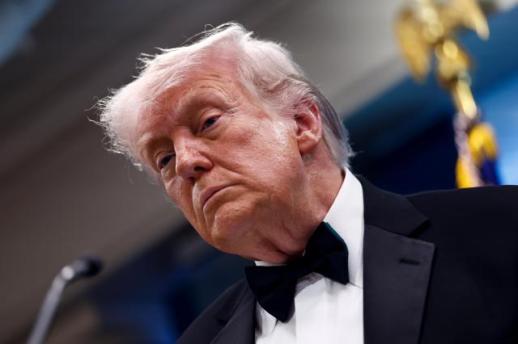 White House Correspondents’ Dinner Shooting Highlights U.S. Democratic Strains A symbolic Washington gathering was again shaken by gunfire. At the White House Correspondents’ Association dinner attended by U.S. President Donald Trump, an armed suspect carrying a shotgun opened fire on April 25 (local time) while trying to breach a security screening area, prompting an emergency evacuation of Trump and other key guests. The suspect was arrested at the scene, and the president and attendees were not hurt. The episode, however, cannot be dismissed as a routine security lapse. The correspondents’ dinner has long been a high-profile venue where U.S. politics and the press share the same room, a public display of the relationship between an administration that wields power and journalists tasked with scrutinizing it. A shooting at such an event underscores how social division and violence have reached even the country’s institutional and symbolic center, putting a democratic stage under physical threat. Investigators must determine whether Trump was targeted, whether the suspect acted alone, and whether there was a political motive. Whatever the motive, the effect is the same: when guns enter political space, debate gives way to fear. A society that shifts conflicts meant for elections, legislatures, the press and public assembly into the realm of weapons has moved into dangerous territory. The United States has repeatedly argued over gun regulation for years. After major tragedies, calls to tighten rules have grown, but political leaders have repeatedly failed to reach conclusions amid partisan confrontation. Constitutional debates and arguments over individual liberty deserve respect, but they cannot justify neglecting the state’s basic duty to protect public safety. If even a top-tier, heavily secured event with the president present is not fully safe, ordinary citizens’ anxiety is likely to be greater. Another concern is the normalization of political hostility. U.S. politics has grown accustomed to language that treats opponents not as rivals but as targets to be eliminated. Conspiracy theories, hatred and inflammatory rhetoric have spread between online spaces and real life. In such an atmosphere, violence by an extremist is less an accident than a foreseeable outcome. The incident is not only an American problem. Democracies broadly face shared challenges, including political polarization, disinformation, hate-driven agitation and leader worship. Cracks can begin when people assume institutions are unshakable. South Korea is not necessarily an exception; as political distrust and factional confrontation deepen, society can overheat quickly. The arrest of one gunman does not end the matter. The central task is to answer why such incidents keep recurring. Democracy is protected not by bullets, but by words, and the United States now faces that basic principle again. * This article has been translated by AI. 2026-04-26 14:15:16
 -
 Foreign and Institutional Investors Turn Net Buyers as Retail Investors Post Record Selling Foreign and institutional investors reversed course within a month, shifting from heavy selling to net buying, while retail investors moved in the opposite direction with record-scale net sales. As foreigners and institutions bet on further gains led by large semiconductor stocks, retail investors appeared to lock in profits and take a more defensive stance. According to the Korea Exchange on the 26th, the KOSPI has risen 28.1% this month, staging a sharp rebound and reaching record levels, including an intraday move above 6,500. Large-cap stocks led the advance: market heavyweight Samsung Electronics gained 31.2%, and No. 2 SK hynix rose 51.4%. Buying by foreigners and institutions stood out. After posting a record monthly net sale of 35.88 trillion won in the KOSPI market last month, foreign investors turned net buyers this month, purchasing more than 2.5 trillion won worth of shares through the 24th. Institutions, which sold about 1 trillion won last month, bought more than 6.9 trillion won this month. By stock, foreigners were net buyers of Doosan Enerbility (1.133 trillion won), Samsung Electronics (867 billion won) and SK hynix (710.5 billion won). Institutions bought SK hynix (1.5587 trillion won), Samsung SDI (575.1 billion won) and Samsung Electronics (554.1 billion won). Retail investors showed the opposite pattern. This month, individuals have sold a net 14.7 trillion won, putting them on track to set a new monthly record for net selling. The total has already surpassed the previous record set in September last year. Still, retail buying has continued over the past three trading sessions, leaving open whether the record will ultimately be extended. Profit-taking in major semiconductor names was particularly pronounced. Individuals sold a net 6.5814 trillion won of Samsung Electronics and 2.498 trillion won of SK hynix this month. That contrasts with last month, when retail investors bought on weakness, purchasing a net 16.8172 trillion won of Samsung Electronics and 7.0705 trillion won of SK hynix during a steep market drop. The KOSPI fell 19.08% last month as tensions between the United States and Iran escalated, and retail investors then moved quickly to realize gains during the rebound, the report said. The market is focusing on rapidly rising earnings expectations for semiconductors. With memory prices climbing and supply remaining tight, some expect the industry upturn to persist for the time being. Brokerages said the KOSPI is also rewriting record highs, lifting the uptrend to a higher level. Kim Jong-min, a researcher at Samsung Securities, said, “The current uptrend is unlikely to break easily and is expected to move to a higher stage.” He added, “As supply is absorbed, the continued record-high flow creates strong upward momentum, so rather than leaving the market based on premature peak calls, this is the time to use the energy of the rise.” 2026-04-26 14:09:18
 -
 Korean Fish Market Vendors Grow Into 10 Billion-Won Businesses Through Coupang More vendors from traditional seafood markets in South Korea are using Coupang as a springboard to grow into small and midsize companies with annual sales in the 10 billion-won range, the e-commerce company said. The shift is credited to moving beyond complex distribution chains and face-to-face sales by using Coupang’s direct-from-source shipping and dawn-delivery system. Coupang said the number of small businesses based in major seafood markets and ports — including Busan’s Jagalchi Market, Yeosu, and areas such as Jeju, Noryangjin and Jindo — selling through Rocket Fresh has recently risen to 10. Their transactions now account for about 17% of Coupang’s overall seafood dawn-delivery sales, the company said. Coupang attributed the growth to direct deals that bypass the typical multi-step route from fishing grounds to wholesalers, sub-wholesalers and retailers, improving margins while expanding sales nationwide. The gains are reflected in company results. Dried-seafood seller Haemalgeun Food, which started from a street stall at Garak Market in 2012, reported sales of 40 million won when it joined Coupang in 2015. Ten years later, last year, sales topped 16 billion won — more than 400 times higher. The company has since built a modern production plant spanning 1,600 pyeong and increased its workforce by more than 10 times. Juil Co., which began as a seafood street stall at Seoul’s Jungbu Market in 1976, said it shifted after joining Coupang in 2018 from bulk raw-product sales to small packages and brand-focused offerings aimed at one-person households. Sales rose from 20 million won in its first month on Coupang to about 1 billion won a month, turning it into a midsize business. Good Morning Seafood, a newer seller from Noryangjin, said customized consulting from Coupang helped boost its sashimi sales volume by more than fivefold from early levels, and it is preparing additional hiring. Coupang said it expanded its direct-from-source seafood purchases from about 1,500 tons in 2024 to about 1,870 tons last year, and is continuing to add new sourcing areas nationwide, including Namhae in South Gyeongsang Province and Sinan and Wando in South Jeolla Province. A Coupang official said the company will prioritize finding more small merchants in traditional markets and, through Rocket Delivery and Rocket Fresh, focus on expanding sales channels, shared growth and digital transformation.* This article has been translated by AI. 2026-04-26 13:55:53
 -
 Trump Says Suspect Likely Acted Alone in WHCA Dinner Shooting, Downplays Iran Link President Donald Trump said Friday that the suspect arrested in a shooting at the White House Correspondents’ Association dinner venue likely acted alone and that a link to Iran, which the United States is at war with, appeared unlikely. According to The Associated Press and other outlets, Trump told a White House news conference that when he first heard the shots, “I thought it was a tray dropping,” adding that it was “pretty loud” and sounded “pretty far away.” He said the suspect rushed from about 50 yards (about 45 meters) away, but Secret Service agents responded immediately. Trump said one agent was hit but survived because he was wearing “a very good bulletproof vest.” Trump said he had been attending the WHCA dinner Friday evening at the Washington Hilton in Washington when the shots were heard and he was evacuated. He said no attendees were wounded and the suspect was arrested at the scene. Trump identified the suspect as Cole Thomas Allen, 31, from Torrance, California. “They seem to think it’s a lone wolf. I think so, too,” he said. He said investigators searched Allen’s apartment and described him as someone with “very serious mental problems.” Asked about a possible Iran-related motive, Trump said, “I don’t think so,” but added, “You don’t know. We’re going to learn a lot” through the investigation. Referring to the incident, Trump urged Americans “to recommit, with all their hearts, to resolving conflicts peacefully.” He also cited two previous assassination attempts against him and said political disputes should be settled without violence. Trump was shot during an outdoor campaign rally in Butler, Pennsylvania, on July 13, 2024, suffering a wound that pierced the upper part of his right ear. He faced a second assassination attempt on Sept. 15 that year at a golf course in Florida. At the news conference, Trump said assassination attempts are carried out against “the most influential people,” adding, “I’ve done a lot. This country, which was mocked for years, has become the hottest country in the world.” He said, “We changed this country, and it seems there are many people who don’t like that,” and stressed the incident “will not stop me from winning the war with Iran.” Acting Attorney General Todd Blanche, who appeared with Trump, said the suspect would soon be charged, including on firearms-related allegations. FBI Director Kash Patel said investigators were working to determine the suspect’s background and whether there were any accomplices.* This article has been translated by AI. 2026-04-26 13:55:08
 -
 CNN: Suspect in Trump Shooting at White House Correspondents’ Dinner Identified as 31-Year-Old California Instructor CNN, citing two sources, reported on 25 (local time) that the suspect in the shooting at the White House Correspondents’ Dinner venue has been identified as a 31-year-old man named Cole Tomas Allen. According to the report, Allen is an instructor and game developer who lives in Torrance, outside Los Angeles. A LinkedIn profile lists him as a part-time instructor at the private tutoring company C2 Education, and shows he received the company’s “Instructor of the Month” award in December 2024. CNN also reported, citing Federal Election Commission records, that Allen donated $25 to Kamala Harris, the Democratic presidential candidate in the 2024 election. The report said he studied mechanical engineering at the California Institute of Technology and earned a master’s degree in computer science last year from California State University, Dominguez Hills. After the shooting, the Secret Service said the suspect was arrested and is being held. In a statement, Secret Service spokesman Anthony Guglielmi said all protectees, including the president and first lady, were safe and that the suspect was in custody. Two sources said the gunman fired from outside the venue, injuring one Secret Service agent. The agent was hit but was wearing a bulletproof vest and is not expected to have life-threatening injuries. The shooting is believed to have occurred outside the banquet hall near a rear staircase on the side opposite the stage. President Trump and first lady Melania Trump quickly left the stage under Secret Service escort. 2026-04-26 13:52:09
 -
 Seoul Apartment Lease Demand Hits Highest Level Since June 2021, Data Show Seoul’s apartment lease supply-demand index, a gauge of the balance between demand and supply for jeonse deposits, has climbed to its highest level since June 2021, signaling demand is outpacing available listings. According to the Korea Real Estate Board on the 26th, the index for the third week of April (as of April 20) came to 108.4, up 3.2 points from the previous week’s 105.2. The increase was larger than the prior week’s 0.7-point rise. It was the highest reading in about five years, since 110.6 in the fourth week of June 2021 (as of June 28). Readings above 100 indicate more tenants seeking jeonse than landlords offering it; the closer to 200, the stronger the demand relative to supply. The index rose as high as 109.1 in September 2021, a period widely described as a jeonse crunch. After the 2020 enactment of two rental laws — the right to request a contract renewal and a cap on rent increases — jeonse listings in the Seoul metropolitan area tightened, pushing prices higher. The annual apartment jeonse increase rate in the metropolitan area reached 10.65%. In Seoul, the index moved above 100 starting in the third week of May last year (100.2) and has continued to rise since March as the spring moving season began. By region, the index was highest in the northeast area (Seongdong, Gwangjin, Dongdaemun, Jungnang, Seongbuk, Gangbuk, Dobong and Nowon) at 111.3. It was followed by the northwest (Eunpyeong, Seodaemun and Mapo) at 108.6, the southwest (Yangcheon, Gangseo, Guro, Geumcheon, Yeongdeungpo, Dongjak and Gwanak) at 108.2, the southeast (Seocho, Gangnam, Songpa and Gangdong) at 105.3, and the central area (Jongno, Jung and Yongsan) at 105.3. The rise is being attributed to a mix of factors, including tighter rules affecting rental businesses and lending, and fewer listings from owners of multiple homes. The government’s Oct. 15 measures designated all of Seoul and 12 areas in Gyeonggi Province as land transaction permit zones, requiring owner occupancy and blocking so-called gap investment — buying homes with a jeonse tenant in place — which contributed to the listing squeeze. Tax rules aimed at encouraging multi-home owners to sell also had an impact as some existing rental homes shifted to owner occupancy. Lee Chang-moo, a professor of urban engineering at Hanyang University, said rental supply needs to keep pace with newly formed households, but “the path for rental businesses or multi-home owners to expand supply is blocked, and if they sell, the homes shift to owner-occupied.” He added, “It’s not just that one rental unit disappears — the chain of housing moves gets clogged.” The shift from jeonse to monthly rent is also accelerating. According to housing statistics from the Ministry of Land, Infrastructure and Transport, monthly rent accounted for 68.3% of the national rental market in February, the highest in five years. In Seoul, the share was 70.3%, above the national average and a key driver of the rise. With jeonse supply tight, prices are also rising quickly. Seoul apartment jeonse prices rose 0.22% in the third week of April from the previous week, the biggest weekly increase since December 2019. The average jeonse price, as of last month, was 600.149 million won, topping 600 million won for the first time in three years and five months. Jin Chang-ha, a professor of economics at Hanyang University, said in the Seoul metropolitan area, where homeownership is relatively low, tighter lending rules that make leveraged investment harder can lead investor-held homes to shift into the sales market or to arrangements with smaller deposits and higher monthly payments. “As a result, existing jeonse supply will convert to monthly rent, and existing jeonse tenants will shift into end-user demand in outlying areas — a major change,” he said. 2026-04-26 13:48:19
 -
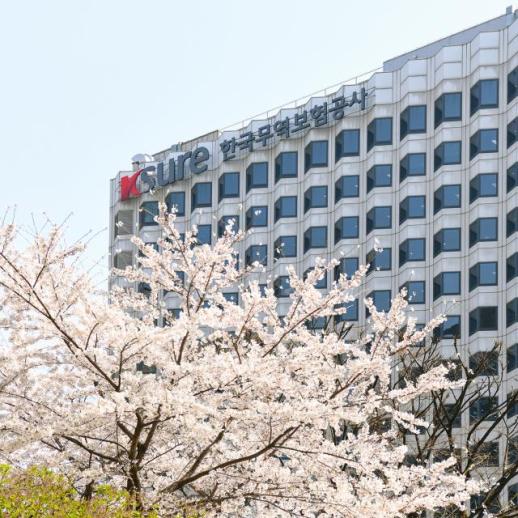 Korea Trade Insurance Corp. to Boost Liquidity Support for Small Defense Exporters Korea Trade Insurance Corp. is stepping up support for small defense firms seeking overseas orders, aiming to broaden the export base of South Korea’s defense industry beyond large prime contractors. The agency said on the 26th it will provide liquidity support to help Dasan Machining expand globally. Under the program, K-SURE will guarantee losses tied to bank guarantees that importers often require when export contracts are signed. The arrangement is intended to raise the likelihood of closing export deals while freeing up funds that had been tied up as collateral at banks. It is the first case of K-SURE directly supporting an export transaction by a small defense company since it set up a dedicated team last year to foster the defense industry. K-SURE President Jang Young-jin said the support directly backs exports of finished defense products by small firms and promotes more balanced growth for K-defense exports. He said the agency will continue to provide support so Korean companies can play a leading role in the country’s push to become one of the world’s top four defense powers. * This article has been translated by AI. 2026-04-26 13:42:52
 -
 South Korea Closes Regulatory Gap by Classifying Liquid E-Cigarettes as Tobacco Liquid-type e-cigarettes have been formally brought under the legal definition of “tobacco.” A revised Tobacco Business Act that took effect on the 24th expanded the definition from products centered on “tobacco leaves” to include nicotine products. Until now, synthetic-nicotine liquid e-cigarettes were distributed largely like ordinary consumer goods, avoiding taxes and regulation. The move is late but necessary to bring an off-the-books market into the system. The regulatory gap has lasted years. The National Assembly and the government have discussed the issue since 2016 but failed to reach a conclusion amid industry pushback and disagreements among ministries. In the meantime, the market grew while oversight lagged. Synthetic-nicotine liquids were excluded from levies such as the tobacco consumption tax and the National Health Promotion charge, giving them a price advantage. Lost revenue mattered, but a bigger problem was the unfairness of applying different standards to products with the same nature. More serious was the risk of youth exposure. With online sales, distribution through unmanned shops and disguised products resembling everyday items, barriers to access fell sharply. Regardless of form, tobacco products should be managed under the basic social principle of protecting minors. Under the revision, health warnings, advertising limits and smoke-free area rules will apply. Still, changing the law does not resolve everything. In the field, concerns are emerging about price increases, stockpiling and confusion among small retailers. Policy cannot end as a declaration. Authorities should quickly tighten the details of enforcement, including tax standards, distribution controls, procedures for business conversion and consumer guidance. A larger task is blocking new ways to evade oversight. Similar products could reappear in blind spots by altering nicotine structures or claiming to be nicotine-free. A legal framework that merely lists specific ingredients cannot keep pace with new products. Markets change quickly, and administration has often moved late; that pattern should not be repeated. The purpose of tobacco regulation is not simply to collect more tax. It is to protect public health, prevent youth access and restore order to the market. Bringing liquid e-cigarettes into the tobacco category is a late but necessary first step. The government and the National Assembly now face a clear task: close the next loophole before it opens. A decade-long regulatory vacuum must not be allowed again. 2026-04-26 13:42:00
 -
 Hoban Construction Wins $110 Million Seoul Housing Redevelopment Contract Hoban Construction said April 26 it has won the contract for the “Myeonmok Station 6-5 district street housing redevelopment project” in the area around 113-1 Myeonmok-dong, Jungnang-gu, Seoul. The project calls for six apartment buildings, from three basement levels to 29 stories above ground, with 449 units and related community and welfare facilities. Total construction costs are estimated at about 150 billion won. The site is within walking distance of Myeonmok Station and Sagajeong Station on Seoul Subway Line 7, and is near green spaces including Yongmasan, Sagajeong Park and Kkachi Children’s Park. Within a 1-kilometer radius are schools including Myeondong Elementary School, Junghwa Middle School, and Myeonmok Middle and High School. Hoban Construction said it plans to actively review additional bids linked to nearby areas around the Myeonmok Station 6-5 district to advance a “Moa Town” project. Moa Town is a Seoul city small-scale redevelopment program that groups multiple zones of aging low-rise residential neighborhoods for development. The company has said it is expanding orders for urban redevelopment projects in Seoul and other major cities in the greater capital area since opening its Seoul office at the Korea Press Center in Jung-gu, Seoul, in October last year. * This article has been translated by AI. 2026-04-26 13:40:08
 -
 Denso Withdraws ROHM Buyout Bid as ROHM Moves Toward Toshiba-Mitsubishi Electric Alliance Denso’s bid to acquire ROHM, seen as a potential turning point in Japan’s reshaping of the power semiconductor sector, has fallen through. With ROHM opting to pursue a three-company alliance with Toshiba and Mitsubishi Electric, the center of gravity in the industry’s reorganization appears to be shifting away from being folded into an automaker group and toward consolidation among manufacturers. The Nikkei newspaper reported in its April 26 edition that Denso had sought to buy ROHM to prepare for the spread of electric vehicles but decided to withdraw after failing to win ROHM’s consent. Denso in February proposed buying all ROHM shares through a tender offer valued at about 1.3 trillion yen (about 12.1 trillion won). Denso had already secured about a 5% stake in ROHM and pursued cooperation in semiconductors, but it did not obtain control. ROHM, meanwhile, had been holding separate integration talks with Toshiba and Mitsubishi Electric. The three companies began discussions in March on combining their power semiconductor businesses, and ROHM’s decision increases the likelihood that the plan will move forward in earnest. A central issue is business balance and independence. ROHM has strengths in silicon carbide-based power semiconductors, a next-generation material, and Denso aimed to absorb that capability to quickly boost competitiveness. ROHM appears to have judged that becoming part of Denso could tilt its business toward automotive semiconductors and unsettle ties with other auto-parts makers that are existing customers. By contrast, a three-company alliance could serve a broader range of demand, including industrial, infrastructure and consumer electronics markets, enabling a more balanced growth strategy. The global competitive landscape also looms large. Europe’s Infineon Technologies and U.S.-based onsemi rank among market leaders, while Chinese companies are intensifying low-price competition. Most major Japanese players have market shares below 5%, underscoring limits to scale as standalone firms. Automakers are also accelerating in-house semiconductor efforts: Tesla and BYD are strengthening their own chip design, and Volkswagen is working with a Chinese company on vehicle system-on-chip development. Against mounting pressure on multiple fronts, the three-company plan reflects a push to gain strength through scale. Still, significant hurdles remain before any alliance becomes reality. One is persuading shareholders. ROHM shares rose into the 3,200-yen range on expectations of a Denso deal and have recently climbed into the 3,700-yen range. With the tender offer off the table, shareholders will focus on whether a three-way integration can deliver greater corporate value. With ROHM’s annual shareholders meeting set for June, confidence in management could also become an issue. ROHM executives voiced confidence. ROHM President Katsumi Azuma said the three-company alliance “can maximize shareholder value and surpass Denso’s proposal.” If ROHM’s SiC technology is combined with Toshiba’s broad customer base and Mitsubishi Electric’s strengths in high-voltage infrastructure, some have suggested the integrated power semiconductor business could be discussed as reaching the world’s No. 2 tier by revenue. Execution is another challenge. Integrating multiple companies can complicate decision-making and slow agreement on leadership. Toshiba and ROHM previously held cooperation talks that failed to take concrete shape, raising concerns that the latest effort could face similar setbacks. The collapse of Denso’s bid is being read as a signal that Japan’s power semiconductor industry is choosing horizontal consolidation among manufacturers over automaker-led vertical integration. Whether that choice translates into stronger competitiveness will depend on execution.* This article has been translated by AI. 2026-04-26 13:39:17