
Journalist

Seo Hye Seung
-
 Column: A Campaign Visit to Seoul City Hall Raises Questions About Power and Humility The pressroom at Seoul City Hall is usually quiet. That does not make it a light place. It is not where power is proclaimed, but where it is tested. Policies pass through here before they become public debate, and those who seek authority must pass through here before they can stand before citizens. That steady atmosphere is part of the order that holds the city together. A small ripple crossed that order a few days ago, on a Friday afternoon. Several people connected to the Democratic Party’s Jung Won-oh campaign suddenly came into the pressroom. Reporters were not there at the time. There was a leader, and some appeared focused on looking over the space. A brief, formal greeting was exchanged with one person, but what stood out more was the direction of their steps. They seemed to treat the room less as a place for conversation than as a space they would soon be passing through. The difference may look subtle, but it is decisive. Power often shows its face first in such details. Politics moves on assumptions about the future. Anyone can imagine victory and prepare to govern. But there is a difference between preparing for the future and acting as if the future is already secured. The first is tension; the second is another name for arrogance. That arrogance tends to surface first in small scenes — how someone knocks on a door, how they treat a space, how they look at people. It reveals how they understand power. The scene brought back an old memory from the Seoul mayoral race between Oh Se-hoon and Han Myeong-sook. It was the atmosphere among Han’s supporters on the night they were confident of victory even before the vote count ended. In central Seoul, at Seoul Plaza, they beat drums and sang. As the caption “certain to win” ran, they chanted, “Oh Se-hoon, move out — move out now.” The cheering seemed to go beyond the results themselves. The heat of that night was intense, but it did not last. The count was still underway, and the result flipped at the last moment. Seoul made its choice — not the side intoxicated with certainty, but the side that kept its tension to the end. Seoul is often like that. It can look as if it is swayed by emotion, but at decisive moments it steps back and judges. It is not a city driven only by factional logic. It watches not who shouts louder, but who keeps balance. Parties, too, must stand on that balance — especially those that dream of governing. Winning power may be possible with the passion of supporters, but holding it is shaped by one’s attitude toward all voters. Elections can create power, but its dignity is visible even before Election Day. What language is used, what posture is taken, what is treated as “obvious” — all of it signals the level of power. The same questions apply to Jung Won-oh and his campaign. What is needed now is not stronger certainty of victory, but humility in attitude. Seoul is not a city to be “taken over.” Interests are tightly intertwined, many ways of life coexist, and even a single policy can set countless interests against one another. Seoul cannot be anyone’s possession. Administration is a public system that works on behalf of citizens. The moment anyone steps onto that system, they should become more modest. That is a basic order of democracy. 2026-04-26 13:30:19
 -
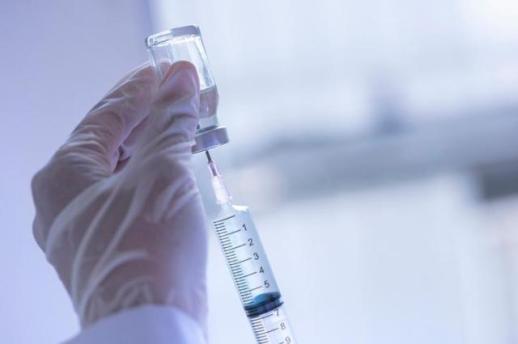 Korean Drugmakers Rush Into Clinical Trials for Next-Generation ADC Cancer Drugs South Korea’s pharmaceutical and biotech companies are moving aggressively into clinical development of antibody-drug conjugates, or ADCs, as global drugmakers pour massive investment into the fast-heating field. Several Korean firms have now advanced candidates to the patient-dosing stage, intensifying competition to develop next-generation cancer therapies. Industry officials said ADCs combine an antibody’s ability to target tumors with the cancer-killing effect of a cytotoxic drug. By linking the drug to an antibody, the therapy is designed to deliver treatment selectively to cancer cells, potentially reducing toxicity compared with conventional chemotherapy while improving effectiveness. Celltrion is accelerating development with multiple programs. After securing Finobio’s platform technology, PINOT-ADC, in 2022, it advanced three ADC cancer candidates to patient dosing. The three pipelines — CT-P70, CT-P71 and CT-P73 — received U.S. Food and Drug Administration approval for Phase 1 investigational new drug applications last year. CT-P73 began dosing patients in the first quarter of this year, while CT-P70 and CT-P71 started dosing in the second half of last year. CT-P70 and CT-P71 also received FDA fast-track designation, the company said. Samsung Bioepis, long focused on biosimilars, has entered new-drug development and moved into ADCs. After signing a joint research and technology licensing deal with Intocell in December 2023, it launched a global Phase 1 trial of its first new-drug pipeline, SBE303. Preclinical results disclosed at the American Association for Cancer Research meeting, AACR 2026, showed SBE303 improved tumor-cell binding specificity and intracellular drug-delivery efficiency compared with existing nectin-4 targeted therapies, the company said. It also reported no observed safety signals such as interstitial lung disease, or ILD. Chong Kun Dang, known for a strong oncology portfolio, is also expanding into biologic drugs through ADC development. After licensing platform technology from Dutch company Synaffix in 2023, it has been developing CKD-703, a c-Met-targeting ADC. In a global Phase 1/2a trial, the company has begun enrolling its first patient in the United States. The study targets patients with solid tumors including non-small cell lung cancer, or NSCLC, and is being conducted at about 12 sites in South Korea and the United States. The company said it has also received clinical approval in South Korea and expects patient enrollment there in the first half of the year, with plans to expand to Europe and other countries. According to market research firm Mordor Intelligence, the ADC market is projected to grow from about $20 billion this year to $70 billion by 2031. Expectations are rising that if ADCs expand into first-line treatment for major cancers, the number of patients and duration of dosing could increase sharply. To date, 15 ADC therapies have received FDA approval. One industry official said ADCs are being valued highly because of their potential expansion into first-line treatment. “ADCs are emerging as a mainstream approach in the oncology market, so the market is likely to grow even larger,” the official said.* This article has been translated by AI. 2026-04-26 13:27:18
 -
 Korean Food Makers Split on R&D Spending as Profits and Overseas Sales Diverge R&D spending by South Korean food companies is increasingly split between firms cutting back to protect profits and those expanding investment on the strength of overseas growth. Companies facing weaker results and higher input costs have tended to trim research budgets and lean on proven products rather than fund new launches. Meanwhile, firms with solid overseas performance have widened the gap by boosting R&D as a longer-term growth engine. An analysis of filings with the Financial Supervisory Service showed that R&D outlays among major food makers varied sharply depending on earnings and the share of sales generated abroad. Industry leader CJ CheilJedang spent 194.5 billion won on R&D last year, down 16.6 billion won, or 7.8%, from 211.1 billion won a year earlier. Its operating profit margin fell from the 5% range to the 4% range, increasing pressure to cut costs, the analysis said. Lotte Chilsung Beverage, Ottogi and Nongshim also reduced spending. Lotte Chilsung cut R&D to 26.8 billion won from 29.6 billion won, down 9.5%. Ottogi lowered it to 19.3 billion won from 20.4 billion won, down 5.4%. Nongshim reduced it to 28.3 billion won from 29.5 billion won, down 4.1%. The pullback was most evident among companies more dependent on the domestic market or slower to recover from rising raw-material costs. By contrast, companies sustaining growth overseas increased investment. Daesang raised R&D spending to 56.9 billion won in 2025 from 46.5 billion won in 2024, up 22.4%, or 10.4 billion won, the largest increase in absolute terms among major food companies. R&D as a share of sales rose to 1.29% from 1.09%, reaching the industry’s top level. The company’s push to expand global businesses centered on ingredients and bio-related operations helped drive the increase. Samyang Foods, which has posted record results with overseas sales accounting for more than 80% of revenue, increased R&D spending to 12.7 billion won from 7.8 billion won, up 62.8%. Backed by an operating profit margin in the 20% range, it has focused funding on locally tailored products and strengthening brand competitiveness. Orion, with overseas sales making up more than 60% of revenue, increased R&D to 6.1 billion won from 5.7 billion won, up 7.0%. As overall R&D investment cools, product strategies are also shifting toward lower-risk moves. Instead of costly new launches, companies are increasingly reviving past hits with updated concepts. Nongshim restored its 1975 “Nongshim Ramyun” to mark its 60th anniversary and sold 10 million packs in three months, riding a retro trend. Lotte Wellfood also brought back discontinued nostalgic products such as “Daerong Daerong,” drawing strong consumer response. “Moves to use proven assets for more efficient management are becoming more pronounced,” a food industry official said. “But if this conservative stance lasts, basic investment to secure new technologies could shrink, and the gap in product competitiveness between companies could widen.” 2026-04-26 13:09:19
 -
 Samsung Holds GSAT Aptitude Test for Entry-Level Hiring Applicants Samsung said April 26 it administered its Samsung Aptitude Test (GSAT) for entry-level recruitment applicants over two days starting April 25. A total of 18 affiliates held the test, including Samsung Electronics, Samsung Display, Samsung Electro-Mechanics, Samsung SDI, Samsung SDS, Samsung Biologics, Samsung Bioepis, Samsung C&T, Samsung Heavy Industries, Samsung E&A, Samsung Life Insurance, Samsung Fire & Marine Insurance, Samsung Securities, Samsung Asset Management, Cheil Worldwide, Samsung Global Research, S-1 and Samsung Welstory. Samsung began its first-half open recruitment process in March with the application period. After GSAT, it plans to select new hires through interviews in May, health checks and other steps. Applicants for software development and design positions will be evaluated through an SW competency test and a design portfolio review, respectively, instead of GSAT. GSAT is designed to assess creative thinking and flexible problem-solving. It was first introduced in the second half of 1995 and marks its 31st anniversary this year. Samsung has administered GSAT online since 2020, a shift made during the COVID-19 pandemic. Applicants can take the test on a PC in an independent location. Samsung introduced South Korea’s first open recruitment system for new employees in 1957 and has maintained it for 70 years. The company has announced a plan to hire 60,000 people over the next five years as it seeks to accelerate investment in future growth businesses. A Samsung official said the company will continue expanding efforts to identify talent in artificial intelligence to lead the global AI era, adding that it plans to actively foster future growth businesses and contribute to the national economy. 2026-04-26 13:03:16
 -
 Korea Chip Leveraged ETFs Surge More Than 11-Fold as Semiconductor Funds Jump Expectations for an improving semiconductor cycle have pushed returns sharply higher for chip-related exchange-traded funds in South Korea, with leveraged products far outpacing standard funds. According to Koscom's ETF CHECK data released on the 26th, Samsung Asset Management's KODEX Semiconductor ETF returned 95.10% year to date. Its six-month return was 112.20%, and its one-year return rose to 300.85%. Mirae Asset Global Investments' TIGER Semiconductor TOP10 ETF showed a similar pattern, posting returns of 90.03% year to date, 112.07% over six months and 304.39% over one year. Leveraged ETFs magnified those gains. The KODEX Semiconductor Leveraged ETF returned 215.21% year to date, more than double the non-leveraged KODEX fund. Its six-month return was 261.55%, and its one-year return reached 1,115.98%. The TIGER Semiconductor TOP10 Leveraged ETF returned 201.60% year to date, 259.90% over six months and 1,141.10% over one year. Even when tracking the same semiconductor index, leveraged ETFs apply a multiple to daily returns. If an index keeps rising, compounding can widen performance gaps beyond a simple two-times effect, potentially reaching three to four times over longer periods. Regulatory changes are also lifting expectations. With listings now allowed for leveraged ETFs using Samsung Electronics and SK hynix as underlying assets, about 10 products are expected to launch next month, led by major asset managers. The move is expected to help capture domestic demand that has been directed to overseas markets, where single-stock leveraged ETFs already trade. Kim In-sik, a researcher at IBK Investment & Securities, said demand is likely to flow first into products linked to expectations for the semiconductor cycle and earnings momentum centered on Samsung Electronics and SK hynix. Still, leveraged ETFs can amplify losses in down markets. Price gaps between a fund's intrinsic value and its market price can also be wider than for standard ETFs, underscoring the need for investors to review risks before investing. 2026-04-26 13:00:31
 -
 KOSPI Surge Lifts Minors’ Stock Holdings to Nearly $3 Billion Despite Fewer Shares A sharp rally in South Korea’s stock market last year pushed the value of stocks held by minors higher even as the number of young shareholders and the amount of shares they owned declined, data showed. According to the Korea Securities Depository on April 26, minors under 20 held about 2.9761 trillion won in shares at the end of last year among 88 companies in the top 200 by market capitalization that disclosed shareholder data by age. The total number of minor shareholders at those firms was 728,344. The depository provides stock-distribution data only for companies that have appointed it as their transfer agent. The shift was clear compared with a year earlier. The average number of minor shareholders per company fell to 8,277 from 8,466, and average shareholdings slipped to about 370,000 shares from about 400,000. But the average value of those holdings jumped more than 72% to 33.8 billion won from 19.6 billion won, reflecting rising stock prices. By company, Samsung Electronics drew the largest number of minor shareholders. At year’s end, 343,694 minors held 16,063,292 shares of the chip and electronics giant. While the number of minor shareholders and shares held fell about 13% and 17%, respectively, the stock price surged to 119,900 won from 53,200 won over the same period, lifting the per-person holding value to about 5.6 million won. Similar patterns appeared elsewhere. At LG Energy Solution, 34,329 minors held 116,072 shares, with per-person holdings valued at about 1.24 million won. At Samsung Biologics, 3,928 minors held 22,882 shares, with per-person holdings valued at about 9.87 million won. Other large-cap stocks also showed minors’ holdings valued in the millions of won per person, including Samsung Electro-Mechanics (about 4.06 million won), Samsung C&T (about 5.49 million won) and Shinhan Financial Group (about 2.59 million won). The depository said it could not confirm stock-distribution data for some companies, including No. 2 market-cap SK hynix, apparently because they did not appoint it as transfer agent. As a result, the total value of stocks held by minors is likely higher than the disclosed figure. Market watchers attributed the changes to profit-taking during the rally and shifting investment behavior. Last year, individual investors reduced exposure to sharply rising stocks by taking gains while moving funds into exchange-traded funds, or ETFs. 2026-04-26 12:57:47
 -
 Hyundai Green Food to Open First Seoul Texas Roadhouse Flagship on April 28 Hyundai Green Food, the food company of Hyundai Department Store Group, said April 26 it will open the Texas Roadhouse Jamsil main store on April 28 in Bangi-dong, Songpa-gu, Seoul. Texas Roadhouse is a steak brand founded in 1993 in Indiana. It operates more than 800 locations across 11 countries, including the United States, Mexico and Taiwan. In South Korea, Hyundai Green Food opened the first store in 2020 at Hyundai Premium Outlets Space One in Namyangju and now runs six locations, including stores in Songdo and Gimpo and outlets at Hyundai Department Store’s Jungdong and Pangyo branches and The Hyundai Daegu. The Jamsil main store is the brand’s first flagship in Seoul’s core retail district. The restaurant spans about 505 square meters (153 pyeong) with 200 seats. Hours will run from 11 a.m. to 10 p.m., one hour longer than existing stores, the company said, citing heavy foot traffic in the area. The chain has built competitiveness around offering Choice-grade steaks at reasonable prices. Stores also feature an in-house meat room and professional meat cutters so customers can see and select cuts and weights before ordering. Lee Jong-pil, executive director and head of Hyundai Green Food’s dining-out business division, said the Jamsil opening is the company’s first flagship-style store in a key Seoul commercial area. He said the launch will help promote the brand and further strengthen Hyundai Green Food’s competitiveness in the dining business.* This article has been translated by AI. 2026-04-26 12:57:15
 -
 Russia’s Lower House Speaker Visits North Korea for Kursk Operation Anniversary Event Vyacheslav Volodin, speaker of Russia’s lower house of parliament (the State Duma), has visited North Korea to attend events marking the first anniversary of the end of what North Korea calls the “Kursk liberation operation,” in which North Korean troops took part. North Korea’s Rodong Sinmun reported April 26 that an official Russian delegation led by Volodin arrived in Pyongyang the previous day at the invitation of the Supreme People’s Assembly and the Ministry of National Defense. The paper said the delegation would attend the inauguration ceremony for the Overseas Military Operation Battle Merits Memorial Hall, described as a facility honoring troops deployed to the Russia-Ukraine war. Jo Yong Won, chairman of the Supreme People’s Assembly Standing Committee, and Kim Jong Gyu, a vice foreign minister, greeted the delegation at the airport, the report said. Kim Jong Un, chairman of the State Affairs Commission, has visited the construction site several times and set the completion date to coincide with the “first anniversary of the liberation of Kursk,” making it likely the ceremony will be held April 26. Russia, which lost control of Kursk at one point during the war with Ukraine, officially declared on April 26 last year that it had regained the territory. Jo said the Russian leadership’s decision to send a high-level delegation to the ceremony was “a sign of the sincere support and respect of the entire Russian people” for North Koreans who “reverently recall the shining lives” of those who fought in overseas operations and “wish for their eternal life.” Volodin said he expressed “sincere gratitude” to Kim and the North Korean people for helping drive out what he called “Ukrainian neo-Nazi occupiers” from Russia’s Kursk region. He added that Russia would “never forget” the feats of “heroic” North Korean officers and soldiers who, he said, gave their lives in the Kursk operation.* This article has been translated by AI. 2026-04-26 12:48:16
 -
 Trump evacuated after gunfire at White House correspondents' dinner SEOUL, April 26 (AJP) - A suspected shooter was apprehended after U.S. President Donald Trump and other top officials were evacuated from the annual dinner of the White House Correspondents' Association in Washington, D.C., on Saturday following gunfire. At around 8:40 p.m. EDT, gunshots were fired near the main security screening area of the Washington Hilton while dinner was being served in the main ballroom. In a televised statement at the White House a few hours later, Trump said, "A man charged a security checkpoint armed with multiple weapons, and he was taken down by some very brave members of the Secret Service." Authorities identified the suspect as a 30-year-old man from California who was injured and taken into custody at the scene after he was reportedly found with a shotgun and a handgun. Trump said the alleged shooter's motivation remains unclear, but added that he was a "guy who looked pretty evil when he was down." Saturday's shooting incident was the third assassination attempt against Trump. During his 2024 presidential campaign, he narrowly survived a shooting while delivering a speech in Pennsylvania. Two months later, a gunman was found to have been lying in wait at a golf course in Florida. When asked by reporters why he has repeatedly been the target of assassination attempts, Trump replied that it may be because he is "impactful," comparing himself to former U.S. President Abraham Lincoln, who was assassinated in 1865, while dismissing any relevance to the current impasse in his war in Iran. "I've studied assassinations, and I must tell you, the most impactful people, the people who do the most, are the ones they go after," he said, describing his profession as "dangerous" and adding that attempted violence is "part of the job." He added, "And I hate to say I’m honored by that, but I've done a lot." Shortly after the incident, Trump said on his social media platform Truth Social, "The First Lady, plus the Vice President, and all Cabinet members, are in perfect condition." He also said the dinner would be rescheduled "within the next 30 days," vowing that it would be "bigger, and better, and even nicer." The gunfire occurred despite tight security at the hotel during the dinner, which was attended by Treasury Secretary Scott Bessent, Director of National Intelligence (DNI) Tulsi Gabbard, White House press secretary Karoline Leavitt. South Korean President Lee Jae Myung, meanwhile, said he was "deeply shocked by the violent incident," in a post on X, formerly Twitter both in Korean and English. "It is especially regrettable that such an incident occurred at an event meant to reaffirm the role of the press and freedom of speech," he wrote. "Political violence is a grave threat that undermines the very foundation of democracy and can never be justified under any circumstances." Lee also said he was relieved to learn that Trump, the first lady, and all others present were safe, and expressed his "deepest sympathies to the American people." 2026-04-26 12:34:42
 -
 PPP Picks Choo Kyung-ho as Daegu Mayor Candidate; Yoo Eui-dong Sole Nominee in Pyeongtaek-eul Rep. Choo Kyung-ho has been selected as the People Power Party’s candidate for Daegu mayor in the June 3 local elections. The party’s nomination committee also decided to make former lawmaker Yoo Eui-dong its sole recommended candidate in the Pyeongtaek-eul district in Gyeonggi Province for a special election to be held alongside the local vote. Nomination committee chair Park Deok-heum announced the results at a briefing April 26 after a committee meeting, saying, “As a result of the primary, candidate Choo Kyung-ho was selected as the People Power Party’s Daegu mayoral candidate.” Park added, “We resolved to make candidate Yoo Eui-dong our sole recommendation for the Pyeongtaek-eul by-election,” and said Yoo is “the best fit” to lead Pyeongtaek’s next step, citing his policy experience, including as the party’s policy committee chair, and his three-term legislative career. With the committee’s decision, the Daegu mayoral race will pit Choo against Kim Boo-kyum, a former prime minister. The Pyeongtaek-eul seat is also where Cho Kuk, leader of the Rebuilding Korea Party, has declared his candidacy. Park said the party will, in principle, hold primaries to pick candidates in nine districts where vacancies will be created because incumbent lawmakers are running in the local elections. A total of nine sitting lawmakers — including Choo and eight lawmakers nominated by the Democratic Party for metropolitan-level chief executive posts — are expected to resign their National Assembly seats within this month to run. Separately, the nomination committee said it will reopen applications for the Incheon Gyeyang-eul parliamentary by-election. Applications will be accepted April 27-28, followed by candidate interviews on April 29. 2026-04-26 12:21:17