
Journalist

Seo Hye Seung
-
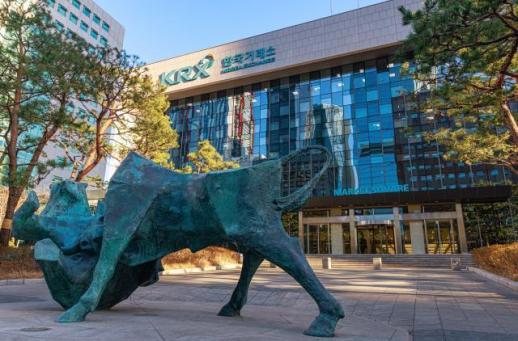 Debate Grows Over Extending Korea Exchange Stock Trading Hours Disagreement is widening inside South Korea’s market over the Korea Exchange plan to extend stock trading hours. The exchange says longer hours would boost global competitiveness and investor convenience, but securities firms and some retail investors question the benefits and warn of confusion. Even if change is needed, a revamp that fails to win market trust is unlikely to succeed. The exchange had pushed to add a premarket and after-hours session, expanding the trading day from the current 6 hours 30 minutes to about 12 hours. After brokerages raised concerns about the burden of systems development, a lack of testing time and staffing needs, the exchange delayed implementation from late June to Sept. 14. It also adjusted the premarket closing time and decided participation would be voluntary for brokerages. The schedule change may ease tensions on the surface, but core issues remain. The exchange argues that as overseas markets such as the United States move toward longer trading, South Korea must follow to stay competitive. It says both foreign and domestic investors want more opportunities to trade. In the United States, some markets have active off-exchange trading, and debate continues over 24-hour trading. Critics say South Korea’s market conditions differ. With liquidity not always sufficient, simply extending hours could spread trading thinner and distort price formation. Thinly traded periods could bring bigger swings, and there are concerns about an increase in spoof orders or short-term speculative trading. Institutions and foreign investors may be able to staff and equip overnight operations, but retail investors could be disadvantaged in access to information and ability to respond. Brokerages also face added costs. Longer hours would require expanded IT infrastructure, more customer-service staffing and stronger risk-management systems. Large firms may absorb the expense, but smaller and midsize firms could struggle. The cost of a market overhaul could ultimately be passed on to investors through fees or reduced services. Retail investors are divided as well. Office workers and those seeking trades linked to overseas markets could gain more options. Others warn of fatigue from monitoring prices for longer periods, encouragement of excessive day trading and disruption to daily routines. Longer trading hours, they argue, do not automatically mean greater investor benefit. The key issue is not speed but sequence. Extending trading hours is not a simple change in business hours; it reshapes market structure. The exchange must first ensure a unified order system, stable technology, safeguards to curb volatility, stronger surveillance against unfair trading and investor-protection measures. Rushing implementation without preparation could leave confusion rather than modernization. With the exchange now reviewing the plan, it should move away from a one-way push. The article calls for an open verification process involving retail investors, brokerages, academia and financial authorities to assess demand and costs objectively. It also warns against treating the demands of some investors as the needs of the entire market, while cautioning that innovation should not be halted solely because of industry burdens. The article argues that capital-market competitiveness comes from trust, not trading hours. Markets grow when investors believe trading is fair, systems are stable and prices are formed transparently. Extended hours should come later. If the exchange is acting for the market, it should broaden trust before lengthening the clock. * This article has been translated by AI. 2026-04-25 09:03:24
 -
 South Korea Forecast: Clear Skies Nationwide, Highs Up to 27C Saturday will be sunny nationwide, with daytime highs rising to as much as 27 degrees Celsius. The Korea Meteorological Administration said daytime temperatures will range from 20 to 27C, higher than usual. In inland areas, the day-to-night temperature gap will be around 20 degrees, and people should take care with their health. Dry weather advisories are in effect for the central region, North Gyeongsang Province and parts of North Jeolla Province, and the advisories could expand to other areas. Authorities urged caution to prevent fires. Fine dust levels are expected to be "good" to "moderate" nationwide due to smooth atmospheric circulation. Waves are forecast at 0.5 to 1.5 meters in the East and South seas and about 0.5 meters in the West Sea. In offshore waters (within about 200 kilometers of the coastline), wave heights are expected at 0.5 to 2.0 meters in the East and South seas and 0.5 to 1.0 meters in the West Sea.* This article has been translated by AI. 2026-04-25 08:33:17
 -
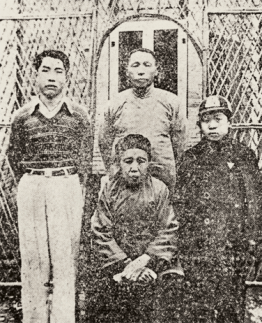 Kim Gu’s ‘My Wish’ at 150: Weighing a Strong Korea Against a Beautiful One One hundred fifty years is long enough to commemorate a person. But when that name still poses a question, the anniversary is also about the present. Marking the 150th anniversary of independence leader Kim Gu’s birth, the issue is not only what he achieved, but what he asked: What kind of country are we building now? Among Kim’s best-known writings is “My Wish.” He said he wanted a beautiful country, not merely a strong one. He envisioned a nation respected for its culture, not one that rules by force. The line was not simple idealism, but a conclusion drawn from the colonial era: Material power alone does not earn respect, and people and culture ultimately shape a nation’s face. A century and a half later, South Korea has reached a landscape Kim never saw: a top-10 global economy, strong industrial competitiveness and the spread of cultural content worldwide. By the numbers, the country is close to what many would call prosperous. The question remains: Has it moved closer to being “beautiful”? The distinction is about direction. Prosperity rewards speed — faster growth and bigger expansion. Beauty demands balance, with human dignity, community values and cultural depth advancing alongside growth. The two can collide, and the article argues South Korean society now stands at that crossroads. Against that backdrop, the government’s decision to form a public-private task force for the 150th anniversary and revive the theme of a “culture of peace” reflects an effort to reassess national priorities. Plans such as holding a culture week in Gwanghwamun and spreading messages on electronic billboards point in the same direction, shifting commemoration from static displays to public participation. One example has drawn attention: “My Wish” appearing at a bank counter. Woori Bank, working with the Korean National Commission for UNESCO, linked donations to a savings product, allowing customers to save while contributing small amounts to cultural content. An idealistic line has been placed in one of the most practical settings. The article cautions against overreading the symbolism. Banks still must generate profits, and customers still choose based on interest rates. Putting a historical message into a financial product does not change finance’s basic nature. The significance, it argues, lies in the question the attempt raises. Kim’s philosophy and a bank’s function belong to different worlds — one speaks to culture and spirit, the other to capital and efficiency. The article says forcing them to match is unrealistic, but treating them as entirely separate also misses a point: Capital has direction. Depending on how it is used, it can be mere accumulation or a source of social value. From that view, Kim’s message gains renewed relevance. He did not reject wealth, the article says; he questioned its purpose. He did not deny strength; he sought to redirect it. The question becomes not how much is earned, but where that wealth is headed. That, the article argues, is what the 150th anniversary represents: commemoration for the present. Invoking Kim’s name prompts a review of today’s choices — what is being lost amid growth, what values are being missed amid competition, and how balance can be restored. No institution — finance, business or government — is exempt from that question, the article says. Each handles capital and makes choices, and those choices accumulate into a society’s direction. In that sense, Kim’s 150th year is presented not as a ceremonial marker, but as a checkpoint. The “My Wish” display at a bank counter is not an answer, the article concludes. It is one attempt. Its meaning lies in bringing a textbook line into everyday decisions. The question, it says, is simple: What kind of country is being built? Beyond being strong by the numbers, is it becoming a country respected for its people? Kim’s question remains in the present tense, and the answer depends on what is chosen now. * This article has been translated by AI. 2026-04-25 07:04:51
 -
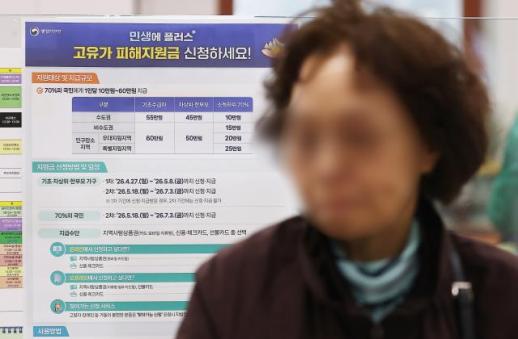 South Korea to Start High Fuel Price Relief Payments; Eligibility, Amounts and Use Rules Applications and payments for South Korea’s high fuel price relief payment begin April 27, drawing attention to who qualifies and how much they can receive. The government is rolling out the program to help stabilize household finances as international oil prices rise and inflation pressures grow. Payments vary by income and place of residence, ranging from 100,000 won per person to a maximum of 600,000 won. Basic livelihood security recipients will receive 550,000 won in the Seoul metropolitan area and up to 600,000 won outside the capital region. Near-poverty households and single-parent families will receive about 450,000 to 500,000 won. Among the general public, those in the bottom 70% by income can receive 100,000 won to as much as 250,000 won depending on region. The schedule is split by group. Vulnerable households — including basic livelihood security recipients, near-poverty households and single-parent families — will be paid first starting April 27. A second round of applications for the bottom 70% by income begins May 18. People who want advance notice can sign up for application-period alerts through the National Secretary service. Alerts can also be set through Naver, KakaoTalk and Toss. Applications and payments will be handled both online and in person. During the first week, a day-of-week system based on the last digit of a person’s birth year will be used to reduce crowding, as in past disaster relief programs. Those who want the payment on a credit or debit card can apply online through their card issuer or a mobile payment app, or apply in person at a bank branch linked to the card. Card-based payments are charged the day after application, and the relief funds are used before regular card balances. Remaining balances will be provided by text message or app notifications. Those who prefer a mobile or card-type local gift certificate can apply online through the local gift certificate app or website run by their local government. People seeking paper certificates or a prepaid card can visit their local eup, myeon or dong administrative welfare center. The funds can be used through Aug. 31 at eligible small businesses in the recipient’s local jurisdiction, including merchants with annual sales of 3 billion won or less. Use is restricted at certain businesses, including adult entertainment and gambling-related venues, online e-commerce and cash-convertible businesses. Any unused balance will expire automatically after the deadline.* This article has been translated by AI. 2026-04-25 07:03:38
 -
 Duo Data Leak Exposes 430,000 Matchmaking Profiles, Raising Questions About Trust Marriage has long carried an element of transaction, even when it is wrapped in the language of love. The film “Materialists” captured that idea with a blunt line from a couple manager who builds matches by salary, looks, education and age: “Love is a variable, and marriage is a calculation.” That logic depends on collecting ever more personal information. But the more complete the calculation becomes, the more exposed people can be. A data breach at Duo, South Korea’s largest matchmaking company, laid bare that risk when sensitive personal information on 430,000 members was leaked. The leaked material went far beyond names and contact details. It included height, weight, blood type and religion, as well as marital history, family relationships, workplace, financial capacity and health status — a profile that can describe a person’s life in numbers. The breach also raised questions about how such data was handled. Of the 430,000 affected, 300,000 were members whose contracts had already ended and whose data should have been destroyed, the article said. Instead, the information was kept and ultimately fell into hackers’ hands. The company’s response drew additional criticism. The article said Duo failed to meet a requirement to report the breach within 72 hours after recognizing it, and victims learned of the leak later through news reports. South Korea’s Personal Information Protection Commission imposed an administrative fine of about 1.2 billion won. Spread across the victims, that amounts to about 2,800 won per person — less than the price of a cup of coffee, the article noted. The article said the penalty reflects limits in the current system, including rules tied to revenue and reductions based on company size. But it argued the larger issue is why people disclose so much while expecting so little protection in return. Unlike breaches involving platforms or telecom companies, the article said, the information entrusted to matchmaking firms is not just a record of consumer behavior. It can shape a person’s social standing and identity, and once exposed it can become an irreversible vulnerability. A scene in the film poses a simple question: “Why do people insist on getting married?” The answer is equally direct: “Because they’re lonely. And because they need hope.” The article said what people are buying is not a set of conditions but relief from anxiety — reassurance that their choice is not wrong. Matchmaking companies sell that reassurance and, in exchange, accumulate vast power through data. In a market where marriage is treated as a deal, the article argued, trust should be the most valuable asset. Instead, it said, trust is treated as cheap, and the costs of that complacency fall most heavily on individuals. * This article has been translated by AI. 2026-04-25 06:45:26
 -
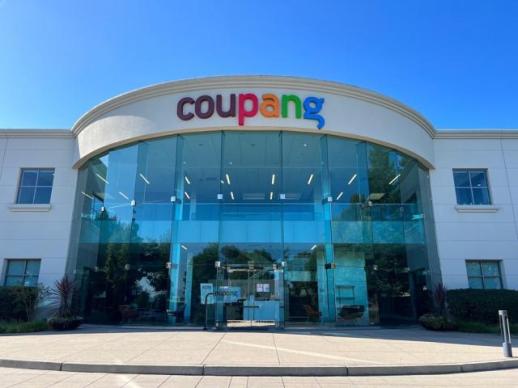 Coupang Scrutiny Should Focus on Numbers, Not Emotion, After Data Leak and Lobbying An old saying about others doing the work while someone else takes the money has resurfaced in South Korea as questions grow over Coupang’s structure and conduct. Built on a logistics network supported by 35 million Korean consumers, with Korean workers making pre-dawn deliveries and Korean small businesses paying platform fees, Coupang posted last year’s results of 45.4555 trillion won in revenue, 2.2883 trillion won in operating profit and 1.5891 trillion won in net profit. Operating profit rose 40.9% from a year earlier and net profit increased 37%, even as South Korea was shaken that year by a personal data leak. Coupang’s Korean unit then paid an interim dividend of 1.4659 trillion won to its parent, the U.S.-based Coupang Inc., which owns it 100%. The payout exceeded 90% of net profit. Coupang has said the transfer was not a shareholder cash dividend but a funding move to reinvest in global growth businesses such as Taiwan, and that the source was not Korean operating profit but part of paid-in capital surplus from past overseas investors. The explanation may be difficult to dispute on accounting grounds. Critics, however, question whether it is reasonable that the trust costs from the data leak were borne by Korean users and society while profits flowed overseas. The issue escalated further with lobbying in Washington. Coupang spent $1.785 million on U.S. lobbying in the first quarter of this year, nearly double the previous quarter. Its in-house lobbying rose to $1.09 million, and it newly hired outside firms including Ballard Partners, Crossroads Strategies, and Williams & Jensen. The reported targets expanded beyond the Commerce Department and the Office of the U.S. Trade Representative to include the White House, the Office of the Vice President and the National Security Council. The fallout soon returned to Seoul. Fifty-four Republican members of the U.S. House sent an open letter to Ambassador Kang Kyung-wha, arguing the South Korean government discriminates against U.S. companies such as Coupang. They described the leak involving data on 35 million people as a release of “low-sensitivity” information. In South Korea, Coupang is widely seen as daily-life infrastructure rather than a simple consumer choice, and critics say the lawmakers’ wording underscored the core of the dispute. Concerns have also grown that the corporate dispute could become entangled with U.S.-South Korea security talks, including issues such as nuclear-powered submarines and uranium enrichment and reprocessing. Wi Sung-lac, head of South Korea’s National Security Office, said, “Coupang is a corporate issue, but it is true that this issue is affecting security consultations between South Korea and the United States,” while drawing a line by calling it an “undesirable connection.” He said questions of corporate illegality should be handled through law and procedure, and security negotiations through security logic, warning that mixing the two risks turning the rule of law into a bargaining chip and the alliance into a transaction. The article argues South Korea’s government and political circles should not treat the matter as an emotional issue, saying anti-American sentiment, anti-business sentiment and nationalism are not answers. It calls for a fact-based accounting: how much Coupang earned in South Korea, how much it paid out, when and by how much lobbying funds increased, how far lobbying targets expanded, and the scale of harm from the data leak and whether follow-up steps were adequate. It says foreign companies should not be treated unfairly, but U.S. companies should not receive exceptions, adding that mature alliances build trust by respecting each other’s laws and institutions and that an alliance cannot serve as a shield against the rule of law. “Korea did the work,” the article concludes, arguing that seeking accountability through the rule of law is a matter of common sense, not emotion. * This article has been translated by AI. 2026-04-25 06:36:23
 -
 China’s ‘Soul Ferry’ Returns as 100% AI-Generated Film, Drawing Backlash A thriller series that drew huge audiences in China in 2014 is returning to theaters about a decade later — this time as a film made entirely with artificial intelligence. The movie, titled ‘Soul Ferry·Floating Life Dream’ (靈魂擺渡·浮生夢), is scheduled for release this summer, according to China News Network and other local outlets. It is co-produced by the online video platform iQiyi and Chuangxin Media. ‘Soul Ferry’ began as a web drama in 2014 and surpassed 5 billion cumulative views. Fans welcomed news of a film adaptation, but the project has also stirred controversy after being billed as a “100% AI-generated film.” AI has been used in film and TV production before, but local media described this as effectively the first case of a well-known intellectual property being produced end-to-end with AI. The original drama follows a young man who can see ghosts. Seemingly ordinary and barely noticed by others, Xia Dongqing (played by Liu Zhiyang) is born with the ability to see “souls from another world.” Struggling to make a living through part-time jobs, he takes work at the “Convenience Store No. 444,” a place where ghosts appear after midnight and a boundary linking different dimensions. A civil servant from the underworld, Zhao Li (Yu Yi), runs the store and calls himself a “guide for souls,” while Dongqing and the bold young woman Wang Xiaoya (Xiao Yin) encounter a series of strange cases. The producers said AI was used from planning through completion, including modeling characters based on the original cast and editing music. They said deep-learning technology was used to reproduce subtle facial expressions and even muscle movement. The trailer has intensified debate over whether AI can replace human actors. Some viewers called it a technical breakthrough for East Asian thrillers, while others criticized it, saying, “Even an actor’s soul is exploited by an algorithm.” Online reaction has been sharply divided. Viewers said the AI performers’ emotional cues — frightened eyes, sly expressions and cutesy speech — looked more awkward than real acting. On China’s Baidu portal, the hashtag “Soul Ferry has no soul” rose among top trending searches. One film critic panned it, saying it was “like serving pre-made food at a Michelin restaurant.” The trailer also drew attention for apparent technical flaws. Some scenes show what viewers described as an “uncanny valley” effect, including a hand that appears to have six fingers and hair that seems to pass through a doorframe. Comments by Guo Jingyu, who oversaw the film’s production, added to the controversy. Critics pointed to his earlier remarks at a forum, where he criticized AI virtual humans and said, “AI cannot express a character’s soul,” calling his move to make a fully AI film contradictory. The dispute reflects broader anxiety in the film industry as AI grows rapidly. Some worry that wider use of AI across production could shrink roles for actors and crew and force a restructuring of the industry. According to Chinese market research firm Tonghuashun, AI short dramas can be produced for about one-tenth the cost of traditional dramas, and a three-person team can finish production in 48 hours. The AI-based short-drama market in China is projected to reach about 24 billion yuan this year, with works featuring AI virtual actors expected to account for about 40% of the total.* This article has been translated by AI. 2026-04-25 06:04:38
 -
 KOSPI’s W-Shaped Rebound Faces Test as Chip Earnings and Fed Meeting Loom After setting a record high and completing a so-called W-shaped rebound, South Korea’s stock market is expected to face a key test next week over whether the rally can extend. Semiconductor-driven earnings momentum has supported gains, but heavy foreign selling and a U.S. monetary policy event could increase volatility. According to the Korea Exchange, the KOSPI closed the previous session down 0.18 point, or flat, at 6,475.63. The index rose to the 6,490 level early in the day but gave up gains amid large foreign selling. In the main board market, foreigners net sold 2.1022 trillion won, while individuals and institutions net bought 1.5066 trillion won and 646.1 billion won, respectively. The KOSDAQ ended up 29.53 points, or 2.51%, at 1,203.94. Foreigners and institutions net bought 806.5 billion won and 179.6 billion won, while individuals net sold 963.8 billion won. This week, domestic shares swung between gains and losses as investors weighed post-record-high fatigue and geopolitical risks. Analysts said expectations for semiconductor earnings have collided with Middle East uncertainty. While negotiations between the United States and Iran have continued, tensions tied to the Strait of Hormuz and rising oil prices have not fully eased, they said. Next week, the durability of the semiconductor earnings story is expected to be a central driver. SK hynix posted its best-ever first-quarter results, reinforcing expectations for an industry upturn, and optimism could spread across related sectors. In April export data released recently, semiconductor exports rose more than 180% from a year earlier, maintaining a strong trend. Market watchers also noted that the KOSPI’s rise has been driven more by improving corporate earnings than by liquidity. Upward revisions to profit estimates, led by semiconductors, have helped underpin fundamentals. Still, the sharp run-up over a short period and continued foreign selling are seen as near-term sources of volatility. Foreign flows are viewed as a key swing factor. Foreign investors have remained net sellers in the cash market, and directional buying in the futures market has been limited, analysts said. That could restrain program buying and reduce the index’s upward momentum. Overseas, investors are watching U.S. monetary policy and major economic data. The Federal Open Market Committee meets April 29-30 local time, and while a rate hold is widely expected, markets are focused on how the Fed addresses inflation pressure linked to higher oil prices. U.S. first-quarter gross domestic product, the personal consumption expenditures inflation gauge and earnings from major big tech companies are also seen as potential volatility triggers. Some in the market said that if higher oil prices intensify inflation concerns, expectations for rate cuts could weaken. Others said the KOSPI could keep its uptrend if earnings improvements, led by semiconductors, continue. Na Jeong-hwan, a researcher at NH Investment & Securities, said, "The KOSPI is in a phase where expectations for earnings growth have been reflected in prices, so investors need to focus on sectors where results are being confirmed," adding that "semiconductors, power equipment and defense remain valid leading sectors." Kang Jin-hyeok, a researcher at Shinhan Investment Corp., said, "After a sharp short-term drop, the market has succeeded in a W-shaped rebound, so whether gains continue will depend on earnings and macro variables," and added that investors should keep in mind the possibility of greater volatility driven by geopolitical risks and inflation factors. Some analysts also said the recent pullback has not translated into damage to corporate earnings. With profit estimates continuing to rise, particularly in semiconductors and industrials, they said the current move looks more like a short-term, flow-driven adjustment than a break in the broader trend. As a result, they expect stock-specific performance to dominate over a clear index direction for the time being.* This article has been translated by AI. 2026-04-25 06:03:23
 -
 Blue House swaps senior civil affairs and discipline aides; special inspection team moved The Blue House confirmed that its senior secretary for civil affairs and its senior secretary for public service discipline swapped posts on April 24. According to the Blue House, Lee Tae-hyeong, the senior secretary for civil affairs, and Jeon Chi-young, the senior secretary for public service discipline, began working in their new roles that day. The special inspection team, which had been under the public service discipline office, was also moved under the civil affairs office, officials said. The personnel switch within the same senior secretariat was seen as unusual. The Blue House did not disclose the reason for the changes. Separately, President Lee Jae-myung is set to meet Google DeepMind CEO Demis Hassabis at the Blue House on April 27 to discuss cooperation on artificial intelligence. Hassabis, a founder of Google DeepMind, oversaw the 2016 matches between Go champion Lee Sedol and the AI program AlphaGo. He also won the 2024 Nobel Prize in Chemistry for developing AlphaFold, an AI model that predicts protein structures. The Blue House said the meeting is part of the government’s broader push for global AI cooperation and is expected to help accelerate policy efforts through collaboration with a top-tier AI company.* This article has been translated by AI. 2026-04-25 00:33:17
 -
 NH Investment & Securities Shifts to Co-CEO Structure, Citing Accountability NH Investment & Securities said its board of directors met on the 24th and approved a change in its CEO management structure, shifting from a single-CEO system to a co-CEO system. The company said the move is intended to respond to its larger scale and more diversified business structure following its entry into the IMA (investment management account) business. It said it revamped its top management structure to enable faster, more efficient decision-making as capital markets grow. Under the co-CEO system, the firm plans to strengthen accountability centered on key business divisions and raise division-level expertise. It said the change is aimed at improving execution and speeding decisions, while linking growth in client assets with investment banking capabilities to reinforce its mid- to long-term growth foundation. The company said the board finalized the decision after several rounds of discussions, reflecting NH NongHyup Financial Group’s direction to upgrade governance at its subsidiaries. The board also reviewed expected benefits and potential risks from the shift and said it will put in place phased safeguards. An NH Investment & Securities official said the company will operate a firmwide coordination function and strengthen internal controls so an expertise-based accountability system works smoothly. The official added that while responsibilities by business division will be clearly defined, companywide risk management and customer protection standards will be kept consistent. The official said the change is a strategic choice to strengthen competitiveness over the mid to long term, not a short-term response, and that the company will use greater division expertise to connect expanding business opportunities to higher customer and shareholder value.* This article has been translated by AI. 2026-04-24 22:00:18