
Journalist

Seo Hye Seung
-
 Test Drive: Lexus RX450h+ Offers Flexible Electric and Hybrid Driving The first impression of the Lexus RX450h+ is its striking copper-toned exterior. The bronze color subtly shifts in the sunlight, exuding a sense of luxury that stands out in any setting. During the May holiday, I tested the RX450h+ in Seoul and the Boryeong area of South Chungcheong Province. This vehicle is notable for being a plug-in hybrid (PHEV) and part of the increasingly popular sport utility vehicle (SUV) segment. Activating the EV mode on the console, I noticed the driving range displayed on the dashboard, based on internal combustion, remained at 790 km. Even after driving through downtown Seoul, this number barely decreased. It was only when I thought, "I’m driving through Seoul for free," that I saw the electric driving range drop from 24 km to 15 km on the left side of the dashboard. The RX450h+ allows drivers to switch seamlessly between electric and hybrid modes based on their needs. Notably, when driving in hybrid mode, the electric vehicle battery charges automatically, allowing for a dual benefit. On May 1, while traveling from Seoul to Boryeong for a business trip, the benefits of EV mode became evident. The vehicle operated almost entirely on the electric motor, with minimal engine engagement. The smooth ride in low-speed urban areas felt akin to that of an electric sedan. The RX450h+ is equipped with an 18.1 kWh high-capacity lithium-ion battery, enabling approximately 56 km of driving in electric mode when fully charged. For drivers who frequently commute or travel within urban areas, the option to charge at a parking facility makes it a practical choice for electric driving. Once on the West Coast Highway, the vehicle's character shifted again. Engaging hybrid mode activated the 2.5-liter inline four-cylinder gasoline engine, delivering a refreshing acceleration. The engine and electric motor worked together seamlessly to increase speed. During heavy traffic between Hwaseong and Pyeongtaek, I experienced the effectiveness of the driver assistance systems. The Dynamic Radar Cruise Control (DRCC) maintained a stable distance from the vehicle ahead, even in slow-moving traffic. In fact, even in stop-and-go traffic at around 30 km/h, the vehicle responded smoothly without abrupt acceleration or deceleration. When traveling over 100 km/h, if the car in front suddenly slowed down, the RX450h+ naturally adjusted its speed. This feature significantly reduced fatigue during long drives. The interior focuses on Lexus's signature comfort. The driver's seat incorporates the Tazuna concept, inspired by horseback riding, enhancing the connection between the driver and the vehicle. It feels more like a refined, eco-friendly vehicle than an aggressive sports car, showcasing a new direction for Lexus in the era of electrification. 2026-05-08 16:34:58
 -
 Kolon Industries Reports 130% Increase in Q1 Operating Profit Kolon Industries announced on May 8 that its consolidated revenue for the first quarter reached 1.2374 trillion won, with an operating profit of 61.9 billion won. Despite ongoing external uncertainties, the company's operating profit surged by 130.1% compared to the same period last year, driven by the success of its ongoing Operational Efficiency (OE) project and increased sales of key products such as aramid, engineering plastics, and petroleum resins. In the industrial materials sector, sales growth in aramid and engineering plastics propelled revenue increases. Additionally, the expansion of high-value product sales contributed to improved operating profits. The chemicals division saw revenue and operating profit rise compared to both the same period last year and the previous quarter, thanks to the resumption of petroleum resin production following scheduled maintenance and increased sales to customers. The fashion division also experienced revenue growth year-on-year due to recovering consumer sentiment and strong sales of new products, resulting in a return to profitability. A Kolon Industries representative stated, "Despite the uncertain external environment, the OE project has yielded results, leading to increased revenue and operating profit across all divisions. We will continue to establish a foundation for sustained growth through operational efficiency and the expansion of high-value product lines." Meanwhile, Kolon Industries is accelerating efforts to streamline low-profit businesses and optimize non-core assets. Industry sources indicate that the company is considering the sale of low-profit divisions, including its semiconductor film business. In response, a company representative stated, "No decisions have been made regarding the sale of specific divisions."* This article has been translated by AI. 2026-05-08 16:33:20
 -
 Seoul imposes 30-day taxi suspensions, but deeper issues remain SEOUL, May 08 (AJP) - “I thought that was just the normal price at first,” said Teo, a 28-year-old Singaporean who visited Seoul last month after paying around 50,000 won ($36) for a roughly 20-minute taxi ride from Seoul station to his hotel. South Korea will suspend taxi drivers for 30 days from their very first violation if they are caught overcharging foreign passengers, as authorities move to curb mounting complaints from overseas visitors. However, experts say tougher penalties alone may not fully resolve the issue, pointing to structural problems within South Korea’s taxi industry and limited transportation alternatives for foreign tourists unfamiliar with local systems. “Overcharging foreign tourists is clearly a problem in itself, whether it amounts to discrimination or deception targeting people unfamiliar with the system,” said Jeong Ran-soo, professor at department of Tourism at Hanyang University. The Ministry of Land, Infrastructure and Transport (MOLIT) said Friday it had proposed revisions to enforcement rules under the Taxi Transportation Business Development Act, tightening penalties for drivers who unfairly charge foreign passengers inflated fares. Jeong said foreign tourists are especially vulnerable because of what he described as “information asymmetry,” where visitors are unfamiliar with local transportation systems and pricing structures. While taxi scams exist in many countries, he noted that overseas tourists often have broader access to alternative transportation platforms such as Uber, Grab or global travel-booking services. “In Korea, foreign visitors have fewer convenient alternatives beyond taxis, buses or subways,” he said, adding that authorities should consider expanding specialized tourism transportation services, including regulated “tourist taxi” programs with clearer pricing systems tailored for overseas visitors. Under the current system, drivers caught overcharging passengers for the first time receive a warning, with a 30-day license suspension imposed after a second violation. The revised rules would eliminate the warning stage and allow immediate suspension for a first offense. Under the current system, drivers caught overcharging passengers for the first time receive a warning, with a 30-day license suspension imposed after a second violation. The revised rules would eliminate the warning stage and allow immediate suspension for a first offense. The move follows a broader government campaign unveiled at a tourism strategy meeting chaired by President Lee Jae Myung in February, where officials announced measures to curb tourist overcharging and improve service standards for foreign visitors. The ministry said it plans to finalize the revised rules after a public consultation period ending June 17. Urgency has grown as complaints over taxi overcharging continue to surface amid sharp increase in foreign arrivals. South Korea recorded an all-time high of 2.06 million foreign arrivals in March alone, while first-quarter inbound tourism rose 23% from a year earlier, driven by the global popularity of K-pop and other Korean cultural exports. Against that backdrop, Seoul Metropolitan Government introduced a QR-code complaint system for foreign passengers in June last year, making it easier for tourists to report taxi-related problems. According to data released by the city government in January, authorities received 487 complaints over roughly six months, with unfair fare charges accounting for the largest share. Administrative penalties had already been imposed in cases where violations were confirmed. Seoul also introduced English-language taxi receipts late last year, listing late-night surcharges and toll fees separately so foreign passengers could easily verify charges. Despite those efforts, complaints have remained concentrated around major tourist hubs and transportation gateways. Local reports in January highlighted several alleged overcharging cases involving foreign tourists near Incheon International Airport and Inspire Arena— a large entertainment venue that hosts K-pop concerts and international events. In one case, a Chinese tourist said she paid 150,000 won (about $110), for a taxi ride to Seoul after attending a concert. Another passenger was asked to pay 50,000 won for a short trip to an airport rail station that would normally cost around 10,000 won during snowy weather conditions. Incheon Metropolitan City government said 360 taxi-related complaints were filed last year in areas surrounding the airport and concert venue. During the same period, police detected 466 cases involving illegal transportation services near the airport. The government’s aggressive response also reflects broader concerns about South Korea’s tourism competitiveness. The country has seen a sharp rise in foreign visitors fueled by the global popularity of K-pop, K-dramas and other Korean cultural exports, but officials worry that repeated incidents involving tourists could damage the country’s international image. Data from the Korea Tourism Organization showed tourism-related consumer complaints surged 71.1 percent from a year earlier to 1,543 cases last year, with taxis, shopping and accommodations among the most common categories. Tourism industry officials warn that repeated overcharging incidents in areas heavily frequented by foreign tourists could leave visitors with a negative overall impression of traveling in South Korea. Complaints involving Korean taxi services and advice on avoiding scams are also widely shared across online travel communities and social media platforms. The ministry said unfair taxi charges could undermine trust in South Korea’s tourism industry, adding that authorities plan to strengthen enforcement and penalties to prevent repeat violations. 2026-05-08 16:28:57
 -
 Filibuster Blocks Reintroduction of Constitutional Amendment Proposal On May 8, National Assembly Speaker Woo Won-sik attempted to introduce a constitutional amendment and 51 other legislative items during a plenary session. However, the People Power Party (PPP) filed a filibuster on all bills, prompting Woo to withdraw the proposal. He criticized the PPP for abusing the filibuster process. After the session, PPP floor leader Song Eon-seok stated that amendments pushed through without bipartisan agreement are historically linked to dictatorship and misfortune. Woo expressed his intention to hold the session to avoid derailing the long-awaited constitutional amendment, stating, "Seeing the response of a filibuster, I feel it is pointless to proceed with the agenda, and I will not present the amendment." He added that the proposed amendment included commitments previously made by the PPP, expressing strong regret towards the party for derailing the process with political maneuvering and unfounded claims. In response to the PPP's objections to what they termed a 'hasty amendment,' Woo remarked, "The PPP has repeatedly rejected proposals I have made in the past without providing any answers. If illegal uprisings occur again in 20 or 30 years, the PPP will be seen as historical criminals." During the filibuster, PPP lawmakers left the chamber around 2:18 PM as Woo's remarks extended. He declared the session adjourned five minutes later without presenting any bills. Following the adjournment, the PPP leadership criticized Woo for violating the principle of no simultaneous sessions. Song stated, "The amendment was clearly rejected in the plenary session yesterday. Reintroducing a defeated bill contradicts the principle of no simultaneous sessions," adding that the failure to vote was appropriately reflected in the proposal to dismiss Minister of Unification Jeong Dong-young, which was not brought to the floor. He further questioned the significance of amending the constitution if the National Assembly Speaker does not uphold the current constitution, warning that unilateral amendments without bipartisan agreement have historically led to dictatorship and misfortune. Meanwhile, the National Assembly attempted to introduce the constitutional amendment the previous day, but only 178 lawmakers participated in the vote, leading to a declaration of failure to vote. For the amendment to pass, it requires the approval of at least two-thirds of the National Assembly's members. The amendment must clear the plenary session within 60 days of its announcement, leaving about a month for action. However, to align with the government's plan to hold a national referendum on the amendment alongside the June 3 local elections, it must pass by May 10, effectively sidelining this attempt at constitutional reform. Woo emphasized the need to establish a special committee for constitutional amendments in the second half of the year, urging both parties to present a clear timetable for the amendment to the public.* This article has been translated by AI. 2026-05-08 16:27:52
 -
 YG doubles operating profit Q1 on year on BLACKPINK comeback SEOUL, May 08 (AJP) - South Korea’s K-pop powerhouse YG Entertainment more than doubled first-quarter operating profit as revenue from BLACKPINK and rising contributions from younger artists boosted earnings, reinforcing expectations for a stronger comeback cycle this year despite weaker-than-expected net profit. According to its earnings report released Thursday, YG Entertainment posted an operating profit of 19.4 billion won ($13.2 million) in the January-March period, up 103.9 percent from a year earlier. Revenue jumped 46.9 percent to 147.1 billion won, while net profit slipped 4.6 percent to 9.8 billion won. The company’s sales exceeded market expectations, while operating profit largely matched analyst forecasts. According to local market tracker FnGuide, analysts had projected first-quarter operating profit of 19.3 billion won and revenue of around 138.1 billion won. Net profit, however, missed the consensus estimate of roughly 15.0 billion won. Compared with the previous quarter, operating profit and revenue fell 13.1 percent and 14.3 percent, respectively, reflecting fewer large-scale artist activities. Net profit, however, rose 23.9 percent from the prior quarter. YG attributed the earnings growth to expanding monetization of artist intellectual property, including merchandise and licensing revenue from younger acts such as BABYMONSTER and TREASURE, alongside continued contributions from BLACKPINK-related touring and album sales. BLACKPINK’s latest release, Deadline, sold more than 1.77 million copies in its first week, according to Hanteo Chart, underscoring the group’s enduring global commercial power. The company is expected to maintain stronger earnings momentum in the second half of the year as major artists ramp up activities and touring schedules expand globally. According to FnGuide, YG Entertainment is projected to post operating profit of 80.8 billion won and annual revenue of 590.1 billion won in 2026, surpassing its previous peak in 2023, when operating profit reached 79.5 billion won and revenue totaled 569.2 billion won. BABYMONSTER is scheduled to begin its second world tour in Seoul in June before expanding into Latin America, Oceania and Europe. TREASURE is also expected to release a new album in June and continue solo and unit activities in the second half. YG is additionally preparing to debut a new boy group in September as part of its broader push to strengthen its next-generation artist pipeline. Shares of YG Entertainment closed down 0.2 percent at 50,200 won on Friday. 2026-05-08 16:26:47
 -
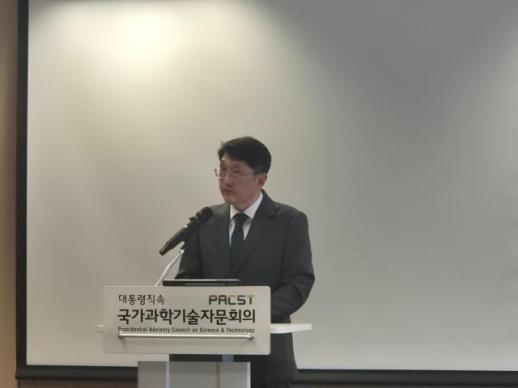 AI Can Identify Vulnerabilities in 10 Minutes, South Korea's Ministry of Science Says The Ministry of Science and ICT is examining the need for developing security-focused AI models to counter evolving AI-based cyber threats. During a briefing on May 8 in Gwanghwamun, Seoul, Choi Woo-hyuk, head of the Cybersecurity Policy Division, stated, "There was a consensus that the current information security system is insufficient to address threats based on AI models. We discussed the necessity of a dedicated AI model specialized in cybersecurity." Earlier that day, the ministry held a meeting with experts from academia and industry to discuss responses to global AI companies' cybersecurity projects. Participants included firms involved in developing independent AI foundation models, such as SK Telecom, Upstage, and Motif Technologies, as well as key AI companies, the president of the Korean Society for Information Security, and chief information security officers (CISOs) from major corporations. The ministry's position is to enhance the performance of currently available security-focused models in the short term while considering the establishment of a security response system based on independent AI models in the medium to long term. Choi noted, "There was a consensus on utilizing independent AI models to create a security-focused AI system. We are not at the stage of finalizing a plan but are in the process of discussing its necessity." He added that a new direction for the information security paradigm will be explained between late May and early June. The meeting also showcased a demonstration of AI-based penetration testing. The ministry and the Korea Internet & Security Agency (KISA) used Anthropic's Opus model to identify vulnerabilities in specific corporate services, leading to account theft and unauthorized access. Choi explained, "There was a case where AI found a way to generate a new password without knowing the existing one. We confirmed the process of AI identifying vulnerabilities and accessing services after securing accounts." According to the ministry and KISA, the test revealed a total of seven vulnerabilities. Notably, AI was able to perform what would typically take professional hackers several days in just about ten minutes. Choi remarked, "AI identified vulnerabilities that would take professional hackers days to find manually in a short time. While it is currently not at a level that general users can easily utilize, the speed of attacks could increase as professional hackers become more adept at using prompts." Meanwhile, on May 11, Deputy Minister Ryu Je-myung is scheduled to meet with representatives from Anthropic to discuss strategies for addressing AI-based cybersecurity threats. Choi stated, "The need for a response related to Mitos has been raised, prompting the government to request cooperation in advance."* This article has been translated by AI. 2026-05-08 16:23:28
 -
 Samsung Elec management, union to sit down at govt mediation SEOUL, May 08 (AJP) - Samsung Electronics and its union agreed to meet next week to iron out differences and possibly avert a full-scale strike scheduled for May 21, after the South Korean government stepped in amid fears that labor unrest could undermine a key pillar sustaining the economy and the stock market rally. The Samsung Electronics Labor Union (SELU) announced Friday it will enter a formal "post-mediation" process, with intensive negotiations scheduled for May 11 and 12. The breakthrough came after a meeting earlier Friday between union leadership and the head of the Gyeonggi Regional Employment and Labor Office. During the meeting, the government "strongly recommended" mediation and promised full support to facilitate a resolution, the union said in a statement. Despite agreeing to the talks, the union maintained its hardline stance, noting that it will continue preparations for the planned walkout. "If a satisfactory outcome is not reached, we will not hesitate to launch a general strike," SELU Chairman Choi Seung-ho said in the statement. Management welcomed the resumption of talks. When asked earlier if the company would participate in a post-mediation process should the union agree, a Samsung Electronics official indicated readiness to engage. "Reaching a settlement is naturally preferable to a strike for the company, so there would be no reason to refuse," the official said. The intervention follows increasingly pointed remarks from President Lee Jae Myung, a former factory worker who has traditionally maintained labor-friendly credentials but has recently emphasized balancing workers’ rights with economic stability. “If organized workers make excessive or unreasonable demands, they will face public criticism and ultimately harm the broader workforce,” Lee said during a meeting with senior aides on April 30. Although he did not name any company, industry observers widely interpreted the remarks as a warning directed at the Samsung union as labor tensions intensified over bonuses and compensation tied to the semiconductor boom. Labor Minister Kim Young-hoon reinforced the message during a separate meeting with regional labor officials. “The achievements of Samsung Electronics were made possible by the dedication of its workers, but we cannot deny the role of countless suppliers, government support and R&D investment,” Kim said. The government’s unusual intervention reflects the outsized importance of Samsung Electronics to the South Korean economy. Semiconductors account for roughly one-fifth of the country’s exports, while Samsung Electronics and its affiliates make up around 20 percent of the KOSPI’s total market capitalization, effectively anchoring the broader market rally. The SELU, now the company’s largest labor organization with more than 40,000 members, has announced plans for an 18-day general strike beginning May 21 after wage negotiations collapsed. The union is demanding that 15 percent of Samsung Electronics’ operating profit be allocated to employee bonuses, arguing workers have not received a fair share of profits generated during the AI-driven semiconductor supercycle. Management has proposed a 10 percent bonus pool alongside additional one-time incentives. The dispute comes as Samsung Electronics is racing to regain ground in high-bandwidth memory (HBM) chips used in artificial intelligence servers, an area where rival SK hynix has recently outpaced Samsung through early supply deals with AI chip leader NVIDIA. Analysts warn that even limited disruptions inside semiconductor fabrication lines can trigger expensive yield losses because chip plants operate around the clock and require uninterrupted ultra-precise processing conditions. Should disruptions escalate into a full production halt, estimated daily losses could climb to as much as 1 trillion won ($730 million), according to industry estimates. Any deterioration in yields or wafer damage would be especially costly as Samsung pushes to expand next-generation HBM shipments amid exploding global AI demand. The confrontation is also exposing widening divisions inside Samsung itself. Employees in consumer electronics and device divisions have increasingly voiced resentment over compensation disparities favoring semiconductor workers, mirroring broader concerns over South Korea’s growing economic dependence on a narrow group of AI-linked exporters. The labor standoff arrives at a politically delicate moment for the Lee administration, which is trying to preserve both labor support and industrial competitiveness as geopolitical instability and technology fragmentation intensify pressure on the export-driven economy. 2026-05-08 16:21:32
 -
 Blue House Expresses Regret Over Failed Constitutional Amendment Due to Opposition The Blue House expressed regret on May 8 that a proposed constitutional amendment was not presented at the National Assembly due to opposition from lawmakers of the People Power Party. It urged continued discussions on the amendment in the upcoming second half of the 22nd National Assembly. Chief Spokesperson Kang Yoo-jung stated in a written briefing that the amendment aimed to incorporate the spirit of the Busan Democratic Uprising and the May 18 Democratic Movement into the preamble of the constitution, as well as to clarify the government's responsibility for regional balanced development and enhance the National Assembly's oversight of martial law. He noted that reflecting the lessons of the December 3 illegal martial law was a national demand, and there was little disagreement between the ruling and opposition parties on this matter. Kang emphasized, "The public will find it hard to understand why even the minimal constitutional amendment necessary to safeguard the nation and democracy was opposed." He further stated, "The discussions on constitutional amendments promised to the public must not be halted. We request that the National Assembly approach these discussions with a greater sense of responsibility in the second half and uphold the commitments made to the people." Kang added, "Constitutional amendment is not merely a matter of changing systems. It should serve as a new starting point for restoring cooperative politics, national unity, and social harmony beyond extreme confrontation and political strife." He assured that the Blue House would continue to pursue discussions on constitutional amendments as a pressing issue alongside the public.* This article has been translated by AI. 2026-05-08 16:21:25
 -
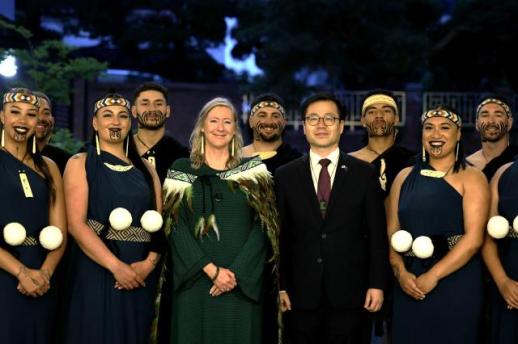 New Zealand ambassador hosts Māori culture night in Seoul SEOUL, May 08 (AJP) - New Zealand Ambassador Dawn Bennet hosted an evening of traditional Māori performance at her Seoul residence on Thursday, emphasizing the deep-seated societal parallels between New Zealand and South Korea. The event brought together influential guests to witness indigenous cultural displays, signaling a continued commitment to soft-power diplomacy between the two nations. The two nations share a history that predates their modern economic ties, beginning with the Korean War when New Zealand deployed more than 6,000 personnel to the peninsula, according to the New Zealand Ministry for Culture and Heritage. Today, that relationship is defined by a comprehensive free trade agreement and a shared vision for the Indo-Pacific region. The guest list for New Zealand Culture Night 2026 included approximately 100 South Korean lawmakers, diplomats, scholars, and business leaders. The evening featured a performance by the Hiwa Crew, a group previously recognized for their appearance at the National Museum of South Korea during the Mana Moana exhibition. The performance focused on kapa haka, a Māori performing art that combines vocal music, rhythmic movement, and storytelling. Bennet explained that the art form is essential for passing on indigenous history and language to future generations. "Kapa haka is a treasured Māori performing art that brings together song, chant, movement, expression, and storytelling," Bennet said. "It is a way of passing on history, values, language, and identity, from one generation to the next." During her address, the ambassador identified direct parallels between Māori and South Korean social foundations, specifically the emphasis on lineage and respect for elders. She noted that both cultures value the concept of individuals being shaped by their broader communities. "There is much that connects Māori and Korean cultures," Bennet said. "For example, ancestry, which we call whakapapa, respect for elders, hospitality, and the concept of individuals being shaped by the communities they come from." The event also welcomed members of Te Rūnanga o Te Āti Awa, a Māori tribal authority that arrived in Seoul on the day of the event. The group participated in the haka, a traditional dance of focus and strength, alongside waiata, which are melodic songs of joy and warmth. "Through kapa haka, Māori communities affirm their connection to the land of Aotearoa, New Zealand; to their ancestors; and to one another," Bennet said. 2026-05-08 16:20:05
 -
 South Korea pushes for drone autonomy through standardization SEOUL, May 08 (AJP) - South Korea is moving to standardize its drone industry around K-MOSA as the government seeks to shorten development cycles, lower production costs and build a scalable domestic manufacturing ecosystem for unmanned systems. The initiative comes as drones rapidly redefine modern warfare from Ukraine to the Middle East, exposing how military competitiveness increasingly depends not only on advanced unmanned systems but also on resilient supply chains and the capacity for fast, low-cost mass production. “Drones have already changed the battlefield, but South Korea still has a long way to go,” said Chun In-bum, a retired South Korean Army lieutenant general. The Office for Government Policy Coordination said Thursday that it had finalized key policy tasks during the third meeting of the government’s drone and counter-drone task force. Officials said they had completed scenario analyses on evolving security threats, including hybrid drones, and agreed to coordinate inter-ministerial response systems under a broader national defense framework. At the center of the strategy is a standardized marketplace built on K-MOSA, short for Korea’s modular open systems approach for defense unmanned systems. The framework is designed to move the industry away from fragmented proprietary specifications by allowing certified drone parts and modules to operate interchangeably across platforms. Under the envisioned system, authorized buyers would be able to compare, select and procure interoperable components through a digital platform, reducing dependence on single vendors while making drone systems easier to upgrade as battlefield requirements evolve. The government said the framework is intended to shorten development timelines and enable low-cost mass production. The push also reflects a broader industrial vulnerability. Although South Korea’s drone exports have expanded rapidly, the domestic ecosystem remains heavily exposed to cheaper Chinese products and components. According to a report by the Korea International Trade Association (KITA) released last November, South Korea’s drone exports reached $27.54 million in 2024, nearly 10 times higher than three years earlier. Yet the country still accounted for less than 0.5 percent of global drone exports, underscoring the gap between outward growth and meaningful global competitiveness. The same report showed global drone trade more than doubled over the past three years to exceed $6 billion, while the overall market is projected to expand more than 14 percent annually to reach $163.6 billion by 2030. Despite that growth, South Korea’s drone sector continues to struggle with weak manufacturing infrastructure, low localization of critical parts and heavy dependence on imports. DJI remains the dominant global player. Trade data cited by Monthly Trade, a publication affiliated with the KITA, showed China accounted for roughly 37.8 percent of global drone exports in 2024, down from 64.5 percent in 2022 but still by far the largest share. DJI alone is estimated to control more than 70 percent of the global finished-drone market. South Korea’s dependence is especially acute in components. Recent trade analysis found that Chinese products accounted for roughly 70 percent of South Korea’s drone-parts imports on average over the past three years, leaving domestic manufacturers vulnerable to supply disruptions or export controls from Beijing. Industry officials say the imbalance ultimately comes down to cost. Chinese components are often significantly cheaper than domestic alternatives, making it difficult for smaller Korean drone makers to source locally while competing in an intensely price-sensitive market. Kim Mu-hyun, a researcher at the KITA, said South Korea’s dependence on Chinese drone parts does not stem from a lack of technological capability. “South Korea has the technology,” Kim said. “The fundamental problem is that there is not enough domestic demand, so even if companies make the parts, it does not become profitable.” Kim argued that localization is necessary over the long term, but demand must come first. Without sustained civilian, public-sector or defense procurement, manufacturers have little incentive to invest in production lines or expand hiring. That imbalance is reflected in the industry’s structure. According to the 2024 Drone Industry Survey cited in industry reports, South Korea had 6,835 drone-related companies as of December 2023, but combined industry sales totaled just 1.09 trillion won ($1.4 billion). Of those firms, only 608 were manufacturers, while 6,227 focused on services or drone utilization, highlighting how the sector remains centered more on operation than deep manufacturing capacity. Employment data points to a similar weakness. According to figures from the Korea Institute of Aviation Safety Technology cited in local industry reports, the number of workers employed by drone manufacturers fell from 4,152 in 2021 to 2,740 in 2023, even as the number of drone manufacturers rose from 345 to 608 over the same period. Experts say the government’s latest initiative could mark a shift from fragmented support measures toward a more coordinated national drone strategy. But its ultimate success will depend on whether the framework can generate enough sustained demand to justify large-scale domestic investment and reduce South Korea’s reliance on cheaper foreign supplies during a military contingency. 2026-05-08 16:14:50