
Journalist

Seo Hye Seung
-
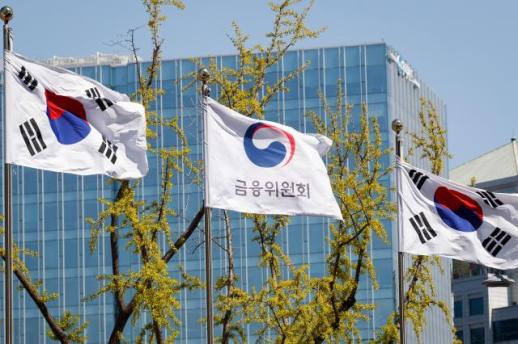 Financial authorities to crack down on misuse of state-supported loans SEOUL, May 11 (AJP) - Financial authorities will step up efforts to prevent some businesses from profiting by lending government-funded money to their subcontractors at excessively high interest rates. The Financial Services Commission (FSC) and the Fair Trade Commission (FTC) said on Monday that they will strengthen monitoring and review processes to crack down on improper business practices and other irregularities. They added that companies found engaging in these practices will be banned from receiving such funds. The move comes after Myeongnyundang, which runs restaurant chain Myeongnyun Jinsa Galbi, allegedly diverted state-supported low-interest funds by lending them to its franchisees at much higher interest rates. According to a joint investigation by the FSC and FTC, Myeongnyundang obtained funds at annual interest rates of 3 to 6 perent from institutions including the state-run Korea Development Bank (KDB), the Industrial Bank of Korea (IBK), and the Korea Credit Guarantee Fund (KODIT). It then lent about 900 billion won (US$613.92 million) to 14 affiliated lenders linked to its major shareholders. These lenders were found to have charged franchisees and prospective small business owners of Myeongnyun Jinsa Galbi annual interest rates of 12 to 18 percent on loans used for expenses such as interior renovations. Authorities also found that some businesses had deliberately split their operations into smaller entities to keep their assets below 10 billion won to avoid regulatory oversight. They also discovered that some franchisees were required to repay loan principal and interest through payments for meat supplies. The FTC has already launched formal procedures against Myeongnyundang for allegedly violating franchise regulations along with a corrective order. Investigators found the restaurant chain pressured franchisees to use certain contractors for interior work and equipment, while omitting or falsely stating key financial details in its documents. It also urged financial institutions including the KDB, IBK, and KODIT to tighten their monitoring and screening of loans made to franchisees and other borrowers. "Desperate small-business owners should never be exploited for someone else's gain," said FSC chairman Lee Eog-weon on social media, vowing to crack down on predatory lending practices targeting franchisees. 2026-05-11 15:16:11
 -
 Iran Demands Sovereignty Over Hormuz Strait and War Reparations in Response to U.S. Proposal Donald Trump, the President of the United States, has stated that he cannot accept Iran's response to the U.S. peace proposal. In that response, Iran reportedly demanded recognition of its sovereignty over the Strait of Hormuz and reparations for war damages. On May 11, CNN cited Iran's state broadcaster IRIB, reporting that Iran's response included demands for recognition of sovereignty over the blocked Strait of Hormuz and compensation for war damages. The response also reportedly called for the unfreezing of assets and the lifting of sanctions against Iran. Reuters, citing Iranian state television, reported that Iran is demanding a ceasefire on all fronts, including Lebanon. However, there has been no mention of Iran's nuclear program in the responses reported by Iranian state media so far. Iran's response was conveyed to the U.S. through Pakistan, the mediating country. Following this, President Trump stated on social media platform Truth Social that he finds Iran's proposal "completely unacceptable." The U.S. has set the prohibition of Iran's nuclear weapons and the lifting of the blockade on the Strait of Hormuz as key conditions. U.S. Ambassador to the United Nations Mike Waltz previously appeared on Fox News Sunday, stating that the latest U.S. proposal contains "very clear red lines." He added, "President Trump has made it clear that they will never be allowed to possess nuclear weapons and cannot hold the global economy hostage."* This article has been translated by AI. 2026-05-11 15:14:35
 -
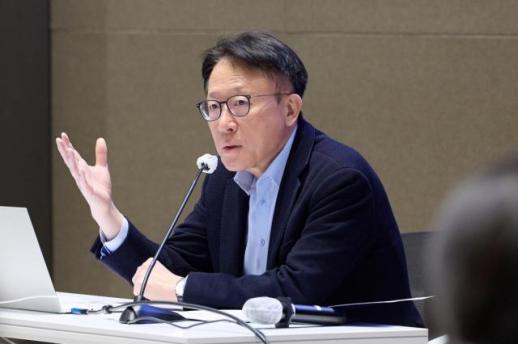 Shin Seong-hwan: Inflation Control Essential Despite Economic Polarization Shin Seong-hwan, a member of the Bank of Korea's Monetary Policy Committee, stated on May 11 that controlling inflation is imperative despite the ongoing economic polarization. He made these remarks during a press conference as he prepares to retire on May 12, highlighting the persistent upward pressure on prices due to the entrenched 'K-shaped growth' and geopolitical tensions in the Middle East. Shin noted, "It has become burdensome to discuss interest rate cuts," acknowledging that while some sectors may face increased difficulties with rate hikes, there are limited alternatives available. He emphasized that the priority must always be inflation, stating, "Our current inflation target is 2%. If we are at risk of exceeding that, even if inflation and growth are at odds, I believe it is appropriate to prioritize inflation." Reflecting on his four-year term, Shin identified polarization as a significant challenge. He remarked, "Monetary policy in a polarized environment has been extremely difficult. Economic growth is a collective achievement, yet now, a sector that accounts for about 10% of the economy can dictate overall outcomes." He elaborated on the implications of polarization, explaining that it creates scenarios where one sector may require a 3% interest rate while another may need only 2%. He noted that in the past, the trickle-down effect would eventually align these rates, but currently, the connection between sectors has weakened. Regarding future interest rate paths, Shin indicated that the price of oil at year-end will be a crucial variable. He initially anticipated oil prices would stabilize around $70 per barrel by the end of the year, but now expects they could rise to about $90. He warned that if prices remain high, the secondary shocks to other prices would be unavoidable, leading to a more intense battle against inflation than previously expected. On the recent rise in government bond yields, Shin attributed it to multiple factors, including the increase in long-term U.S. Treasury yields, which have influenced domestic rates. He noted that concerns about expected inflation are reflected in both U.S. and South Korean bond markets. Concerning the semiconductor industry's concentration, Shin acknowledged that while it is a capital-intensive sector with limited impact on employment, its profitability contributes to tax revenues, which in turn supports the economy. He stated, "While there will naturally be price shocks from this process, I do not view it as a cause for concern."* This article has been translated by AI. 2026-05-11 15:12:48
 -
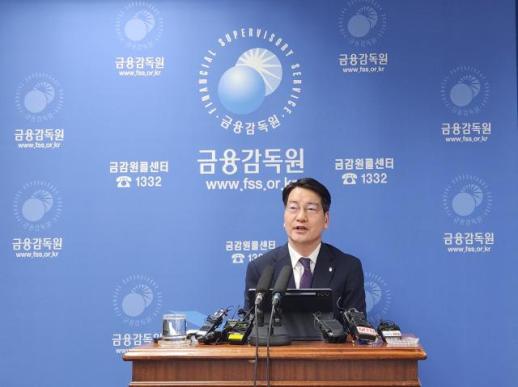 Financial Supervisory Service Addresses Stock Market Risks Amid Surge As the domestic stock market continues its sharp upward trend, the Financial Supervisory Service (FSS) is taking steps to strengthen market risk management in response to short-term overheating and increased leverage investments. The FSS plans to proactively assess liquidity risks stemming from the expansion of comprehensive investment accounts (IMA) and issuance notes by comprehensive financial investment firms, while also significantly shortening the audit cycle and enhancing scrutiny of formal disclosures to restore confidence in the capital markets. Hwang Seon-oh, Deputy Director of the Capital Markets Division at the FSS, stated during a briefing on capital market issues in Yeouido, Seoul, on May 11, "Rather than being overly optimistic about the overall market based solely on index gains, it is necessary to examine the risks that lie behind this rise. We will continue to pursue institutional improvements to foster a culture of long-term investment and enhance market trust." KOSPI Surpasses 7000: Caution Advised on Overheating and Short-Term Trading The KOSPI index has surged 76% over the past year and has gained an additional 74% as of May 7 this year. The amount of idle funds in the market has also increased significantly. As of June 6, investor deposits totaled 130.7 trillion won, and the balance of comprehensive asset management accounts (CMA) reached 112.7 trillion won, bringing the total idle funds in the stock market to approximately 243.4 trillion won. The average daily trading volume of the KOSPI has skyrocketed from 12.4 trillion won last year to 29.6 trillion won from January to April this year. However, the FSS is also paying attention to signs of overheating hidden behind the index's rise. As of April this year, among 948 KOSPI-listed companies, 276 saw their stock prices decline, while 647 out of 1,804 KOSDAQ-listed companies also experienced downward trends. This indicates a growing polarization among stocks despite the overall index increase. The FSS has identified the expansion of short-term trading by individual investors as a major risk factor. Given that individual investors hold a significant share in the domestic market and that mobile trading infrastructure is well-developed, short-term trading is prevalent. Hwang noted, "Short-term trading not only amplifies market volatility but also accumulates transaction costs that can erode investment returns." As of April this year, the average turnover rate was 1.48% for the KOSPI and 2.56% for the KOSDAQ, significantly higher than that of the U.S. S&P 500 and Japan's Nikkei. The turnover rate for ETFs reached a record high of 21.58%, with some inverse ETFs seeing turnover rates soar to around 70%. Regarding the upcoming launch of single-stock leveraged and inverse ETFs expected at the end of this month, the FSS acknowledged the potential for increased volatility. Hwang stated, "We will ensure sufficient investor education before the launch and will continue to monitor trading patterns and trends afterward to devise appropriate responses." Surge in Margin Loans Raises Concerns Over Forced Liquidation Risks Concerns have also been raised regarding the rapid increase in margin loans. As of the end of April this year, the proportion of margin loans relative to market capitalization was 0.58%, the lowest level in the past five years, but the absolute amount is rising quickly. The balance of margin loans increased from 27.3 trillion won at the end of last year to 35.7 trillion won by the end of April, a rise of over 8 trillion won. During the market crash in March due to the Middle East conflict, the amount of forced liquidations surged to 108.4 billion won in a single day, which was 22 times the average daily forced liquidation amount from the previous year. Hwang emphasized, "Margin loans involve borrowed funds for investment, so if stock prices fall, forced liquidations can exacerbate investment losses. Investors need to consider the potential for losses and the risks of forced liquidations and invest within their capacity to absorb losses." The FSS plans to monitor the risk management status of securities firms and the trends in margin loan balances, and will take preemptive measures to ensure market stability if necessary. Issuance Notes and IMA Expansion: Managing Liquidity Risks The FSS also unveiled plans to strengthen risk management in response to the expansion of issuance notes and IMAs by comprehensive financial investment firms. The balance of issuance notes rose from 15.6 trillion won at the end of 2020 to 54.4 trillion won by the end of March this year. The IMA, introduced at the end of last year, has also grown to 2.9 trillion won. The FSS has noted that the short-term funding from issuance notes could lead to maturity mismatch issues if invested in long-term assets like corporate financing. The IMA also has a principal preservation obligation, which could impact the soundness of comprehensive financial investment firms if the underlying assets deteriorate. Hwang explained, "Comprehensive financial investment firms can raise funds through issuance notes or IMAs, but they must invest a significant portion in corporate financing, where fund recovery is not easy, so they cannot overlook liquidity concerns. While the supply of venture capital is necessary, we must ensure that liquidity crises do not arise from maturity mismatches." Currently, the FSS mandates a liquidity ratio of over 100% for both issuance notes and IMAs. They are also guiding firms to conduct crisis situation analyses and establish emergency funding plans. In the future, they plan to adjust capital regulations, such as NCR risk values, to facilitate the movement of funds concentrated in real estate toward productive finance. Hwang stated, "As of the end of March, the liquidity ratio for the seven firms issuing notes was 115%, and the liquidity ratio for the issuance notes themselves was 163%, indicating that there are no significant issues. Please view the current issues as a proactive response to potential challenges." Audit Cycle Shortened to Detect Accounting Fraud In the audit sector, the FSS has identified early exit of insolvent companies and enhancing accounting transparency as core tasks. The FSS plans to establish a long-term roadmap to shorten the audit cycle to 10 years for KOSPI firms and 5 years for KOSDAQ firms within this year. Initially, they will apply the 10-year audit cycle to KOSPI 200 companies. Currently, it takes an average of 20 years to audit all listed companies in South Korea. In contrast, the U.S. audits all listed companies every three years, while the U.K. inspects FTSE 350 companies every five years. The FSS also plans to expand the review targets for companies showing signs of insolvency by over 30% compared to the previous year. They will conduct detailed reviews of companies nearing management designation requirements or facing uncertainties about their continued operations, and will activate a system where the accounting, investigation, and disclosure departments collaborate in response. Hwang mentioned the possibility of increased incentives for accounting fraud following the tightening of delisting criteria. He stated, "Accounting is fundamentally tied to delisting criteria, so I expect there will be significant attempts to inflate sales figures. We are closely monitoring potential attempts to boost market capitalization in relation to failing to meet market cap requirements." Strengthening Disclosure to Protect Shareholder Rights The FSS also announced plans to enhance disclosure reviews and improve the DART electronic disclosure system. They aim to revise disclosure formats and enhance the functionality of the DART system to protect the rights of common shareholders and increase the usability of disclosure information. Although the revised Commercial Act introduced a duty of loyalty to shareholders last year, the FSS believes that some companies are not fully reflecting this intent and are only preparing formal disclosures. In fact, it has been reported that the FSS issued correction orders for disclosures related to organizational restructuring that failed to include specific discussions from special committees or shareholder communication plans. Hwang stated, "We will strengthen guidance on the duty of loyalty disclosures to help companies understand the intent of the revised Commercial Act and prepare related disclosure documents." He explained that a recent correction order regarding Hanwha Solutions' securities registration statement for a capital increase falls within the same context. Hwang emphasized, "Our goal is to ensure that sufficient information is provided for investors to make informed investment decisions, including specific details on liquidity risks, potential funding sources beyond capital increases, and the rationale for performance improvement forecasts."* This article has been translated by AI. 2026-05-11 15:09:00
 -
 Korea's inflation may soar to 3.7% if Gulf oil crisis persists: KDI SEOUL, May 11 (AJP) — South Korea's inflation could run as high as 3.7 percent this year under the worst-case scenario of an energy shock from the Middle East crisis, according to state think tank Korea Development Institute on Monday. The KDI, which is due to announce its revised economic outlook on Wednesday, predicted a bump-up of between 1 and 1.6 percentage points from this year’s estimated inflation rate of 2.1 percent. The forecast, however, excludes policy buffers such as fuel tax cuts and gasoline price caps, said Ma Chang-seok, a fellow at the KDI’s Department of Economic Forecasting. Under its “base scenario,” the KDI assumed Dubai crude prices would rise to $100 per barrel in the second quarter before gradually easing to $90 and $87 in the third and fourth quarters, respectively. Under that scenario, higher oil prices would lift this year’s consumer inflation by 1.2 percentage points and next year’s by 0.9 percentage point. Under a more severe “prolonged high oil price scenario,” where Dubai crude remains at around $105 per barrel from the second through fourth quarters, the inflationary impact would widen to 1.6 percentage points this year and 1.8 percentage points next year, raising the possibility that elevated inflation could persist into next year. Conversely, under an “oil price stabilization scenario,” where Dubai crude falls from $95 in the second quarter to $85 and $80 in the third and fourth quarters, respectively, inflationary pressure would ease significantly starting next year, the KDI said. The think tank specifically noted that oil price hikes caused by transportation uncertainty in energy supply routes tend to have a larger impact on consumer inflation than ordinary supply-demand driven increases. If concerns over shipping disruptions intensify, refiners often expand petroleum inventories, amplifying price hikes even under similar market conditions. Accordingly, the KDI warned that cost-push pressure could spread beyond petroleum products to industrial goods and services. While ordinary increases in Dubai crude historically had limited impact on core inflation, a 10 percentage point oil increase driven by transportation uncertainty was estimated to raise the core inflation rate by approximately 0.10 percentage point. “Policy responses such as the maximum oil price system and fuel tax cuts are factors that reduce the ripple effect of rising international oil prices on consumer inflation,” Ma said. “It is necessary to operate price stabilization policies in preparation for the possibility of prolonged high oil prices and unstable inflation expectations.” As of Monday afternoon, both West Texas Intermediate and Brent Crude futures were trading above $100 per barrel after U.S. President Donald Trump responded “Unacceptable” to Iran’s proposal for ending the war, reigniting fears of prolonged conflict and supply disruptions across the Middle East. 2026-05-11 15:08:54
 -
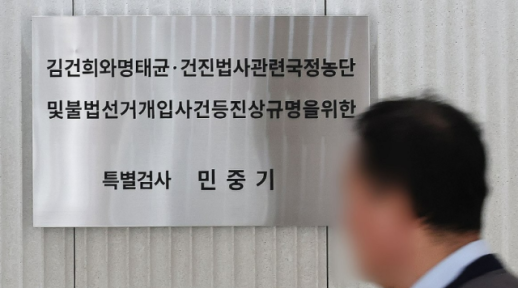 Supreme Court Confirms 3-Year Sentence for Legal Broker Linked to Geonjin Beopsa A legal broker linked to Geonjin Beopsa, Lee Mo, has received a confirmed three-year prison sentence. This marks the first case in which the Supreme Court has finalized a sentence related to the special investigation team (involving insurrection, Kim Geon-hee, and deceased Marines). According to Yonhap News on May 11, the Supreme Court's first division, led by Justice Seo Kyung-hwan, upheld the original ruling that sentenced Lee to three years in prison and imposed a fine of 400 million won for charges of bribery under the Act on the Aggravated Punishment of Specific Crimes. In criminal cases, if the grounds for an appeal are deemed improper, the court may reject the appeal without further deliberation. This applies in cases where no appeal brief is submitted, claims of disproportionate sentencing are made despite a sentence of less than ten years, or when a defendant admits to the crime but disputes the facts. Lee was arrested and indicted in August of last year for allegedly accepting 400 million won in exchange for promises to secure a not guilty verdict in court by leveraging connections with influential figures, including the president and prominent politicians from the People Power Party, as well as high-ranking legal professionals. The Kim Geon-hee special investigation team, led by Special Prosecutor Min Jung-ki, viewed Lee as a broker who facilitated connections between individuals seeking to suppress investigations or influence court proceedings and Geonjin Beopsa. In the first trial, all charges against Lee were found guilty, resulting in a two-year prison sentence and a fine of 400 million won. Both the special investigation team and Lee's side appealed the decision, but the second trial increased the sentence to three years while maintaining the fine amount. The second trial court noted, "If the public suspects that judicial procedures are influenced by external improper pressures or transactions, the mere existence of such suspicion can undermine the rule of law and critically damage the fairness of criminal procedures." The court further stated, "The defendant's actions constitute a serious crime that undermines public trust in the independence of the judiciary and the fairness of trials, which are the last bastions of the rule of law. Therefore, a severe punishment is warranted." Despite repeated appeals from Lee's side, the Supreme Court deemed the grounds for the appeal improper and decided to reject it.* This article has been translated by AI. 2026-05-11 15:01:41
 -
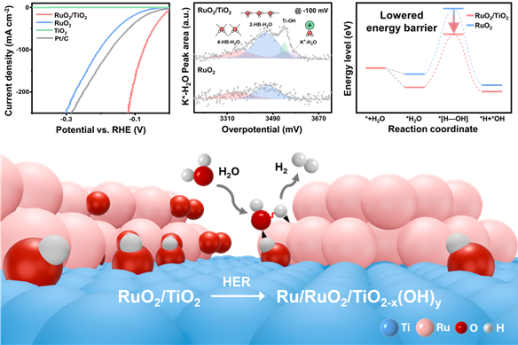 Kookmin University researchers develop high-efficiency catalyst for hydrogen production SEOUL, May 11 (AJP) - A research team at Kookmin University has developed a new heterostructure catalyst that significantly improves the efficiency of hydrogen production in alkaline water electrolysis. The team, led by Professor Lee Chan-woo of the Department of Chemistry, identified the specific mechanism that allows the catalyst to accelerate the water-splitting process, the university said Monday. The research focuses on Anion Exchange Membrane Water Electrolysis (AEMWE), a next-generation technology that operates in alkaline environments to reduce reliance on expensive precious metal catalysts and corrosion-resistant parts. While promising, these systems are often limited by a slow initial step where water molecules must be broken down to create hydrogen intermediates, leading to higher energy consumption and lower efficiency. To address this bottleneck, the team engineered a catalyst by forming ruthenium oxide nanoparticles approximately 2 nanometers in size onto a 25-nanometer titania support. During the electrochemical process, the catalyst surface reconfigures itself into an active interface that attracts water molecules and lowers the energy barrier required to break their chemical bonds. Test results showed that the new catalyst required an overpotential of only 6.6 millivolts to reach a standard current density. This performance significantly outperforms commercial platinum catalysts, which require 43 millivolts, and standalone ruthenium oxide, which requires 79 millivolts. The mass activity of the new material was found to be approximately 6.4 times higher than that of standard platinum-on-carbon catalysts. The study utilized real-time spectroscopy and theoretical calculations to track water molecules and hydrogen intermediates during the actual reaction. This allowed the team to confirm that the titania interface directly facilitates the cutting of oxygen-hydrogen bonds. The researchers found that the ruthenium and titania work together, with the interface handling water activation while the ruthenium handles the formation of hydrogen molecules. "This research is significant because we developed a high-activity catalyst while simultaneously observing how the interface activates water molecules under actual operating conditions," Professor Lee Chan-woo said. "Based on the principle of cooperative hydrogen formation at the ruthenium-titania interface, we can suggest design strategies for high-efficiency catalysts applicable to next-generation electrolysis systems." The study was supported by the Ministry of Science and ICT and was published in the international journal Carbon Energy. (Reference Information) Journal/Source: Carbon Energy Title: Ruthenium-Titania Interface-Mediated Water Activation for High Turnover Frequency in Alkaline Hydrogen Evolution Link/DOI: https://doi.org/10.1002/cey2.518 2026-05-11 14:58:02
 -
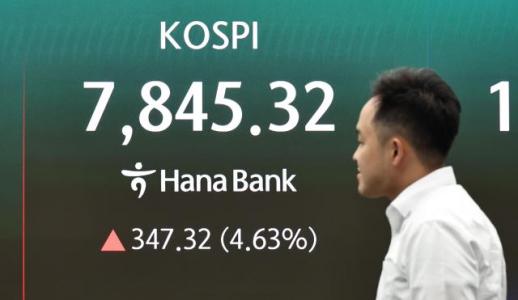 JPMorgan Predicts KOSPI Could Reach 10,000 Amid AI Momentum Global investment bank JPMorgan has expressed optimism about the South Korean stock market, citing the expansion of artificial intelligence (AI) investments and a strong memory chip market. The bank raised its KOSPI target, suggesting the possibility of a "10,000-point era" for the index. On May 11, JPMorgan released its "Korea Equity Strategy" report, adjusting its target scenarios for the KOSPI to 9,000, 10,000, and 6,000 points for basic, bullish, and bearish scenarios, respectively, all higher than previous forecasts. The report noted, "In the past two to three months, signals have emerged that alleviate concerns about AI monetization," adding that advancements in model performance, increased consumption of agentic tokens, a stabilization in token prices, and new funding have significantly boosted the growth trajectory of AI capital expenditures. JPMorgan also highlighted that prices for AI-related hardware continue to rise, stating, "The South Korean stock market is highly exposed to themes of AI, security, and resilience." The bank specifically pointed to the memory chip sector, suggesting a prolonged supercycle. It explained that memory stocks currently account for about 50% of the KOSPI's market capitalization and have driven approximately 70% of the index's gains since the beginning of the year. "AI demand continues to outstrip supply, and inventory levels remain tight," the report stated, noting that high-bandwidth memory (HBM) supply is tied to multi-quarter price and volume contracts, indicating a significant risk of supply shortages. It also mentioned that clients are preemptively advancing demand projections to 2027 due to concerns over supply shortages. JPMorgan anticipates that the memory market's upward cycle will likely continue into 2027-2028. The report emphasized that the rise in the domestic stock market is not limited to semiconductors. "The KOSPI's performance, excluding Samsung Electronics and SK Hynix, has significantly outperformed regional benchmarks," it stated, noting that earnings forecasts are also improving for sectors related to industrial materials. Regarding bank stocks, JPMorgan observed positive earnings momentum based on recovering net interest margins, increased fee income, and stable loan loss provisions. Corporate governance improvements were also identified as a key factor in the reevaluation of the South Korean stock market. JPMorgan stated, "The trend of improving corporate governance is an important foundation for attracting foreign and domestic investor capital, particularly as it will provide significant momentum for the reevaluation of holding companies." However, the bank raised concerns about potential short-term cooling due to overheating pressures. It noted, "The market breadth is narrowing, and technical pressures are increasing, as indicated by rising relative strength index (RSI) spreads and volatility indices (VKOSPI)." Nevertheless, it advised that any corrections should be viewed as buying opportunities. JPMorgan also expressed optimism about the potential for additional capital inflows from emerging market and Asian investors. The report stated, "In the second quarter, hedge funds have aggressively increased their exposure to South Korea," while noting that active long-only investors have slowed their selling after significant sell-offs in the first quarter, although large capital inflows into the spot market have yet to be confirmed. It added that emerging market and Asian investors are estimated to be in a state of overbuying Samsung Electronics and SK Hynix by about 70 basis points, but considering the expected earnings improvements, this remains a light position. The report estimates that the earnings per share (EPS) for Samsung Electronics and SK Hynix could be four to five times higher than last year. JPMorgan identified promising investment opportunities in AI-themed memory sectors, holding companies and insurance stocks benefiting from governance improvements, banks, automotive, and telecommunications stocks that could benefit from tax reforms, and securities firms expected to gain from increased trading volumes. Long-term industrial themes include defense, power equipment, robotics, nuclear power, space, and shipbuilding. Top KOSPI picks include Samsung Electronics, SK Hynix, Hyundai Motor, Samsung C&T, Samsung Electro-Mechanics, Hanwha Aerospace, Samsung Life Insurance, HD Hyundai Electric, Shinhan Financial Group, SK, HD Korea Shipbuilding & Offshore Engineering, LG Chem, APR, and Isu Petasys. Conversely, POSCO Future M, Hyundai Marine & Fire Insurance, and Kakao were mentioned as less favored stocks.* This article has been translated by AI. 2026-05-11 14:52:36
 -
 Samsung C&T Shares Surge Over 7% on Rising Value of Samsung Electronics Stake Samsung C&T shares experienced a significant increase of over 7% during trading on expectations of rising value from its stake in Samsung Electronics and potential contracts in the nuclear power sector. According to the Korea Exchange, as of 2:04 PM, Samsung C&T shares were trading at 454,500 won, up 32,000 won (7.57%) from the previous trading day. Earlier, analysts adjusted their target prices for Samsung C&T, citing the increased value of its Samsung Electronics stake, along with improved prospects in nuclear and solar energy projects and investments in affiliates. Hana Securities maintained a 'Buy' rating on Samsung C&T and raised its target price from 400,000 won to 600,000 won. Kim Seung-jun, a researcher at Hana Securities, stated, "Although the stock price has risen significantly over the past week, Samsung C&T's valuation remains attractive. Currently, the price-to-book ratio (PBR) is around 0.7 times when reflecting Samsung Electronics' stock price." He emphasized, "Considering the premiums for nuclear power, solar energy, and affiliate investments, we recommend buying Samsung C&T shares." Kim added, "A PBR of 0.7 is significantly lower compared to other holding companies (SK at 1.3, SK Square at 3.1, Doosan at 17.3, CJ at 1.4) and is also lower than construction firms with market capitalizations over 10 trillion won (Hyundai Engineering & Construction at 2.1, Samsung E&A at 2.4, Daewoo Engineering & Construction at 3.6)." He further noted, "There is a strong narrative supporting valuation premiums due to expected quarterly profit increases, accelerating semiconductor investments and related revenue growth, efforts to secure nuclear contracts, growth in Raemian orders, and initiatives in the U.S. solar operations (IPP business)."* This article has been translated by AI. 2026-05-11 14:50:39
 -
 BBQ Opens First Store in Almaty, Kazakhstan, Expanding into Central Asia Genesis BBQ has opened its first store in Almaty, Kazakhstan, marking its entry into the Central Asian market. This is the first time BBQ has expanded into this region. On May 11, BBQ announced the opening of its Mega Almaty location in the southern part of Almaty, the largest city in Kazakhstan, within the MEGA Alma-Ata shopping mall. The store covers approximately 78 square meters and is located on the second floor food court of the mall. It offers a variety of menu items, including Golden Fried Chicken, the seasoned "Secret Sauce Chicken," chicken burgers, tteokbokki, and set menus. The menu also features "UFO Chicken," which includes chicken served with cheddar cheese fondue, targeting local consumers. Almaty is recognized as Kazakhstan's largest city and a key economic hub in Central Asia. The city has a well-developed dining, franchise, and retail industry, making it a prime location for global brands entering Kazakhstan. With a concentration of finance, trade, and tourism industries, the demand for dining out in the evenings is high, and the presence of major universities contributes to a strong market of young people and international students. The Mega Alma-Ata shopping mall, where BBQ has opened, is one of the largest shopping centers in Central Asia, with a total area of about 180,000 square meters. It attracts around 10 million visitors annually and is considered a central business district that draws university students, professionals, and tourists. BBQ plans to accelerate its expansion across Kazakhstan, starting with Almaty. The company aims to open an additional 20 stores in key commercial areas by the end of the first half of the year and intends to enter the capital city of Astana in the third quarter. Based on this strategy, BBQ aims to have 100 local stores open by the end of the year. A BBQ representative stated, "This entry into Kazakhstan is a result of public-private collaboration achieved through cooperation with the Korea Trade-Investment Promotion Agency (KOTRA). We plan to strengthen our presence in the Central Asian market by expanding our business to major cities like Astana, starting from Almaty."* This article has been translated by AI. 2026-05-11 14:48:32