
Journalist

Seo Hye Seung
-
 LG CNS Unveils RX Platform for Autonomous, Collaborative Robots A dancing robot opened LG CNS’ showcase, greeting Chief Technology Officer Park Sang-yeop. Another robot handed a microphone to CEO Hyun Shin-gyun to begin the event. In a logistics demo area, robots moved and worked together without human control. A humanoid robot picked up a plastic bag and passed it toward a box on a conveyor belt. A quadruped robot carried the box, and a wheeled robot and an autonomous mobile robot, or AMR, placed it on a designated shelf. LG CNS described the scene as a preview of what it called an era of self-moving robots. LG CNS on May 7 held a “Robot Transformation (RX) Media Day” at its Magok headquarters in Seoul and unveiled its RX platform, “Physical Works.” It also introduced two core platforms: the robot training platform “Physical Works Forge” and the integrated operations platform “Physical Works Baton.” The company said the center of the robot industry is shifting from hardware to real-world deployment. It said the key is building a system that trains robots using on-site data and then operates and upgrades them reliably, rather than simply installing robots. LG CNS defined RX for industrial sites as an end-to-end service covering the full process — from introducing intelligent robots to training and operations — and said it is moving to expand in the market. “LG CNS does not manufacture robot hardware directly, but we source the most suitable robots for each site, train them with data, and operate and manage them so they can perform real work,” Hyun said. “A company’s competitiveness depends on how quickly it can apply robots in the field and turn that into results.” He added that while the robot industry has developed around hardware, the priority is now making robots perform tasks well, validating them on site and operating them stably — “the essence of RX” as LG CNS defines it. Physical Works Forge is a robot training platform that collects and learns from industrial-site data to prepare robots for deployment, LG CNS said. It supports the full process from data collection to simulation and on-site application, and can cut deployment time from several months to about one to two months, the company said. Securing high-quality on-site data quickly and training robots with it is a core capability, it added. Physical Works Baton is designed to integrate control and monitoring of different robots from different manufacturers within a single system. It assigns tasks and manages operations in real time across biped, quadruped, wheeled and AMR robots. Its name refers to a conductor’s baton, reflecting its role in orchestrating multiple robots, the company said. LG CNS said that applying the system to an environment operating about 100 robots could raise productivity by about 15% and cut operating costs by up to 18%. Lee Jun-ho, head of LG CNS’ Smart Logistics & City Business Division, said earlier smart-factory automation largely repeated preset motions, while physical AI-based RX enables robots to recognize situations and carry out tasks autonomously. He said the industry is rapidly shifting from showcase demonstrations to delivering results in real manufacturing and logistics sites. Lee said the biggest barrier to deployment is what he called the “PoC swamp,” referring to proof-of-concept projects that do not progress. He added that if companies can quickly collect and train on high-quality data, the pace of field deployment will accelerate. LG CNS said it is conducting robot PoCs with more than 20 customers in South Korea and overseas. In the Busan Smart City National Pilot City project, it said it is using Physical Works Baton to integrate monitoring of four types of robots: patrol, barista, luggage-carrying and cleaning robots. The company said it plans to expand its RX business based on robot forms optimized for industrial sites and industry-specific robot foundation models, or RFMs.* This article has been translated by AI. 2026-05-07 14:00:23
 -
 BGF Retail to Pay CU Store Owners Aid After Logistics Strike, Dispute With Truckers Persists BGF Retail, the operator of CU convenience stores, began compensating franchise owners on Wednesday after a labor agreement between its distribution and logistics affiliate, BGF Logis, and the Cargo Truckers Union ended a disruption in CU deliveries. The company’s move comes as CU franchisees continue to press the union for damages, signaling the dispute is not over. According to the retail industry, CU store owners on Wednesday could confirm the headquarters’ support amounts on their settlement statements under an item labeled “logistics supply support funds and consolation payments.” The strike ended after BGF Logis signed a collective agreement with the union on April 30, and the support plan was finalized about a week later. Some owners said the amounts were larger than expected even when their losses were limited, industry officials said. BGF Retail issued a notice to franchisees and employees detailing the plan, which was finalized late Tuesday. It consists of store support funds and separate consolation payments, with individual deposits scheduled for May 8. The store support funds include compensation for stockouts of chilled and frozen products and reimbursement for discarded ready-to-eat meals. For the period from April 5 to 30, BGF Retail will cover the full amount of store gross profit that would have been earned from out-of-stock refrigerated and frozen items, assuming normal sales. It will also reimburse the full value of ready-meal disposals incurred during the same period. The consolation payments are additional support separate from direct loss compensation. Regional payments will be set on a sliding scale, up to 300,000 won, based on the level of supply instability. Store-by-store payments, considering stockouts and delivery delays, will be up to 700,000 won per store. BGF Retail did not disclose the total amount, but the industry estimates it at around 10 billion won. “As the franchisor, we put store stability first and prepared a plan that includes practical compensation as well as consolation payments,” a BGF Retail official said. “We will continue working so we can grow together based on partnership.” Even as deliveries return to normal, friction between franchisees and the Cargo Truckers Union continues. The CU Franchisee Council on May 4 sent the union a certified letter demanding 14 billion won in damages, steps to prevent a recurrence and a public apology, seeking to hold the union responsible for losses during the strike. The council said it will file a civil damages lawsuit if its demands are not accepted by May 15, and it will also seek criminal accountability for alleged illegal acts during the strike. Another CU franchisee group, the CU Franchisee Federation, has also recently sent the union a certified letter demanding a resolution and compensation, according to industry officials.* This article has been translated by AI. 2026-05-07 13:56:42
 -
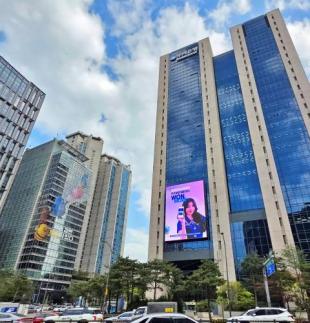 Woori Bank to Lead Investment in Government Future City Fund for First-Generation New Town Redevelopment Woori Bank said Wednesday it will participate as the largest investor in the government-backed “Future City Fund,” aimed at supporting redevelopment projects in first-generation new towns. The policy fund was created to provide stable financing for aging apartment complexes in areas such as Bundang and Ilsan, where reconstruction is being pursued. It is designed to supply essential early-stage project costs from the planning stage, helping projects move forward more smoothly. Woori Bank will commit 480 billion won to the first master fund, which totals 600 billion won, as part of a broader 12 trillion won Future City Fund initiative. Linked to guarantees from the Korea Housing & Urban Guarantee Corp. (HUG), the funding will be provided at low interest rates, up to 20 billion won per project site, the bank said. Woori Asset Management will run the fund. The selection will allow the firm to expand beyond traditional asset management into alternative investments and large policy funds, it said. Major investors, including Woori Bank, have completed investment agreements to establish the fund. It will operate on a capital-call basis, with money drawn and deployed when needed. Actual disbursements will begin after the first borrower project is chosen among designated leading districts in the first-generation new towns and requests financial support. Lee Jin-kyung, a team leader in Woori Bank’s structured finance department, said the bank’s participation will help ease early funding shortages for aging new-town redevelopment and provide a more stable foundation for projects. He said the bank will continue expanding structured finance tied to policy financing. 2026-05-07 13:55:47
 -
 U.S. Treasury Secretary Bessent to Visit Japan Ahead of China Trip for Yen Talks U.S. Treasury Secretary Scott Bessent plans to visit Japan ahead of a trip to China and is expected to meet separately with Prime Minister Sanae Takaichi, Finance Minister Satsuki Katayama and Bank of Japan Gov. Kazuo Ueda, Japanese media reported. The talks would come soon after Japan’s government and central bank carried out large-scale yen-buying intervention, drawing attention to whether U.S.-Japan coordination on the weak yen will deepen. The Nikkei newspaper reported May 7, citing multiple U.S. and Japanese diplomatic sources, that Bessent will visit Japan for three days starting May 11. The stop is scheduled ahead of his attendance at a U.S.-China leaders’ summit in Beijing on May 14-15. Nikkei said plans are being coordinated for Bessent to hold separate meetings on May 12 with Takaichi, Katayama and Ueda. The agenda is expected to include the weak yen as well as economic security issues such as rare earths and energy procurement, Nikkei reported. It said Iran could also come up, amid worsening conditions in the Middle East. The visit is notable because it follows Japan’s foreign-exchange intervention. Japan’s government and the BOJ stepped into the market on April 30 for the first time in 1 year and 9 months, buying yen and selling dollars. The yen had weakened to the 160.70 yen range per dollar before rebounding sharply to the 155 yen range after the intervention. The U.S. Treasury told Nikkei it is “in close contact with Japan,” a comment some interpreted as a signal Washington is effectively tolerating Japan’s response in the currency market. With the Trump administration arguing for the need for a weaker dollar, Nikkei described Bessent as sensitive to speculative yen selling, which can weaken the yen while strengthening the dollar. Nikkei also reported that a “rate check” conducted by the U.S. Treasury in January was led by Bessent rather than requested by Japan. While rising interest rates typically support the yen by making yen assets more attractive, the yen has recently weakened even as rates have risen, a sign speculative moves are intensifying. The U.S. is watching closely because the trend could spread to selling of U.S. Treasurys, Nikkei reported. Tension over 160 yen per dollar Currency markets have remained on edge over the possibility of further Japanese intervention. On the afternoon of May 6, during a holiday period, the yen jumped about 2.80 yen in roughly 30 minutes, from around 157.80 per dollar to about the 155 yen level. Similar spikes occurred on May 1 and May 4, fueling speculation that Japan’s government and the BOJ may have intervened again during the holidays. Some market participants believe the level authorities are trying to defend has shifted from the 160 yen range to the 157 yen range. The April 30 intervention occurred around 160.70, but the starting points for the three subsequent spikes on May 1, 4 and 6 were all in the 157 yen range. Daisaku Ueno, chief FX strategist at Mitsubishi UFJ Morgan Stanley Securities, told Nikkei, “The final line of defense is 160 yen, but it looks like they are also trying to protect the 157 yen range as a first line.” Rikiya Takebe, a senior strategist at Okasan Securities, said authorities may try to manage the dollar-yen rate in the 150-155 yen range. The intervention is also believed to have been sizable. In a BOJ forecast released May 1 for current account balances dated May 7, the category reflecting FX intervention, labeled “fiscal and other factors,” showed a decline of 9.48 trillion yen (about 88 trillion won). That was far larger than the 4 trillion to 4.5 trillion yen decline estimated in advance by short-term money market firms on the assumption there was no intervention. Nikkei said the difference — about 5 trillion yen (about 46.42 trillion won) — is likely the scale of the yen-buying intervention on April 30. Ahead of the move, Japanese officials issued unusually strong warnings. Katayama said before the intervention, “The time is nearing to take decisive action,” and top currency diplomat Atsushi Mimura called it “effectively the final warning.” Hiroyuki Machida, a director at Australia and New Zealand Banking Group, told Nikkei authorities may have tried to amplify yen buying by raising market vigilance before stepping in. Still, it is unclear whether intervention alone can reverse the yen’s broader weakness. With oil prices elevated amid Middle East instability, pressure to sell yen and buy dollars persists, reflecting Japan’s widening trade deficit. Hirofumi Suzuki, chief FX strategist at Sumitomo Mitsui Banking Corp., told Nikkei it is too early for yen strength below 155 per dollar to take hold without a change in the macro environment, adding that downward pressure toward 158 yen is stronger. Against that backdrop, Bessent’s Japan visit is expected to test how closely Washington and Tokyo align on the weak yen and market intervention. As Japanese authorities continue a cat-and-mouse game with markets even during holidays, how far the United States will tolerate Japan’s defense of the yen is emerging as a key variable for currency markets, Nikkei reported.* This article has been translated by AI. 2026-05-07 13:54:17
 -
 South Korea to Help K-Beauty Firms Enter Halal Cosmetics Market With Ingredient Database South Korea’s Ministry of Food and Drug Safety said Thursday it will step up a “halal cosmetics certification support” program as the global market for halal beauty products expands. Halal cosmetics are products certified as produced, processed and distributed in line with Islamic law for use by Muslims. The market is projected to grow to $129 billion in 2027 from $84 billion in 2022, the ministry said. With regulations tightening in major countries — including Indonesia’s move to require halal certification labeling — differing standards by country have added to the burden on small and midsize companies, the ministry said. To help, the ministry plans to select 30 companies preparing for halal certification and provide tailored on-site consulting. It will also run hands-on training courses at beginner, intermediate and advanced levels twice a year, and hold seminars with invited overseas experts to share policy changes and the latest trends in key export markets. The ministry said it will produce and distribute country-by-country halal certification guides for major Middle Eastern markets such as the United Arab Emirates and Saudi Arabia. In key export markets including Indonesia, it plans to support expanded mutual recognition agreements, or MRAs, between local certification bodies and private certification organizations in South Korea. The ministry said some smaller firms have abandoned certification because they lacked information and struggled to obtain documentation from suppliers for the many ingredients used in cosmetics. To reduce that burden, it will provide information on about 4,000 halal-compliant ingredients based on Indonesian regulations and build a database integrating halal-certified ingredients, company information and halal regulatory information for 10 major countries. It also plans to offer an AI-based “cosbot” search service using the database. “We will expand support so domestic cosmetics companies can respond effectively to changes in the global regulatory environment and enter the growing halal market smoothly,” the ministry said.* This article has been translated by AI. 2026-05-07 13:51:14
 -
 Philip Morris Korea Expands Safety Partnership Program to Prevent Workplace Accidents Philip Morris Korea is expanding a workplace safety initiative aimed at improving conditions for partner companies and the local community. The company said Thursday that it held a launch ceremony and seminar May 6 at the Gyeongnam Eastern Branch of the Korea Industrial Safety Association in Yangsan, South Gyeongsang Province, for a “large-small business safety and health partnership program” jointly promoted with the Korea Occupational Safety and Health Agency. At the event, the Yangsan plant and the association’s Gyeongnam Eastern Branch signed a memorandum of understanding to help eliminate industrial accidents in the region, the company said. The two sides said they will cooperate on on-site technical support, tailored consulting and the sharing of professional safety expertise. The program will be run through a consultative body made up of internal and external partner companies and local small and midsize businesses, focusing on detailed risk assessments and customized on-site support reflecting each workplace’s conditions. The company said this year’s program significantly expands both funding and participants. With four additional in-house partner companies and one local small business added, the number of beneficiary sites rises to 10: four in-house partners, four outside partners and two local small and midsize businesses. The support package has also been refined, including new assistance for foreign workers, who make up a growing share of the industrial workforce. To reduce accidents linked to language barriers, the company said it will distribute safety manuals translated into multiple languages and provide on-site interpretation and tailored consulting. A campaign to prevent heat- and cold-related illness during periods of extreme heat and cold will also be conducted, it said. The company said the program will follow a phased roadmap for about five months, starting with the launch event and continuing through joint inspections, safety equipment support and on-site training, before a final results seminar in September. Philip Morris Korea said it ran the program last year with eight partner companies and small businesses, providing six months of consulting and supplying essential safety and health items, including automated external defibrillators, to help spread a safety culture across its supply chain. Haroon Basheer, head of the company’s Yangsan plant, said, “As we participate for the second year in a row, we will build on the experience we have accumulated and focus on sharing safety management know-how by expanding the scope beyond in-house partners to include local small businesses and foreign workers.”* This article has been translated by AI. 2026-05-07 13:49:19
 -
 GC녹십자 Wins Peru Approval for Hunter Syndrome Drug Hunterase ICV GC Green Cross, which is nearing the 2 trillion won revenue mark, has secured marketing approval in Peru for its intraventricular Hunter syndrome treatment, Hunterase ICV, following approvals in Japan and Russia, the company said. The move supports its push to expand overseas sales and diversify exports as it focuses on high value-added products in advanced markets such as the United States and Japan while accelerating entry into emerging markets. The company said Tuesday that Peru’s drug regulator, DIGEMID, recently granted approval for Hunterase ICV. Hunterase ICV is administered directly into the brain’s ventricles and is given once a month. In clinical trials conducted in Japan, the treatment significantly reduced heparan sulfate, a key substance linked to central nervous system damage. It also showed effects in improving or stabilizing developmental age, a measure used to assess patients’ intellectual and physical development. Lee Jae-woo, head of development at GC Green Cross, said, “Based on long-term clinical data, we will work to address unmet medical needs in severe Hunter syndrome.” Hunter syndrome is a congenital rare disease in which a deficiency of the IDS enzyme causes glycosaminoglycans (GAG) to accumulate in the body. Symptoms include skeletal abnormalities, joint deformities, respiratory and cardiac dysfunction, and cognitive decline. It is known to occur in about one out of every 100,000 to 150,000 boys. About two-thirds of patients are believed to have a severe form accompanied by central nervous system damage. As the disease progresses, cognitive decline and behavioral abnormalities can appear, significantly affecting quality of life and prognosis. GC Green Cross posted record annual revenue of 1.9913 trillion won last year. Market observers say the company has a strong chance of surpassing 2 trillion won this year as its core businesses, including blood products and vaccines, are expected to grow.* This article has been translated by AI. 2026-05-07 13:48:05
 -
 Kakao Posts Record Q1 Results, Pushes KakaoTalk-Based Agent AI Platform Kakao posted its strongest quarterly results on record in the first quarter, with both revenue and operating profit reaching all-time highs, the company said Thursday. Growth was broad-based across its core platform businesses, including advertising, commerce, mobility and payments. Kakao said it will use that momentum to accelerate its shift into an “agent AI platform” company. Over the medium to long term, Kakao aims to onboard all 50 million KakaoTalk users to AI services. It plans to expand in-house offerings including “ChatGPT for Kakao,” “Kanana in KakaoTalk” and “Kanana Search,” and is preparing to unveil its next model, “Kanana 2.5.” Kakao said in a regulatory filing that first-quarter revenue on a consolidated basis rose 11% from a year earlier to 1.9421 trillion won, while operating profit jumped 66% to 211.4 billion won. By segment, platform revenue increased 16% to 1.1827 trillion won. Within that, Tok Biz revenue rose 9% to 608.6 billion won, and Tok Biz advertising revenue climbed 16% to 338.4 billion won. Demand from financial-sector advertisers helped lift overall message volume, and a broader lineup of messaging products expanded how advertisers used the service. Business messaging revenue rose 27% from a year earlier, while display advertising revenue increased 10%. Tok Biz commerce, which includes Gift and Tok Deal, posted combined gross transaction value of 2.9 trillion won, up 10% from a year earlier. Kakao attributed the gain to a stronger product mix centered on fresh food and home appliances and more tailored user benefits. During the “Kakao Shopping Festa” held in March, Tok Store transaction value rose 18% year over year, and self-purchase transaction value within Gift surged 53%. First-quarter commerce revenue rose 1% to 270 billion won. Other platform revenue, including mobility and payments, rose 30% to 506.5 billion won. Kakao said its mobility business — spanning taxis, parking, last-mile logistics and advertising — delivered double-digit year-over-year revenue growth for a third straight quarter. Payments revenue topped 300 billion won for the first time, driven by growth across payments, financial and platform services. Content revenue rose 5% to 759.4 billion won. Music revenue increased 11% to 484.6 billion won, and media revenue climbed 23% to 92.4 billion won. Story revenue totaled 182.4 billion won. Kakao said profitability typically is weaker in the first quarter due to seasonal factors, but this year improved as efficiency efforts focused on core businesses were reflected in results. Kakao said it will step up its transition to an agent AI platform this year, with the goal of having all 50 million KakaoTalk users onboarded to AI services. In the second half, it plans to roll out agent commerce more fully, enabling reservations and payments within KakaoTalk based on conversational context. Kakao has already launched AI services that use KakaoTalk chat context, including Kanana in KakaoTalk and Kakao Search, in stages. The company said it is building a flow that links identifying user needs in conversation to reservations and payments. Jeong Shin-a, Kakao’s CEO, said on a first-quarter 2026 earnings conference call Thursday that “the second half will be an important turning point when anyone can experience an agent that starts from a domestic conversation and completes payment.” Kakao’s AI services currently available in KakaoTalk are ChatGPT for Kakao, Kanana in KakaoTalk and Kanana Search. Kakao said it segments target users based on AI familiarity and whether they use paid services — offering ChatGPT for Kakao to users with higher AI understanding, and positioning Kanana in KakaoTalk for users who can experience AI naturally in daily life without paying. ChatGPT for Kakao has surpassed 11 million cumulative sign-ups. Compared with the previous quarter, monthly active users and monthly messages sent per user more than doubled. Jeong said the service is moving beyond one-time visits into repeated use. Kanana in KakaoTalk is designed to identify user needs from conversational context and connect information delivery to reservations and payments. Kakao said it linked Kanana in KakaoTalk with its Gift service starting last month. Jeong said she expects 31 million users to download and use the Kanana in KakaoTalk model by year’s end. She said positive evaluations of AI response quality are “around 80%,” adding that Kakao will continue improving the model and raise service completeness so more users can experience higher-quality AI. Kakao also said it will focus on upgrading Kanana Search, a conversational-context-based discovery service that provides place and product search results and trend-topic exploration within KakaoTalk chat rooms. Kakao is also strengthening its in-house AI models. Following Kanana 2, unveiled last year, the company is preparing to release Kanana 2.5, sized at 150B parameters. Jeong said Kakao has confirmed Kanana 2.5 delivers the best performance among domestic and overseas large language models of similar parameter size, and that it showed strong performance in execution-focused areas such as function calling compared with top global models. Jeong said Kanana in KakaoTalk and Kanana Search are new types of services even in global markets and could become key entry points for expansion into agent AI. Kakao’s medium- to long-term AI vision, she said, is for all 50 million KakaoTalk users to have personalized agents. * This article has been translated by AI. 2026-05-07 13:45:20
 -
 APR posts record Q1 operating profit as overseas sales near 90% Beauty company APR posted its strongest quarterly results on record in the first quarter, driven by a surge in overseas business as K-beauty demand lifted its performance in the U.S. market, including a No. 1 ranking in Amazon’s U.S. beauty category. APR said in a preliminary earnings filing on Wednesday that 2026 first-quarter consolidated revenue rose 123.0% from a year earlier to 593.4 billion won, while operating profit jumped 173.7% to 152.3 billion won. Both were the highest quarterly figures since the company’s founding. Overseas sales led the gains. First-quarter international revenue climbed 179.9% to 528.1 billion won, topping 500 billion won for the first time. Overseas sales accounted for 89.0% of total revenue, up 18.1 percentage points from a year earlier. The U.S. market posted the sharpest growth. U.S. first-quarter revenue surged 250.8% to 248.5 billion won, representing 41.9% of total sales. U.S. market research firm Navigo Marketing said APR ranked first in Amazon’s U.S. beauty category in the first quarter with a 14.1% share. APR’s flagship brand, Medicube, is set to expand beyond Ulta Beauty, with placements planned at multiple major U.S. offline retail channels in stages within the year starting in the second quarter. Outside the U.S., Japan revenue rose 100.8% to 58.9 billion won. Sales in other regions increased 216.1% to 190.0 billion won from 60.1 billion won a year earlier. By business segment, cosmetics and beauty revenue climbed 174.3% to 452.6 billion won. Medicube’s PDRN product line surpassed 50 million units in cumulative global sales in February, and its toner pads sold more than 20 million units on a first-quarter basis. During Amazon’s Big Spring Sale in March, 10 Medicube products entered the beauty category’s top 100 best-seller list, the company said. Beauty device revenue rose 46.0% to 132.7 billion won, also a record quarterly result. APR said it plans to use its online momentum to accelerate offline distribution, aiming to reinforce a self-sustaining growth cycle. In the U.S., it expects additional major offline channel rollouts beyond Ulta Beauty beginning in the second quarter. The company is also expanding in other markets. In March, it launched Medicube through Sephora’s online and offline channels across 17 European countries, including France and Germany, and signed a partnership with Nykaa, India’s largest beauty and lifestyle platform. APR recently was named to Time magazine’s list of the “100 Most Influential Companies” in the world, the company said, calling it the only South Korean company on the list this year and the first K-beauty company to be included. Time’s website shows APR was selected in the “Titans” category, alongside companies including Nvidia, Google, SpaceX, Meta and Saudi Aramco. “While pursuing sustained growth through entry into new markets and diversification of distribution channels, we will also actively launch new products that reflect customer and market trends to continue a quantum jump,” an APR official said.* This article has been translated by AI. 2026-05-07 13:43:26
 -
 SK Biopharm Posts Record Q1 Profit on Xcopri, Accelerates TPD Drug Development SK Biopharm said it posted its best-ever first-quarter results, driven by strong sales of its epilepsy drug cenobamate, sold in the U.S. as Xcopri. The company said it plans to use the momentum and cash flow to speed research and development centered on targeted protein degradation, or TPD, along with next-generation pipeline and proprietary platform technologies. In a regulatory filing on 7일, SK Biopharm said its consolidated operating profit for the first quarter was 89.8 billion won, up 249.7% from a year earlier on a preliminary basis. Revenue rose 57.8% to 227.9 billion won. U.S. sales of cenobamate, the company’s main profit driver, increased 48.4% to 197.7 billion won. To expand cenobamate’s indications, the company said it submitted a U.S. Food and Drug Administration new drug application in March for an oral suspension formulation. It is also pursuing filings within the year to expand indications to primary generalized tonic-clonic seizures, or PGTC, and pediatric patients. In China, it began commercialization in March through partner Ignis Therapeutics. Approval procedures are also underway in Japan within the year, it said. SK Biopharm said it is stepping up R&D investment based on cash flow from cenobamate. Building on its central nervous system focus, it is expanding pipelines in radiopharmaceutical therapeutics, or RPT, and TPD. The company has previously identified RPT, TPD and cell and gene therapy, or CGT, as three new growth platforms. On a post-earnings conference call, SK Biopharm detailed development of SKT-18416, a p300 selective degrader candidate. The TPD candidate is designed to selectively degrade the p300 protein, which is involved in cancer cell growth and survival. Choi Jong-gil, head of strategy at SK Biopharm, said SKT-18416 is a first-in-class candidate that selectively degrades p300. He said the company has confirmed in preclinical work that a p300 selective degrader can reduce the risk of hematologic toxicity and is advancing development based on those findings. The company said it confirmed tumor growth inhibition in preclinical models of prostate cancer and CBP-mutant cancers. It is preparing a preclinical package for an investigational new drug application, targeting submission in the first half of next year. Indications under review include cancers with high p300 dependency, with prostate cancer and multiple myeloma prioritized, it said. The conference call also introduced the company’s proprietary platform, MOPED, a technology for discovering compounds that selectively degrade specific proteins by inducing protein-protein interactions. SK Biopharm said molecular glues discovered through MOPED show improved drug-like properties and blood-brain barrier penetration compared with conventional heterobifunctional TPD approaches, and have demonstrated scalability, supporting differentiated technological competitiveness.* This article has been translated by AI. 2026-05-07 13:39:15