
Journalist

Seo Hye Seung
-
 Gwangju stabbing suspect, 24, allegedly roamed with knives for two days before killing student A man in his 20s accused of stabbing two high school students he did not know in downtown Gwangju, killing one and injuring the other, told police he meant to take someone with him because he was going to die anyway, according to reports. Yonhap News Agency reported Thursday that the Gwangju Metropolitan Police Agency is questioning Jang, 24, who was arrested on suspicion of murder and attempted murder, about the circumstances and motive. Jang is believed to have confessed that he targeted random passersby. Investigators said he had been roaming the streets carrying two bladed weapons starting two days before the attack. One was used in the crime, and the other was found still unopened in its packaging, police said. Police said the first victim was a 17-year-old high school girl who was walking home late at night. Jang allegedly encountered her twice in the Wolgye-dong area before attacking her at 12:11 a.m. on May 5. A preliminary autopsy finding from the National Forensic Service listed the cause of death as a stab wound to the neck, the report said. The second victim was a male second-year high school student who approached after hearing a woman scream nearby, police said. He was seriously injured but is not in life-threatening condition. Investigators said Jang has not made any specific statement about whether he copied a particular incident. Instead, he has repeatedly said he decided to attack because life was not enjoyable, according to reports. Police said they have requested digital forensic analysis of Jang’s cellphone to determine the motive and plan to conduct a psychopathy assessment. A court hearing to review a warrant for Jang’s arrest is scheduled for 11 a.m. Thursday at the Gwangju District Court. Police said they will convene a panel to consider releasing his identity if he is formally detained.* This article has been translated by AI. 2026-05-07 09:51:14
 -
 Kakao posts record first-quarter operating profit as platform, content revenue rises Kakao said it posted its highest-ever quarterly revenue and operating profit in the first quarter, with broad growth across its platform and content businesses. Advertising, commerce, mobility and payments led gains in its core platform operations. On a consolidated basis, Kakao said May 7 that first-quarter revenue rose 11% from a year earlier to 1.9421 trillion won, while operating profit jumped 66% to 211.4 billion won. Platform revenue increased 16% to 1.1827 trillion won. Within that, Talk Biz revenue rose 9% to 608.6 billion won, and Talk Biz advertising revenue climbed 16% to 338.4 billion won. Kakao said demand from financial advertisers boosted overall message volume, and a wider range of messaging products expanded how advertisers used the service. Business messaging revenue rose 27% from a year earlier, while display advertising revenue increased 10%. Combined gross transaction value for Talk Biz commerce, including Gift and Talk Deal, grew 10% to 2.9 trillion won. Kakao attributed the increase to stronger product offerings in high-demand categories such as fresh food and home appliances, along with more personalized user benefits. After the March “Kakao Shopping Festa,” Talk Store transaction value rose 18% from a year earlier, and self-purchase transaction value within Gift surged 53%. First-quarter commerce revenue increased 1% to 270 billion won. Other platform revenue, which includes mobility and payments, rose 30% to 506.5 billion won. Kakao said mobility posted double-digit year-over-year revenue growth for a third straight quarter, supported by taxi, parking, last-mile logistics and advertising. Payments revenue topped 300 billion won for the first time, driven by growth across payments, financial and platform services. Content revenue rose 5% to 759.4 billion won. Music revenue increased 11% to 484.6 billion won, and media revenue climbed 23% to 92.4 billion won. Story revenue totaled 182.4 billion won. Operating expenses rose 7% to 1.7307 trillion won. Kakao’s operating margin was 11%. A company official said profitability typically is weaker in the first quarter due to seasonal factors, but improved this year as efficiency efforts focused on core businesses were reflected in results. Kakao said it plans to accelerate a shift this year to an agentic AI platform, citing growing interest as execution-focused AI that connects to real-world actions spreads quickly. The company previously launched AI services “Kanana in KakaoTalk” and “Kakao Search,” based on conversation context within KakaoTalk. Kakao said it is building a structure that links identifying user needs in chats through to reservations and payments, and aims to onboard and serve 50 million users on its AI services. Chief Executive Jeong Shin-a said, “In the first quarter, we achieved qualitative growth by strengthening our fundamental competitiveness,” adding, “Building on the structural growth momentum of our existing businesses, we will begin the transition to an agentic AI platform used by 50 million users.” 2026-05-07 09:46:52
 -
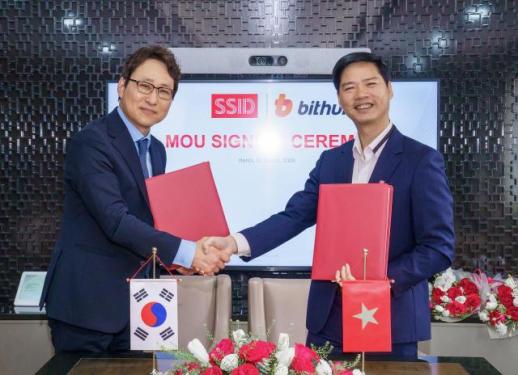 Bithumb Signs MOU With Vietnam’s SSID to Pursue Crypto Exchange Venture Bithumb is expanding cooperation with overseas financial firms as it builds a base for global business. Bithumb said May 7 it signed a broad memorandum of understanding with SSID, a subsidiary of SSI Securities, Vietnam’s largest securities firm, to pursue a virtual-asset exchange business. Attendees at the signing included Bithumb CEO Lee Jae-won, SSID CEO Nguyen Khac Hai and SSI Securities Chairman Nguyen Duy Hung, the company said. The MOU aims to build a strategic partnership to establish and operate an exchange in Vietnam. Subject to regulatory approval for virtual assets in Vietnam, the agreement also leaves open the possibility of a strategic equity investment by Bithumb in an SSID-designated entity. The companies plan to cooperate on technology architecture and development, wallet and custody systems, security and risk management, regulatory support and knowledge transfer, business and product development, and institutional business. Vietnam’s government last month put into effect a resolution allowing coin trading and the establishment of exchanges through a virtual-asset pilot program to be implemented over the next five years. The pilot limits foreign investor ownership stakes, making joint ventures with local financial firms and IT companies important for domestic exchanges. A Bithumb official said cooperation with SSI Securities and SSID reflects international recognition of Bithumb’s exchange operations and transparency. The official said Bithumb will prioritize strict compliance with Vietnam’s regulatory environment and work with its partners to build safe virtual-asset trading infrastructure.* This article has been translated by AI. 2026-05-07 09:41:28
 -
 Hantavirus-hit cruise ship heads to Spain’s Canary Islands; WHO says risk remains low A cruise ship hit by a cluster of hantavirus infections while sailing off West Africa headed for Spain’s Canary Islands after disembarking three suspected patients. AP and Reuters reported that the Dutch-flagged MV Hondius, which had been anchored for several days off the coast of Cabo Verde, began moving on May 6 (local time) with 146 passengers and crew aboard. The three suspected patients were taken off the ship and were being flown by air ambulance to the Netherlands. The Dutch Foreign Ministry said they are a 41-year-old Dutch national, a 56-year-old British national and a 65-year-old German national, and will be transferred directly to specialized hospitals in their respective European countries. Authorities have identified eight suspected cases so far, including three confirmed infections. Three people — a Dutch couple and a German — have died. One of the confirmed cases was the Dutch woman who died. Another was a British patient being treated in South Africa. South Africa’s Health Ministry said testing confirmed the Andes strain, which can spread from person to person. Swiss authorities said one of their citizens who left the ship and returned home in late April is being treated in Zurich and was also confirmed to have the Andes strain. A World Health Organization official said the same strain was identified in samples taken in Cabo Verde, South Africa and Switzerland. The ship departed Argentina on April 1 and traveled through remote areas including the Antarctic mainland, South Georgia Island and Nightingale Island. After infections were confirmed, Cabo Verde refused the ship entry, citing a public health threat. Spain decided to allow it to dock in the Canary Islands on humanitarian grounds. Cabo Verde authorities said an air ambulance arrived the previous night, but stressed that once the evacuation was completed, “the ship must resume its voyage.” Spanish Health Minister Monica Garcia told a news conference in Madrid that all remaining passengers and crew had no hantavirus symptoms and that the ship is expected to arrive in Tenerife in three days. Garcia said that if all non-Spanish passengers are healthy, they will be sent back to their home countries, while 14 Spanish passengers will be quarantined at a military hospital in Madrid. The Canary Islands’ regional government has objected to the central government’s decision. Regional leader Fernando Clavijo told Spanish broadcaster Onda Cero, “We cannot allow it to dock in the Canary Islands. This decision is not based on our criteria, and we have not received enough information.” WHO: “Not like COVID-19” The WHO said it is working with national authorities to trace the movements of 69 people who had close contact with passengers. The agency has repeatedly stressed that the situation is very different from the COVID-19 pandemic. WHO Director-General Tedros Adhanom Ghebreyesus wrote on social media platform X that “at this stage, the overall public health risk remains low.” He said the WHO is working with the operator to closely monitor the health of passengers and crew and is coordinating with national authorities to begin medical monitoring and follow-up for passengers, including those who have already disembarked. In an interview with AFP, Tedros said the risk in other parts of the world is low. Asked whether the outbreak resembled the early days of the COVID-19 pandemic, he said he did not think so. Maria Van Kerkhove, the WHO’s epidemic management director, told Reuters that “close contact” for person-to-person transmission means very close physical contact, such as sharing a cabin or providing medical care. “That is very different from COVID-19 and influenza,” she said.* This article has been translated by AI. 2026-05-07 09:40:26
 -
 WSJ: Trump Wants Iran War Deal Before China Trip, May Resume Strikes if No Accord An analysis says President Donald Trump wants to reach an agreement to end the war with Iran before his planned May 14-15 visit to China. If no deal is reached even after the trip, Trump could again turn to military action, the reports said. The Wall Street Journal reported Tuesday, citing Daniel Shapiro, a former U.S. ambassador to Israel, that the longer the war drags on, the more China’s leverage grows in other U.S.-China negotiations. “Trump has a strong incentive to wrap up the war before next week’s China visit,” Shapiro said. If the war continues, he said, Trump would arrive in China “in the position of a supplicant,” asking Xi Jinping to help pressure Iran to accept Trump’s terms. Shapiro added that the ongoing Middle East war weakens U.S. deterrence against China in the Indo-Pacific and helps Xi’s effort to portray the United States as unstable while casting China as a responsible, mature power. Shapiro said that if the war ends, Trump can focus on the economic deals he cares about most. He added that Iran understands that dynamic, giving Tehran some negotiating leverage to extract a certain level of agreement. CNN also reported, citing sources, that if Trump visits China without concluding talks to end the war with Iran, it would hand Beijing an advantage. A Chinese source told CNN that Trump wants to visit China after resolving the Iran issue to project strength. In an interview Tuesday with PBS, Trump said a deal with Iran could be reached before his China trip. Asked whether it would be finished before he leaves next week, he replied, “It’s possible.” But Trump suggested he could resume military action if no agreement is reached. “We’re going to have to bomb them again like crazy,” he said. Axios also reported Tuesday, citing U.S. officials, that Trump could consider renewed military action if negotiations with Iran do not produce an agreement by the end of his China visit. The report said that if talks still fail after Trump’s China trip, his incentive to negotiate could weaken, potentially leading him to intensify pressure on Iran in a way aimed at China. The Chinese source told CNN that if Trump attacks Iran after the China visit, it could make it appear China abandoned Iran. The source added that Trump is “very smart” and, rather than striking China directly, first brought down Venezuela and is now targeting Iran — moves the source described as effectively clipping China’s wings in those regions.* This article has been translated by AI. 2026-05-07 09:37:17
 -
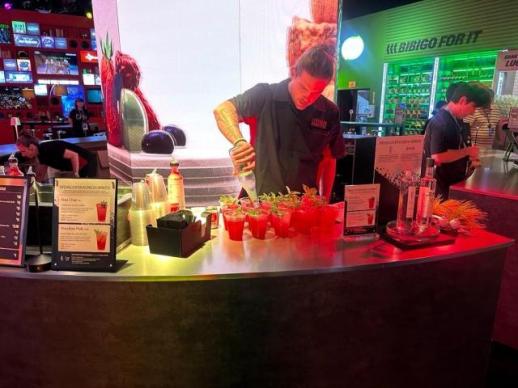 CJ CheilJedang to promote Korean liquor at PGA Tour event SEOUL, May 07 (AJP) - CJ CheilJedang announced it will use this year's "The CJ Cup Byron Nelson," a PGA Tour event, as a platform to introduce Korean traditional liquor to global consumers, part of a broader push to position Korean distilled spirits alongside Japanese sake and Chinese baijiu. The South Korean food giant said cocktails made with Munbae-ju and Gamuchi soju will be served to players and spectators at the tournament, which the company has sponsored through its Bibigo brand. Last year's edition featured four "K-Liquor cocktails" based on Munbae-ju, marking the spirit's debut in Texas. Munbaeju is a grain-based distilled liquor made from millet and sorghum without additives, known for its distinctive wild pear aroma. The drink has gained a following across generations in South Korea. "Thanks to the partnership with CJ CheilJedang, we have been able to introduce Munbaeju to consumers in the United States and beyond for a second consecutive year," said Lee Seung-yong, CEO of Munbae Distillery. "The strong response on the ground confirms the competitiveness of our spirits and bodes well for future sales." The company has signed supply agreements with liquor makers Munbae Distillery and Danong Bio, and is aging the spirits at a facility in Nonsan, South Chungcheong Province. The first products, aimed at the U.S. market, are scheduled for launch in the second half of this year. CJ CheilJedang has also been selected for the government's "Global Next K-Food Project," which supports overseas expansion of traditional Korean liquor producers through programs such as a "K-restaurant week" tied to local dining venues. 2026-05-07 09:36:50
 -
 South Korea Launches Project to Give Sea Forests Official Names "I think you have to give it a name. How lonely would it be without one? I already named it 'Bonny.' Now I'll call this geranium 'Bonny.'" That line comes from the novel "Anne of Green Gables," when Anne names a geranium on the windowsill. The moment it has a name, it becomes more than just one plant among many. Naming something can be a gentle promise to care for it and stay with it. Underwater, South Korea has many places still waiting for that kind of attention: "sea forests." Sea forests are underwater areas where seaweeds such as kelp, Ecklonia and sea mustard grow in clusters, creating habitat for a wide range of marine life. They serve as feeding grounds and spawning and nursery areas, while absorbing carbon dioxide, releasing oxygen and helping clean the marine environment. The Ministry of Oceans and Fisheries said it created 375 square kilometers (145 square miles) of sea forests from 2009 through last year, an area more than half the size of Seoul. The term compares coastal seaweed beds that grow in sunlit waters to forests on land. Fish use these areas as spawning grounds and nurseries. They were previously referred to as seaweed grounds or seaweed forests, but the ministry said the term "sea forest" is now used. The sea forests built so far are large enough to absorb 127,000 tons of carbon dioxide a year, equivalent to emissions from 52,000 cars, the ministry said. In sea forests completed in 17 waters including Yeosu and Pohang from 2022 to 2025, a species-diversity index used to indicate ecosystem health rose 64.1% compared with before construction, it said. Even so, many of these sites have been recorded in project reports only by coordinates and administrative place names, such as the "Donghae Mukho sea forest" and the "Jeju Aewol-ri sea forest." The ministry contrasted that with well-known land forests and mountains that are remembered and protected by name. The ministry said places without names can be easier to overlook. When a sea forest is managed only as a set of coordinates, it can quickly fade from public memory after it is built. To change that, the ministry said it will launch a project called "Sea Forests, Adding Names" with Hyundai Motor Co. and the Korea Fisheries Resources Agency, both of which participate in sea-forest construction. The goal is to publicize sea forests and elevate them as places the public continues to watch and manage, described as a kind of "companion space." The first name created through the project is "Ullim," for a sea forest built in waters off Ulsan's Jujeon area. The ministry said the name carries the meaning of a "new forest of Ulsan" (蔚林) and reflects Hyundai employees' hope that the sea forest's recovery of marine ecosystems will spread as a powerful resonance. On May 10, Marine Planting Day, the ministry said the "Ullim sea forest" will also appear on map apps, turning an unnamed seaweed cluster into something more familiar, like a friend or neighbor. The ministry said the naming project is expected to expand into a global campaign, including in Argentina and Australia. South Korea designated May 10 as Marine Planting Day in 2012, the first in the world, to promote protection of marine ecosystems and awareness of the risks of ocean desertification. The ministry said it hopes the effort to name sea forests will help spur care and protection of sea forests worldwide.* This article has been translated by AI. 2026-05-07 09:36:15
 -
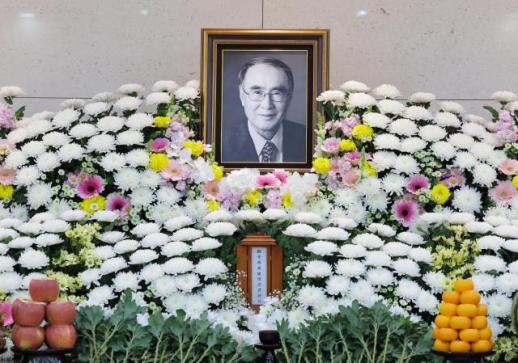 Remembering Lee Hong-koo: A Statesman and Scholar Lee Hong-koo, a distinguished elder statesman and scholar of South Korea, passed away on May 5, 2026, at the age of 92. He played a significant role in South Korea's modern history, contributing to academia, politics, and diplomacy. Born in 1934 in Kaesong, he attended Gyeonggi High School and Seoul National University, later studying at Emory University and Yale University. After returning to Korea, he served as a professor of political science at Seoul National University for 20 years. He held various key positions, including Minister of National Unification under the Roh Tae-woo administration, Deputy Prime Minister and Minister of Unification and Prime Minister under the Kim Young-sam administration, and Ambassador to the United States under the Kim Dae-jung administration, making him a rare figure who was trusted by all three governments following democratization. His passing signifies more than the loss of a former prime minister; it marks the departure of a scholar who maintained the dignity of public discourse and a sense of balance in governance as South Korea navigated through industrialization, democratization, division, the Cold War, globalization, and financial crises. Lee Hong-koo's identity is difficult to encapsulate in a single phrase. He was a scholar, diplomat, prime minister, politician, and writer, but above all, he was a gentleman who upheld the dignity of public language. He was not a politician who raised his voice to overpower others, nor was he a combative figure. His words resonated because they were rooted in scholarship, moderation, and a profound consideration for the nation. As a prominent scholar, he taught Western political thought at Seoul National University, covering topics from Plato to the social contract theory, liberalism, and democracy. His lectures were described as intellectual dramas, filled with vigor and scholarly elegance, demonstrating that politics is not merely a struggle for power but a discipline that questions the fate of humanity and communities. Lee's life was intertwined with both grand historical events and personal connections. His father's birthplace was Odae-ri in Sangju, Gyeongsangbuk-do. The fact that a man born in Kaesong, who studied at Yale and walked through the halls of power in Seoul and Washington, had humble roots in Sangju serves as a reminder that his life was not just a record of power and positions but a long journey intertwined with family, hometown, roots, and memories. As a professor at Seoul National University for two decades, he laid the foundation for political science in Korea. Earning a Ph.D. in political science from Yale, he was a rare intellectual capable of interpreting Western political thought alongside the realities of Korean politics. During a time when Korean society was grappling with the aftermath of war, authoritarianism, the Cold War, division, industrialization, and democratization, political science was not merely theoretical; it was a practical discipline questioning how to build a nation, control power, and harmonize freedom and order. Lee's political science was precisely at this intersection. He entered public service in 1988 with the Roh Tae-woo administration, serving as Minister of National Unification. He viewed inter-Korean relations not merely as ideological confrontations but as opportunities to rethink the long-term and gradual restructuring of order on the Korean Peninsula. His proposal for a 'Korean Commonwealth' later became the backbone of the inter-Korean unification plan. The inter-Korean unification plan announced in 1989 is one of his most significant legacies. It advocated for a gradual and peaceful unification based on the three principles of independence, peace, and democracy, moving beyond the logic of confrontation and absorption. Importantly, this was not a unilateral vision but a unification policy developed through consensus between the ruling and opposition parties. This reveals Lee's political philosophy. He did not speak of unification in incendiary terms, nor did he consume it as a radical slogan. Instead, he sought to design unification through the language of institutions, agreements, peace, and democracy. Aware of the pain of division, he was not impatient, and while believing in the necessity of unification, he did not ignore reality. This was the strength of a scholar turned public servant. He prioritized structure over emotion, institutions over slogans, and consensus over confrontation. Under the Kim Young-sam administration, he was again appointed as Minister of Unification and Deputy Prime Minister, eventually becoming Prime Minister in December 1994. This was a tumultuous period for the civilian government, tasked with establishing democratic institutions following military authoritarianism, promoting globalization, and managing both the potential and crises in inter-Korean relations. Notably, a summit between the two Koreas was nearly realized in 1994 but was thwarted by the sudden death of Kim Il-sung, a moment that could have marked a significant turning point in modern Korean history. For Lee, the prime ministership was not merely an honor. He had to manage the national tragedy of the Sampoong Department Store collapse. His swift response to the disaster, rushing to the scene upon hearing the news during an official dinner, demonstrated that he did not merely speak of responsibility. Reflecting on his tenure, he remarked, “I feel more responsibility than achievement.” This statement encapsulates his view of public service: it is a position of accountability before being a place of prestige. Power is not merely to be exercised but to be shouldered. Lee entered politics in 1996 as a representative of the New Korea Party and became a member of the 15th National Assembly. He also ran in the presidential primaries but withdrew midway, realizing the high barriers of realpolitik. He expressed a desire to discuss policies but lamented that political competition often prioritized party allegiance over the merits of policies. This sentiment remains relevant today, as contemporary Korean politics often leans more towards factionalism, attacks, and electoral calculations than on policy debates. Thus, Lee's failure was not merely a personal setback; it highlighted how difficult it has been for Korean politics to embrace dignified policy competition. After the inauguration of the Kim Dae-jung administration, Lee was once again called to serve the nation. In the wake of the financial crisis, South Korea urgently needed to restore its international credibility. President Kim Dae-jung asked him to serve as Ambassador to the United States, a politically challenging choice. However, he prioritized the nation's needs over personal discomfort. Although he was a representative of a conservative party, he accepted the role in a progressive government, placing the country above party interests. This aspect truly reflects the stature of Lee Hong-koo. He was able to serve in all three administrations after democratization—Roh Tae-woo, Kim Young-sam, and Kim Dae-jung—because he possessed trust that transcended party lines, a sense of balance in governance, and the ability to set aside personal interests in times of crisis. Lee's conservatism was not narrow or factional; it was characterized by dignity, moderation, and institutional integrity. He sought to base politics on rationality rather than anger, to mediate conflicts rather than exacerbate them, and to emphasize responsibility over ideological excess. In today's polarized political landscape, his brand of conservatism stands out. True conservatism is not about clinging to the past but about safeguarding institutions and responsibilities to prevent the community from collapsing. Lee embodied this principle as a politician. Even after leaving public office, he remained active, serving as an advisor to the JoongAng Ilbo and writing the 'Lee Hong-koo Column,' providing dignified insights on political issues, inter-Korean relations, and foreign affairs. Through the Seoul International Forum, he offered alternatives to international and security issues. He remained a scholar until the end, a knowledgeable voice, and a respected elder in discussions. He particularly emphasized decentralization and dialogue, believing that distributing the excessive powers concentrated in the presidency would enhance the nation's overall capacity. This was not merely a call for constitutional reform but a vision to strengthen democracy through the moderation of power and the distribution of responsibility. He trusted sustainable institutions over strong leaders and valued institutional balance over individual goodwill. This conclusion arose from both his scholarly intuition and his experiences in public office. Lee Hong-koo was a rare type of leader. He transitioned from academia to politics without losing his scholarly integrity, held a central position of power without sacrificing his dignity, and engaged in party politics while maintaining the balance of a national elder. He lacked the harsh rhetoric of incitement but possessed a deep persuasive language. He did not adopt an authoritarian demeanor but instead exhibited a listening attitude. He embodied the restraint of a scholar rather than the ruthlessness of a competitor. Today, we are not merely bidding farewell to an individual politician; we are parting with an era of political civility. He stood quietly yet responsibly at various positions as South Korea traversed the paths of war and division, authoritarianism and democratization, the Cold War and post-Cold War, financial crises and globalization. He consistently sought to maintain balance and consider the long-term sustainability of the nation. The life of the late Lee Hong-koo poses profound questions for today's politics: What is politics? What should power be used for? Can ideology take precedence over the community? Are words weapons that wound people, or bridges that persuade society? Lee Hong-koo's life quietly answers these questions. Politics is the art of managing conflict, power is a position of responsibility, and ideology should be a tool for the nation, not a weapon that divides it. Words become public discourse only when they retain their dignity. Born in Kaesong, educated at Yale, teaching at Seoul National University, and traversing the Blue House, Prime Minister's Office, and embassies to the realms of media and forums, his life was ultimately a long journey of a single individual. At the end of this journey, we remember the magnitude of dignity over power, the depth of responsibility over position, and the refinement of public language over political victories. Lee Hong-koo has now departed from our midst. However, the dignity of his public language, the attitude of rationalism, the faith in institutions, and the politics of responsibility that prioritized the nation will endure. In an era of division, his restraint is missed, and in a noisy age, his calm voice is longed for. He was not a loud voice in the political arena but a steady presence at every historical juncture. The eternal gentleman, former Prime Minister Lee Hong-koo. We pay deep respect to the life of the late scholar, public servant, diplomat, and elder statesman. May he rest in peace. Our condolences. 2026-05-07 09:34:51
 -
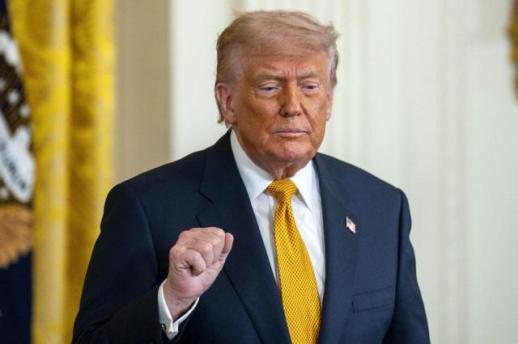 Trump says Washington 'closing in on a deal' with Iran to end months of conflict SEOUL, May 7 (AJP) - U.S. President Donald Trump on Wednesday raised hopes that the U.S. is "closing in on a deal" with Iran to end the prolonged conflict in the Middle East. In a phone interview with PBS News, Trump said, "I think it's got a very good chance of ending," suggesting that the deal could be reached before his trip to China for a summit with Chinese President Xi Jinping next week. But he left some doubt, saying, "I felt that way before with them, so we'll see what happens." He then warned that the U.S. would resume bombing Iran if no deal is reached. "If it doesn't end, we have to go back to bombing the hell out of them." "But it's getting very close. If they agree, it's over, and if they don't agree, we bomb," he added. When asked whether Iran would export its highly enriched uranium, possibly to the U.S. as part of the deal, Trump replied, "No, not perhaps. It goes to the United States." He also confirmed that Iran would agree not to operate its underground nuclear facilities. His comments came several hours after American news website Axios reported that Washington and Tehran are working on a "one-page, 14-point memorandum of understanding (MOU)" that would "declare an end to the war in the region and the start of a 30-day period of negotiations on a detailed agreement to open the strait, limit Iran's nuclear program and lift U.S. sanctions." Later in the day, during a press availability at the White House, Trump again said, "We've had very good talks over the last 24 hours and it's very possible that we'll make a deal up there," adding that Iran "badly" wants to make a deal. He also reiterated that Iran cannot have a nuclear weapon, saying it had "agreed to that among other things." But amid a war of words, it remains to be seen whether any deal will be reached to end the prolonged conflict, which began with U.S. and Israeli joint airstrikes against Iran in late February. Tehran says it is still reviewing the proposal, dismissing Trump's claims as a pressure tactic to push for a deal. 2026-05-07 09:33:26
 -
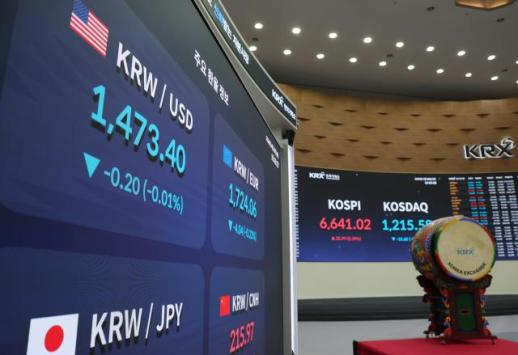 South Korean Won Strengthens to 1,440s on Easing Middle East Tensions The South Korean won strengthened into the 1,440s against the U.S. dollar for the first time in about 2 1/2 months as expectations of easing Middle East tensions revived risk appetite. In Seoul trading, the won was quoted at 1,447.9 per dollar as of 9:20 a.m. Thursday. The exchange rate opened at 1,448.6, down 6.5 won from the previous session, and fell into the 1,440s during intraday trading. It was the first time the rate returned to the 1,440s since Feb. 27, just before the outbreak of the Middle East war. Sentiment improved after renewed expectations for a final agreement between the United States and Iran, lifting risk-on moves across global markets. Overnight, U.S. President Donald Trump said in a media interview that he had “very good talks” with Iran over the past 24 hours and that “there is a very big chance” of reaching a deal. U.S. stocks rose broadly on optimism over negotiations to end the war. The Dow Jones Industrial Average gained 1.24%, the S&P 500 rose 1.46% and the Nasdaq composite climbed 2.02%. The dollar index, which measures the greenback against six major currencies, was up 0.021 at 98.029. Min Kyeong-won, an economist at Woori Bank, said markets are “betting on the possibility of a deal,” adding that continued foreign inflows into South Korean stocks could spur offshore selling and increase downward pressure on the exchange rate. She said demand for dollars from importers’ payments and residents’ currency conversions for overseas stock investment is supporting the downside. With Wall Street hitting fresh highs, she added, demand could return as residents seek to buy more U.S. stocks.* This article has been translated by AI. 2026-05-07 09:30:18