
Journalist

Seo Hye Seung
-
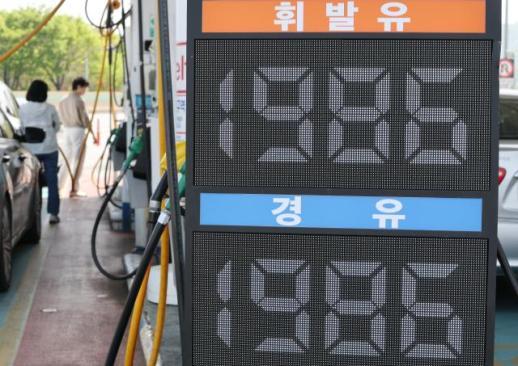 South Korea Weighs Fines for Fuel Hoarding, Says Diesel Could Have Hit 2,800 Won a Liter The government said it estimates diesel prices could have surged to about 2,800 won per liter without a cap on petroleum product prices, and it is considering introducing administrative fines to punish market disruptions such as hoarding. Officials said the risk of further inflation remains high as higher global oil prices, driven by uncertainty from the Middle East war, could feed into domestic prices with a lag. The government discussed its assessment and response plan at a meeting of the “Special Task Force of Related Ministers for Livelihood Price Management,” chaired by Deputy Prime Minister and Minister of Finance and Economy Koo Yun-cheol, held on the 7th at the Government Complex Sejong. The government said April consumer inflation came in at 2.6%, with a sharp rise in petroleum-related prices leading the increase after the Middle East war. Petroleum product inflation jumped to 21.9% in April from 9.9% in March, while inflation excluding petroleum products stayed around 1.8%. Officials said policy measures such as the price cap and fuel tax cuts absorbed much of the upward pressure. They estimated that without the price cap, overall inflation would have been 2.8% in March and 3.8% in April — 0.6 percentage points and 1.2 points higher than the official figures. A finance ministry official said figures presented by the Energy and Oil Market Monitoring Team suggest gasoline could have risen into the 2,200-won-per-liter range and diesel to more than 2,800 won per liter without government controls. The government also said Korea’s inflation has been relatively stable compared with major countries, noting that many advanced economies have recorded inflation in the mid-2% to low-3% range and that domestic oil prices have risen more slowly than in key peers. Japan, Hungary and Poland are using tougher measures such as price ceilings or subsidies for refiners, while major European countries are combining fuel tax cuts with market inspections, the government said. Going forward, officials said they will focus on stabilizing petroleum prices by stepping up on-site inspections at gas stations and crackdowns on hoarding, while also managing supply and demand through steps such as securing alternative crude supplies and rotating vehicle use at public institutions. The government said it will also swiftly execute 6.1 trillion won in high-oil-price relief funds and fuel-cost support for agriculture, fisheries and transportation, and expand measures to ease household costs, including discounts of up to 50% on farm, livestock and fishery products and broader discounts on processed foods. To strengthen market order, officials said illegal acts such as hoarding can be punished by up to three years in prison or a fine of up to 100 million won, along with confiscation and forfeiture, and that the government will review introducing administrative fines to enable faster penalties. A finance ministry official said the law already provides a basis to confiscate or forfeit related goods in hoarding cases, and added that the government will quickly review the administrative-fine measure mentioned by the president at a Cabinet meeting. * This article has been translated by AI. 2026-05-07 09:07:01
 -
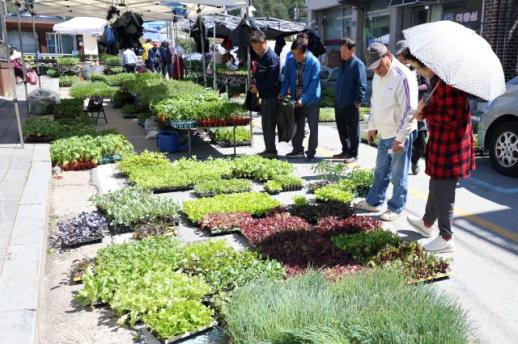 South Korea to tighten tariff-quota oversight, speed bonded-warehouse releases The government said it will tighten customs and distribution oversight of tariff quotas to prevent delays and misconduct, including by speeding releases from bonded areas and strengthening penalty rules. Officials said they reviewed follow-up steps to improve tariff-quota operations at a meeting of the interministerial task force on special management of consumer prices held on May 7. The government has used tariff quotas to help stabilize prices, but it said it identified improper cases in which some agricultural and fishery products were not promptly released from bonded areas after import declarations. In response, it plans to newly designate items for intensive management, revise customs rules to encourage faster release, and strengthen domestic distribution oversight and sanctions. The government previously inspected the full chain of importing, storage and sales for emergency tariff-quota items from March 9 to April 16. It said the review found price declines for bananas (-4%), mangoes (-20%), pineapples (-11%) and frozen mackerel (-3%). In distribution, the government said consumers saw larger price cuts when importers supplied large discount stores directly than when products moved through wholesale and retail channels. It also said imported fruit has a limited shelf life and frozen mackerel is already managed, and it found no problems with delayed market distribution timing. To support the changes, the government is also pursuing amendments to the Customs Act, including a new legal basis for designating intensively managed items. The related bill was submitted to a Cabinet meeting on March 31, then received emergency approval on April 3 and was promulgated and took effect. Since March, authorities have also operated a joint interagency task force on tariff-quota management for agricultural and livestock products to strengthen item-by-item customs and distribution inspections. The government said it will reflect additional measures — including tougher penalty standards and a new release order — in the regular tax law revision package in July, aiming to complete revisions within the year. Under current rules, an additional tax is imposed only after 30 days from the date goods enter a bonded area; the revision would tighten that to 20 days. To speed sugar distribution, the government will shorten the mandatory release period from six months to four months. Starting in August, it will also add five items — including frozen mackerel — to the list of imported seafood subject to distribution traceability management. By year’s end, the government said it will build an integrated system, centered on a dedicated body, to continuously monitor the entire process of importing, distribution and sales for tariff-quota items in agriculture and livestock.* This article has been translated by AI. 2026-05-07 09:05:34
 -
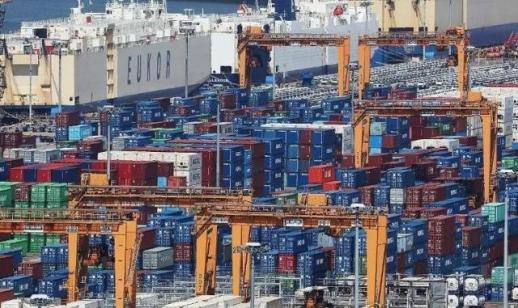 Korea to streamline customs for critical imports, expand FTA use to diversify supply chains As supply-chain disruptions from the Middle East war become more visible, South Korea’s customs authorities will simplify import clearance and unloading procedures for items deemed necessary for supply-demand management to speed deliveries of raw materials and intermediate goods. The Korea Customs Service also said it will pursue regulatory changes and identify additional support targets to help diversify supply chains. The agency announced the steps on the 7th at a ministerial task force meeting on special management of consumer prices, releasing an “inspection and improvement plan for import clearance of items affected by the Middle East war.” According to the Korea Customs Service, total crude oil imports in March and April fell to 130 million barrels this year from 150 million barrels a year earlier, down 8.5 percentage points. Imports from the Middle East dropped by 25.29 million barrels, while non-Middle East imports fell by 4.30 million barrels. The average unit price rose to $92 a barrel from $79 a year earlier, up 16.2%. Imports of Middle East-sourced liquefied natural gas and liquefied petroleum gas butane also plunged, down 12.7% and 47.8%, respectively. Key industrial inputs beyond energy also showed shifts. Total naphtha imports fell 25.2%, while sourcing diversified to the United States, Greece and India. Helium imports from Qatar dropped 45.5%, while shipments from the United States increased 49.9%. With energy and raw-material supply chains under strain, the customs service said it is operating an emergency response task force tied to the Middle East war to stabilize supplies and provide urgent tariff and logistics support. To ease bottlenecks at the import stage, it said it is helping rush-demand items clear customs before unloading so they can be deployed to industrial sites immediately upon arrival. The agency also said it is supporting supply measures by banning hoarding, designating certain emergency supply-demand adjustment items for penalties on delayed import declarations, and tightening customs screening for export-restricted goods. It is also analyzing import unit prices weekly for seven items, including crude oil and naphtha, and sharing detailed information with relevant ministries. To limit damage to companies trading with the Middle East, the customs service said it will minimize administrative fines, actively approve extensions of storage periods for unshipped cargo, and waive error points for corrections or withdrawals of export declarations. For companies using detours around the Strait of Hormuz or alternative transport, it said higher freight costs will be excluded from the customs value used for duties. It also said it will support Middle East importers with delivery extensions and installment payments. Until the Middle East war ends, the customs service said it will temporarily simplify import clearance and unloading procedures for supply-demand management items. For raw materials procured overseas, it will work with relevant ministries to allow required import documents to be submitted after customs clearance. To prevent supply delays caused by late arrivals or unloading of crude oil and LNG carriers, it will exclude them from vessel search designation and waive reporting requirements for moving to anchorage or mooring locations within ports. To diversify supply chains, the agency said it will identify additional systems and items eligible for special support under free trade agreements and work to resolve difficulties in import procedures. It said it will seek to shorten the time required to issue certificates of origin for Malaysian crude oil, which it said takes longer than in other countries. It also said it will review import support measures for some Australian condensate that can be used as a substitute feedstock for naphtha.* This article has been translated by AI. 2026-05-07 09:04:28
 -
 Boucheron sued in South Korea after diamond falls from ring; brand denies refund French luxury jeweler Boucheron has been sued by a South Korean consumer after refusing to exchange or refund a ring that the buyer says had a major defect. The lawsuit follows a claim that a diamond fell out of the ring about a week after purchase, and the company offered only repairs. According to the complaint obtained by Ajunews on the 6th, the customer, identified as A, bought one signature “Quatre Classic Small Ring” in early January at a Boucheron boutique inside a department store in Seoul’s Songpa district. The ring, popular as a wedding band, cost 11.5 million won. A said that about seven days after the purchase, on the 11th of that month, one diamond set in the band was missing. A told the store there had been no external impact or negligence and requested a refund, saying the incident showed a fundamental problem with durability and quality for a high-priced product. Boucheron, however, cited scratches that it said occurred during use and responded that a refund or exchange was not possible, according to the complaint. The company said only repairs could be provided and rejected the request. A filed a damages lawsuit against Boucheron’s South Korean unit, Kering Watch & Jewelry Korea, seeking the return of the purchase price. The law firm representing A said the case qualifies as grounds to cancel the contract under the Civil Act’s warranty liability for defects. Lee Hyun-hee, an attorney at Law Firm YK, said, “The value of luxury jewelry lies in sophisticated design and the completeness of the stone setting,” adding that “a diamond falling out just seven days after purchase is a serious defect that markedly lacks the durability ordinary precious-metal goods should have.” Lee also said the defendant’s repair-only stance “clearly refuses its obligation to deliver goods without defects.” In the lawsuit, the legal team cited not only South Korea’s consumer dispute resolution standards but also France’s consumer code, Code de la consommation, where Boucheron is headquartered. Under that code, defects that arise within two years of delivery are presumed to have existed at the time of sale, and unless the seller proves the consumer is responsible, the seller must provide remedies including repair, exchange or contract cancellation, the filing said. The case has also prompted criticism of how Boucheron operates in South Korea. Kering Watch & Jewelry Korea changed its corporate form in 2022 from a stock company to a limited liability company, drawing claims that the move was intended to avoid mandatory disclosure of external audit reports. An industry official said luxury brands can post enormous sales in South Korea while avoiding management disclosure obligations, and then, when defects occur, cite global guidelines to disregard domestic consumer protection rules. Ajunews said it contacted Boucheron multiple times by phone and email to seek comment on the lawsuit but received no response.* This article has been translated by AI. 2026-05-07 09:03:19
 -
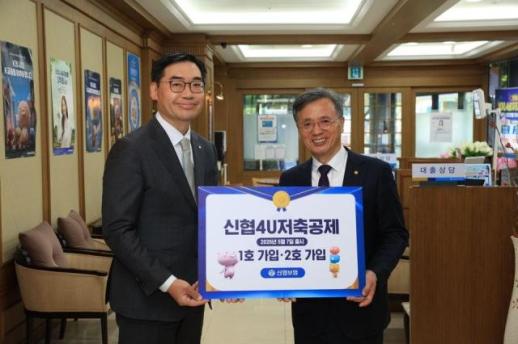 Credit Union Launches 4% Annual Savings Plan Targeting Three-Year Goals The Credit Union Central Association has introduced a new savings plan with a three-year maturity. The plan offers a fixed annual interest rate of 4%, providing stability in funding even amid fluctuating interest rates.On May 7, the association announced the launch of the 'Non-Dividend Credit Union 4U Savings Plan.' Members pay a one-time premium upon enrollment and receive a fixed annual interest rate of 4% if they maintain the plan until maturity. This savings plan is similar to savings insurance products offered by insurance companies.A 55-year-old man who pays a one-time premium of 50 million won can expect to receive 54,718,000 won before taxes at maturity, with an estimated return rate of 109.4%.The plan also includes a death benefit. If the contract holder passes away, the death benefit will be the sum of 3% of the one-time premium and the accumulated amount at the time of death. Additionally, participants can make partial withdrawals up to 50% of the surrender value up to 12 times a year.Participants can convert their benefits into an annuity through the 'Non-Dividend Annuity Conversion Special Clause II.' Enrollment is open to individuals aged 15 to 80, with a minimum premium of 1 million won. However, early termination may result in a surrender value lower than the paid premium.On the same day, Chairman Ko Young-cheol and CEO Son Sung-eun became the first customers to enroll at Hanuri Credit Union. Chairman Ko stated, “In a volatile financial market, this product aims to help customers secure their goal funds and plan for retirement. We will continue to introduce products that enhance the financial benefits for our members and customers.” 2026-05-07 09:00:20
 -
 Hyundai Motor Securities: Celltrion’s New Biosimilars to Drive Sales Growth Hyundai Motor Securities on Thursday maintained its “buy” rating on Celltrion and kept its target price at 270,000 won, saying rapid growth in the company’s new biosimilar lineup is expected to lead sales gains. Kim Hyeon-seok, an analyst at Hyundai Motor Securities, said most of the new products were launched in the second half of last year, and he expects growth to accelerate further in the second half of this year. He added that factors expected in the second half — including Omliclo’s U.S. launch and an expansion of Stekima’s indication for ulcerative colitis — should support sales growth. Kim said that from the second quarter, Celltrion should see a larger revenue contribution from the new products and no longer face one-time costs tied to losses from a production halt caused by maintenance at its U.S. Branchburg plant in the first quarter, raising expectations for further improvement in operating margins. He also said a favorable environment, including streamlined biosimilar clinical requirements, is translating into tangible benefits. Kim said regulators approved a sharp reduction in the number of patients required for Phase 3 trials of Cosentyx and Keytruda biosimilars, and he expects such benefits to continue. Kim said shorter development timelines and lower costs should help convert the pipeline into revenue more quickly and improve operating margins. He added that the company is pursuing aggressive capacity expansion to boost sales volumes of new biosimilars and to scale up its contract manufacturing (CMO) business.* This article has been translated by AI. 2026-05-07 08:57:16
 -
 SK Securities Raises SK Hynix Target Price to 3 Million Won on AI Memory Revaluation SK Securities said May 7 that a structural revaluation of memory semiconductors is gaining momentum in the artificial intelligence era, raising its target price for SK Hynix to 3 million won from 2 million won, a 50% increase. It maintained its “buy” rating. Analyst Han Dong-hee said the revaluation “is still only at an early stage,” citing what he described as top-tier profit and profitability among global AI-related stocks, improving structural earnings stability and a broader base of buyers for Korean memory makers. He said the stock’s undervaluation “is only beginning to stand out.” SK Securities noted that despite a recent surge in the share price, SK Hynix’s 12-month forward price-to-earnings ratio remains around five times. With a strong memory cycle, higher HBM prices and expanding long-term supply contracts, it said further earnings upgrades and a valuation re-rating could occur at the same time. The firm pointed to AI adoption as reshaping the demand structure for memory. It said memory, once tied closely to cyclical replacement demand for smartphones and PCs, is now a key component that affects AI inference performance and cost efficiency. It added that discussions of long-term supply contracts spanning three to five years are spreading in the high-value memory market centered on HBM, and said the shift should reduce earnings volatility and improve stability. SK Securities also raised its forecasts, putting SK Hynix’s 2026 operating profit at 262 trillion won, up 4% from its prior estimate, and projecting 2027 operating profit of 376 trillion won, up 15%. * This article has been translated by AI. 2026-05-07 08:55:05
 -
 Insurers’ Overseas Units Near $200 Million in Net Profit, Up 24% on Year Korean insurers’ overseas units posted a sharp rise in net profit last year, helped by Hanwha Life Insurance’s acquisitions of an Indonesian bank and a U.S. securities firm. According to the Financial Supervisory Service’s preliminary 2025 results released Wednesday, insurers’ overseas units earned $197 million in net profit, up 23.8% from $159.1 million a year earlier. Life insurers’ net profit rose 70.8% to $109.3 million, driven by newly consolidated overseas units. Excluding two newly added units and one sold unit, net profit from existing overseas units fell by $13.5 million from the previous year. Non-life insurers posted $87.7 million in net profit, down 7.8% ($7.4 million), as natural disasters in Southeast Asia, including an earthquake in Myanmar and flooding in Thailand, weighed on results. By business line, insurance operations recorded $128.6 million in profit, down $22.1 million from a year earlier. Financial investment and banking operations posted $34.2 million and $29.3 million, respectively, reflecting Hanwha Life’s purchase of a stake in U.S. securities firm Velocity and its acquisition of Indonesia’s Nobu Bank. The Velocity deal marked the first entry by a South Korean insurer into the U.S. securities market. By region, profit in Asia rose $6.4 million to $121.6 million, while the United States increased $32 million to $66.4 million. Europe slipped $500,000 to $9 million. Total assets stood at $16.24 billion at the end of last year, up 121.2% ($8.9 billion) from $7.34 billion a year earlier. The FSS said net profit and assets jumped largely due to new overseas expansion into banking and financial investment, but added that growth slowed when excluding newly consolidated units and that non-life insurers’ results weakened due to natural disasters. Citing heightened uncertainty from global market volatility, including Middle East tensions, and rising risks of major disasters linked to climate change, the regulator said it will closely monitor overseas units’ management and financial soundness and instruct insurers to strengthen risk management.* This article has been translated by AI. 2026-05-07 08:54:14
 -
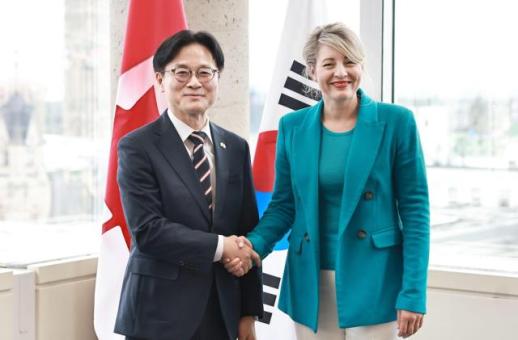 South Korea’s industry minister presses Canada submarine bid, calls it partnership turning point South Korean Industry Minister Kim Jeong-gwan, visiting Canada, has stepped up efforts to support defense exports, including a bid tied to Canada’s submarine program. The Ministry of Trade, Industry and Energy said May 7 that Kim met with Canadian Industry Minister Melanie Joly in Ottawa on May 5 (local time) and shared updates on industrial cooperation related to the submarine bid, including a memorandum of understanding between companies from the two countries. Kim and Joly also discussed expanding cooperation in other sectors such as hydrogen and coordinating in multilateral frameworks. Kim asked for Canadian government support for South Korean companies investing in Canada, the ministry said. The next day, Kim met with Energy and Natural Resources Minister Tim Hodgson and agreed to deepen cooperation on critical minerals, citing the need to diversify supply chains. Kim also met with Sen. Hassan Youssef, described as a former chair of the Senate defense committee, to discuss strategic cooperation between South Korea and Canada related to the submarine project. In talks with Flavio Volpe, president of the Automotive Parts Manufacturers’ Association, Kim exchanged views on defense industry cooperation and thanked the group for declaring its support for South Korea in connection with the submarine program. After finishing his Canada schedule, Kim is to travel to Washington, D.C., for preliminary talks on strategic investment with key U.S. officials, including U.S. Commerce Secretary Howard Lutnick. He also plans outreach to the U.S. Congress on investment and trade issues, the ministry said. “Winning Canada’s submarine project would go beyond a simple defense procurement and become an important turning point in building a long-term partnership between our two countries,” Kim said. “We will marshal public and private capabilities and respond with full force.”* This article has been translated by AI. 2026-05-07 08:52:09
 -
 BTS to Meet Mexico President Claudia Sheinbaum Ahead of Mexico City Concerts BTS is set to meet Mexico President Claudia Sheinbaum ahead of the group’s Mexico City concerts. On May 6 (local time), Sheinbaum said at her regular morning news conference, known as the “Mañanera,” that BTS will visit the presidential offices. She said the balcony will be opened so the group can greet citizens gathered in the plaza. Sheinbaum praised the group’s music, saying it “always delivers a message of friendship and peace, and love.” Sheinbaum had earlier welcomed confirmation of BTS’ Mexico City shows in January, calling it a “historic moment.” Government-level attention has continued. In February, Sheinbaum drew notice after disclosing a reply she said she received from President Lee Jae-myung regarding a request for additional BTS performances. Lee expressed thanks for Mexicans’ affection for Korean culture and said he hoped cultural ties between the two countries would continue. Demand has been reflected in ticket sales. The three shows scheduled for May 7 and May 9-10 at Estadio GNP Seguros in Mexico City sold out shortly after tickets went on sale. The Mexico City Chamber of Commerce estimated the concerts will generate about $107.5 million (about 155.7 billion won) in economic ripple effects. Spotify data ranks Mexico City as the city that listens to BTS the most worldwide. The local reception has coincided with the group’s performance on global charts. On the latest Billboard charts released May 5 (dated May 9), “SWIM,” the title track from the group’s fifth full-length album “ARIRANG,” ranked No. 2 on both Global (Excl. U.S.) and the Global 200. BTS has remained in the top three on those charts for six straight weeks. The album’s broader showing has also held steady. All 13 vocal tracks — excluding the bell sound of the Sacred Bell of King Seongdeok — have stayed on both global charts for six weeks. “ARIRANG” ranked No. 5 on the Billboard 200, while “SWIM” was No. 32 on the Hot 100. “Pied Piper,” performed recently at the group’s Tampa show, re-entered the World Digital Song Sales chart at No. 9, underscoring the spillover effect of live performances. BTS is scheduled to begin its Mexico City run on May 7. The sold-out shows and the planned meeting with Sheinbaum have focused attention on the group’s cultural reach.* This article has been translated by AI. 2026-05-07 08:51:15