

Journalist

Sohn Jie-ae
-
 Korean Economy Relying on Semiconductors Faces Growth Illusions Major domestic and international economic institutions have raised their forecasts for South Korea's economic growth rate. However, a significant gap remains between macroeconomic indicators and the real economy as experienced by ordinary citizens. Most sectors, except for semiconductors, continue to struggle, raising concerns about economic polarization. This phenomenon is attributed to what is termed the "semiconductor illusion effect." While the semiconductor export boom has boosted exports and growth rates, the real economy continues to lag due to high inflation and exchange rates. According to the Ministry of Economy and Finance, the Organization for Economic Cooperation and Development (OECD) has revised its forecast for South Korea's economic growth rate upward by 0.9 percentage points to 2.6% for this year. Growth is expected to continue in the second half of the year, primarily driven by semiconductors, although the polarization between semiconductor and non-semiconductor manufacturing is expected to deepen. A recent report from the National Assembly Budget Office indicates that the production capacity index for the semiconductor sector has surged by 80 percentage points over the past five years. This increase is attributed to the AI boom and the recovery of global information technology demand, leading to significant investments and production increases. In contrast, the production capacity index for non-semiconductor manufacturing has declined by 14 percentage points during the same period. This decline reflects the weakening fundamentals of traditional manufacturing sectors, such as steel, petrochemicals, and automotive parts, which have been the backbone of the South Korean economy. A representative from the Budget Office stated, "Due to global supply excess, the operating rates for steel and petrochemical sectors have been declining for several years. High inflation is also constraining consumption, leading to negative growth in the domestic service sector." The inability of the semiconductor boom to spread to other industries and the overall economy is attributed to external uncertainties. The prolonged conflict in the Middle East, coupled with geopolitical risks, has kept international oil prices elevated. Given South Korea's high dependence on energy imports and its export-oriented economic structure, high oil prices contribute to rising production costs and inflationary pressures. The high exchange rate, hovering around 1,500 won per dollar, also poses challenges. In the past, a rising exchange rate was seen as enhancing the price competitiveness of export companies. However, current analyses suggest that it primarily exacerbates the costs of imported raw materials, negatively impacting the profitability of domestic firms. Rising international oil prices and exchange rates lead to increased import prices and production costs. This, in turn, triggers price hikes for products and raises living costs. The increase in living costs results in a decline in real household income, ultimately leading to a vicious cycle of reduced consumption. This trend is evident in various indicators. According to the National Data Agency's industrial activity trends for April, the retail sales index, which reflects consumption, fell by 3.6% compared to the previous month, marking the largest decline since February 2024. Equipment investment also decreased by 3.6%, and the construction performance index, which indicates domestic construction activity, dropped by 1.4%. Some experts warn that excessive reliance on semiconductors for national economic growth could lower South Korea's potential growth rate. If the global AI boom ends or the semiconductor market enters a downturn, there may not be sufficient industrial foundations to replace or supplement it. A representative from the Budget Office emphasized, "The semiconductor industry has limited spillover effects, so if semiconductor demand slows, it could exert significant downward pressure on the overall manufacturing sector. Policies are needed to diversify away from semiconductor dependence and strengthen the resilience of other manufacturing and domestic-based industries."* This article has been translated by AI. 2026-06-03 18:00:00
 -
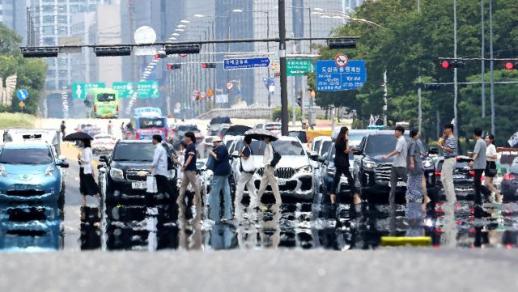 Early Heatwave and Rising LNG Prices Pressure Electricity and Gas Rates Rising international liquefied natural gas (LNG) prices and an expected increase in cooling demand this summer are intensifying pressure for electricity and gas rate hikes in the second half of the year. The surge in LNG prices is beginning to be reflected in domestic gas rates, while the potential for increased electricity demand is raising concerns about higher wholesale electricity prices, which could further strain the finances of Korea Electric Power Corporation (KEPCO) and Korea Gas Corporation (KOGAS). ◆ LNG Prices Drive Gas Rate Fluctuations According to KOGAS on June 3, the wholesale price of natural gas for city gas power generation has risen to 20.8335 won per megajoule this month, a 10.4% increase from last month’s 18.8694 won. Wholesale prices for industrial and transportation natural gas have also increased by around 10%, indicating that the rise in international LNG prices is starting to affect domestic rates. The upward trend in international LNG prices continues. The Japan Korea Marker (JKM), a key indicator for spot LNG prices in East Asia, rose from $10.7 per million British thermal units (MMBtu) on February 27 to $18.6 per MMBtu as of June 2, marking an increase of over 70% in approximately three months. A key issue is that the rise in LNG prices impacts domestic energy rates with a delay. Typically, the import price of LNG is reflected in electricity and city gas rates four to five months later. If the current trend of high international prices continues, the pressure for rate adjustments in the second half of the year could intensify. The Korea Energy Economics Institute recently projected in a report that even if geopolitical uncertainties in the Middle East ease, the domestic LNG import price is expected to remain high until October. The report noted that high oil prices, which influence LNG pricing, combined with increased cooling demand in Asia, will likely limit the speed of price declines. ◆ Rising Costs Amid Frozen Rates Burden Energy Companies The electricity supply situation is also becoming increasingly strained. The Korea Meteorological Administration forecasts that temperatures this summer are likely to be above average. Indeed, the average temperature across the country this spring was the second highest since 1973, and early June has already seen temperatures exceeding 30 degrees Celsius in many areas, leading to an earlier-than-usual increase in cooling demand. If the heatwave persists, the share of LNG in power generation is expected to increase to meet the surge in electricity demand. This could further accelerate the rise in wholesale electricity prices (SMP), which typically increase as LNG generation costs rise. So far this year, SMP has been on an upward trend each month. The average SMP was 90.43 won in December last year, rising to 103.54 won in January, 108.52 won in February, 110.03 won in March, 118.94 won in April, and reaching 121.36 won in May. In June, the daily average is approaching the 130 won mark. If SMP rises above a certain level, KEPCO's electricity procurement costs could increase by billions of won in a short period. Currently, KEPCO has maintained a freeze on rates for industrial users since the fourth quarter of 2024 and for general users for 12 consecutive quarters, forcing it to absorb rising costs. KEPCO's financial burden remains significant, with its consolidated debt reaching approximately 206 trillion won and borrowings at 128 trillion won. Daily interest expenses amount to about 11.4 billion won, raising concerns that prolonged increases in electricity procurement costs could hinder profitability recovery. KOGAS faces similar challenges. As of the end of March, the 'receivables from residential customers' due to supplying gas below cost amounted to 13.3717 trillion won. Its debt is also around 42 trillion won, indicating substantial financial pressure. In this context, the burden of high exchange rates must also be considered. Given South Korea's high dependence on energy imports, rising exchange rates inevitably lead to increased raw material costs. Reports indicate that for every 10 won increase in the won-dollar exchange rate, KEPCO and KOGAS face annual foreign exchange losses of 200 billion won and 20 billion won, respectively. While inflation remains stable, the ongoing rise in energy costs has industry insiders anticipating that discussions on adjusting electricity and gas rates will intensify in the second half of the year. An industry official stated, "The recent simultaneous rise in LNG prices and summer electricity demand is concerning. Public rate increases have been effectively suppressed due to local elections, but if cost burdens continue to accumulate, rate adjustments in the second half of the year will be unavoidable."* This article has been translated by AI. 2026-06-03 18:00:00
 -
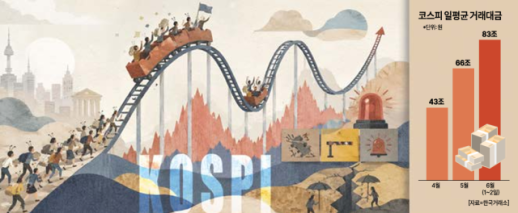 KOSPI Surpasses 8,800 Amid Surge in Trading Volume and Market Volatility The KOSPI index has surpassed the 8,800 mark, reflecting unprecedented strength in the domestic stock market, accompanied by a significant increase in trading volume and heightened market volatility. A surge of funds from individual investors is driving the market upward, but signs of overheating are becoming evident, with mechanisms like sidecars and circuit breakers being activated to mitigate volatility. According to the Korea Exchange, the average daily trading volume in the securities market for June 1-2 was approximately 83 trillion won. This figure is nearly double the average daily trading volume of 43 trillion won recorded in April, before the current upward trend began. The buying momentum, primarily driven by individual investors, is contributing to both the increase in trading volume and the rise in stock prices. While foreign investors have been net sellers for 18 consecutive trading days, totaling 60 trillion won, individual investors have stepped in with about 47 trillion won in net purchases, supporting the index. Market analysts attribute the recent surge in stock prices to a fear of missing out (FOMO) among investors. However, the rapid increase in trading volume and volatility is raising concerns. Recently, the KOSPI has experienced dramatic fluctuations, with intraday swings of several hundred points. The average difference between intraday highs and lows this month has reached 409 points, significantly up from 306 points last month and 134 points in April. The activation of sidecars, a key indicator of market volatility, has surged this year, with a total of 20 activations in the KOSPI market, marking the first time in six months that sidecars have been triggered consecutively. This is only six activations short of the annual record of 26 set during the global financial crisis in 2008. Circuit breakers, which temporarily halt all trading, have also been activated twice. This marks the first time since the COVID-19 pandemic in 2020 that circuit breakers have been triggered twice in a single month. The use of volatility mitigation devices (VI) to ease sharp fluctuations in individual stocks is also on the rise. The KOSPI 200 Volatility Index (VKOSPI), often referred to as Korea's fear index, remains at elevated levels. On June 2, the VKOSPI peaked at 75.42 and has exceeded 75 for three consecutive trading days. Analysts warn that if volatility continues to expand, potential market shocks could lead to larger-than-expected declines. Despite the recent increase in volatility, analysts do not interpret it as a signal of an impending downturn. Cho Chang-min, a researcher at Hyundai Motor Securities, noted, "This year, the average VKOSPI has exceeded 50 points, reaching an all-time high, but unlike in the past, we are seeing both rising indices and increasing volatility simultaneously. Typically, in a bull market, volatility tends to decrease, but we are currently experiencing an unusual market driven by liquidity and investor sentiment." He added, "The current market is more akin to a trend with high volatility rather than a crisis phase. While volatility is increasing during the price rise, the price-to-earnings ratio remains at a historical low of 7.77, suggesting that a return to average valuations could enable the KOSPI to reach 10,000 points."* This article has been translated by AI. 2026-06-03 17:45:00
 -
 'Goonche', Surpasses 4 Million Viewers in 14 Days Amid Global Success ‘Goonche’ has surpassed 4 million viewers just 14 days after its release. The film is breaking records for the fastest box office success in South Korea this year, while also achieving the top opening box office in major Asian markets, indicating a strong global performance.According to the Korean Film Council's integrated ticketing system, as of 5:12 PM on June 3, ‘Goonche’ recorded a cumulative audience of 4,001,31. It reached this milestone just 14 days after its release on May 21, marking the fastest 4 million viewer count for a film released in 2026.‘Goonche’ achieved 1 million viewers on its fourth day, 2 million on the fifth day, and 3 million on the tenth day, continuing to set records for the shortest time to reach 4 million viewers. It surpassed the break-even point within ten days of its release and is now ranked second among the highest-grossing films of 2026.The film depicts survivors trapped in a quarantined building facing unpredictable forms of infected individuals amid an unidentified infection crisis. Directed by Yeon Sang-ho, known for expanding the zombie genre with films like ‘Train to Busan’ and ‘Peninsula,’ it features a cast that includes Jeon Ji-hyun, Koo Kyo-hwan, Ji Chang-wook, Shin Hyun-bin, Kim Shin-rok, and Go Soo.Interest from the international film community was significant even before its release. ‘Goonche’ was officially invited to the Midnight Screenings section of the 79th Cannes Film Festival, where it was first showcased to global audiences. Following its screening in Cannes, it garnered attention for its genre thrills and contemporary themes of collective intelligence and infection, creating buzz before its domestic release.In addition to its domestic success, ‘Goonche’ is also performing well internationally. It topped the opening box office in key Asian regions including Malaysia, Taiwan, the Philippines, Singapore, and Hong Kong.In Malaysia, where it opened on May 22, it surpassed ‘Parasite’ within three days to become the third highest-grossing Korean film, accumulating approximately 15.8 million ringgit (MYR) as of May 30, ranking second behind ‘Train to Busan.’ In Taiwan, it recorded approximately 110 million New Taiwan dollars (TWD) by May 31.The film is also seeing success in the Philippines, where it opened on May 27 and earned about 68.5 million pesos (PHP) within five days, ranking second among the highest-grossing Korean films after ‘Train to Busan.’ In Singapore, it recorded approximately 715,000 Singapore dollars (SGD) by May 31, positioning itself among the top Korean films at the box office.In Hong Kong, it opened on May 28, earning about 1.4 million Hong Kong dollars (HKD) on its first day, setting the highest opening box office record for a Korean film since ‘Peninsula’ in 2020. By May 31, its cumulative earnings reached approximately 6.4 million Hong Kong dollars.With a rapid increase in audience numbers in South Korea and ongoing interest in Yeon Sang-ho's K-zombie genre abroad, attention is focused on whether ‘Goonche’ can maintain its box office momentum both domestically and internationally.* This article has been translated by AI. 2026-06-03 17:45:00
 -
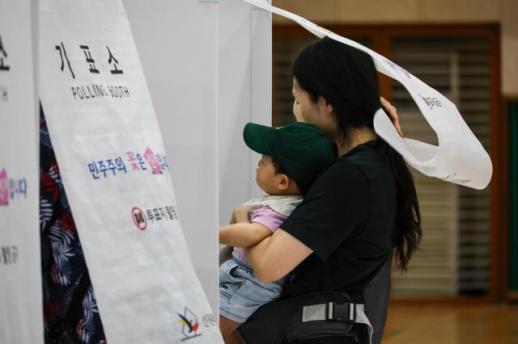 South Korea's local election turnout reaches 57.4% by 5 p.m. SEOUL, June 03 (AJP) - Voter turnout in South Korea’s June 3 local elections reached 57.4 percent as of 5 p.m. (0800 GMT) Wednesday, sharply higher than the level recorded at the same point in the previous local elections, according to the National Election Commission. The commission said 15,052,860 people had cast ballots nationwide during the 11 hours since voting began at 6 a.m. When combined with 10,564,571 early, overseas, shipboard and absentee voters, the total number of ballots cast reached 25,617,431 out of 44,649,908 eligible voters. The turnout was 9.8 percentage points higher than the 47.6 percent recorded at the same hour during the 2022 local elections. South Jeolla Province posted the highest turnout at 63.6 percent, while the southwestern city of Gwangju recorded the lowest at 51.5 percent. The election commission updates turnout figures hourly based on data collected from polling stations nationwide about 10 minutes earlier. At polling stations across the country, voters said they cast ballots despite frustration with political rhetoric and uncertainty over campaign promises. Grace Ryu, a 28-year-old resident of Seoul’s Songpa District, said she had doubts about whether candidates would follow through on their pledges. “Even after looking at the campaign promises, I couldn’t clearly tell what they were actually trying to accomplish, and seeing candidates focus on attacking each other made me question whether their policies would really be implemented,” she said, adding: “Still, I think not voting means giving up my rights voluntarily. I believe it’s important to vote based on my own judgment first and then speak about policies afterwards.” At a polling station in Maehwa-dong, Siheung, south of Seoul, 32-year-old voter Jung So-ri said that she hoped the election would lead to policies that provide tangible support for people struggling with economic difficulties. “I hope more policies come out that genuinely help ordinary people, whether in the economy or welfare sectors, so that everyone can worry a little less about their future and sleep more peacefully at night during these difficult times,” she said. She emphasized that voting was both a responsibility and a way for citizens to have a voice in politics. “I believe voting is a basic duty for citizens. Only by voting do people earn the right to speak about politics, and I think it is essential for the development of both the community where I live and the country as a whole,” Jung said. 2026-06-03 17:34:45
 -
 China Opposes U.S. Tariffs on Imports Linked to Forced Labor The Chinese government has expressed strong opposition to the United States' plan to impose additional tariffs on imports from 60 economic regions, including China and South Korea, citing concerns over forced labor. During a regular briefing on June 3, Chinese Foreign Ministry spokesperson Mao Ning responded to questions regarding the Trump administration's proposed tariffs, stating, "There is no so-called 'forced labor' in China," and added, "We oppose using this as a pretext for political manipulation." Mao emphasized that China consistently opposes all forms of unilateral tariff measures, asserting that "tariff wars and trade wars do not benefit either side." She further stated that economic and trade issues should be resolved through dialogue and negotiation based on equality, respect, and mutual benefit. Previously, the Office of the United States Trade Representative (USTR) proposed imposing additional tariffs of 10% or 12.5% on 60 economic regions that fail to prevent the trade of products produced through forced labor. Among these, 54 economic regions, including South Korea, China, Japan, the United Kingdom, Australia, Brazil, and Vietnam, would face a 12.5% tariff, while six regions, including the European Union, Canada, and Mexico, would be subject to a 10% tariff.* This article has been translated by AI. 2026-06-03 17:33:00
 -
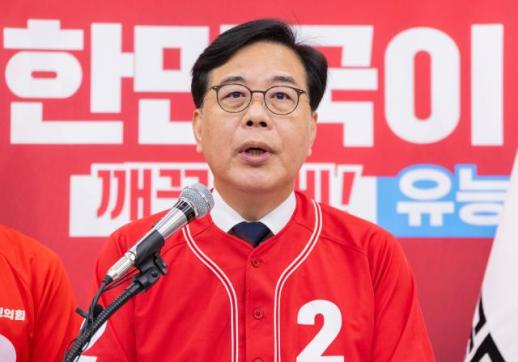 Song Eon-seok: High Voter Turnout Signals Serious Warning to President Lee and Democratic Party Song Eon-seok, the floor leader of the People Power Party, stated that the voter turnout for the 9th nationwide local elections reached 57.4% by 5 p.m., surpassing the turnout of the previous local elections. He argued that this reflects a public sentiment that demands a serious warning to President Lee Jae-myung and the Democratic Party, who are perceived to be mismanaging the country.In a live broadcast on People Power Party TV on June 3, Song noted, "This election marks one year since President Lee took office, and the public agrees that his administration has been marked by arrogance and overreach." He suggested that the Democratic Party may be worried about the rising voter turnout on election day, interpreting President Lee's active encouragement for voter participation on social media as a sign of his anxiety.He further speculated, "If the public delivers a decisive message in this local election, it could prevent President Lee from achieving his long-desired goal of having charges against him dropped." He expressed concern that President Lee is feeling pressure regarding this issue.Song also pointed out that many voters supporting the People Power Party still harbor concerns about potential election fraud related to early voting. While he acknowledged that agreeing to the existence of fraud is difficult, he emphasized that there is a consensus on the poor management of the election process.He remarked, "Our supporters did not participate much in early voting, which is why we expect a strong turnout on election day. The Democratic Party interprets high early voting rates as favorable to them." He added that among the younger generation, support for the Democratic Party is notably low, while support for the People Power Party is high, suggesting that young voters who participated in early voting may also lean towards the People Power Party.Song noted that high early voting rates were observed in the Gyeongbuk region and questioned whether it is accurate to interpret this as advantageous for the Democratic Party, emphasizing the need to consider regional differences.He concluded by highlighting that areas previously identified as competitive in polls, such as Seoul, Gangwon, and Chungnam, have seen significant increases in voter turnout. He urged voters in Incheon and Gyeonggi, where polling results have consistently favored one side, to make their voices heard by going to the polls.* This article has been translated by AI. 2026-06-03 17:30:00
 -
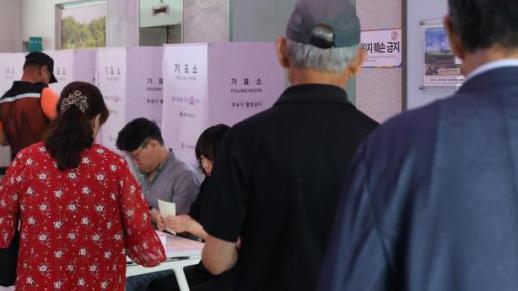 Voter Turnout Reaches 57.4% by 5 PM in Local Elections, Up 9.8 Percentage Points from Four Years Ago As of 5 PM on June 3, the voter turnout for the 9th nationwide local elections stood at 57.4%. According to the National Election Commission, 25,617,431 of the 44,649,908 eligible voters participated in the elections. This figure includes votes cast during early voting, absentee voting, and shipboard voting conducted from May 29 to 30. Regionally, South Jeolla Province recorded the highest turnout at 63.6%, while Gwangju had the lowest at 51.5%. Other notable turnouts included Seoul at 59.1%, Busan at 58.1%, Daegu at 59.9%, Incheon at 54.6%, Daejeon at 56.3%, Ulsan at 59.9%, Sejong at 58.6%, Gyeonggi at 54.6%, Gangwon at 61.9%, North Chungcheong at 56.4%, South Chungcheong at 55.8%, North Jeolla at 60.2%, North Gyeongsang at 57.8%, South Gyeongsang at 60.9%, and Jeju at 53.8%. Voting for the local elections took place from 6 AM to 6 PM on the same day. All citizens aged 18 and older were eligible to vote, but they could only cast their ballots at designated polling stations in their registered areas. Voters were required to present a valid form of identification that includes a photo and date of birth, such as a resident registration card, driver's license, or passport. Mobile identification was also accepted, but saved image files or screenshots were not permitted. In this local election, a total of 4,227 positions are being filled, including 16 heads of regional governments, 16 education superintendents, 227 heads of local governments, 933 regional council members, and 3,035 local council members. Additionally, by-elections for the National Assembly will be held in 14 districts, including Pyeongtaek in Gyeonggi Province and Busan North Gap.* This article has been translated by AI. 2026-06-03 17:21:00
 -
 Goldman Sachs Raises KOSPI Target to 12,000, Driven by Semiconductor Growth Global investment bank Goldman Sachs has strengthened its optimistic outlook for the South Korean stock market. The firm has raised its KOSPI target to 12,000, citing expected performance improvements driven by artificial intelligence (AI) semiconductors. On June 3, Reuters reported that Goldman Sachs, in a recent report, maintained a positive view on the South Korean market and increased its 12-month KOSPI target from 9,000 to 12,000. This adjustment suggests a potential upside of approximately 36% from the current index level. Goldman Sachs particularly highlighted the stock markets in South Korea and Taiwan. The demand for AI semiconductors is expected to significantly boost corporate profits, with companies showing strong performance growth receiving high valuations in the market. Timothy Moe, Goldman Sachs' Asia-Pacific equity strategist, stated, "Companies demonstrating profit growth are being rewarded by the market." The semiconductor sector is identified as a key driver of the South Korean stock market's strength. With the AI semiconductor supply chain centered around Samsung Electronics and SK Hynix, South Korea is leading the rally in Asia. According to Goldman Sachs, the MSCI Asia-Pacific index (excluding Japan) has risen 27% this year, but would have declined by 4% without the contributions from South Korea and Taiwan. Goldman Sachs also positively assessed the South Korean market's relative resilience to energy price shocks resulting from the Iran conflict. In contrast, some South Asian countries, which are heavily reliant on energy imports, are seen as more vulnerable to rising oil prices. However, the firm issued a warning regarding the potential overheating of the stock market. The recent surge in leveraged ETF funds indicates an increase in speculative demand, and the upward trend is concentrated in certain AI and semiconductor stocks, raising the likelihood of short-term corrections. Goldman Sachs noted, "While the AI semiconductor rally may continue, the risk of a pullback is also increasing." 2026-06-03 17:21:00
 -
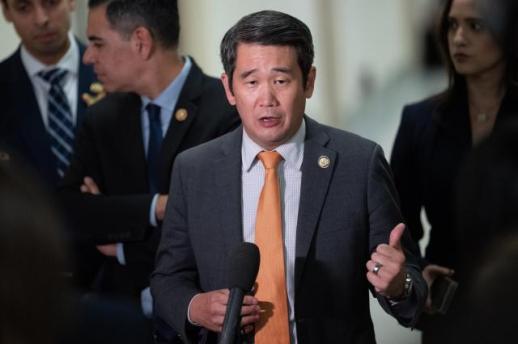 Korean American Congress Members Face Mixed Results in California Primary Korean American members of Congress received mixed results in California's primary elections. On June 2, Dave Min (Democrat) secured his place in the general election for California's 47th District with 44.7% of the vote based on 50% of ballots counted. Min's closest competitor, Republican Jenny Rae Le Roux, and other Republican candidates collectively garnered less than 40% of the vote, suggesting a strong likelihood of Min's victory in the general election. In contrast, Young Kim (Republican), who goes by the Korean name Kim Young-ok, faced a tough battle in California's 40th District. After redistricting, she was defeated by fellow Republican Ken Calvert, who received 36% of the votes, while Kim managed only 21.6%. Esther Kim-Barrett (Democrat), also of Korean descent, placed third with 15.7%. This primary election also highlighted the impact of Proposition 50, a redistricting measure passed by Democrats last November aimed at increasing their seats in the House of Representatives. In San Diego's 48th District, where incumbent Darrell Issa (Republican) announced he would not seek re-election, nine Democratic candidates competed, raising concerns about vote splitting. However, a Democratic candidate advanced to the general election. In the 22nd District, incumbent David Valadao (Republican) confirmed his place in the general election, while Democratic candidates collectively surpassed 50% of the vote. However, an unexpected twist occurred in the 6th District, where Kevin Kiley, who left the Republican Party to run as an independent in protest of redistricting, led with 26.9% of the votes based on 47% counted. Republican Michael Stansfield and Democrat Richard Pan were in a close race for second and third place, with 22.1% and 21.2%, respectively, raising the possibility that Democrats might not field a candidate in the general election. In the gubernatorial race, Republican Steve Hilton led with 27.6% of the votes based on 55% counted, narrowly ahead of Democrat Javier Becerra at 25.5%. Neither candidate has yet secured a spot in the general election. If Hilton wins, he would become California's first Republican governor since Arnold Schwarzenegger's re-election in 2006. Conversely, if Becerra is elected, he would be the first Latino governor in nearly 150 years. In the Los Angeles mayoral race, incumbent Karen Bass secured her place in the runoff with 36.5% of the vote. Reality TV star Spencer Pratt, backed by former President Donald Trump, was in second place with 29.2%, while Nitya Raman, known as the "Mom-Dani of the West," followed closely with 21.4%. The California primary allows all candidates to run regardless of party affiliation, with the top two advancing to the general election on November 3. However, as ballots are still being counted and many mail-in votes remain, final results in some competitive districts may take longer to determine.* This article has been translated by AI. 2026-06-03 17:15:00