
Journalist

Son Ji-ae
-
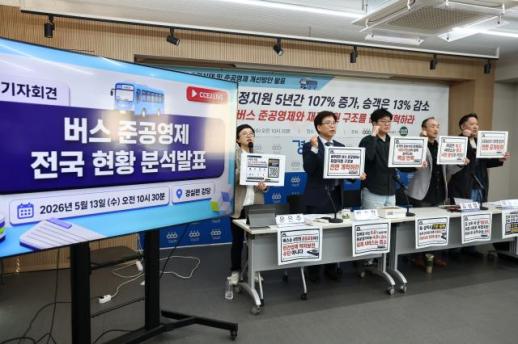 Civic Group Reports 12% Decline in Bus Passengers Despite Increased Funding This year marks the 20th anniversary of the quasi-public bus system in South Korea. Despite a more than twofold increase in national bus funding over the past five years, passenger numbers have dropped by over 12%, failing to recover to pre-COVID-19 levels. The Citizens' Coalition for Economic Justice and the Public Transport Network released an analysis on May 13, examining bus operations data from 2019 to 2024 across the country, including the status of quasi-public bus operations in seven major cities and 151 local governments. According to the analysis, national bus funding rose from 1.98 trillion won in 2019 to 4.1 trillion won in 2024, an increase of 107.1%. However, during the same period, the number of passengers fell from 4.22 billion to 3.69 billion, a decrease of 12.6%. All seven cities implementing the quasi-public system—Seoul, Incheon, Daegu, Gwangju, Daejeon, Busan, and Ulsan—failed to recover their passenger numbers compared to 2019, even as funding increased. Specifically, Seoul saw a 7.7% decline in passengers, while funding rose by 37.2%. In Busan, passenger numbers dropped by 27.1%, yet funding doubled. Ulsan experienced a 21.6% decrease in passengers, with funding increasing by 135.8%. The 151 local governments also saw an increase in funding, but both transport revenue and passenger numbers declined. Additionally, while the number of bus stops increased, the actual distance buses traveled decreased, indicating a deterioration in service supply. Among the 151 local governments, 99 had continuous data available, showing a total operating distance that fell from 735.71 million kilometers in 2019 to 707.12 million kilometers in 2024, a 4.8% reduction. In contrast, the number of bus stops increased from 75,323 to 82,532, a rise of 9.6%. These regions were found to have inadequate levels of information disclosure and data provision. Only 66 local governments had comprehensive data available for seven key indicators—funding, transport revenue, passenger numbers, total operating distance, number of stops, number of routes, and number of operating vehicles—between 2019 and 2024. Twenty-four local governments lacked continuous data for all seven indicators, making analysis virtually impossible. The Citizens' Coalition stated, "While national bus funding has significantly increased, passenger numbers have not recovered. Some local governments are experiencing declines in transport revenue and reduced operating distances. The current bus operating system is becoming entrenched in a structure that prioritizes compensating private companies for losses over restoring citizens' mobility rights." Based on the analysis results, the coalition and the Public Transport Network called for seven measures: full disclosure of funding, standard transport costs, settlement amounts by company, and itemized expenditure; reestablishment of evaluation criteria focusing on total operating distance, frequency of service, operational counts, connectivity, and accessibility for vulnerable populations; establishment of an audit and verification system for maintenance and safety costs; creation of a citizen participation governance model for bus policy; experimentation with public operation models including public routes, contracted operations, non-profit operations, demand-responsive transport, and community-centered route systems; expansion of information disclosure regarding operating distances, daily service counts, frequency, monthly costs, and complaint status; and institutionalization of inter-local government cooperation systems. A representative from the Citizens' Coalition urged, "Candidates in local elections should adopt the seven proposed pledges to enhance bus publicness and present them as key transportation commitments. The government and the National Assembly must also immediately initiate institutional reforms to address the opacity of the quasi-public system and the privatization of route rights."* This article has been translated by AI. 2026-05-13 17:45:30
 -
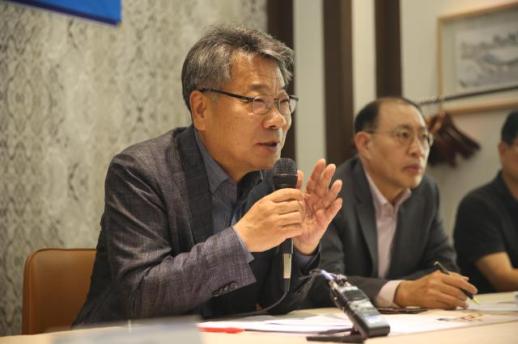 Korea Publishing Association President Kim Tae-hun: 'We Will Create a Fair Distribution System for AI Readers' "I believe a new type of 'AI reader' is emerging. It's a market where AI reads books and answers our questions," said Kim Tae-hun, the newly appointed president of the Korea Publishing Culture Association (KPCA), during a press conference held in Jongno-gu, Seoul, on May 13. He emphasized the need for the publishing industry to respond quickly and rationally to the AI era, stating, "We will contribute to the development of Korea's AI industry." Kim highlighted the importance of fair compensation, saying, "We will establish a direction for what the publishing industry should do in the AI era and how to do it. Books are a crucial foundation for AI training data." He added, "We will create a system that ensures normal copyright protection and fair compensation during the distribution of books as training data, establishing a utilization framework based on the rights of authors and publishers." The KPCA plans to gather opinions from the publishing industry through meetings and establish a distribution method for AI training data, along with building infrastructure such as a database service. Last year, the KPCA supplied data worth approximately 3.6 billion won to the Korea Data Agency. They have requested government cooperation, including budget support from the Ministry of Culture, Sports and Tourism, to expand the related industry. Kim noted, "The government and public institutions are creating book data to build sovereign AI," adding that the value of books as high-quality training data is increasing. He predicted that the demand for related data will continue to grow across various fields, including educational AI, robotic AI, and medical AI. For university textbooks, the KPCA is considering establishing an AI-based distribution platform that would implement a subscription service model similar to Netflix or Melon. This platform is expected to include features such as content summarization, chatbots, and exam question generation. Kim stated, "We need a platform that allows students to discuss and learn, which will not only help prevent illegal copying but also contribute to achieving lower textbook prices." Regarding the Seoul International Book Fair, starting next year, the KPCA plans to expand participation by utilizing the entire A and B halls of COEX. They will also present plans for improving the governance and public interest of the fair by the end of the year. The goal is to establish the fair as a leading international book fair in Asia by promoting copyright transactions and expanding discussions on technological changes in the publishing industry. Kim also expressed his intention to improve the previously strained relationship with the government, noting that the KPCA had faced conflicts during the Yoon Suk-yeol administration, resulting in a complete cut of government funding. He explained, "The government is currently in the process of establishing next year's budget by the end of this month, and we are discussing budget issues with the Ministry of Culture, Sports and Tourism." He added, "The KPCA has received no budget from the government this year," and emphasized that, from an efficiency standpoint, projects related to the publishing industry should be conducted by publishing organizations to yield at least three times the effect compared to the budget. Kim stressed the need to approach publishing from an industrial perspective, stating, "I think we have neglected the industrial perspective in the past. We aim to view the publishing industry from a balanced perspective, allowing it to develop and grow, ultimately blossoming into a cultural flower." * This article has been translated by AI. 2026-05-13 17:42:50
 -
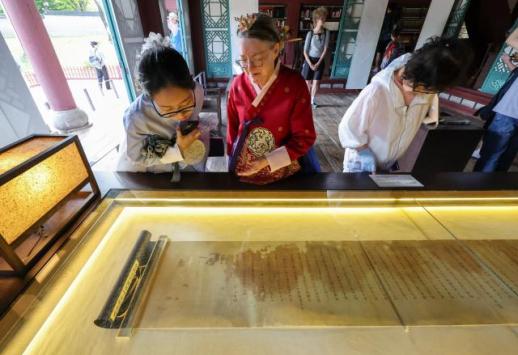 Gyeongbokgung Palace opens historic royal library to public through fall SEOUL, May 13 (AJP) - Seoul's historic Gyeongbokgung Palace has opened its doors to a hidden gem, Jibokjae, a former royal library that was once off-limits to the public. Starting Wednesday, visitors can explore the storied space as part of a special program running through the end of October. Used by King Gojong as his study and office, Jibokjae also served as a reception space for foreign envoys during the Joseon Dynasty. Since 2016, Jibokjae has opened seasonally as a small library, where visitors can browse historical records and books in a peaceful setting. Its distinctive architecture also sets it apart from the other palace buildings. Visitors can also take a stroll around its adjoining pavilions. The library is open from 10 a.m. to 4 p.m. excluding Mondays and Tuesdays as well as certain public holidays. It will also be closed during the hot summer months from June to August. 2026-05-13 17:34:14
 -
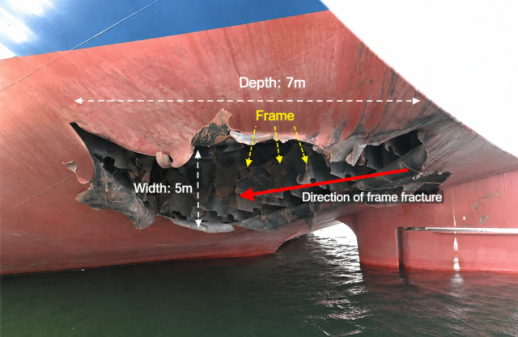 Seoul mulls US-led Hormuz mission amid questions over Namu findings SEOUL, May 13 (AJP) - South Korea is facing growing questions over its investigation into the recent attack on an HMM vessel Namu, as the case becomes increasingly intertwined with Washington’s call for Seoul to play a larger role in securing the Strait of Hormuz. National Security Adviser Wi Sung-lac on Wednesday said that Seoul is reviewing participation in the U.S.-led maritime security initiative aimed at ensuring freedom of navigation in the Strait of Hormuz. “The United States has proposed the Maritime Freedom Initiative and a plan called ‘Project Freedom,’” Wi told a press conference with the Korea News Editors' Association. “Like other forms of international cooperation, we are reviewing the maritime freedom initiative as well.” Wi added that President Lee Jae Myung had already expressed willingness to make “practical contributions” during a recent virtual conference led by Britain and France and said Seoul is actively participating in multinational military and diplomatic cooperation efforts related to the Middle East conflict. The comments came as Defense Minister Ahn Gyu-back, currently visiting Washington, disclosed that he had informed U.S. Defense Secretary Pete Hegseth that Seoul is considering phased contributions to restoring safe passage through the strategic waterway. “Basically, I said we would participate as a responsible member of the international community and review ways to contribute in stages,” Ahn told reporters at the South Korean Embassy in Washington. Ahn said possible forms of support could include diplomatic backing, personnel dispatch, intelligence sharing and the provision of military assets, while stressing that any decision would be made after considering international law and domestic legal procedures. Hegseth, during the opening remarks of his meeting with Ahn earlier this week, emphasized the importance of alliances and said Washington expects its partners to stand “shoulder to shoulder” with the United States amid the escalating confrontation with Iran. At the center of the debate is the Namu, a South Korean vessel that caught fire in the Strait of Hormuz on May 4. The South Korean government initially stopped short of attributing the incident to an external attack. Early assessments found no clear signs of external impact, while HMM officials said there were no visible cracks or fractures because no seawater had leaked into the ship. The vessel’s labor union also disputed U.S. President Donald Trump’s earlier claim that the ship had been independently transiting the Strait at the time, saying it had actually been anchored alongside other vessels. However, after a joint government investigation team inspected the vessel in Dubai, Seoul announced on May 10 that the fire had been caused by an external impact. The Foreign Ministry said the ship had been struck twice near the stern about one minute apart, and CCTV footage showed two unidentified flying objects approaching the vessel. Officials said they still could not determine the origin, size or type of the objects. The shift in Seoul’s assessment has raised questions among maritime and military experts. Some analysts point out that if the external damage was clear enough for government investigators to confirm through visual inspection, it remains unclear why the crew, HMM or foreign maritime security firms failed to identify such evidence immediately after the incident. British maritime security company Vanguard had earlier raised the possibility of an underwater drone or drifting mine while noting that no external penetration holes had been confirmed at the time. Experts also said the size and shape of the damaged area suggest the vessel was more likely hit by a drone or a small anti-ship missile than by a conventional cruise missile designed to sink a warship. The damaged section, reportedly measuring about 5 meters by 7 meters, appeared relatively limited compared with the destruction expected from a larger missile strike. The suspected entry hole, estimated at around 50 centimeters, has led some observers to point to the possibility of a Shahed-series suicide drone, although Seoul has so far avoided publicly identifying either the weapon or the attacker. “We do not yet have grounds to definitively conclude that it was a drone,” Wi said Wednesday, adding that missiles and other possibilities remain open pending further investigation. Foreign Minister Cho Hyun also stressed caution. “It is difficult to specify that at this point,” Cho said Wednesday. “Even within Iran, there could be several possible actors. Militias could also be involved.” Iran has denied involvement. The Iranian Embassy in Seoul said shortly after the incident that Iranian forces were not responsible, and Tehran is understood to have maintained that position even after Seoul disclosed photographs showing external impact marks on the vessel. Several experts said the unresolved questions surrounding the Namu incident could complicate Seoul’s deliberations over how far it should go in supporting U.S.-led maritime security efforts. Treating the incident as an external attack on a South Korean civilian vessel could provide Seoul with a stronger rationale for participating in operations aimed at securing the Strait of Hormuz, allowing the government to frame involvement as protecting Korean ships, citizens and energy supply routes rather than simply responding to U.S. pressure. At the same time, analysts warn that any premature attribution could heighten tensions with Iran or expose South Korea to additional security risks in a waterway where Korean commercial vessels continue to operate. 2026-05-13 17:30:06
 -
 KOSPI hits fresh high, fully recovering from previous losses as most Asian markets rally SEOUL, May 13 (AJP) - Asian stock markets largely shrugged off the overnight slump in Wall Street triggered by higher-than-expected U.S. consumer inflation. However, Taiwan's benchmark index, which is heavily reliant on the semiconductor industry, was the sole decliner among major Asian markets amid weaker U.S. market sentiment. The South Korean won ended at 1,494.5 per dollar, sharply down 15.5 won from the previous session. The global dollar strength was reignited as the U.S. Consumer Price Index (CPI) for April rose 3.7 percent on year, surpassing market expectations and dampening hopes for an early interest rate cut by the Federal Reserve. Government bond yields retreated across both short- and long-term maturities - signaling a rise in bond prices - reversing the previous day's sharp ascent. Investor sentiment was bolstered as Cheong Wa Dae directly addressed policy uncertainties surrounding the "AI dividend," easing relevant concerns. The three-year treasury bond yield fell 4.2 bps to 3.520 percent, while the 10-year yield dropped 3.8 bps to 3.615 percent. The benchmark KOSPI surged 2.63 percent on Wednesday to close at 7,844.01, fully recovering from the previous day's 2 percent loss and setting a new record high. Retail and institutional investors led the rally, net buying 1.89 trillion won (US$1.26 billion) and 1.69 trillion won, respectively. In contrast, foreign investors extended their selling streak, offloading 3.73 trillion won. The index had initially opened lower following a more than 2 percent drop the previous day, after Kim Yong-beom, the senior presidential secretary for policy, abruptly raised the idea of a dividend from brokerage profits. However, the mood shifted as government officials distanced themselves from Kim's remarks. Expectations also grew for semiconductor stocks ahead of the summit between U.S. President Donald Trump and Chinese President Xi Jinping. Market heavyweights SK hynix and Samsung Electronics saw divergent fortunes. SK hynix soared 7.7 percent to close at 1,976,000 won ($1,322.25). Meanwhile, Samsung Electronics edged up 1.8 percent to 284,000 won, as its gains were capped by an ongoing general strike despite hopes for the U.S.-China summit. Hyundai Motor, which held its ground during Tuesday's sell-off, jumped 9.9 percent to end at 710,000 won. The gain reflected delayed positive sentiment following the release of a demonstration video for the "Atlas" humanoid robot by its subsidiary, Boston Dynamics. Conversely, secondary battery stocks struggled or saw limited gains as the higher-than-expected U.S. CPI pushed back rate cut expectations. LG Energy Solution fell 2.93 percent to 430,000 won, while Samsung SDI edged up 0.8 percent to 634,000 won. The tech-heavy KOSDAQ slipped 0.2 percent, weighed down by a 4 percent drop in secondary battery leader EcoPro BM, which closed at 197,100 won. In Japan, the Nikkei 225 gained 0.84 percent to close at 63,272.11. Market leader Toyota Motor led the rise, jumping 3.4 percent to 2,940 yen ($18.85). Honda Motor, which recently scaled back operations and exited some overseas markets like South Korea due to poor performance, also rose 1.3 percent to 1,272 yen. Having said that, semiconductor equipment makers struggled as the U.S. accelerated the "MATCH Act," which broadly bans exports of semiconductor equipment to China. Advantest fell 1.45 percent to 28,290 yen, and Tokyo Electron dropped 1.57 percent to 51,340 yen. The TAIEX was the only major regional index to fall, declining 1.25 percent to 41,374.50. The index was hit hard by news that Apple decided to outsource some chip orders to Intel. TSMC fell 1.6 percent to 2,220 Taiwan dollars ($68.41), and MediaTek slumped 5.54 percent to 3,495 Taiwan dollars. Mainland Chinese shares rallied on expectations for the U.S.-China summit. The Shanghai Composite rose 0.67 percent to 4,242.57, while the Shenzhen Composite climbed 1.67 percent to 16,089.75. 2026-05-13 17:29:27
 -
 South Korea Advances Development Finance Initiative with New Advisory Committee The South Korean government has established an advisory committee to promote its development finance initiative. Heo Chang, the Deputy Minister of Finance, chaired the first meeting of the Development Finance Advisory Committee on May 13 at the Government Seoul Complex. Earlier, Deputy Prime Minister and Minister of Finance Koo Yun-cheol announced at a recent meeting on external economic affairs that the government aims to advance Korean-style development finance to support the country's entry into new markets in the Global South. He stated, "We will introduce a new development finance model that mobilizes private finance to support the development of emerging economies through various financial instruments." The government has recognized the growing need for development finance. Major advanced countries are also shifting from budget-centered official development assistance (ODA) to development finance that utilizes private resources. Development finance is characterized by long financial support periods, a high risk tolerance, and a broad scope of assistance, which is expected to enhance South Korea's competitiveness in securing large-scale infrastructure projects in developing countries. Participants suggested that as global development cooperation trends evolve, the South Korean government should also activate its development finance capabilities. Kim Yong-bin, head of the Development Marketing Research Institute, shared examples of development finance institutions from major advanced countries, discussing their areas of support, key strategies, and methods of assistance. Deputy Minister Heo emphasized the need to establish a framework for Korean-style development finance that aligns with the country's conditions, stating, "We will continue to engage with private experts." The Ministry of Finance plans to hold a task force meeting to establish a comprehensive development finance framework based on the discussions from this meeting.* This article has been translated by AI. 2026-05-13 17:18:50
 -
 Government Enhances Effectiveness of National Contract Dispute Mediation System The government is taking steps to enhance the effectiveness of the National Contract Dispute Mediation System by listening to the voices of small and medium-sized enterprises facing disputes. On May 13, the Ministry of Finance and Economy held the "2026 First National Contract Dispute Mediation System Briefing Session" in collaboration with the Korea Federation of Small and Medium Businesses. The National Contract Dispute Mediation System allows procurement companies to request mediation from the National Contract Dispute Mediation Committee, which proposes solutions to resolve disputes. The committee is chaired by the Director of the National Treasury at the Ministry of Finance and Economy and consists of 15 members, including four government representatives and ten private sector members. Mediation cases surged from just one in 2014 to 60 last year, with projections indicating that this year will exceed 100 cases. Since the system's introduction, the acceptance rate for claims was 50.0%, and the mediation success rate was 35.7% last year. During the briefing, the Ministry provided explanations about the National Contract Dispute Mediation System and shared mediation case studies. It also discussed major types of disputes arising during the national contract process and potential solutions, focusing on real-life examples. Additionally, one-on-one customized pre-consultations were offered to companies currently experiencing disputes or anticipating them. The government is working to improve the utilization of the National Contract Dispute Mediation Committee by implementing various system enhancements. Starting June 11, the period for filing objections and mediation requests against contracting agencies will be extended from 20 days to 30 days. A proposed amendment to the National Contract Act aimed at increasing the effectiveness of the mediation system has also been submitted to the National Assembly. This amendment seeks to establish a financial system that allows the committee to issue binding decisions and enables companies to apply for mediation without prior objections. Furthermore, it will allow contracting agencies and the committee to review and recommend corrections to contract conditions and unfair clauses in advance. The proposal also includes increasing the number of mediation committee members from the current 15 to 30 and providing assistance from public defenders for small and medium enterprises. Lee Joo-hyun, Director of Procurement Contract Policy at the Ministry, stated, "We will strengthen the effectiveness and accessibility of the National Contract Dispute Mediation System so that it can become a trusted solution in the field." Yang Chan-hwa, Executive Director of the Korea Federation of Small and Medium Businesses, expressed support for the proposed amendment, hoping it will pass quickly to help safeguard the rights of small procurement companies.* This article has been translated by AI. 2026-05-13 17:18:20
 -
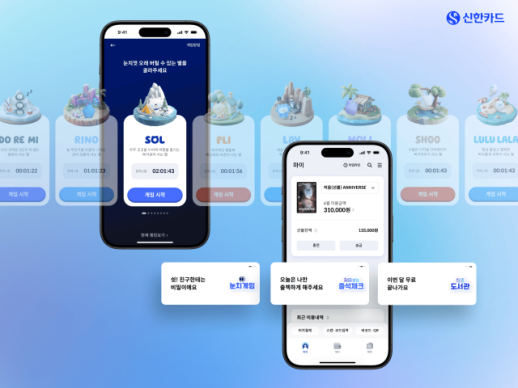 Shinhan Card Integrates Payments and Asset Management with SOL Pay Shinhan Card's lifestyle finance platform, Shinhan SOL Pay, is expanding its offerings by integrating payment, asset management, travel, and convenience services into a comprehensive financial platform. As of the end of February, Shinhan Card reported that the number of subscribers to Shinhan SOL Pay has reached approximately 20 million. The company aims to encourage customers to use Shinhan SOL Pay across various payment scenarios, thereby accumulating data to enhance customer experiences and build a virtuous ecosystem. Shinhan SOL Pay includes features such as a payment function called 'Pay,' transaction management under 'My,' asset management based on My Data in 'Assets,' a collection of discounts and events in 'Benefits,' and loan product recommendations in 'Finance,' all within a single app. The payment infrastructure is also being expanded. Shinhan Card has introduced the industry's first iPhone touch payment service, allowing iPhone users to make payments at all merchants without a physical card. It also offers global payment features such as Android-based NFC payments and UnionPay and Line Pay QR payments. Additionally, a dedicated platform for teenagers, 'SOL Pay First,' has been launched as an industry first. This platform is tailored to the financial lives of teenagers, prominently displaying their spending and remaining balance for the month, along with payment and transfer functions on the main screen. Services specifically designed for overseas travel have also been enhanced. Through 'SOL Travel+,' users can access discounts and cashback benefits for accommodations, shopping, and dining, as well as features to block overseas won payments and prevent fraudulent transactions abroad.* This article has been translated by AI. 2026-05-13 17:18:00
 -
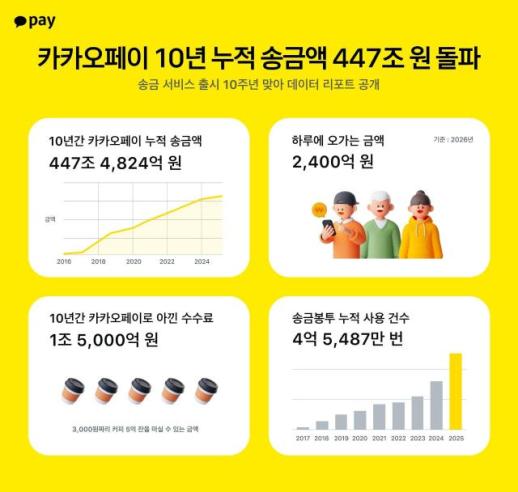 KakaoPay Expands Payment Platform with 1.13 Million Merchants KakaoPay is strengthening its competitiveness as a comprehensive payment platform by expanding into overseas payments, membership services, and utility bill payments.As of May 13, KakaoPay reported that it launched South Korea's first simple payment service for online transactions in 2014 and introduced offline payment services in 2018. Currently, KakaoPay is available at 1.13 million merchants nationwide. It also supports payments at 3 million locations through Samsung Pay and 1.1 million small business stores via Zero Pay.Users can utilize QR and barcode payments at various offline merchants, including convenience stores, cafes, restaurants, movie theaters, and supermarkets. The service also supports Samsung Pay's Magnetic Secure Transmission (MST) and Zero Pay's QR scanning method. Membership points such as Happy Points, CJ ONE, and Shinsegae Points are automatically accumulated during transactions.KakaoPay is also expanding its overseas payment services. It supports QR payments in over 50 countries and regions, including China, Japan, Southeast Asia, Europe, and the Americas, based on the AlipayPlus network. The introduction of NFC-based 'Tap & Go' payments allows mobile transactions at approximately 150 million Mastercard merchants worldwide.The company has enhanced its lifestyle services as well. KakaoPay's membership program allows users to accumulate and use points from over 40 partner programs with a single barcode. Through its electronic billing payment service, users can view and pay utility bills such as electricity, gas, local taxes, communication fees, and apartment management fees via KakaoTalk and KakaoPay.* This article has been translated by AI. 2026-05-13 17:17:22
 -
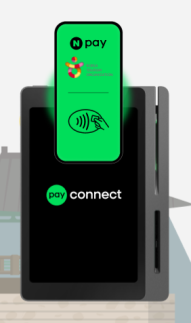 Naver Pay Expands to Offline Payments with 86 Trillion Won in Transactions Naver Pay (Npay) is accelerating its expansion into the offline payment market by leveraging its point ecosystem and the integrated terminal 'Npay Connect.' The service is transitioning from an online-centric model to encompass offline store operations and marketing, broadening its reach as a platform for small businesses. According to Naver Financial, Npay maintained its position as the leader in South Korea's mobile payment market with an annual transaction volume of 86.1 trillion won last year. The growth is attributed to the expansion of its point ecosystem, with approximately 60% of the population experiencing benefits from Npay points last year. The launch of the offline integrated terminal 'Npay Connect' in November is expected to further accelerate this expansion. The terminal supports various payment methods, including cash, cards, QR codes, mobile payments, and Near Field Communication (NFC), as well as the facial recognition payment service 'Facesign' introduced in March. Customers can immediately use the service at stores featured in Naver's existing 'Smart Place' service, which includes reviews, coupons, and orders. For small businesses, this offers the dual benefits of securing reviews and enhancing operational efficiency. Npay Connect can also be utilized in a mini kiosk format, reducing labor costs associated with the ordering and payment process. Since the launch of Npay Connect, collaborations with local governments, banks, and franchises have expanded, establishing it as a model for regional economic revitalization and mutual growth. In Seoul, Naver is working with the Seoul Credit Guarantee Foundation and Hana Bank on a guarantee loan program for small businesses, while in the Gyeongbuk, Jeonbuk, and Jeju regions, it is promoting local currency initiatives in partnership with regional banks. Naver Pay is also enhancing compatibility with existing payment markets. The company plans to complete integration with all Value-Added Network (VAN) companies by the end of this year and improve compatibility with major Point of Sale (POS) systems, allowing for the installation of Npay Connect without replacing existing POS systems.* This article has been translated by AI. 2026-05-13 17:16:47