

Journalist

Stefan Wolff, Tetyana Malyarenko
-
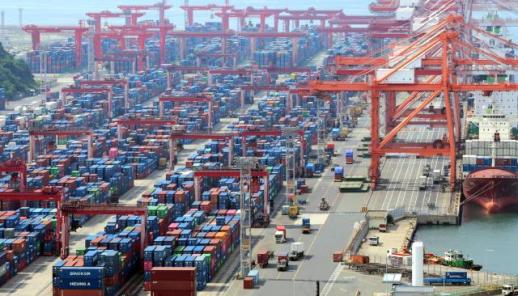 Strong Semiconductor Demand Drives Record May Exports, $1 Trillion Goal Possible Last month, South Korea's exports surged more than 50% year-on-year, setting a new record. The significant increase in semiconductor exports, along with steady growth in non-semiconductor items, has fueled this rise. Observers suggest that this year could see exports exceed $900 billion for the first time, with the possibility of reaching the ambitious $1 trillion mark. According to the Ministry of Trade, Industry and Energy and the Korea Customs Service, exports in May totaled $87.7 billion, a 53.2% increase from the previous year. This marks the highest monthly export figure on record, with exports surpassing $80 billion for three consecutive months. The average daily export amount, adjusted for working days, reached $4.28 billion, exceeding $4 billion for the first time, surpassing the previous record set in March at $3.79 billion. The robust performance of semiconductor exports played a significant role in this growth. In May, semiconductor exports soared to $37.16 billion, a staggering 169.4% increase compared to last year, marking an all-time high. This growth is attributed to a steady increase in volume and rising fixed memory prices driven by increased capital investment from major U.S. tech companies. Exports of non-semiconductor items also saw a 16% increase. Computer exports surged by 290.7% to $4.18 billion, driven by demand for SSDs for artificial intelligence servers, while wireless communication device exports rose by 12.6% to $1.46 billion, buoyed by strong sales of new products. Consumer goods exports also showed solid growth. Cosmetic exports reached $1.18 billion, a 24.2% increase from last year, setting a record for May. Agricultural and fishery product exports rose by 4.7% to $1.07 billion. The export value of petroleum products surged by 46.6% to $5.25 billion, driven by high export prices due to rising oil prices. Petrochemical product exports increased by 11.1% to $3.7 billion. Kang Gam-chan, head of the Trade and Investment Promotion Division at the Ministry of Trade, stated, "While semiconductor exports are leading the current export situation, other items are also performing well. Even excluding semiconductors and computers, we see a 9.5% increase, which is a significant figure in itself, despite the high growth rate of semiconductors." Imports rose by 20.8% to $60.8 billion, with energy imports increasing by 15.9% to $11.75 billion. Notably, crude oil imports rose by 25.0% to $8.5 billion, despite a decrease in volume due to conflicts in the Middle East, driven by higher import prices. Non-energy imports increased by 22.0% to $49.05 billion. With exports exceeding imports, the trade surplus for May reached $26.95 billion, an increase of $20.03 billion from the previous year. This marks the 16th consecutive month of trade surpluses. The cumulative trade surplus from January to May stands at $101.91 billion, surpassing the annual record of $95.2 billion set in 2017. As South Korea's exports remain strong, optimistic projections for this year's trade continue. The Bank of Korea recently forecasted that exports could reach $952 billion this year. The Korea Institute for Industrial Economics and Trade also raised its export forecast to $924.4 billion, representing increases of 34.2% and 30.3% respectively from last year. Some analysts predict that buoyant semiconductor exports could push South Korea's exports beyond the $1 trillion mark this year. Meritz Securities recently estimated that exports could reach $1.02 trillion, a 44.2% increase from last year. If exports exceed $1 trillion, South Korea could move from being among the world's top five exporters to potentially challenging the top four. Last year, only China, the United States, and Germany surpassed the $1 trillion export threshold. Kang noted, "If the current trend continues, we could approach or even exceed the forecasts provided by the Bank of Korea and the Korea Institute for Industrial Economics and Trade. With an optimistic outlook, achieving $1 trillion in annual exports is not an impossible target. Factors such as potential further increases in semiconductor prices, the sustainability of high oil prices, and protectionist measures from the U.S. and the European Union will be crucial for achieving this goal."* This article has been translated by AI. 2026-06-01 14:51:00
 -
 SK Telecom Introduces NVIDIA Omniverse-Based Digital Twin at GTC Taipei SK Telecom (SKT) announced on June 1 that it is utilizing NVIDIA's digital twin platform, Omniverse, to establish a digital twin for SK Hynix's semiconductor fab and optimize it for large-scale manufacturing environments. During the keynote speech at NVIDIA's GTC Taipei event in Taiwan, SKT was introduced as a key partner in physical AI for the manufacturing sector. The keynote video showcased how SKT applied digital twin technology to semiconductor manufacturing processes using Omniverse. As part of its 'Autonomous Fab 2030' initiative, SK Hynix completed a proof of concept (PoC) for semiconductor fab digital twin technology with SKT last year and plans to gradually commercialize it in the future. A digital twin replicates actual factories and equipment in a virtual space, allowing for pre-validation of the impacts of process changes or equipment layout adjustments. This technology is considered a core physical AI tool that reduces trial and error on the manufacturing floor and supports data-driven decision-making by simulating various scenarios in a virtual environment. SKT has also developed 'Agentic Digital Twin Modeling' technology, which uses NVIDIA's Agent Toolkit to automatically process equipment and spatial structure data for the digital twin environment. This approach aims to enhance the efficiency of the digital twin construction and operation process through data transformation, scene optimization, and performance improvement. Additionally, SKT is enhancing the platform by integrating the NVIDIA Omniverse library to improve loading speeds, execution performance, and GPU and memory usage efficiency for large-scale 3D scenes. This advancement is expected to enable the stable and scalable construction of digital twins in complex manufacturing environments like semiconductor fabs. Jo Ik-hwan, head of physical AI at SK Telecom, stated, "We have confirmed that manufacturing digital twins can evolve beyond simple 3D visualization into a physical AI platform that allows AI to understand and optimize large-scale data in manufacturing environments. We will expand our collaboration with NVIDIA across various manufacturing industries, including semiconductors." Meanwhile, NVIDIA CEO Jensen Huang is scheduled to visit South Korea on June 5. He is expected to meet with leaders including the heads of SK and Hyundai Motor Group, as well as LG Group Chairman Koo Kwang-mo and Naver Chairman Lee Hae-jin, among others.* This article has been translated by AI. 2026-06-01 14:51:00
 -
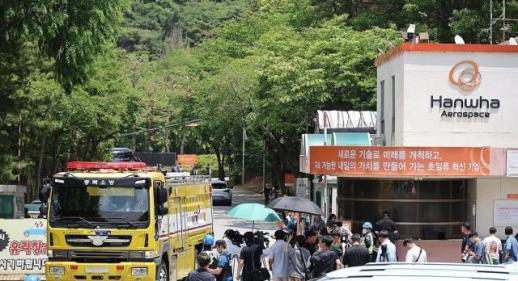 Explosion at Hanwha Aerospace in Daejeon Leaves 5 Dead, 2 Injured A deadly explosion occurred at Hanwha Aerospace's facility in Daejeon. According to Yonhap News, police, and fire authorities, the explosion took place at 10:59 a.m. on June 1 at the Hanwha Aerospace plant in the Oesam-dong area of Yuseong District, resulting in five fatalities. One individual suffered severe burns, while another sustained minor injuries. Fire authorities declared a Level 1 response at 11:17 a.m. and deployed 100 personnel and over 30 pieces of equipment, managing to control the fire within 50 minutes. The fire was fully extinguished by 1:07 p.m., and the Level 1 response was lifted shortly after at 1:08 p.m. The blaze completely destroyed a single-story building covering an area of 544 square meters. A representative from Hanwha Aerospace stated that the explosion likely occurred in the cleaning room of Building 56, where workers were engaged in cleaning operations related to explosives. At approximately 1 p.m., Yuseong Fire Station and Yuseong District Health Center held a joint briefing in front of the main entrance of the facility. They confirmed that all five deceased individuals were found within the explosion site. The two injured individuals managed to escape on their own. The person with severe burns is currently receiving treatment in the hospital, while the individual with minor injuries has been treated and discharged. Authorities reported that the condition of the deceased was so severely damaged that identification has not yet been completed.* This article has been translated by AI. 2026-06-01 14:51:00
 -
 HK Inno.N Completes Phase 3 Trials for JAK-1 Inhibitor IN-115314 for Canine Atopic Dermatitis As the culture of treating pets like family, known as 'Pet Humanization,' continues to grow, the market for related treatments is also expanding. The global market for canine atopic dermatitis treatments is projected to grow from approximately $2.7 billion in 2025 to $8.2 billion by 2034. On June 1, HK Inno.N announced that it has completed Phase 3 clinical trials for its oral medication, IN-115314, designed to treat atopic dermatitis in dogs, and has submitted an application for product approval. IN-115314 is a low-molecular-weight drug developed in-house by HK Inno.N and is the only Janus kinase-1 (JAK-1) inhibitor treatment available in South Korea. Currently, the only other JAK inhibitor for pets on the market is a product containing oclacitinib from a global pharmaceutical company. The study involved dogs with atopic dermatitis and was conducted at 13 veterinary hospitals across South Korea. It compared the effects of IN-115314 with existing JAK inhibitor treatments, evaluating itchiness, skin lesion improvement, and safety. The trial was divided into three groups, with one group receiving the control drug twice daily for 28 days, while the other groups received IN-115314 either once daily or twice daily. Results showed that IN-115314 was effective with just once-daily dosing, achieving results comparable to the competing drug. The average itchiness score decreased from 7.46 at the start of treatment to 2.12 by week four, with the difference in reduction compared to the competing drug ranging from -2.257 to -0.302 points. The improvement in skin lesions also showed significant progress, dropping from an average score of 33.80 to 16.18 by week four. Notably, IN-115314 demonstrated a rapid initial response with long-lasting effects on itch relief, which could enhance convenience for pet owners and improve treatment satisfaction, especially given the high recurrence rate and ongoing management needs of the condition. In terms of safety, key physiological indicators such as weight, heart rate, respiratory rate, and temperature remained stable, and no serious adverse reactions related to the trial drug were observed. The company is also developing a human treatment for atopic dermatitis (in ointment form) based on IN-115314, which is currently undergoing Phase 2 clinical trials in South Korea. Recently, it received approval from the U.S. Food and Drug Administration (FDA) for its Investigational New Drug (IND) application for a Phase 1b trial in the United States. A representative from HK Inno.N stated, "We plan to expand indications utilizing the JAK inhibitor mechanism for autoimmune skin diseases in the future."* This article has been translated by AI. 2026-06-01 14:51:00
 -
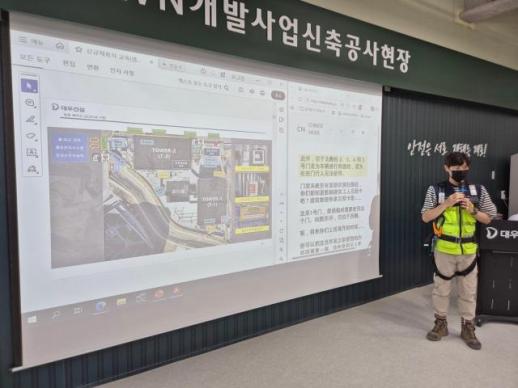 Daewoo Engineering Develops Real-Time AI Translator for Construction Sites Daewoo Engineering announced on June 1 that it has developed a real-time AI translator tailored for construction sites to facilitate communication with foreign workers. The initiative aims to enhance the accuracy of safety instructions and work details while reducing communication errors on site. The AI translator was developed in collaboration with Daewoo Engineering and its technology partner, Lotte Innovate. Unlike existing translation solutions, this system is specifically designed for construction environments. The proportion of foreign workers in South Korean construction sites has been steadily increasing. Consequently, language barriers during safety training and work instructions have emerged as significant challenges for site management. Given the high pace and risk associated with construction work, delays in conveying instructions can lead to confusion or safety incidents. The recent trend of adopting AI translation and multilingual safety training solutions in the construction industry aligns with this need. Daewoo Engineering's AI translator utilizes Lotte Innovate's real-time translation technology to reliably recognize and translate on-site speech. It incorporates a specialized construction terminology dictionary that reflects commonly used jargon and technical terms, enhancing translation accuracy. New expressions and frequently used words can be registered and modified instantly, allowing for site-specific management. The translator supports over 180 languages and employs real-time voice processing technology to minimize translation delays. This advancement is expected to reduce the likelihood of inaccurate interpretations or omissions, addressing the limitations of previous reliance on select team leaders for translation. The usage method is aligned with site operations. When a site manager opens a translation channel, workers can access real-time translations on their personal smartphones during morning briefings and safety meetings. Managers can oversee usage and manage the construction glossary through a dedicated screen. As the chair company of the Smart Construction Alliance led by the Ministry of Land, Infrastructure and Transport, Daewoo Engineering is also promoting the expansion of AI and data-driven smart construction technologies. The company is applying its self-developed AI-based contract document analysis system, 'Barodap AI,' and communication solution 'BaroLetter AI,' as well as AI intelligent landscape design, across various aspects of the construction industry’s digital transformation. A Daewoo Engineering representative stated, "The development of this real-time AI translator goes beyond mere language translation; it serves as a communication infrastructure aimed at ensuring the safety of on-site workers and improving construction quality. As the chair company of the Smart Construction Alliance, we will actively expand various smart safety technologies on-site to lead a digitally-based safe construction ecosystem."* This article has been translated by AI. 2026-06-01 14:48:00
 -
 SoftBank Expected to Overtake Toyota as Japan's Most Valuable Company Amid AI Surge SoftBank Group is projected to surpass Toyota Motor Corporation to become Japan's most valuable company. According to Bloomberg on June 1, SoftBank Chairman Masayoshi Son's company saw its stock price surge by as much as 14% during trading on the Tokyo Stock Exchange. The rise was fueled by a broader rally in AI-related stocks across Asia, along with news that key portfolio companies OpenAI and SB Energy are preparing for U.S. listings, boosting investor sentiment. As a result of this increase, SoftBank's stock has risen over 80% this year, pushing its market capitalization beyond 46 trillion yen (approximately $436 billion), surpassing Toyota's roughly 45.8 trillion yen (about $434 billion). In contrast, Toyota's stock has fallen more than 10% this year, with a decline of about 5% at one point during the day. Bloomberg noted that this shift in market capitalization illustrates a rapid change in investor preference toward companies benefiting from AI infrastructure. While macroeconomic pressures and geopolitical tensions weigh on the automotive sector, the AI boom is driving gains in technology stocks. If SoftBank maintains its gains through the market close, it will become Japan's top company by market capitalization for the first time in over 20 years, having briefly surpassed Toyota during the peak of the Japanese internet bubble in 2000. However, the timing of the market capitalization shift may vary depending on the calculation method. Bloomberg indicated that under Japan's calculation method, which includes both outstanding shares and treasury stock, SoftBank is likely to surpass Toyota. Conversely, excluding treasury stock, SoftBank's market capitalization had already exceeded Toyota's last month. While it is customary in Japan to include treasury stock in market capitalization calculations, analysts often exclude it for global comparisons.* This article has been translated by AI. 2026-06-01 14:39:00
 -
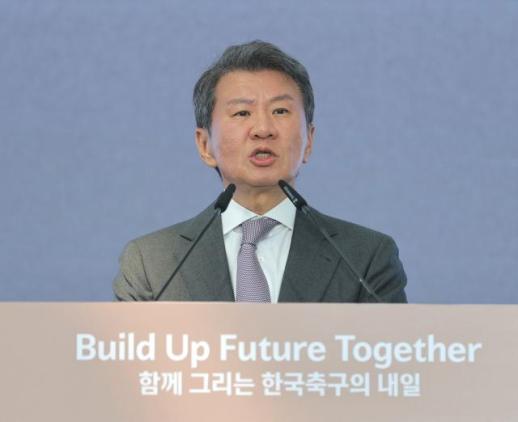 KFA President Chung Mong-kyu Announces Bonus for National Team at World Cup Chung Mong-kyu, president of the Korea Football Association (KFA), has pledged additional bonuses for the national team ahead of the 2026 FIFA World Cup in North and Central America. On June 1, Chung announced through the KFA that he would provide extra rewards as the team progresses through the tournament, stating, "I will donate 1 billion won for reaching the Round of 32, 2 billion won for the Round of 16, and 3 billion won for the quarterfinals." Previously, on May 25, the KFA outlined the bonus structure for the World Cup team. Each player will receive a base payment of 50 million won, with an additional 100 million won for reaching the Round of 32 and 100 million won for each subsequent round they advance. Victory bonuses will also be awarded, with 30 million won for group stage wins (10 million won for draws), 50 million won for the Round of 32, 80 million won for the Round of 16, and 140 million won for the quarterfinals. In addition to the KFA's official rewards, Chung decided to provide these extra bonuses through donations. Chung recently informed head coach Hong Myung-bo and team captain Son Heung-min (LAFC) about the additional donations during a video call. He expressed his hopes for the players, saying, "I wish for the players to unite the nation through their determination to surpass their limits." Meanwhile, Chung announced on May 29 that he plans to step down from his position as KFA president after this World Cup, stating, "I believe supporting the national team to achieve results in the finals is my last duty as president, and I will do my best." Since taking office as the 52nd president of the KFA in 2013, Chung was re-elected for a fourth term last February with a support rate of 85.6%. He intends to submit his resignation after the World Cup concludes on July 19.* This article has been translated by AI. 2026-06-01 14:39:00
 -
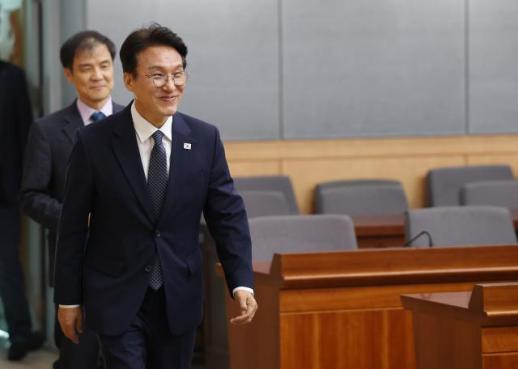 Prime Minister Kim Min-seok to Host Dinner with Cabinet Members Amid Resignation Speculations Speculation is growing that Prime Minister Kim Min-seok may resign shortly after the local elections, prompting various interpretations of his upcoming actions. According to political sources on June 1, Kim is scheduled to hold an informal dinner with cabinet members on the evening of June 2 at the Prime Minister's residence in Samcheong-dong, Seoul. Most key figures from the cabinet, including ministers from major departments, are expected to attend. A ruling party official explained, "This dinner is being held to mark the first anniversary of the Yoon Suk-yeol administration." However, some speculate that this gathering could be a 'farewell dinner' in light of Kim's potential resignation. Recent discussions in political circles suggest that Kim may step down from his position to run in the upcoming leadership election of the Democratic Party in August, following the local elections. After casting his vote during early voting at a community center in Yeouido, Seoul, on May 29, Kim responded to inquiries about the resignation rumors by stating, "Today is the day for early voting," and refrained from further comments.* This article has been translated by AI. 2026-06-01 14:36:00
 -
 Huhons Group Merger Controversy Escalates to Shareholder Vote The merger controversy between Huhons and Huhons Lab has escalated to a shareholder vote at Huhons Global. This situation exemplifies how the merger strategy employed by companies during a period of declining bio investments can become a sensitive issue regarding shareholder value. Attention is now focused on the extraordinary general meeting scheduled for July. According to industry sources, Huhons Global will hold an extraordinary general meeting on July 3 to gather shareholder opinions on the proposed merger between its listed subsidiary Huhons and the unlisted Huhons Lab. The company is also considering measures to limit voting rights for major shareholders and related parties, indicating that the conflict surrounding the merger is evolving beyond mere stock price concerns to issues of governance and shareholder value. The merger involves Huhons absorbing Huhons Lab, a subsidiary of Huhons Global. The company describes this as a strategic decision aimed at enhancing its research and development (R&D) competitiveness and securing future growth drivers. Huhons Group has recently denied any connection to succession purposes and clarified that there are currently no plans for major shareholder equity transfers. Huhons argues that for Huhons Lab, which is responsible for developing biopharmaceuticals, stable funding is necessary to expedite R&D up to the technology transfer stage. The merger is presented as a way to improve both R&D efficiency and financial stability. Additionally, the company cites the need to increase R&D investments in line with government reforms in drug pricing and the trend toward certification for innovative pharmaceutical companies as justification for the merger. However, market sentiment is lukewarm. There is significant backlash as stakeholders express concerns that the core value of Huhons Lab may shift from Huhons Global, the holding company, to Huhons, the operating company, potentially harming the interests of common shareholders of Huhons Global. In fact, minority shareholders have voiced their opposition to the merger, claiming it represents a "value transfer favorable to the owner." Shareholder platforms Act and Shareholder Alliance have submitted petitions to the Financial Supervisory Service and the Korea Exchange demanding a thorough review. As the controversy grows, Huhons Global has decided to directly seek shareholder judgment. The company has accepted a proposal from a special committee to review the appropriateness of the merger and will collect opinions for and against during the extraordinary general meeting on July 3. The possibility of applying the so-called "3% rule," which limits voting rights for major shareholders and related parties during the appointment and dismissal of audit committee members, is also being considered. This shift indicates that the balance of power in the vote may tilt toward minority shareholders. An industry insider noted, "If shareholder opposition translates into actual voting outcomes, it could halt the group's merger strategy, making the July extraordinary general meeting a turning point. Conversely, if the company successfully persuades shareholders, it could set a precedent for the internalization of R&D assets in the bio industry."* This article has been translated by AI. 2026-06-01 14:33:00
 -
 Future Industry Signs $10.26 Million Semiconductor Equipment Supply Deal with Chinese Firm Future Industry has signed a semiconductor inspection equipment supply contract worth 10.26 million dollars with a Chinese company. This year alone, the company has secured 11 contracts, totaling 50 billion won. According to a filing with the Financial Supervisory Service's electronic disclosure system on June 1, Future Industry announced the contract with Chinese firm YILING TRADING, which amounts to approximately 154.2 billion won based on the day's exchange rate. The contract value represents 30.37% of the company's consolidated revenue of 507.8 billion won from the previous year. The contract is set to run until December 15, with payment terms stipulating 70% to be paid before shipment and the remaining 30% upon final approval. As a specialist in semiconductor back-end equipment, Future Industry has been steadily increasing its order intake in the global market. The company has actively pursued sales, announcing 11 single sales and supply contracts this year alone. Notably, on May 27, the company disclosed a contract with Chinese memory semiconductor firm Yangtze Memory Technologies Co. (YMTC) for semiconductor inspection equipment valued at 2.36 million dollars, further expanding its collaboration with clients. Industry experts note that as expectations for a recovery in the global semiconductor market grow, demand for back-end equipment is also gradually increasing. A company representative stated, "This contract exceeds 30% of last year's revenue, and we expect it to positively impact our sales recognition and performance in the second half of the year. We plan to focus on diversifying our overseas clients and enhancing our technological competitiveness to expand our market share globally."* This article has been translated by AI. 2026-06-01 14:33:00