

Journalist

Stefan Wolff, Tetyana Malyarenko
-
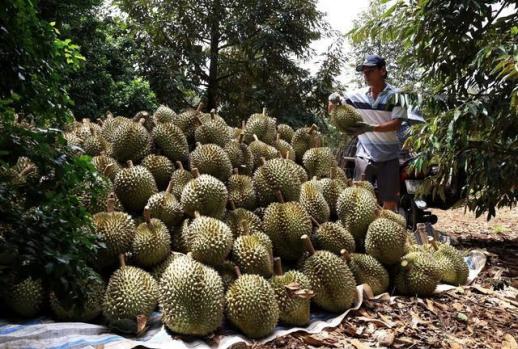 Vietnam's Durian Exports to South Korea Surge Amid Inspection Challenges Vietnam's durian exports are rapidly increasing, particularly in the South Korean market, showing a clear growth trend. However, in the Mekong Delta, the largest production area, delays in residue testing are causing both price drops and shipping disruptions. While export figures continue to rise, a lack of inspection infrastructure remains a significant constraint. According to various Vietnamese media reports on May 30, customs data shows that from January to April, durian exports reached $293 million (approximately 442 billion won), a 60% increase compared to the same period last year. Of this, exports to China accounted for $257 million (about 388 billion won), marking a 142.7% increase, while South Korea recorded a 201.5% growth, entering the top 10 markets. ◆ South Korean Market Sees 201.5% Surge, Frozen Products Offer a Breakthrough The South Korean market demonstrated the most significant growth rate. However, the export value remains just over $1 million, indicating that the absolute scale is still small. Nguyen Duy Phuc, Secretary-General of the Vietnam Fruit and Vegetable Association, stated, "Vietnam has not yet been able to export fresh durians to South Korea; currently, we are only exporting frozen whole fruit or separated flesh." He noted that the recent export growth rate to South Korea had even reached 500%, attributing this to the expanding demand from the Vietnamese community, students, and workers in Korea. Additionally, the perception of durian as a unique fruit in South Korea contributes to its growth. South Korea has strict food safety standards, including the Pesticide Residue Management System (PLS). As a result, frozen durians are being used as an alternative to reduce the risk of spoilage during logistics. Nguyen emphasized, "South Korea has high purchasing power and long winters, presenting opportunities not only for durians but for all Vietnamese agricultural products." ◆ Dong Thap Province, a Major Production Area, Struggles with Inspection Shortages However, the situation in production areas contrasts sharply with export statistics. Dong Thap Province, located in the Mekong Delta and a key cultivation area producing hundreds of thousands of tons of durians annually, is facing challenges in shipping due to a lack of facilities for testing cadmium and Aflatoxin O residues. According to the Dong Thap Department of Agriculture and Rural Development, the area dedicated to durian cultivation spans 32,100 hectares, with an expected production of about 111,221 tons in May and June. Despite this, the price of the Ri6 variety has recently dropped to around 30,000 dong per kilogram, a 46% decrease compared to after the 2026 Lunar New Year. Although durian exports exceeded $221 million in the first quarter, local farmers and purchasing companies are struggling to prepare export documents on time due to inspection delays. The Dong Thap Durian Association has received complaints that some inspection centers have refused to accept samples or have extended processing times. ◆ Limited Certified Laboratories and Canceled Approvals There are only 12 cadmium testing laboratories and 8 Aflatoxin O testing laboratories recognized by China in Vietnam. In the Mekong Delta, there are 8 certified facilities, but only 5 can conduct cadmium testing. Nguyen Khanh Ngoc, Deputy Director of the Can Tho Technical Standards and Quality Center, stated that the center currently only performs Aflatoxin O testing, as cadmium testing has been suspended due to the cancellation of approval by Chinese authorities. He mentioned that a supplementary application was submitted in December 2025, and they are awaiting re-approval, adding, "If operational, we have the capacity to process 50 to 60 containers a day, which would greatly benefit the region." The Regional Center No. 5 for Agricultural and Fishery Quality in Ca Mau has laboratories capable of testing both substances but has not yet resumed operations. Reasons cited include the review of new regulations, distance from production areas, and a lack of concentrated cultivation areas for exports. According to the Crop Protection Bureau under the Ministry of Agriculture and Rural Development, as of early May, 16 out of 21 cadmium testing laboratories and 19 out of 22 Aflatoxin O laboratories were operational, while the rest were temporarily suspended. Deputy Director Nguyen Quang Hieu emphasized, "Export companies must conduct food safety and cadmium testing before loading containers." Meanwhile, netizens have expressed strong dissatisfaction with the recurring lack of inspection infrastructure. One user remarked, "It's unfortunate that no one is held accountable in these articles, and the expression 'we will do it' is repeated without any real intention to solve the problem." Another user pointed out, "With such a large production area lacking testing facilities, equipment is stalled due to a shortage of technicians and processing technology." Some argued, "The failure of state management to keep pace with industrial growth has resulted in a need for a clear management system to determine who is responsible for what."* This article has been translated by AI. 2026-05-31 14:21:00
 -
 Son Heung-min Scores Twice as South Korea Defeats Trinidad and Tobago 5-0 Hong Myung-bo's squad achieved a decisive victory in their first warm-up match ahead of the 2026 FIFA North and Central America World Cup. The South Korea national football team, led by coach Hong Myung-bo, defeated Trinidad and Tobago 5-0 in a friendly match held on May 31 at Brigham Young University's South Field in Provo, Utah. After suffering consecutive losses to Ivory Coast (0-4) and Austria (0-1) during a European tour in March, this victory marked South Korea's first win in three matches since their 1-0 victory over Ghana last year. Son Heung-min (Los Angeles FC) and Cho Gue-sung (Midtjylland) each scored two goals to lead the team to victory. Notably, Son scored his 55th and 56th career goals in international matches, narrowing the gap to just two goals behind former coach Cha Bum-kun, who holds the record for the most goals by a South Korean player in international matches with 58. Coach Hong employed a three-back formation against Trinidad and Tobago, with Son positioned at the forefront, supported by Bae Jun-ho (Stoke City) and Lee Dong-kyung (Ulsan Hyundai) in the attacking midfield. Kim Jin-kyu (Jeonbuk Hyundai) and Baek Seung-ho (Birmingham City) coordinated in the midfield, while Jens Castrop (Borussia Mönchengladbach) and Kim Moon-hwan (Daejeon Hana Citizen) played as wing-backs. The three-man defense consisted of Lee Gi-hyeok (Gangwon FC), Jo Yu-min (Sharjah), and Lee Han-beom (Midtjylland). The goalkeeper was Jo Hyun-woo (Ulsan Hyundai). South Korea took the lead in the 40th minute, with Son scoring after receiving a cross from Kim Moon-hwan. Just three minutes later, he converted a penalty kick awarded to Bae Jun-ho, completing his brace. In the second half, Coach Hong actively utilized substitutions, bringing in Lee Jae-sung (Mainz), Hwang Hee-chan, Eom Ji-sung (Swansea City), Kim Min-jae (Bayern Munich), Seol Young-woo (Crvena Zvezda), and Hwang In-beom (Feyenoord) for Kim Jin-kyu, Bae Jun-ho, Son, Lee Han-beom, Baek Seung-ho, Castrop, and Kim Moon-hwan. A third goal came in the 65th minute when Cho Gue-sung headed in a cross from Lee Dong-kyung. South Korea added two more goals with a penalty kick from Hwang Hee-chan in the 75th minute and another goal from Cho Gue-sung in the 77th minute, sealing the 5-0 victory. Despite the impressive win, South Korea faced injury concerns as Jo Yu-min and Bae Jun-ho were substituted in the second half due to potential injuries. The team will face El Salvador in their second warm-up match on June 4 at 10 AM at the same venue before moving to Guadalajara for their training camp.* This article has been translated by AI. 2026-05-31 14:21:00
 -
 NVIDIA CEO Jensen Huang Faces Controversy Over Taiwan Night Market Incident NVIDIA CEO Jensen Huang has sparked debate after a video surfaced showing him suggesting he would pay for everyone’s food at a night market in Taiwan to skip the line. The video, which circulated on social media and online communities, features Huang at the Raohe Night Market in Taipei, where he was surrounded by fans and tourists eager to see him. In the footage, Huang, upon seeing the long queue, proposed, "I buy everybody's, can I get the first one?" Many online users viewed this as a lighthearted moment, interpreting it as a humorous gesture from a prominent CEO buying corn at a night market. The video shows onlookers laughing and cheering in response. However, Indian media outlet NDTV reported criticism of Huang's actions, describing them as an example of "wealth privilege." Critics argued that attempting to change the order of the queue with money disregards the cultural norm of waiting in line. Some social media users likened the incident to a "pay-to-win" scenario, highlighting issues of privilege. This has led to a lively online debate, with some arguing that Huang's offer to pay for everyone’s food was harmless, while others contended that trying to bypass social rules with money was inappropriate. Meanwhile, Huang's recent visits to night markets and restaurants in Taiwan have garnered attention. He referred to Taiwan as the "epicenter of the AI revolution" and announced that NVIDIA plans to invest $150 billion in the country annually.* This article has been translated by AI. 2026-05-31 14:18:00
 -
 Life and Non-Life Insurance Associations Select 22,305 Certified Advisors The Life Insurance Association and the Non-Life Insurance Association announced on May 31 that they have selected a total of 22,305 certified advisors for this year. The certification period will begin on June 1 and last for one year. The certified advisor program has been in operation since 2008, aimed at enhancing the professionalism of insurance advisors and establishing a culture of consumer protection. To qualify as a certified advisor, individuals must have worked for the same insurance company for at least three years and have no cases of incomplete sales. They must also meet criteria such as a contract retention rate of over 90% for the 13th month and over 80% for the 25th month. Additionally, there should be no history of sanctions related to violations of insurance laws in the past three years. This year, the certified advisors include 11,460 from life insurance and 10,845 from non-life insurance, representing 9.5% of the total candidates and 6.9% of non-life insurance agents. The average tenure for life insurance certified advisors is 17.7 years, with a retention rate of 97.4% for the 13th month and 91.0% for the 25th month. Their average annual income is 142.63 million won. For non-life insurance certified advisors, the average tenure is 19.3 years, with retention rates of 95.8% for the 13th month and 88.2% for the 25th month, and an average annual income of 120.05 million won. The associations explained that the total number of selected advisors has decreased compared to last year (30,778) due to stricter certification criteria implemented this year. Starting this year, the retention rates from the 'e-Clean Insurance Service,' which allows consumers to directly check advisors' incomplete sales rates and contract retention rates, have been applied. A representative from both associations stated, "We plan to continuously enhance the fairness and reliability of the program so that the certified advisor system can become a symbol of trust in the insurance industry."* This article has been translated by AI. 2026-05-31 14:06:00
 -
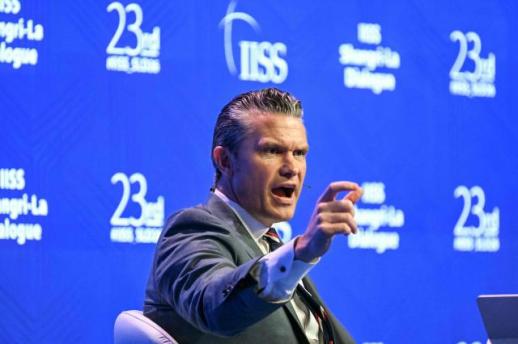 US says Iran blockade holds firm as warship disables Iran-bound vessel SEOUL, May 31 (AJP) - U.S. Defense Secretary Pete Hegseth said that the U.S. naval blockade of Iran remains firmly in place and that American forces stand ready to resume combat operations should ceasefire negotiations collapse. Speaking to reporters in Singapore on the sidelines of the Shangri-La Dialogue security summit Saturday (local time), Hegseth said the matter of the Strait of Hormuz had surfaced repeatedly in his bilateral talks. "The blockade is very much still in place," he said, adding that the waterway would become "a toll-free strait that the entire world can use, which is the way it should be." Hours earlier, U.S. Central Command said its forces had fired a missile at the Gambian-flagged merchant vessel M/V Lian Star, which was steaming through international waters in the Gulf of Oman toward an Iranian port. The command said the crew was warned more than 20 times before the strike disabled the ship. The vessel was knocked out of action and is no longer bound for Iran, military officials said. They did not disclose whether anyone aboard was hurt. It was the fifth commercial ship CENTCOM has disabled since the blockade began about mid-April. Asked whether Washington might permanently pull troops from Middle Eastern bases struck by Iran, Hegseth deferred to the White House, saying such calls rested with President Donald Trump and would hinge on the outcome of the talks. For now, he said, the focus was on staying postured to strike again if needed. On Taiwan, Hegseth said U.S. policy was unchanged even as he acknowledged China's military buildup, reiterating Trump's line that Washington stood in its strongest position yet across the Pacific. Trump has said he discussed arms sales to the island with Chinese leader Xi Jinping but has not approved further transfers. Pressed on whether the United States would deliver Virginia-class submarines to Australia on schedule under the AUKUS pact, due to begin in 2032, Hegseth said he believed it would, despite domestic doubts over whether the boats would meaningfully deter China's navy. 2026-05-31 14:05:37
 -
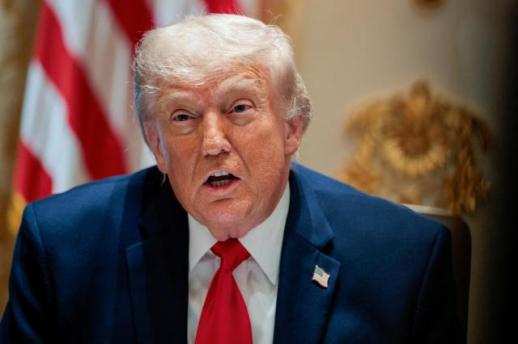 Trump Delays Approval of Iran Ceasefire MOU, Sends Revised Proposal President Donald Trump has reportedly withheld approval for a draft memorandum of understanding (MOU) aimed at ending hostilities between the United States and Iran. According to a report by The New York Times on May 30, citing three officials, Trump did not approve the draft MOU intended to formalize the cessation of war between the two nations. The report indicates that Trump has strengthened the terms of the ceasefire agreement and sent a revised document back to Iran. The specific changes made to the proposal have not yet been disclosed. However, officials noted that Trump has expressed concerns regarding the inclusion of measures to release Iran's frozen assets in the preliminary agreement. Additionally, he has voiced frustration over Iran's slow response to the U.S. proposals. One official suggested that Trump's issuance of a tougher new proposal might be aimed at pressuring Iran's Supreme Leader Ayatollah Seyyed Ali Khamenei to swiftly accept the existing offer. Earlier, Trump discussed the approval of the ceasefire MOU during a meeting in the White House Situation Room on May 29, but the meeting concluded without any announcement. The draft MOU reportedly includes provisions to extend the ceasefire between the U.S. and Iran for an additional 60 days, fully open the Strait of Hormuz, and reach agreements on Iran's denuclearization during the extended ceasefire period.* This article has been translated by AI. 2026-05-31 14:00:00
 -
 Thousands explore South Korean palaces during central Seoul walking event SEOUL, May 31 (AJP) - More than 2,000 people walked through the historic royal palaces of central Seoul on Sunday to experience South Korean traditional culture. The event aimed to showcase the harmony between the capital city's modern landscape and its historical sites. The 2026 Seoul Foreigner Palace Walking Contest, hosted by Aju News Corporation, brought together about 1,200 foreign nationals and 800 local citizens. The seven-kilometer circular route started at Gwanghwamun Plaza and guided participants through Gyeongbokgung, Changdeokgung and Changgyeonggung palaces before passing Jogyesa temple. Organizers expanded the event this year to include K-culture photo zones and cultural performances. Participants tried on traditional royal garments and interacted with setups replicating a royal clinic and historical palace guards. Lim Kwu-jin, president of Aju News Corporation, said the event serves as a meaningful time for people from various countries to naturally mingle with the history and culture of Seoul. "The palaces are Seoul's most precious cultural heritage and symbolic spaces that show the history and dignity of South Korea," Lim said. The event drew attendees from countries including China, Japan, the United States, France, India, Vietnam and Mexico. Several foreign diplomats participated in the trek and noted the visual impact of the preserved architecture. Jacques Flies, the Ambassador of Luxembourg to South Korea, said the curated walk gave him a deeper connection to the country's history. "I especially liked seeing the old palaces surrounded by the modern city," Flies said. "It creates a very nice bridge between the past and the present, and actually between the history of South Korea and the current state and future of South Korea." Wray Mulendema Hamweene, minister counsellor at the Embassy of Zambia in South Korea, highlighted the structural longevity of the traditional buildings. "Today, I had the opportunity to appreciate South Korea's rich culture," Hamweene said. "The many people wearing hanbok in the palace were very impressive." "Where else in the world can you find palaces like these? They are truly unique," Hamweene said. "Although these palaces were built hundreds of years ago, they look as if they were built only yesterday. The architectural technology of the past is truly astonishing." 2026-05-31 13:57:43
 -
 Naver Labs and Lotte Innovate Expand Physical AI Business As the market for Physical AI, which enables artificial intelligence to perceive and interact with the real world, continues to grow, Naver Labs and Lotte Innovate are enhancing their related businesses. Naver Labs is focusing on building infrastructure that allows robots to navigate spaces, while Lotte Innovate is accelerating the commercialization of service robots and humanoids based on its retail and logistics operations. Naver Labs is concentrating on creating a robot-friendly environment using spatial data technologies such as digital twins, autonomous robots, and high-precision indoor mapping. This infrastructure-based Physical AI strategy supports AI in understanding and moving through real spaces. The key lies in accurately replicating real-world spaces in digital form. Naver Labs is advancing technology that allows robots to autonomously navigate buildings and recognize their surroundings, relying on high-precision indoor maps and location recognition technologies. This foundation enables AI and robots to understand and move through spaces without human intervention. At Naver's second office, known as '1784', autonomous robots are already handling in-house deliveries and logistics tasks. The integration of robots, cloud technology, and digital twin technology has successfully created an environment where AI operates smoothly in real spaces. Lotte Innovate is focusing on the commercialization of AI robots in retail and logistics. Its unique strength lies in the ability to immediately apply AI robots in real-world settings by leveraging the vast infrastructure of its group affiliates. With diverse business sectors including retail, logistics, hotels, and entertainment, the company can quickly validate tailored Physical AI services across industries. Lotte Innovate is expanding its Physical AI business around its integrated AI platform, 'iMember'. This platform combines generative AI, vision AI, and voice AI with group service data to provide customized services. Recently, the company has enhanced the AI agent functionality, further extending its business into the realm of Physical AI that recognizes and interacts with real spaces. A notable example is the humanoid robot 'Roy', which is linked to convenience stores. Utilizing vision AI, Roy can autonomously recognize products on shelves and guide customers with information about product locations and details. It can learn new location information even when product arrangements change. Currently, a proof of concept (PoC) is being conducted in the first-floor store of the Seoul headquarters. At the recent World IT Show (WIS), Roy demonstrated its ability to accurately recognize snacks and beverages in a simulated convenience store environment and respond to customer inquiries. For instance, when a user requests, "Recommend a snack I can buy for 6,000 won," the robot analyzes the shelf with vision AI and provides recommendations based on price and product information, including their locations. It can also assist in finding specific product locations or checking for promotional items at a practical level. Lotte Innovate recently showcased Roy at the Lotte World Tower Sky Run event, demonstrating its humanoid technology. The company plans to expand its application to actual group locations, such as Lotte Mart and logistics centers, to enhance roles in inventory management, product recommendations, and logistics automation. The company is also accelerating efforts to secure global-level AI technology competitiveness. In February, it obtained the international standard certification for AI system quality, 'ISO/IEC 25058', and recently followed up with the certification for the international standard for AI management systems, 'ISO/IEC 42001'. Industry insiders note, "The Physical AI market has transcended simple robot development. Various technological domains, including spatial data, autonomous driving, vision AI, and logistics automation, are organically combining, leading to rapid market expansion." 2026-05-31 13:54:00
 -
 UN Faces Bankruptcy Risk Due to Unpaid Contributions from US and China The United Nations is facing a severe financial crisis due to unpaid contributions and delayed payments from the United States and China. According to the Wall Street Journal on May 30, the US and China, which together account for 42% of the UN's core budget, have delayed billions of dollars in payments, putting the organization at risk of bankruptcy. UN Secretary-General António Guterres warned that the UN is "heading toward bankruptcy" and stated that the likelihood of a financial collapse is very high. If current trends continue, the UN is projected to run out of cash by mid-August, coinciding with the process of selecting Guterres's successor. The US currently owes $4.284 billion, which includes $2.037 billion in regular budget arrears and $2.247 billion in peacekeeping budget arrears. The administration of President Donald Trump has characterized the UN as a bloated and inefficient organization, insisting that it will only pay its dues after significant restructuring. The US has called for further staff reductions, cuts to business-class travel, and increased use of machine translation. According to UN regulations, if a member state's arrears exceed the contributions for the previous two years, it loses its voting rights in the General Assembly. There are concerns that the US could lose its voting rights as early as 2027 if the arrears continue. China, the second-largest contributor to the UN, is also exacerbating the financial crisis. Recently, during Foreign Minister Wang Yi's visit to the UN, China paid $844 million for peacekeeping costs but still owes $455 million. The Wall Street Journal noted that while China presents itself as "effectively the largest financial contributor to the UN," it has delayed payments, worsening the UN's financial situation. Historically, China paid its dues within months at the beginning of each year, but since 2022, it has postponed payments until the end of the fiscal year. Some experts interpret the unpaid dues and delayed payments from both the US and China as a means to pressure the UN to meet their political demands. Jodi Herman, a senior director at the UN Foundation, stated, "The US is not paying its fair share of dues, and China has been exploiting the payment system for years." The Wall Street Journal reported that China is leveraging its alliance with the Group of 77, a coalition of developing countries, to exert influence during UN budget discussions. It also pointed out that China provides minimal funding for UN humanitarian programs. The UN's unique accounting rules are also contributing to the financial crisis. The UN refunds unspent funds based on member states' dues assessments by the end of the year. However, unpaid dues can also be treated as unspent budgets on the books, making them eligible for refunds. This year alone, $299 million in non-existent cash has been recorded as refundable credits, with projections suggesting this could rise to $400 million next year. Earlier this year, Guterres urged member states in a letter to reform these regulations, stating, "We are trapped in a Kafkaesque cycle of being asked to refund non-existent cash." In response to the financial crisis, the UN has initiated significant austerity measures. It plans to cut 3,000 staff positions, reduce interpretation hours, and postpone maintenance of its New York headquarters. Additionally, the UN is accelerating the withdrawal of peacekeeping forces from conflict zones in Africa, such as the Democratic Republic of the Congo, and is cutting peacekeeping budgets. Reimbursements to developing countries like Nepal and Bangladesh that have deployed troops for peacekeeping are also being delayed. There are growing concerns within the UN that if cash shortages materialize, staff salaries could be halted, and food and security programs could be paralyzed.* This article has been translated by AI. 2026-05-31 13:39:00
 -
 One Year of Lee Jae-myung's Government: Focus on Curbing Speculative Demand As of June 4, the Lee Jae-myung administration marks its first year with a focus on establishing a market order centered on actual residents and curbing speculative demand. The government has implemented a series of financial, tax, and administrative regulations aimed at putting pressure on multiple homeowners and gap investors since its inception. The stringent regulations have sent warning signals to the overheated high-end housing market, effectively dampening speculative buying. However, there are concerns that the emphasis on demand suppression has limited actual supply expansion and rental stability. Shortly after taking office, the government introduced measures such as the June 27 financial regulations, the October 15 housing market stabilization plan, and the resumption of increased capital gains tax for multiple homeowners, tightening loans, transactions, and tax systems simultaneously. Following these regulations, there were short-term effects, including a slowdown in price increases and a surge in urgent sales in parts of the Gangnam area and the Han River belt. However, as time has passed, a phenomenon of inventory lockup has emerged. According to real estate big data firm Asil, as of May 29, the number of apartment listings in Seoul stood at 61,767, down 9.8% from 68,495 on May 9, just before the end of the capital gains tax exemption. Analysts suggest that multiple homeowners are withdrawing listings or opting for gifts, reducing the available supply in the market. Price trends are also becoming unstable again. According to the Korea Real Estate Agency, the increase in apartment sale prices in Seoul during the third week of May was 0.31%, the highest rate in seven months. While the price rise in the Gangnam area has slowed, demand is shifting to the relatively less regulated northern regions and outskirts of Seoul. The instability in the rental market is another key variable in evaluating the government's policies. The administration believed that if homes owned by multiple homeowners were transferred to actual residents, the impact on the rental market would be limited. However, concerns are growing about a decrease in rental listings and rising prices. Lee Chang-moo, a professor at Hanyang University, noted at a recent seminar on the evaluation of the Lee Jae-myung government's real estate policies that the average rental price in Seoul has increased by 8.66% over the past 11 months. In the four northern districts of Gangbuk, Nowon, Dobong, and Seongbuk, rental prices rose by 12.63%, while monthly rents increased by 13.14%. The government is also pursuing supply measures. Through the September 7 plan, it set a goal to supply 1.35 million housing units in the metropolitan area during its term, and in early January, it announced plans to supply 10,000 units in the Yongsan International Business District. Recently, it has also unveiled plans to expand non-apartment supply, public rental purchases, and utilize idle urban spaces. However, there are still criticisms regarding the lack of specificity about the timing, location, and quality of the supply that the market desires. While construction goals and permit numbers have been presented, the actual move-in dates, competitive locations, and quality standards that could replace apartment preferences remain unclear. Choi Hwang-soo, a professor at Konkuk University, commented, "The government's justification for curbing speculative demand was clear, but the details needed to create an exit for the market's self-correction were insufficient." Go Jun-seok, a professor at Yonsei University's Sangnam Business School, added, "If new supply is difficult to come by immediately, there should have been consideration for opening a pathway for existing properties owned by multiple homeowners to enter the market." 2026-05-31 13:39:00