
Journalist

Stefan Wolff
-
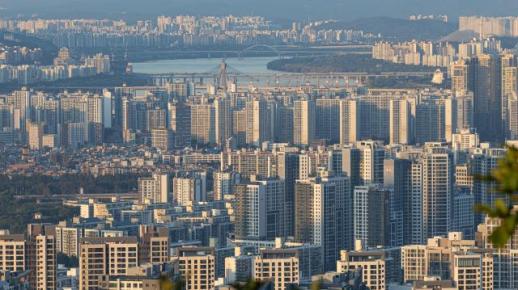 Gangnam District Sees Price Increase After 12 Weeks of Decline, Seoul Prices Up 0.28% Gangnam District, a key area in the Gangnam region, has reversed its 11-week decline and is now experiencing an increase in apartment prices, significantly boosting the overall sales prices in Seoul.According to the Korea Real Estate Agency's weekly apartment price trends released on May 14, the average apartment sales price in Seoul rose by 0.28% compared to the previous week, nearly doubling last week's increase of 0.15% and indicating a strong rebound.After three weeks of stagnation with price fluctuations around 0.15%, the demand for purchases surged this week across Seoul, including the Gangnam area. Notably, Gangnam District saw a shift from a decline of -0.04% to an increase of 0.19%, joining Seocho District (0.17%) and Songpa District (0.35%) in the upward trend.A representative from the Real Estate Agency stated, "While some areas continue to show a wait-and-see attitude, the increase in inquiries for well-located complexes and those undergoing reconstruction has led to rising contracts, contributing to an overall increase in Seoul's prices."In the northern regions, Seongbuk District (0.54%) recorded the highest increase, particularly in large complexes in the Gileum and Donam-dong areas, followed by Seodaemun District (0.45%) and Jongno District (0.36%). In the Gangnam area, Gangseo District (0.39%), influenced by reconstruction projects, topped the increase, with Songpa District (0.35%) and Guro District (0.33%) also showing notable rises.In Gyeonggi Province, prices rose by 0.11%, led by Anyang's Dongan District (0.69%) and Gwangmyeong City (0.67%), which saw significant increases due to reconstruction and major complexes. In Incheon, prices remained stable at 0.00%, with rises in Bupyeong District offset by declines in Namdong District. Overall, the metropolitan area saw a 0.14% increase.In contrast, non-metropolitan areas experienced a slight decline of -0.02%, particularly in the five major cities (-0.04%), although Sejong (0.01%) saw a minor increase in newly built complexes. Nationwide, the average sales price rose by 0.06%.Meanwhile, nationwide apartment rental prices increased by 0.11% compared to the previous week.In Seoul (0.28%), demand for rentals remained steady, particularly in large complexes and preferred school districts, leading to an increase from last week's 0.23%. Seongbuk District (0.51%) showed a significant rise, especially in the Gileum and Jongam-dong areas, while Songpa District (0.50%), Seongdong District (0.40%), and Gangbuk District (0.40%) also continued to see strong rental prices.Gyeonggi Province (0.18%) and Incheon (0.09%) maintained their upward trends, with the metropolitan area overall rising by 0.20%. Non-metropolitan areas (0.03%) saw slight increases in Ulsan (0.12%) and Sejong (0.09%), with growth slightly expanding from the previous week.Nam Hyuk-woo, a researcher at Woori Bank's Real Estate Institute, noted, "The active trading of high-priced reconstruction complexes during the 'bargain sale' period for multiple homeowners has led to a reduction in available listings and an increase in asking prices, driving the turnaround in Gangnam District. The trend of depleting urgent sales that began in Songpa District is now spreading to Seocho and Gangdong, reaching key areas in Gyeonggi Province such as Gwacheon, Bundang, and Gwangmyeong." He added, "Demand for upgrading in mid- to low-tier areas of Seoul is also continuing, resulting in a price adjustment phenomenon."* This article has been translated by AI. 2026-05-14 14:37:21
 -
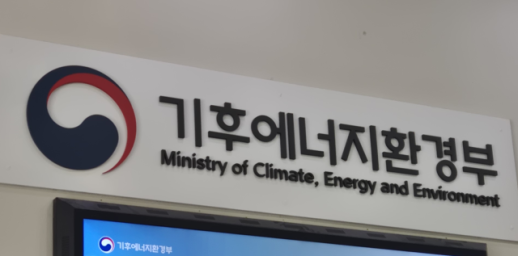 Government Inspects Rainwater Management Facilities Ahead of Summer Flood Season Government officials conducted an on-site inspection of urban flood response facilities in the Sinwol-dong area of Yangcheon District, Seoul, ahead of the summer natural disaster response period. The inspection aimed to assess the management of drainage infrastructure, including the deep underground rainwater tunnel, drainage inlets, and manhole fall prevention systems, in preparation for heavy rainfall and urban flooding.On May 14, the Ministry of Climate, Energy and Environment announced that First Vice Minister Kim Han-seung visited Sinwol-dong to review the operational status of the Sinwol deep underground rainwater tunnel, the cleaning of drainage inlets, and the installation of manhole fall prevention systems. This inspection was organized in anticipation of the summer natural disaster response period, which runs from May 15 to October 15.The Sinwol deep underground rainwater tunnel, located 40 meters underground, is the first of its kind in South Korea. It can store up to 320,000 cubic meters of rainwater, equivalent to the volume of about 150 Olympic-sized swimming pools. Since the facility began operations in 2020, the area, which was previously prone to flooding, has not experienced any flood damage.During the visit, Vice Minister Kim inspected the operational status of the rainwater tunnel and pumping stations. He emphasized the need for enhanced cleaning and maintenance of drainage inlets and the early installation of manhole fall prevention systems to prevent flood damage due to drainage issues. He also urged for strict safety management at flood response sites.The ministry plans to monitor local governments' cleaning and inspection records of drainage inlets on a weekly basis during the summer disaster response period. It will also continue to check the management status of flood response drainage facilities, including the installation of manhole fall prevention systems. The ministry aims to ensure the implementation of preventive measures through ongoing inspections.Additionally, the ministry will promote three key public initiatives to maintain clear drainage inlets: not littering in drainage inlets, not placing covers on them, and reporting blocked drainage inlets.Vice Minister Kim stated, "The damage from flooding due to heavy rainfall can be prevented by how well we prepare and respond on-site. We will do our utmost to ensure there are no shortcomings in urban flood response ahead of the summer natural disaster response period."* This article has been translated by AI. 2026-05-14 14:36:05
 -
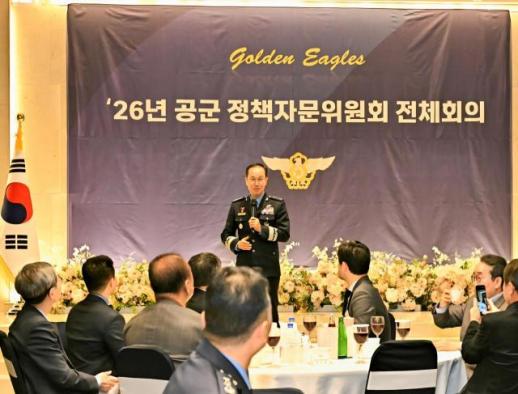 Air Force Chief Son Seok-rak Announces Early Retirement for F-5 Fighters Air Force Chief Son Seok-rak announced plans to accelerate the retirement of the long-serving F-5 fighter jets from 2030 to 2027. During a meeting with defense reporters in Seongnam, Gyeonggi Province, on May 13, Son stated, "We are preparing for the F-5 fighters to retire honorably before the end of next year." He added, "We will push for the introduction of low-cost unmanned systems like LUCAS, which can be deployed in large numbers at the beginning of a conflict by the early 2030s," and mentioned plans to develop AI pilots aimed for the 2040s, further transitioning to unmanned combat squadrons. Son emphasized that relying solely on the KF-21 would be insufficient, stating, "We must expedite the development of unmanned attack and combat aircraft, completing a combined manned and unmanned system to transition to a sixth-generation fighter system in the 2040s to 2050s." He clarified that unmanned systems are not meant to replace humans but to enhance combat capabilities, asserting that the judgment and expertise of pilots will become increasingly important. The Air Force is actively working on establishing an AI-based command and operational system. Son noted, "The Air Force is currently operating its own generative AI platform, 'AirWars.' We have established the military's first AI-based reporting management system," and added that the Air Force is leading in military AI initiatives, participating in the design of generative AI platforms for the Ministry of National Defense and defense projects. He further stated, "We are now accelerating the introduction of AI into military operations, following its application in administrative tasks," explaining the use of AI for geographic information collection and target processing systems.* This article has been translated by AI. 2026-05-14 14:34:09
 -
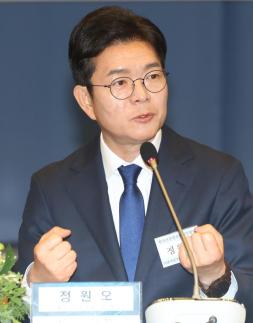 Jung Won-oh Apologizes for Past Assault Incident Jung Won-oh, the Democratic Party's candidate for Seoul mayor, apologized on May 14 for a past assault incident, stating he would express his regrets again if necessary. After attending a forum hosted by the Korea Newspaper and Broadcasting Editors Association in Jung-gu, Seoul, Jung addressed claims from the victim's side that they had never received an apology. "It seems that due to the long passage of time, they may not have a clear memory of the event," he said. "I did apologize at the time, but I want to reiterate my feelings of regret and sorrow at any time." In response to assertions from the People Power Party that the background of the assault was not due to political differences, based on records from the Yangcheon District Council, Jung stated, "I do not believe that statements from council members in the records hold more weight than a ruling from an official court in South Korea. Even if we check the five journalists who reported on the incident at the time, the reasons for the dispute are clear." He added, "Once again, I deeply apologize for the past, regardless of the reasons, and I feel sorry for the distress caused." On May 13, Kim Jae-seop, a member of the People Power Party, claimed that the 1995 assault incident involving Jung occurred after he demanded that a cafe owner allow a female employee to stay overnight, which was denied. This contradicts Jung's explanation that the altercation stemmed from political differences. On the same day, fellow party member Joo Jin-woo released audio recordings purportedly from the assault victim, who stated, "I have no memory of any arguments related to the May 18 incident or of receiving an apology afterward."* This article has been translated by AI. 2026-05-14 14:32:26
 -
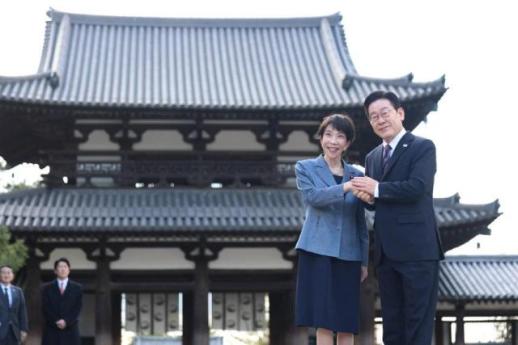 Japanese Prime Minister Takaiichi to Visit South Korea for Summit with President Lee Japanese Prime Minister Sanae Takaiichi is scheduled to visit South Korea on May 19-20 for a summit with President Lee Jae-myung, the Japanese government reported to its parliament on May 14. According to Japanese media, including TBS News, Chief Cabinet Secretary Masanao Ozaki conveyed the details of Takaiichi's visit during a meeting of the House of Representatives' Committee on Rules and Administration. The upcoming summit is part of a "shuttle diplomacy" initiative, where the leaders of both countries visit each other's nations. President Lee and Prime Minister Takaiichi first met in person during the Asia-Pacific Economic Cooperation (APEC) summit in Gyeongju last October, where they agreed to actively pursue shuttle diplomacy. Following this, the two governments have discussed holding the next meeting in Andong, President Lee's hometown, after he visited Takaiichi's hometown in Nara Prefecture, Japan, for a summit on January 13-14. TBS News reported that the agenda for the upcoming meeting is expected to include discussions on stable energy supply in light of the situation in Iran and the geopolitical dynamics in Northeast Asia, including North Korea.* This article has been translated by AI. 2026-05-14 14:30:39
 -
 Naver Shares Rise on Acquisition Hopes for Woowa Brothers Naver's stock price has shown strong gains amid speculation about its potential acquisition of Woowa Brothers, the operator of the popular food delivery service Baedal Minjok (Baemin). According to the Korea Exchange, as of 1:33 PM on May 14, Naver shares were trading at 211,500 won, up 4.96% from the previous trading day. The stock opened at 204,000 won, a 1.24% increase from the last close, and quickly gained momentum, reaching a peak of 216,000 won during the session. However, some profit-taking led to a slight pullback in gains. Market analysts suggest that the news of Delivery Hero's (DH) efforts to sell Woowa Brothers has boosted investor sentiment. DH is reportedly exploring acquisition interest from major domestic and international companies, with Naver identified as a key contender. DH acquired Woowa Brothers in 2020 and is now looking to sell the company approximately six years later. The expected sale price is estimated to be around 8 trillion won. Industry sources indicate that Naver has received a teaser letter containing key management and business information from DH. Additionally, global platform companies such as Alibaba, Uber, and DoorDash are also being mentioned as potential buyers.* This article has been translated by AI. 2026-05-14 14:29:24
 -
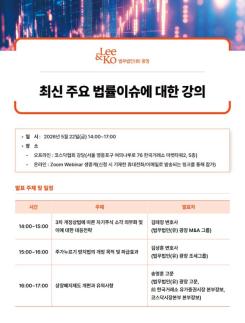 Law Firm Gwangjang to Discuss Stock Price Control Prevention Law Strategies Law Firm Gwangjang announced on May 14 that it will conduct a lecture on May 22 for KOSDAQ members, focusing on key legal issues affecting corporate management and capital markets, including the mandatory cancellation of treasury stocks and the so-called "stock price control prevention law." The lecture aims to assess corporate management risks arising from recent changes in commercial law and capital market regulations and to share response strategies. It will consist of three sessions: mandatory cancellation of treasury stocks, the stock price control prevention law, and the reform of the delisting system. In the first session, attorney Kim Tae-jung from the M&A group will present on "Mandatory Cancellation of Treasury Stocks Under the Third Amendment to the Commercial Law and Response Strategies." Amid ongoing discussions in political and market circles regarding the use of treasury stocks for maintaining control and defending management rights, he will explain key issues of the amended commercial law and practical response measures from the perspectives of corporate governance and financing. The second session will feature attorney Kim Sang-hoon from the tax group, who will discuss "The Purpose and Impact of the Stock Price Control Prevention Law." This law aims to prevent major shareholders from intentionally keeping corporate stock prices low to reduce inheritance and gift tax burdens, which is part of ongoing discussions regarding amendments to inheritance and gift tax laws. In the political arena, there are ongoing discussions about supplementing tax standards to reflect not only the market price but also net asset values for companies with excessively low price-to-book ratios (PBR). The lecture is expected to focus on how these regulatory changes will impact corporate shareholder return policies and succession strategies. In the final session, advisor Song Young-hoon, who previously served as the deputy head of the KRX's securities market division and the KOSDAQ market division, will present on "Reform of the Delisting System and Key Considerations." He plans to introduce the direction of the delisting system reform and practical application cases from the exchange, as well as outline the response measures that listed companies should be aware of. A representative from Gwangjang stated, "We hope this lecture will help KOSDAQ members effectively respond to legal and regulatory changes and establish a stable management environment."* This article has been translated by AI. 2026-05-14 14:25:58
 -
 Korea-Japan Economic Cooperation Meeting to Focus on Supply Chains and AI As global supply chains are being reshaped and competition in the artificial intelligence (AI) sector intensifies, Korea and Japan are accelerating their economic cooperation. Business leaders from both countries will discuss ways to establish a 'future-oriented partnership' focusing on key industries such as semiconductors, mobility, energy, and finance.The Korea-Japan Economic Association announced on May 14 that it will co-host the 58th Korea-Japan Business Meeting in Tokyo at the The Okura Tokyo from May 19 to 20. This year's theme is 'Next Step Together,' marking the first event since the new presidents of the two economic associations took office, and is expected to outline a new direction for Korea-Japan economic cooperation.The meeting is particularly noteworthy as it coincides with a scheduled Korea-Japan summit on May 19, suggesting that the business sector will also contribute to strengthening private-sector cooperation amid improving political and diplomatic relations.Leading the Korean delegation will be Koo Ja-yeol, Chairman of the Korea-Japan Economic Association and LS Group. Other prominent attendees include Shin Dong-bin, Chairman of Lotte Group; Park Jung-won, Chairman of Doosan Group; Koo Ja-eun, Chairman of LS Group; Koo Ja-kyun, Chairman of LS Electric; Kim Dong-wook, Vice President of Hyundai Motor; Lee Hyung-hee, Vice Chairman of SK; and Lee Jae-eon, President of Samsung C&T.Representatives from the finance sector and platform companies will also participate. Notable attendees include Shinhan Bank CEO Jin Seon-kyu, OK Financial Group Chairman Choi Yoon, and Kwon Dae-yeol, Head of ESG at Kakao, who will discuss digital transformation and financial cooperation.On the Japanese side, key figures will include Koji Akiyoshi, Chairman of the Japan-Korea Economic Association and Asahi Group, along with other prominent business leaders such as Masakazu Tokura, Honorary Chairman of the Japan Business Federation (Keidanren); Masayuki Hiodo, Chairman of Sumitomo Corporation; Keiichi Iwata, Chairman of Sumitomo Chemical; Akitoshi Takemura, General Manager of Toyota Motor; and Koji Nagai, Chairman of Nomura Holdings.The meeting is expected to highlight the necessity of industrial collaboration between Korea and Japan in response to growing global economic uncertainties. As the U.S.-China conflict continues and supply chain fragmentation deepens, there is an increasing need for cooperation between companies in sectors such as semiconductor materials, components, equipment, batteries, future vehicles, and decarbonized energy.With the intensification of competition in the AI industry, discussions are also anticipated regarding collaboration in data centers, power infrastructure, semiconductors, and advanced manufacturing. The potential for cooperation between manufacturing companies like LS, Doosan, and Hyundai Motor and Japanese material and component firms will be closely watched.On May 18, Koo Ja-yeol and the Korean delegation plan to meet with Prime Minister Sanae Takaichi to explain the significance of the Korea-Japan Business Meeting ahead of the summit and request the Japanese government's cooperation for economic collaboration between the two countries. 2026-05-14 14:23:53
 -
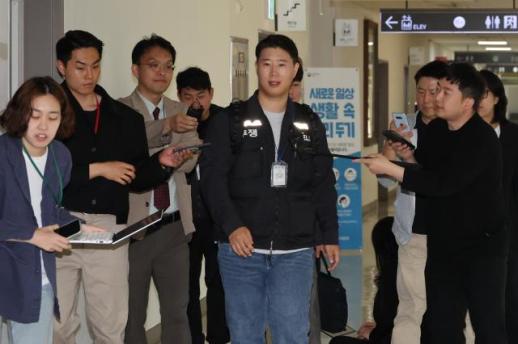 Samsung Union Declares No Reason to Negotiate with Government or Company, Moves Toward Strike As Samsung Electronics and the Central Labor Relations Commission proposed additional talks to avert a total strike, the union has effectively rejected the offer, signaling an escalation in tensions. On May 14, Samsung Electronics sent a formal letter to the National Samsung Electronics Union and the Samsung Group's inter-company union, stating, "We propose additional discussions between labor and management." The company noted that while both sides had shared their views during recent mediation by the labor commission, they had not reached an agreement. The labor commission also officially requested the resumption of mediation talks on May 16, marking a simultaneous call from both the government and the company for negotiations just a week before the planned strike. However, the union insists that the establishment and transparency of a performance bonus system must be prioritized. Choi Seung-ho, chairman of the inter-company union, stated, "There is no reason to negotiate if the establishment and transparency of the performance bonus system are not achieved." Choi added that there could be room for dialogue if there are plans for the establishment and transparency of a cap removal system. However, the company has shown reluctance to agree to the establishment of such a system, which is interpreted as a rejection of the proposal. From May 11 to the early hours of May 13, the labor and management attempted mediation under the labor commission but ultimately failed to find common ground. The union demands that 15% of operating profit be allocated for performance bonuses and the removal of the 50% salary cap. In contrast, the company has proposed maintaining the existing performance bonus system based on economic value while adding special rewards for the DS division. During the mediation process, the labor commission also suggested maintaining the current OPI system and implementing special management performance bonuses for the DS division, but the union rejected these proposals. The union plans to proceed with a total strike from May 21 to June 7, as previously announced.* This article has been translated by AI. 2026-05-14 14:21:35
 -
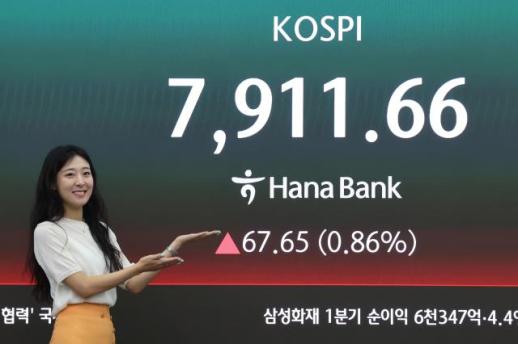 Wall Street Turns Its Attention to South Korean Stocks Beyond Semiconductors The South Korean stock market is emerging as a new investment destination for Wall Street, fueled by the surge in artificial intelligence (AI) and semiconductors. Beyond the soaring stock prices of SK Hynix and Samsung Electronics, companies like SK Square and Samsung Life, which hold stakes in these firms, are also attracting global investors' attention. Two years ago, foreign capital was primarily focused on reevaluating the Japanese stock market, but that gaze is now shifting toward Korea. The Nihon Keizai Shimbun reported on May 14 that "walking the streets of New York, one can feel the popularity of Korean culture, from music to food and cosmetics. Wall Street is no different," noting that both institutional and individual investors are increasingly drawn to South Korean stocks. This trend was evident at the "Sorn Investment Conference" held in New York on May 12. Known as a "hedge fund festival," the event showcased investment ideas from both emerging and veteran fund managers. Eduardo Marques of hedge fund Pertento Partners took the stage, stating, "Lately, I have been focused on uncovering complex value investment opportunities hidden within Korean stocks." The driving force behind the rise of the South Korean stock market is the demand for high-performance memory for AI data centers. The Nihon Keizai Shimbun highlighted that the KOSPI index has tripled in the past year, marking the steepest rise among major global indices. The tight supply of high-performance memory for data centers has led to soaring stock prices for SK Hynix and Samsung Electronics, lifting the entire market. On the surface, South Korean semiconductor stocks still appear undervalued. According to the Nihon Keizai Shimbun, the projected price-to-earnings ratios (PER) for SK Hynix and Samsung Electronics are both around six, still below their American competitor Micron Technology, which stands at nine. However, Marques emphasizes that he is not focused on this PER gap. He remarked, "PER comparisons are already well-known in the West," suggesting that there are much more deeply discounted stocks available for purchase. He pointed to SK Square and Samsung Life as notable examples. SK Square is a major shareholder in SK Hynix, while Samsung Life holds significant shares in Samsung Electronics. The Nihon Keizai Shimbun noted that the market capitalizations of these two companies are only about half the value of their stakes in memory firms. Due to the unique cross-shareholding structure of South Korean conglomerates, these long-ignored discount factors are now seen as attractive value investment opportunities by Wall Street investors. Investor expectations are also being fueled by the South Korean government's push for improved corporate capital efficiency. There is growing anticipation among foreign investors that the undervaluation of holding companies and insurance firms, long viewed as a symbol of the Korea Discount, may be resolved in conjunction with the government's corporate value-up program. Similar to the recent reevaluation of the Japanese stock market amid pressures for improved capital efficiency and activism from investors, a similar transformation may be on the horizon for the South Korean market. There are also projections that the AI memory boom could translate into domestic consumption in South Korea. Jonathan Lennon of Present Lake Partners recently analyzed that Samsung Electronics is considering a plan to pay bonuses equivalent to 10% of operating profits, similar to its competitors, after interviewing several former employees. He stated, "Our calculations suggest that the total bonuses for both companies could reach $40 billion, which corresponds to several percent of South Korea's GDP," indicating that this could have unprecedented ripple effects. Individual investors are also rapidly pouring funds into the market. A memory stock exchange-traded fund (ETF) launched by U.S. firm Roundhill attracted over $6 billion within a month of its debut in early April. The Nihon Keizai Shimbun reported that this marks the fastest inflow rate ever, surpassing that of Bitcoin ETFs in 2024. Nearly half of the ETF's assets are in SK Hynix and Samsung Electronics. Access for U.S. investors to South Korean stocks is also expanding. Interactive Brokers, a U.S. online brokerage, began offering trading services for stocks listed on the Korea Exchange on May 7. Previously, U.S. investors could only access South Korean stocks through ETFs or American Depositary Receipts (ADRs), but now they have broader options for investing in individual South Korean stocks. Strengths Compared to U.S. and Japanese Markets This trend is also linked to the high valuation pressures in the U.S. stock market. Marques noted, "No matter how much one believes in artificial intelligence, the valuations of U.S. stocks appear very high." The Nihon Keizai Shimbun reported that the S&P 500 index reached an all-time high on May 13, with projected PERs in the 21 range, significantly exceeding the 15-year average of 17. While the AI growth story remains valid, there is a growing perception that it has become difficult to generate additional returns solely from U.S. stocks, increasing interest in alternative investment destinations like South Korea. A notable point is the contrast with the Japanese market. The Nihon Keizai Shimbun reported that Japanese stocks were hardly mentioned at the Sorn Conference. Just two years ago, activist investors were prominent speakers, drawing attention to the Japanese market, but now it has been noted that "the narrative has run dry" for Japanese stocks. The strategies of investment banks and brokerages are also changing. Hong Kong-based CLSA is set to hold a new investor event called the "Northeast Asia Forum" in Seoul in June. In contrast, the existing "Japan Forum," which has been held for over 20 years, is expected to be renamed and scaled down, according to the Nihon Keizai Shimbun. This shift of a marquee Asian stock event from Tokyo to Seoul symbolically reflects where global investment banks see the flow of capital in Northeast Asia heading. The competition among Northeast Asian stock markets to attract global money is intensifying. It is noteworthy that a leading Japanese economic newspaper framed the situation as "Japanese stocks are running out of steam, while South Korean stocks present new investment ideas." This signals that the recent rally in the South Korean stock market is being interpreted as a shift in the allocation of global capital in Northeast Asia, extending beyond just a semiconductor boom.* This article has been translated by AI. 2026-05-14 14:17:08