
Journalist

Tae Yeon Eom
-
 First Comprehensive Review of 'Blue Seed' Retirement Pension for SMEs The government has initiated its first review of the 'Blue Seed' retirement pension system designed for workers in small and medium enterprises (SMEs). This assessment aims to ensure the stability of fund management and internal controls ahead of an expansion of eligible participants. On May 11, the Ministry of Employment and Labor announced that it, along with the Financial Supervisory Service, will conduct a comprehensive review of the Blue Seed fund over the next two weeks. This marks the first evaluation since the system was introduced in 2022. The review will cover not only the fund's performance but also its risk management systems, contract and account management, subscriber protection measures, and internal control operations. The government plans to examine issues of fairness and transparency, particularly regarding potential harm to subscribers' interests, improper inducements, and the fee structure. The Blue Seed program was established to secure retirement income for SME workers. Currently, it has approximately 170,000 subscribers, with total assets around 1.6 trillion won. Over the past three years, the annual return rate has consistently ranged between 6% and 8%. The government plans to gradually expand the eligibility criteria. Starting in July, businesses with fewer than 50 employees will be able to enroll, followed by those with fewer than 100 employees in January 2027. Revisions are also being pursued to allow special employment workers and freelancers to participate in the subscriber contribution accounts. Based on the findings of this evaluation, the Ministry of Labor will recommend operational improvements and develop measures to enhance the system if any deficiencies are identified. Seo Myung-seok, Director of Labor Standards Policy, stated, "This comprehensive evaluation will serve as an opportunity to thoroughly examine the operation of the Blue Seed program ahead of its reform. We will continue to manage operational performance and risks through regular evaluations."* This article has been translated by AI. 2026-05-11 12:12:08
 -
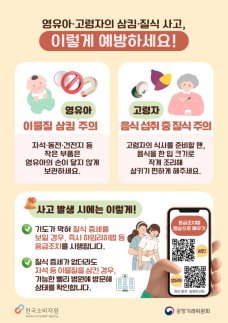 Increase in Choking Incidents Among Infants and Seniors Prompts Consumer Safety Alert As incidents of choking due to foreign object ingestion among infants and seniors continue to rise, the government has issued a consumer safety alert.On May 11, the Fair Trade Commission reported that last year, the Korea Consumer Agency's Consumer Hazard Monitoring System (CISS) recorded 809 cases of foreign object ingestion. Over the past five years, the trend has shown fluctuations: 728 cases in 2021, 949 in 2022, 972 in 2023, and a temporary decrease to 655 in 2024, followed by a rise again last year.Among the foreign object ingestion incidents in the last five years, 67.6% involved children aged seven and under. Specifically, the highest number of incidents occurred with one-year-olds (25.2%), and more than half (56.3%) of the cases involved infants under two years old, who are more likely to put objects in their mouths.The primary hazardous items ingested by infants included magnets (13.8%, 384 cases), toys (10.0%, 279 cases), and coins (9.6%, 266 cases). Other causes of incidents included marbles, stickers, and batteries. The Fair Trade Commission has urged caution, noting that foreign objects can lead to severe injuries such as intestinal perforation or airway obstruction.In contrast, seniors aged 65 and older are at greater risk of choking incidents due to diminished physical abilities, such as reduced coughing reflexes associated with aging. Many choking incidents among seniors have occurred while consuming foods like rice cakes, sweet potatoes, and tangerines. According to the Fire Agency, a total of 1,196 patients were transported due to airway obstruction from food consumption over the past five years.The Fair Trade Commission emphasized that while infant choking incidents often arise from curiosity during play, choking incidents among seniors frequently occur during meals, highlighting the importance of adjusting food sizes.To prevent choking incidents among infants and seniors, the Fair Trade Commission and the Korea Consumer Agency recommend: keeping small items like magnets and coins out of reach of infants; preparing food for seniors in bite-sized pieces and encouraging slow chewing; and immediately performing emergency measures such as the Heimlich maneuver if choking symptoms occur.* This article has been translated by AI. 2026-05-11 12:10:31
 -
 Government Launches Pilot Project for Comprehensive Management of Refrigerants The government is set to launch a pilot project aimed at managing the entire lifecycle of hydrofluorocarbon (HFC) refrigerants, from usage to recovery, regeneration, and disposal. This initiative seeks to reduce greenhouse gas emissions resulting from refrigerant leaks and to lay the groundwork for future legislation on refrigerant management. The Ministry of Climate, Energy, and Environment and the Korea Environment Corporation announced that they will hold a kickoff meeting for the 'Refrigerant Lifecycle Management Pilot Project' on May 12 at the Sharing and Empathy Conference Room in Yongsan, Seoul. The core of this pilot project is to implement a circular system that recovers waste refrigerants from devices such as air conditioners and refrigerators and regenerates them for reuse. The government aims to systematically manage the entire process of refrigerant usage, recovery, and regeneration to enhance the effectiveness of greenhouse gas reduction. Hydrofluorocarbons, widely used as refrigerants, were developed to replace ozone-depleting substances like chlorofluorocarbons (CFCs) and hydrochlorofluorocarbons (HCFCs). However, HFCs have a global warming potential (GWP) that can be up to 12,400 times greater than that of carbon dioxide, making them significant contributors to global warming. In response, the international community agreed in 2016 under the Montreal Protocol to designate HFCs as regulated substances and to phase them out gradually. As the need for refrigerant management grows domestically, discussions on related regulatory frameworks are accelerating. Industry stakeholders have raised concerns about instances where refrigerants are not properly recovered during the maintenance or disposal of equipment like air conditioners and refrigerators, leading to leaks into the atmosphere. Once charged, refrigerants can remain in devices for extended periods, which can significantly impact greenhouse gas emissions if management gaps occur. Current air quality regulations mandate refrigerant recovery only for large equipment with a legal refrigeration capacity of 20 RT or more. However, many medium and small-sized devices are excluded from this requirement, raising ongoing concerns about regulatory gaps. The pilot project will involve participation from Chungcheongnam-do and the Seoul Transportation Corporation, which plan to actively recover waste refrigerants from devices and products not covered by legal regulations. A system for managing residual refrigerants in containers and recovering, regenerating, and reusing refrigerants will also be established. The Ministry of Climate plans to expand efforts to remove moisture and contaminants from waste refrigerants to utilize them as regenerated refrigerants of new product quality. This initiative aims to reduce dependence on the production and import of new refrigerants and strengthen the foundation for a circular economy. Based on the results of this pilot project, the ministry will also pursue the establishment of a 'Refrigerant Management Act' (tentative title) that encompasses the recovery, transportation, regeneration, and disposal of refrigerants. Kim Jin-sik, Director of the Air Quality Division at the Ministry of Climate, stated, "Hydrofluorocarbon refrigerants can leak for over 15 years after being charged, making thorough management essential for achieving national greenhouse gas reduction targets (NDC). We will do our utmost to ensure that the systems introduced through this pilot project are implemented smoothly in the field."* This article has been translated by AI. 2026-05-11 12:08:51
 -
 Government Implements Dispute Resolution System for Chemical Registration Delays As disputes over costs between companies have led to delays in chemical substance registrations, the government is taking formal steps to mediate these conflicts. The aim is to maintain the principle of shared use of testing data for the same substances while reducing registration delays and the burdens of production and export.The Ministry of Environment and Energy announced on May 10 that a system to resolve disputes arising during the chemical registration process will be officially implemented starting May 12.Under the current Chemical Registration and Evaluation Act, companies seeking to register existing chemical substances must form a consortium with other companies using the same substances to jointly secure and submit the necessary testing data. If a later company wishes to utilize already registered substances, it must also obtain consent from the existing data owner to share the data.In practice, delays in chemical registrations have occurred due to disagreements over data usage fees and cost-sharing arrangements.The Ministry has established principles for cost-sharing and accounting applicable to the production and use of registration application data in relevant laws, allowing the government to step in for official mediation in case of disputes.When a company applies for mediation through the chemical substance information processing system, the government will review legal principles, similar cases, and the opinions of related companies to prepare a mediation proposal, which will then be recommended to the parties involved in the dispute.If mediation fails, the later registering company can apply to the government for a submission deferment regarding the relevant data. If approved, the company can proceed with the registration process without submitting the data and continue discussions afterward.The government expects that addressing cost disputes will reduce delays in registration and disruptions to business operations.Jo Hyun-soo, Director of the Environmental Health Bureau at the Ministry, stated, "The government will continue to support the industry in implementing the system with reasonable costs and procedures while ensuring comprehensive information on the harmfulness of chemical substances is secured."* This article has been translated by AI. 2026-05-11 12:07:12
 -
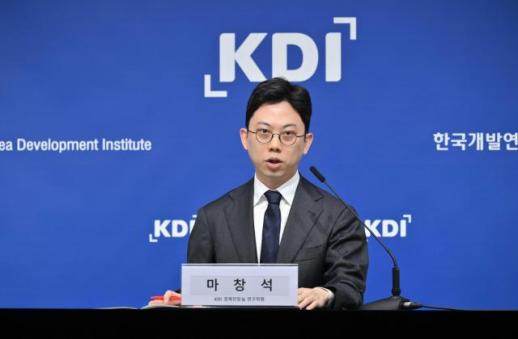 KDI: Rising International Oil Prices Could Increase Inflation by 1.6% Rising international oil prices, triggered by the conflict in the Middle East, could increase South Korea's consumer price inflation rate by as much as 1.6 percentage points this year, according to a report from a national research institute. The report also suggests that core inflation, which has been less affected by oil price fluctuations, may rise by 0.1 percentage points. The Korea Development Institute (KDI) released its report on May 11, analyzing the effects of recent increases in international oil prices on consumer prices. KDI forecasts that fluctuations in oil prices could raise the consumer price inflation rate by 1.0 to 1.6 percentage points starting in the second quarter of this year. If high oil prices persist, core inflation could face upward pressure through next year. Research indicates that a 10 percentage point increase in international oil prices (Dubai crude) leads to a 2.69 percentage point rise in domestic oil product prices. Typically, increases in Dubai crude do not affect core inflation. However, due to uncertainties in transportation, a 10 percentage point rise in Dubai crude could push core inflation up by 0.10 percentage points. This means that transportation uncertainties could trigger cost increases not only in oil products but also in industrial goods and services. While the initial impact of rising international oil prices on core inflation is smaller than on consumer prices, its persistence is expected to be greater. Nevertheless, some analysts believe that government measures, such as price ceilings on oil products, will prevent inflation from exceeding 3%. As of March, the price ceiling was estimated to lower the consumer price inflation rate by 0.8 percentage points, while recent reductions in fuel taxes are believed to have contributed to a 0.2 percentage point decrease. These high oil price countermeasures are also expected to partially alleviate the rise in core inflation. Ma Chang-seok, a KDI researcher, stated, "If we measure without considering the effects of the price ceiling on oil products and add in the impact of fuel tax reductions, inflation is unlikely to exceed 3%. However, without the price ceiling, a rate above 3% would be quite possible." The institute views the ongoing developments in the Middle East as uncertain, leading to significant uncertainty regarding future consumer price trends. It suggests that policies should be formulated considering the varying impacts of rising international oil prices on inflation. Ma emphasized, "While the rise in international oil prices may temporarily affect the prices of certain items, the degree of inflation and its ripple effects can vary depending on the core factors. Policies aimed at stabilizing prices must also prepare for the possibility that prolonged increases in international oil prices could destabilize expected inflation."* This article has been translated by AI. 2026-05-11 12:05:30
 -
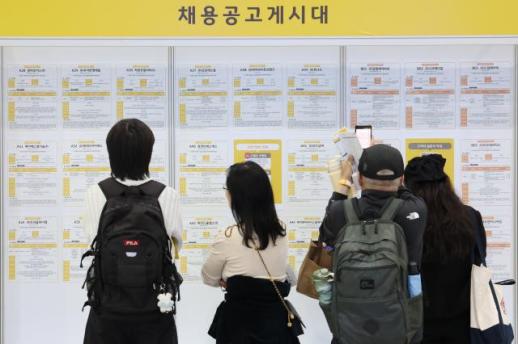 Employment Insurance Enrollment Rises by Nearly 200,000 for Four Consecutive Months The number of regular enrollees in employment insurance has increased by nearly 200,000 for four consecutive months, driven by growth in the service sector. However, the manufacturing and construction industries continue to see declines, and the employment situation for those under 29 remains challenging. According to the Ministry of Labor's "Labor Market Trends Based on April Employment Statistics" released on May 11, the total number of regular enrollees in employment insurance reached 15.807 million at the end of April, an increase of 269,000 (1.7%) compared to the same period last year. The growth in regular enrollees has consistently been in the high 200,000s since January (263,000). This increase is primarily attributed to a robust rise in the service sector, which saw an increase of 284,000 enrollees (2.6%) compared to a year ago. Notable growth was observed in health and welfare (117,000), accommodation and food services (54,000), business services (26,000), and professional, scientific, and technical services (23,000). In contrast, the manufacturing sector experienced a decline of 8,000 (-0.2%) enrollees, marking 11 consecutive months of decrease. While there were increases in sectors such as other transportation equipment, electronics and communications, food, and medical substances and pharmaceuticals, significant reductions were seen in metal processing, textiles, rubber and plastics, and electrical equipment. Regarding the recent decline in manufacturing enrollment due to the impact of the Middle East conflict, Cheon Gyeong-gi, head of the Ministry of Labor's Future Employment Analysis Division, stated, "We need to closely examine the decreases in the oil refining and chemical manufacturing sectors. However, given the ongoing trend of decline, we should monitor the situation a bit longer." The construction sector also saw a decrease of 8,800 enrollees, bringing the total to 746,000, marking 33 consecutive months of decline. However, the rate of decrease has slightly lessened recently due to a reduction in sluggish construction investment. Cheon noted, "New applications for unemployment benefits in the construction sector have been on a downward trend since the second half of last year." By age group, there were increases among those in their 30s (88,000), 50s (47,000), and those aged 60 and above (206,000), while there were declines among those under 29 (-64,000) and in their 40s (-7,000). The number of young enrollees has been decreasing for 44 consecutive months since September 2022. The number of new applicants for unemployment benefits was 100,000, down by 3,000 (-2.7%) compared to a year earlier, marking three consecutive months of decline. The total number of beneficiaries was 667,000, a decrease of 34,000 from the previous year, and the total payout was 1.1091 trillion won, down 4.1%. The job vacancy ratio, which indicates the number of job openings per job seeker, rose slightly to 0.45 from 0.43 a year ago. Cheon remarked, "There has been an upward trend in job openings for two consecutive months; however, considering the long-term decline, it is still difficult to view this as a recovery."* This article has been translated by AI. 2026-05-11 12:03:28
 -
 S-Oil swings to $837 million Q1 operating profit on crude price surge SEOUL, May 11 (AJP) - S-Oil returned to profit in the first quarter as a jump in crude prices triggered by the Middle East conflict delivered hefty inventory gains, more than offsetting headwinds from scheduled maintenance and a domestic petroleum price cap. According to regulatory filings released Monday, the Aramco-controlled refiner posted a consolidated operating profit of 1.23 trillion won ($835.7 million) for the January to March period, swinging from an operating loss of 21.5 billion won a year earlier. Net profit came in at 721 billion won, also reversing a year-ago loss. Revenue edged down 0.5 percent from a year earlier to 8.94 trillion won, as the hit from lower utilization during turnaround maintenance was largely cushioned by surging oil prices. More than half of the quarterly operating profit stemmed from inventory-related gains tied to the crude rally, the company said, with the so-called lagging effect — the timing gap between crude purchases and product sales — widening refining margins despite the drag from maintenance and Seoul's petroleum price ceiling. The refining division led the gains with an operating profit of 1.04 trillion won on revenue of 7.10 trillion won, as the blockade of the Strait of Hormuz disrupted global crude flows, trimmed regional refinery runs and lifted Asian crack spreads for gasoline and diesel. Petrochemicals eked out a 25.5 billion-won operating profit on revenue of 1.10 trillion won, while the lubricants unit booked 166.6 billion won in operating profit on revenue of 737 billion won, down sequentially as feedstock costs outran product prices. Despite the tighter regional supply backdrop, S-Oil said it has preserved stable crude procurement through long-term contracts with parent Saudi Aramco and shipping affiliate Bahri. "Although supply-demand conditions remain tight due to the Middle East war, we are maintaining stable crude supply through long-term purchase agreements with our parent company Aramco," said a company spokesperson. Looking ahead, S-Oil expects firm refining margins in the second quarter as supply disruptions outweigh demand concerns from high prices, while flagging widening uncertainty over petrochemical feedstocks and a recovery in lubricant spreads. The Shaheen Project, the company's flagship petrochemical complex, stood at 96.9 percent EPC progress as of end-April and remains on track for mechanical completion by the end of June, with commercial operations to be readied after trial runs through the end of the year. Shares of S-Oil traded at 111,600 won per stock at 11:43 a.m., 4.45 percent lower than the previous session. 2026-05-11 11:47:51
 -
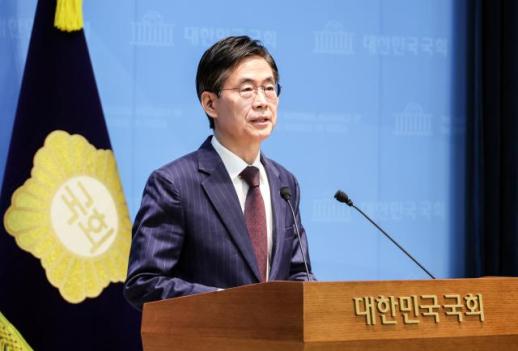 Jung Kyung-tae Announces Candidacy for National Assembly Vice Speaker Jung Kyung-tae, a member of the People Power Party, has declared his candidacy for the position of Vice Speaker of the National Assembly, describing himself as the only six-term lawmaker who has experienced both progressive and conservative politics in South Korea.At a press conference held on May 11 in the National Assembly's communication hall, Jung stated, "I will become a Vice Speaker who listens to the rational and sensible voices of the people, opening a new chapter of cooperation and checks in the 22nd National Assembly."He criticized the ruling party's unilateral legislative actions and autocratic management of the National Assembly, saying, "The dialogue and compromise that are essential to parliamentary democracy have faded away due to the ruling party's legislative rush. If the People Power Party fails to properly check the Democratic Party, it will lead to greater arrogance from them, and the consequences will return to the people's livelihoods, pushing South Korea into crisis."Jung emphasized that the upcoming Vice Speaker election will be a critical juncture for the People Power Party, determining whether it will signal a renewal or fade into history. He urged the party to step out boldly from behind a curtain of military rule.He added, "The Vice Speaker position allocated to the opposition is not merely an honorary role. It must serve as a frontline barrier against the unchecked power of the ruling party, correcting the imbalance in the political landscape. The standards for cooperation and checks must be solely based on the livelihoods of the people."Jung vowed to confront any legislative actions that disregard the people and to uphold the values of constitutional spirit and rule of law by preventing self-cancellation of charges against the president.He also expressed his commitment to establishing the presence of the People Power Party as the leading opposition party through strategic negotiations that transcend partisan lines and by actively negotiating with the ruling party on behalf of the smaller opposition party.Furthermore, he pledged to lead the realization of parliamentary democracy, stating, "We must correct the unilateral proceedings of plenary sessions, the autocratic operation of standing committees, and the issues surrounding the allocation of the chair of the Legislation and Judiciary Committee, which have undermined parliamentary democracy due to the majority party's abuses, and restore the traditions of cooperation and respect for the opposition in the National Assembly."The People Power Party will select its candidate for Vice Speaker at a general meeting on May 13. So far, lawmakers Cho Bae-sook and Park Deok-heum have also announced their candidacies.* This article has been translated by AI. 2026-05-11 11:45:23
 -
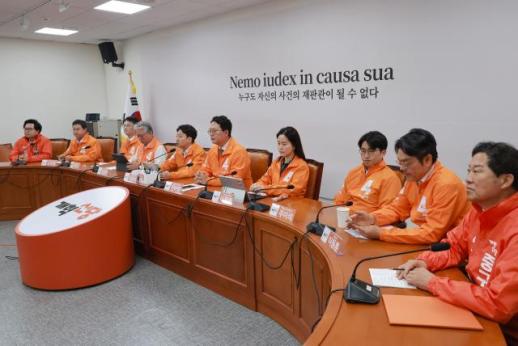 Reform Party Launches Central Election Committee Amid Local Elections The Reform Party officially launched its Central Election Committee on May 11, gearing up for the June 3 local elections and the National Assembly by-elections. Lee Jun-seok, the party leader, criticized the exclusion of Jung Ji-han, the party's candidate for Busan mayor, from a local TV debate, urging the Democratic Party's candidate, Jeon Jae-soo, not to ignore this issue. The Reform Party's election committee held its inaugural meeting at the National Assembly, marking the start of its activities. During the meeting, Lee presented nomination certificates to candidates including Kim Seong-yeol, who is running in the Hanam Gap district, and Park Il-ha, the candidate for the Dongjak District mayor, who recently left the People Power Party to join the Reform Party. Lee also dressed the candidates in orange jackets as a symbol of their commitment to victory in the elections. In his opening remarks, Lee highlighted Jung's exclusion from the TV debate and his ongoing hunger strike, stating, "Jeon Jae-soo, the candidate from the Democratic Party, should not turn a blind eye to this. A 30-something challenger like Jeon should not leave Jung, who is of a similar age, outside the debate venue." He emphasized the importance of acknowledging Jung's situation. Lee urged Jeon to abandon his privileged stance and return to the mindset of a challenger, saying, "Today’s Jeon should reach out to the Jeon who was once ignored and left alone at that debate. This is a matter of respect for the citizens of Busan who supported Jung and a minimal duty to the debate where he once sat alone." He also criticized the joint investigation team of the police and prosecutors for indicting Jung's aides on charges of evidence destruction while dismissing allegations of Jung's involvement in receiving money from the Unification Church. Lee called the decision to exclude Jung from the debate "unacceptable," likening it to broadcasting a game with three players while only covering two.* This article has been translated by AI. 2026-05-11 11:43:41
 -
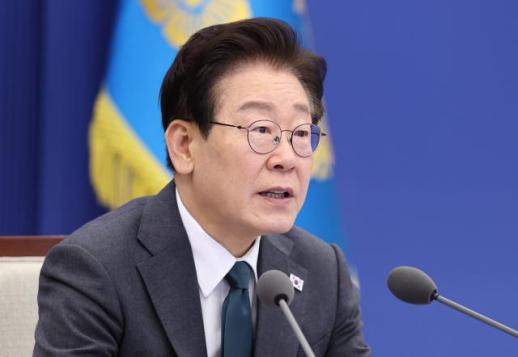 President Lee Calls Donghak Peasant Revolution the First Step for Democracy in Korea President Lee Jae-myung stated on May 11 that the Donghak Peasant Revolution, which awakened the people to their role as the foundation and masters of the nation, was a significant first step for democracy in South Korea. Speaking at the 132nd anniversary ceremony of the Donghak Peasant Revolution held at the National Museum of Korea in Yongsan, President Lee, through a speech read by Minister of Culture, Sports and Tourism Choi Hwi-young, remarked, "The spirit of the Donghak Peasant Revolution, which resisted unjust power while dreaming of a world where everyone lives well, has become an unquenchable light in our hearts." He reflected, "The spirit that has continued through the independence movement, the April 19 Revolution, the May 18 Democratization Movement, and the 'Candlelight Revolution' and 'Light Revolution' is the source that has blossomed South Korea into a model democratic nation that the world pays attention to today." President Lee emphasized that the value of a government based on popular sovereignty is closely aligned with the ideal of a community where citizens share the fruits of growth and enjoy their rightful rights, as envisioned by the farmers in 1894. He pledged, "The government will do its utmost to create a warm community where the people are the true masters of the nation and can enjoy their legitimate rights and share the fruits of growth together." He expressed deep respect for the courage, loud cries, and noble sacrifices of those who participated in the Donghak Peasant Revolution, which planted the seeds of precious democracy in this land. President Lee added, "Together with the people, I will work to build a nation where no neighbor is left behind, where everyone enjoys fair opportunities, and where we achieve a more developed and mature democracy in a country that belongs to its citizens." * This article has been translated by AI. 2026-05-11 11:42:21