
Journalist

Toby Murray
-
 Nobel Laureate Peter Howitt: Education, Finance, and Welfare Must Adapt to AI Era Peter Howitt, a Nobel laureate in economics and professor at Brown University, emphasized that the rise of artificial intelligence (AI) will fundamentally transform not only industries but also education, social safety nets, and financial systems. He urged South Korea to undertake a comprehensive redesign of its economic framework. The Korea Development Institute (KDI) and the Economic and Social Research Institute hosted a conference on May 15 at the Westin Chosun Hotel in Seoul, where Howitt delivered a keynote address on innovative growth strategies for the South Korean economy in the AI era. Howitt diagnosed that the South Korean economy faces multiple challenges, including the spread of AI, rising protectionism, demographic changes, and the transition from follower to leading growth. He defined AI as a “General Purpose Technology,” akin to electricity, electric vehicles, and personal computers, indicating that it is a technology that can reshape the entire economic structure rather than being confined to specific industries. “General Purpose Technologies tend to go through initial disruption and prolonged adjustment periods before their productivity-enhancing effects spread across industries,” Howitt said. “To reap future benefits, all countries need to actively embrace this technology.” He stressed the necessity for a comprehensive institutional redesign that encompasses education systems, social safety nets, and the stability of financial systems to respond to the spread of AI. He also highlighted the importance of collaborative industrial policies among government, businesses, and academia. Howitt underscored the need to maintain an open economic system despite the rise of protectionism. “International trade enhances competitive pressure and provides access to global markets and learning opportunities, which fosters innovation,” he said, suggesting that South Korea should seek new trade alliances while also strengthening its domestic market in response to declining demand from existing trading partners. Regarding the issue of population decline, he cautioned against excessive pessimism. “Population decline is not necessarily a constraint on growth, as some may fear,” he noted, adding that expanding selective immigration policies to attract talented individuals from abroad is a desirable direction. Howitt proposed establishing a “leading growth system” as a key objective for South Korea's economic strategy. He stated that for the economy to transition to leading growth, a more innovative corporate ecosystem is needed, emphasizing the importance of strengthening support for small and medium-sized enterprises, expanding antitrust policies, and creating a technology-friendly financial system. Concerns about the structural slowdown in the South Korean economy were prominently raised during the conference. Kim Se-jik, head of KDI, remarked, “It is time for a new growth strategy focused on ‘real growth’ rather than short-term economic responses,” referring to the trend of the economy experiencing a decline of 1 percentage point in growth rates every five years over the past three decades. Deputy Prime Minister and Minister of Economy and Finance Ku Yun-cheol also emphasized in his congratulatory remarks the need for a shift from a follower-type economy to an innovation-driven transformation based on “creative destruction” to address external uncertainties such as the Middle East conflict and the structural issue of declining potential growth. 2026-05-15 14:05:29
 -
 Government to Announce Employment Stability Plan Amid Industrial Transition The South Korean government plans to unveil a basic employment stability plan during the first half of the year in response to growing concerns about job disruptions caused by industrial changes, including artificial intelligence (AI), digital transformation, and carbon neutrality. This initiative aims to proactively address the potential for large-scale job shifts resulting from these transitions. On May 15, the Ministry of Employment and Labor held a meeting at the Seoul Business Center to gather input from labor representatives, business leaders, and youth organizations. Since November of last year, the government has been working with expert forums to develop policies aimed at preventing job shocks and creating new employment opportunities stemming from industrial transitions. The urgency arises from the rapid spread of AI, digitalization in manufacturing, and the restructuring of green industries, which could destabilize existing sectors and labor markets. There is a growing awareness that while some jobs may quickly disappear during the transition, new roles may not be created in time to replace them. A notable example is the decline in jobs for workers at traditional power plants due to the shift toward renewable energy. Similarly, workers in the internal combustion engine vehicle sector face increasing pressure as the industry shifts to electric vehicles. As job restructuring pressures mount, concepts like 'just transition' are gaining traction in the United States and the European Union. These regions are strengthening policies to mitigate labor shocks resulting from industrial changes, and there are calls for South Korea to adopt a more systematic transition strategy. To this end, the government has been accumulating foundational data on the status of industrial transitions and their employment impacts through a first phase of forums held from November last year to March this year. The second phase, conducted in April and May, focused on five specialized areas: job outlook, employment safety nets, business support, vocational training, and social dialogue. During the recent meeting, reports prepared by the expert forum and review materials from the labor ministry were discussed. The government plans to announce the basic employment stability plan next month, following public discussions and feedback from an expert committee on employment stability during industrial transitions. Lim Young-mi, head of the Employment Policy Office, stated, "There is a gap between the speed of industrial transition and the readiness of the labor market. If we do not train the necessary talent in line with facility and equipment investments, successful transitions will be difficult." She added, "We will establish a robust support system in collaboration with relevant ministries to ensure that talented individuals can work in a timely manner throughout the entire cycle of industrial transition." She emphasized the need to strengthen measures to ensure that workers' jobs and livelihoods remain stable during the transition period while also seizing new opportunities.* This article has been translated by AI. 2026-05-15 14:03:00
 -
 KOSPI Drops Over 4% After Briefly Surpassing 8000 Mark, Trading Curbs Activated The KOSPI index, which fluctuated around the 8000 mark throughout the week, briefly surpassed this threshold for the first time during trading but then plummeted by over 4% due to a surge in profit-taking sales. The index fell to the 7600 range, prompting the activation of a trading curb. According to the Korea Exchange, as of 1:30 PM, the KOSPI was trading at 7611.51, down 369.90 points (4.63%) from the previous trading day. The index opened at 7951.75, down 29.66 points (0.37%) from the previous day but managed to rise above 8000 early in the session. However, a rapid increase in profit-taking sales, primarily from foreign investors, led to a swift decline. At approximately 1:28:49 PM, a trading curb was activated due to significant fluctuations in the KOSPI 200 futures index, halting program sell orders for five minutes. At the time of activation, the KOSPI 200 futures index was recorded at 1182.00, down 63.50 points (5.09%) from the previous day's close. This marks the first activation of a trading curb in the KOSPI market since April 2. Seo Sang-young, a researcher at Mirae Asset Securities, noted, "After surpassing 8000 points early in the session, the market turned downward as foreign selling increased. Following comments from U.S. President Donald Trump that he would 'no longer tolerate' Iran, U.S. futures fell, leading to an expansion of declines in the Korean market." In the securities market, individual investors made a net purchase of 4.3927 trillion won to help defend the index. In contrast, foreign and institutional investors sold a net 4.1735 trillion won and 321.3 billion won, respectively, focusing on profit-taking. Most of the top market capitalization stocks declined, with the exception of Samsung Electro-Mechanics (0.20%). Samsung Electronics (-6.25%), SK Hynix (-5.74%), SK Square (-5.83%), Hyundai Motor (-1.40%), LG Energy Solution (-3.62%), Doosan Enerbility (-4.87%), HD Hyundai Heavy Industries (-4.17%), and Samsung Biologics (-0.62%) all showed weakness. The KOSDAQ index also turned downward. At the same time, the KOSDAQ was recorded at 1145.25, down 45.84 points (3.85%) from the previous trading day. The index opened higher at 1197.23 but quickly reversed as investor sentiment deteriorated. In the KOSDAQ market, foreign investors were net buyers of 85.1 billion won, while individuals and institutions sold a net 25.8 billion won and 10.4 billion won, respectively. Top KOSDAQ stocks also experienced declines, including Alteogen (-3.64%), EcoPro BM (-6.22%), EcoPro (-6.61%), Rainbow Robotics (-2.50%), Kolon TissueGene (-2.19%), Samchundang Pharm (-3.58%), Rino Technology (-8.76%), Rigakem Bio (-1.38%), HLB (-1.50%), and ABL Bio (-4.46%).* This article has been translated by AI. 2026-05-15 13:51:57
 -
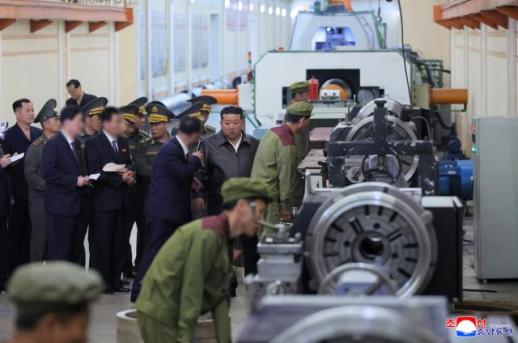 Kim Jong Un Takes Commemorative Photo with Participants of the 9th Workers' Federation Congress Kim Jong Un, Chairman of the Workers' Party of Korea, took a commemorative photo with participants of the 9th Congress of the Korean General Federation of Trade Unions on May 14.According to a report by the Korean Central News Agency on May 15, Kim urged the entire working class and union members to lead the changes of the era under the banner of the three revolutions and to drive the country toward the achievement of the new five-year goals.He emphasized that the significant transitional period ahead requires the unwavering leadership and extraordinary efforts of the working class, which is the main force of creation and construction. He stated, "It is the fundamental task facing the working class and union members at this stage of socialist construction to further elevate the spirit of self-reliance and self-sustenance across all areas of ideology, technology, and culture."Kim also congratulated the newly elected chairman and vice-chairmen of the 9th Central Committee of the Federation and acknowledged the contributions of union members.To commemorate the 9th Congress, the Federation held a performance titled "Forward with the Great Party!" featuring the Central Workers' Art Propaganda Troupe and grassroots propaganda workers at the Central Workers' Hall. The Korean Central News Agency reported that Kim Yong Sop, deputy director of the Party Central Committee, Ri Won Jong, chairman of the Federation's Central Committee, and other officials attended the performance, although it did not specify the date and location of the event. The 9th Congress of the Federation was held in Pyongyang from May 11 to 12.The Federation is considered one of North Korea's "four major labor organizations," alongside the Socialist Women's Union, the Socialist Patriotic Youth League, and the Agricultural Workers' Union.These organizations serve to disseminate and implement the policies and lines determined by the Party, with mandatory membership for youth, women, workers, and farmers.* This article has been translated by AI. 2026-05-15 13:49:06
 -
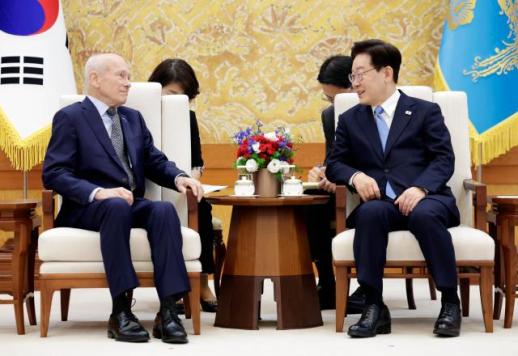 President Lee Emphasizes Innovation Growth in Meeting with Nobel Laureate Peter Howitt President Lee Jae-myung met with Peter Howitt, a professor at Brown University and last year's Nobel Prize winner in Economics, on May 15 at the Blue House. During the meeting, Lee credited Howitt's guidance through his former student, Chief Economic Advisor Ha Joon-kyung, for helping South Korea achieve the highest global growth rate in the first quarter of this year."Your mentorship has greatly benefited our national policies," Lee said, acknowledging Howitt's influence on Ha, who was advised by Howitt during his doctoral studies at Brown University in 2003.Lee noted that Ha is directly overseeing South Korea's economic growth strategy, emphasizing that the country is focusing on innovation-driven growth, as taught by Howitt.He also requested Howitt's insights on South Korea's economic growth strategy, adding, "I apologize for the delay, but congratulations on your Nobel Prize win."Howitt expressed gratitude for the meeting, mentioning that he had heard it was Teacher's Day in South Korea. He expressed joy in seeing Ha implement the teachings he provided.He remarked, "The large corporations that have driven South Korea's economic growth for decades are not resting on their laurels but are continuing to innovate at a high level. I found that South Korea's R&D spending is the second highest in the world relative to GDP."Howitt praised President Lee's support for startups and small businesses, calling them the key drivers of economic growth and highlighting the incentives and financial support being provided under Lee's leadership. He noted the importance of ensuring that the benefits of growth are distributed inclusively and that rational policies are established.He also commended the government's efforts to maintain a sound fiscal policy while minimizing deficits and effectively managing inflation targets.Howitt concluded by emphasizing that despite the current unstable and uncertain global environment, South Korea has achieved impressive results, stating, "While many countries face various headwinds, few have navigated these challenges as successfully as South Korea."* This article has been translated by AI. 2026-05-15 13:46:26
 -
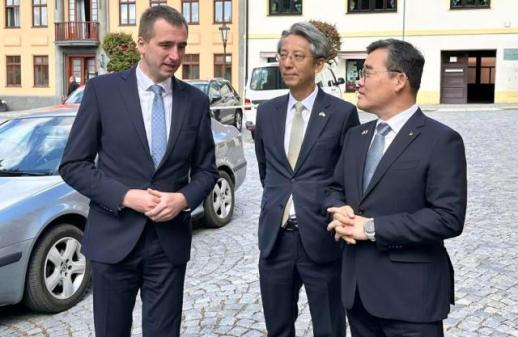 Daewoo Engineering's CEO Visits Austria and Czech Republic to Enhance Nuclear Cooperation Daewoo Engineering has initiated extensive communication efforts with local communities to successfully advance new nuclear power projects in Europe. The company announced that CEO Kim Bohyun visited Austria and the Czech Republic from May 11 to 14 to assess collaboration frameworks for nuclear projects and engage in community development activities. On May 12, Kim met with key officials from the International Atomic Energy Agency (IAEA) in Vienna, where they discussed global trends in the nuclear power market and the status of small modular reactor (SMR) development. During the meeting, Daewoo Engineering emphasized its strong construction capabilities and project management skills in the South Korean nuclear industry, expressing a commitment to expand international collaboration opportunities starting with the Czech nuclear project. On May 13, Kim traveled to the Czech Republic, where he participated in a fire truck donation ceremony in the municipality of Náměšť nad Oslavou, near the planned nuclear site. This donation was initiated in response to the need for enhanced local firefighting infrastructure, with the specialized vehicle completed after approximately 14 months of production. The ceremony was attended by local dignitaries, including Náměšť Mayor Jan Kotásek and Vysočina Region Governor Martin Kukla. Representatives from South Korea, including CEO Kim, Ambassador Hong Young-ki, and officials from Korea Hydro & Nuclear Power and Doosan Enerbility, were also present, reinforcing the unity of 'Team Korea.' Following the donation ceremony, Kim held discussions in Prague with key figures from the Czech Ministry of Industry regarding practical cooperation measures. A Daewoo Engineering official stated, "This visit goes beyond mere sales efforts; it is a genuine initiative to gain the trust of local residents and municipalities. We aim to successfully lead the Czech nuclear project based on our accumulated construction capabilities and establish a foothold for entering the European market." Shin Dae-hyun, a researcher at Kiwoom Securities, noted, "In the first quarter, overseas plant sites recorded high margins, resulting in profitability exceeding expectations. We anticipate securing the Czech Dukovany nuclear project in the second quarter, along with contracts for the Papua New Guinea LNG project throughout the year."* This article has been translated by AI. 2026-05-15 13:40:03
 -
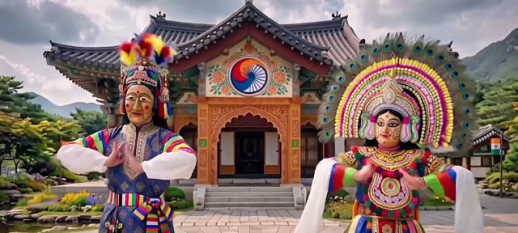 Korea-India Cultural Contest Highlights Language Barriers and Understanding There was no Hindi interpreter present. In a meeting with a country of 1.5 billion people, South Korea could not provide a single person fluent in that language. Instead, a double interpretation through English conveyed the words of both leaders.During a Cabinet meeting on April 28, President Lee Jae-myung directly reprimanded Foreign Minister Park Jin. "We need to ensure that we can avoid double interpretation in the future by training at least one person in special education," he said.While the reprimand focused on the lack of personnel, it also highlighted a more uncomfortable reality. South Korea and India are both located on the Asian continent, share thousands of years of civilization, and have experienced colonial pain together. Despite having established diplomatic relations long ago and increasing trade each year, the two countries still feel distant from one another. The absence of a single interpreter was not a coincidence but a result of structural indifference.Language is a measure of interest. The languages we choose to learn reflect how seriously we regard those countries. By that standard, India has long been a low priority.To bridge this gap, the Indian Cultural Center in Korea, the Indian Embassy, and Aju Media collaborated to launch the '2026 Korea-India AI Video and Essay Contest,' which drew a passionate response from about 550 participants. The responses were remarkable.Sonali Ray, who won the essay grand prize, compared Seoul's Gwangjang Market with India's bazaars. She noted that while kimchi and achar (Indian pickles) are not the same food, they share a common philosophy. Both civilizations understood the wisdom of transforming simple ingredients into something complex and vibrant through fermentation and patience.Kim Ji-young, who won the gold prize, approached India from a different angle. His essay began with the observation that the Hindi words for 'yesterday' and 'tomorrow' are expressed with the same term, 'kal.' This led him to reflect on India's philosophy of rejecting definitive conclusions.Quoting independence activist Aurobindo, who said, "Humans are transitional beings and never complete," he quietly examined the impatience of modern Korean society, which often defines each other by four letters of the MBTI. In a country where yesterday is tomorrow and tomorrow is yesterday, he learned a life attitude of not rushing to conclusions.Ultimately, the two essays, though expressed in different languages, convey the same message: we have not known India well enough.Kim Dong-hee's AI video titled 'Together We Soar Higher,' which won the top prize in the video category, captured a similar sentiment in a different format. It showcased what could emerge when Korea's planning capabilities meet India's creative sensibilities in a rapidly changing digital environment.Double interpretation is a language issue. However, at a deeper level, it is a matter of understanding. The 550 participants took the opportunity to explore India through this contest. They researched Indian cuisine, read about Indian history, and pondered the meaning of a single Hindi word. Each of these actions, in a different way but no less significant, helped bridge the distance between the two countries.On May 16, an India Culture Day event will be held at Yeouido Hangang Park. Contest winners will stand on the podium that day. As the colors and sounds of India spread over the Han River, it may mark the first scene where the distance of double interpretation transforms into a bridge of bilingual understanding. In a country where yesterday and tomorrow are the same word, we are just beginning to greet that nation properly.* This article has been translated by AI. 2026-05-15 13:26:10
 -
 Kumho Construction Reports 121 Billion Won Operating Profit in Q1, Up 112% Year-on-Year Kumho Construction has achieved a significant rebound in its financial performance for the first quarter of 2026 through improved profitability and solid management practices.In its quarterly report released on May 15, Kumho Construction announced that its consolidated revenue for the first quarter reached 453.4 billion won, with an operating profit of 12.1 billion won and a net profit of 10.8 billion won. While revenue saw a slight decline compared to the same period last year, operating profit surged by 112% from 5.7 billion won in the first quarter of the previous year, more than doubling. Net profit also saw a substantial increase, rising from 800 million won last year to 10.8 billion won this quarter.The reduction of risks associated with previously high-cost projects, which have now been completed, has contributed to this improvement, along with a greater focus on profitable new ventures.Kumho Construction is expanding its operations beyond public housing and private participation projects to include energy sectors such as LNG combined cycle power plants and electrical infrastructure projects, which are currently in high demand. Analysts attribute the rise in profit margins to a strict selective bidding strategy, enhanced site management, and efforts to reduce interest expenses.The stabilization of financial indicators is also noteworthy. With improved performance, the collection of receivables has become smoother, significantly increasing cash liquidity. As of the first quarter, cash and cash equivalents stood at 275.6 billion won, a 72% increase from 160.7 billion won at the end of last year.With the secured cash, the company is also reducing its debt levels. During the first quarter, Kumho Construction repaid approximately 26 billion won in borrowings, accelerating its financial structure improvement. Consequently, total borrowings decreased from 157.1 billion won at the end of last year to 131.1 billion won in the first quarter.A Kumho Construction official stated, "We are maintaining a management policy that strengthens both profitability and financial stability. We plan to continue our stable profit structure based on thorough cost management and a selective bidding strategy."Shin Dae-hyun, a researcher at Kiwoom Securities, commented, "Kumho Construction is expected to continue its growth in size and profitability through the expansion of private participation projects. The government is planning to focus on public housing supply, and the increase in private participation project tenders this year is also a favorable factor. However, many private participation projects have experienced delays in commencement, so government action is needed to initiate these projects."* This article has been translated by AI. 2026-05-15 13:22:01
 -
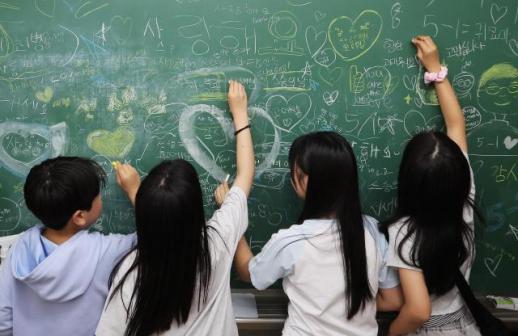 Teachers' Day in Korea without pride, gratitude and... cake SEOUL, May 15 (AJP) -South Koreans, whose Confucian roots instill deep reverence for educators, have observed Teachers' Day for more than six decades. Yet the tradition endures largely in name, as schoolteachers' authority and morale languish under the weight of compounding regulations and increasingly assertive parenting. The interference extends to the absurd: provincial education offices have issued specific directives on how cakes may be shared on Teachers' Day, lest schools and classroom teachers find themselves entangled in legal disputes. "Students casually joke that they could have a teacher arrested simply for accepting a drink or even a small bunch of flowers," said Yun Misook, a teacher at S Elementary School in Geumjeong District, Busan with 21 years in the profession. "To hear that in the days before Teachers' Day makes one question the whole profession." The remark followed a notice posted on an internal portal by the Gyeongsangbuk-do Office of Education, a provincial education authority, advising that teachers and students refrain from sharing cake together under the country's anti-graft legislation — a directive that ignited immediate debate. What was once a day of gratitude has, for many educators, curdled into bitterness and cynicism. Only three in ten teachers reported satisfaction with their work, while more than half said they had considered leaving the profession within their first year, according to a survey released Thursday by the Korean Federation of Teachers' Unions. Half reported feeling wrongfully treated by parents and students; a mere five in one hundred felt their profession commanded genuine respect in society. A separate survey by the Korean Federation of Teachers' Associations (KFTA) yielded parallel findings. Nearly half — 49.2 percent — said their sense of professional pride had eroded over the past one to two years. The most commonly cited source of disillusionment, noted by 67.9 percent of respondents, was a sense of being distrusted by students and parents, or experiencing direct violations of their professional rights. Regional data echo the national picture. In Busan, the country's second-largest city, 69.2 percent of surveyed teachers said they would not choose teaching again given the opportunity, according to a 2026 perception survey conducted by the Busan Teachers' Union. Some 80.9 percent said they lived in fear of being accused of child abuse — even in the course of legitimate educational activities. Under current regulations, teachers are formally classified as having a direct conflict-of-interest relationship with students and parents, rendering even nominal tokens such as carnations, coffee, or cake largely impermissible. Teachers' Day has been observed each May 15 since 1965, the date chosen to coincide with the birthday of King Sejong, the sovereign who devised the Korean alphabet, hangeul, to broaden access to literacy and learning. In Confucian tradition, teachers are held in high esteem as moral guides as much as instructors — which is why students still compose handwritten letters of gratitude to their teachers. Yet many educators say the reality inside classrooms has transformed beyond recognition. "In the past, much was socially accepted as part of student guidance," Yun said. "Now everything is governed by manuals, procedures and the ever-present threat of complaints." She recalled organizing monthly class events and occasionally treating students to snacks as a reward. Today, concerns over safety liability, administrative paperwork and accusations of favoritism have made such gestures increasingly untenable. Classrooms, teachers say, have grown defensive and legally guarded. "These days, I record most counseling sessions with students," Yun said. "It feels necessary as a safeguard in case a complaint or child-abuse allegation surfaces later." The shift reflects a pervasive anxiety that has spread through South Korea's education system in the wake of several high-profile teacher deaths, sustained campaigns of parent complaints, and protracted disputes over classroom discipline. The crisis came to national attention following the 2023 death of an elementary school teacher at Seoul's Seoyi Elementary School, who died after reportedly enduring relentless parent complaints and classroom confrontations. The case galvanized mass nationwide protests, with teachers demanding meaningful legislative protection. Yet many educators say the situation inside schools has remained substantively unchanged. Teachers also point to the proliferation of artificial intelligence and smartphones as forces reshaping both classroom dynamics and students' dispositions toward their teachers. Baek Y.K., an elementary school teacher in Seoul's Gangnam district, observed that the digital environment had fundamentally altered how students perceived teachers' authority. "Teachers are no longer regarded as the primary source of knowledge, and that has changed classroom dynamics in profound ways," she said. A recent survey by the Seoul Education Research and Information Institute found that more than half of Seoul's teachers believed disruptions to classroom order — and encroachments on teachers' authority by emotionally distressed students — had worsened appreciably in recent years. Experts describe the situation as a cultural collision between entrenched Confucian expectations and a contemporary, consumer-oriented approach to education. Society, teachers say, still expects them to steward students' behavior and emotional development — while stripping them of the authority and trust that once underwrote that role. The profession itself has borne the consequences. Teaching was once among South Korea's most coveted and respected careers. But years of declining school-age enrollment, incessant parental pressure, and mounting fear of legal exposure have steadily eroded its appeal. Average admission scores at several of the country's elite teachers' universities fell in the 2025 academic year, according to local admissions analysts, signaling a measurable retreat in the profession's allure. Elementary teaching has also remained heavily female-dominated. In Seoul's 2026 public elementary school teacher hiring examination, only 30 of 210 successful candidates — roughly 14.3 percent — were men, according to the Seoul Metropolitan Office of Education. "Because there are so few male teachers, physically demanding tasks or difficult situations tend to fall to us by default," said Yeon, a teacher in his thirties based in Daejeon. "And if you try to raise concerns, there's an unspoken expectation that a man shouldn't complain — so you end up absorbing the pressure in silence." He added that workplace culture could be difficult to navigate, marked by frequent gossip and diffuse social pressures among colleagues. The teacher crisis in South Korea cannot be attributed to demographic decline alone, educators insist. Even as student populations shrink, many teachers say their workload has grown substantially more demanding — emotionally, administratively and legally — owing to behavioral challenges, persistent parental complaints and heightened legal scrutiny. "What is needed is mutual respect, consideration and a genuine sense of community," Yun said. "Education cannot be sustained by laws and systems alone." As South Korea marks another Teachers' Day, many educators say words of appreciation, however warmly offered, are no longer sufficient. What they want, they say, is far simpler: to teach without fear. 2026-05-15 13:01:49
 -
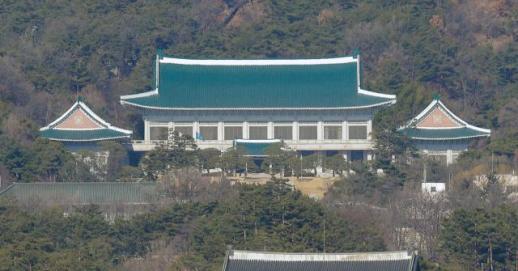 Japanese Prime Minister Kono to Visit South Korea for Shuttle Diplomacy South Korea's Blue House announced on May 15 that Japanese Prime Minister Sanae Takaichi will visit Andong, South Korea, from May 19 to 20 at the invitation of President Lee Jae-myung.In a written briefing, Chief Spokesperson Kang Yoo-cheong explained that Takaichi's visit comes about four months after President Lee's trip to Japan in January, marking the first reciprocal hometown visit between the leaders of the two nations.On the first day of the visit, May 19, the two leaders will hold both small and expanded summit meetings, a joint press conference, and a dinner, along with additional informal engagements.During the summit, they will discuss the future direction of South Korea-Japan relations and seek to enhance practical cooperation in various areas directly affecting citizens, including the economy, society, and public safety. They will also address regional and global issues, including the situation in the Middle East.Kang expressed hope that the shuttle diplomacy between Prime Minister Takaichi and President Lee, expanding from Gyeongju to Andong and other regional cities, will deepen the strong ties and trust between the two leaders and solidify the foundation for a forward-looking development of South Korea-Japan relations.* This article has been translated by AI. 2026-05-15 12:09:23