
Journalist

Tom Stacey
-
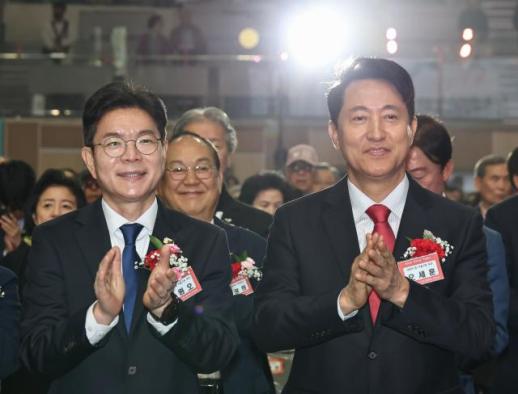 Seoul mayoral rivals Jung Won-oh and Oh Se-hoon trade barbs over housing supply Democratic Party candidate Jung Won-oh and People Power Party candidate Oh Se-hoon, both running for Seoul mayor, campaigned for older voters on May 6 by each calling himself “Seoul’s eldest son,” while continuing to clash over housing supply. The two appeared together in the morning at the Seoul chapter’s 54th Parents’ Day event of the Korea Senior Citizens Association at Jangchung Arena in Jung-gu. Oh arrived first, and Jung came in slightly after the opening time. They greeted each other with smiles and a handshake, but competed in their remarks. Jung said he remembered seniors’ contributions to the country and society, adding, “When I was Seongdong district mayor, you called me Seongdong’s eldest son. Now I will become Seoul’s eldest son.” After Jung left for another schedule, Oh told the audience, “The real eldest son of Seoul greets you,” and said his first pledge was a “healthier, higher-quality-of-life special city, Seoul.” He said he would pursue “healthy longevity” and make Seoul “the world’s longest-living city.” The rivals also kept up their dispute over how to expand housing supply in Seoul. Oh announced an afternoon pledge he called a “comprehensive plan to expand a housing mobility safety net” aimed at stabilizing housing for residents without homes. The plan’s centerpiece is supplying 123,000 public rental units and 6,500 public for-sale units by 2031. For the public for-sale portion, Oh proposed a “Baro Nae Jip” model that includes land-lease apartments priced at about half of nearby market levels and installment-plan apartments requiring a 20% upfront payment. He also pledged to expand long-term jeonse housing — which he said carries no risk of jeonse fraud — from 37,000 units to 106,000 by 2031. “With an overwhelming expansion of supply, we will lower the barriers for residents without homes to enter homeownership and greatly increase safe housing options without worries about jeonse fraud,” Oh said. Oh also launched what he called a “Real Estate Hell Citizens Countermeasures Committee,” criticizing the real estate policies of the Lee Jae-myung government and Jung. At the committee’s kickoff news conference, Oh took aim at Jung’s pledge to expand non-apartment supply, including villas, saying many Seoul residents want newly built apartments. “Policies that ignore reality are bound to fail,” he said. Jung’s campaign quickly pushed back. Kim Gyuhyun, a spokesperson for Jung’s election committee, said in a statement that Oh’s side was “recklessly trying to divide” residents who live in apartments and those who do not. Kim questioned whether an apartment supply plan that takes 10 years until move-in could address the urgency of residents facing jeonse contract expirations as soon as next year. Kim said Jung would shorten redevelopment project timelines to within 10 years and use villas, urban lifestyle housing and purchased rental housing together to pursue long-term supply while responding in the short term. He also said Jung would build “high-quality villa models” with safety, security and community features to broaden stable housing options for young people, newlyweds, one-person households and older single-person households. Jung’s campaign also criticized Oh’s “Real Estate Hell” committee. Spokesperson Park Kyung-mi pointed to Oh as responsible for what she called failures in Seoul’s real estate policy, saying, “The more he tries to mislead public opinion with provocative words, the noose will only tighten around himself.” She added, “Distorting facts and blaming others cannot cover up the failures of a four-term mayor.”* This article has been translated by AI. 2026-05-06 16:55:34
 -
 Korea Mint’s ‘Money Pollock’ Magnet Draws Buzz for Upcycled Banknote Dust A currency-themed merchandise item released by the Korea Minting and Security Printing Corp. is drawing attention online. Posts on online communities and social media have highlighted a “money magnet” sold through the mint’s online store, with particular focus on the “money pollock magnet.” Pollock has long been regarded as a symbol of protection, with its clear eyes said to watch over the home and its open mouth associated with welcoming good fortune. A tradition of wrapping pollock with silk thread is also described as a folk practice wishing for physical and mental well-being. The product is made as a magnet that can be attached to refrigerators or other metal surfaces. The mint operates an upcycling brand that uses currency byproducts generated during banknote production, including defective notes, offcuts and leftover paper. The product is said to contain about 2 grams of dust from 50,000-won notes. Online commenters wrote, “I bought it as a gift — it’s cute and seems meaningful,” “Recycling real money makes me feel like I’m doing something good,” and “I’ll keep it as a talisman.” Others said they waited a long time to buy it, were disappointed it was already sold out, or said they would wait for a sixth round of sales. The mint’s online store sells not only gold and silver products but also commemorative coins and medals, along with a range of goods using currency designs.* This article has been translated by AI. 2026-05-06 16:52:08
 -
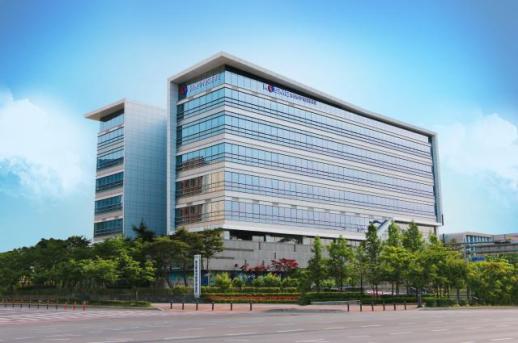 KOSME Selects 10 Teams for In-House AI Transformation Challenge The Korea SMEs and Startups Agency, known as KOSME, said it is stepping up efforts to strengthen employees’ artificial intelligence skills and data-use capabilities as organizations move into an era of AI transformation. KOSME said Tuesday that 10 teams have advanced to the finals of its in-house AI transformation, or AX, challenge. The selected teams will begin developing AI-based services aimed at solving on-the-job problems. The AX challenge is an internal innovation competition in which employees identify inefficiencies in their work and build AI-based services to address them, or use AI coding tools to improve tasks. KOSME said the program is designed so nonprofessional developers can lead service development. The challenge is being held in two categories — improving work efficiency and enhancing customer service — and drew 41 submissions. After an internal review, KOSME selected 10 projects it said showed strong creativity and potential for practical use and wider adoption. Selected projects include an “AI-based program to check performance indicators for policy loans,” an “AI-based assistant for corporate evaluation work,” and an “upgrade of the safety and health management system through AI-based ad hoc risk assessments.” KOSME said it will run an intensive training program from May through August to improve AI skills for the 10 teams and provide one-on-one coaching by experts to support implementation and service upgrades. It plans to conduct user testing and verify service stability through October, then select and reward four best cases in November. KOSME previously received the top rating in the Ministry of the Interior and Safety’s “2025 data-based administration evaluation.” It also won a minister’s award at a government innovation competition and received a citation for contributions to promoting the data industry. Lee Byeong-cheol, KOSME’s vice president, said the agency will “strengthen employees’ ability to use AI and continue to produce tangible results in work innovation that the public can feel in everyday life.”* This article has been translated by AI. 2026-05-06 16:51:17
 -
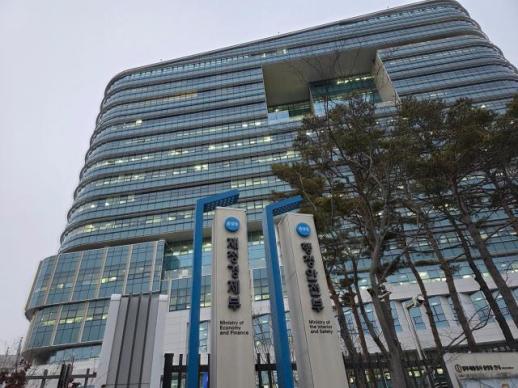 South Korea Tightens State Contract Rules After Serious Accidents, Raises Bond Requirements Contractors sanctioned after a serious industrial accident will have to post a higher contract bond if they sign a state contract after a court grants a temporary suspension of the sanction. The government will also tighten safety requirements at the bidding stage, allowing only companies with safety-related certification to bid on some contracts. The Cabinet on the 5th reviewed and approved a partial revision to the Enforcement Decree of the State Contract Act reflecting those measures. The revision focuses on easing management burdens through more rational payment procedures, strengthening safety management to ensure stable performance of state contracts, and improving fairness by supplementing contract rules. Earlier, the Ministry of Economy and Finance submitted to the National Assembly a report on follow-up actions to the 2024 National Assembly audit and said it planned to revise the enforcement decree. The move is seen as raising bond requirements for sanctioned firms while reducing burdens on contracting agencies. To strengthen safety from the outset, the revision creates a legal basis to limit eligibility for contracts requiring specialized safety standards to companies with safety certification and the necessary professional staff and technology. Firms sanctioned for serious violations — including serious accidents and bid rigging — will face higher bond requirements. If a sanctioned company signs a contract after a court accepts an injunction suspending the sanction’s effect, the contract bond rate will rise to 20% from 10%. The payment process will also be adjusted. Previously, when a competitive bid failed and a contract was then awarded through a private contract, only turnkey projects could reflect price changes by adjusting the total project cost and then revising the contract amount. Under the revision, contract amounts may also be changed when a private contract is signed after a basic-design technical proposal bid. To reduce companies’ burdens, the contract bond rate for construction contracts will be lowered to 10% from 15%. A new provision will also allow the bond for long-term construction contracts to be eased to 5% from 10% in an economic crisis such as a disaster or recession. The government also added measures to improve fairness. In cases where it was not possible to determine provisional prices for some cost items that make up the estimated price before bidding, agencies could sign contracts subject to a post-contract cost review. Citing concerns that oversight could be insufficient, the revision requires a resolution by the contract review committee when the combined share of such items is 20% or more, and requires both a contract review and notification to the Board of Audit and Inspection when the share is 50% or more. A ministry official said the government will continue working to reduce companies’ management burdens while strengthening safety management in the performance of public contracts, adding that it will keep improving the contract system by reflecting difficulties in the field. * This article has been translated by AI. 2026-05-06 16:48:17
 -
 Report: China Targets 70% Domestic Silicon Wafers for Chipmakers This Year China is aiming for domestic products to supply more than 70% of the silicon wafers used by its semiconductor manufacturers this year, according to a report. Nikkei Asia reported on May 5 (local time), citing multiple anonymous sources, that the target is part of an aggressive push to localize China’s semiconductor supply chain. The sources said the goal is being treated among Chinese chipmakers as an unspoken directive to use domestically made 12-inch (300mm) wafers. Unlike other self-sufficiency targets, they said, this one appears achievable and could become a major milestone in China’s semiconductor self-reliance strategy. One industry official said “only 30% of the market will still be open to foreign companies,” adding that some Chinese chipmakers are pursuing advanced chip production and that segment still needs support from leading foreign suppliers. For China’s domestic market focused on mature processes and legacy semiconductors, the official said, Chinese-made silicon wafers can already meet demand and required standards. Silicon wafers are the substrate used to produce most logic and memory chips and are considered a key semiconductor material. Twelve-inch wafers are mainly used for advanced logic and memory chips, while traditional 8-inch wafers are used for older-generation chips and some power semiconductors. China is widely seen as already able to supply a significant share of its needs for 8-inch wafers. Xi’an ESWIN Material Science and Technology, a Chinese silicon-wafer maker, said it expects to secure monthly capacity of 1.2 million wafers by 2026, enough to meet 40% of China’s demand for 12-inch silicon wafers. It also forecast its global market share would exceed 10%. Sources said ESWIN is building new plants in Xi’an, Shaanxi province, and Wuhan, Hubei province, and plans to add monthly capacity of 700,000 wafers this year. China’s foundries SMIC and Hua Hong Semiconductor, and memory makers YMTC and CXMT, are among ESWIN’s major customers. ESWIN said domestically made wafers are becoming the default option as new semiconductor plants are built and expanded in China. ESWIN also said it already supplies products to multiple global customers, including Micron and TSMC, and that Samsung Electronics and SK hynix, which have large production bases in China, are testing its products. David Dai, an analyst at Bernstein Research, said China was able to meet about 50% of its demand for 12-inch silicon wafers last year and that the share is expected to keep rising this year. Bernstein Research said Chinese companies’ share of the global silicon-wafer market by production capacity rose from 3% in 2020 to about 28% last year and is projected to expand to about 32% this year. The silicon-wafer market has traditionally been led by Japan’s Shin-Etsu Chemical and Sumco, Taiwan’s GlobalWafers, and some South Korean and European companies. But the market is shifting as Chinese firms rapidly catch up on the back of a large domestic market. Some observers have warned that aggressive capacity expansion by Chinese companies could lead to oversupply. However, demand is also rising due to increased investment in artificial intelligence infrastructure and growing demand for advanced packaging. SEMI forecast global silicon-wafer shipments will rise 13% this year from a year earlier.* This article has been translated by AI. 2026-05-06 16:45:16
 -
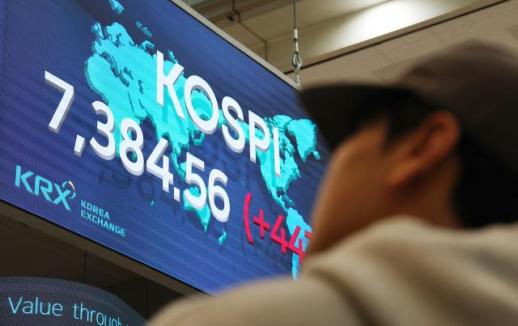 Stocks on unfettered rally, bonds dip as Seoul markets bet on inflation-driven rate hike SEOUL, May 6 (AJP) — The rationale for higher interest rates gained ground in South Korea as inflation, long subdued by lethargic demand, accelerated at the fastest pace in 21 months in April after the blockade of the Strait of Hormuz triggered a surge in imported prices, while the benchmark stock index nearly tripled from a year earlier to touch a new four-digit milestone. According to data released by the Ministry of Data and Statistics (MDAS) on Wednesday, consumer prices rose 2.6 percent year-on-year in April, breaking out of the months-long range around 2 percent. Fuel was the primary driver, as South Korea relies heavily on Middle Eastern crude and gas for energy and manufacturing. Petroleum prices alone soared 21.9 percent from a year earlier and 7.9 percent from the previous month, contributing nearly 1 percentage point to headline inflation. Gasoline prices jumped 21.1 percent year-on-year, while diesel prices surged 30.8 percent. Kerosene prices also climbed 18.7 percent. As fuel prices rose, transportation costs followed suit. International airfares climbed 15.9 percent from a year earlier. The Baltic Dry Index (BDI), a benchmark for global shipping rates, surged more than 27 percent from 2,140 on Feb. 27 — before the conflict escalated — to 2,730 as of May 1. Economic authorities say the impact of the blockade reached the domestic market with a time lag. While vessels that cleared the Strait of Hormuz in February arrived at Korean ports by late March, supply chains began rupturing in April as shipments were cut off. And the pain may only be beginning. “The squeeze from the blockade will be reflected in second-quarter data,” Lee Dong-won, director general of economic statistics at the Bank of Korea (BOK), said during a press briefing on first-quarter GDP growth on April 23. At the time, Lee said the modest 2.2 percent rise in March inflation was temporary. “The impact remained minimal through the first quarter as vessels that passed through the strait before the closure arrived in Korea by late March,” he warned. That warning has now become reality. International oil prices have continued to climb steadily. As of Wednesday afternoon, the three major oil benchmarks — West Texas Intermediate (WTI), Brent and Dubai crude — were all trading above $100 per barrel. Dubai crude, which accounts for about 70 percent of South Korea’s crude imports, has maintained its upward trend even after the United Arab Emirates (UAE) withdrew from OPEC and other members announced production increases. Given the tense tug-of-war between the United States and Iran over control of the strategic chokepoint, oil prices are unlikely to normalize anytime soon. The National Assembly Budget Office (NABO) estimated that South Korea’s economic growth could slow to 1.2 percent from its initial estimate of 2 percent if international oil prices remain above an annual average of $100 per barrel. It also projected inflation to average 2.9 percent, well above the central bank’s 2 percent target. Following stronger-than-expected 1.7 percent GDP growth in the first quarter and a red-hot streak in chip earnings and stocks, major investment banks have sharply raised their forecasts for Korea this year. JPMorgan Chase lifted its growth estimate to 3.0 percent from 2.2 percent, BNP Paribas raised its forecast to 2.7 percent from 2.0 percent and Citigroup increased its projection to 2.9 percent from 2.2 percent. Higher growth and inflation forecasts could further fuel inflation expectations at a time when price pressures are already becoming entrenched. Bond prices hit fresh annual lows on expectations that rates may move higher. The yield on the three-year government bonds retreated to 3.595 percent after hitting annual high of 3.641 percent in the morning while the ten-year yield ended at 3.932 percent after flirting close at 4.00 percent in earlier session, building pressure around the benchmark interest rate, which has stayed unchanged at 2.5 percent since May last year. Pessimists warn that the chip and stock frenzy may be overheating, particularly as leveraged investment accelerates. The KOSPI continued to stun markets, ending Wednesday up 6.45 percent at 7,384.56, outpacing the S&P 500 index’s Tuesday close of 7,259.22. “The prolonged Middle East war could lower South Korea’s economic growth rate by 0.9 percentage point,” Albert Park, chief economist of the Asian Development Bank (ADB), said during a press conference at the ADB annual meeting in Samarkand, Uzbekistan. The ADB nevertheless raised its growth forecast for South Korea to 1.9 percent from 1.7 percent earlier in April. 2026-05-06 16:45:00
 -
 Ace Bed Releases 'Omniscient Sleep View' Video With Science-Based Sleep Tips Ace Bed has released a street-interview video series, 'Omniscient Sleep View,' on its YouTube channel in collaboration with science communicator Orbit, aiming to offer practical, science-based advice to South Korean office workers struggling with sleep deprivation. The company said on the 6th that the content meets people on the street to hear their sleep concerns and suggest solutions. It focuses on office workers who feel a slump around 2 p.m. and on the everyday experiences of the MZ generation, capturing public reactions and on-the-spot conversations. Orbit appears as “Director Gwe,” head of a sleep science lab in Ace Bed’s TV commercial universe, 'ACE in the Strange Land of Science.' In the video, he meets office workers at Yeouido Park to analyze why they feel drowsy after lunch and to share tips for better sleep. At the Gyeongui Line Forest Park in Yeonnam-dong, he offers tailored guidance to young adults whose sleep patterns vary with different lifestyles. To keep the pace lively, the series includes a “Beat Director Gwe” game with passersby, a sleep-myth “this-or-that/OX” quiz, and a “five words, 30 seconds” segment designed to deliver key points quickly. During location changes, the video also introduces Ace Bed’s mobile “Sleep Engineering Research Lab” vehicle, presenting a service that uses advanced measuring equipment to recommend a customized bed. Ace Bed said its partnership with Orbit began in April 2024 on Orbit’s science YouTube channel, 'Unlikely Science.' The company later named him a brand model and released the August 2024 TV commercial 'The Sleep Formula Everyone Knows: Bed = Science,' followed by the March 2025 digital campaign ad 'The Law of Conservation of Good Sleep.' According to OECD statistics, South Koreans sleep about 6 hours and 30 minutes a day on average, placing them near the bottom among OECD member countries. The OECD average is 8 hours and 22 minutes. An Ace Bed official said the company planned the content to extend the sleep science it has explored with Orbit into everyday life and to share concerns many people can relate to. The official said the company hopes the mix of expertise and entertainment will help it connect more closely with customers.* This article has been translated by AI. 2026-05-06 16:42:17
 -
 Kurly to Sell 33 Billion Won in New Shares to Naver, Raising Stake to 6.2% Retail tech company Kurly is moving to deepen its partnership with Naver. Kurly said in a regulatory filing on the 6th that it will carry out a third-party allotment paid-in capital increase for Naver. Kurly will issue 498,882 new common shares at 66,148 won per share. Naver will subscribe to all of the newly issued shares, Kurly said. The issue price was set by mutual agreement based on Kurly’s most recent fundraising round, the company said. Based on that, Kurly’s overall valuation is estimated at about 2.8 trillion won. After the capital increase is completed, Naver’s stake in Kurly will rise to 6.2%. Kurly said it plans to use the 33 billion won raised to support mid- to long-term growth, including expanding logistics infrastructure, a key to delivery competitiveness, and funding new businesses. Kurly and Naver signed a strategic partnership in April last year and have expanded cooperation, including opening the “KurlyN Mart” grocery section on the Naver Plus Store in September of the same year. Kurly Nextmile, Kurly’s logistics subsidiary, handles dawn delivery for products sold through Naver Smart Store and Brand Store, the company said. Kurly CEO Kim Seul-a said, “With this investment as a turning point, the two companies plan to further strengthen cooperation as strategic partners and achieve meaningful synergy and rapid growth.” Kurly said its consolidated revenue last year rose 7.8% from a year earlier to 2.3671 trillion won. Operating profit came to 13.1 billion won, swinging to a profit from an 18.3 billion won operating loss a year earlier. Gross merchandise value increased 13.5% to 3.5340 trillion won. The company attributed improved profitability to balanced growth in its core fresh food business and its Beauty Kurly cosmetics unit, as well as results from KurlyN Mart. Samsung Securities said KurlyN Mart’s monthly transaction volume has increased by more than 50% each month since launch. * This article has been translated by AI. 2026-05-06 16:39:16
 -
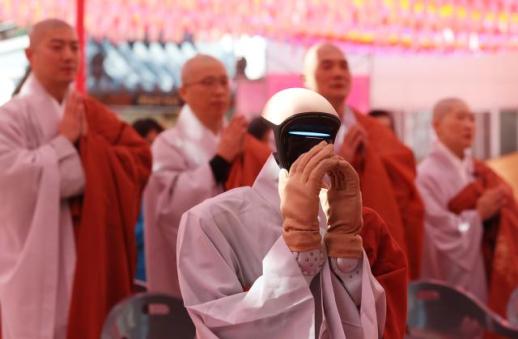 Robot Monk ‘Gabi’ Takes Buddhist Precepts at Seoul’s Jogyesa Temple "I will follow people well, not talk back, conserve energy and not overcharge." That was the pledge delivered by a humanoid robot monk named Gabi at a Buddhist Year 2570 (2026) "robot ordination ceremony" held May 6 in the courtyard in front of the main hall at Jogyesa Temple in Seoul. The remarks, which recast traditional Buddhist precepts through a robot’s perspective, drew a strong response from visitors, reflecting how artificial intelligence and advanced robotics are becoming new tools for outreach in religious circles. ◆ Gabi receives a Buddhist name, completes rites, and takes a ‘robot five precepts’ Gabi, a human-shaped humanoid robot, became the first in the Jogye Order to receive a Buddhist name — Gabi — and to complete the yeonbi rite. Instead of reciting standard doctrine, Gabi took what organizers called the "robot five precepts," blending the machine’s physical traits with Buddhist values. The promise to "follow people well and not talk back" was framed as humility and consideration for others. The vow to "not overcharge" likened battery charging to the teaching of curbing greed and being content with less. The message, organizers said, is that AI and robotics should be used with compassion, wisdom and responsibility. ◆ Religious groups embrace IT, with robots set to join lantern parade on May 16 Religious groups have been adopting advanced technology to broaden contact with younger people and international tourists. Recent examples include AI chatbots that recommend Buddhist sayings tailored to personal concerns and self-driving guide robots. Gabi is expected to appear next in central Seoul. The Jogye Order plans to have four robots that have received Buddhist names — including Gabi and fellow robots Seokja, Mohee and Nisa — take part in a large lantern parade scheduled for the evening of May 16 around the Jongno area. A Jogye Order official said, "In the AI era, even robots have become part of the community of monks and laypeople," adding, "We hope many citizens will join this lantern parade and, together with the robots, celebrate and offer prayers for Buddha’s Birthday." * This article has been translated by AI. 2026-05-06 16:37:15
 -
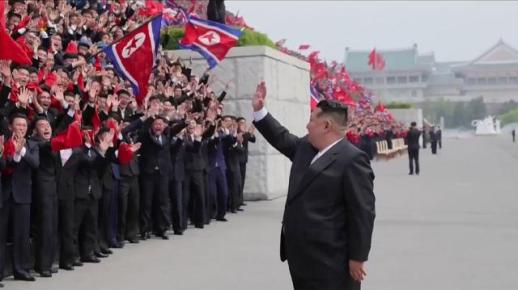 North Korea drops reunification references in revised constitution, consolidates leader's power SEOUL, May 6 (AJP) - North Korea has added a clause newly defining its territory and removed all references related to reunification with the South in its revised constitution, according to the Ministry of Unification here. In a press conference at the government complex in central Seoul on Wednesday, the ministry said North Korea has defined its territory as the land it shares borders with China and Russia to the north and South Korea to the south including its surrounding waters and airspace, instead of broadly describing the Korean Peninsula as a whole. Despite leader Kim Jong-un's earlier declaration of South Korea as a "main enemy" under his "two hostile states" policy in January 2024, in which he no longer considers the South as brethren to one day be reunified with, the revised constitution stopped short of labeling Seoul a "primary foe." But all references to reunification between the two Koreas, including terms like "peaceful reunification" and "national unity," have been eliminated from the constitution, effectively dropping the achievements of his grandfather and regime founder Kim Il-sung and his father Kim Jong-il. The constitution instead elevated the status and power of its current leader, designating Kim junior as "head of state" and placing him above the Supreme People's Assembly (SPA), the country's highest state organ, in the constitutional hierarchy. A new clause also grants him sole authority over the country's nuclear forces including the power to delegate that authority. It further stripped the SPA of its power to remove him from office, eliminating its nominal oversight role in state affairs. Notably, the constitution also dropped socialist welfare promises seen as unrealistic such as "free medical care" and "a country without taxes" as well as more aggressive ideological references including "imperialist aggressors" and "liberation from exploitation and oppression." In its list of those entitled to special state protection, which previously included "revolutionary fighters" and "honored veterans," it added "war heroes from overseas military operations," a phrase widely seen as referring to North Korean soldiers killed while assisting Russia in its war in Ukraine. Pundits say the latest revision appears to be intended to project the image of a "normal country." First adopted in September 1948, the constitution was amended five times before incorporating socialist ideologies in 1972, followed by about a dozen further amendments. 2026-05-06 16:34:08