
Journalist

Tom Stacey
-
 Stablecoin-Linked Stocks Jump in South Korea on U.S. CLARITY Act Hopes As the U.S. Congress moves toward taking up the CLARITY Act, a key digital-asset regulation bill, South Korea’s market for stablecoin-related plays is reacting quickly. Expectations that global rules will be clarified, along with domestic policy signals, have helped lift related shares and investor interest. According to the securities industry on the 22nd, investors are increasingly betting that if regulators set standards to classify assets as securities or commodities, regulatory uncertainty will ease and mainstream adoption will accelerate. Analysts also say that if oversight authority is clearly divided, institutional participation could increase and market restructuring could move faster. The mood has been reinforced by the release of guidance from the U.S. Securities and Exchange Commission, which market participants viewed as a more concrete policy signal. As the direction of global regulation becomes clearer, expectations have spread quickly in South Korea. Attention intensified after Shin Hyun-song, a candidate for Bank of Korea governor, said stablecoins “can coexist with central bank digital currency.” The remark was seen as a shift from the monetary authorities’ previously cautious stance, fueling expectations that institutional discussions could gain speed. With overseas and domestic factors converging, stablecoin-related shares have strengthened in South Korea, with buying focused on payments, fintech and blockchain-infrastructure companies. Funds have concentrated on names seen as potential policy beneficiaries, widening short-term volatility. Many in the market say the rally is not just a short-lived theme trade. They argue that if stablecoins take hold as payment and remittance infrastructure, they could drive broader structural change across the financial industry, supporting a longer-term growth narrative. Still, analysts caution that beneficiaries may differ depending on who issues stablecoins and how regulation is defined, and that expectations and uncertainty are likely to coexist until policy direction becomes clearer.* This article has been translated by AI. 2026-04-22 16:33:05
 -
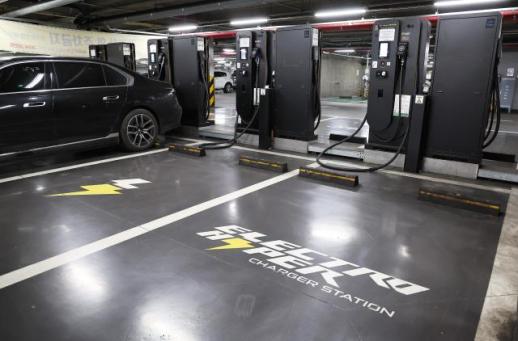 Korea auto industry calls for tax incentives as Chinese EV share hits 33.9 percent SEOUL, April 22 (AJP) — After dominating the rechargeable bus market, smaller electrified four wheels of Chinese origin are rapidly proliferating on South Korean roads. Chinese brands accounted for 33.9 percent of Korea's electric vehicle market in 2025, up sharply from 4.7 percent in 2022, according to a report presented at the Automobile & Mobility Industry Development Forum hosted by the Korea Automobile & Mobility Industry Association (KAMA) in Seoul. Over the same period, the share of domestically produced EVs fell from 75.0 percent to 57.2 percent, underscoring a rapid shift in market dynamics. The trend has accelerated further this year. In the first quarter, sales of Chinese EVs surged 286.1 percent from a year earlier to 25,000 units, outpacing the 126.1 percent increase in domestic EV sales, which reached 51,000 units. “Competition with low-priced Chinese EVs is intensifying in the domestic market,” KAMA Chairman Jung Dae-jin said. “A weakening production base could lead to a contraction of the broader industrial ecosystem and, in the long term, the hollowing out of domestic manufacturing.” Industry officials warned that the impact could extend beyond automakers, given the sector’s tightly integrated supply chain. “Erosion of the domestic production base could undermine the parts industry and affect employment stability,” said Lee Taek-sung, chairman of the Korea Auto Industries Coop. Association (KAICA), calling for tax incentives to support local manufacturing. Experts said China’s edge is expanding beyond pricing into next-generation vehicle technologies. “Chinese EVs combine strong cost advantages with rapid progress in technologies such as software-defined vehicles and autonomous driving,” said Cho Chul, a senior researcher at the Korea Institute for Industrial Economics and Trade. He called for coordinated efforts by the government, industry and labor to lower domestic production costs through R&D support, tax incentives and infrastructure investment. Major economies have already adopted production-linked support measures. The United States has introduced incentives under the Inflation Reduction Act, Japan has incorporated EVs into its domestic manufacturing tax credit schemes, and the European Union has rolled out the Net-Zero Industry Act. “Without a comparable framework, there is a real risk that Korea’s global competitiveness will erode,” said Song Dong-jin, managing partner at The Wiz Law Firm, urging tax credit programs to encourage companies to maintain production onshore. 2026-04-22 16:30:27
 -
 Samsung Biologics Q1 revenue tops 1.2 trillion won; operating profit 580.8 billion won Samsung Biologics said it extended its growth streak in the first quarter, starting the year strongly as it targets annual revenue of 5 trillion won. The company reported first-quarter revenue of 1.2571 trillion won and operating profit of 580.8 billion won, it said in a regulatory filing on the 22nd. Revenue rose 25.8% from a year earlier and operating profit increased 35%. Samsung Biologics maintained its full-year revenue growth guidance of 15% to 20%, citing full utilization at Plants 1 through 4 and a ramp-up at Plant 5. The outlook, first presented in January, does not include any revenue contribution from its acquisition of a manufacturing site in Rockville, Maryland. The company said it plans to provide updated guidance reflecting that deal later. As of the end of the first quarter of 2026, Samsung Biologics reported assets of 11.9950 trillion won, equity of 7.9228 trillion won and liabilities of 4.0722 trillion won. It said its balance sheet remained stable, with a debt-to-equity ratio of 51.4% and a borrowing ratio of 11.6%. The company also reported steady order activity across contract manufacturing (CMO) and contract development (CDO). Cumulative orders since its founding totaled 112 CMO deals and 169 CDO deals, with cumulative contract value reaching $21.4 billion, it said. Samsung Biologics said it is expanding global production capacity. It completed the acquisition of the Rockville facility at the end of March, securing local staff and infrastructure and building a continuous production system. It said it is also strengthening order competitiveness through closer coordination with global drugmakers. The company said it has enhanced its service portfolio by bringing master cell bank production and vector construction in-house, enabling an end-to-end service that can move from vector build to an IND submission within nine months. It also said it secured flexible production capacity through the CEPI network to improve its ability to respond to global public health crises. Despite the strong results, labor risk was cited as a potential burden. The Samsung Biologics Mutual Growth Labor Union held a rally on the 22nd and stepped up pressure in wage and collective bargaining talks. Labor and management have held 13 rounds of negotiations since December but have not reached an agreement. The union said it plans a large-scale strike on May 1 if differences are not narrowed. Market participants have raised concerns that a strike could disrupt production and increase earnings volatility. Samsung Biologics posted 2025 revenue of 4.5570 trillion won, up 30.3% from a year earlier, and has set a 2026 revenue target of 5.3200 trillion won. A bio industry official said, "If the union goes ahead with a strike, disruptions to the May production schedule are unavoidable," adding, "We cannot rule out penalties for contract violations with global clients and potential damage to trust."* This article has been translated by AI. 2026-04-22 16:30:20
 -
 LIG D&A Signs First Export Deal for Haegung Naval Missile With Malaysia South Korea’s shipborne guided weapon system Haegung will be exported for the first time. LIG D&A and Malaysia’s Defense Ministry signed a supply contract for Haegung on Tuesday at the DSA 2026 defense exhibition in Kuala Lumpur, the company said. The deal, Haegung’s first overseas export, is worth $94 million (about 140 billion won). The missile is to be installed on Malaysia Navy littoral patrol vessels built by Turkish defense company STM. Haegung is a domestically developed ship-to-air missile designed to intercept a range of aerial threats, including anti-ship guided missiles and aircraft. Led by the Agency for Defense Development, the system was developed in 2011 and later deployed by the South Korean Navy, where it established reliability during force modernization. It is assessed as a system that can replace or complement close-in weapon systems. LIG D&A says Haegung’s key strength is accuracy. Using a dual-mode seeker, it can track targets steadily even in electronic-warfare conditions or amid complex interference. “Accuracy directly maximizes a ship’s survivability, so it is seen as an effective weapon system in Malaysia,” said Hong Jun-gi, a senior manager at LIG D&A. Korean air defense systems that have already posted results in the Middle East also drew attention from Southeast Asian countries. Cheongung-II, which has been evaluated as having proven performance through exports to the Middle East and operational use, was among the exhibition’s key items. It is cited for layered defense that can respond to aircraft and ballistic missiles at the same time, operational efficiency and price competitiveness. Hong said demand from Southeast Asian countries is growing for Cheongung-II as “an effective weapon system that can intercept aircraft and ballistic missiles simultaneously, along with high accuracy.” Korean defense firms also highlighted naval platforms. The Malaysia Navy is pursuing a project this year to acquire two multi-role support ships, and HD Hyundai Heavy Industries used the exhibition to begin its bid. The company’s proposed ship is about 11,000 tons, about 154 meters long and 24 meters wide. It can operate two helicopters at the same time and carry troops, armored vehicles and supplies needed for amphibious operations. The platform is presented as suitable for Southeast Asia’s mixed security needs, including troop transport, amphibious operations, disaster relief and humanitarian assistance. “The advantage is strong combat power and amphibious capability, including the ability to carry at least 18 armored vehicles and move more than 140 troops at once for operations,” said Park Yong-yeol, vice president and head of HD Hyundai Heavy Industries’ naval ship business division. Beyond the multi-role support ship, the company proposed coastal mission ships, coastal combat ships, next-generation patrol vessels and submarines, and delegations from the Philippines and Thailand also visited the booth.* This article has been translated by AI. 2026-04-22 16:27:18
 -
 BIGBANG Opens Official b.stage Fan Community Ahead of August World Tour 그룹 빅뱅(BIGBANG)이 데뷔 20주년을 맞아 글로벌 팬덤 플랫폼 비스테이지(b.stage)에 공식 팬 커뮤니티를 열고 팬들과의 소통 강화에 나섰다. 오는 8월 월드투어를 앞두고 그룹 활동의 구심점을 마련한 셈이다. 22일 YG엔터테인먼트에 따르면 빅뱅은 지난 21일 데뷔일인 8월 19일을 상징하는 오후 8시 19분에 맞춰 비스테이지에 공식 팬 커뮤니티와 사회관계망서비스(SNS) 채널을 동시에 오픈했다. YG 측은 “오는 8월부터 월드투어를 예정하고 있는 만큼 팬들과 소통하며 더욱 뜻깊은 20주년을 만들어 나가고 싶다는 멤버들의 의지가 컸다”며 “이 채널을 통해 빅뱅이라는 이름으로 팬들의 마음에 더욱 가까이 다가설 것”이라고 밝혔다. 이번 커뮤니티는 멤버들이 그룹 활동 소식과 콘텐츠를 팬들에게 직접 전하고, 팬들 역시 게시판을 통해 자유롭게 소통할 수 있는 공간으로 운영된다. 향후 글로벌 투어를 비롯한 20주년 프로젝트 관련 공식 소식과 다양한 혜택도 순차적으로 공개될 예정이다. 빅뱅 멤버 지드래곤, 태양, 대성은 이미 각자의 솔로 활동을 통해 비스테이지에서 공식 팬 커뮤니티를 운영해왔다. 이번 그룹 커뮤니티 역시 같은 플랫폼에 오픈하면서 솔로 활동과 그룹 활동을 하나의 공간에서 이어갈 수 있게 됐다. 소통을 위한 첫 콘텐츠로는 새로운 로고 모션 영상이 공개됐다. ‘BIGBANG’과 ‘20TH ANNIVERSARY’ 문구를 담은 영상에는 코첼라 현장에서 촬영한 세 멤버의 뒷모습도 포함됐다. 빅뱅은 지난 12일과 19일(현지시간) 미국 캘리포니아에서 열린 ‘2026 코첼라 밸리 뮤직 앤드 아츠 페스티벌’ 무대에 올라 약 67분간 17곡을 선보였다. ‘뱅뱅뱅’, ‘판타스틱 베이비’, ‘하루하루’ 등 대표곡과 함께 태양의 ‘링가 링가’, 지드래곤의 ‘파워’, 대성의 ‘한도초과’ 등 솔로 무대도 펼쳤다. 해외 매체도 호평했다. 빌보드는 “관객들을 K팝의 황금기로 완벽히 소환했다”고 했고, 포브스는 빅뱅을 “K팝의 황제”라고 치켜세우며 귀환을 반겼다. 특히 빅뱅은 지난 19일 공연에서 오는 8월부터 월드투어를 시작한다고 공식 발표했다. 2017년 ‘라스트 댄스(LAST DANCE)’ 이후 9년 만에 빅뱅이라는 이름으로 선보이는 공연이다. YG엔터테인먼트는 “완벽한 공연을 만들기 위해 스태프 모두 최선을 다하겠다”고 밝혔다. 한편 비스테이지 관계자는 “K팝의 역사를 써온 빅뱅과 솔로에 이어 그룹 활동까지 비스테이지를 팬 소통 거점으로 제공하게 돼 기쁘다”며 “20주년이라는 특별한 해에 전 세계 팬들이 하나의 공간에서 모이고 앞으로 펼쳐질 글로벌 투어와 다양한 프로젝트를 함께 경험할 수 있도록 최선을 다해 지원하겠다”고 전했다. 2026-04-22 16:22:30
 -
 Yulchon, OnYul conference examines nonprofit regulation, governance and social value metrics Yulchon LLC, the OnYul public-interest foundation and the Social Value Institute held the third Yulchon-OnYul Public Interest Legal System Conference at 2 p.m. April 21 at Yulchon’s lecture hall in Seoul’s Gangnam district. The three organizations have hosted an annual conference since 2024, selecting topics aimed at improving public-interest legal frameworks. This year’s agenda focused on legal and legislative issues surrounding the permit-based system for establishing nonprofit corporations, legislative tasks to improve nonprofit governance, and ways to expand and institutionalize the measurement and compensation of social value. The event opened with remarks from the heads of the co-hosting organizations. Lee In-yong, co-chair of OnYul, said it has become difficult to ignore criticism that laws and institutions are acting as barriers rather than safeguards for people seeking to engage in public-interest work. He said he hoped the discussions would help spur legal and legislative improvements. Kang Seok-hoon, managing partner at Yulchon, said the public-interest ecosystem has been unable to fully exercise autonomy and creativity under an outdated legal system and excessive regulation that has been in place for more than half a century. He said Yulchon and OnYul would work together as partners in reform. Na Seok-kwon, head of the Social Value Institute, cited a remark attributed to Michelangelo about freeing an angel from marble while creating the statue of David. He said he hoped the conference would help chip away at entrenched practices and rigid interpretations to enable major achievements in solving social problems. Discussions then continued in three sessions. In the first session, on legal issues and legislative tasks related to the permit system for establishing nonprofit corporations, Lee Dong-jin, a professor at Seoul National University School of Law, presented arguments that the permit requirement under Article 32 of the Civil Act is unconstitutional. Attorney Lee Hee-sook of the Dongcheon Foundation presented legislative alternatives centered on creating a public-interest commission. Lee Dong-jin cited the Constitution’s Article 21(2), which explicitly bans prior permission for associations, and noted that major countries including Germany, France and Japan have already shifted to a rules-based system. Lee Hee-sook said reform should go beyond simply abolishing the permit system, proposing a new legal framework that would establish a public-interest commission to integrate authorization, support and oversight of public-interest corporations. The session followed a December ruling in which the Seoul Administrative Court referred a constitutional review of Article 32 to the Constitutional Court (2025Hun-Ga20). A panel discussion, moderated by Yulchon attorney Yoon Yong-seop, included Kim Deok-san, chairman of the Korea Public Interest Corporation Association; attorney Jeong Soon-moon of The Ham Law Firm; OnYul attorney Jeon Gyu-hae; and Kim Da-hye, a senior official in the Justice Ministry’s Legal Review Office. Panelists raised concerns about the permit system and exchanged views from their respective positions. The second session addressed legislative tasks to improve nonprofit governance. Bae Won-gi, head of the Nonprofit Organization Evaluation Institute, introduced overseas governance systems, including the U.S. intermediate sanctions regime, the U.K. Charity Commission model, and Japan’s requirement for councils for foundation corporations, and discussed directions for improving Korea’s system. Kim Jeong-yeon, a professor at Ewha Womans University School of Law, outlined limits in current nonprofit regulation and public oversight tools. She presented tasks for rebuilding legal models, including codifying directors’ duty of loyalty, introducing shareholder-style derivative suits, and revising the Public Interest Corporation Act. A discussion moderated by Lim Seong-taek, a director of the Duru foundation, featured Baek Dong-ho of Korea GuideStar; Park Dong-soon of the Korea YWCA; Yoon Hwan-cheol of the Mirae Nanum Foundation; and Kim Hyun-joo of the social welfare corporation Together Walking Children, who discussed governance improvements from the field perspective. The third session took the form of a talk concert on expanding and institutionalizing social value measurement and compensation. It was moderated by Jeong Myeong-eun of the Social Value Institute, with panelists Yoo Mi-hyun of the institute; Kim Young-sik, secretary general of the National Council of Local Governments for Social Solidarity Economy; Kwak Je-hoon, CEO of Pan-Impact Korea; and attorney Lee Seon-min of Duksu Law Firm. The panel reviewed the legislative progress and significance of the Framework Act on Social Solidarity Economy, which was expected to pass the plenary session, and assessed the past decade of performance-based support models, including Social Impact Bonds (SIB) and Social Performance Compensation (SPC). Yoo said the Social Performance Compensation program has, since 2015, paid 76.9 billion won in incentives in proportion to 536.4 billion won in social performance created by 468 companies, and that it has led to policy shifts by local governments including Hwaseong. Kwak cited an SIB case supporting children with borderline intellectual functioning, arguing that innovations difficult under process-focused administration can be achieved through performance-based approaches. Kim Young-sik said some activities that address social problems are inherently difficult to measure, and argued against treating performance-based support and grant funding as a strict either-or choice, calling instead for diversification depending on circumstances. Lee Seon-min pointed to issues that must be resolved in legislation, including the objectivity of social value measurement, who bears measurement costs, and how to ensure fairness. Yulchon, OnYul and the Social Value Institute said they plan to continue related work so that the conference discussions can lead to a legislative roadmap in preparation for a possible unconstitutional ruling on the nonprofit permit system, institutional changes to improve public-interest corporation governance, and the institutionalization of social value measurement after enactment of the Framework Act on Social Solidarity Economy. * This article has been translated by AI. 2026-04-22 16:21:19
 -
 US Military Seeks to Triple Drone and Air Defense Spending in FY2027 Budget After Iran War The U.S. military is pushing a fiscal 2027 defense budget that would sharply increase investment in drones, air defenses and missile capabilities, citing lessons from the Iran war. The Pentagon plans to raise spending on drones and related technologies to more than $74 billion — about triple previous levels — and to put more than $30 billion into securing key munitions such as missile-intercept systems, The Associated Press reported on April 21. The proposal would significantly expand funding for drones and counter-drone systems. It allocates about $54 billion for military drones and related technology and $21 billion for weapons designed to shoot down enemy drones. AP said the wars in Ukraine and Iran have underscored the growing role of drones and unmanned systems, and the U.S. military is arguing for a major budget increase in that area. In munitions, the Pentagon highlighted replenishing stocks of Patriot and Terminal High Altitude Area Defense, or THAAD, interceptors. The systems can be used against ballistic missiles as well as low-cost drones, and stockpiles were reported to have fallen sharply during the war. The plan also includes procurement of the Army’s long-range precision strike missile and a midrange strike capability. The Navy plans to increase Tomahawk cruise missile procurement to 785 from 55 last year, though limited production capacity was cited as a constraint. The Air Force plans to invest about $600 million to develop low-cost munitions that can be mass-produced instead of relying on expensive precision weapons. “We want to shift from a small number of high-performance weapons to an approach that can overwhelm the enemy with volume,” said Frank Verdugo, the Air Force’s budget chief. The budget proposal also includes adding 44,500 troops and spending more than $2 billion on operations at the U.S.-Mexico border. The Navy plans to spend more than $65 billion to acquire 18 additional ships. A battleship construction program promoted by President Donald Trump was not included in this proposal and is expected to be addressed in next year’s budget. Repair costs for U.S. bases in the Middle East are expected to be requested through a separate budget later. Todd Harrison, a senior fellow at the American Enterprise Institute, said the budget is aimed at building a force that could prepare for a large-scale war with countries such as Russia and China. He said it “looks more similar to the defense strategy under President Biden than to the Trump administration’s strategy.”* This article has been translated by AI. 2026-04-22 16:19:36
 -
 South Korea Justice Ministry, Seoul National University Hold Forum on 2030 Immigration Strategy South Korea’s Justice Ministry said it is shifting immigration policy away from a focus on low-skilled, low-wage labor and toward a national strategy to attract talent, as the country confronts a low birthrate and an aging population. The ministry said it held a joint forum with Seoul National University on Tuesday at the university’s Graduate School of Public Administration to discuss a “2030 immigration policy future strategy.” The event was designed to map out practical steps to carry out the strategy announced in March, covering the full process from bringing in highly skilled foreign workers to helping them settle and supporting social integration. Participants discussed four main topics: scientifically designing the scale of foreign inflows and wage standards; visa policy directions to secure overseas talent; upgrading social integration policy; and establishing a dedicated organization and infrastructure for immigration and border policy. The ministry said discussions centered on moving beyond simply filling labor shortages by using data to plan admissions more precisely and building an organizational foundation to help newcomers become part of Korean society. Justice Minister Jeong Seong-ho said the forum would serve as “a foundation for South Korea’s future” in immigration and border policy. He said advancing the strategy would contribute to the economy and produce changes the public can feel. The ministry said it will continue pursuing immigration policies that support economic activity and regional development while balancing social integration with protection of foreigners’ human rights.* This article has been translated by AI. 2026-04-22 16:18:44
 -
 Vietnam Emerges as a ‘Second Home Market’ for South Korean Food Companies South Korean food companies are stepping up investment in Vietnam, a country of about 100 million people, treating it as a “second home market” by expanding local production and tailoring products for Vietnamese consumers. Backed by annual growth in the 6% range and a large young consumer base, the companies aim to strengthen their foothold while using Vietnam as an export base. Industry officials said April 22 that major South Korean food makers have expanded in Vietnam since the late 1990s, drawn by its growth potential. Vietnam’s 2025 economic growth rate was provisionally estimated at about 8.02%, and per capita GDP was about $5,026, placing it in the upper-middle-income category. With the middle class projected to reach 75% of the population by 2030, companies are shifting from simple exports to strategies centered on local manufacturing to gain market share. Daesang, which established a local unit in 1994, is accelerating a shift from bio and starch sweeteners into a broader food business. In 2016, it entered Vietnam’s meat-processing market by acquiring local company Duc Viet Food, the first such move by a South Korean food company. Daesang has since expanded its base, maintaining the top market share in Vietnam’s seaweed products and strengthening its K-food lineup, including tteokbokki and kimchi seasoning. Daesang’s Vietnam sales totaled 235.9 billion won last year, nearly double the 2018 level. It recently invested 30 billion won to expand its Hai Duong and Hung Yen plants, boosting capacity. Orion, which set up its Vietnam unit in 2005, has focused on localization for nearly 20 years. Using marketing tied to the local concept of “Tinh,” and products tailored to local tastes — including “Bong Bang,” inspired by traditional folktales, and the rice snack “An” — Orion posted 514.5 billion won in sales in 2024, topping 500 billion won for the first time. Orion has designated Vietnam as a key market in its “post-China” strategy and is investing a total of 130 billion won. It plans to expand its Yen Phong plant in Hanoi and build a third factory scheduled for 2026, lifting local production capacity to the equivalent of 900 billion won. Ramen makers are also intensifying their push. Vietnam leads the world in per capita instant noodle consumption, at 81 servings in 2024. Paldo completed a second factory in Tay Ninh province in southern Vietnam in 2024, building a system that can produce 700 million ramen units a year across its two plants. Paldo plans to keep expanding the second plant and use Vietnam as a production and export hub and a springboard into other Southeast Asian markets. Ottogi operates two manufacturing plants, in Binh Duong near Ho Chi Minh City and in Bac Ninh in the north. It has sustained average annual growth of more than 18% over the past five years and posted 89 billion won in sales last year. The company produces about 770 items, including “Mini Jin Ramen” and “Oppa Ramen,” reflecting local eating habits. It has also obtained halal certification and is moving to expand exports to Muslim markets. In alcoholic beverages, HiteJinro is making a major bet. Vietnam was HiteJinro’s first export market for soju, and about 60% of soju exported from South Korea to Vietnam is HiteJinro products. The company is building its first overseas production plant in Thai Binh province, targeting completion this year. Designed as a smart factory and covering an area about 11 soccer fields, the plant is expected to produce up to 5 million cases of soju a year. HiteJinro aims to improve logistics efficiency and cost competitiveness through local production and extend Jinro’s dominance — the top-selling distilled spirit brand in Vietnam — across Southeast Asia. “Vietnam has cultural similarities with Korea and a solid base of food consumption, so barriers to entry are relatively low,” an industry official said. “Securing cost competitiveness through local production and close-to-market marketing is raising Vietnam’s value as a forward base for global expansion.” 2026-04-22 16:16:01
 -
 Park Hong-geun says government's 'Vision 2045' plan will differ from past strategies Minister Park Hong-geun of the Ministry of Planning and Budget said April 22 that the government’s mid- to long-term national development strategy, “Vision 2045,” being prepared for release by year’s end, will “clearly differentiate itself from existing mid- and long-term plans.” Park made the remarks at a full meeting of the 7th Mid- to Long-Term Strategy Committee at the Korea Press Center in Jung-gu, Seoul. It was his first time attending the committee since taking office. He said South Korea is facing “complex and structural crises,” including a major shift driven by artificial intelligence, low growth, the climate crisis and regional population decline. Responding to structural problems, he said, requires setting clear directions and goals and pursuing them consistently. Park also cited “Vision 2030,” announced in 2006, saying it produced results that carried into actual policies such as child allowances and the earned income tax credit, but had limits, including in its timing and fiscal investment plans. “It is important to build a mid- to long-term national development strategy that looks 20 to 30 years ahead through a whole-of-government approach by bringing together the public’s capabilities,” Park said. He added that detailed steps for policy tasks now being discussed by the 7th committee will later be reflected in the national strategy. Kwon Oh-hyun, chair of the 7th committee, said the current system was effective through the industrialization era and in helping the country join the ranks of advanced nations, but has limits in enabling a leap to become a global leading country. He urged the government to step up regulatory reform.* This article has been translated by AI. 2026-04-22 16:14:56