
Journalist

Tom Stacey
-
 KOTRA Steps Up Support for Korean Shipbuilding Equipment Firms Entering Japan Japan’s shipbuilding industry is accelerating its shift to greener and more digital operations under a government-led rebuilding drive, opening more opportunities for South Korean marine equipment suppliers. The Korea Trade-Investment Promotion Agency, known as KOTRA, said April 21 it will join the city of Busan and the Korea Marine Equipment Association, or KOMEA, at “Sea Japan 2026,” running from April 22-24 in Japan, to operate a pavilion showcasing top Korean marine equipment products. KOTRA also published a report titled “Japan’s Shipbuilding Revival Policy and Market Entry Opportunities.” KOTRA said the push is aimed at helping Korean firms respond to changes driven by Japan’s shipbuilding reconstruction policy. Japan held about half of the global shipbuilding market in the 1970s, but its share fell to 5.4% last year as South Korea and China rose. Japan’s government drew up a “Shipbuilding Industry Revitalization Roadmap” in 2025, calling for shipbuilding capacity to double to 18 million gross tons by 2035, alongside large-scale investment in digitalization and decarbonization. Under that policy direction, Japanese shipbuilders are stepping up investment in production automation, autonomous navigation technology and development of eco-friendly vessels, KOTRA said. With mandatory implementation of a greenhouse gas emissions trading system starting in April this year, demand is rising quickly for carbon-reduction equipment and propulsion systems based on hydrogen, ammonia and LNG. Structural pressures are also reshaping the market. Japan’s shipbuilding sector faces labor shortages and aging facilities, driving demand for robots, data-driven operations and equipment that improves maintenance efficiency. KOTRA said this is expanding openings for Korean companies with strengths in areas such as AI-based ship safety management and smart design and maintenance solutions. At Sea Japan 2026, KOTRA will hold product displays and business consultations with 20 Korean companies. The pavilion will feature AI-based safety management systems, eco-friendly ship equipment, and design and maintenance solutions, with KOTRA aiming to support export results through networking and B2B meetings with global buyers. Sea Japan is Japan’s largest shipbuilding and maritime exhibition, bringing together global companies and experts across shipbuilding, shipping and marine equipment, and is seen as a key platform for entering the market. KOTRA Vice President Kim Kwan-mook said Japan’s roadmap “is an opportunity for South Korea and Japan to respond together to changes in the global maritime industry,” adding that KOTRA will continue supporting Korean marine equipment companies seeking to expand into Japan. 2026-04-21 14:15:27
 -
 Severance University Hospital reaches 50,000 robotic surgeries, setting global milestone SEOUL, April 21 (AJP) - Severance University Hospital said Tuesday it has performed 50,000 robot-assisted surgeries, becoming the first single institution in the world to reach the milestone. It comes about 28 months after it hit 40,000 cases, having reached 10,000 in 2013, 20,000 in 2018, and 30,000 in 2021 since pioneering robotic surgery in South Korea in 2005. According to the hospital in Seoul, 12 surgical robots and two training robots are in use, five of which are single-port models suited for procedures in narrow, deep areas such as oral cancer resections, while also helping reduce pain and scarring. Robotic surgery is most commonly used in urology, thyroid, and gastrointestinal procedures, with thyroid surgery being the most frequent. The hospital also published about 196 research papers on robotic surgery from 2014 to 2023, with about 2,300 medical professionals from 43 countries completing its training programs. "We will endeavor to enhance our services with patient-tailored treatment based on advanced surgical technology and clinical research," said the hospital's president, Lee Kang-young. Robots once merely assisted surgeons, but they are increasingly being used throughout entire surgical procedures from the initial incision to the final stitches, playing a larger role by enabling delicate, precise movements that reduce the risk of infection and shorten surgery time. 2026-04-21 14:14:41
 -
 Mobis Shares Slide 12% After Being Named an Unfaithful Disclosure Company Shares of KOSDAQ-listed Mobis fell sharply in intraday trading after the company was designated an unfaithful disclosure company, a sanction tied directly to investor trust and seen as weighing on sentiment. As of 1:55 p.m. on the 21st, Mobis was trading at 4,955 won, down 685 won, or 12.15%, from the previous session. The Korea Exchange said the day before that it had designated Mobis as an unfaithful disclosure company for reversing a disclosure. The case involved the termination or cancellation of a stock transfer agreement that would have entailed a change in the company’s largest shareholder. Mobis first disclosed the matter on Dec. 2 last year, then filed a reversal disclosure on Jan. 26 this year, prompting controversy over the reliability of its disclosures. After a designation notice on Feb. 25, the exchange finalized the unfaithful disclosure designation on the 21st. The company received 5.0 penalty points and a 4 million won fine for the disclosure violation. The penalty points were initially set at 6.0, but 1.0 point was replaced with a monetary penalty. Mobis operates in computer programming and systems integration and management. Revenue at the end of last year totaled 5,097.70 million won, little changed from the end of 2024 at 5,026.43 million won. Operating losses widened to 2,935.21 million won at the end of last year, compared with 2,393.80 million won at the end of 2024 and 2,133.50 million won at the end of 2023. Net profit also remained in the red, with a net loss of 1,052.60 million won at the end of last year. * This article has been translated by AI. 2026-04-21 14:12:44
 -
 Korea Tourism Organization Names Min Byeong-seon as Tourism Industry Division Head Korea Tourism Organization said on 21 it appointed Min Byeong-seon, former chairman of the Suwon Convention Center, as its new executive director and head of the Tourism Industry Division. Born in 1972, Min graduated from Chungju High School and earned a sociology degree from Sungkyunkwan University. He began his career in 2000 as a reporter at The Korea Times and later worked as a reporter at The Dong-A Ilbo. He also served as a media adviser in the Gyeonggi Province spokesperson’s office, a public relations and cooperation officer at Gyeonggi Housing & Urban Corporation, and chairman of the Suwon Convention Center. The following is the list of personnel appointments. ◇Korea Tourism Organization △Appointments ▷Min Byeong-seon, head of the Tourism Industry Division (executive director) ▷Kim Young-mi, head of the Tourism AI Innovation Division (executive director) △Promotions and transfers <Division heads> ▷Park Yoon-sook, head of the Management Innovation Division ▷Yang Kyung-soo, head of the International Tourism Division ▷Park Jung-woong, head of the Domestic Tourism Division <Office directors> ▷Kim Kyung-ju, director of the ESG Management Office ▷Kim Kwan-mi, director of the Tourism Business Support Office ▷Lee Young-geun, head of the Jeju branch <Team heads> ▷Lee Jun-ho, budget team head 2026-04-21 14:08:47
 -
 U.S., Cuba Resume Talks Amid Tensions; Meeting Held in Havana This Month The United States and Cuba, long at odds over sweeping U.S. economic sanctions including restrictions on energy shipments, held bilateral talks in Havana earlier this month, according to reports. Reuters reported that a U.S. State Department official confirmed the meeting took place April 10 in the Cuban capital. It was the first visit to Cuba by a U.S. delegation since 2016. The official said the delegation again stressed that Cuba’s economy is rapidly deteriorating and that there is little time left to carry out key U.S.-backed reforms before conditions worsen beyond repair. The official added that President Trump is committed to pursuing a diplomatic solution if possible, but would not allow Cuba’s leadership to ignore U.S. concerns and let the country become a serious security threat. The U.S. side was reported to have proposed allowing Starlink satellite internet, compensation for U.S. individuals and companies whose assets were seized after the 1959 revolution, the release of political prisoners and expanded political freedoms. The delegation also raised concerns about growing influence by foreign powers in Cuba. Alejandro Garcia del Toro, deputy director for U.S. affairs at Cuba’s Foreign Ministry, said the U.S. delegation included officials at the assistant secretary level, while Cuba was represented by vice ministers. Garcia del Toro said there were no deadlines or threats and that the talks were conducted in an overall respectful atmosphere. He said Cuba’s top priority was lifting what he called the U.S. energy blockade. He described the measure as unjustifiable economic punishment of the Cuban people and “a kind of global intimidation” of countries that, under free-trade principles, have the right to export fuel to Cuba. Reuters said the meeting signaled the two countries could still reach a diplomatic agreement, even after President Trump suggested possible military action against Cuba following the capture of Venezuela’s Nicolas Maduro in January. Since taking office, Trump has repeatedly spoken of the need for regime change in Cuba and has pursued a hard-line policy, including an oil blockade. On March 28, he again suggested the possible use of force, saying, “Anyway, Cuba is next,” after Venezuela and Iran. Cuban President Miguel Diaz-Canel said April 16 that the country must prepare for the possibility of a U.S. military invasion, adding, “If it cannot be avoided, we will repel it.” 2026-04-21 14:08:03
 -
 Seoul to Develop Chang-dong as K-Entertainment Hub Around 28,000-Seat Seoul Arena An area around Chang-dong in Seoul’s Dobong district will be redeveloped into a global cultural hub and a cluster for the culture and entertainment industry, centered on the 28,000-seat Seoul Arena set to open in the first half of next year. Seoul Mayor Oh Se-hoon announced the plan at a news briefing at City Hall on April 21. The city aims to draw domestic and overseas visitors to boost the local economy and create jobs by fostering the entertainment industry, positioning Chang-dong as an economic anchor for northeastern Seoul. “Chang-dong, long seen as the outskirts of Seoul, will be reborn as a stage the world comes to — ‘K-Enter Town, Chang-dong,’” Oh said. “It will be a new engine driving Seoul’s next growth and a starting point for urban competitiveness that brings vitality to northern Seoul.” The city said the project will build Chang-dong into a place where performances run year-round, where concerts expand into industry and jobs, and where events translate into tourism and spending. Officials said they expect economic effects in the trillions of won, extending beyond ticket sales to lodging, transportation, dining and shopping. Chang-dong is to be promoted as a “Live Stage” city, with global concerts and exhibitions throughout the year. The city plans to host more than 100 performances annually at Seoul Arena, each drawing about 30,000 people. It also plans to introduce a live-broadcast system, dubbed “Connective Live,” so people outside the venue can watch and share performances in real time. Oh said the arena’s opening could bring about 2.7 million global tourists to Chang-dong each year, calling it a key driver for Seoul’s push toward an era of 30 million foreign tourists. The city also plans programs and performances linked to cultural sites in northern Seoul, including the Dongdaemun Design Plaza and the “Dongdaemun K-pop Street,” to spread the project’s impact across the broader northeastern area. Events tied to Seoul’s seasonal Spring Festival are also planned to coincide with the arena’s opening. Nearby facilities — including the Seoul Museum of Photography, the Seoul Robot and AI Science Museum, and cultural spaces under the elevated structure near Chang-dong Station — are to run exhibitions and hands-on programs on an ongoing basis. A “multi-purpose cultural convention” facility inside the arena complex is planned to host music awards, album showcases and fan meetings. To encourage spending, the city plans K-culture-themed retail facilities within the district. Working with the privately developed Chang-dong station complex, it plans to support shopping tied to K-fashion and K-beauty, including merchandise. A K-food specialty market is planned for the site of an NH Hanaro Mart. For underused land near Chang-dong Station and aging commercial areas, the city plans incentives including floor-area ratios of up to 1,300% to bring in commercial uses, tourist accommodations and office space. The city also plans to attract and nurture culture and entertainment companies. A public-run support facility for popular music will provide assistance for music content production and distribution, targeting smaller agencies and other high-potential firms. Startup space is also planned at the Chang-dong Aurne startup center and the Seed Cube Chang-dong cultural industry complex. Across the Jungnang Stream in the Sanggye area, the city said it will also seek culture-industry tenants for the Seoul Digital Bio City (S-DBC) under development, allowing performance and entertainment firms alongside bio-related businesses to strengthen links between Chang-dong and Sanggye. To help visitors handle lodging, leisure and dining within the district, the city plans to expand infrastructure under a “Live City” concept. It plans to add 700 hotel rooms and promote urban homestay businesses using nearby housing. Chang-dong Station is also expected to add “Seoul Arena Station” or “K-Enter Town Station” as an additional name to improve access and brand recognition. The city put the total budget for the “K-Enter Town, Chang-dong” project at 2.7 trillion won. It said 2 trillion won in private and public capital had been invested through last year, and it plans an additional 700 billion won starting this year. “The essence of growth and change in northern Seoul, including K-Enter Town, Chang-dong, is improving the quality of life for residents in northern Seoul as well as Seoul’s urban competitiveness,” Oh said. He pledged strong support until the area’s potential becomes competitiveness and change leads to a real narrowing of gaps. 2026-04-21 14:06:48
 -
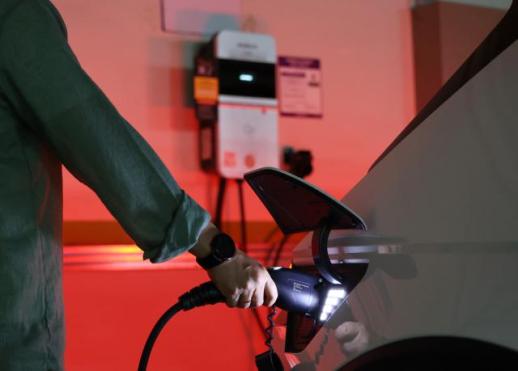 South Korea EV Registrations Top 1 Million as 2026 New Sales Pass 100,000 South Korea’s new electric-vehicle registrations have topped 100,000 this year, pushing cumulative EV registrations above 1 million. The Ministry of Climate, Energy and Environment said Tuesday that new EV registrations surpassed 100,000 on April 14. The pace is faster than in previous years. In 2025, when EV adoption was highest for the year at 220,919 vehicles, new registrations crossed 100,000 in the second week of July. In 2024, with 146,902 vehicles, the milestone came in the second week of September. Cumulative EV registrations exceeded 1 million on April 15. As of April 17, the total stood at 1,004,727. Through March, EVs accounted for 83,533 of 415,746 new vehicles, or 20.1%. The EV share slipped slightly from 9.2% in 2023 to 8.9% in 2024, but rose to 13.0% in 2025. The ministry attributed the increase to a wider range of new models, price discount competition among automakers, expanded subsidies including government support for switching from internal-combustion vehicles, and early implementation of rollout programs. Some observers also cited higher oil prices linked to the recent Middle East situation. The government recently secured additional supplementary-budget funding for EV purchase subsidies covering 20,000 passenger cars and 9,000 trucks. That brings this year’s planned subsidy volumes to 280,000 passenger cars, 45,000 trucks and 3,800 buses. With a growing number of local governments running out of first-half subsidy allocations, the government plans to urge municipalities with remaining second-half volumes to move up their public notices. The municipalities planning to do so number 81 for passenger cars and 75 for trucks. The government also said it will allow local governments that need additional budget allocations to pay subsidies first using national funds. Minister Kim Seong-hwan said, “This year will be recorded as a historic year that opens the era of 1 million electric vehicles,” adding that the government will pursue “effective and swift measures” so the public does not face inconvenience in using EVs. 2026-04-21 14:06:06
 -
 KOSPI Jumps More Than 2% to Top 6,370 on Foreign and Institutional Buying South Korea’s KOSPI surged more than 2% in intraday trading, breaking past its previous high. Shares rose, led by semiconductors, on expectations for the upcoming earnings season despite concerns about volatility tied to the Middle East. According to the Korea Exchange, the KOSPI was up 150.91 points, or 2.43%, at 6,370.00 as of 1:48 p.m. The index opened up 83.45 points, or 1.34%, at 6,302.54 and extended gains on foreign buying. In the main market, foreigners and institutions were net buyers of 1.2823 trillion won and 631.3 billion won, respectively, while individuals were net sellers of 1.8002 trillion won. Among large-cap stocks, Samsung Electronics rose 1.86% and SK hynix gained 4.55%. Hyundai Motor added 2.66%, LG Energy Solution jumped 9.91% and SK Square rose 1.00%. Samsung Biologics slipped 0.37% and Hanwha Aerospace fell 2.25%. The KOSDAQ was down 1.21 points, or 0.10%, at 1,173.64 at the same time. The index opened up 11.38 points, or 0.97%, at 1,186.23, but turned lower as foreigners and institutions sold. In the KOSDAQ market, individuals were net buyers of 552.1 billion won, while foreigners and institutions were net sellers of 395.7 billion won and 98.8 billion won, respectively. Among top KOSDAQ shares, Alteogen fell 0.54%, Rainbow Robotics dropped 1.64%, Samchundang Pharm slid 0.21%, ABL Bio lost 2.87% and Kolon TissueGene sank 6.21%. EcoPro rose 3.98%, EcoPro BM gained 4.29% and Lino Industrial added 0.34%. 2026-04-21 14:00:19
 -
 Samchundang Pharm penalized for disclosure lapse, raising concerns for biotech trust Samchundang Pharm, a KOSDAQ-listed company, has been designated an unfaithful disclosure firm. The Korea Exchange’s KOSDAQ Market Division imposed five penalty points, citing a failure to carry out fair disclosure of “forecasts or predictions regarding business performance.” Its cumulative penalty points over the past year now total five. The exchange finalized the sanction after a notice last month and a review by a disclosure committee that included outside experts. While the case appears to be a single company’s disclosure violation, it underscores a broader issue for the pharmaceutical and biotech sector, where disclosures are not a routine formality. Information such as research and development results, clinical progress, the possibility of technology exports and sales outlooks can directly affect corporate value and share prices. Because investors cannot easily evaluate products themselves, they rely on disclosures to judge a company’s prospects; when disclosures falter, the market’s basis for judgment weakens. Biotech is also an industry where expectations and uncertainty coexist, with future earnings that have not yet materialized reflected in current valuations. That structure demands stricter information sharing. Even small wording choices, schedule changes or shifts in the tone of guidance can influence investment decisions. In that context, neglecting fair-disclosure obligations is likely to be seen as more than a simple mistake. The concern grows when such cases recur. The damage does not stop with one company, the editorial said, warning that Korea’s broader biotech sector can come under suspicion that statements run ahead of disclosures. Overseas investors may apply a discount to Korean biotech firms, and retail investors may lose confidence in the sector, hurting even stronger companies. The five-point penalty is a warning, but sanctions alone are not enough, it said. Companies need internal controls that place disclosure under top management responsibility, with R&D, investor relations, and legal and finance functions working to review material information promptly and deliver it to the market under consistent standards. Regulators, it added, should not rely only on after-the-fact punishment. It called for tighter disclosure guidelines reflecting the characteristics of the pharmaceutical and biotech industries and for clearer standards on what predictive disclosures may include and what responsibilities follow. The goal, it said, should be a system that prevents violations born of confusion while holding firms strictly accountable when rules are knowingly broken. As Korea’s biotech industry pushes into global markets, technology alone is not enough, the editorial said. Capital-market trust must keep pace, and a culture of stating numbers and facts accurately is essential for laboratory achievements to be recognized by the market. The Samchundang Pharm case, it said, is a reminder to return to those basics.* This article has been translated by AI. 2026-04-21 13:57:16
 -
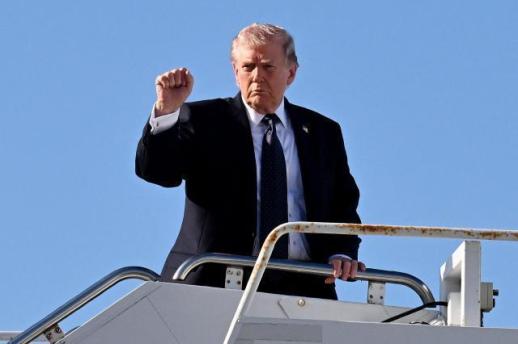 Trump Revives ‘Midnight Hammer,’ Says Iran Nuclear Program Won’t Be Easy to Rebuild President Donald Trump has again pointed to last year’s U.S. airstrike operation against Iran, dubbed “Midnight Hammer,” reiterating his claim that Iran’s nuclear program will not be easily rebuilt. In a post Sunday on his Truth Social account, Trump said the operation “completely and totally destroyed” Iran’s nuclear-related targets and that recovering buried nuclear material “will require a long and difficult process.” He also criticized CNN and other outlets, saying they were diminishing the achievements of U.S. pilots. “Midnight Hammer” was the name of a U.S. operation last June that struck three Iranian nuclear sites. The U.S. military deployed more than 125 aircraft, including seven B-2 stealth bombers, and dropped 14 massive bunker-buster bombs targeting Fordo, Natanz and Isfahan. The U.S. military said it combined deception flights and indirect approaches to hit the targets. Iran’s military was reported to have been largely unable to respond to the U.S. aircraft. Assessments of the damage have differed. Trump and Defense Secretary Pete Hegseth used language suggesting near-total destruction, while Joint Chiefs Chairman Dan Caine said all three sites suffered “extremely severe damage and destruction” but stopped short of saying Iran’s nuclear capability had been eliminated. Trump’s post came as it remains unclear whether follow-up talks between the United States and Iran will materialize. Trump has argued that any new nuclear deal with Iran would be better than the 2015 Joint Comprehensive Plan of Action, but it is still uncertain how negotiations might be concluded in the near term. 2026-04-21 13:55:07