
Journalist

Tom Stacey
-
 Seoul Mayor Oh Se-hoon says Jang Dong-hyuk is a liability, urges broader conservative appeal Seoul Mayor Oh Se-hoon said Tuesday that candidates heading into the election want the party to take a unified approach, arguing that it will help to embrace both conservatives and centrists. Oh made the remarks on KBS radio's "Jeongyeok Sisa," saying he could not avoid noting that party leader Jang Dong-hyuk has become a burden for candidates. Oh pointed to Jang's reported instruction to look into lawmaker Jin Jong-oh after Jin said he would support Han Dong-hoon, who has declared his bid in a by-election. Oh said the party must show through actions and words that it has sincerely reflected since the declaration of martial law and will work to ensure it never happens again. On Jang's 8-day, 10-night trip to the United States, Oh said the party leadership has entered a phase with little to do, but added that candidates are under intense pressure day by day and have not been told how the trip would help in the local elections or what meetings and talks took place. Oh said the outlook for the June 3 local elections is unfavorable because the People Power Party's approval ratings are low. Still, he said he could benefit from an incumbency advantage, citing results over the past five years including a lower unemployment rate, a higher ranking in city competitiveness and improved air quality. After Democratic Party Seoul mayoral candidate Jung Won-oh said his campaign would set up an "Oh Se-hoon 10-year judgment headquarters" to evaluate the city administration, Oh said Seoul has done a lot while managing its finances carefully and has instead reduced debt. "I'd welcome them taking a close look and judging," he said. Oh also criticized Jung, saying he would be unable to oppose the president even on matters that would harm Seoul residents. Oh added that a Seoul mayoral candidate should state a position on the long-term holding deduction tied to real estate capital gains tax, but said Jung has remained silent.* This article has been translated by AI. 2026-04-21 13:54:21
 -
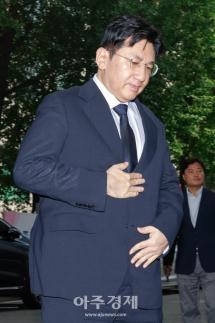 Police Seek Arrest Warrant for HYBE Chairman Bang Si-hyuk on Fraudulent Trading Allegations Police have applied for an arrest warrant for HYBE Chairman Bang Si-hyuk over allegations that he misled investors ahead of the company’s initial public offering and induced them to sell their stakes. The Seoul Metropolitan Police Agency’s financial crimes unit said April 21 it requested the warrant on suspicion of fraudulent unfair trading. The move came about five months after police questioned Bang in mid-November. Bang is accused of telling HYBE investors in 2019 that there were no plans to list the company, then having them sell shares to a specific private equity fund before proceeding with the IPO. Police believe Bang had previously signed a nonpublic agreement to receive 30% of the fund’s post-listing sale profits, and that he gained nearly 200 billion won in illicit profits. Under South Korea’s Capital Markets Act, it is illegal to obtain financial gain by providing false information or using improper schemes involving financial investment products, including unlisted shares. If the violation yields profits of 5 billion won or more, the penalty can be life imprisonment or at least five years in prison. Police said they began investigating after receiving a tip in late 2024. They raided the Korea Exchange and HYBE in June and July last year and barred Bang from leaving the country. As the probe dragged on, his public activities were also reported to have been constrained. More recently, the U.S. Embassy in Seoul was reported to have sent a letter to the National Police Agency seeking cooperation for Bang’s visit to the United States, citing BTS world tour-related matters. Bang’s side says the company complied with relevant laws and regulations during the listing process and that there is no legal issue. * This article has been translated by AI. 2026-04-21 13:51:16
 -
 Labor Ministry: Casualties at Cargo Truckers Rally Go Beyond Yellow Envelope Law South Korea’s Labor Ministry said the casualties at a Cargo Truckers Solidarity rally should not be framed as an issue limited to the so-called Yellow Envelope Law, which revises Articles 2 and 3 of the Trade Union and Labor Relations Adjustment Act. In an explanatory note released April 21 in response to reports linking the incident to the law, the ministry said it "expresses very deep regret" over the injuries and death. It said the case "goes beyond" disputes over prime contractor-subcontractor bargaining under the revised Article 2, which is based on "substantial and specific" control. The ministry said the root problem was the lack of a structure allowing people in relatively vulnerable positions — including small business owners and individual proprietors — to organize and demand dialogue. It added it was regrettable that the conflict was not resolved through talks and instead worsened. The ministry said it will work with relevant agencies to find ways for small merchants and self-employed people to communicate with stakeholders to protect their rights. The comments were seen as signaling a preference for creating a separate channel for talks rather than applying the Yellow Envelope Law by treating Cargo Truckers Solidarity members as small business owners or individual proprietors. The incident occurred about 10:32 a.m. April 20 at the CU logistics center in Jinju, South Gyeongsang Province, where a 2.5-ton delivery truck collided with members of the CU branch of the Korean Public Service and Transport Workers’ Union, an affiliate of the Korean Confederation of Trade Unions. One person was killed and two others suffered serious to moderate injuries. Cargo Truckers Solidarity has urged BGF Retail, the prime contractor, to join joint bargaining as an employer, arguing working conditions are effectively determined by the company. BGF has said it has no direct duty to bargain because convenience store logistics operate through a multilayer contract structure running from BGF Logis to logistics centers, transport firms and drivers. The government has maintained that direct mediation is difficult because Cargo Truckers Solidarity is not an officially recognized union but an extra-legal group formed by individual business operators. 2026-04-21 13:49:57
 -
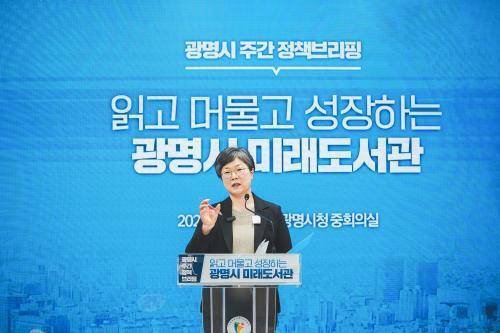 Gwangmyeong Launches ‘Future-Ready’ Library Policy Focused on Daily Life Gwangmyeong, a city in Gyeonggi Province, said it will move ahead with a “future-ready library policy” aimed at linking reading, learning, creation and community engagement in residents’ daily lives. Kim Myeong-ok, head of the city’s Lifelong Learning Projects Headquarters, outlined the plan at a policy briefing at City Hall on the 21st. The policy centers on expanding public libraries beyond places to view materials, repositioning them as neighborhood-based cultural hubs where people can stay, rest, learn and create. “The key is building Gwangmyeong’s own system that shows, in a comprehensive way, how libraries support growth and connection in citizens’ lives,” Kim said. As part of the effort, the city plans a broad redesign to make library spaces more welcoming for longer visits. Haan Library will be rebuilt as a complex cultural space combining hands-on areas — including reading-camp activities, an art workshop, shared transcription sessions, a sound relaxation room and a game zone — with a cafe-style community area. Gwangmyeong Library will be converted into a community space with a shared area for young adults and a digital creativity space for teenagers. Cheolsan Library will strengthen citizen-participation creation functions centered on an arts-based creative space called “Siseon.” Yeonseo Library will be improved into an open, neighborhood living-room style space for discussion, learning and communication, Kim said. The city will also expand specialized programs by library. Haan Library will focus on digital education based on gaming, VR and AR. Soha Library will center on creative writing programs. Chungyeon Library will run children’s English reading programs. Gwangmyeong Library will strengthen makerspace-based digital and entrepreneurship education. Cheolsan Library will add arts creation and video production functions, and Yeonseo Library will operate programs built around reading communities. Kim said the city will also promote a “2026 Gwangmyeong Citizens Read One Book Together” initiative to broaden participation in reading culture. In addition, the city plans to run a book publishing support project so residents can take part in planning, writing and publishing, aiming to build a local creation ecosystem. To support local bookstores, the city said it is operating a 10% cashback program for book purchases. Residents who buy books at local bookstores using local currency can receive a partial refund. The city said it is also expanding public libraries and operating eight smart libraries to provide a neighborhood-based reading environment available 24 hours a day. “Libraries are changing into public cultural platforms that support learning and rest, creation and communication close to citizens’ lives,” Kim said. “We will build a reading-culture city where books and people are connected.”* This article has been translated by AI. 2026-04-21 13:49:12
 -
 Changwon to Host Concert, Bullfighting Tournament and Museum Exhibition Starting Late April Changwon Special City will roll out a series of cultural events for residents starting in late April, including a community concert, a traditional folk competition and a museum exhibition. Changwon will hold the “Uichang-dong Community Harmony Concert” at 7 p.m. on April 24 in the parking lot of the Changwon City Livestock Cooperative. The concert was planned to mark the 100th anniversary of the children’s song “Hometown Spring” and to share with residents the historical significance of Uichang-dong, where the song was created. The program begins at 6:40 p.m. with a pre-show by the Uichang-dong resident program team “Gogo Janggu.” The main concert will feature the Changwon Municipal Choir performing “Hometown Spring,” followed by singer Kim Eun-ju, fusion band A-PLUS, local singer Bae Jin-a and popular singer Na Sang-do.24th Changwon National Folk Bullfighting Tournament Opens April 29 The “24th Changwon National Folk Bullfighting Tournament” will be held April 29 through May 3 at a temporary arena in the Magumsan hot-spring district in Buk-myeon, Uichang-gu. A total of 200 bulls from nine cities and counties nationwide will compete, including 20 from Changwon. The tournament will be run in a bracket format across three weight classes — Baekdu, Hangang and Taebaek — with total prize money of 55.2 million won. Organizers said stricter animal-welfare rules will apply this year, including tougher horn-management standards and a match time limit of up to 40 minutes. An opening ceremony is scheduled for 2 p.m. on May 2, with congratulatory performances, a prize drawing and a mobile livestock-products sales vehicle among side events. An indoor exhibition is also planned. The Changwon Municipal Masan Museum will present its first-half 2026 special exhibition, “We Are Blossoming Flowers of Joseon,” from April 28 to Aug. 30 in the first-floor special exhibition gallery. The exhibition highlights the history of “Daejayu Kindergarten,” which opened in 1927 and worked to preserve the Korean language and culture. Organized in three sections, it traces the period from the opening of Masanpo Port in 1899 through the Japanese colonial era, focusing on efforts to find hope through education despite harsh repression. Key items include a seal stamp used by Monk Guha, a 1924 map titled “Joseon Map, Southern Section,” and the 15th Daejayu Kindergarten graduation album published in 1942. The museum will also run a participatory program in which visitors write messages to help complete a large Taegeukgi, the national flag of South Korea.* This article has been translated by AI. 2026-04-21 13:48:19
 -
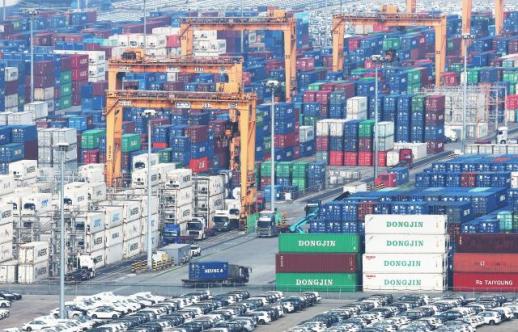 South Korea’s Exports Jump 49.4% in Early April on Chip Surge; Crude Imports Rise for Third Month Semiconductor strength pushed South Korea’s exports through mid-April to the highest level ever recorded for that point in the month, while crude oil imports rose for a third straight month amid the war in the Middle East. The Korea Customs Service said Monday that exports for April 1-20 totaled $50.4 billion on a customs-clearance basis, up 49.4% from a year earlier. With the same 15.5 working days as last year, average daily exports came to $3.25 billion. Semiconductors led the gains. Chip exports rose 182.5% to $18.3 billion, lifting their share of total exports to 36.3%, up 17.1 percentage points from a year earlier. Exports of petroleum products climbed 48.4%, and computer peripherals surged 399.0%. Passenger car exports fell 14.1%, and auto parts declined 8.8%. By destination, exports increased to China (up 70.9%), the United States (51.7%), Vietnam (79.2%), the European Union (10.5%) and Taiwan (77.1%). Imports for the period totaled $39.9 billion, up 17.7%. Imports rose for semiconductors (58.3%), crude oil (13.1%) and semiconductor manufacturing equipment (63.3%), while machinery slipped 0.6%. Energy imports — crude oil, gas and coal — increased 6.8%. Crude oil imports for April 1-20 rose to $4.8 billion, extending gains from February ($4.4 billion) and March ($4.6 billion). With exports exceeding imports, South Korea posted a $10.4 billion trade surplus for the period. 2026-04-21 13:46:25
 -
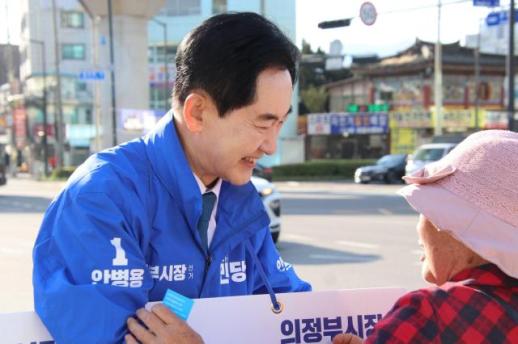 Uijeongbu mayoral hopeful Ahn Byeong-yong urges policy debate, warns against 'blind' runoff The Democratic Party’s primary for Uijeongbu mayor has narrowed to a runoff between preliminary candidates Kim Won-gi and Ahn Byeong-yong, with Ahn on Monday formally proposing a one-on-one policy debate and calling for a contest focused on issues. The party’s Gyeonggi provincial chapter said no candidate won a majority in voting held April 19-20, sending the top two finishers to a runoff. The final vote is scheduled for April 25-26. “Having reached the runoff with strong support from citizens and party members, it is time to prove, confidently and in front of the public, who is best suited to solve Uijeongbu’s many pending issues,” Ahn said in explaining the proposal. Ahn cited major local challenges including development of returned U.S. military base sites, attracting large companies, the proposed GTX-G line and an extension of Seoul Subway Line 8. He said the runoff should not become a “blind primary” driven by organizational mobilization, and argued that sharply testing candidates’ visions and policy capacity is the minimum owed to citizens and party members. Ahn said he would follow Kim’s side on practical details such as the debate format, time and venue. Transportation has been a central theme for Ahn and has also emerged in broader regional policy coordination. On April 20, Ahn signed a joint policy agreement with Kim Han-jung, a preliminary candidate for Namyangju mayor, calling for the extension of Line 8 — currently ending at Byeollae in Namyangju — to Uijeongbu’s Tapseok, Minrak and Gosan areas, and for the plan to be prioritized in the 5th National Rail Network Construction Plan. They also agreed to pursue a new GTX-G route linking Pocheon, Uijeongbu, Namyangju, Guri and Seoul; strengthen connections between the Seoul Metropolitan Area’s First and Second Ring Expressways; and build an advanced industry and economic belt connecting Uijeongbu’s returned base sites with Namyangju’s Wangsuk new town. At the time, Ahn said the large-scale national project to bring Line 8 into Uijeongbu “cannot be achieved by the strength of any one city alone,” and would require two local governments to unite and persistently persuade the government and the Ministry of Land, Infrastructure and Transport. Ahn has also emphasized economic recovery in the runoff. On April 20, he campaigned under the banner of “reviving Uijeongbu’s economy” at the underground shopping arcade at Uijeongbu Station with actor Lee Ki-young and Ahn Jin-geol, head of the People’s Livelihood Economy Institute. Earlier, he held a policy meeting with small business owners, pledging expanded issuance of local currency, tailored support by commercial district, and a regular channel for communication. “The essence of this election is ultimately a serious economic election asking, ‘Who will revive Uijeongbu’s stagnant economy and help citizens put food on the table?’” Ahn said. In a message to Kim, Ahn said, “Let’s proudly show citizens how healthy and capable our Democratic Party is,” adding that he hopes for Kim’s “generous and forward-looking” acceptance of the debate proposal. The party’s Uijeongbu primary, now in its runoff phase, could shift from a test of organization to a policy showdown over transportation, the economy and urban development solutions.* This article has been translated by AI. 2026-04-21 13:40:59
 -
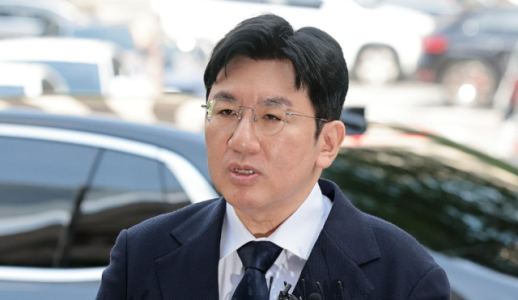 Police Seek Arrest Warrant for HYBE Chairman Bang Si-hyuk Over Alleged IPO Fraud Bang Si-hyuk, chairman of HYBE, is facing possible detention after police sought an arrest warrant over allegations he deceived investors during the company’s initial public offering process and gained about 190 billion won in illicit profits. Police moved to secure his custody about 18 months after opening the probe. The Seoul Metropolitan Police Agency’s Financial Crimes Investigation Unit said Monday it applied for a warrant for Bang on suspicion of fraudulent unfair trading under the Capital Markets Act. The request came about five months after his last questioning in November. Police suspect that in 2019, ahead of HYBE’s listing, Bang told existing investors the IPO was not planned or would be delayed, then steered them to sell their stakes to a specific private equity fund. After the company later went public and the value of those shares rose, investigators say Bang received a portion of the sale profits under a prior undisclosed agreement. Police said they believe Bang gained about 190 billion won. Some findings indicate a structure in which roughly 30% of the profit was to be shared with the private equity fund. An SPC set up by the fund was reportedly used in the stake transfers. The Capital Markets Act bans gaining profits in financial investment transactions through false information or deceptive schemes. If illegal gains exceed 5 billion won, the law allows a sentence of life imprisonment or at least five years in prison. The investigation began after police obtained a tip in late 2024. In June and July last year, police raided the Korea Exchange and HYBE headquarters to secure IPO-related materials and imposed a travel ban on Bang. From September to November, they questioned him five times and continued reviewing the legal issues. The case also involved legal disputes, with prosecutors reportedly rejecting initial search warrant requests twice. As the probe dragged on without additional questioning, police faced criticism for moving too slowly. The warrant request has drawn attention amid a recent diplomatic controversy. The U.S. Embassy in Seoul recently sent police a letter asking that Bang be allowed to travel to the United States. The letter reportedly cited his attendance at events marking the 250th anniversary of U.S. Independence Day in July and the need to support a BTS world tour. Police said they would review the request “in accordance with law and principle,” but the warrant application has effectively limited his ability to leave the country. Bang’s side has denied all allegations, saying he did not mislead investors, the share sales were made at investors’ request, and the IPO process complied with relevant laws and rules. Police said they plan to accelerate the investigation if the court grants the warrant and they take Bang into custody. * This article has been translated by AI. 2026-04-21 13:39:53
 -
 Trump Invokes Defense Production Act to Fund Energy Projects Amid Oil Price Pressure President Donald Trump, facing rising oil-price pressure tied to the Iran war, on Sunday issued measures allowing federal funding for energy-sector projects. Bloomberg News and other outlets reported that Trump released five presidential memorandums invoking the Defense Production Act, targeting U.S. oil production and refining, coal supply chains, natural gas transportation and power-grid infrastructure. The actions allow the Energy Department to direct federal funds to those areas. A White House official told Bloomberg the memorandums would let the administration use tools such as energy purchases and financial support to address delays, funding shortfalls and market barriers affecting industry. The funding is expected to come from a large spending package law passed last year under the Trump administration, according to the report. In the memorandums, Trump cited his declaration of a national energy emergency shortly after taking office, saying ensuring resilient domestic oil production and refining capacity is critical to U.S. defense readiness. He warned that without immediate federal action, U.S. defense capabilities would remain at risk of disruption. He also stressed that securing natural gas and liquefied natural gas is important to U.S. defense and allies’ energy security, adding that insufficient natural gas and LNG export capacity could expose the United States and its partners to danger in a crisis. The Defense Production Act was enacted in 1950 during the Korean War and gives the president authority to intervene to expand private-sector production. It was introduced as federal power to direct industry was strengthened after disruptions in military supplies, the report said. The move was widely interpreted as a response aimed at curbing oil-price increases following Iran’s blockade of the Strait of Hormuz. Trump has also faced pressure to push for an early end to the war as energy prices have surged. Trump has previously used the law for energy policy, including efforts to restart offshore crude production off Southern California. During the 2020 COVID-19 outbreak, he invoked it to expand ventilator production. The previous Joe Biden administration also used the act to boost production of energy technologies such as solar panels and transformers. 2026-04-21 13:39:22
 -
 New Bank of Korea Gov. Shin Hyun-song Faces Inflation, Debt Squeeze Shin Hyun-song’s inauguration as Bank of Korea governor is widely seen as an asset for South Korea’s economic policy establishment. He helped lead global central bank debates at the Bank for International Settlements and has rare experience spanning macro-finance theory and policymaking, fueling high expectations in markets and academia. But even a top economist is facing a difficult reality at the central bank. In his first remarks as governor, Shin said the bank must “promote price stability and financial stability through cautious and flexible monetary policy.” The diagnosis is straightforward. The problem is that the economy is presenting the most challenging mix for monetary policy at the same time: upward pressure on prices and downward pressure on growth. After the war in the Middle East, rising international oil prices have increased inflation risks even as the growth outlook has weakened. For a central bank, it is an uncomfortable moment — tighten to curb inflation, or ease to support the economy. Inflation risks may not have fully surfaced yet. If instability around the Strait of Hormuz persists, higher energy prices could spread across domestic prices with a lag. That is why the fact that inflation remains within the 2% target is not, by itself, a reason for complacency. To anchor inflation expectations, the bank may have to keep the option of raising rates on the table — but that is not a light choice because debt levels are high. Household lending at the five major banks has turned back to growth this month. Mortgage loans are rising with seasonal spring moving demand, and unsecured credit loans have increased for a second straight month. In particular, credit loans increasingly reflect leveraged stock investing as the Kospi sets record highs, suggesting part of the rally is supported by borrowing. As of the end of March, card loan balances also swelled to a record 43 trillion won. As borrowers shut out of banks shift to high-interest loans, concerns about credit quality are growing. Delinquency indicators are also worsening. The delinquency rate on won-denominated loans at domestic banks has climbed to its highest level since May last year, and new delinquencies have increased. It is a sign that repayment burdens are rising for both households and companies. Loans are growing while repayment capacity weakens; asset prices are rising while credit quality deteriorates. Market rates have already reflected those risks. Mortgage rates at commercial banks are running about 4.4% to 7.0% for fixed-rate loans and 3.6% to 6.0% for variable-rate loans. In that context, Shin’s emphasis on “caution” reflects not so much a virtue as a narrow set of options. In his inaugural address, he also stressed a new view of financial stability, arguing that blurred lines between banks and nonbanks, and between domestic and overseas markets, make it difficult to assess systemic risk using old frameworks. Funding flows that skirt regulatory boundaries — including card loans, off-balance-sheet transactions and nontraditional financial products — have already spread across the market. The core risk now is not a sudden explosion but a gradual buildup, not collapse but distortion. The challenge is what comes next. Setting a direction and delivering policy success are different matters. What markets are demanding now is less a refined diagnosis than a decision on priorities. 2026-04-21 13:30:20