
Journalist

Tom Stacey
-
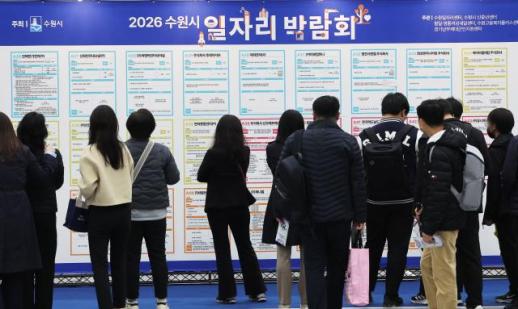 A quarter of the unemployed in South Korea are under 30 as jobless tops 1 million SEOUL, April 19 (AJP)-One in four unemployed South Koreans are young people under 30, as the country’s total jobless climbed back above 1 million for the first time in five years, pointing to a structural cliff at the entry level in the labor market. According to data released Sunday by Statistics Korea via KOSIS, the number of unemployed averaged 1.029 million in the January–March quarter, up 49,000 from a year earlier. It marked the first time since 2021 that first-quarter unemployment has exceeded 1 million, extending a three-year upward trend. The headline figure masks a sharper deterioration among younger workers. A total of 272,000 people aged 15 to 29 were unemployed in the first quarter, accounting for 26.4 percent of the total. Youth unemployment rose by 10,000 from a year earlier, marking a second consecutive annual increase. The youth unemployment rate climbed to 7.4 percent, up 0.6 percentage point on-year and the highest level for a first quarter since 2021, when the pandemic pushed it to 9.9 percent. Behind the rise lies a structural shift in hiring. Companies are increasingly favoring experienced workers, while large-scale open recruitment has given way to rolling, position-based hiring — a transition that has prolonged job searches for new entrants and recent graduates. Employment data underscore the strain. The number of employed young people fell by 156,000 on-year to 3.423 million in the first quarter, extending a decline to a 14th consecutive quarter. It marks the smallest youth employment level since comparable records began in 1980. While demographics are part of the story, they do not fully explain the drop. The youth population declined by 2.0 percent over the same period, but employment fell by 4.4 percent — more than twice as fast. That gap is reflected in the employment rate. The youth employment rate dropped to 43.5 percent, down 1.0 percentage point from a year earlier and the lowest for a first quarter in five years. In contrast, employment among those in their 30s continues to strengthen, suggesting delayed — rather than foregone — labor market entry. The employment rate for people in their 30s rose to 80.7 percent, the highest on record for a first quarter. A rise in applicants preparing for civil service exams also contributed, as individuals actively seeking work are classified as unemployed rather than economically inactive. The data point to a labor market increasingly defined by transition frictions, where young people cycle longer between inactivity, job search and employment before securing stable positions. The government is expected to roll out a package of youth employment measures later this month, including programs to strengthen job readiness, expand work experience opportunities and support re-entry into the labor market. 2026-04-19 15:30:27
 -
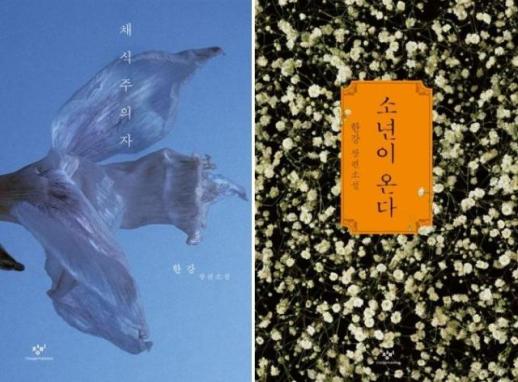 Han Kang leads Korea's book market for a decade SEOUL, April 19 (AJP) -South Korean author Han Kang, the country’s first Nobel laureate in literature, is not just a literary heavyweight but the defining commercial force in South Korea’s book market over the past decade with her bestsellers "The Vegetarian" and "Human Acts", data showed. According to data released Sunday by Kyobo Book Centre ahead of World Book and Copyright Day on April 23, the two novels ranked first and second, respectively, in cumulative sales between April 17, 2016, and April 16, 2026, based on combined online and offline figures. Originally published in 2007, "The Vegetarian" gained global recognition after Han became the first Korean writer to win the Man Booker International Prize in 2016. The win triggered a surge in domestic readership, with the novel topping weekly bestseller charts for 12 consecutive weeks and becoming the best-selling book of that year. Nearly a decade later, Han’s readership saw a renewed surge following her receipt of the Nobel Prize in Literature in 2024 — the first for a Korean author. This second wave was led by "Human Acts", her 2014 novel centered on the Gwangju Uprising, which ranked as the country’s annual bestseller in both 2024 and 2025. A Kyobo official noted that while "The Vegetarian" leads in cumulative sales due to its earlier post-Booker boost, "Human Acts" has outpaced it in more recent years. Han’s presence extended further down the list. Her 2021 novel "We Do Not Part", which deals with the Jeju 4·3 Incident, ranked eighth over the decade, supported by major international recognition including France’s Prix Médicis étranger in 2023 and the U.S. National Book Critics Circle Award this year. Of the top 10 bestsellers, six were Korean novels, underscoring sustained domestic demand for locally grounded fiction. Other titles in the ranking include Kim Ho-yeon’s "The Uncanny Convenience Store", Lee Mi-ye’s "DallerGut Dream Department Store", and Yang Gui-ja’s "Contradiction", which placed fifth through seventh. Nonfiction titles also featured prominently. The self-help book "Say No’s Teachings" ranked third, followed by Lee Ki-joo’s essay collection "The Temperature of Language" in fourth. Kim Soo-hyun’s "I Decided to Live as Me" came in ninth, while "Winnie-the-Pooh: Happy Things Happen Every Day" rounded out the top 10. Meanwhile, overall reading habits in South Korea continue to decline. According to the Ministry of Culture, Sports and Tourism’s national reading survey, the proportion of adults who read at least one general book per year — excluding textbooks, exam materials, magazines and comics — fell from 67.4 percent in 2015 to 38.5 percent last year. 2026-04-19 15:14:54
 -
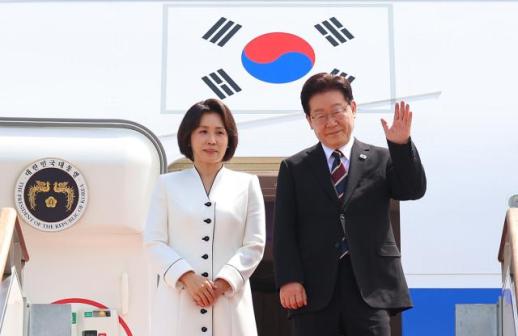 South Korea's India–Vietnam state visit targets security, energy recalibration SEOUL, April 19 (AJP)-South Korean President Lee Jae Myung departed Sunday for a five-night, six-day state visit to India and Vietnam, a trip that goes beyond ceremonial diplomacy to probe whether Seoul can turn its “Global South” pivot into a workable economic and strategic hedge in an increasingly fractured world. The back-to-back visits — Lee’s first to India and the first state-level engagement with Vietnam’s new leadership — come at a moment when global supply chains are being reshaped by conflict in the Middle East and intensifying great-power rivalry. Lee’s itinerary follows the familiar arc of state visits: summit talks, business forums, and agreements spanning artificial intelligence, defense, shipbuilding and energy. In New Delhi, he is set to meet Prime Minister Narendra Modi , with both sides expected to accelerate an upgrade of the Korea–India CEPA and set a target of $50 billion in bilateral trade by 2030. In Hanoi, meetings with Communist Party chief To Lam and other senior officials will aim to deepen an already dense manufacturing and investment relationship, with a longer-term goal of pushing trade to $150 billion. Yet the meaning of the trip lies less in the schedule than in its sequencing. This is the first state visit to India in eight years and one of the fastest such trips by a new Korean administration — a signal that Seoul is moving early to reposition itself. The prolonged conflict around the Strait of Hormuz has exposed South Korea’s structural vulnerability: an export-driven economy dependent on imported energy and maritime logistics. Energy security and supply-chain coordination are explicitly on the agenda, with Seoul seeking closer alignment with both India and Vietnam on logistics resilience and critical minerals. India is central to that recalibration. Both countries arrive at the summit with a shared exposure to Middle East energy. South Korea sources roughly 70 to 75 percent of its crude from the Gulf, with almost all shipments transiting the Strait of Hormuz, leaving it acutely sensitive to any disruption in the narrow waterway and forced to explore more diverse sourcing. India, while also heavily reliant, imports a lower 55 to 65 percent from the region and has diversified part of its supply to Russia, the United States and West Africa. An area where the two are expected to seek active partnership is next-generation energy — pairing India’s vast renewable resource base with South Korea’s industrial and nuclear engineering strengths. New Delhi’s scale in solar and wind offers low-cost power for future demand, while Seoul brings grid technology, storage solutions and emerging small modular reactor (SMR) capabilities to stabilize intermittency and provide reliable baseload. The combination points to a complementary model: India as a production hub for clean energy and hydrogen, and Korea as a technology and systems integrator, with cooperation likely to center on hybrid energy systems, hydrogen supply chains and industrial decarbonization. With a population of 1.4 billion, rapid growth near 7 percent, and ambitions to become a manufacturing alternative to China, New Delhi offers both scale and strategic industrial base for Korean Inc. Vietnam, on the other hand, is not a future bet but a present anchor. It remains South Korea’s most deeply embedded production base in Southeast Asia, and the emphasis on early engagement with Hanoi’s new leadership reflects a priority on continuity. What is evolving is the scope of the relationship — from labor-intensive manufacturing toward infrastructure, energy and strategic resources — signaling a shift from factory floor to broader economic partnership. The dual visit points to a wider recalibration in Seoul’s external strategy. The language of the “Global South” is less about alignment than diversification — an attempt to spread risk across geographies at a time when concentration has become a liability. 2026-04-19 13:08:46
 -
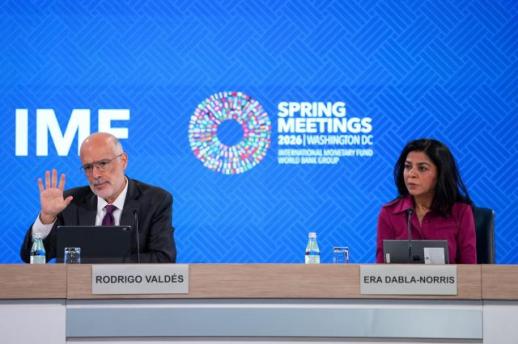 Korea's debt ratio to surpass advanced non-reserve peers next year, IMF warns SEOUL, April 19 (AJP)-South Korea’s government debt burden is set to cross a key threshold next year, overtaking the average of advanced economies without reserve currencies, as fiscal expansion continues to outpace economic growth, according to the latest assessment by the International Monetary Fund. The IMF projected in its April Fiscal Monitor that Korea’s general government debt-to-GDP ratio will rise from 54.4 percent this year to 56.6 percent in 2027, exceeding the 55.0 percent average for a group of 11 advanced non-reserve-currency economies that includes the Czech Republic, Denmark and Sweden. The crossover marks a symbolic shift for a country long viewed as fiscally conservative among advanced economies, highlighting how quickly its debt trajectory has steepened since the pandemic. The broader trend reflects a structural imbalance: debt is rising significantly faster than the economy. Between 2020 and 2025, Korea’s nominal GDP expanded at an annual average of 5.3 percent, while central and local government debt (D1) grew at 9.0 percent — roughly 1.7 times faster. That divergence is now feeding directly into the debt ratio, a key gauge of fiscal sustainability. The IMF expects Korea’s debt ratio to rise by 8.7 percentage points over the next five years, reaching 63.1 percent by 2031. That marks the steepest increase among the 11 comparator economies and the second-fastest pace after Hong Kong. In contrast, several peers — including Norway, Iceland and New Zealand — are projected to reduce their debt burdens over the same period. The IMF flagged Korea, alongside Belgium, as one of the countries facing “significant increases” in debt levels, underscoring mounting concerns over medium-term fiscal dynamics. At around the mid-50 percent range, Korea’s debt ratio still remains well below that of Group of Seven economies, where averages typically run between 120 percent and 130 percent of GDP. But unlike the United States or Japan, Korea does not issue a global reserve currency — a distinction that limits its flexibility during external shocks. Non-reserve currency economies tend to face sharper capital outflows and exchange rate volatility in times of stress, requiring stricter fiscal discipline. This structural constraint makes the pace of debt accumulation more consequential than the level itself. The IMF’s latest report also points to a worsening global fiscal backdrop. It warned that government balance sheets are facing structural deterioration amid higher borrowing costs and geopolitical shocks, including spillovers from the Middle East conflict. Globally, public debt is projected to exceed 100 percent of GDP by 2029, driven by persistent spending pressures and rising interest burdens. Key risks include war-related fiscal outlays, protectionism, shifts in sovereign bond markets and demographic aging — all factors that could further strain public finances. Against this backdrop, the IMF urged governments to adopt clearer medium-term fiscal frameworks while reallocating spending toward growth-enhancing investments. It also recommended targeted and temporary support measures to cushion households from energy price shocks, rather than broad-based subsidies. Seoul has signaled alignment with such guidance, emphasizing selective support for vulnerable groups and a restructuring of rigid expenditures to free up resources for strategic sectors such as artificial intelligence and future industries. 2026-04-19 12:37:03
 -
 Woori Bank to Invest 460 Billion Won in 35 Mid-Sized Firms Under Rising Leaders Program Woori Bank said April 19 it has selected 35 companies for the seventh round of its “Rising Leaders 300” financing program with South Korea’s Ministry of Trade, Industry and Energy and will begin full support. Rising Leaders 300 is a “productive finance” initiative designed to identify and back mid-sized companies with strong technology and growth potential. Woori Bank and the ministry have jointly run the program since 2023. The seventh-round selection followed a recruitment notice issued in March, recommendations from four ministry-affiliated agencies and Woori Bank’s review. The final list includes Dr.Agg, Jahwa Electronics, Silicon2 and Powermax, among 35 firms. Through rounds one through six, Woori Bank selected 190 companies and provided about 1.8 trillion won in support. For the seventh round, the bank plans support totaling about 460 billion won. Selected firms will be eligible for up to 30 billion won each, with an interest-rate discount of up to 1.0 percentage point in the first year. The bank also plans to provide nonfinancial services, including export-import finance solutions and digital transformation consulting. “Our goal is to provide practical financial benefits so mid-sized companies with growth potential can take the next step in global markets,” said Park Hwa-geun, a general manager in Woori Bank’s corporate sales strategy department. He said the bank will continue productive finance support to help secure future growth engines for mid-sized firms and add vitality to the economy. 2026-04-19 11:03:57
 -
 Samsung Bioepis Presents Follow-Up Phase 3 Data on Osteoporosis Drug Ovodens in Europe Samsung Bioepis said Sunday it presented follow-up results from a Phase 3 study of its Prolia biosimilar, Ovodens (project name SB16), at the World Congress on Osteoporosis, Osteoarthritis and Musculoskeletal Diseases (WCO-IOF-ESCEO) in Prague, Czech Republic. The analysis was an exploratory subgroup review of the global Phase 3 SB16 trial. It examined 456 postmenopausal women with osteoporosis to assess whether disease characteristics such as age, body mass index and history of vertebral fractures affected the drug’s efficacy. Samsung Bioepis analyzed the percent change from baseline in bone mineral density of the lumbar spine, total hip and femoral neck at 12 months in patients included in the subgroup analysis for SB16 and the reference product. The company said the SB16 and reference-product subgroups showed consistent treatment effects, reaffirming biological similarity between the two products. Shin Dong-hoon, head of the Clinical Medicine Division at Samsung Bioepis, said the company confirmed Ovodens’ consistent treatment effect across diverse patient groups and would strengthen its capabilities to expand evidence-based prescribing of biologic medicines.* This article has been translated by AI. 2026-04-19 10:54:00
 -
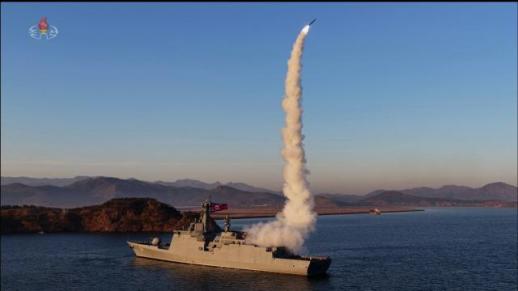 N. Korea fires ballistic missile toward East Sea, suspected as sub-linked launch *Updated with additional information SEOUL, April 19 (AJP) -North Korea fired multiple short-range ballistic missiles from its submarine hub of Sinpo early Sunday in its latest string of weapons tests over the last two months amid ongoing war in the Gulf, raising the possibility of a submarine-linked launch as Pyongyang advances its sea-based nuclear ambitions. The Joint Chiefs of Staff (JCS) said the launches were detected at around 6:10 a.m. from the Sinpo area, with the missiles flying about 140 kilometers. South Korean and U.S. intelligence authorities are conducting a detailed analysis of the missiles’ specifications and trajectory, with officials not ruling out a submarine-launched ballistic missile (SLBM) test, while noting the unusually short range. South Korea’s presidential office convened an emergency National Security Council (NSC) meeting shortly after the launch, led by National Security Adviser Kim Hyun-jong, to assess the situation and review response measures. Participants reaffirmed a firm joint defense posture with the United States and agreed to closely monitor further North Korean activity. “Our military is closely monitoring North Korea’s various movements under a robust South Korea-U.S. combined defense posture and maintains the capabilities and posture to respond to any provocation in an overwhelming manner,” the JCS said, adding that Seoul, Washington and Tokyo are sharing related intelligence. The firing comes 11 days after Pyongyang last launched ballistic missiles on April 8, when it conducted two tests in a single day. A day earlier, on April 7, the North fired another projectile that appeared to fail shortly after launch. Sunday’s launch is the seventh ballistic missile test by North Korea this year, following earlier firings on Jan. 4, Jan. 27 and March 14, according to military data. It follows a series of recent weapons developments, including claimed trials of cluster-munition warheads, electromagnetic systems and upgraded missile engines, pointing to a broad-based effort to enhance tactical and strategic capabilities. The provocations also fall in the background of heightened regional tensions and ahead of a planned visit by Donald Trump to China next month, where North Korea is expected to be a key topic in talks with Xi Jinping along with the Middle East crisis. North Korea’s submarine-based nuclear ambitions have drawn renewed scrutiny since December 2025, when leader Kim Jong Un inspected what state media described as the country’s first nuclear-powered ballistic missile submarine (SSBN). Estimated at over 8,000 tons, the platform would mark a major leap from the North’s aging, conventionally powered fleet and is believed capable of carrying multiple SLBMs, potentially from the Pukguksong-5 series. Analysts say such a system — if operational — would significantly strengthen Pyongyang’s second-strike capability by enabling more survivable, sea-based nuclear deployments. Sinpo, the site of Sunday’s launch, has long served as the hub of North Korea’s SLBM program, underscoring the strategic significance of the latest activity. 2026-04-19 07:41:24
 -
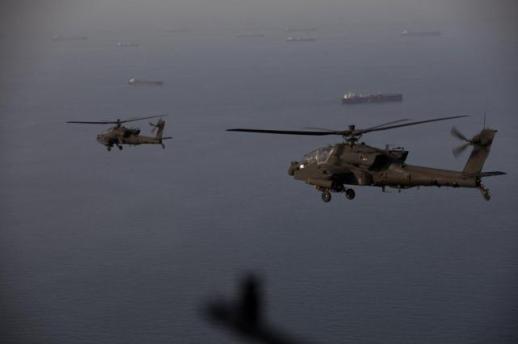 Seoul flags supply shift as Hormuz tensions flare again after brief reopening SEOUL, April 19 (AJP) -South Korea will push ahead with diversifying its energy supply chain as renewed instability in the Strait of Hormuz underscores persistent risks to global oil flows, even after a brief reopening of the key shipping route. The Gulf chokepoint slipped back into tension over the weekend, with Iran warning it would again restrict transit unless the United States lifts its blockade on Iranian ports, while Washington rejected the demand and signaled continued enforcement at sea. The conflicting positions quickly translated into operational risk. Multiple vessels reported coming under fire or being forced to turn back while attempting to pass through the strait, according to maritime authorities, highlighting the fragility of any reopening. The Strait of Hormuz carries roughly 20 percent of global oil supply and is a critical artery for South Korea, which depends on the route for a majority of its crude and naphtha imports. The latest disruption comes despite signs of diplomatic progress. Iran is reviewing new U.S. proposals for a potential deal, with talks expected to resume through third-party mediation, while a separate ceasefire between Israel and Hezbollah has reduced fighting in Lebanon. However, Iranian officials have made clear that maritime access remains conditional, linking freedom of navigation to the removal of U.S. sanctions. Donald Trump has rejected that position, saying Iran “cannot blackmail” the United States. Analysts say the result is a shift from outright closure risk to intermittent disruption, where limited attacks or threats raise shipping costs and insurance premiums without fully halting flows. For South Korea, the episode has reinforced the need to reduce reliance on Middle Eastern supply routes. In an interview with Yonhap News Agency, Trade, Industry and Energy Minister Kim Jung-kwan made clear that South Korea will press ahead with a structural overhaul of its energy supply chain, even if hostilities in the Gulf subside. “Even if the war ends, we will not stop diversifying crude imports away from the Middle East and expanding transport routes,” he said, underscoring that supply chain resilience — not cost efficiency — has become the government’s defining economic doctrine. The policy pivot reflects a hard lesson. Despite repeated Middle East crises, South Korea remained heavily reliant on the region, with 61 percent of crude oil and 54 percent of naphtha imports routed through Hormuz as of last year. The government has also stepped up monitoring of key feedstocks such as naphtha, where supply concerns have been amplified by precautionary stockpiling across the supply chain. Authorities expect market conditions to stabilize if disruptions remain limited through April, but warned that volatility could persist as long as tensions in the Gulf remain unresolved. The latest developments suggest that even when the Strait of Hormuz is technically open, access may no longer be predictable — a shift that is likely to keep energy markets and import-dependent economies on edge. 2026-04-19 07:32:11
 -
 Korea FDA Signs Deal With Hankook Vaccine to Stabilize Syringe Supply Chain The Ministry of Food and Drug Safety said Friday it signed a business agreement with Hankook Vaccine to stabilize the online supply chain for syringes. The ministry said the agreement is expected to help ensure a steady supply of syringes needed by online shopping malls and medical clinics. Hankook Vaccine has applied for special extended work hours — an exemption from the 52-hour workweek limit — to support online supply stability, enabling additional syringe production and securing more inventory, the ministry said. The ministry noted that it and the Ministry of Economy and Finance recently issued a notice banning hoarding and price-gouging of syringes and needles, but some online shopping sites are still reporting sold-out items. MFDS Commissioner Oh Yu-kyoung said syringes are an essential medical device that must be available for patient treatment. She said the ministry is providing active support to keep production on track, including dispatching staff to the top 10 manufacturers by output.* This article has been translated by AI. 2026-04-18 17:36:00
 -
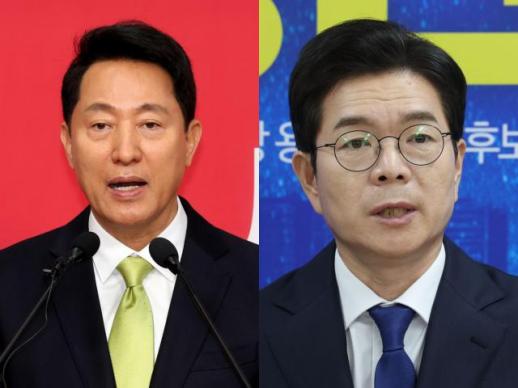 Seoul Mayor Oh to face DPK's Chung in June mayoral race SEOUL, April 18 (AJP) - Seoul Mayor Oh Se-hoon has been confirmed as the main opposition People Power Party’s candidate in the June 3 local elections, facing Chung Won-o of the ruling Democratic Party of Korea. The PPP’s nomination committee announced Saturday that Oh won the party’s primary, defeating Rep. Park Soo-min and former lawmaker Yoon Hee-sook. If elected, he would secure a third consecutive term since returning to office in 2021 and a fifth overall term as mayor. Oh said he would “solemnly accept” the mandate to safeguard Seoul and restore balance in the country, adding, “If I am elected, I will take it as a call to rebuild the opposition,” he said, vowing to push for political reform. Born in 1961, Oh entered politics by winning a parliamentary seat in Seoul’s Gangnam district in 2000. He later became Seoul mayor in 2006 and was re-elected in 2010, but resigned in 2011 after staking his position on a citywide vote over whether to provide free school lunches to all students or only to low‑income children. He returned in 2021 through a by-election and won another term in 2022. His rival, Chung, is a three-term district mayor who has been publicly praised by President Lee Jae Myung, earning him the nickname “Lee’s pick.” After Oh was chosen as the PPP’s candidate, Chung wrote on his social media account that he hoped the upcoming election would be “a fair competition based on policies and competence” in addressing citizens’ livelihoods and the future of Seoul. A poll released Friday by Gallup Korea showed a sharp divide in party support, with the DPK at 48 percent and the PPP at 19 percent. In the same survey of 1,000 adults conducted from April 14 to 16, 45 percent of respondents said they wanted more ruling party candidates to win the June 3 elections, while 28 percent preferred opposition candidates. 2026-04-18 16:45:27