
Journalist

Topher L. McDougal
-
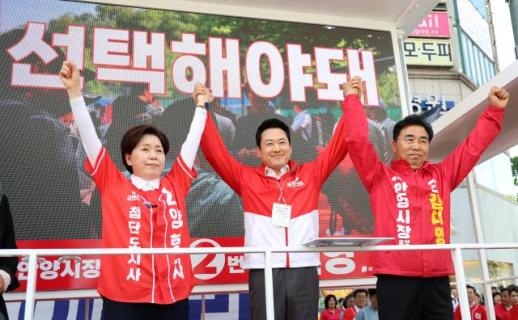 Jang Dong-hyuk Appeals for Support for Yang Hyang-ja in Gyeonggi Province Jang Dong-hyuk, chairman of the People Power Party, visited Gyeonggi Province on May 22 to urge voters to support Yang Hyang-ja, the party's candidate for governor. He called for overwhelming support for a "clean and capable candidate who will shape the future of Gyeonggi Province." During a campaign rally at Beomgye Intersection in Anyang, Jang criticized Choo Mi-ae, the Democratic Party candidate, stating, "While Yang was on a hunger strike to prevent a strike at Samsung Electronics for the future of South Korea, Choo was nowhere to be seen. How can such a candidate be trusted with the future of Gyeonggi Province?" He further accused Choo of being a key player in damaging the country for the benefit of Lee Jae-myung, saying, "Choo knows nothing about Gyeonggi Province. She proved her ignorance during the internal party debate, yet she became a candidate by securing votes from the 'Kkaedal' (a strong support group for the Democratic Party)." Jang praised Yang as a "high school graduate who made a name for herself at Samsung Electronics," emphasizing her qualifications as the true capable candidate to lead Gyeonggi Province, the heart of the semiconductor industry. "Yang is the one who understands semiconductors and can best drive the future advanced industries," he asserted. He also endorsed Kim Dae-young, the candidate for Anyang mayor, describing him as a "true worker who has dedicated over 30 years to Anyang City," stating that he knows the city well and has devoted everything to its betterment. In response, Yang addressed Choo, saying, "I don't want to talk about a candidate who viewed Gyeonggi Province as just a stopover for two years. Gyeonggi is my life, my everything. The People Power Party will unite to take care of the lives of each citizen in Anyang." Yang announced her campaign slogan, "A Profitable Gyeonggi Province," pledging to create a region where young people do not struggle with finances, delaying education, marriage, or housing. The rally included Jang and other party leaders, such as Kim Min-soo, Jo Kwang-han, Choi Ji-ye, and Park Jun-tae. After the event in Anyang, Jang continued campaigning in Suwon and Ansan.* This article has been translated by AI. 2026-05-23 18:45:26
 -
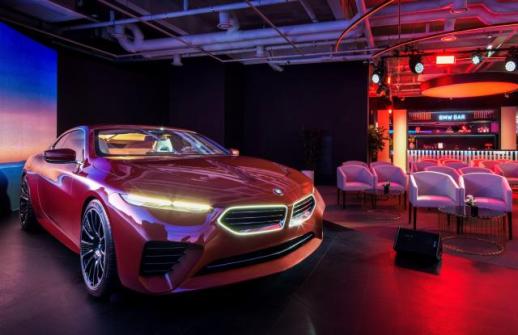 BMW Excellence Lounge 2026: A Fusion of Luxury and Culture "A very special day for BMW luxury car owners." BMW Korea hosted the 2026 BMW Excellence Lounge event on May 22 at the Project Space Line in Gangnam, Seoul. This exclusive event is aimed at owners of luxury brands, including the BMW 7 Series. This year's theme, "Progression," encompassed a premium experience that blended art and luxury lifestyle. The exhibition featured BMW's flagship vehicles alongside works by renowned contemporary Korean artist Lee Kang-soo. A docent guided attendees through the display, creating a cultural space that intertwined the brand's philosophy with the world of art. The BMW i7 showcased its presence with a large kidney grille and separated headlights, emphasizing its status as a flagship electric sedan. In the 8 Series display area, Lee's iron sculptures were strategically placed to highlight a strong image. The event also featured expert lectures, including a presentation by Dr. Kim Ji-yoon, a political scientist, who spoke on "The Leadership of South Korea: Their History." Dr. Kim discussed the trends of major corporations in South Korea, the U.S., the U.K., and Japan over the past 35 years, illustrating the evolution of South Korean leadership. He noted, "The country that has changed the least is the U.K., while South Korea has undergone the most transformation. South Korea has closely experienced changes and growth in leadership through military regimes, democratization, and the IMF crisis." Other speakers during the event included big data analyst Song Gil-young, music director Kim Moon-jung, humanities writer Jo Seung-yeon, former professional Go player Lee Sedol, and neuroscientist Jang Dong-seon, who discussed topics such as AI, art, psychology, and luxury. Now in its eighth year, the BMW Excellence Lounge has become a signature event for BMW Korea. Starting this year, a new lifestyle program called "Curation by Excellence" will be offered, allowing members to select from curated programs, including golf lessons and art exhibitions, to participate in up to twice a year. Following the event, a luxury class test drive program was conducted, where participants experienced the BMW 740i, driving through the Jamsil and Samseong areas for about 30 minutes, enjoying the sedan's substantial presence and smooth ride.* This article has been translated by AI. 2026-05-23 18:43:12
 -
 KOSDAQ Soars on Hopes for National Growth Fund, Led by Battery and Bio Sectors On May 22, major stocks on the KOSDAQ surged amid expectations for the National Participation Growth Fund. Strong buying activity, particularly in the secondary battery and pharmaceutical sectors, drove the KOSDAQ's upward trend. According to the Korea Exchange, EcoProBM, the top stock by market capitalization on the KOSDAQ, closed at 216,000 won, up 21,000 won (10.77%) from the previous trading day. During the session, it peaked at 219,750 won, recovering a market cap of 21 trillion won. EcoPro also saw a significant increase, closing up 12.87% at 146,500 won. Market analysts suggest that the anticipation surrounding the National Growth Fund has stimulated investment sentiment across the secondary battery sector. The pharmaceutical and biotech sectors also experienced gains. HLB closed at 50,900 won, up 8.76%, while ABL Bio finished at 120,200 won, a rise of 9.37%. Other top biotech stocks, including Peptron (up 7.32%), Samchundang Pharm (up 4.79%), and Alteogen (up 3.70%), also saw increases. The positive sentiment in the biotech sector is attributed to expectations surrounding the upcoming American Society of Clinical Oncology (ASCO) abstract releases and inflows of funds into growth stocks. Semiconductor equipment stocks continued their strong performance as well. Jusung Engineering surged 20.95% to close at 224,000 won, with trading volume exceeding 1.39 trillion won, marking it as the most actively traded stock on the KOSDAQ. IOTech also rose 4.37% to close at 573,000 won, while Rino Technology saw a 2.40% increase. However, some semiconductor stocks that had recently performed well faced profit-taking, leading to declines. Wonik IPS closed down 2.87% at 121,700 won. Overall, investor sentiment for technology growth stocks improved. Pado surged 9.94%, and Rainbow Robotics closed up 1.48%. Kang Jin-hyuk, a researcher at Shinhan Investment Corp, noted, "The National Participation Growth Fund sold out within 30 minutes of its launch, expanding expectations for capital inflows into advanced industries. The rapid improvement in investment sentiment centered on growth stocks has led the KOSDAQ to outperform the KOSPI." Lee Kyung-min, a researcher at Daishin Securities, commented, "As the semiconductor and robotics sectors take a breather, a rotation centered on the pharmaceutical and biotech sectors continues. The expectations surrounding the National Growth Fund appear to be improving the overall supply and demand in the KOSDAQ market."* This article has been translated by AI. 2026-05-23 18:40:50
 -
 Oh Se-hoon Campaign Criticizes Jung Won-o's Housing Policy Record As the Seoul mayoral election approaches, the debate over housing supply intensifies. Oh Se-hoon's campaign responded to Jung Won-o's criticism of the current housing policy by stating, "During Jung's 12 years as Seongdong District Mayor, the completion rate for redevelopment projects was effectively '0%.'" Lee Chang-moo, head of Oh Se-hoon's election campaign's Special Committee on Real Estate Normalization, issued a statement on May 22, asserting that Jung's attacks on Oh's housing policy, citing a "lack of supply results," are fundamentally contradictory. Lee emphasized that Oh's administration has significantly expedited the designation of redevelopment and reconstruction zones through the "Rapid Integrated Planning" initiative, and that these efforts will lead to substantial housing supply starting in the next mayor's term. He criticized Jung for repeating the same criticisms without acknowledging these advancements. Highlighting Jung's long tenure as district mayor, Lee stated, "The role of local governments is crucial in the designation and execution of redevelopment projects. Given Jung's record, he should apply the same standards to himself." According to Lee's analysis, since Jung took office in 2014, none of the 11 designated redevelopment areas in Seongdong District have resulted in completed projects, leaving the completion rate at 0%. He noted that this performance is below the average completion rate of 4.8% for Seoul during the same period. Lee further pointed out that even when considering redevelopment zones designated since 2010, Seongdong's completion rate remains at 0%, significantly lower than the average of 15.2% for other districts in Seoul. He acknowledged that Jung's team might argue that redevelopment projects take a long time to complete, but he countered that this reasoning actually supports the legitimacy of Oh's housing supply policies. Lee argued that the current supply shortage is largely due to the previous administration's cancellation of large-scale redevelopment zones, and that the current expansion of designated areas will eventually lead to increased supply, a point that Jung's own arguments inadvertently validate. Lee concluded, "While Jung claims that his 12-year record requires 'time,' he immediately points to Oh's supply policies based solely on completion results. This is a classic case of double standards. The supply debate, which Jung has used to attack Oh, is turning into a self-inflicted wound that reveals his own administrative shortcomings."* This article has been translated by AI. 2026-05-23 18:38:15
 -
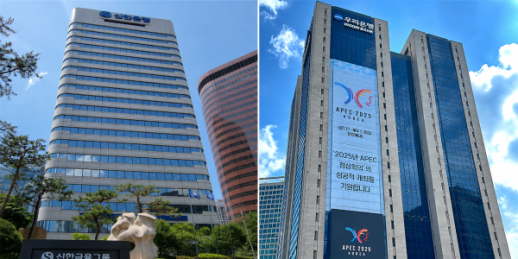 Shinhan and Woori Banks Compete for 16 Trillion Won District Treasury Contracts Woori Bank and Shinhan Bank, which competed for the 51 trillion won Seoul city treasury bid, are set to face off again in the bidding for district treasuries in Seoul. Following Shinhan Bank's successful retention of the city treasury, attention is focused on whether Woori Bank, which currently operates the most district treasuries at 14, can maintain or regain its position. According to financial industry sources and the Ministry of the Interior and Safety on May 22, the contracts for district treasuries in 25 Seoul districts will expire by the end of this year. These districts plan to sequentially hold bids for selecting district treasury banks in the second half of the year. The total operating funds for the 25 district treasuries in Seoul amount to approximately 16 trillion won, a significant figure when compared to Incheon’s budget of about 15 trillion won. Currently, the distribution of district treasuries in Seoul is as follows: Woori Bank operates 14 (Gangdong, Gangseo, Gwanak, Geumcheon, Mapo, Seodaemun, Seongbuk, Songpa, Yangcheon, Yongsan, Yeongdeungpo, Jongno, Jung, and Jungnang), Shinhan Bank has 6 (Gangnam, Gangbuk, Guro, Seongdong, Seocho, and Eunpyeong), and KB Bank operates 5 (Gwangjin, Nowon, Dobong, Dongdaemun, and Dongjak). Industry analysts expect a two-way competition between Shinhan Bank and Woori Bank in the upcoming district treasury bids. In the previous Seoul city treasury bid, both banks applied for the top two treasury positions, with Shinhan Bank receiving the highest score and being selected as the operating institution. After losing the city treasury bid, Woori Bank plans to launch a full-scale effort to secure additional district treasuries ahead of the upcoming bids. Woori Bank has operated the Seoul city treasury for over 100 years and has effectively monopolized the district treasury operations. However, since Shinhan Bank acquired the operating rights for the Yongsan District's first treasury in 2015, it has increased its number of district treasuries to 6, breaking Woori Bank's monopoly. In response, Woori Bank is currently reviewing its bidding strategy through an internal task force. Shinhan Bank aims to leverage its momentum from retaining the city treasury to secure more district treasuries. Given that system stability and operational experience are crucial in treasury operations, its use of the same collection and IT systems as the city treasury may provide an advantage. Some analysts suggest that KB Bank's potential participation in the upcoming bids, having previously challenged for the second treasury, should also be monitored. KB Bank has been steadily expanding its institutional sales organization based on solid performance and has secured five district treasuries in Seoul, broadening its base. However, significant costs related to interest rates and contributions are expected for banks participating in the district treasury bids. In the past, banks reportedly proposed contributions of around 10 billion won for each treasury. Interest rates for loans and deposits will also be a variable in the competition. According to the Ministry of the Interior and Safety, the average interest rate for 12-month or longer time deposits across the 25 district treasuries in Seoul is approximately 3.42%. The highest rates are currently applied in Seodaemun, Seongbuk, Yongsan, and Jung-gu at 3.95%. As competition intensifies, banks will need to offer higher rates, which could ultimately become a burden. A financial industry official stated, "District treasuries are a business that may incur low profitability or losses due to the burden of contributions and interest rate competition, but they are essential for future challenges in city treasury selections. As the bidding will begin after the local elections, the strategic planning of each bank will become increasingly important."* This article has been translated by AI. 2026-05-23 18:36:00
 -
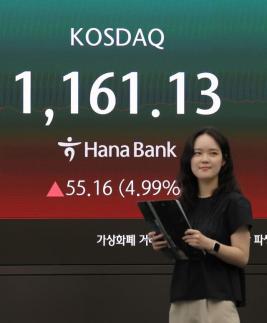
 KOSPI Closes Slightly Higher Amid Foreign Profit-Taking; KOSDAQ Surges Nearly 5% The KOSPI index closed slightly higher, supported by net buying from institutions and individuals despite significant profit-taking by foreign investors. As large-cap semiconductor stocks took a breather, a rotation into growth sectors like pharmaceuticals, biotechnology, and secondary batteries propelled the KOSDAQ index to a nearly 5% surge. According to the Korea Exchange, the KOSPI finished at 7,847.71, up 32.12 points (0.41%) from the previous trading day. The index opened at 7,873.12, up 57.53 points (0.74%). Lee Kyung-min, a researcher at Daishin Securities, noted, "As the semiconductor and robotics sectors take a pause, expectations for the National Growth Fund have increased, leading to a rotation into growth stocks like pharmaceuticals and biotechnology. However, the 12 consecutive days of net selling by foreign investors and the rising won-dollar exchange rate have limited the index's upside potential." In the securities market, individuals and institutions net bought 1.5672 trillion won and 961 billion won, respectively, while foreign investors net sold 2.6556 trillion won. Among the top market capitalization stocks, SK Hynix (0.05%), SK Square (0.51%), Samsung Electro-Mechanics (11.30%), Samsung Life Insurance (2.68%), Doosan Enerbility (2.95%), and HD Hyundai Heavy Industries (1.19%) saw gains, while Samsung Electronics (-2.34%), Hyundai Motor (-1.65%), and LG Energy Solution (-0.62%) declined. The KOSDAQ index closed at 1,161.13, up 55.16 points (4.99%). It started at 1,119.43, up 13.46 points (1.22%) from the previous trading day, and expanded its gains due to strong foreign buying. At approximately 9:33:06 AM, a buy-side circuit breaker was triggered in the KOSDAQ market, halting program buy orders for five minutes. This followed a similar occurrence in both the securities and KOSDAQ markets the previous day, marking the second consecutive day for a buy-side circuit breaker in the KOSDAQ market. In the KOSDAQ market, foreign and institutional investors net bought 702.9 billion won and 287.9 billion won, respectively, while individuals net sold 969.2 billion won. Among the top stocks by market capitalization, EcoPro BM (10.77%), EcoPro (12.87%), Alteogen (3.70%), Rainbow Robotics (1.48%), JUSUNG Engineering (20.95%), Kolon TissueGene (3.59%), and Samchundang Pharm (4.79%) closed higher.* This article has been translated by AI. 2026-05-23 18:33:23
 -
 K-Bio Achieves $6.5 Billion in Technology Transfers in First Half of 2026 The South Korean biotechnology sector, which achieved record technology exports last year, is showing resilience in the first half of 2026 with a series of significant contracts. As major conferences and partnering events are set to commence in the latter half of the year, attention is focused on whether additional large deals will follow on the global stage. As of mid-May, the scale of technology transfers in the domestic biotech industry reached $6.5 billion, about half of last year's total of $13.7 billion, based on maximum milestone criteria. Although the number of technology transfer agreements stands at five—down from 14 last year—the value per contract has been substantial. Aribio and Alteogen have been at the forefront this year. Aribio secured a global licensing deal for AR1001 with China's Puxing Pharmaceutical, generating $4.7 billion. Earlier, Alteogen signed a contract worth approximately $285 million with GSK subsidiary Tesaro in January and another deal with Biogen valued at $569 million in March. An industry insider noted, "Western big pharma companies are seeking reliable platform technologies, while large Chinese pharmaceutical firms are looking for differentiated substances to aid their global expansion, leading to continued interest in South Korean biotech firms." However, investment sentiment in the biotech sector has been low in the first half of the year. Huh Hyemin, a researcher at Kiwoom Securities, stated, "The controversy over royalty rates, clinical data issues, and contract-related disputes have shaken overall confidence in the biotech sector." Nevertheless, the second half of the year presents opportunities for recovery, as major global conferences and partnering events will kick off at the end of May. Key events include the European Association for the Study of the Liver (EASL) on May 27, the American Society of Clinical Oncology (ASCO) on May 29, the American Diabetes Association (ADA) next month, the BIO International Convention at the end of June, and the European Society for Medical Oncology (ESMO) in October. These conferences are seen as more than just platforms for research presentations; they are considered practical venues for technology transfers. Promising candidate substances will have their clinical data disclosed, often leading to business development meetings with global pharmaceutical companies and accelerating licensing negotiations. Huh added, "The number of oral presentations by domestic companies at major global conferences is increasing, and this year’s focus has shifted from preclinical to clinical data. This indicates that South Korean biotech firms are moving beyond merely holding early-stage technologies to accumulating clinical data that allows for discussions on global commercialization." At ASCO, companies such as GI Innovation, VigenCell, and Lunit will present their findings. Among them, GI Innovation's GI-101A is a pipeline aimed at technology transfer, and positive data could increase the likelihood of follow-up negotiations. A pharmaceutical industry representative remarked, "If the flow of data presentations leads to actual technology transfers, it could restore and reassess the confidence that has been dampened in the biotech sector."* This article has been translated by AI. 2026-05-23 18:30:36
 -
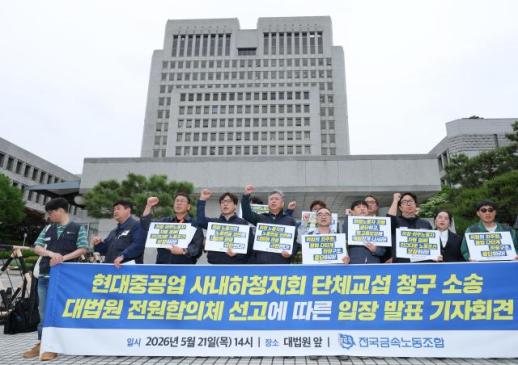 Lawyers Group Condemns Supreme Court Ruling on Hyundai Heavy Industries Union Negotiations The Lawyers for a Democratic Society (Minbyeon) has strongly condemned the Supreme Court's ruling that dismissed a collective bargaining request by the subcontracted workers' union at Hyundai Heavy Industries, calling it unconstitutional and outdated. On May 22, Minbyeon stated in a commentary that "the three rights of labor are specific rights that directly take effect under constitutional provisions, with the right to collective bargaining being the most fundamental." They emphasized that for this right to be guaranteed, it must be exercised against employers who effectively determine labor conditions. This criticism arises from the fact that subcontractors have historically avoided negotiations by claiming they lack authority without the approval of the primary contractor. The Supreme Court's ruling, which absolves the primary contractor of responsibility, is seen as contrary to the spirit of the constitution. Minbyeon particularly criticized Hyundai Heavy Industries for pursuing profits by employing subcontracted workers instead of regular employees while evading the responsibilities and risks that come with being an employer. They asserted, "It is a basic legal principle that where there is profit, there is responsibility," arguing that the primary contractor, which benefits from the use of subcontracted workers, has an obligation to respond to the inevitable demands for collective bargaining. Furthermore, Minbyeon stated that this ruling undermines the significance of the Supreme Court as the highest judicial body responsible for realizing constitutional values. They also claimed that the Supreme Court distorted the intent of the amended labor law. The amended law recognizes those who exercise substantial and concrete control as employers, confirming previous rulings and decisions by the Central Labor Relations Commission, yet the majority opinion of the Supreme Court treated this as a new creation of rights. Minbyeon concluded, "Strengthening the responsibilities of primary employers and recognizing their employer status is an irreversible trend of the times," pledging to stand in solidarity with subcontracted workers fighting for their labor rights and to monitor closely to prevent the recurrence of such regressive rulings. The day before, the Supreme Court's full bench, led by Justice Oh Kyung-mi, ruled in favor of Hyundai Heavy Industries, stating that there is no obligation to engage in collective bargaining in the case brought by the subcontracted workers' union in 2017.* This article has been translated by AI. 2026-05-23 18:27:26
 -
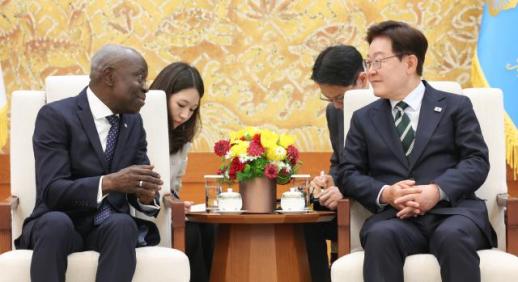 President Lee Meets ILO Chief, Emphasizes Balance in Labor Rights and Innovation in AI Era President Lee Jae-myung met with Gilbert Houngbo, the Secretary-General of the International Labor Organization (ILO), to discuss labor policies in the age of artificial intelligence (AI). In a written briefing on the afternoon of May 22, Chief Spokesperson Kang Yu-jeong stated, "President Lee and Secretary-General Houngbo acknowledged that balancing the protection of labor rights and technological innovation is a critical challenge for the international community amid significant changes in the labor market and industrial structure due to advancements in AI technology. They discussed the role of AI in creating quality jobs." Houngbo praised South Korea's efforts to establish itself as a global AI hub and expressed expectations for the country's role in utilizing AI in the labor sector. The global AI hub is a South Korean-led initiative involving collaboration among governments, international organizations, and research institutions to build an AI cooperation framework. He also requested that President Lee attend the ILO General Conference scheduled for June next year to share the direction and achievements of South Korea's labor-respecting policies. President Lee emphasized the government's commitment to a "labor-respecting" policy framework, explaining that efforts are ongoing to ensure that the use of AI positively impacts labor. He highlighted key initiatives, including the protection of labor rights, the establishment of social safety nets, enhanced vocational training and lifelong learning, and building trust through social dialogue. Additionally, he expressed a desire to strengthen cooperation with the ILO to fulfill South Korea's responsible role in the international community. During the opening remarks, when Houngbo noted that South Korea ranks among the top ten contributors to the ILO, President Lee responded, "We have many talented individuals in South Korea, so please make good use of them in international organizations like the ILO." Houngbo agreed, stating, "That is a valid point." * This article has been translated by AI. 2026-05-23 18:24:54
 -
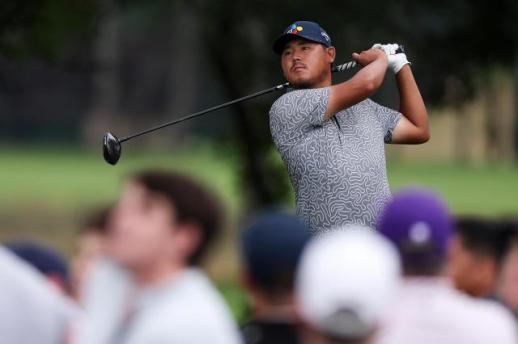 Kim Si-woo Ties for Fourth on First Day of The CJ Cup Kim Si-woo made a strong start at The CJ Cup Byron Nelson, part of the PGA Tour, with a solid performance on the first day of the tournament, which has a total prize purse of $10.3 million. On May 22, in McKinney, Texas, at TPC Craig Ranch (par 71), Kim recorded eight birdies and one bogey, finishing with a score of 7-under 64. He is tied for fourth place with Keith Mitchell, Michael Thorbjornsen (both from the U.S.), Emiliano Grillo (Argentina), Stephan Jaeger (Germany), and Hirata Gensei (Japan). Kim trails the leader, Tyler Moore (U.S.), by two strokes, as Moore shot a remarkable 9-under 62. Despite drizzly weather, Kim's shot accuracy stood out. He played alongside top competitors, including world No. 1 Scottie Scheffler (U.S.) and 2018 tournament champion Brooks Koepka, yet maintained his composure throughout the round. Starting on the 10th hole (par 4), Kim made a long birdie putt from about 20 meters on his first hole. He added birdies on the 12th (par 5) and 14th holes (par 4), finishing the front nine with four birdies. The momentum continued on the back nine. On the 2nd hole (par 4), he placed his second shot just 70 centimeters from the hole for another birdie, and he sank a 2-meter birdie putt on the 3rd hole (par 4). On the 5th hole (par 5), he used a mini driver to reach the green and followed up with a precise approach to score another birdie. Although he had a disappointing three-putt bogey on the 7th hole (par 3), he redeemed himself with a birdie on the final 9th hole (par 5), finishing the round on a high note. After the round, Kim said, "It was a good round. My putting was excellent. My shots were a bit shaky, but I'm satisfied with the result. The greens were trickier than I expected, but my putting helped me have a good round." Brooks Koepka (U.S.), who made eight birdies without a bogey, recorded an 8-under 63, tying for second place with Jesper Svensson (Sweden). Returning to the PGA Tour after joining LIV Golf, Koepka achieved his personal best score of the year in this tournament. He remarked, "It was my best round of the year. My putting felt good, and it was a big confidence boost to see my feelings align with the actual results." Defending champion Scottie Scheffler finished tied for 16th with a score of 5-under 66. He noted, "I had some good plays, but I was a bit short with my iron shots, which limited my birdie opportunities. Overall, it was a positive day." Among other South Korean players, Noh Seung-yul finished tied for 32nd with a score of 4-under 67, while Kim Joo-hyung, Im Sung-jae, and Bae Yong-joon all scored 3-under 68, tying for 47th. Lee Kyung-hoon finished tied for 74th with a score of 2-under 69.* This article has been translated by AI. 2026-05-23 18:22:13